Forth Wanderers employ a tin-can-telephone style of composition which they use even when living in the same area code. Since first collaborating in 2013 as Montclair, New Jersey high schoolers, guitarist and songwriter BenGuterl and vocalist Ava Trilling have passed songs back and forth like pen pals. Guterl will devise an instrumental skeleton before sending it to vocalist Ava Trilling who pens the lyrics based off the melody. The duo then gather alongside guitarist Duke Greene, bassist Noah Schifrin, and drummer Zach Lorelli to expand upon their demo. It’s a patient and practiced writing system that has carried the quintet through two EPs (2013’s Mahogany and 2016’s Slop) and one LP (2014’s Tough Love). Forth Wanderers, the group’s sophomore record and Sub Pop Records debut, is the groups’ most comprehensive and assured statement yet. On Forth Wanderers these introspections include meditations on relationships, discovery, and finding oneself adrift. Despite the inherent heaviness of those themes, Forth Wanderers feels joyous, a rock record bursting with heart. Take Not for Me, a romping track about “the ambivalence of love. Opener Nevermine, is a surge of confidence inspired by an ex-lover who is still captivated by her image.
On Ages Ago Trilling paints the image of a constantly-shifting enigmatic lover. “I wasn’t sure who they were, they changed constantly (hence the metaphor describing the “grey coat” and cutting their hair just to “stay afloat”),” she says. “I wasn’t going to wait any longer to find out.” Recorded over five days by friend and audio engineer CameronKonner at his Philadelphia home studio, Forth Wanderers amplifies the heartfelt sentiments of their earlier works into massive anthems. Guterl and Greene’s guitars have never sounded sharper, Schifrin and Lorelli’s terse rhythm section is restless, and Trilling sounds more self-assured than ever. These are exuberant, profound songs driven by tightly bound melodies and a loving attention to detail.
Forth Wanderers (Release Date: April 27, 2018) Sub Pop Records
With the release of the band’s 15th album, There’s a Riot Going On, last week, the time was right to reappraise the trio’s discography There’s a Riot Going On is a good one, but so far none of its songs have jumped off to become my absolute favorites. That’d be a tall order for any band.
And if you’re somehow wondering who these Yo La Tengo guys are in the first place, well, they’re a Alt rock band—and a really good rock band. The husband-wife team of guitarist Ira Kaplan and drummer Georgia Hubley started the band in Hoboken in 1984, and released four albums with a variety of partners and sidemen and on a handful of labels before incorporating bassist James McNew on the 1992 full-length May I Sing With Me. The next year they released their breakout record Painful on Matador, a partnership that endures to this day. Painful is where their “disparate influences congealed into a fully formed style of the band’s own, from early ‘60s folk and pop to the post-Velvets diaspora of noise and punk,” and that’s still a good summation. They’re about as likely to play a three-minute pop gem as they are a forlorn folk song, a 10-minute one-note drone, a cover of a classic hit from the ‘70s, or a crazed, 20-minute noise jam. And they do it all with the same level of proficiency, confidence and humility. Again, but they’re are a really good rock band,
Ride the Tiger (1986)
New Wave Hot Dogs (1987)
President Yo La Tengo (1989)
Fakebook (1990)
May I Sing with Me (1992)
Painful (1993)
Electr-O-Pura (1995)
Genius + Love = Yo La Tengo (with Jad Fair e Daniel Johnston) (1996)
I Can Hear the Heart Beating as One (1997)
And Then Nothing Turned Itself Inside-Out (2000)
The Sounds of the Sounds of Science (2002)
Summer Sun (2003)
Prisoners of Love: A Smattering of Scintillating Senescent Songs: 1985-2003 (2004)
Yo La Tengo is Murdering the Classics (2006)
I’m Not Afraid Of You And I Will Beat Your Ass (2006)
Popular Songs (2009)
Fade (2013)
Danish post-punk band Iceage have shared another new track from the band’s forthcoming fourth studio album Beyondless, due out on May 4th via Matador Records.
“Take It All” is the third single from their new album and it follows the release of “Catch It” and “Pain Killer,” the latter of which featured guest vocals from Sky Ferreira. “Catch It” was the band’s first single since their 2013 album Plowing Into The Field of Love,
Their brand new single, “Take It All,” features marching drums, twinkling yet murky guitars and frontman Elias Bender Rønnenfelt mourning the state of the planet (“the world is a crime”) before becoming distracted and utterly mesmerized by the beauty of another human. Rønnenfelt sings as he is reluctantly entranced, “And men were dying for the death of the west / Oh yeah / And the last thing I ever wanted to see was these brand new sparkles / Coming from your ever loving God damned eyes.”
A statement described the sound and themes from the band’s new album, Beyondless:
The intoxication is consistent, this has always been drunk music, but it’s less a stumbling confusion and more a sturdy heartfelt confession with each record. They have finally caught up with their ambition. Their entire charm has always rested in their running ahead of themselves with blind confidence, taunting you to follow and you follow because wherever they are going is vital, is alive; on Beyondless they are treading with an assurance that is disarming, but there is no loss of charm, you are arm in arm now, whispering intimacies.
Surfer Rosa is one of those perfect debut albums, that lets you know what you’re in for right out of the gate. The blueprint for the album, and for so much of the guitar-based music that followed over the next decade or so, is set within the first minute of the lead track, “Bone Machine.”David Lovering’s spare yet ferocious drums, the sound of them so vast that you wonder if he’s actually playing an oil rig. Kim Deal’s muscular, melodic bassline, underpinning but never overstepping. Joey Santiago drawing blood out of a few crystal-sharp notes of guitar. Black Francis (aka Frank Black) yelping for sixteen bars of agitated verse over a relative lull of music before Santiago yanks the song back into a chorus of blistered lips and “uh-oh!”—the first instance of the loud/soft motif that the band further refine and recalibrate through another dozen frenetic and thrilling songs, most of which combust around the two-minute mark.
The Pixies made Surfer Rosa not long after their formation in Boston, Massachusetts, and just a few weeks after the release of their debut mini album, Come On Pilgrim. Both releases were themselves culled from a March ’87 demo, The Purple Tape, which included embryonic versions of several Surfer Rosa songs: “Break My Body,” “I’m Amazed” and the album’s most straightforwardly hardcore moment, “Broken Face.” At the urging of their British label, 4AD Records, Surfer Rosa saw the Pixies replace Purple Tape producer Gary Smith with a relatively unknown recording engineer, Steve Albini, who was best known at the time for his work with his own band, Big Black. After a get-to-know-you dinner at Lovering’s place, the band and Albini set to work on the record at the newly opened Q Division Studios in Somerville, a few miles north of Boston, which had ironically been recommended to them by the ousted Smith.
Famously opposed to both the title “producer” and the concept of receiving royalties on albums he worked on, Albini was paid a flat fee of $1,500 for his ten days of work on the album, out of a total recording budget of $10,000. He would be similarly forthright in his critiques of the band’s performances, alternately hailing them as “genius” or dismissing them entirely.
In press interviews at the time, the band would characterize Albini as a “brainiac” who loved lo-fi and instruction manuals but had little enthusiasm for “anything human-sounding”—the result of which meant that those ten days of recording were spent honing guitar and drum sounds, with vocal parts left until the very last evening. Special effects were eschewed in favor of an abrasive, unadorned—and soon to be much copied style that found its perfect foil in the Pixies’ deceptively delicate (and often delicately played) songs. Even overdubbing was generally avoided. “He hates overdubs,” Deal had told Melody Maker.
Though the two would later on form a deep friendship (as evidenced by their joint panel at this year’s SXSW festival), Deal was somewhat dismissive of Albini’s methodology in subsequent interviews. But Albini always had a fan in Black Francis. “I like him because he likes loud,” he exclaimed in the same interview. “All the needles were on red. He totally overloaded the tape.”
Assistant engineer John Lupner, meanwhile, was struck by the lengths Albini went to authentically capture the particular sound of Q Division Studios. Not everything was quite so meticulously planned, however. According to John Murphy—Deal’s husband at the time—the abrupt end to “Where Is My Mind?” came about by accident, as a result of the tape running out while the band was playing. “The tape started to go click click click,” he told Frank and Ganz, “and they went, ‘Well, we got most of it.
If there’s an overarching theme to Surfer Rosa, it’s a Lynchian scratching away at the underbelly of modern life to reveal tales of voyeurism, incest, and other deviant behavior. Francis put these preoccupations—that include a rather ahead-of-its-time portrayal, in “Bone Machine,” of a pedophile priest (or “preachy-preach” in Pixies vernacular)—down to his “real hardcore Pentecostal” upbringing. It’s not all about molestation, though. Two songs (“Broken Body” and “Tony’s Theme”) reference superheroes, while several others draw on a six-month period Francis spent as an exchange student in Puerto Rico the inspiration for both the Spanglish lyrics in “Vamos” and “Where Is My Mind?” with its dreamy evocation of snorkeling “in the Car-ibb-e-an.”
Though vocals were left until the final day of recording, they were by no means an afterthought. Indeed, the interplay between the band’s two vocalists, Francis and Deal, would become another Pixies trademark. In keeping with his vérité style, Albini abandoned studio trickery in favor of natural acoustics. Deal’s two most memorable vocal performances—her lead on the bouncing, pop-toned single, “Gigantic” and the oo-oohs that run throughout “Where Is My Mind?”—were recorded in the bathroom, its natural echo proving preferable, as far as Albini was concerned, to any available studio effect. The latter song’s false start jarring and seemingly throwaway on first listen is instructive as to the attention to detail from both band and engineer. Deal’s first ooh, which precedes Francis’s curt instruction to “Stop,” has a sharp rawness to it. When her voice returns in the song proper, it’s engulfed in an underwater haze much more befitting the lyrical reverie.
There are further spoken interjections elsewhere: some within the songs, such as the aforementioned opening to “Bone Machine” and Deal’s similar announcement that “Tony’s Theme” is about “a superhero named Tony,” and some in between. “I’m Amazed” begins with Deal mid-sentence, gossiping about a teacher who’s “into field-hockey players.” “Oh My Golly!” ends with Francis yelling “You fuckin’ die!” at her. He goes on to clarify that he’d done so in jest, in response to her warning that no one mess with her equipment.
Surfer Rosa was released in March 1988 in the UK and remained available only as an import in the United States until late summer, when 4AD signed a North American distribution deal with Rough Trade. Initial U.S. pressings paired the album with Come On Pilgrim. The two works were then reissued separately in 1992, after ElektraRecords took on the 4AD catalogue.
Having received largely positive press notices, Surfer Rosa sold solidly in the interim, if unspectacularly—perhaps in part because, like so many landmark albums, it found itself a little far ahead of the curve. Winning the hearts and minds of college radio and Melody Maker (which named the album the best of 1988) would not yet yield widespread success. The album did not go gold in the U.S. until 2005, by which time the Pixies had disbanded, lain dormant for a decade, and then reunited for the first of several deservedly lucrative world tours.
By then, of course, Surfer Rosa had been well and truly canonized as one of the most influential albums of its time, with Nirvana and myriad others taking the Rosa model and running with it, many of them queuing up both to sing its praises and to summon Steve Albini to work his magic to record his own band’s album In Utero. Kurt Cobain listed it as his second favorite album of all time (after Iggy and the Stooges’ Raw Power)
Among the earliest advocates for the band, meanwhile, was one of rock’s greatest statesmen, David Bowie, who would later lament, “I thought it was a hell of a shame that America didn’t recognize its own with the Pixies.” His 2002 album Heathen includes a well-judged cover of Rosa’s “Cactus,” a short and sweet ballad about a prisoner so desperate for something—anything from his wife that he ends up begging her to smear her dress with blood and “send it to meeee.”
Sam Fogarino of Interpol once opined that the Pixies have been the most influential band in music since they first emerged back in 1988 with their debut album, “Surfer Rosa”. Recalling the first time he heard their music, he said: “I felt vile, then I felt violated, then I thought it was the most brilliant fucking thing since sliced bread, and that hasn’t changed because it’s ageless music, and that’s a very rare thing to stumble upon.”
Fogarino’s account is textbook slow-burning appraisal. The Pixies have always been somewhat of an oddity. They somehow exhibit a dichotomous mix of perturbing sounds and iconography akin to the world of death metal breaking bread with the harmonic sensibilities of the Bee Gees. David Bowie aptly surmised this mishmash as sounding like a “psychotic Beatles”. It’s a jarring mix that proves joyously untempered on their debut. You just have to overcome the vile introduction before you can relish the pig thrashing in a plashy mire reverie of its sultry lair.
Another important step in the album’s elevation came a few years earlier, with David Fincher’s clever use of “Where Is My Mind?” in a pivotal scene toward the end of Fight Club. Since then, that song in particular has become so inescapable that you’ll even hear gentle piano renditions in HBO prestige dramas. Surfer Rosa regularly appears on all-time “best-of” lists online and in print.
Pixies
Black Francis – vocals, rhythm guitar, acoustic guitar
Kim Deal – bass, backing vocals, vocals on “Gigantic” (credited as Mrs. John Murphy)
Devotion is a stunning artistic about-face from revered Melbourne songwriter Laura Jean. Loved for her piercing, intimate, folk-based albums such as 2014’s Laura Jean and 2011’s A fool who’ll, Laura has worked with producer John Lee (Beaches, Lost Animal) to create an enveloping, deep pop album like nothing she has done before. Laura’s last self-titled album, recorded in the UK with John Parish (Perfume Genius, Aldous Harding, PJ Harvey) and featuring Jenny Hval on backing vocals, was a critical smash in Australia, shortlisted for the Australian Music Prize and nominated for two Age Music Victoria Awards.
The album lead to Australian and New Zealand tours with Aldous Harding and Marlon Williams, plus shows with Julianna Barwick, Jessica Pratt and more.
But soon Laura found herself tinkering with a 90s Kawai keyboard, enjoying its built-in drum rhythms and moody synth sounds. Laura began a series of shows performing with nothing but the keyboard, as the idea for her next album grew and developed.
Devotion is an album about teenage obsession, coastal child- hood and vivid memory – universal themes filtered through Laura’s razor sharp lyrical focus. Initial influences for the record took in R’n’B, 80s adult contemporary pop and 70s disco, but the end result is transformed into something wholly other, full of depth, resonance and mystery.
Played entirely by Laura, John Lee and drummer Dave Williams (Augie March), “Devotion” is both contemporary and timeless.
About the album, Laura says: “Devotion is about how a lonely coastal childhood filters into a contemporary adult life built hundreds of miles away. I wrote this album for my mum, middle sister and myself as we were at that time – eccentric, romantically-unfulfilled teens and a stressed out single mum trying to have a love life. In those times we needed to hear songs that were loving and uplifting, about the reality of intimacy, longing, romantic risk and reward. The album is narrated by me in the present, a detached adult figure far away from home, but still driven by an inner fantasy world that is set on the beach where I grew up.”
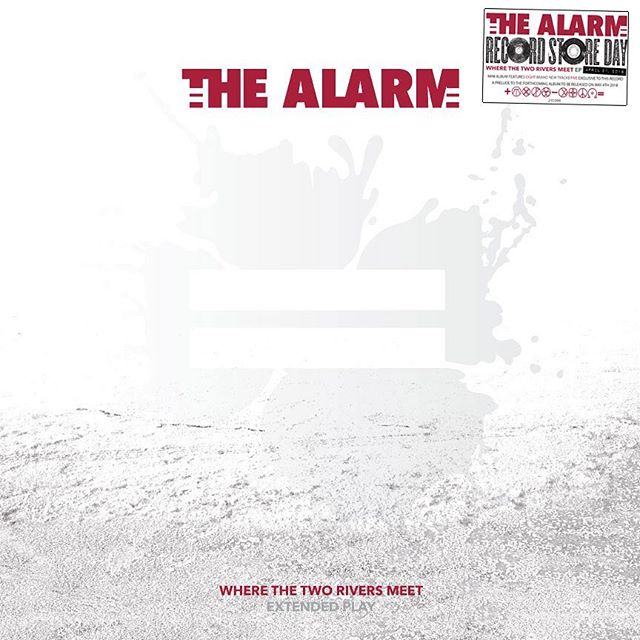
Record Store Day 2018, The Alarm“Where The Two Rivers Meet”
Saturday April 21st is World Record Store Day and also the day for the release of brand new music from Mike Peters and The Alarm.
Mike Peters and The Alarm will be releasing a very special, limited edition 8 track – vinyl only – mini album entitled Where The Two Rivers Meet Extended Play which will only be available exclusively at participating Record Store Day outlets worldwide.
To celebrate the release, Mike Peters will undertake a 24 Hour Transatlantic Tour performing at Record Stores in the U.K., New York and Los Angeles – all within the same day.
Where The Two Rivers Meet Extended Play features an incredible collaboration with The Cult / Coloursøund guitarist – Billy Duffy on the brand new song Blood Red Viral Black. There are 8 songs in total including a brand new recording / mix of live favourite Two Rivers coupled with Transatlantic, The White Count and Year One which runs at 8.55 minutes in length, making it the longest song in Alarm history (Only three of the eight tracks will appear on the forthcoming album). The original artwork was conceived by Mike Peters and Daniel Shearn and features a spot varnish cover image with full colour inner sleeve.
Where The Two Rivers Meet Extended Play features an ‘electric’ and ‘acoustic’ side and is the prelude to a brand new album release scheduled for June 29th 2018.
The complete track listing of Where The Two Rivers Meet Extended Play is as follows:
Electric Side
Two Rivers
Transatlantic
Blood Red Viral Black
The White Count
Acoustic Side
Thirteen Dead Reindeer [Acoustic]
Armageddon In The Morning [Acoustic]
Crowd Trouble [Acoustic]
Year One
Arcade Fire have announced a reissue of their debut Arcade Fire EP. It’s the first time that the EP has been pressed to vinyl. The Arcade Fire reissue arrives on Record Store Day 2018 (Saturday, April 21) via Legacy Recordings. The band self-released Arcade Fire in 2003. Two years later, Merge Records re-released it on CD. The seven-track release includes “No Cars Go,” which was re-recorded for 2007’s Neon Bible.
This 2003 album preceded the instant classic Funeral, and has been relatively overlooked since Arcade Fire became one of the biggest bands in the world. However, the seven track EP (known unofficially as Us Kids Know) gives an insight into the band’s thematic and musical heart and is a key part of any fan’s collection. Now on vinyl for the first time in transparent blue, limited and numbered. Tracklist:
1. Old Flame 2. I’m Sleeping In A Submarine 3. No Cars Go 4. The Woodland National Anthem 5. My Heart Is An Apple 6. Headlights Look Like Diamonds 7. Vampire / Forest Fire
First time on Vinyl for this 12″ transparent Blue coloured & individually numbered EP, with augmented Gold artwork
Lindsey Jordan has a lot of firepower for an 18-year-old. The Maryland-based Matador Records signee was stylishly clad with a red guitar in tow and sleek shades. Throughout the set, the band gave way to the commanding Jordan for a powerful 40 minutes in front of what felt like the largest crowd of the day. Something big is brewing here, take note…For Indie rock wunderkind Lindsey Jordan and her band, Snail Mail, have announced the release of their debut album. Lush, which follows 2017’s Habit EP, is out June 8th via Matador Records.
“Pristine” continues the personal, intimate feel of Habit, which was written in Jordan’s suburban bedroom. But “Pristine” aims a bit higher, with soaring choruses and crisp guitars crafting a shimmering backdrop for Jordan’s musings on young love. “Don’t you like me for me?” she sings. “I know myself, I’ll never love anyone else.”
Ah, to be young. And yet, “Pristine” is a grand step forward for a promising songwriter who — despite the hype — is really just getting started.
After three thrilling but taxing years spent fronting the Montreal quartet Ought, Tim Darcy needed a break. The group had accomplished a tremendous amount in a short period of time; their first album, 2014’s More Than Any Other Day, was remarkably assured, efficiently sketching out the blueprint for the band’s sound: fitful, snarling post-punk, topped with Darcy’s piercing lyrics, which explored the ways that daily choices are subtly influenced by people in power.
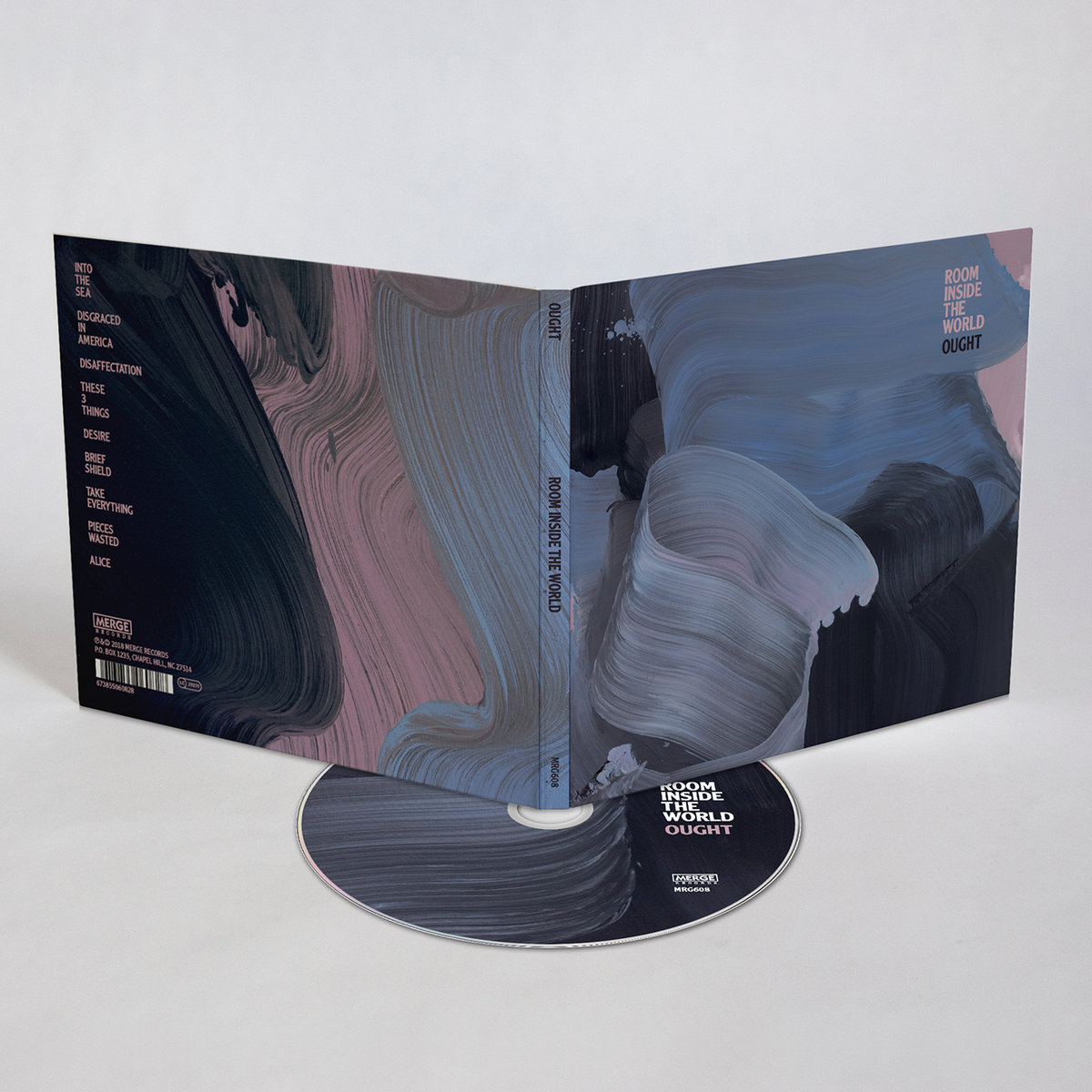
After a world tour in support of that record, they started the process all over again with 2015’s Sun Coming Down.But three years spent globetrotting takes a toll, no matter how romantic it seems from the outside. So for Room Inside the World, their third full-length and first for Merge Records, the band decided to prioritize deliberateness over the ruthless cycle of record, tour, repeat. The result is the band’s finest work to date, and a striking indication of where they may be heading.
“It’s amazing how much a little bit of downtime can do, as far as regrouping yourself,” Darcy says. The relief in his voice is audible; on previous albums, the recording process was a 100-yard dash: write the songs, record the songs, release the songs, hit the road. With Room Inside the World, the band wanted to flip the script, not just in terms of the writing and recording process, but also when it came to the album’s sonic palette.
On first listen, Room Inside the World is a sharp departure from Ought’s signature mix of post-punk precision and Talking Heads-y pop-funk. There’s a stripped-down glam gem (“Into the Sea”), an ode to ‘90s indie rock (“Disgraced in America”), and a ballad that manages to work a 70-person choir into the mix (“Desire”). Room Inside the World is the sound of a band confident enough to edge away from the wiry, worked-up songs that made them successful in the first place. On the whole, the album feels more relaxed and controlled.
“The thing we were able to get with More Than Any Other Day was a really cohesive statement that really matched what was happening in our live show,” says Darcy. “Before that, as a group of four musicians, we were interested in a lot of different tonalities and sensibilities that weren’t present on the recordings we were putting out. [With this record], it’s not like we’re disowning that stuff, we just had a desire to get back in touch with some of the other things we were doing.
Darcy’s lyrics suggest that, while 2017 was an alarming departure from the norm, that norm wasn’t all that great to begin with. The world is still a frightening and unfair place for most of the population, and 2017 simply helped crystallize what Darcy has been singing about since More Than Any Other Day.
“Part of what I appreciate about the band and the way it addresses politics is that it’s always been interwoven with more general poetic reflection and thoughts about life,” Darcy says. “That’s more true way to us than, ‘Oh, now we need to write the political song to maintain our image.’”
In short, Darcy views political songwriting and evolution more as a spectrum than a single flashpoint, and much of what has transpired over the course of the last 12 months bears that thinking out. “It’s good to be able to parse out what elements are fleeting versus things that have been ongoing, and to embrace the power of realizing that bad things are happening even when we thought our society was doing so well,” Darcy says. “The #MeToo moment is a product of our era. The light is just being shone.”
With Room Inside the World, Darcy and Ought solidify the ideas they’ve been working through since the band began, which can be loosely summarized as: “Things are bad, but evil isn’t new. Our job is to persist, regardless.” Room Inside the World may feel more streamlined, but defiance—red-hot and electric—still pulses beneath its sleek surfaces.
The Band:
Tim Darcy: voice and guitar Tim Keen: drums, viola, vibraphone, and synth Matt May: keys, guitar, and synth Ben Stidworthy: bass
Nicolas Vernhes: guitar, keys, and noise box
James Goddard: saxophone
Eamon Quinn: clarinet
Choir Choir Choir: additional vocals on “Desire”
Released February 16th, 2018
In summer of 2016, we finished up a North American tour and then headed back to Montreal to start work on our third record. We spent about 4 months writing and recording what would become Room Inside the World. The process in Montreal was the most in-depth for us to date. More Than Any Other Day was tracked in 3 days. Sun Coming Down we wrote in something like 30 practices, and then recorded and mixed over a spotty 2-week period. With Room Inside the World, we had a full month in the studio to record and mix and yet we wasted no time. We worked every day and did 2 rounds of demos on our own before we went down to NYC.
We finished at the end of the year and then took some time off to work on other projects while we sorted out changing labels and the like. In April I recorded Choir! Choir! Choir! in Toronto for “Desire”, the last piece of tracking. The record was done. In August 2017 we got together for our first tours of the year. We did some festivals, a tour with Waxahatchee, and now we’re here, getting ready for a release party in Montreal.
So it’s been a minute, since we’ve released new music at least, and we couldn’t be happier to finally have this thing out there. It’s an honest statement of where we’re at now and we’re thrilled and honored at the response so far. We’re really looking forward to seeing you at shows over the rest of the year.
As a final note, we’d like to take this moment as a group of mostly Americans to advocate for increased gun control and medicare for all. These are very achievable things that we should all keep renewing our faith in. Let’s see that happen in our lifetimes.
And as always, please support your local record shop wherever possible. There’s a lot of love in this record, we hope that comes across.
U.S. Girls were hands down one of the best bands seen at SXSW this year. On the heels of their eighth LP, In a Poem Unlimited (4AD), the Meghan Remy led band put down perhaps the best performance we’ve ever seen at the festival. Their mid-week set at Cheer Up Charlie’s had it all: A complex eight-piece arrangement (later in the week at Hotel Vegas, it would be a nine-piece), With fiery performances from every member of the band on every song and, best of all, Remy’s extravagant artistry. She was an impeccable bandleader on “Window Shades” and a benevolent disco diva on “Mad As Hell.” Remy and U.S. Girls have become a revelatory band cut from the same cloth as ABBA and Blondie, with a decidedly modern and avant-garde spin. Their appearances at this year’s festival ought to be bronzed and held up as a model for all future SXSW performers.