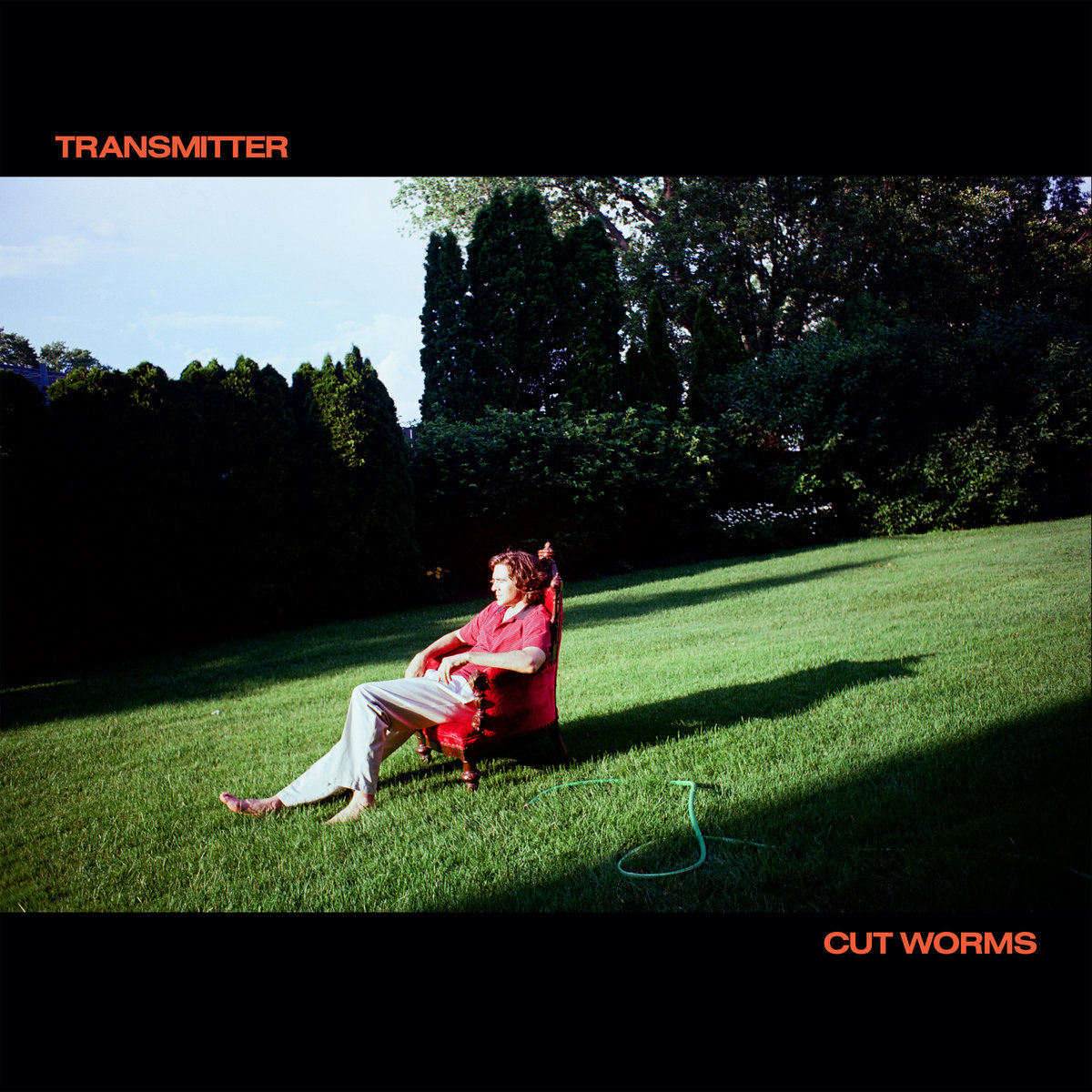
Cut Worms, the project of Max Clarke, announces his fourth full-length record, “Transmitter“, due for release in Marchvia Jagjaguwar. Produced by Jeff Tweedy at Wilco’s Loft studio, “Transmitter” marks a deepening of Clarke’s abilities and the convergence of two artists whose work searches for grace amid dislocation. Together, they conjure the ecstatic spirits of power pop and alt rock, expanding Cut Worms’ vintage palette while reaffirming his gift for timeless songwriting. These are songs shaped by the myth of self-reliance, where people sold the idea of connection through technology have been reduced to quiet transmitters—data points bought and sold, manipulated and measured, their lives distorted through the very networks meant to unite them.
Clarke says of the album, “The stories in these songs are equal parts innocence and experience—dealing with the ecstatic moments of being freshly enamored with the world as well as the isolation and seclusion that can come after. On view are the unseen inner sanctums of quiet daily life—the private worlds that people inhabit, where they don’t or can’t let anyone else in. It is not a uniquely American phenomenon, but it does seem prevalent here, rooted in the mythos of rugged individualism and the idea that each person must be strong enough to make it on their own or die.”
Today also sees the release of the finely-crafted “Windows on the World,” featuring Tweedy on electric guitars and bass and Glenn Kotche on percussion. The song wrestles with American disillusionment, its melancholy drifting somewhere between Elliott Smith and Miracle Legion, and arrives alongside a video shot on the streets of New York and directed by Caroline Gohlke.
Cut Worms will be embarking on a U.S. tour this spring
Courtney Marie Andrews’ has a new album “Valentine” is out next month, and she’s given us another preview with “Little Picture of a Butterfly.” “After being stood up, this song fell out of me in a fit of heartbreak,” she says. “Musically, I wanted the beginning of the song to sound like the whimsical, dreamy, and helplessly meek feeling of limerence, and feeling like you need a response in order to be kicked into action. Once it’s stated that limerence can create illusions of fantasy or ‘make believe,’ we’re kicked into action, kicked into waking up, kicked into our power. The band kicks in, and I’m empowered.”
“Cons And Clowns’ is an ode to all the artists, outsiders, and shy loved ones you want to see shine!,” says Andrews. “In this world of growing sameness I wanted to write a love letter of encouragement to anyone who was afraid to be their wildest and weirdest self, especially amid the dark landscape of now. With a desire to embody the unencumbered playfulness of youth, I played the flute on this track, an instrument I haven’t played since my childhood.”
Andrews is joined by drummer Grizzly Bear‘s Chris Bear, with producer Jerry Benhardt adding bass, high strung guitar, piano, juno, farfisa and mellotron.
In the three years since “Loose Future“, Andrews also published her second collection of poetry –Love Is a Dog That Bites When It’s Scared,via Simon & Schuster – and has exhibited her artwork in US galleries.
“Cons And Clowns” coincides with a run of UK and EU shows for Andrews: distributed by Thirty Tigers Released on: 2025-09-17
Manchester Orchestra an American indie rock band from Atlanta, Georgia, that formed in 2004. The group’s current line-up is composed of lead singer, songwriter and rhythm guitarist Andy Hull, lead guitarist Robert McDowell, bassist Andy Prince and drummer Tim Very.
Hull is the band’s only original member, having overseen every iteration of the band to date.
Releasing “Cope”, Manchester Orchestra stated it was an “unapologetically heavy rock record”. Ten years later, the legacy holds up as the band’s loudest, fastest, and most pounding album of their career. To celebrate the 10th Anniversary of this seminal album “Cope”, Manchester Orchestra took the stage at Atlanta’s tiny but beloved rock venue The Earl to perform a blistering set, performing the record from start to finish. Immortalized on this special 10th anniversary tribute.
The former Sonic Youth alt-rock icon has become a genuine It-woman of contemporary art-pop cool with her exhilarating solo work. It’s unbelievable that it’s now 10 years since her first solo single “Murdered Out”, when she began her work with producer Justin Raisen, but not such a surprise that her peerless noise-core post-modern deconstructions of contemporary life have struck a chord in disjointed times. After her single “BYE BYE” went viral a couple of years ago and bagged a couple of Grammy nominations, there is much excitement around forthcoming album “Play Me”. With good reason: early listens confirm a cacophony of sound and critique that only she can pull off. The Madonna of the Underground will be speaking again.
Kim Gordon’s vision of art and noise has come sharper into focus just as readily as it has changed—a paradigm of possibility that, four decades on, still feels like a dare. The adventure continues on the artist’s third solo album, “Play Me“, released by Matador Records.
“Play Me” is distilled and immediate, expanding Gordon’s sonic palette to include more melodic beats and the motorik drive of krautrock. “We wanted the songs to be short,” Gordon says of her continued collaboration with LA producer Justin Raisen (Charli XCX, Sky Ferreira, Yves Tumor). “We wanted to do it really fast. It’s more focused, and maybe more confident. I always kind of work off of rhythms, and I knew I wanted it to be even more beat-oriented than the last one. Justin really gets my voice and my lyrics and he understands how I work—that came forth even more on this record.”
In 2019, Gordon’s debut solo LP “No Home Record” proved she was attuned as ever to vanguard sounds, mixing avant-rap and footwork into her sonic conceptual art. The Collective, in 2024, was brick-heavy and even more daring, led by the tectonic industrial clatter of her packing-list-cum-rage-rap banger ‘BYE BYE’ and earning two Grammy nominations.
The fast-following “Play Me” processes, in Gordon’s inimitable way, the collateral damage of the billionaire class: the demolition of democracy, technocratic end-times fascism, the A.I.-fueled chill-vibes flattening of culture – where dark humour voices the absurdity of modern life. But despite its frequent outward gaze, “Play Me” is an interior record, one in which a heightened emotionality pulses through physical jams, rejecting definitive statements in favour of an inquisitiveness that keeps Gordon searching, ever in process.
Taken from the album “Play Me”, out March 13th on Matador Records
Iconic singer/songwriter Joe Jackson will release a new studio album titled “Hope and Fury” on April 10th, 2026. The 22nd studio album from Jackson in his famed career, the record features lyrics like this, suggesting he’s pretty fired up these days:
“Hello cruel world / I’m not going away / So I might as well have my say.”
Featuring nine new songs, this album showcases Jackson’s ability to stay true to his vision — and challenge himself in the studio, even this far into his career. A news release quotes Jackson’s recent statement given in rare interview to the U.K.’s Chap magazine: “I always knew I was in this music thing for life. So every now and again I’m going to do something different, to keep it interesting.”
As for some album context, here are details from the news release: After laying the groundwork for the album in Michael Tibes’ Fuzz Songs Full of Contrast, Humour and Heart Factory studio in Berlin, Jackson returned to New York’s Reservoir Studios with co-producer Patrick Dillett and assembled his on-and-off band since 2016 — “bassist for life” Graham Maby, guitarist Teddy Kumpel, and drummer Doug Yowell — augmented by the Latin percussion of Peruvian native Paulo Stagnaro. The result might strike a fan as a cross between 2019’s “Fool”, 1991’s “Laughter and Lust”, and 1982’s “Night and Day”.
Grammy-winning artist Joe Jackson announces his own return right in the lyrics of one of his new songs: ‘Hello cruel world/I’m not going away/So I might as well have my say’. Often labeled a musical chameleon, Jackson insists that most of his work belongs to his own ‘mainstream’ – sophisticated pop songs with ever-shifting rhythms and textures. The 2026 album features nine new songs in total – ranging from biting, witty pop to moving ballads. Living between New York and Portsmouth, Jackson calls himself ‘bicoastal’ – geographically and musically.
He describes ‘Hope and Fury’ as bicoastal latinjazzfunkrock’.
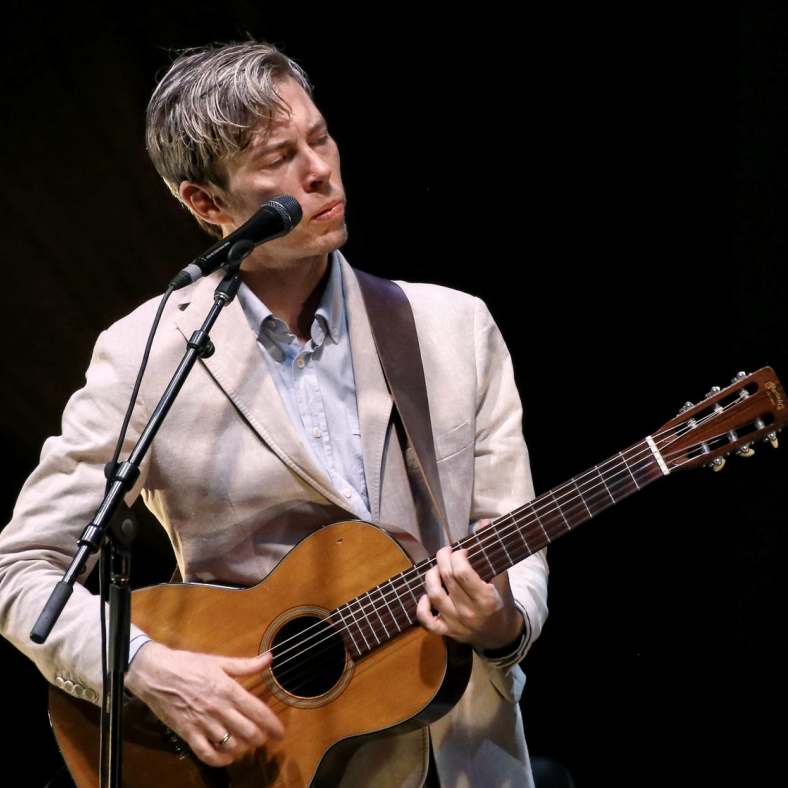
Bill Callahan’s new album “My Days Of 58” promises live-feel dynamics and sharp observation. “People have told me it’s a very direct album. I wanted something that was crystal clear like a stream,” he says. “What’s considered psychedelic music is usually cloudy and furry and gooey. I was thinking of the clarity aspect of psychedelic. I’d been listening to a couple of bluegrass records a lot. That’s cold stream clarity music to me. Not the hallucination but the reality.”
“My Days of 58” is the eighth Bill Callahan album, his first since 2022. The twelve tunes here open uncanny depths of expression as Bill continues to blaze one of the most original songwriting-and-performance trails out there. With “My Days of 58”, he applies the living, breathing energies of his live shows to the studio process, sharpening his slice-of-life portraiture to cut deeper than ever before.
The core musicians featured on “My Days of 58” is the group that toured for 2022’s “Reality” guitarist Matt Kinsey, saxophonist Dustin Laurenzi and drummer Jim White, whose synergy was evident in 2024’s live Resuscitate!. This showed Bill, as he puts it, “that they could handle anything I threw at them,” adding:
“Improv/unpredictability/the unknown is the thing that keeps me motivated to keep making music. It’s all about listening to yourself and others. A lot of the best parts of a recording are the mistakes — making them into strengths, using them as springboards into something human.”
With this in mind, Bill prepared the songs with each player separately. Taking a note from songwriter, fan and friend Jerry DeCicca, he recorded the basic tracks for all but one song in a duo with Jim White. Meanwhile, he rehearsed with Matt, guitar to guitar, while asking Dustin to make horn charts for a few songs. Bill: “I usually just sing a melody to a horn player or let them try a few takes and go from there. This time I thought, why not get some of the record charted out. There’s always room for spontaneity on top of that. And we did indeed throw some off the cuff stuff on top of the charted horns in a couple cases where they weren’t fully doing what I wanted.
With this record I kept thinking of it as a ‘living room record.’ I’m not talking about fidelity at all here. Living room attitude. Living room vibe. Not too loud, not otherworldly. I asked for the horns to be relaxed like someone on the couch playing, not a blast from heaven or hell.”
For more spontaneity and human colour, Bill called up several other players: Richard Bowden on fiddle, whom he’d seen playing with Terry Allen and loved; pianist Pat Thrasher; bassist Chris Vreeland; and trombonist Mike St. Clair. About pedal steel player Bill McCullough, who he knew from Knife in the Water, Bill says this:
“He has a real abstract approach to an abstract instrument — he’s a photographer (shot the front and back cover) and sees the steel in the same way as apertures and f-stops — foreground and mid ground and background — blurry and sharp. That’s how I’ve always seen the steel so it’s exciting to share that.
But hobo stew is always the idea— throwing together who I have at hand instead of following a recipe. I’m always learning. I know very little after all these years. I go by gut mostly, but sometimes forget all the possible considerations to consider. The goal of every record at the recording part of the process is to get thrown out of Eden. Every session starts in Eden but you have to get out of there at some point.”
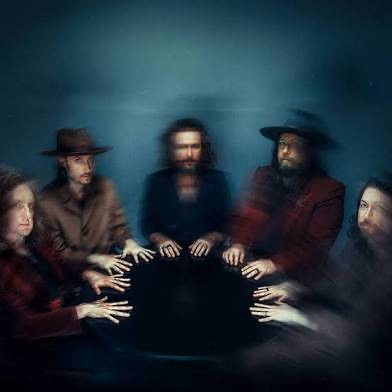
For more than 25 years, My Morning Jacket have achieved an incredibly rare feat in rock and roll, upholding a long-established cultural legacy while sustaining the curiosity and creative hunger of their earliest days. For their 10th studio album the band teamed up with Grammy Award-winning producer Brendan O’Brien (Springsteen, Pearl Jam) for what may be their most masterfully realized work yet, once again expanding the limits of their sound while elevating their artistry to unprecedented heights.
My Morning Jacket have occasionally been tagged a jam band, albeit one that exists on the less slapstick-y end of the jam spectrum. But they’ve also often been at their best when compacting their rangily spiritualist 21st century Southern rock into digestible studio servings. That is definitely the case with their tenth album, “Is”, which signifies its inentions with a title that’s at once philosophical and down-to-earth.
The usually self-produced band changed things up by bringing a big-name outside producer – mega-reliable rock record-maker Brendan O’Brien,MMJ’s previous LP, a self-titled record from 2021, had three songs that went on past the seven-minute mark. This one doesn’t have any over five. “Out In the Open” kicks things off with what sounds like a marriage proposal by the sea: “Well, I’m walking on the ocean/Praying in the sand/Pledging my devotion/Won’t you take my hand?” Jim James sings over a hypnotic acoustic guitar figure that will eventually spread out into a dance-y, freewheeling rock track with a swirling groove any prospective body-mover can get down to without unsettling their IPA. “Half a Lifetime” is classic-rock dream-pop. “Everyday Magic” lofts lyrics about finding the good amidst life’s daily blur over a taut, amiably swaggering Stones riff. “Squid Ink” merges industrial pulse and blues crunch to sound a little like the Black Crowes if they’d ever made a record with Trent Reznor behind the boards. With a trippy groove and sweeping solo, “Die for It” feels like it wants to drift toward the sunset for about ten minutes, but instead ends up saying its expansive piece in the space of an old-fashioned radio hit.
If some of this stuff might feel a little bit polished and hemmed-in for longtime Jacket fans, they can be reassured by thinking of how easily these tunes could become launch pads for capacious jams on the road. But the economy and texture here is refreshing. Restraint helps bring out the soul in the album’s softer songs, too. James gets his Roy Orbison on for the ballad “I Can Hear Your Love,” and does some coffee-shop theorizing on the folk-y “Beginning From the Ending,” musing, “Maybe there’s no tomorrow?/But love still lives on/In our hearts and the earth and the sun.”
One of the niftiest moments here cleverly balances studio craft, deep thoughts, and live power. “Time Waited” begins with a sample of the lovely jazz piano intro to “Blue Jade,” an early Seventies tune by steel guitar titan Buddy Emmons, then lifts into a burly, meditative mid-tempo rocker about finding the right mix between taking your time and getting the most out of it, an age-old paradox James renders with an earnest, believable sense of discovery. It’s a nice reminder that – like classic-rock itself – some hand-me-down notions are still worth keeping around, especially when they’re rendered in sweet new forms like these.
My Morning Jacket are back, and their new album is their first studio LP in nearly four years.
Jim James and the Lexington, Kentucky five-piece’s 10th studio album finds the band teaming with producer Brendan O’Brien for the 10-song LP, their first time working with an outside producer in nearly a decade.
Ahead of the LP’s March 21st release, My Morning Jacket have shared the first time “Time Waited,” a love song featuring a sample from pedal steel giant Buddy Emmons’ “Blue Jade” off the long-out-of-print classic Emmons Guitar Inc.
“I made a loop of that piano intro and listened as I went for a walk, and all these melodies started coming to me,” James said in a statement. “For a long time, I didn’t have lyrics, but then I had a dream where I was in a café and a song was playing, and the lyrics to that song became the lyrics to ‘Time Waited’ – the melodies just fit perfectly. And the lyrics are about how flexible time is, how we can bend and warp time, especially if we are following our hearts, the universe and time itself can flow to work with us.”
“Is” was mostly recorded at Los Angeles’ Henson Recording Studios, with the band atypically deciding to work with O’Brien as opposed to self-producing the LP. “Up until now I’ve never been able to let go and allow someone else to steer the ship,” James says. “It almost felt like an out-of-body experience to step back and give control over to someone who’s far more accomplished and made so many more records than us, but in the end I was able to enjoy the process maybe more than I ever have before.”
As for the simple album title, James added, “I like how the word is indicates a sense of presence in the now – there’s no logic or rationale behind this record; it just is,” says James. “All these songs came into existence out of an attempt to connect with something beyond the human experiment, which for me is one of the most beautiful things about music – that connection with something larger than us, yet something we are all equally a part of.”
Sometimes a change can do you good, and handing over the production keys to Brendan O’Brien (AC/DC, Pearl Jam, Springsteen) proved to be a change that allowed MMJ to deliver their most cohesive (and concise) album so far. Running the gamut from expansive, hypnotic opener “Out In The Open” to the squelchy riffery of “Squid Ink”, the Beatle-y country funk of “Everyday Magic” via the beautiful piano-led “Time Waited”,Is exudes a focused confidence that makes MMJ’s tenth time a charm.
“Is”, My Morning Jacket’s first non-seasonal LP since their 2021 self-titled album, is available via ATO March 21st release.
“is” Track List
Out In The Open Half A Lifetime Everyday Magic I Can Hear Your Love Time Waited Beginning From The Ending Lemme Know Squid Ink Die For It River Road
The Black Crowes have revealed that their new studio album, “A Pound of Feathers”, will be released on March 13th, 2026, via Silver Arrow Records. As promised in a press release, the new album promises to “push their iconic blend of blues, soul and rock into electrifying new terrain.“ Commenting on the new project, lead singer and frontman Chris Robinson revealed that they made the entire album in eight to ten days.
Robinson went on, “Bringing the high and inspiration from “Happiness Bastards” into this album, it was a natural progression. We experimented more, we wrote on instinct, and how we were feeling in the moment. Rich brought a spontaneity to the record that I can’t describe, but it’s the best shit he’s ever done.”
Rick Robinson agreed, stating that the album feels “transformative” for the pair, adding, “Going back to our roots, we felt that spark in the studio and how we work together. Lighting a fire that hits harder, more jagged but is still true to our musical essence.”
Their last album, “Happiness Bastards“, was released in 2024. Subsequently, it was nominated ‘Best Rock Album’ at the 2025 Grammy Awards. However, The Rolling Stones ended up taking home the award for their project, “Hackney Diamonds”.
With ‘Profane Prophecy’, the band opens with fun, funky lyricism: “My pedigree and debauchery is my claim to fame / the profane prophecy has got me in its sweet embrace.
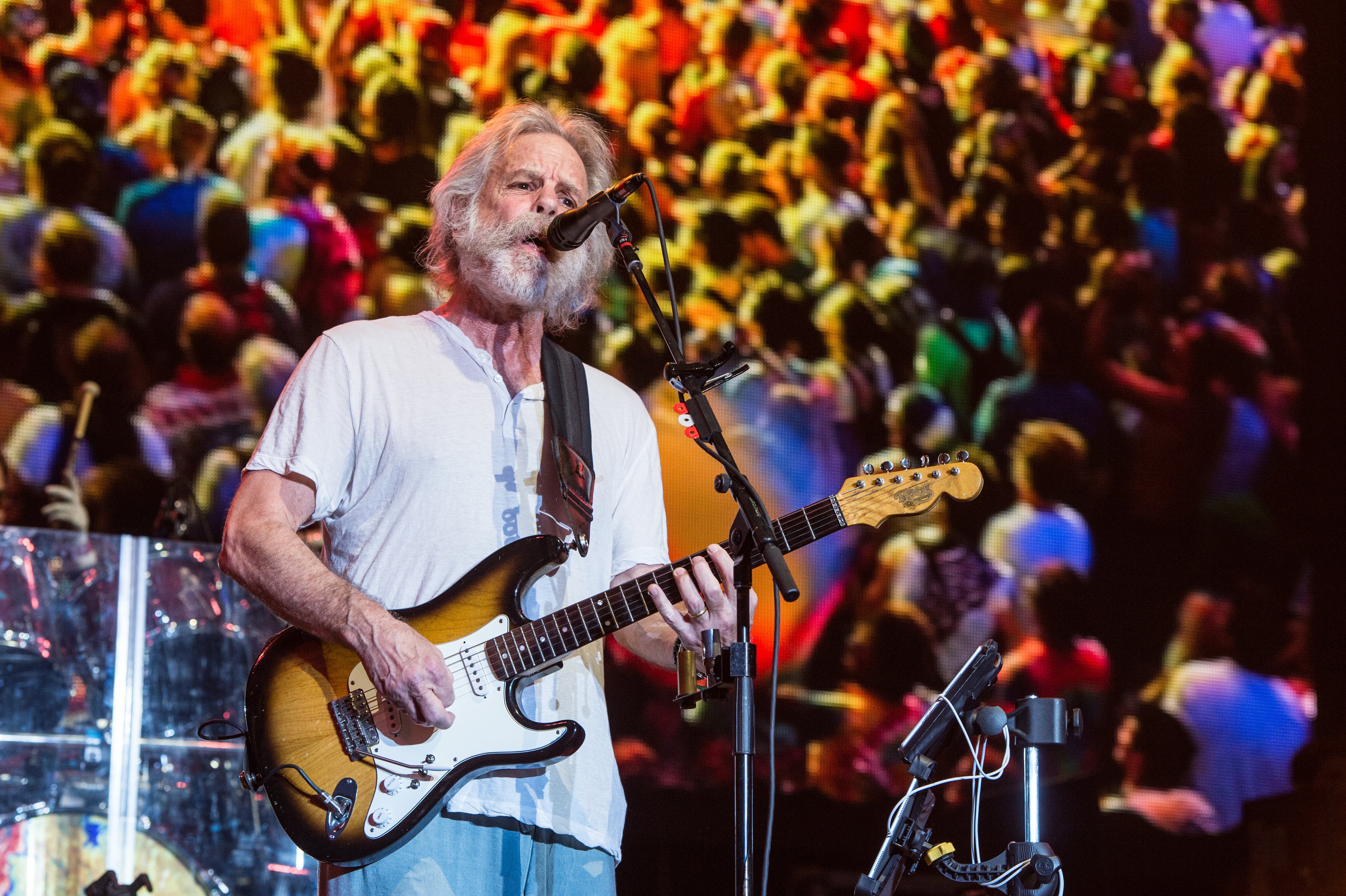
Bob Weir, guitarist, vocalist, and co-founder of the Grateful Dead, has passed away at age 78. “It is with profound sadness that we share the passing of Bobby Weir,” the post said. “He transitioned peacefully, surrounded by loved ones, after courageously beating cancer as only Bobby could. Unfortunately, he succumbed to underlying lung issues.” The family said his “final months reflected the same spirit that defined his life. Diagnosed in July, he began treatment only weeks before returning to his hometown stage for a three-night celebration of 60 years of music at Golden Gate Park. Those performances, emotional, soulful, and full of light, were not farewells, but gifts. Another act of resilience.”
Born on the Bay in October 1947, Weir began playing guitar at age 13 after failing to figure out the piano and trumpet. His dyslexia got him kicked out of every school he attended, until he wound up at Fountain Valley in Colorado, where he’d meet future Grateful Dead lyricist John Perry Barlow. When Weir was 16, he and a buddy caught a whiff of banjo music in a Palo Alto back alley on New Year’s Eve. They followed the trail all the way to Dana Morgan’s Music Store, where a 21-year-old music teacher named Jerry Garcia was picking. He and Weir spent the night jamming together and struck up a group together, which Weir likened to the Beatles if they were a jug band. “What we saw them doing was impossibly attractive,” he said. “I couldn’t think of anything else more worth doing.
They called themselves Mother McCree’s Uptown Jug Champions and then, later, the Warlocks. Eventually they sorted the name out: the Grateful Dead.
Weir played rhythm guitar and sang lead on many Dead tunes. He ran point on a few of my favorites, like “Playing in the Band,” “Estimated Prophet,” and “Sugar Magnolia,” one of the best songs in the English language. Weir’s guitar playing wasn’t strong at first, but by the time drummer Mickey Hart left the band temporarily in 1971, he was one of the best around.
His voicings were clearer than ever. “I found myself astonished, delighted, and excited beyond measure at what Bobby was doing,” bassist Phil Lesh, who later called Weir’s style “quirky, whimsical, and goofy,” commented. He would tinker with slide guitar in the ‘70s, picking up ideas from hard bop pianist McCoyTyner and gospel players like Rev. Gary Davis. Weir was also a catalyst in a couple other bands, including Kingfish, RatDog, Scraping the Children, Further, Bobby and the Midnites, the Bob Weir Band, and, most notably (alongside Mickey Hart, Bill Kreutzmann, and John Mayer), Dead & Company. Weir made his solo record, “Ace”, in 1972, and his last solo record, “Blue Mountain“, in 2016.
Weir’s passing marks the third Dead member to die since 2024, joining the late Phil Lesh and Donna Jean Godchaux-MacKay across the bridge.
When I produce a Tiny Desk Concert, one of my most important jobs is to make sure they run on time and that the performance sticks to our set time limit (roughly 15-minutes). So when Bob Weir and Wolf Bros achieved lift-off during a pre-show sound-check, it was my unthinkable responsibility to tell the guy who practically invented the jam band to… stop jamming. Weir is a founding member of Grateful Dead, a band that launched countless jams from 1965 until the death of lead guitarist Jerry Garcia in 1995. And it also fell to me to keep looking at my watch during the performance, even as I realized that my favourite “Dark Star” jams alone lasted well beyond our fifteen-minute performance window. But the magic space behind the Desk has a way of bringing sharp focus to the task at hand, leading to exquisite performances that go well beyond the pale. Such was the case in this gig by Bobby and his Wolf Bros, Jay Lane (drums) and Don Was (bass), as they played a set that was rich in Grateful Dead lore and that will likely create new memories for the Deadheads who were in the room and beyond. “Only a River,” from Weir’s 2016 solo album “Blue Mountain”, feels like a memorial to Jerry Garcia, with a reference to the Shenandoah River, a body of water Garcia famously made reference to on the song, “A Shenandoah Lullaby.” Weir turns the chorus into a mantra and seems to evoke the spirit of his fallen bandmate. And what would a Grateful Dead-related performance be without a Bob Dylan song? The intimacy of the Tiny Desk turns Weir into a sage Master Storyteller during a version of “When I Paint My Masterpiece” with its reference to Botticelli and a lonely Roman hotel room. With the addition of special guest, Mikaela Davis on harp, the final stretch of two Hunter-Garcia tunes takes on legendary status. When Weir switches to electric guitar midway during “Bird Song,” I looked at my watch because I knew we were in for some time travel. And the band didn’t disappoint as the rhythmic interplay between Weir and Davis showed off his singular rhythm guitar style, honed from more than thirty years of playing alongside one the most idiosyncratic lead guitarists in modern music. And I ain’t gonna lie: I teared up at the end of “Ripple,” Grateful Dead’s fifty-year-old sing-along from their album “American Beauty“. And it wasn’t because of the treat of being just five feet from the action, but because of the song’s celebration of hope and optimism, found in the spirit of all of the band’s music. Bob Weir continues to evoke that spirit every time he picks up a guitar; and as we all sang along at the end, we evoked that spirit too: “Let there be songs, to fill the air.” Indeed.
SET LIST “Only a River”‘ “When I Paint My Masterpiece” “Bird Song” “Ripple” MUSICIANS Bob Weir: vocals, guitar; Don Was: upright bass; Jay Lane: drums, vocals; Mikaela Davis: harp, vocals
For Mandy, Indiana, the truth is the only way through. On their Sacred Bones debut “URGH“, the four-piece – vocalist Valentine Caulfield, guitarist and producer Scott Fair, synth player Simon Catling, and drummer Alex Macdougall – are a force of uncanny nature, grafting together a record that is as much a call to action as a parlay into oblivion and transcendence. Across the ten tracks, the band interpolate their own unconventional language into a mantra for self-determination and resilience, forging a template for a brighter future before it fades to black.
“Cursive” begins with a wait, as this steady, hypnotic pulse percusses like the foreword to a beat drop. Then: a pause. Alex Macdougall’s hand drumming clatters into Valentine Caulfield, who uses the French language as an instrument of static. The song’s itchy rhythms bleed into Simon Catling’s synthesizers, which grow abrasive, violent like knives breaking through muscle. Short breaths hang onto the melody until Scott Fair’s guitar blasts skronk and suffer like screams beneath a cauterized wound. “I dance while waiting for the world to disappear, and my dreams refuse to be held on a leash,” Caulfield rattles. Her bandmates respond by turning her sideways. Mandy, Indiana traffic in the unease of bang. “Cursive” is ecstatic art cloaked in disharmonic madness and textural heresy.
Four diabolical Mancs arrive speaking in tongues and then cut them all out.
This is dance music that splinters and squirms and suffocates. the upcoming album “URGH” out on February 06th, 2026 on Sacred Bones Records.






 The Fat Angel Sings