Third Man Records is thrilled to welcome psychedelic rock mainstays The Flaming Lips to the label, and to announce their new album, “The Teardrop Throbs”. Out January 22nd, it is available to pre-order now on black vinyl, limited edition blue vinyl and CD. The first single “God Will Control The Werewolves” is available to stream everywhere.
Six years after their last studio album, “Teardrop” finds the group issuing a stark reminder to the public of what made them mandatory listening for the better part of the last half century: lush arrangements coupled with exquisite production and songwriting that’s been distilled over time and has achieved fully optimized power.
The Flaming Lips will introduce fans to the world of “The Teardrop Throbs” with a series of intimate performances across the United States and in the United Kingdom.
Wayne Coyne was sitting in a Trader Joe’s parking lot, looking in the rearview mirror at his 3-year-old son, Rex, asleep in the back seat, when a sign caught his eye. Or, more accurately, when he misread it. What appeared to say “Children’s Death Foundation” actually read “Children’s Health Foundation.” But the Flaming Lips frontman’s imagination had already taken him somewhere darker, conjuring memories of his mother comforting families who had lost a child and confronting the terrifying possibility of losing one himself.
“I think all parents probably have these type of thoughts a hundred times every day,” Coyne writes in a sprawling account of the making of the Flaming Lips’ new album, The Teardrop Throbs. “It occurred to me there will never be anything in my life as important as my two little boys.”
That realization helped set the emotional coordinates for the Oklahoma psych-rock institution’s first new album in six years, due Jan. 22 via Jack White’s Third Man Records. Produced with longtime collaborator Dave Fridmann, the band’s label debut arrives with new single “God Will Control the Werewolves” and will be supported by two-night runs in intimate venues in Nashville, New York, Los Angeles, Chicago and London.
The opening track, “Throb,” grew from Coyne’s fascination with The Night of the Hunter, specifically the “Pretty Fly” song sung by children escaping an evil preacher. He tasked new slide guitarist Adam Judd Slaughter with recreating it note for note, but Slaughter’s extended introduction and outro took the music somewhere unexpected. Guitars and drum machines followed; a longer piece about a dreary hospital emerged, with Coyne changing the original lyrics. Only a fragment survived.
Coyne says “God Will Control the Werewolves,” began with a bedtime-adjacent question. While playing hide-and-seek under a full moon with his sons, Bloom and Rex, Coyne was asked whether werewolves might get them. His reassurance became the song’s central conceit. Musically, he imagined “kind of Pink Floyd Dark Side of the Moon BUT Syd Barrett is still in the band.”
Elsewhere, “You’ve Got Brain Damage” emerged from Coyne’s reflections on the impact caused by drugs and alcohol, while “Instructions on How to Draw an Eyeball or How to Deal With a Loved One Who Is Addicted to Drugs” grew from a simple mantra: “I don’t know why but I just keep on trying again and again.” “Every Teardrop Cried” also began as a single line written during the same parking lot episode that sparked the album’s opening track.
Coyne is careful not to dictate how listeners should interpret the results. “I don’t really believe any song has a fixed meaning,” he writes, “and I don’t WANT my songs to have a fixed meaning.” Instead, he hopes the music will affect listeners’ moods and feelings on its own terms. The Teardrop Throbs will be released on the heels of a 20th anniversary reissue of the Lips’ At War With the Mystics, which is out Nov. 13 from Rhino/Warner.
As for the upcoming live shows, the Lips will on the first night perform The Teardrop Throbs alongside “songs from the 20th century,” which appears to mean material released from 1986-1999, including some never played live. The second night will offer Teardrop Throbs material played “in a new way,” plus songs from 2002-2020.
Goose is an American rock band celebrated for its genre-defying sound, adventurous live performances, and fiercely loyal fan community. Comprised of Rick Mitarotonda (vocals, guitar), Peter Anspach (vocals, keys, guitar), Trevor Weekz (bass), and Cotter Ellis (drums), the band has grown from playing Connecticut basements to headlining some of the most iconic stages in the country. Blending infectious songwriting with fearless improvisation, Goose has built its audience organically through relentless touring, a DIY spirit, and a direct connection with fans via platforms like YouTube, Bandcamp, and nugs.net. Goose blends indie groove sensibilities with jam-band improvisation, fusing rock, funk, jazz, and electronic textures into expansive live experiences. Their performances often feature extended improvisational jams and spontaneous exploration, bridging tradition and freshness, with a growing presence in modern jam culture.
Big Modern
The band recently released its sixth studio album, “Big Modern”, marking its third full-length studio LP in just over a year. Together with “Everything Must Go” and “Chain Yer Dragon“, the album completes a prolific creative run that traces both the band’s musical growth and personal evolution. Unlike its two predecessors, which drew from songs written across different eras of Goose’s career, “Big Modern” is rooted entirely in the moment.
A dispatch from interesting times, “Big Modern” captures the strange duality of modern life, simultaneously familiar and surreal. It is an ode to the overwhelming, high-definition experience of now: a world of constant connection, endless information, and reality streaming directly into our minds in real time.
“Big Modern” Is a project born out of Goose’s newfound creative and collaborative freedom. The record opens up a new, future-facing era for the band, introducing 15 tracks that highlight the musical evolution of the four-piece, built on the back of their improvisational prowess. The album beckons listeners with high-energy pop grooves and searing guitar riffs. These highs are punctuated by their musical counterparts. “Big Modern” genre-bending orchestration moves between haunting, driving distortion and gorgeous choral harmonies.
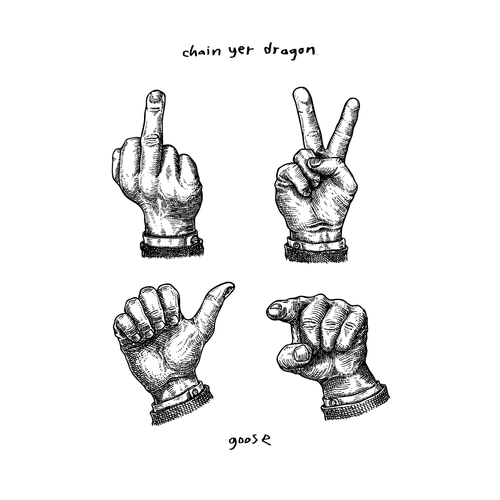
Chain Yer Dragon
Goose released their fifth studio album “Chain Yer Dragon”, The new LP is the band’s second full-length release of the year following April’s “Everything Must Go”.
According to press notes, “Chain Yer Dragon” serves as a “connective tissue between some of the group’s earliest, much-beloved songwriting and its current evolution as a four-piece.” The record largely features songs Goose have performed over the years, including “Echoes of a Rose,” “Empress of Organos,” and “Rockdale,” as well as new tracks “Madalena” and “Royal.”
“There’s a world-building component that feels like the driving force of this record,” shared vocalist Rick Mitarotonda. “Many of these character-driven songs come from a time and place where we were finding our voice musically, and it’s been so gratifying to not only revisit it through the lens of who and where we are now, but to expand on it. These songs have been on a journey, and it feels right for them to finally have a home now.”
“Chain Yer Dragon” is certainly its own world,” added guitarist Peter Anspach. “One that has existed for a while, but has grown along the way. I think “Everything Must Go” was in many ways a broader statement album for the band after three wild years. It kind of symbolized that roller coaster, with many different themes and moments that were born in that pressure cooker.”
Speaking of the lead track, Mitarotanda continued, “‘Madalena’ expanded on the world of “Chain Yer Dragon” in a beautiful way to us, offering a side to the album’s story that wasn’t quite present before. It felt fresh and exciting, and yet in a strange way like it’s been there from the beginning. “Where Everything Must Go” was their most polished studio release to date, “Chain Yer Dragon” feels raw and alive. Long-form jams tracked in real time and then shaped in the studio, it’s as close as you’ll get to hearing Goose live without leaving your couch. The album opens with “Hot Love and the Lazy Poet,” a jaunty tale of a drunken poet chasing love. It’s a perfect opener:
“Madalena” follows as the album’s emotional centerpiece, a ballad weaving dream and reality into a story of longing. That thread continues in “Royal,” where themes of ambition and the harsh realities of the music business strike close to home. “Turbulence & the Night Rays” then expands the scope from one musician to a whole band navigating life on the road, its closing jam evoking shades of Phish’s “Divided Sky.”
“Echo of a Rose” drifts in next. Dreamy, groovy, and offering a hand to guide us forward. Is this mysterious figure Madalena herself? The question lingers as “Mr. Action” arrives, upbeat in sound but lyrically full of deception and doubt. Trevor Weekz’s bouncing bass drives this track, laying the foundation for soaring guitar work and some of RickMitarotonda’s most direct lyricism.
“…..” leads into “Dr. Darkness,” a stark exploration of manipulation and inner demons, before the playful and bouncy “Empress of Organos” offers resilience through love and music, fuelled by improvisation. “Jed Stone” shifts the mood, reflecting on aging and mortality, while the fan-favourite jam vehicle “Rockdale” captures Goose at their most interpretive.
The album closes with “Factory Fiction,” a 17-minute opus that’s long been a cornerstone of Goose lore.
“Everything Must Go” and “Chain Yer Dragon” helped propel Goose to No. 2 on Billboard’s Top New Artist Albums chart. Singles “Give It Time” and “Your Direction” charted simultaneously at AAA radio, making Goose the only band to achieve that distinction during the campaign. “Everything Must Go” was met with widespread critical acclaim, earning features in The New York Times, Vulture, GQ, Billboard, SPIN, and more. Rolling Stone praised the band’s ability to balance studio craftsmanship with the spontaneity and energy that define its live shows.
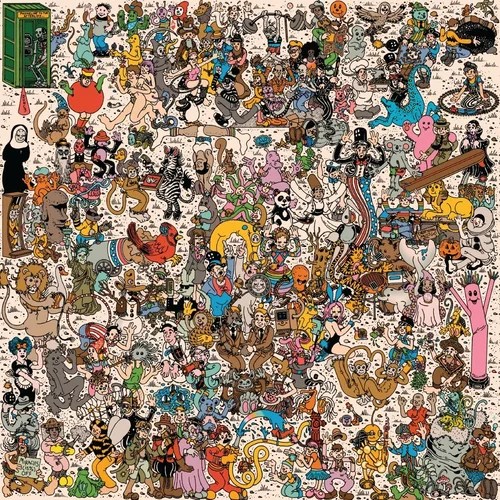
Everything Must Go
its fourth full-length studio release, “Everything Must Go”, released via No Coincidence Records . The band also shared the album’s lead single, “Give it Time”, Produced by previous collaborator D. James Goodwin, Goose’s first new album since 2022’s “Dripfield” underscores the band’s continuing evolution, marking the group’s first studio effort recorded with drummer Cotter Ellis.
“These songs all come from different times and places in a way that captures a part of the journey of the band,” said guitarist Rick Mitarotonda. “It moves through time for us, but not in a tidy, linear way. Like the band, it’s okay for things to feel more like a landscape sometimes and less like a singular cohesive statement. It mixes different moods and ideas and characters.
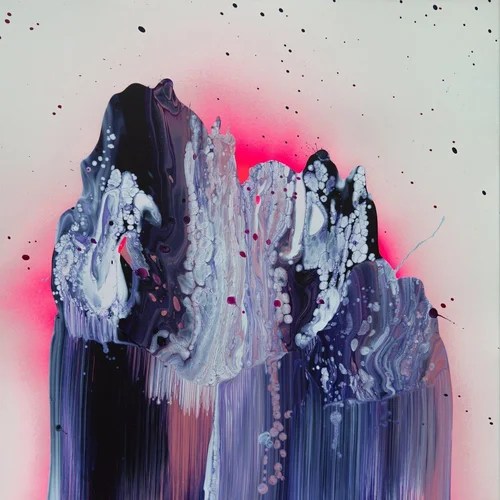
Dripfield
“Dripfield” is a consistently engaging pop-psychedelic record, like a trippier Father Of The Bride. While it is technically Goose’s third studio LP, it feels like a proper debut, far outstripping its predecessors in terms of quality and ambition. Some tracks slip into funky instrumental tangents, but the focus is on concise and punchy songwriting deriving mainly from Mitarotonda, with Anspach pitching in a George Harrison-sized allotment of tunes.
Given Goose’s surging drawing power as a live act, which already seems greater than even many established indie stars — on this year’s Bonnaroo poster they’re billed higher than Bleachers and Japanese Breakfast — “Dripfield” would seem to warrant coverage as a potential breakout album. But while the record’s announcement last month did garner notices from Rolling Stone and Stereogum, it still seemed muted compared with the attention that much less popular.
Shenanigans Nite Club
The (now) quintet began to experience their truly meteoric ascent. Since then, the group has done an exceptional job taking advantage of their newfound musical opportunities, including being handpicked by Vampire Weekend’s Ezra Koenig to appear on their “40:42” EP, as well as a series of critically-acclaimed virtual performances and subsequent feature-film, dubbed the Bingo Tour, during the 2020 pandemic.
That well-deserved momentum shows absolutely no signs of slowing down with the release of their second full-length studio effort, “Shenanigans Nite Club”.Shenanigans, represents a watershed moment in the band’s history, featuring a strong & cohesive collection of material that showcases the group’s formidable songwriting & improv skills and adventurous musical inclinations. The track-list, which consists of nine songs clocking in at just over an hour, is comprised of a healthy mix of some of Goose’s oldest numbers along with a handful of brand-new tracks that have yet to be performed live.
Starting things off is the disco-infused “So Ready”, which, in addition to being a fixture of Goose’s setlists since its 2015 debut, features some bubbling bass-lines from Trevor Weeks before smoothly segueing into the driving instrumental “Satellite” that acts as a de facto musical coda to the album’s opening track.
Up next is “Madhuvan”, one of Goose’s oldest songs (it was debuted in 2014), which namechecks an ancient holy forest & its associated deities, and features an extended outro jam that highlights the musical dynamic between Anspach’s subtle piano work and Rick Mitarotonda’s searing guitar riffs. “Same Old Shenanigans”, an ode to a now-defunct Connecticut night club (and inspiration for the album title), counts as the album’s lone forgettable track, despite the impressive rhythmic output of Ben Atkind (drums) and newest member, Jeff Arevalo (percussion), who formally joined the band in 2020.
“S.O.S.” is followed by the album’s first new song, “Dawn”, which starts off with some tasteful vocal trickery and leads to a climactic solo from Mitarotonda rife with his trademark tension & release fuelled peaks. The latter half of the track showcases the group’s keen ability to dramatically shift gears from a musical perspective mid-composition as the song seamlessly flows from its jubilant guitar interlude into a gentle & atmospheric finale without missing a beat.
“Flowdown” represents some of the oldest material on the album, as this countrified number was originally written & performed in 2012 by Vasudo, a pre-Goose Connecticut-area jam-band that consisted of Mitarotonda, Weeks & Atkind, among others, and has been a staple of Goose setlists since their 2014 debut. This genuine knee-slapper is pretty much as close to bluegrass as it gets for Goose, and they pull it off with aplomb, featuring some interesting tempo changes underneath the lightning-quick fretwork of Mitarotonda.
The following track, “Spirit of the Dark Horse” should come as a welcome surprise for even the most hardcore fans as it marks the very first original Goose composition, though it has only been performed live a dozen or so times since 2014, making this one of the most sought-after songs in their repertoire. Inspired by a “twelve-minute meditation” between Mitarotonda & Weeks, “Dark Horse” is a funky endeavor that manages to shine despite Mitarotonda’s somewhat questionable use of auto-tune on his lead vocals.
The album comes to a triumphant close with a pair of new & (mostly) instrumental tracks, “Thunder” & “TheLabyrinth.” The latter is the album’s longest, at over 12 minutes, and is intricately composed of multiple distinctly sounding, yet cohesive, musical sections that flow effortlessly with masterful segues and serious chops. However, both songs are fine examples of the band’s ability to incorporate their myriad influences into their sound while still managing to keep things fresh and with a clear focus on the future.
Moon Cabin
Since recording its 2016 debut, “Moon Cabin”, in a New Hampshire barn, Goose has steadily refined a sound that merges thoughtful songwriting, virtuosic musicianship, and emotional authenticity. The band has sold out renowned venues including Radio City Music Hall, Red Rocks Amphitheatre, Forest Hills Stadium, and Madison Square Garden, while making national television appearances on The Tonight Show Starring Jimmy Fallon, Jimmy Kimmel Live!, and CBS Saturday Morning. With standout performances at major festivals such as Bonnaroo and Austin City Limits,
Goose continues to establish itself as one of the most exciting and innovative live bands of its generation.
Studio albums
Moon Cabin (2016)
Shenanigans Nite Club (2021)
Dripfield (2022)
Everything Must Go (2025)
Chain Yer Dragon (2025)
Big Modern! (2026)
Goose are Rick Mitarotonda (vocals, guitar), Peter Anspach (vocals, keys, guitar), Trevor Weekz (bass) and Cotter Ellis (drums)
Jimi Hendrix’s version of ‘Gloria’ is a dynamic and heavily improvised cover of a classic rock song originally written by Van Morrison for the band Them. The Jimi Hendrix Experience’s version was recorded on 29th October 1968 at TTG Studios in Hollywood and stands out for its unique, humorous take on the lyrics and arrangement.
Hendrix transformed the simple lyrics into a surreal tale. In his version, the mysterious “Gloria” knocks on the door in the middle of the night, enters the room and sits on his chest.
Jimi weaves his bandmates into the lyrics. He mentions that drummer Mitch Mitchell and bassist Noel Redding also had their own ‘encounters’ that night with girls named Gloria.
The song ends on a chaotic and amusing note when the police (‘the man’) knock on the door, and Hendrix hurriedly tells Gloria to run away.
As well as Hendrix’s characteristic, gritty guitar riffs, the track features sections in which Jimi directly introduces Noel’s bass solos and Mitch’s drumming displays.
The haunting, spellbinding moment a young Irish visionary stepped away from his blistering guitar amplifier, picked up a harmonica, and proved to a European television audience that a heavy blues-rock trio could carry the deep, melancholic soul of a traditional folk ballad. The legendary power trio Taste delivers an absolute masterclass in atmospheric roots precision and raw, emotional showmanship fully live on the set of the celebrated West German program Beat-Club. Broadcast by Radio Bremen on February 28th, 1970, for Episode 52, this extraordinary archival clip captures the band at their absolute creative peak, treating the studio to a beautifully unique, multi-instrumental performance of “If The Day Was Any Longer.”
This early 1970 television broadcast stands as a monumental showcase of musical versatility and telepathic group chemistry. Front and center, a young Rory Gallagher completely commands the room, swapping his ferocious electric fretwork to anchor the track with a soulful acoustic guitar foundation and an aching, gravelly vocal delivery. The performance reaches a deeply poignant climax when Rory steps into the spotlight to blow a crying, lonesome harmonica solo that cuts directly through the studio air. Behind him, the rhythm section drops into an elite, minimalist pocket—with Richard “Charlie” McCracken weaving warm, melodic bass lines around the progression while drummer John Wilson drives a crisp, beautifully restrained brush-led rhythm.
Originally released in January 1970 on their seminal sophomore masterpiece “On the Boards” the second and final studio album before their tragic disbandment following a historic, show-stopping set at the Isle of Wight Festival—the composition perfectly highlighted the band’s willingness to stretch past conventional 12-bar structures into progressive folk and jazz textures. Do you think the intimate, unpolished focus and live television sweat of this 1970 German Beat-Club appearance capture the true, multi-instrumental genius of Taste’s short-lived legacy even better than the tightly wrapped studio tracking they cut for the original LP?
One of the most anticipated debut albums in recent times. It’s simply stunning.
Dublin six-piece Madra Salach release their debut album “Gorta”, via Island Records. Named after the Irish word for “hunger”, “Gorta” is an album about inheritance: what we carry from the generations before us, what we leave behind, and the many forms that hunger can take.
The sleeve of the album, created by Oscar Torrans, holds all of that in a single figure: a Blemmyes, one of the akephaloi of ancient legend, the headless ones whose faces sat in their chests.
Madra Salach perform at Green Man Festival’s Round The Twist. There is a backdrop of patchwork material with triangles, suns and stars on some of the patches. Paul, the lead singer, stands in the middle of the stage wearing a checked khaki shirt buttoned up to the top with black baggy jeans. Maxime in a green t-shirt is on the mandolin and Jack Lawler in a long sleeve black shirt is on bass – they both sit on chairs to the left of Paul. Adam on guitar and Jack Martin on the mandolin both wear black t-shirt with a white graphics on the front, sit on chairs to the right of Paul. Dara at the back of the stage on drums wears a black shirt.
The album produced by Loren Humphrey in New York — whose recent credits include Geese and Cameron Winter — “Gorta” moves between moments of stark intimacy and full-band eruptions.
Hailing from Derby and drawing influence from the well of rock legends and blues greats, These Wicked Rivers have made quite an impact since their inception with their unique brand of blues-infused modern rock. With a reputation for soulful-bordering-on-spiritual live performances and timeless songcraft the band have built unstoppable momentum in recent years.
Established in 2014, These Wicked Rivers have emerged as one of the UK’s most compelling forces in the recent rock resurgence. Hailing from Derby and drawing influence from the well of rock legends and blues greats, the band have made quite an impact since their inception with their unique brand of blues-infused modern rock. With a reputation for soulful-bordering-on-spiritual live performances and timeless songcraft the band have built unstoppable momentum in recent years. Sold-out shows across the UK, the Netherlands, France and Germany have cemented their reputation as a must-see act, bolstered by the critical acclaim of their second studio album “‘Force of Nature’ (#3 UK Rock Chart).
2026 is set to mark a landmark chapter for the quintet, with their hotly-anticipated third album “Fire and Folklore“. The record was recorded in the band’s hometown of Belper in Derbyshire, at Andy Sneap’s home studio. With the Grammy-winning Sneap (Judas Priest, Saxon, Megadeth) and Colin Richardson (Slipknot, Massive Wagons, Those Damn Crows) at the helm, it’s the band ‘s most accomplished record to date. Expanding beyond their signature wizard-blues rock sound, “Fire and Folklore” pushes into new sonic territory, blending in shades of country and Southern spirit while retaining the groove and soul that defines the band. The record also features a special guest appearance from fellow Derby artist, country starlet Kezia Gill.
We’re so immensely proud of this collection of rock and roll wizardry we’ve conjured up together. Each song reflects the power, spirit and love we have to share and we can’t wait for you to drop the needle down and join our revolution.”
Loved dearly by a rapidly growing “Family” of fans, and armed with a homegrown record with its sights set firmly on the global stage, These Wicked Rivers are poised to reach new heights. Jump on in and enjoy!
the forthcoming album ‘Fire and Folklore’ out on 2nd October via Fat Earth Records.
On their third album, “Fangs”, London collective HMLTD have created an entirely new genre: Götherdammerüng (or ÜberGöth). Predictably unpredictable, it could not be further away from their last outing, 2023 rock opera “The Worm”. The sixteen-piece orchestra has been traded in for Ableton, the timpani and violins replaced with side-chained four-to-the-floor and rave synths, and the gospel choir swapped for guttural gothic howling and black metal screams. The result is both unique and terrifying: a total reinvention and rehabilitation of the goth genre, through the looking glass of modern electronic and doomscroll-era dance music.
This new beginning was accompanied by a change in personnel, with Theo Spark and Andrei Martynchyk joining the fray alongside original members Henry Spychalski and Duc Peterman. Decamping to a ruined château in the Loire Valley, the quartet became obsessed with vampire lore, and the EBM and goth sound that inspired their early work: Fad Gadget, DAF, Nitzer Ebb, Suicide and Bauhaus. “Fangs” also points to more contemporary influences like Crystal Castles, German hardcore, 2000s blog-house a la Justice, and 2020s sleazepop.
The world crafted in “Fangs” is full of cosmic pessimism, glowing horror, imperceptible evil and digital dismemberment, ancient curses and ruined castles, Vampires. But it is also a thoroughly fun, and funny, record, as danceable as it is deep. Born of the club, some tracks would not sound out of place on Brat. Like a Smiths song which sounds happy and carefree until your brain tunes in to the misery of the lyrics, it can be listened to – and enjoyed – on two levels. One can get lost in the throb of bass and ludic synths, or tune into the horror of the lyrics which overlay them.
“Fangs” attempts to offer up a reflection to a culture that – like a Vampire – has lost its own. The result is something not only thoroughly modern, original, and inventive – but that feels genuinely dangerous and potent. “Fangs” delights in this ambiguity: simultaneously indicting decadence, decay, and moral rot, while luxuriating in its intoxication by it. Cacophonous sub-bass becomes a chthonic call of the void; seraphic rave synths become the screech of Valkyries; four-to-the-floor becomes a deathly funeral march. Vampire apocalypse.
The Guest List is a Greater Manchester alternative rock band known for ambitious, emotionally charged music, including their EP “When the Lights Are Out” (2025) and debut album “Something Real” (2026).The Guest List step forward with their highly anticipated first album. A raw and emotionally charged record that captures the voice of Gen Z. Built on sharp societal commentary and unfiltered storytelling, the band’s sound offers a fresh, distinctive take on the modern Mancunian lineage, and signals the arrival of a band set to leave a lasting mark.
“We want to steer away from being a Manchester band,” says The Guest List’s lead singer Cai Alty early on in our Play Next interview.
It’s a bold statement, given that city’s rich and endless musical lineage, but it’s easy to understand what he means when you listen to this Greater Manchester band’s latest EP, “When the Lights Are Out“. It’s a thrillingly ambitious statement of intent that takes in sludgy desert rock moments reminiscent of Humbug-era Arctic Monkeys and even heads into dream pop territory after they headed to Bergen to work with pioneering producer Matias Tellez.
With lofty themes such as male suicide and climate change tackled within this collection of songs, it’s an EP with incredibly big things to say too. Their name, it’s fair to say, is a reflection of where this group are heading. The guest list for, err, The Guest List, is about to grow at lightning speed.
It’s been a mad time, man. I’m excited for it to come out because there are songs we’ve written recently and ones we’ve held back for the right moment which are finally getting their moment. Songs like ‘Mary’ and ‘Weather Man’ and the title track have been on the back burner for a good two or three years. We’ve always really believed in them and believed that they could be, not necessarily big, but we wanted them to reach the right audience.
This unmissable four-disc bundle presents Van Morrison’s legendary live session at Pacific High Recording Studios, in San Francisco, on 5th September 1971. The set was recorded live in front of an intimate studio audience of 200 people. The first show was kind of a live version of the “Moondance” album. The second show was notable for having lots of cover versions and other rarities, such as acoustic versions. This show doesn’t really stand out in any particular way. It dates from less than a month from the second show (at the Lion’s Share in San Anselmo, California), so it’s not surprising that the song selection isn’t that different. However, the performance is excellent and the sound quality is too, so the show is a must-have because there are so few concert recordings this good from this early in his career. Also, at one hour and 35 minutes it’s a long show, 20 minutes longer than the Lion’s Share one.
It was recorded in Pacific High Studios, a recording studio in San Francisco, in front of a small audience. That studio was used by the Grateful Dead to record “Workingman’s Dead” in 1970, and Morrison used it around this time to record “St. Dominic’s Preview.” Local radio station KSAN used it to record live shows and play them over the radio, which is how this got bootlegged. So the sound quality is about as good as a live album from 1971 could possibly get.
Taking place shortly before the release of his fifth studio album, “Tupelo Honey”, this celebrated performance captures Van Morrison in fine form, as he delivers a set fuelled with unbridled passion. There are three great Van Morrison full concert recordings from 1970 to 1971,
In addition to the Pacific High set, this four-disc set also includes Van Morrison’s gig at the Fillmore West, on 26th April 1970.
Featured across four discs, are classic cuts such as “Into the Mystic”, “Tupelo Honey”, “Wild Night”, “Crazy Love”, “Brown Eyed Girl”, “And It Stoned Me”, “Caravan”, “Cyprus Avenue” and many more.
Band: Van Morrison – Guitar & vocals; John Platania – guitar; Alan Hand – keyboard; John Klingberg – bass; Dahaud Shaar – drums; Jack Schroer – saxophone; Collin Tilton – sax & flute; Keith Johnson – trumpet; Ellen Schroer, Janet Planet & Martha Velez – backing vocals.
Simon Fowler has a new book out, as well as an exclusive album of songs that he recorded before forming the band. “Finding My Voice” is the genesis of the story – you can hear in the tracks and read in the stories the way OCS would later unfold. Each copy is signed by Simon, and books are luxe versions, boxed, and with coffee table-design.
“Finding My Voice” is an intimate celebration of the life, music and remarkable career of Simon Fowler, best known as the distinctive lead singer and frontman of Ocean Colour Scene.
Through his own story, Simon reflects on the experiences, influences and defining moments that shaped his journey and his unmistakable voice. From his musical beginnings through to life as part of one of Britain’s best-loved bands, “Finding My Voice” offers fans a personal insight into the man behind the music.
This special edition is made even more collectible with a Simon Fowler signed bookplate, individually hand-signed by Simon, together with an exclusive coloured vinyl featuring a specially selected collection of recordings. The package also features a hand-written lyric sheet for “The Circle“, on Zeta Hammer Brilliant 350gsm paper, to be framed by owners.
The vinyl includes tracks such as A Hundred Words, Charlie Brown Says, Days Like Today, Don’t You Go Inside, and Justine, making it a perfect companion to the book. This edition has been created as a lasting celebration of Simon Fowler’s musical story and is an essential addition to Ocean Colour Scene fans.
Vinyl is only available free with the book and is not for resale.