I’ve recently been turned on by this track from another Australian great psyche band; SONS OF ZÖKU’s new EP Can Dead Dance. SONS OF ZÖKU’s latest offering Can Dead Dance is full of fuzzy, bright, old-school garage, with no shortage of good times to be found within.
Based out of Adelaide, SONS OF ZÖKU are made up of Ricardo Da Silva, Ica Quintela, Jordan Buck, and Jacob Otto, who together jump through gloriously fuzzed out, psychedelic-tinged, garage rock. Over the course of the five tracks, the band somehow create a perfect balance between frenzied chaos . On Mauvause Foi, the four-piece belt through bright, jangly guitar chords and incredibly infectious, lo-fi vocal hooks to deliver a truly memorable surfy alt-garage-pop tune.
Yet on Big Rich Man or Wild Eyes they’re hitting more of a saunter; a lackadaisical take on psych that will whisk you off to somewhere you’d rather be. Unsurprisingly, all tracks on the EP were recorded in one day. This comes through in the EP’s charming sense of urgency.
DIY pop charmers School Damage release their second album A To X today!
A To X is the second album by Melbourne DIY pop quartet School Damage . The new album focuses their simultaneously sharp and wobbly DIY pop aesthetic, taking in the woozi- ness of Young Marble Giants, the bite of Devo and the busy melodies of the Television Personalities. A To X comes hot on the heels of School Damage’s instantly loveable 2017 self-titled debut, which earned the band raves from Brooklyn Vegan, Noisey and BBC6 among others.
Formed as a bedroom pop project for Carolyn Hawkins (Chook Race, Parsnip) and Jake Robertson (Ausmuteants, Hiero- phants, Frowning Clouds), School Damage now include Jeff Raty on drums and Dani Damage on bass. They have released cassettes and 7”s on various labels, including a recent single for UK label Upset The Rhythm.
They’ve played King Gizzard’s festival Gizzfest and shared stages with The Bats, Tropical Fuckstorm and NO ZU.
About the new album, Carolyn says: “A To X is about trying (and failing) to find patterns in the overwhelming jumble of activities involved in being alive. We were going to call it In Alphabetical Order but I guess we never quite made it to Z!”
“Charming off-kilter pop” – Noisey
“Like Custard giving The Vaselines a nipple cripple” – The Herald Sun
“Their songs deal with crises of everyday life, set to wobbly pop that recalls bands like Tronics, The Vaselines, and early ’80s Sydney band The Particles.”
Just over a year since their self-titled instant classic debut, A To X focuses School Damage’s simultaneously sharp and wobbly DIY pop aesthetic, taking in the wooziness of Young Marble Giants, the bite of Devo and the busy melodies of the Television Personalities.
It has already had love from around the world, including BBC 6Music airplay and rave reviews from Brooklyn Vegan, Loud & Quiet, Raven Sings the Blues, Clash and elsewhere.
Idles’ 2017 debut Brutalism proved to be a DIY breakthrough. The UK band’s intense, socially conscious yet frequently snarky first set spread quickly via word of mouth, on the strength of tracks like the powerful “Mother.” Their follow-up not only lives up to that outstanding debut but builds on it, expanding their sound while exploring topics ranging from the personal to the political. On the single “Danny Nedelko,” they shout-out a friend of the band in a pro-immigrant anthem, while “Colossus” is as imposing and intense as they’ve ever sounded, all with the promise of putting homophobes in coffins. Idles are the kind of band that can make heavy, loud sounds feel like a much-needed dose of comfort in troubled times, and Joy As An Act of Resistance has arrived just when we need it most.
A ranking and review of the studio albums by the legendary swamp-rock band Creedence Clearwater Revival. This list also includes their brilliant live album. A true tragedy when Creedence broke up, had they stayed together they really could have taken the 1970’s by storm.
Creedence Clearwater Revival’s 1968 self-titled debut album introduced the world to guitar-playing brothers John and Tom Fogerty, drummer Doug Clifford, and bassist Stu Cook, four young men out of ElCerrito in the San Francisco Bay Area. Though they emerged in a place and time where trippy psychedelic visions were the order of the day, CCR bucked the trends and instead tapped into a rich, traditional seam of American music that connected to blues, country, rockabilly, gospel, folk and R&B. During their short time together as a band (1968 – 1972), the band enjoyed an unparalleled period of creativity. They’ve sold over 30 million records in the U.S. alone, releasing 14 Top 10 hits, six Platinum albums (two of which went to number one) and one Gold album. They also managed to play over 150 tour dates around the world, including a headlining spot at Woodstock. Creedence Clearwater Revival’s canon has become a part of the Great American Songbook. Songs like “Bad Moon Rising,” “Down on theCorner,” “Fortunate Son,” “Have You Ever Seen the Rain,” “Proud Mary,” “Born on the Bayou,” “Travelin’Band” and “Up Around the Bend” have been ingrained into pop culture — not just as rock staples, but as classic standards. With so many memorable songs that continue to grace our radio waves and television and movie screens, plus lyrics that still resonate today, Creedence Clearwater Revival is, truly, America’s greatest rock ’n’ roll band.
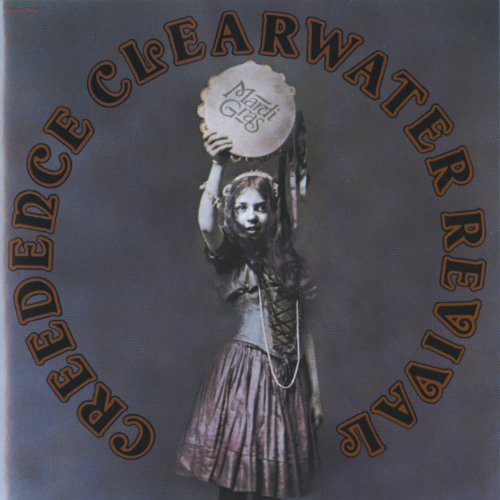
Mardi Gras (1972)
Creedence Clearwater Revival really deserved a better swan song than what they got with ‘Mardi Gras’. How the final Creedence album turned out was a real shame. Released in 1972, Tom was out the door, and John had reconnected with Doug and Stu after almost a year apart with little or no contact,
After John’s brother, rhythm guitarist Tom Fogerty, left the band, John gave the other two members of the group album space to write and sing their compositions. I’ve never heard this, but I’m happy to avoid it – even John’s material like ‘Sweet Hitch-hiker’ and ‘Someday Never Comes’ isn’t among his best. It’s generally a unanimous pick for Creedence’s worst studio album.
Creedence deserved a better swan song than ‘Mardi Gras,’ whose title is the most celebratory thing about it. By the time the band arrived here, it was down to a trio with John’s older brother, rhythm guitarist Tom Fogerty, had left CCR over creative control issues. Bassist Stu Cook and drummer Doug Clifford also had expressed a desire to have a stake in the songwriting, and they got it. For this album, John relinquished his firm grip on the band and split the writing and singing duties evenly among the three remaining members. The result was the most uneven album in the band’s catalog, with six songs contributed by guys who were new to songwriting, not to mention far from naturally gifted vocalists. Cook and Clifford try their best but sound like they want to be in a Creedence cover band (they eventually got their wish, in a way). But CCR’s otherwise wonderful rhythm section isn’t the only thing to blame. After a few years of constant creative output, Fogerty’s well of songs (which once seemed endless) was beginning to run dry. Still, he saved the album from being a total loss with blazing closer “Sweet Hitch-Hiker” and the soulful “Someday Never Comes,” an elegy to terrible fathers, including himself. What a way to go out.
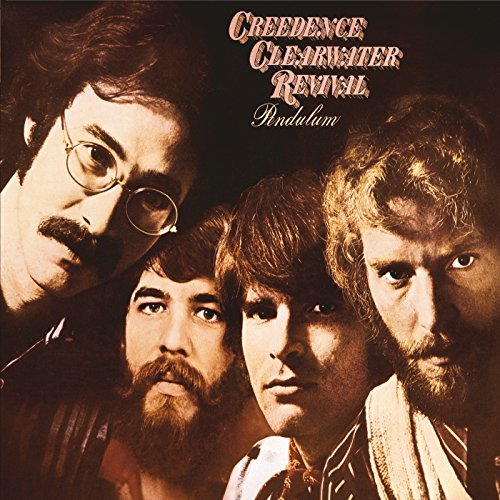
Pendulum (1970)
Pendulum is more of a studio-based album than Creedence’s previous albums – I like the more detailed arrangements, like the soulful organ on some tracks. But on their sixth album since 1968, it feels as though John Fogerty’s running out of songs, and despite a few strong songs like ‘Have You Ever Seen The Rain?’, For the baby-boom generation, this is John Fogerty either commenting on the Vietnam War era or the loss of late-1960s innocence and idealism. But Fogerty reportedly wrote the somber, acoustic-guitar-driven song about the friction within CCR, particularly brother Tom’s unhappiness with his role in the group. What’s known for sure is this: “Have You Ever Seen the Rain,” was CCR’s last big A-side featuring Tom Fogerty. It reached No. 8 in early 1971.
‘Pendulum’ is Tom Fogerty’s final run with Creedence; he would quickly depart after its release to pursue an unsuccessful solo career, citing stifling creative control from brother John. ‘Pendulum’ would also foreshadow the internal conflicts that had been driving the band apart since they first became famous. During 1969 and 1970, CCR was dismissed by hipsters as a bubblegum pop band and the sniping had grown intolerable, at least to John Fogerty, who designed Pendulum as a rebuke to critics.
Ranking CCR’s albums, we swing back toward the end of the discography to the band’s second-to-last album, ‘Pendulum.’ Creedence’s was thier sixth LP stands out as the band’s most sonically layered album as well as Fogerty’s most obvious tribute to his Stax Records heroes. John not only wrote, sings and plays guitar on every track, he also overdubbed organ and horns (which he played himself) on many of the songs. When the more adventurous sound works, ‘Pendulum’ showcases the band at its best: the sweet church organ that floats through “Have You Ever Seen the Rain?,” the honking sax on the charging “Molina.” When Fogerty overreaches,
The rest of the record is excellent, with such great numbers as the bluesy groove “Pagan Baby,” the soulful vamp “Chameleon,” the moody “It’s Just a Thought,” . Most bands would kill for this to be their best stuff, and the fact that it’s tucked away on an album that even some fans forget illustrates what a tremendous band Creedence Clearwater Revival was.
Creedence sound unremarkable or even worse, untethered (the half-baked prog exercise “Rude Awakening #2”). That said, this is Creedence Clearwater Revival’s most cohesive album; it’s more than just a collection of songs – even if hits such as “Have You Ever Seen the Rain” and “Hey Tonight” and the overlooked ballad “It’s Just a Thought” rise to the top. Pendulum was the band’s weakest effort to date.
The Concert (2003)
Released in 1980 originally as ‘The Royal Albert Hall Concert’ but then it was changed on later releases due to the fact that the recordings were not made at London’s Royal Albert Hall. ‘The Concert’ was one of Fantasy’s attempts to continue making money off the Creedence name, years after the band had dissolved and in the midst of their legal battle with John. A merchandising ploy at its best. Nevertheless, ‘The Concert’ is the perfect album to capture Creedence in all their glory on stage; while it may have been John’s brains on the studio recordings, it was Creedence’s energy on the stage. The chemistry and timing between the members is impeccable and they sound fantastic as they rip through their timeless classics.
Creedence Clearwater Revival (1968)
Creedence’s debut album landed on the charts immediately upon its release in 1968. This was due to the strong single ‘Suzie Q’, which saw Creedence put their own distinct twist on the Southern blues that had influenced them; the long version is a tough, delightful jam that conveys this as a band to be reckoned with. The rest of the debut sees the band tear through all the other typical bluesy numbers that most modern rock bands were guilty of doing on their first album to attract attention.
It’s a testament to the rest of Creedence’s catalog that the band’s self-assured debut comes in so low in our ranking of their albums. While most of the rock ’n’ roll world was still suffering the after-effects of psychedelia, CCR were digging for treasure in the mud of Americana. The self-titled album is a sort of sampler platter of what the guys in this band were into, from roadhouse rockabilly to Stax soul. The record also established that these four white boys from California knew their way around a groove, so much so that they scored hits with hypnotic covers of “Susie Q” and “I Put a Spell on You.” But save for the righteously angry “Porterville” (the most underappreciated song in the CCR canon), Fogerty’s original contributions lack the melodic hooks and the gritty atmosphere of his future songs. On their debut, Creedence Clearwater Revival proved they had a sound. Soon, Fogerty would find a voice to go with it. And he was a very quick learner.
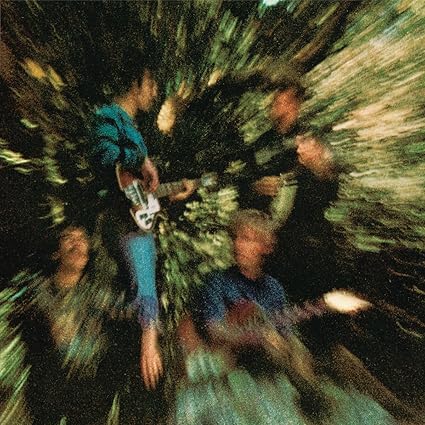
Bayou Country’ (1969)
Creedence came into their own on the band’s second album, with mantle-deep bass grooves, guitars that wafted in like swamp gas and a lead singer whose throaty yowl buzzed right through the heavy air. ‘Born on the Bayou’ John Fogerty doesn’t just sing this ominous ode to the New Orleans area — he howls it. “To this day, it’s still my favorite Creedence song,” says drummer Clifford . In August 1969, CCR opened its Woodstock set with this song, which probably scared the crap out of many mind-altered spectators.
This was the first of three studio albums released throughout 1969, reveals an assured band; a band that has found its voice between their first and second album, and spotlighting John Fogerty as the driving force within the band. Within ‘Born on the Bayou’, Fogerty sketches out his persona; it makes him sound as if he crawled out of the backwoods of Louisiana instead of being a native San Franciscan. He carries this illusion throughout the record, through the ominous meanderings of “Graveyard Train” through the stoked cover of “Good Golly Miss Molly” to “Keep on Chooglin’,” which rides out a southern-fried groove for nearly eight minutes. At the heart of BayouCountry, as well as Fogerty’s myth and Creedence’s entire career, is “Proud Mary.” A riverboat tale where the narrator leaves a good job in the city for a life rolling down the river, the song is filled with details that ring so true that it feels autobiographical. The lyric is married to music that is utterly unique yet curiously timeless, blending rockabilly, country, and Stax R&B into something utterly distinctive and addictive.
Despite a lack of first-hand knowledge, Fogerty crafted a mood, a time, a place that is so tangible, you can almost feel the muck between your toes. He caught a lightning bug in a bottle. And CCR keep on chooglin’ that way through the album, becoming more interesting with each track – from the snarling gem “Bootleg” to working man’s anthem “Proud Mary.”
To call the song an instant classic is to undersell it. Like their contemporaries in the Band, This is without doubt Creedence’s signature song — the first of five CCR singles to peak at No. 2 between 1969-70 , It also displays all of the band’s signature strengths: an airtight rhythm section, steadily strummed guitars and John Fogerty’s fantastic imagery and working-class sensibilities. After hearing this song, you understand why fans assumed the band was from Louisiana.
Creedence were tapping into something pure and primal about America, taking hard-luck yarns and wrapping them around country-fried mythology. There are thousands of brilliant rock ‘n’ roll songs, but so few of them rank as honest-to-goodness standards. “Proud Mary” is one of those … and it’s not the only standard Fogerty wrote.
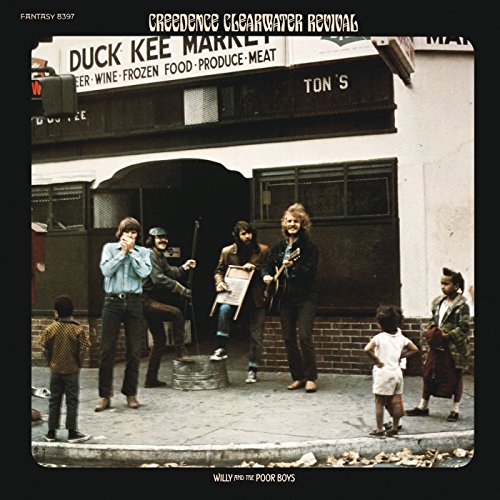
Willy and the Poor Boys’ (1969)
Speaking of timeless standards, CCR’s fourth album opens with a track so strong, it’s endured being associated with Fisher-Price Pocket Rockers and Walgreens’ commercials. If you didn’t know better, you might guess that “Down on the Corner” was a folk song handed down a few generations, instead of something Fogerty wrote in 1969. A lot of fun and a little bit funky, “Down on the Corner” can be interpreted as the story of CCR. It’s easy to picture the Fogerty brothers, bassist Stu Cook and drummer Doug Clifford in their hometown of El Cerrito, Calif., as the “four kids on the corner trying to bring you up” with their “happy noise.”. But the majority of the songs on “Willy and the Poor Boys” have an easy, almost tranquil aesthetic – suggesting a ragtag band playing country shuffles, bluesy boogie woogie and Leadbelly covers out on the back porch or, perhaps, down on the corner. Creedence never sounded more effortless, which must have been hard work. In contrast to the rest of the album (and most of CCR’s catalog), a pair of songs witnessed topical commentary creeping into Fogerty’s writing.
The rampaging “Fortunate Son” was an all-out protest song that was less a specific commentary on the Vietnam conflict and more of an excoriation of cowards who hide behind privilege. As such, it might be the least dated ’60s protest song (it’s certainly among the most exciting to listen to). John Fogerty didn’t grow up privileged or politically connected, but he totally understood that an upbringing with “silver spoon in hand” could later play a big role in working the system, whether it be exemption from military service or paying taxes. Fogerty makes it crystal clear he’s among the have-nots, not the haves, and rock ’n’ roll is all the better for it.
Then there’s the sinister finale of “Effigy,” in which Fogerty runs out of answers and allows a blistering guitar attack to express the all-consuming anger of a turbulent nation.
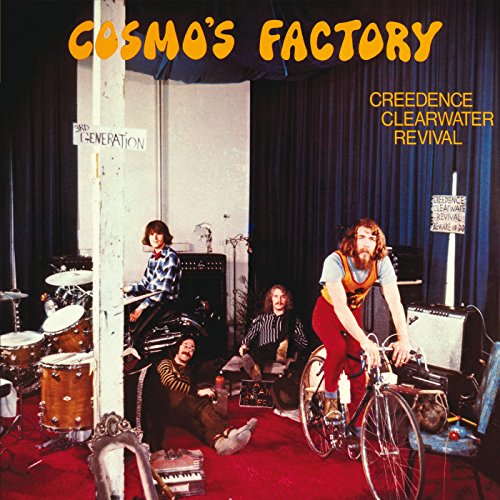
Cosmo’s Factory’ (1970)
On the heels of a year in which CCR released three albums, toured incessantly and played Woodstock, it wouldn’t have been surprising if the group decided to take 1970 off. Instead, Fogerty and Creedence pushed through, often drawing on their hectic schedule and weary feelings on their fifth album. Fogerty’s original songs focus on escape and touring (“Up Around the Bend,” “Travelin’ Band”) as well as a less-than-sunny worldview (“Ramble Tamble,”“Who’ll Stop the Rain”), and the LP features more cover tunes than any other CCR release (four). Even the title ‘Cosmo’s Factory’ was a reference to the band’s work ethic. Although relationships within CCR were becoming strained, the guys pumped out some of the best music in their career. Covers included (especially the edgy, epic version of “I Heard It Through the Grapevine”), ‘Cosmo’s Factory’ features Creedence’s best batch of songs, most of them instantly distinct. There’s the glistening melancholy of “Who’ll Stop the Rain,” Almost a year to the day before ‘Have You Ever Seen the Rain’ CCR reached the chart with this precipitous tune. John Fogerty’s thinly veiled tale of disappointment with U.S. politics is showered with a haunting wall of vocals during the chorus, and the song’s three-note acoustic-guitar figure throughout sticks with you as much as the lyrics.
The buzz-saw frenzy of “Up Around the Bend,” Over snarling electric guitars, John Fogerty urges everyone to “leave the sinkin’ ship behind” and “catch a ride to the end of the highway” in this No. 4 Billboard pop hit. Was he yearning for everyone back in the day to ditch the policies of President Nixon’s administration, or merely prompting listeners to take a momentary escape on the open road? Like most CCR songs, there’s enough vagueness to make ‘Up Around the Bend’ timeless as well as adaptable to many experiences.“Lookin’ Out My Back Door.” Just like Down on the Corner’ did the year before, the countrified ‘Lookin’ Out My Back Door’ shows CCR at its most joyous and playful. A rapidly strummed, heavily muted acoustic guitar sets the pace, and along the way John Fogerty sings rather trippy lyrics about all sorts of “happy creatures dancing on the lawn” (perhaps a friendly swipe at the San Francisco Bay Area’s psychedelic scene) while also name-checking country legend Buck Owens.
Meanwhile, Fogerty was branching out sonically by playing a blurting sax on “Travelin’ Band” and using a mellow organ to enhance the “last call” vibe of closer “Long As I Can See the Light.” Then there were the backward sound effects added to the ominous “Run Through the Jungle,” which turns the mysterious “Bayou Country” of a few albums before into a violence-plagued land ruled by Satan. With so many great songs,
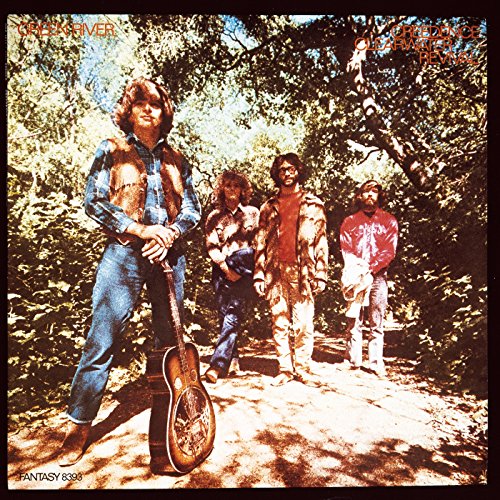
Green River’ (1969)
How did the terrific ‘Cosmo’s Factory’ end up at No. 2 on our list? Because ‘Green River’ is even better. The album isn’t just an excellent introduction to Creedence, but rock ‘n’ roll as a whole. ‘Green River’ is a near-perfect distillation of country, blues, soul and rockabilly, resulting in a record that digs into bedrock Americana. The guitars twang, the bass lines tumble down, the drums chug like a locomotive and Fogerty’s foghorn voice barks above it all. The sound is beautiful in its simplicity – the sound of a band locked into a gleeful groove. John Fogerty’s protagonist looks back fondly to a simpler time and a place where he fished, skipped rocks and scoped out shoeless girls dancing in the moonlight. It’s not all fun and games in this short, tight rocker, An old-timer warns the narrator that “you’re gonna find the world is smolderin’,” and whenever that happens, he’s always welcome to come back to the comfort and safety of good ol’ Green River.
The songs, on the other hand, are a few towns removed from glee, maybe somewhere around “Lodi” – a dead-end town where Fogerty imagined he might find himself down the road, singing for his supper.
Doug Clifford recalled the night that significantly inspired Creedence Clearwater Revival track “Lodi,” which appeared as a the b-side to “Bad Moon Rising” in 1969. It tells the story of a musician, down on his luck, who finds himself stranded and penniless after playing in the California town.
Although frontman John Fogerty later said he’d never visited Lodi in real life, Clifford said that the band had plenty of experiences in playing similar places.
“We played up and down the Sacramento-Cerrito Valley for four or five years, in pizza places and in bars where people asked us to turn it down because it was interfering with whatever else was going on,” he said. “The night that I really remember, we were in a little bar, and the most people they had in there at any one given time was nine people, all locals, all drunk, all obnoxious. They made us play the full four hours They made us, the entire time, ‘Turn it down, do this do that.’
“So we did it, honored our commitment, and went to get paid. And the bartender said, ‘I’m not paying you guys. You were too loud, you were this, you were that.’” When the band issued an angry demand to hand over the cash, Clifford recalled, “The nine guys stood up in the bar and said, ‘You better leave now.’ And we did.”
But that wasn’t the end: “And to add insult to injury, Stewie [Cook] backed up our truck in haste, trying to leave, and backed up over one of our amps. Not a good deal. So a lot of inspiration for ‘Lodi’ came from that particular evening.”
Between the jaunty chords of “Bad Moon Rising” and the end of all existence described in the lyrics, Something’s lurking out there, and it ain’t good. And once again, John Fogerty uses weather-related imagery to make his point: earthquakes, lighting, hurricanes and “rivers overflowin’.” And in a little more than two minutes, he unloads his mind and prompts you to think about what’s troubling you in your life.
Fogerty was feeling the weight of his responsibility when writing many of the songs on ‘Green River,’ weary of urban “Commotion,” wary of his “Tombstone Shadow,” unable to communicate with his love on “Wrote a Song for Everyone.” Even the warm nostalgia of the title track is tainted by the knowledge that “Green River” might be the last refuge. The push and pull between the full-bore energy of the music and the nagging fear in Fogerty’s heart makes for a fascinating listen, again and again. If you get lost, you can always come home to ‘Green River.’
Once from a small town called Lititz, proclaimed as “America’s coolest small town,” the home to Clair Brothers, a world renowned sound and production company, and Rock Lititz, a sprawling music industry complex where the biggest names go to rehearse, with full production for their tours.
Lititz can also lay claim to The Districts, a four-piece rock band fronted by the charismatic lead singer and guitarist Rob Grote. Grote, along with bassist Connor Jacobus, and drummer Braden Lawrence have known each other since attending grade school together in Lititz, and formed the band when they were at Warwick High school. After self-releasing their 2012 debut Telephone, they moved to Philadelphia, signed with Fat Possum and released 2015’s A Flourish And A Spoil. (Guitarist Pat Cassidy joined the band in the summer of 2014.).
The band have released their new album this week Popular Manipulations. Its The Districts‘ third full-length, Popular Manipulations, and it’s a significant leap forward for the band. Across 11 songs, fans will notice changes (for the better) in songwriting, technique, production and arrangements. It’s a dense and intense collection of songs that stands tall, with a broad and far-reaching indie-rock lens attached.
Throughout the record, Grote singing in a low register and employing a series of vocal gymnastics. A swirl of heavy psychedelic rock sets the foundation for many of these songs, but the arrangements on “Airplane,” “Salt” and “Why Would I Wanna Be” demonstrate a level of craftsmanship that hasn’t always been there in the past.
The Districts worked with producer John Congleton on a few songs (he also produced their earlier EP A Flourish And A Spoil, and self-produced the balance of the record with engineer Keith Abrams. Zoe Reynolds of Kississippi adds vocals on two of the album’s best songs “Violet” and “Point” .
Popular Manipulations is a powerful and punchy set of songs by a group of men whose talent has finally caught up to its ambition. It demands and commands your attention.
Since 2014, Zoe Reynolds has been making music under the Kississippi moniker, but the release of her debut full length, Sunset Blush signals a change for the artist.
Following a series of demo releases and EPs, Reynolds believes she has finally found her voice, calling Sunset Blush an honest recognition of the music she always wanted to make.
The album fully immerses listeners in Kississippi’s sincerely heartfelt world, with Reynolds sharing every strength and struggle that fueled her writing.
The album’s namesake comes from a flavor of boxed wine that’s frequently appeared throughout Reynolds’ adulthood; consumed on rooftops reached by ladders or in between sets at house shows.
The album enlivens these moments saturated in nostalgia for listeners, Sunset Blush is more than just a debut, it’s Reynolds’ reassurance to herself and others that even when things are at their worst, brighter days are ahead, and you have the strength needed to get through it.
Having successfully toured the albums from Hooky’s previous bands for over eight years now, Peter Hook & the Light have now reached the late eighties and early nineties albums of new order, “Technique” and “Republic” in their consecutive run and have announced a raft of new concert dates.
As has become their custom, all dates feature the Light performing an opening set of Joy Division material.
‘Technique’, New Order’s fifth studio album chronicles the impact of acid house on the band, marking the clearest statement of the rock and dance influences which were shaping their output. released in january 1989, just after the bands infamous G-mex gig and aftershow downstairs at the Hacienda in december the previous year, it became New Order’s first album to go to number one in the UK. it was also hugely successful in the united states where the influence of Quincy Jones’ Qwest label regularly got the band’s singles to the top of the american dance charts, ‘Technique’ was driven by the classic acid house single “fine time” which rivals “Blue Monday” as probably the most openly dance orientated record the group ever produced whilst other tracks on the lp “Round and Round”, “Mr disco” and “Vanishing Point” also reflect the dance sensibilities then fusing their way into New Order’s sound. yet like on its predecessor, “Brotherhood”, these are balanced by the vocal led, more rock leaning “All the Way”, “Gulity Partner” and “Run”.
legendarily recorded in ibiza in 1988, ‘Technique’ has often been observed to capture the sound of that summer and the heady period back them both on the island and in the uk and of course, Manchester. as is widely known, the band didn’t actually do much work in ibiza, a jaunt that Factory label boss Tony Wilson once told Peter Hook “was the most expensive f*cking holiday you’ve ever been on”. the band returned to the UK to finish the lp at Bath’s Real World studios later in 1988, itself the scene of another legendary New Order party when recording was completed.
In many ways, ‘Technique’ epitomised its time and the culture surrounding it. it came out to generally ecstatic reviews from the top notch echelons of the music press. in the uk, melody maker called it “a rare and ravishing triumph” whilst nme proclaimed the band “had fashioned an lp of rare and unflinching honesty”. across in the states, spin called it New Order’s best ever album, rolling stone referred to its “sonic presence with immaculate playing” and pitchfork sum up the album simply as “magnificent.”
“placed in the perfect position to deliver the definitive alternative take on house music, the band produced another classic record” – all music
Many consider ‘Technique’ to mark the high point of New Order and as they went on from the album to headline Reading festival in august 1989, before going on hiatus and also pursuing their solo projects, this is generally thought of as the golden period for the band.
due to the well documented history surrounding ‘Republic’, it is remarkably difficult to characterise it as sharing the same sunny outlook as ‘Technique’ but Hooky’s decision to include it in these concerts underline his commitment to perform all of his catalogue that he has committed to record. Not that ‘Republic’ wasn’t hugely successful. again it went to number one in the UK and became the band’s biggest ever selling album in america, narrowly missing the billboard album chart top ten peaking at number 11.
however it is not unknown that it was new order’s most difficult album to make. Factory records had hit financial trouble and needed a new order album to bail themselves out so the band were coerced into recording the album in to save Factory. something that didn’t entirely work out as Factory was then to go bankrupt in november 1992 and New Order then signed to London Records, an offshoot of warner bros with ‘republic’ released in may 1993.
The band roared back with first single “Regret”, still thought of as one of their finest ever, and subsequent singles “Ruined in a Day” and “World” did well, both in their original versions and as remixes which again dominated the dance charts.
It’s not hard to deduce that the demise of Factory, coupled with the ongoing difficulties surrounding the band’s involvement in Manchester’s Hacienda as well as internal friction within New Order and due to the band members’ solo projects, all had an impact on the recording sessions and mood that lies behind “republic, something that Stephen Hague did his utmost to assuage in producing the lp.
Still considered a worthwhile addition by fans to New Order’s catalogue, yet, if not perhaps hitting the standards they had previously set for themselves, ‘Republic’ did receive some strong reviews. nme’s dele fadele awarded it 8/10 on release whilst all music commented that “‘Republic’ simply borrows elements of contemporary innovations in club music to frame a set of effortlessly enjoyable alternative pop songs.”
Say Hi is Eric Elbogen. It used to be called Say Hi To Your Mom. Like a good neighbor, A new Say Hi LP! Can you believe it?! Caterpillar Centipede is record number twelve, with ten rock gems that will worm their way into your heart in whatever way possible (hence the title). LPs, CDs and a brand new t-shirt are available in addition to the digital version . Until this week we hadn’t though about Say Hi for probably the best part of a decade. Then, as they do an email landed in our inbox, declaring a new album on the way, a new single to listen to and we were instantly propelled backwards, to a box room in a Leeds flat, and it was every bit as exciting as we remember it.
The track, Green With Envy, is the latest single to be lifted from Say Hi’s upcoming album, Caterpillar Centipede, which is out next week. With it’s Teenage Dreams like guitar riff, glitchy electronic pulse and emotive vocal, it’s just a fabulous alt-pop song. As Say Hi frontman, Eric Elbogen recalls, “‘riffage’ and ‘anthem’ were the two words going through my mind once the tape was rolling”. He’s not wrong; it’s a stone-cold indie-disco floor-filling banger, just about 10 years after they went out of favour with the mainstream. Still, with an album inspired by being visited in a dream by a centaur called David Bowie, Say Hi might just be the band to bring it back into fashion, or at least have those of us too old for dancing dreaming nostalgically of a youth well lived: either way it’s a triumph.
What do you do when your long term relationship grinds to a halt? If you’re lifelong friends Lily Rae and Alex Wisgard then you form Fightmilk. Coming together in 2015 as a heady mix of angst, alcohol and Kirtsy MacColl, the duo set about writing the songs that would soundtrack their break-ups and, reference It’s Always Sunny In Philadelphia wherever possible. Following two well received EP’s the band are set to take the full-length plunge in November, with the release of their debut album, Not With That Attitude.
Ahead of Not With That Attitude’s release, the band have this week shared their brand new single, Four Star Hotel. The track details how, towards the end of both their relationships, Lily and Alex had independently booked holidays to Amsterdam, which ended with the same conclusion, a holiday will never save a relationship. As Alex explains,“almost every line is based on one of our two true stories, from the shit-eating grins in the holiday photographs to having to push two twin beds together in a hotel room”.
Their tales of sexless nights in swanky hotel rooms, fleeing from weed cafes and, “kissing for the camera”, are set to their usual blend of ferocious riffing, and pounding drum beats. With a sound equal parts Weezer and Diet Cig, and lyrics so acerbically comic that Art Brut would be proud of them, Fightmilk are bringing a fresh take on the oldest, angstiest subject known to songwriting, and it sounds wonderful.
10 songs about crushing hard, acting out, and running away to solve crimes in Sweden, available on GORGEOUS pink vinyl thanks to the good folks of Reckless Yes Records.
MC5 only released three albums, but they were ferocious, adventurous, and confrontational enough to secure the group’s place as one of the greatest rock ’n’ roll bands ever. Singer Rob Tyner, guitarists Wayne Kramer and Fred “Sonic” Smith, bassist Michael Davis, and drummer Dennis Thompson came together as the MC5 in 1965. The band performed for several years before making its first record. This year is the 50th anniversary of the recording of the band’s incendiary debut, Kick Out The Jams, which was recorded live over two nights at Detroit’s Grande Ballroom in October 1968.
To celebrate, MC5 release Total Assault: 50th Anniversary Collection, a limited-edition boxed set that features all three of the band’s albums pressed on coloured vinyl. It includes Kick Out The Jams (red vinyl), Back In The USA (white vinyl) and High Time (blue vinyl). The albums come in sleeves that faithfully re-create the original releases, including gatefolds for Kick Out The Jams and High Times. All three are housed in a hard slipcase with new art and previously unseen photographs by world renowned photographer Raeanne Rubenstein. The music on Total Assault shows why the MC5 is held is such high regard today with indelible tracks like Kick Out The Jams, Human Being Lawnmower and Sister Anne.
The set also includes a new essay by Creem magazine founding editor/writer and Uncut contributor Jaan Uhelszki, who writes: “Turned loose on a bare stage, the MC5 were among the most awe-inspiring perpetrators of sheer bombast and rock and roll brinkmanship alive… They tore through the stuff they heard on the radio with a fierce intensity that transcended the original artists’ intent. Tunes by James Brown, Chuck Berry, the Kinks and the Rolling Stones vibrated at a higher frequency when the Motor City Five tackled them.”
MC5 co-founder and guitarist Wayne Kramer will release his memoir The Hard Stuff: Dope, Crime, the MC5, and My Life of Impossibilities on August 14th before hitting the road with a new all-star line-up of MC5 called MC50. The group will perform Kick Out The Jams in its entirety, along with other MC5 classics.