Saintseneca’s Zac Little has been thinking a lot about memory. Not necessarily his memories, though they creep in often, too. Rather, he mulls over the idea of memory itself: its resilience, its haziness, how it slips away as we try to hang on, the way it resurfaces despite our best efforts to forget. Memory is the common thread running throughout the Columbus, Ohio folk-punk band’s fourth album, Pillar of Na, arriving via Anti- Records. Following 2015’s critically lauded Such Things, the new album’s name is rooted in remembrance, referencing the Genesis story of Lot’s wife who looks back at a burning Sodom after God instructs her not to.
She looks back, and God turns her into a pillar of salt. “Na,” meanwhile, is the chemical symbol for sodium. “Nah” is a passive refusal and the universal song word. It means nothing and stands for nothing. It is “as it is.” Musically, Pillar of Na is Saintseneca’s most ambitious album to date, with Little aiming to incorporate genre elements he’d rarely heard in folk. “I wanted to use the idiom of folk-rock, or whatever you want to call it, and to try to do something that had never been done before,” Little explains. I told producer Mike Mogis I wanted Violent Femmes meets the new Blade Runner soundtrack. I’m looking for the intersection between Kendrick Lamar and The Fairport Convention.”
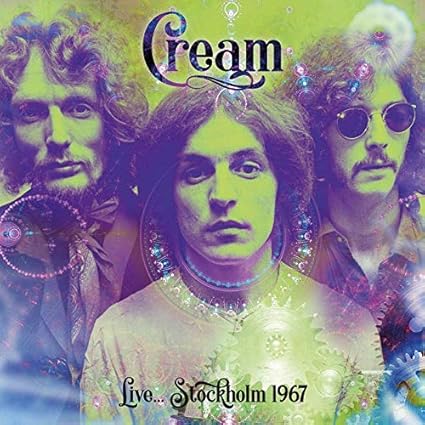
Cream, live at the Konserhuset, Stockholm, Sweden November 14th 1967. Just after the release of Disraeli Gears, Cream embarked on a Scandinavian tour on November 11th 1967, following dates in Denmark and Finland, they reached Sweden on the 14th. This explosive set, broadcast on Sveriges radio, was performed at Stockholm sKonserthuset that night, and captures them at their peak, stretching out on a selection of classics old and new. It s presented in full here, together with background notes and images.
Setlist:
1. Tales Of Brave Ulysses 2. Sunshine Of Your Love 3. Sleepy Time Time 4. Steppin Out 5. Traintime 6. Toad 7. I m So Glad
R.E.M’s second album, 1984’s Reckoning, carried a curious phrase on the LP’s spine: “File Under Water.” It was a designation, an in-joke or even an alternate title that referenced the running theme of water in the album’s lyrics, from “Seven Chinese brothers swallowing the ocean” to “These rivers of suggestion are driving me away.”
When R.E.M. released their first best-of collection, 1988’s Eponymous, the compilation had a different designation: “File Under Grain.” This time, it was a reference to the wheat field cover art as well as the subject matter of the LP’s lone single, “Talk About the Passion,” which was about hunger.
A few years, and albums, after Reckoning, and about a year before Eponymous hit stores, R.E.M. repeated this exercise. Lead singer and primary lyricist Micheal Stipe had noticed that many of the songs that made up the band’s fifth studio album, “Document” featured fire from burning coals in “Exhuming McCarthy” and fiery destruction in “Welcome To The Occupation” to a firehouse in “Oddfellows Local 151” and a literal chorus of “Fire!” in “The One I Love” When released in the summer of 1987, Document had “File Under Fire” inscribed on its spine.
R.E.M. has just finished a tour of Europe and North America, playing to the largest crowds of the group’s career so far. They are on the cover of the Rolling Stone, underscored with the declaration “America’s Best Band.” Their latest album,Document, is fast approaching platinum sales in the U.S. And they have a Top 10 hit. Most bands would be thrilled, ready to forge ahead with declarations of continued greatness . But the guys in R.E.M., bandmates for seven years, were more surprised by their quantum leap in popularity, maybe even shocked by it, and definitely skeptical.
For R.E.M., 1986 had been a pivotal year. The band’s fourth album, the brash, yet highly accessible Lifes Rich Pageant had rewarded them with their first gold disc, while their extensive Pageantry tour of the US had garnered considerable critical acclaim. As 1987 rolled around, confidence was at a high within the R.E.M. camp. The Athens, Georgia, quartet had already worked up a clutch of promising new songs for what would become their fifth album, Document, and they had completed a successful initial studio session with new producer Scott Litt prior to Christmas ’86.
Litt had already assembled an impressive CV. He began his career as a studio engineer during the late 70s, working on recordings by artists as diverse as Carly Simon and Mott The Hoople’s Ian Hunter. He debuted as a producer in 1982 with The dB’s Repercussion album, a record R.E.M. were already familiar with, having shared stages with the band. In fact, the two groups’ histories would continue to intertwine when The dB’s co-frontman, Peter Holsapple, later joined R.E.M. as their fifth member on the Green tour and then played on Out Of Time.
R.E.M. and Litt began their fruitful, decade-long partnership with the successful recording of the quirky ‘Romance’. Though intended for the soundtrack of the film Made In Heaven, the song also later featured on the rarities compilation Eponymous. Litt reconvened with the band at their regular demo studio – John Keane in Athens – for an extensive demo session, before R.E.M. took a break and briefly embarked on extracurricular activities, including some studio contributions to Warren Zevon’s Sentimental Hygiene album.
The band were back in the harness with their new producer at the end of March, with all of April ’87 given over to the recording of Document at Sound Emporium Studios in Nashville, Tennessee. Several of the songs had already been worked up onstage, and the band’s keen pre-production work paid dividends: for Document, R.E.M and Scott Litt captured the sound of a rock band at the absolute top of their game, capable of taking on all comers.
The accessibility that seeped from Lifes Rich Pageant’s every pore was again apparent, but this time round the band had taken things up a gear. Indeed, the R.E.M. of Document was a sinewy, muscular rock beast, primed and ready to dominate the airwaves. Peter Buck’s distinctive jangle and chime was still apparent on ‘Disturbance At The Heron House’ and ‘Welcome To The Occupation’, but, for the most part, his guitar playing took on a sharp, steely quality. Accordingly, he turned in some of his most memorable recorded performances: launching ‘Finest Worksong’ with urgent, metallic riffs; embroidering the swampy funk of ‘Lightnin’ Hopkins’ with Andy Gill-esque tension and atonality; and punctuating the band’s supercharged cover of Wire’s ‘Strange’ with a neat, Nuggets-style psych-pop solo.
Meanwhile, the newfound confidence and vocal clarity Michael Stipe proffered on Lifes Rich Pageant continued apace, and on Document he summoned up a clutch of startling performances: bending and twisting his voice like an old time preacher around ‘Lightnin’ Hopkins’ and rattling off a rapid-fire alternate history of the 20th Century on the exhilarating ‘It’s The End Of The World As We Know It (And I Feel Fine)’.
Lyrically, the socio-political concerns Stipe addressed on Lifes Rich Pageant again loomed large. Featuring barbed observations such as “Listen to the Congress where we propagate confusion/Primitive and wild, fire on the hemisphere below,” ‘Welcome To The Occupation’ was widely reputed to be a commentary on American intervention in South America. The deceptively infectious ‘Exhuming McCarthy’ also delved into political hypocrisy, drawing a parallel between the communist-baiting of the Joe McCarthy era of 50s American politics and the recent Iran-Contra affair during which senior politicians under President Ronald Reagan had secretly facilitated the sales of arms to Iran: a country which was then under an arms embargo.
Sonically, Document also afforded the band the chance to further broaden their palette. Special guest, Los Lobos’Steve Berlin, added his distinctive saxophone skills to ‘Fireplace’, while lap steel and dulcimer coloured the hypnotic, raga-like ‘King Of Birds’. From their earliest days recording Murmur with Don Dixon and Mitch Easter, R.E.M. had always relished the opportunity to try out different sounds and textures – and experimental approach that would continue through Green and Out Of Time, wherein the band members often swapped instruments and fashioned new songs from riffs and melodies worked up on acoustic instruments such as mandolins and accordions.
The spine of the artwork for R.E.M.’s second album, Reckoning, had featured the message ‘File Under Water’ and the original sleeve design for Document included another elemental phrase, ‘File Under Fire’. Michael Stipe considered fire to be one of the record’s central lyrical themes, with the album also including the song ‘Fireplace’ and the eerie, religion-related ‘Oddfellow’s Local 151’, on which the chorus consisted of Stipe repeatedly keening the word “Firehouse!” Document’s savage break-out single ‘The One I Love’ again included a chorus wherein Stipe sang “Fire!”, and while this emotionally vicious song itself was actually the very antithesis of a traditional love song, it still provided R.E.M. with their first major US hit single when it peaked at No.9 singles chart.
The second song on side two, “Fireplace.” Like the song that preceded it on the album, “The One I Love,” the track both contained a connection to fire and the use of repetition by Stipe. Where “The One I Love” replicated the same verse three times, but switched out a word in the last reiteration to emphasize a nasty cycle (“A simple prop” became “Another prop”), “Fireplace” changed the last line of its chorus each time, in an effort to depict escalation.
The first time around, the floor is cleared to “sweep the rug into the fireplace.” Next time, they “sweep the floor into the fireplace.” Before long, it’s “throw the chairs into the fireplace” and then, finally, “throw the walls into the fireplace.” What begins with, seemingly, the burning of dust and crumbs ends with the destruction of the structure that the fireplace is meant to make habitable. Fire and brimstone, indeed.
As it turns out, “Fireplace” has a significant religious connection. According to many R.E.M. biographies, Stipe’s lyrical inspiration for the song was a speech given in the eighteenth century by Mother Ann Lee, the leader of the first American chapter of the Shakers. Before she became known as Mother Ann, Lee joined this religious sect – also known as the Shakin’ Quakers because of their dancing method of worship – in her native England, where she was persecuted for her beliefs.
Despite the Shakers’ extreme reaction to a civilization that they felt was out of control (perhaps reflected in Stipe’s recitation of “Crazy, crazy world / Crazy, crazy times”), the sect is mostly known today for their simple, strong craftsmanship of furniture and for their love of dancing and movement as a method of worship. Each shaker home had hooks mounted on the wall, on which their chairs could be hung. This would allow for a strict cleaning of the floor, as well as make room for dancing.
Both of these elements are represented in the chorus of the R.E.M. song: “Hang up your chairs to better sweep / Clear the floor to dance.” Eventually, of course, everything including the floor, chairs and walls ends up in the fireplace. Given the other political content on Document, it’s likely that Stipe was making some sort of modern connection to Mother Ann Lee. “Fireplace” could be a cautionary tale, that righteous anger of any kind can slowly consume the structures that are necessary.
Stipe’s cryptic lyrics and matched by the strange, sharp instrumentation, which includes an off-kilter beat from drummer Bill Berry. “Fireplace” a “hard-rock waltz with a modal, hypnotic riff.” Peter Buck, the guitarist responsible for the riff, explained that R.E.M. was hoping for weirder results when making Document.
“This time around we wanted to make a tougher-edged record,” Buck reported .Its predecessor “Lifes Rich Pageant”. This time we wanted to make a loose, weird, semi-live-in-the-studio album. We wanted to have a little tougher stance. Part of the loose, weird approach was provided by saxophonist Steve Berlin, most famous as a member of Los Lobos – although he also worked with the Replacements, the Go-Go’s and Faith No More. Co-producer Scott Litt had previously teamed with Berlin and brought him near the end of the Document sessions. His midnight sax took the place of a typical Buck guitar solo, lending “Fireplace” a jazzy edge, as it finished off the song in an explosion of freewheeling bebop honking. Never before had an outside musician been given such a prominent role on an R.E.M. LP.
“That one was obviously a big one, because R.E.M. were pretty huge, said Berlin “I was a little nervous going into that field, but it was a lot of fun. Even though they’d been successful, they were still experimenting. They were having a lot of fun making that record. The vibe in that room was they were really having a great time. They were happy with the way they were sounding and how the record was going and the way the world was receiving them. It was just a real honor to be a part of it.”
The guys in R.E.M. must not have thought that “Fireplace” was much good without Berlin’s presence. The band only performed the song 10 times in concert in their entire career, the final instance coming in 1989. “Fireplace” remains a stranger, lesser-known entry in the R.E.M. canon, although – as with the Shakers – the workmanship is rock solid.
Document followed through on the success of ‘The One I Love’, peaking at an impressive No.10 in September 1987. The band’s heavy touring schedule across the past five years now yielded far greater dividends as Document proved to be a hit in numerous territories, peaking at No.28 in the UK (where it also went gold), No.17 in New Zealand and No.13 in Canada, where it earned a platinum disc for the band.
The press agreed en masse that R.E.M. had again conjured up something special with Document. Always one of rock’s most insightful writers, Rolling Stone’s David Fricke was impressed by Stipe’s continued prowess as a frontman (“His vocals, which are upfront in the mix, are as crisp and distinct as they’ve ever been, full of emotional portent and physical insistence”) before he cogently summed up his review with: “Document is the sound of R.E.M. on the move, the roar of a band that prides itself on the measure of achievement and the element of surprise.” Elsewhere, New York Times critic Robert Christgau weighed in with, “Their commercial breakthrough eschews escapism without surrendering structural obliqueness,” and the Los Angeles Times praised: “A tougher, meaner, leaner album than its immediate predecessors, with a far more hard-edged guitar sound and tenser rock rhythms.”
The group filmed promotional videos for Document’s spearhead singles, ‘The One I Love’ (directed by New York artist Robert Longo) and ‘It’s The End Of The World As We Know It (But I Feel Fine)’, for which R.E.M. turned to their long-term friend Jim Herbert, also the director of photography for the rock documentary Athens Georgia Inside-Out. In readiness for their next bout of touring, the band embarked on a series of interviews, including one with Rolling Stone, wherein Peter Buck cautiously stated: “I don’t see this as the record that’s going to blast apart the chart.”
From the onset of the band’s European tour, however, it was clear that R.E.M. were indeed ready to sell a large number of records and slough off the shackles of cultdom for good. The band’s Work tour kicked off with a rapturously received show at one of London’s premier indoor venues, the Hammersmith Odeon, and continued with the band playing to packed houses in The Netherlands, Germany and at La Cigale in the French capital, Paris.
Taking 10,000 Maniacs (and, later, The dB’s) along as their support, R.E.M. launched into the American leg of their Work tour with a show at the University Of Tennessee in Knoxville, on 1st October, and traversed North America and Canada until the end of November, playing around 45 shows in all. Along the way, they performed some of their most prestigious gigs to date, including a two-night stand at one of their favourite stamping grounds, New York’s Radio City Music Hall.
Document was a massive turning point for R.E.M., filled with big hits and hard lessons. As the band’s final studio LP with I.R.S. Records, it marked the ending of the band’s underground years – as R.E.M. would jump to Warner Bros. the following year and become an act that could fill arenas. But it was also the beginning of a new era, a fruitful studio partnership with Scott Litt resulting in a bevy of blockbuster albums and many more radio songs.
On October 12th, 2018, Sub Pop will reissue The Helio Sequence’s landmark album Keep Your Eyes Aheadfor its 10th anniversary as a deluxe edition.The newly remastered set will be available on CD/2xLP/DL and includes the original 10-song effort along with a second album of demos, alternate versions, and outtakes from the same era. Keep Your Eyes Ahead: Deluxe Edition was mastered by The Helio Sequence at Helio Sound studio in their hometown of Portland, Oregon.
Deluxe Edition of Keep Your Eyes Ahead (Release date: October 12, 2018)
Upon its release in 2008, the record was warmly received from critics and fans alike. It wasnamed one of the “Top 25 Albums of 2008,” ,“Keep Your Eyes Aheadis a shining example of how to go retro while still moving forward.” Washington Post offered this, “Trading its former album’s dense keyboard compositions for a more expansive and organic sound, Keep Your Eyes Aheadis the work of a band commanding its audience’s attention. Stand out tracks like “Hallelujah” and “Can’t Say No” show the band flexing its melodic muscles, branching out into grandiose guitar rock territory without sacrificing the nuance and keyboard flourishes of its early work.”
Sara Beth Tomberlin’s debut album, At Weddings, is an ode to the uncertainty and overall dishevelment of your late teens and early twenties: bogged down by self-doubt, seeking validation from others, rebelling against unsolicited religious beliefs that were pressed upon you as a child (the 23-year-old singer/songwriter was born to strict Baptist parents) and longing for someone even though you know they’re a bad influence.
Much of the record details her shift from a home-schooled daughter of a Baptist pastor, into a young woman striving to find her place in the world and questioning, perhaps rejecting, the faith that shaped her upbringing. At Weddings is released today on Saddle Creek Records, and this week Tomberlin has shared the latest track from it Any Other Way.
Influenced more by hymns than any modern artist, there’s certainly a clarity and power to Tomberlin’s sound more often associated with religious music, as well as a lyrical intensity that comes with those songs of judgement and revelation. Sarah Beth describes the moment she found herself singing in church and realising she wasn’t sure she believed the words in front of her, “I felt nauseous and shaky reading these words I was singing and feeling their intensity. If I did believe this, how could I sing these words without being scared out of my mind? That’s what’s influenced how I write”. On, Any Other Way, Tomberlin offers a candid snapshot of that moment, and the emptiness that came with it, “feeling bad for saying oh my god, no I’m not kidding, gave me a sudden feeling that I didn’t have a place”.
Throughout, atop a backing of muted guitar strums and gentle piano runs, Sarah Beth is struggling for answers, now they’re no longer found in, “a book off the shelf”, and despite others reassuring her it’s a brave decision, you can hear the doubt and the temptation to run back to the world she knows. Tomberlin’s music feels vital, a lifeline to those going through difficult times and wondering if there’s a light at the end of the tunnel, “my number one goal with my music is for honesty and transparency that helps other people find ways to exist”, this certainly seems like a very impressive start towards achieving her goals.
Featuring only an acoustic guitar and various keyboards and effects, the record centers on Tomberlin’s Joni Mitchell-esque pipes, loud in their softness and tenderness and unsuspectedly moving you to your absolute core. The naked instrumentation mirrors the transparency of her lyrics and while the songs consist of just a few elements, her overflowing emotions make the tracks feel full and warm. At Weddings is filled with such a powerful, saintly aura that even the most ugly subject matters can spur flawless, beautiful results.
Big Red Machine was a decade in the making, starting with the sketch of a song The National’s Aaron Dessner sent Bon Iver’s Justin Vernon for the Dark Was the Night charity compilation. The duo enlisted more than two dozen collaborators, including vocalists like Lisa Hannigan, Phoebe Bridgers, This Is the Kit’s Kate Stables and Arcade Fire’s Richard Reed Parry, and string arrangements from Rob Moose and Dessner’s twin brother Bryce. Side projects like this often seem tossed off, but Big Red Machine feels like the opposite—something remarkably ambitious, a labor of love that sees two of indie rock’s most talented and creative minds pursuing a passion without pressure, or limits.
The resulting music can sound at times like a National album with Vernon’s echoing, manipulated falsetto serving as a stark contrast to the warm, intimate baritone of Matt Berninger, and at other times like a BonIver album with more complex and inventive chordal patterns and rhythmic structures. It’s experimental but affecting with Vernon’s snippets of heart-on-sleeve vulnerability popping up screaming from a cloud of otherwise opaque lyrics.
Alongside the album, they’ve unveiled new videos for three tracks from the record: “Gratitude,” “Forest Green,” and “I Won’t Run From It.” The visuals were directed by Eric Timothy Carlson and Aaron Anderson, and they feature colorful layers of graphics, text, and images.
Aaron Dessner & Justin Vernon are Big Red Machine. A project evolving through the PEOPLE collective.
It’s probably not possible to dislike a record that opens with the lyric, “I’m so angry, I’m going to get a tattoo, that says ‘fuck Jeremy Clarkson, and fuck you too” . In case it passed you by, Exeter trio Muncie Girl’s 2016 debut ‘From Caplan To Belsize’ was one of the most special indie rock records to emerge . It was a record that recalled all manner of bands from an era when indie rock was called college rock (Veruca Salt, Throwing Muses, Buffalo Tom to name but three) and succeeded in every song delivering the feeling of a close friend leaning into your ear and telling you a secret. Muncie Girls were part of a gang of British bands who were of a similar ilk (Doe, Personal Best, Happy Accidents to name another three) who shared similar musical aesthetics and political concerns.
At the fulcrum of its brilliance was singer/bassist Lande Hekt, whose lyrical observations bounced from feminism, to Sylvia Plath, to the sort of political awaking that occurs when you realise you’ve spent a decade at school and you haven’t really learned anything of very much importance at all. This time round, there’s a more coherent theme to Lande’s songs. She’s largely concerned with the concept of health, largely of the mental variety. ‘Clinic’ will be familiar to anyone who’s ever woken up with a head feeling like a test site for Trident, only to be told by the doctor’s receptionist “there’ll be a three week wait”. Then there’s the frenzied ‘Picture Of Health’ which not only shares the viewing platform for the abyss with the aforementioned number, but serves as the best argument for fuzz pedals to be given out free to children we’ve heard all year. You’ve probably got a pretty good idea what songs like ‘Laugh Again’ and ‘Falling Down’ are about. Not that it’s relentless horror. The song ‘Bubble Bath’ uses actual bubbles as a musical instrument of sorts.
On Valentine’s weekend 1970, the Allman Brother’s shared the stage with the Grateful Dead and Love at The Fillmore East along with Peter Green’s Fleetwood Mac who’d showed up as they’d been sharing the bill with the Dead the previous week. Musicians from the other bands actually joined the stage for the late show on the 11th although none of that is used here. The Dead’s sets have been used to make up both History Of The Grateful DeadVolume 1 (Bear’s Choice) and Dick’s Picks Volume 4. Grateful Dead soundman Owsley “Bear” Stanley was running his Nagra reel to reel deck as he pretty much always did at the time. While preparing Dick’s PicksVolume 4 in late 1995 and very early 1996, Dick and Bear contacted the Allman Brothers and their archivist paving the way for this release not too long after.
This is a fantastic release and features thundering performances by the band from early in their career. These shows took place about six months after the band began recording their first album. This is also currently the earliest concert release by the Allman Brothers Band as the Ludlow Garage set was recorded about 7 weeks after these performances. I’m really surprised that this release has been allowed to go out of print as I was sure that it would’ve been grabbed up by Peach Records by now. There’s not too unusual as far as the songs go as it’s pretty much a standard list for the time but the performances are blistering. The disc itself runs over 72 minutes so it’s pretty full for a single disc release. It’s a shame that there wasn’t enough room for a version of Dreams as well but that would’ve put it over the maximum run time.
This concert was recorded by the Gratefull Dead staff in 1970, one year before the mythic “At Fillmore East” of march 1971. If you want to discover the band, buy first “At Fillmore East” of 1971, one of the best live albums ever recorded. If you want to go futher and hear the band before it became famous, this “Fillmore East Feb” 70″ is shorter but is their first professionnal live recording.
These live performances captured by Owsley “Bear” Stanley were recorded at the late, great New York City venue in February 1970 but remained unreleased for over 25 years until they were excavated by Grateful Dead Records. Now, they’re available again in a newly remastered edition. The 7 tracks (available on a single CD or digitally) include “Statesboro Blues,” and “Whipping Post.”
Drawn from Bear’s Sonic Journals titled Allman Brothers Band Fillmore East February 1970, the sonically restored and mastered recordings of the Allman Brothers Band’s performances at the Fillmore East on February 11th, 13th & 14th, 1970 were captured by Bear, who is known for the purity of his “Sonic Journal” recordings. The performances feature the earliest known live concert recording of Dickey Betts’ monstrous instrumental number “In Memory of Elizabeth Reed.” It will be released August 10th by Allman Brothers Band Recording Company (Orchard Distribution).
all new album art and liner notes, including a series of rare band photos from the Fillmore East in February 1970, original cover artwork (“Electric Mushroom”), and new notes from the Allman Brothers Band and the Owsley Stanley Foundation. Although the Allman Brothers Band in early 1970 had but one studio album under their belt, word of mouth about their incendiary and improvisational marathon live shows had begun to spread. In his new liner notes, ABB authority magazine editor John Lynskey aptly describes the Allman Brothers Band’s music as a “wicked blend of rock, jazz and R&B that created a dynamic, groundbreaking sound.”
Here’s the set list:
“In Memory of Elizabeth Reed” (Dickey Betts) – 9:19
“Hoochie Coochie Man” (Willie Dixon) – 6:01
“Statesboro Blues” (Blind Willie McTell) – 4:18
“Trouble No More” (McKinley Morganfield aka Muddy Waters) – 4:12
“I’m Gonna Move to the Outskirts of Town” (William Weldon) – 8:28
“Whipping Post” (Gregg Allman) – 8:12
“Mountain Jam” (Donovan Leitch, Duane Allman, Gregg Allman, Dickey Betts, Berry Oakley, Butch Trucks, Jai Johnny Johnson) – 30:48
Long out of print and never reissued, Futurismo proudly present a super limited Deluxe edition of Devo’s 1988 album – Total Devo, in time for it’s 30th Anniversary! Over the years this totally underrated LP has become a true fan favourite, as well as a prediction of these unsettling times we live in. So it seems only fitting it’s right now that Total Devo gets it’s first time reissue for all to hear. Back in 1988, when the airwaves were being homogenized by vapid pop, Devo set about creating their first album in four years. The result was this slice of overt irony, a dance orientated, back to basics, emotionally arch selection – including now classic tracks Baby Doll and Disco Dancer – that twisted pop on it’s head by imitating in part the very music it mocked. Despite it’s industrial edge and unusual trademark quirk, the joke was so honest at the time that it was inevitably lost, but in the years since heinsight has this serving as a true testament to another of Devo‘s misunderstood works of art.
Each Gatefold LP set includes 2x180g limited edition coloured vinyl in the choice of ‘Defcon Disco’,‘Totally Agitated’ or ‘Happy Sad’ also available is a 2xCD gatefold digipak version. Included alongside the original album are remixes, demos and unheard tracks unearthed from the archives. The records come in a spot laminated gatefold sleeve that shows illustrations and logos when viewed in a certain light, it contains a huge double sided poster with unseen pictures and brand new liner notes by Gerald V. Casale of Devo.
The LP version also contains two collectable photographic postcards! Devo’s Total Devo Deluxe is an essential addition to the collection of any agitated spud, on it’s 30th Anniversary it’s time to witness total de-evolution in action! You knew the time would come, and now it’s here, so get totalled
The Classic 10th anniversary Farm Aid set from Neil Young. The anniversary concert was held at the Cardinal Stadium in Louisville, KY with Neil Young returning as headliner, as he has done almost every year since Farm Aid began. Young performed most of the Cardinal Stadium concert with minimal backing, accompanied only by Willie Nelson on guitar and Mickey Raphael on harmonica. Crazy Horse joined him for the two-track encore however, providing a full scale rock-out on which to complete proceedings. The period prior to the concert had been a busy time for Neil Young. He and Crazy Horse had produced the sombre Sleeps With Angels in 1994, dedicated to Kurt Cobain, who had committed suicide earlier that year. This was followed in June 1995 by Young’s collaboration with Pearl Jam, Mirror Ball, and in 95 too, Young was also recording the instrumental soundtrack for Jim Jarmusch s black and white western Dead Man, which saw general release on 10th May 1996. Young played a set that included numbers from across the man s career, although with emphasis on his 1970s output.
Neil Young with Crazy Horse The Cardinal Stadium, Louisville, Kentucky, USA, Oct 1st, 1995
Comes A Time , The Needle and The Damage, Mother Earth ,Four Strong Winds Helpless ,Heart Of Gold ,Sugar Mountain Country Home , Slip Away . Farm Aid was started by Willie Nelson, Neil Young .