Genre-bending singer/songwriter Chelsea Wolfe has been giving audiences an alternate vantage point since her career got off the ground at the start of this decade. Wolfe has always had a way of dignifying moods that we might otherwise refer to (with a touch of condescension) as “brooding.” But with her sixth album “Birth of Violence”, she makes her most convincing statement to date, reminding us once again that angst is not the exclusive province of young adults. Where so much of the so-called darkness in music falls into the realm of stylized affectation, Wolfe’s presentation doesn’t allow for one-dimensional readings and doesn’t fall prey to self-parody. She has always shown keen awareness in her portrayals of emotional states like apprehension and grief. On Birth of Violence, though, woundedness becomes a launching pad for regeneration just as Wolfe’s musical vocabulary seems to be gelling more than ever before. Because of Wolfe’s newfound ability to communicate so much more with less, you could call Birth of Violence a tour de force—only Wolfe has mastered the art of eschewing force altogether.
From the upcoming album “Birth of Violence”, available September 13th on Sargent House Records
Living in the river town Louisville, Kentucky, where the Ohio River is at its widest, must be impactful for JoanShelley, as both this album and her last, 2018 EP Rivers and Vessels, include the word “river.” This time the river led her to Iceland, where she recorded yet another exquisite collection of songs that pairs the purest voice since Joan Baez with an exploration of uncertain currents. Over the past few years, and seven albums, Shelley, along with longtime guitarist Nathan Salsburg, has quietly created a genre unto herself.
In her album announcement she said that her songs invoke a “conversation with the divine that has seen all of it. … They are also a longing cry born of all the dividing; a call across the slowly spreading ocean. Primarily, [the album] is a haven for overstimulated heads in uncertain times.” To say that she and Salsburg put you in a trance is an oversimplification, but you do get lost and want to linger in a world so slip-shaped that only heaven seems to know. Thus, I cannot pick any single song to highlight, but if you are taken with “Cycle,” a Nick Drake-Sandy Denny-like floater, you’ll be as smitten as I am.
“LIKE THE RIVER LOVES THE SEA”, the new record, is coming out in just over 2 weeks. I can’t wait to rip off the seal and let you all into it. Two songs are out now, as singles for the record:
Click to listen to Coming Down for You featuring Bonnie “Prince” Billy, Nathan Salsburg, and James Elkington-and Cycle featuring Nathan and James as well as the Icelandic sisters, string dream-team Sigrún KristbjörgJónsdóttir and Þórdís Gerður Jónsdóttir. Music video animated by Douglas Miller.
From “Like The River Loves The Sea” out August 30th, 2019
Iggy Pop is releasing a new album, “Free”, on September 6th via Loma Vista. he shared its first single, short title track “Free.” This week he shared the album’s second single, “James Bond,” which seems to be about a woman who wants to be a superspy. The song features additional vocals from Faith Vern of the British band PINS and a notable trumpet solo played by Leron Thomas.
Iggy Pop had this to say about the song in a press release: “I don’t know what she’s up to exactly, but the tables seem to be turning, and she’s taking over. Well, why not? I’ll try anything once.”
Pop adds: “I’ve never had more fun singing a lyric. Faith’s reading is so loaded, and Leron’s production and trumpet along with the band swings like crazy.”
Freeis the follow-up to 2016’s Post Pop Depression, which was produced by Josh Homme of Eagles of Death Metal and Queens of the Stone Age, who also co-wrote the album with Pop and played on it. In 2018 Pop also teamed up with the iconic British dance duo Underworld (Karl Hyde and Rick Smith) for the collaborative four-song EP, Teatime Dub Encounters. Free was made with help of Leron Thomas and Noveller. A previous press release called the album a “uniquely somber and contemplative entry in the Iggy Pop canon.”
Pop had this to say about the album in the previous press release: “This is an album in which other artists speak for me, but I lend my voice… “By the end of the tours following Post Pop Depression, I felt sure that I had rid myself of the problem of chronic insecurity that had dogged my life and career for too long.
“But I also felt drained. And I felt like I wanted to put on shades, turn my back, and walk away. I wanted to be free. I know that’s an illusion, and that freedom is only something you feel, but I have lived my life thus far in the belief that that feeling is all that is worth pursuing; all that you need – not happiness or love necessarily, but the feeling of being free.
“So this album just kind of happened to me, and I let it happen.”
This is first new Iggy Pop album since 2016’s Post Pop Depression, will be released September 6th on Caroline International/Loma Vista.
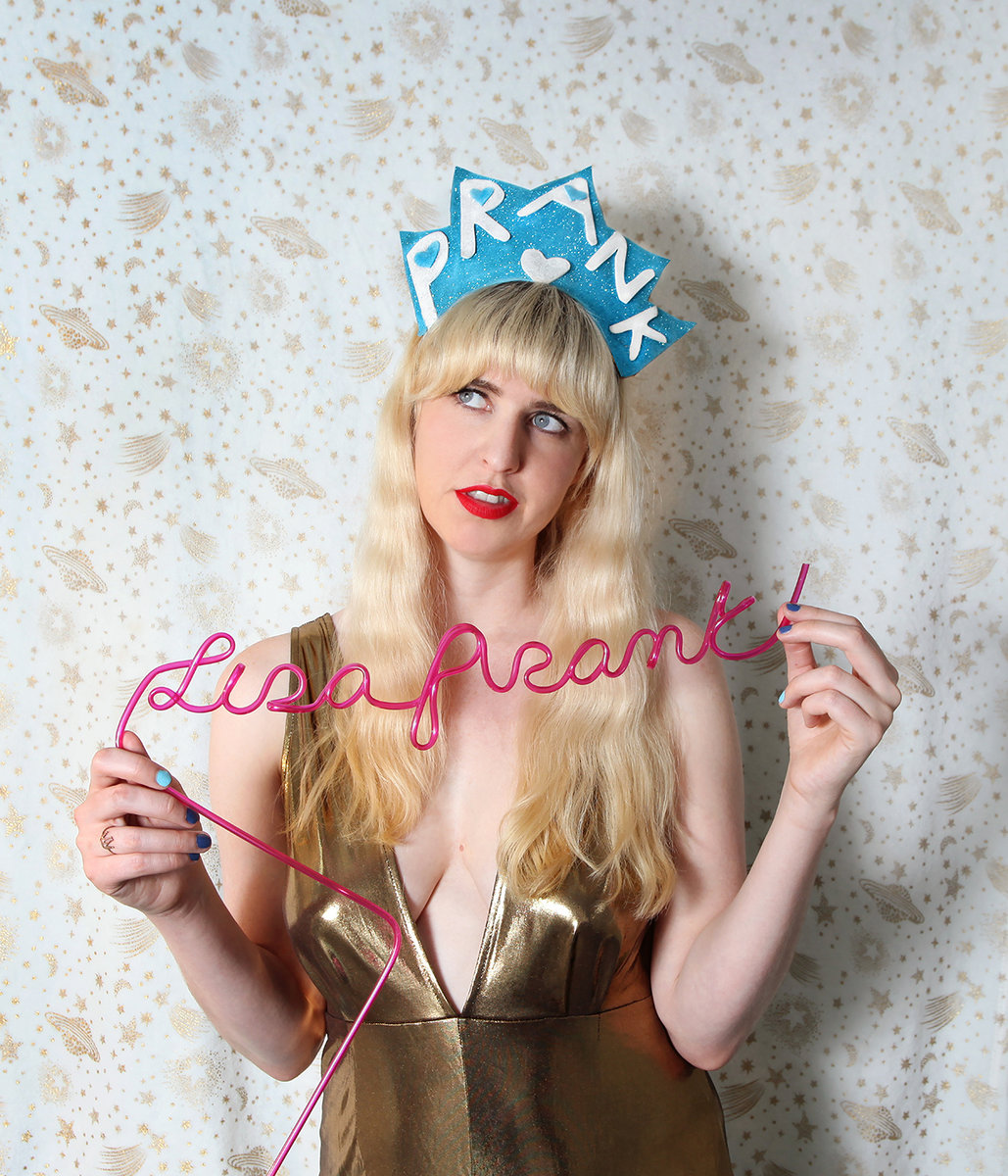
Lisa Prank is a true blue romantic. In fact, “I’m very preoccupied with romance,” songwriter Robin Edwards admits, “and I’m always trying to figure out what the deal with love is.” On her new record, “Perfect Love Song”, Edwards acknowledges the ultimate joke of love: that there is no perfect, so you’ll get tripped up while chasing it but what else could possibly be more rich, more exhilarating, more everything, skinned knees be damned? Stitching together pop punk panache and pillow talk introspection, Perfect Love Song finds Lisa Prank not in pursuit of the
flawless impossible, as the title may suggest. Rather, she’s interested in the entire experience of love and learning through it. “I never learned how to be mad,” Edwards sings on the reflective “Get Mad” but she did learn how to write totally gratifying pop songs about it, with the end of “processing my feelings, and hoping that other people can relate if they’ve been in a similar situation.” Perfect Love Song is an album that takes a soft focus gaze at romance’s sharpest points and edges, both the exciting peaks and the scary cliffs.As Edwards was navigating a drawn out, Lifetime movie level heartbreak, she found herself drifting back towards the home she had in her friendships. She moved back into her old room in storied Seattle punk manse, Spruce House, sharing a door with Tacocat’s Bree McKenna. She’d knock and ask McKenna for feedback on songs, who wound up playing guitar on the record. To produce, Edwards tapped old friend Rose Melberg of Tiger Trap. Melberg’s artistic alignment and personal closeness to Edwards gave her near psychic insight into Lisa Prank’s sonic goals,
but at enough remove to provide breakthroughs to Edwards at stuck points. It was a collaboration that felt like coaching. She helped Edwards step back and look at harmonies, percussion, guitar tones she may have not considered at first, but that helped her achieve her ideal polished punk sound.
Plus, it was fun in the studio, with friends around, creating the kind of lighthearted, mutually supportive feeling one needs surrounding them feel like themselves again after retrieving their heart back from a breakup.
“I love love songs, or falling out of love songs,” explains Edwards, “where I can see one moment of the situation and know what the whole story is.” Writing Perfect Love Song was Edwards’ opportunity “to personally say all the things that I wanted to say, or wish I had said.” In “Scream the Truth,” a gaslighting extinguisher anthem about reclaiming your sanity, she gets to be mad on her terms: “I wasn’t losing my mind,” she sings. Says Edwards, “its about seeing someone else navigate the world as a very nice guy whose very woke and feminist or whatever, and knowing the truth about him.” The first track, “Rodeo,” likens the searing, sinking in feeling of a
post fight realization “‘cause ‘I don’t wanna be in love’/means I don’t wanna be in love/with you” to the dangers and desires of the spectacle of love. “By now I know/this is the rodeo I chose,” she sings, electing to get back on her horse and ride, acknowledging the pain that’s part of that game.
“I wish a different emotion was so alive and exciting to me,” Edwards laughs, “but love is just the one that feels so visceral and consuming!” Perfect Love Song explodes the roller coaster snapshots of romance in bursts of poppy neon bright color, with Edward’s cheeky perspective
polished to full shine. “Lisa Prank has humor to it,” she says. “Some of the songs are really sad to me, but it’s still fun pop punk.” And the mission of that genre, one could argue, is to keep on bopping along through the bullshit of life. To stay buoyant, to find fun in the big what ifs and whatevers.
It what keeps the dream Lisa Prank afloat: as she sings on “Constellation,” “still I keep on hoping this is some perfect love song/and we’ll go on and on and on, and on and on, and on.”
Less than a month before the release of his physically and sonically mega box set Live/1975-85, Bruce went completely the opposite direction, stripping down to play his first all-acoustic set since 1972 at what would become Neil Young’s annual Bridge School Benefit Concert.
During a guest DJ session on E Street Radio, Nils Lofgren recounted getting a call from Bruce to join him for the Bridge (Lofgren was also on the bill as a solo artist). Along with Danny Federici, the trio worked up and rehearsed the set in a New York City studio in early October 1986. But as Nils tells it, in an anecdote that conveys deep admiration for the confidence and prowess of his bandleader, on show day at Shoreline, Bruce called a major setlist audible. It wouldn’t be enough to merely play acoustic; Springsteen would go one step further and open the show a capella.
Here was the biggest rock star in the world, last seen 12 months earlier wrapping his staggeringly successful Born in the U.S.A. tour in front of 85,000 fans at the LA Coliseum, taking the stage and singing “You Can Look (But You Better Not Touch)” accompanied only by his snapping fingers. Nils described Bruce’s audacious performance as Elvis-like in its physicality, and grainy bootleg video of the show confirms that. What an entrance.
The Bridge ’86 is a special show. The short but oh-so-sweet set reconnected Springsteen with acoustic performance and can be viewed in hindsight as helping spur a decade or more of solo appearances like the Christic concerts and acoustic recordings like The Ghost of Tom Joad that followed.
The line-up for the inaugural Bridge benefit included Bruce, Nils, Don Henley, Robin Williams (who briefly referenced his famous “Elmer Fudd does Bruce Springsteen” bit during his stand-up set that night), Tom Petty, and host Neil Young (who had his own special guests in Crosby, Stills & Nash). Not unlike the M.U.S.E./No Nukes shows, another benefit where some of these same artists shared a bill, “Broocing” throughout the concert made it clear who most of the audience had come to see.
Following “You Can Look,” Bruce delivers an astounding rebuttal to the jingoistic appropriation that surrounded the title track of his last album. “This is a song about the snake that came around and began to eat its tail,” Bruce says introducing his first public airing of the original solo acoustic arrangement of “Born in the U.S.A.” Any misconstruing of or ambiguity as to the song’s meaning is vanquished over the next five minutes in a spellbinding performance. Until the Bridge, one could only speculate as to what “Born in the U.S.A.” would have sounded like on Nebraska. Now we know.
Nils and Danny then take the stage, and we get an exquisitely rare outing for this E Street Trio. What magic they weave. “Seeds” arrives as a companion to “Born in the U.S.A.” Angry and defiant in 1985, the 1986 model of “Seeds” is instead weary and knowing, sounding like a tune from a bygone era. “Darlington County” is next, preceded by a mini-edition of the story that introduced “Open All Night” in 1984 of Bruce getting pulled over on the turnpike. Nils provides charming harmony vocals throughout the show, none better than what he offers here, as “Darlington” takes its time driving down from New York City.
Strumming and singing brightly, Lofgren shines again on “Mansion on the Hill,” as does Federici. Danny first vamps a little “Lady of Spain,” as Bruce gets his guitar ready, then adds rich accordion swells that paint the song an emotionally tinged hue.
“Fire” will be familiar to those who own Video Anthology on VHS or DVD, where the Bridge version was showcased. Before it starts, Danny is again tapped to fill time due to minor technical difficulties, and he drops a dose of Duke Ellington’s “Satin Doll.” Uncannily, Federici used the song in much the same manner in the earliest E Street days circa 1973-74. Though “Fire” is rightly remembered as a Clarence Clemons showcase, the acoustic version, carried by Bruce’s deep vocal, is pure delight, peaking when Lofgren and Springsteen raise their voices way up to sing, “your words they liiiiiie.”
“Dancing in the Dark” rides a particularly passionate lead vocal along with some fine accordion work from Federici in the final third that pushes the Shoreline audience towards rapture. “Glory Days” always had a bit of a campfire singalong vibe underneath it, and that comes through in this charming take that has the swooning audience joining in.
Serving as something of an encore, “Follow That Dream” lends poignancy to the evening as Springsteen dedicates the song to Neil and Pegi Young. In its River tour incarnation (as heard on the London ’81 archive release) “Follow That Dream” is stark and solemn. In 1986, it transforms into an uplifting song of hope, performed less as a mediation and more as an instruction.
For the final song of the set, “Hungry Heart,” the trio is expanded with backing vocals and guitar from special guests David Crosby, Graham Nash, Stephen Stills, and Young, putting a spirited ending on just under an hour of acoustic enchantment.
Bridge School ’86 is a significant moment in the rebirth Springsteen as an acoustic artist. Since that show, Bruce has done two fully acoustic tours and a Broadway run that carried on in the spirit of ’86. Perhaps someday, Bridge School ’86 could still inspire an E Street Trio tour as well.
The city and the country both have distinct, vibrant energies – but there’s something happening in between, too. As factories give way to fields, and highways drift into gravelly roads, the friction can be palpable, the aura electric.
The lines between city and country were on Jack Cooper’s mind when he named his new band Modern Nature. He took the phrase from the diaries of filmmaker Derek Jarman, written on the coast of Kent in his Dungeness cottage. Visiting Jarman’s home, Cooper was struck by what he calls a “weird mix of urban and rural” – such as the way a nuclear power station sits next to open grasslands.
On Modern Nature’s debut album, “How to Live”, urban and rural cross into each other. Plaintive cello strains melt into motorik beats. Pastoral field recordings drift through looping guitar figures. Rising melodies shine with reflective saxophone accents. Throughout this continuous work, where no song ever really seems to end, there’s an indelible feeling of constant forward motion. It’s as if the band is laying down a railway and riding it simultaneously, and you can hear all kinds of landscapes passing by.
The endless feel of c was inspired by Cooper’s experience making his 2017 solo album Sandgrown. It was the first time he made a record with a defined theme – a suite of songs about his hometown of Blackpool – and imposing a narrative framework turned out to be refreshingly liberating. “When I started thinking about a new project,” he recalls, “going back to making an album of unconnected songs seemed as strange as making a movie with completely unconnected scenes.”
As he began writing songs, Cooper was also tuning to the vibes of Earth Loop, an instrumental solo album by BEAK>’s Will Young (under the name Moon Gangs). For a long time, Cooper had hoped to work more with Young, who almost joined his first band, Mazes, and was in the touring version of his next group, Ultimate Painting. So he decided now was finally the time, as he puts it, “to make good on hundreds of late night ‘we should really do music together’ conversations.”
“Over the next few weeks I started sending Will songs, and we began meeting up, working on ideas and formulating the bigger picture as it were,” Cooper recalls. “Approaching the album as a film or play made complete sense, and from that came the idea to have a very defined narrative, reoccurring themes and chord progressions, field recordings and a set palette of instruments and sounds. Each song came with pages and pages of notes, musical references, films, books, places, words and feelings.”
Cooper is hesitant to explain too much about How To Live’s story, preferring to let the listener to find his or her own narrative to fit what they hear. But he can offer some guideposts. “Broadly speaking, the album moves from an urban environment at the beginning to an escape at the end…whether that’s solitude or acceptance or isolation,” he says. “At the beginning the songs reflect a different type of isolation, the sort of isolation or disassociation one can only feel in a very crowded, hectic environment.”
The vibrations of these environments come across immediately on How To Live. The album’s first line is “There’s a hum in the street,” and the rest of the hypnotic “Footsteps” masterfully paints a picture: “the click repeats, repeats, repeats”….”Isolation, repetition, spark burst fission”…”turns loops to the point in which they meet.”
Throughout the remainder of the record, ideas recur and sounds return, often forming new shapes. A careful guitar pattern sprouts into the halting “Seance”, which ends with that same guitar pattern flipped into reverse. The beatific “Peradam” revels in the cycles of nature, as Cooper asks to be led “out of spirit worlds, let it whirl, out and in, swirling like fireflies. The pulsing “Nature” takes a darker view of our current environment, calling it “the great failure” and concluding with the imperative to “lock them up and don’t forgive them.”
The richness of the ideas in these songs is matched by the resonance of the music. Cooper and Young’s organic compositions gain skin and muscle through the thoughtful cello of Rupert Gillett, the insistent drumming of Aaron Nevue (of compatriot outfit Woods), and the expressive saxophone of Jeff Tobias, from Brooklyn jazz/rock juggernaut Sunwatchers. Each track on How to Live evolved as these creative forces joined the group, and it shows. The entirety of How To Live courses with both precision and vitality. The band is closely tuned to the core of each piece, but also unafraid to throw themselves into every moment.
The care that went into How To Live is clear in album notes, which map out impressionistic ideas behind each step – one block describes the song “Nightmare” as “the calm after the storm, nihilism, acceptance!! HOW TO LIVE??” – and include a list of the music and film that inspire Modern Nature. You can hear traces of those influences throughout the album – the subtle mediations of Talk Talk, the stirring folk of Anne Briggs, the searching melodies of Robert Wyatt, the atmospheric waves of Harmonia.
But ultimately, the music on How to Live speaks for itself. It’s a work of surprising layers and limitless depths, impressing more strongly with each listen. Modern Nature may have been inspired by the line between urban and rural, but with How To Live they’ve gone a step further, and created their own complete world.
Hovvdy’s third full length album, “Heavy Lifter”, is out October 18th, 2019.Charlie Martin and Will Taylor met at a baseball game while on tour drumming for different bands. Back home in Austin, the two Texas natives discovered both held batches of compatible songs, intended for solo projects. They merged as Hovvdy instead.
Penned separately, the duo’s first-ever songwriting efforts coalesce seamlessly on debut LP Taster . To this day, Charlie and Will create like satellites on the same orbit, combining bedroom recordings into a singular worn-in sound. Their downtempo rock found an audience in the Austin and New Orleans scenes, elevated by support from small indie Sports Day Records.
Brooklyn label Double Double Whammy re-released “Taster” in 2017, followed by “Cranberry” in 2018. The sophomore work solidified the group’s sturdy guitar strums and rhythmic instincts, enveloped in nostalgic glow. Third LP “Heavy Lifter” finds new dimensions in the Hovvdy soundscape.
For Heavy Lifter , the duo worked with producer, engineer, and multi-instrumentalist Ben Littlejohn. Throughout Autumn 2018, the team built out the album in makeshift home studios around Texas. Both singers’ voices cut through more decisively than ever, carried by vivid storytelling and production eccentricities.
Familiar fuzz maintains the warmth of past work, but Heavy Lifter is never muffled. Clear-cut characters and scenes emerge in the 13 tracks. Antsy love song “1999” wanders around a small town, while bright pop piece “Mr. Lee” retells a lonely day in reverent detail. Lo-fi Daniel Johnston moment “Tell me I’m a singer” empathetically enters an artistic perspective, unwound lyrically as: “Tell me I’m a singer.”
You can get an early taste via first single and video, “Cathedral,” that blankets you, warm and comforting, in a drowsy sort of way.
Memories inform present decision-making throughout the album. Two tracks dive into family legacies, “Pixie” admitting “outside my mind/ is where i’m gonna be/ not what i had hoped at 14.” “Sudbury” recounts childhood major league dreams: “front yard catch, you got a plan/ to be a baseball star/ texas ranger shortstop.”
Breaking from the confines of guitar-based slowcore, pop and hip-hop influences expand Hovvdy’s established framework. Propulsive, straightforward hooks usher in autotuned tweaks, chugging beats and genre exploration. By pulling apart slightly, Charlie and Will step into new spaces on Heavy Lifter . Always in sync, it’s a balanced effort.
Fans of Colleen Green probably know that blink-182 has always been an influence on her lo-fi indie punk — she released a cover of “M+Ms” off their 1995 debut album Cheshire Cat back in 2010 — and now she is releasing a full covers album of their 1997 sophomore album “Dude Ranch”. She says that she actually first recorded the album in 2011 but lost it when her computer crashed, but now the idea is finally fully coming to fruition. Colleen drastically slowed down and recorded with just her voice and a distorted bass. It’s blink-182 like you’ve never heard them before, but the melodies remain untouched and these stripped-back renditions remind you how good blink were at writing pop songs even before the TRL days.
I don’t remember where or when I got the idea to cover my favorite album of all time. , I don’t remember much of 2011. All I know is that sometime about 7/8 years ago, I decided that I was going to cover Blink 182’s “Dude Ranch” in its entirety…on bass. I borrowed a short scale from my friend Sandy Vu and gave myself 2 weeks to complete the project. 13 days later as I was applying the finishing touches, my computer started acting funny. I thought to myself, “Gee, I sure hope my computer doesn’t crash.” 14 days later, my computer crashed. I had no back ups because I always fly by the seat of my pants! I tried to recover my work to no avail. I was heartbroken, so much so that I was unable to revisit the project in earnest until October 2018. Today I can say with much pride, happiness, and relief that “Blink 182’s Dude Ranch as played by Colleen Green” is finally real and ready to be enjoyed by fans of Colleen Green and/or Blink 182. This was truly a labor of love and I hope that those fans can recognize and appreciate that. And to the band who has influenced me and my life in so many ways: Thank you.
“Dude Ranch” by Blink 182 as Played By Colleen Green available on Burger Records (2019) Released August 6th, 2019.
Mexican Summer Records have announced a new Ariel Pink set of reissues series, “Ariel Archives”, along with a video for the previously unreleased song “Stray Here With You,” plus as well as a video for a reworked version of “So Glad,” from the Loverboy reissue, and part of Dedicated to Boris Karloff, a longer film that was directed by Salvador Cresta.
Ariel Pink – “Stray Here With you” from the album ‘Odditties Sodomies Vol. 2’. is part of Mexican Summer’s ArielArchives project. Ariel Archives is a comprehensive series of reissues and retrospective collections concentrating on the treasure trove of material recorded and released by Ariel Pink as Ariel Pink’s Haunted Graffiti.
Ariel Pink – “So Glad” from the album ‘Loverboy’. is part of Mexican Summer’s Ariel Archives project. Ariel Archives is a comprehensive series of reissues and retrospective collections concentrating on the treasure trove of material recorded and released by Ariel Pink as Ariel Pink’s Haunted Graffiti.
The first installment of Ariel Archives is due out October 25th via Mexican Summer Records and includes reissues of Ariel Pink’s Haunted Graffiti albums “Underground” and “Loverboy”, as well as the rarities compilation Odditties Soddities Vol. 2. Check out the three videos below, as well as the cover art for each release.
Underground was originally self-released on cassette in 1999 when Ariel was 21. Loverboy came out in 2002. Odditties Vol. 2 includes “non-album tracks, outtakes and rarities spanning 1999 – 2018,” including collaborations with John Maus and Mac DeMarco, also including a Smiths cover, and four songs recorded recently, in 2017-2018.
If First Taste is your, well, first taste of Ty Segall, it might be easy to brush him off as self-indulgent noise rock. The album is overly-produced and as gaudy as a paisley shirt, sure, but it’s also immensely compelling, inventive and fascinatingly unhinged, all while still maintaining a tight control and an understanding of how to reign it all in to create an actual song from the mire of noise
“Ice Plant” is Segall at his most sparing. Gone are the fuzzy freak-fests and instrumental meltdowns; here are the airy vocal harmonies. Shannon Lay, the newest member of the rotating Freedom Band, duets with Segall on the track. Her voice is a lovely match for Segall’s, together imbuing the repeated refrain “Let your love rain down on me” with a disarming affect. Simple percussion and pianos bookend the song, which is otherwise entirely vocal.
On the toes of a 10-week residency at the Teragram Ballroom and the release of his brand new album, “First Taste”, Psych/Garage Rock virtuoso Ty Segall came by the KCRW Studio for his 5th MBE Session! 5 sessions in almost as many years and something like 15 albums, not including albums from other bands he plays with and/or is a part of, Ty Segall is like a cosmic beam of pure rock-n-roll energy.
With his Freedom Band mates – Emmett Kelly, Ben Boye, Charles Moothart, Mikal Cronin and Shannon Lay – plus a deep set up with doubles of everything, from two drum kits and bass guitars to kotos, omnichords and bazukis, Segall played all new work from First Taste for almost 40 mins.
Although the new work is undeniably Ty Segall, the instrumental set up pushes the boundaries of the fuzzy, more traditional Garage sound into a hazy world psychedelic and proto-prog rock vibe. Like, for all the T.Rex and Stooges action and Hawkwind nods.
A number of KCRW friends and colleagues watched the performance from the Mezzanine while absolutely face-melted and slack-jawed. I know for a fact that I was making a really gross stank face for most of the set because the grooves were so disgusting and the bass, drums, and SAX were gut churning. It was a beastly trip and I LITERALLY CANNOT emphasize this enough…GO SEE THEM.
They opened the set with a full on ripper, “Taste,” and followed it up by leaning into a loping, skronky groover “Whatever” before getting to the first of our live highlights, “Ice Plant.”
Possibly one of the loveliest tracks in this dude’s oeuvre, “Ice Plant,” which has serious Marc Bolan meets Syd Barrett in Strawberry Fields vibes, wistfully floats on a mellotron-ish mist of keys and Ooos and Aahs before exploding into a super glammy freak-out. Like finding a lit firecracker in your banana split.
The set kept steam rolling through everyone’s faces and guts with “The Fall” and “I Worship The Dog,” during and after which the preternaturally boy-faced Segall kept panting and occasionally barking. He’s a grown ass man, but so help me, if I could’ve, I would’ve pinched his cheeks. They then went into “The Arms” which is probably the most straight-ahead Psych/Garage tune they played, however the high pitched Bazuki phrases really lit the track up with Turkish Psych vibes that made me wanna lay down on the carpet and go for a ride. It was really, really nice.
The band kept in that mode with “I Sing Them” before closing with the seriously heady “Self Esteem,” which I imagine is what you’d get if you crash landed a plane on a desert island with a bunch of marching band kids and they had nothing to eat but psychedelics and Can and Yes records. It was a riot and made me wish I could watch it all over again immediately.