Dear friends, I realized recently that it’s the tenth anniversary of the release of Rook, the second of our three Matador albums, and one that has a special place in my heart. (It’s also, strangely, the only SW LP that I no longer own; I’ve tried to convince Matador to reissue it on vinyl, but so far to no avail.)
It’s hard to remember some things about the sessions for it now, up at the Echo Lab in Argyle, Texas. The electric guitar wasn’t speaking to me then for some reason, so I mostly played the studio’s piano and my little old acoustic on the album, which features some of my favorite performances from Thor, Kim, and Howard, as well as some beautiful string arrangements by Mark Sonnabaum. Matt Barnhart guided the whole thing into shore, and was very patient with me when I wasn’t quite sure what I wanted – which, in those days, was most of the time.
I remember Thor dismantling a dead oak by the studio, turning its limbs into beautiful firewood that seemed to burn forever in the fire pit out back; I also remember the sound of coyotes and barred owls calling to one another in the ravine down below, and kettles of turkey vultures wheeling overhead.
We premiered the album in New York with a live performance at Florence Gould Hall (which you can find here), which included a string section, a grand piano, and our dear friend Elaine Barber on the harp—as well as two brand-new members in Jordan Geiger and Kevin Schneider—and I don’t think I’ve ever been so nervous before a show. I remember willing my hands to stop shaking before “leviathan, bound”, and a sweet little moment of silence in “lost boys”; and a great feeling of relief when it was all over. That was back before I really thought about writing songs that felt comfortable for me to sing, so the melodies seem almost absurdly high-pitched and complicated to me now when I listen back.
I’ll be posting a few odds and ends related to the album, but I don’t have a deluxe edition to sell you, or anything like that. What I do have is a feeling of deep gratitude to all of you, many of whom I first met way back then; you’ve been keeping me going ever since.
I feel very lucky to have met and worked with so many extraordinary people for so long.
Recorded live at Florence Gould Hall in NYC May 5th, 2008.
To commemorate the 20th Anniversary of the release of Rook, JM made a video with his thoughts on the album, and shows some artifacts from the making of the album. He also sings “I Was A Cloud”.
Last month they shared the track ‘Animal’, now Spring King have aired another new track from the forthcoming album ‘Us vs Them’.
“I never thought much about the old haunts and memories until now. Reliving moments gone, and seeing how much life has changed. Now I really see the way in which time has passed, and where I stand today is the consequence of everything I once did. I can feel my whole world changing, softly in the morning sun,” says guitarist Pete in relation to the muscular, scuzzed-up, coming-of-age anthem, where reflective lyrics meet skyscraper-sized riffs.
The band have also announced details of their second album, the follow-up to 2016’s ‘Tell Me If You Like To’, along with a September UK tour with September 26th NOTTINGHAM Rescue Rooms.
‘A Better Life’ is arriving on August 17th, with Tarek Musa in the production hot seat.
We are proud to announce we are releasing a new album this year. For everyone who has supported us, come to see us play, and made this journey so exciting and memorable up to now, this is for you.
We hope you can share this far and wide, with everyone you think would love this record. We hope you can join us for the next step in the world of Spring King.
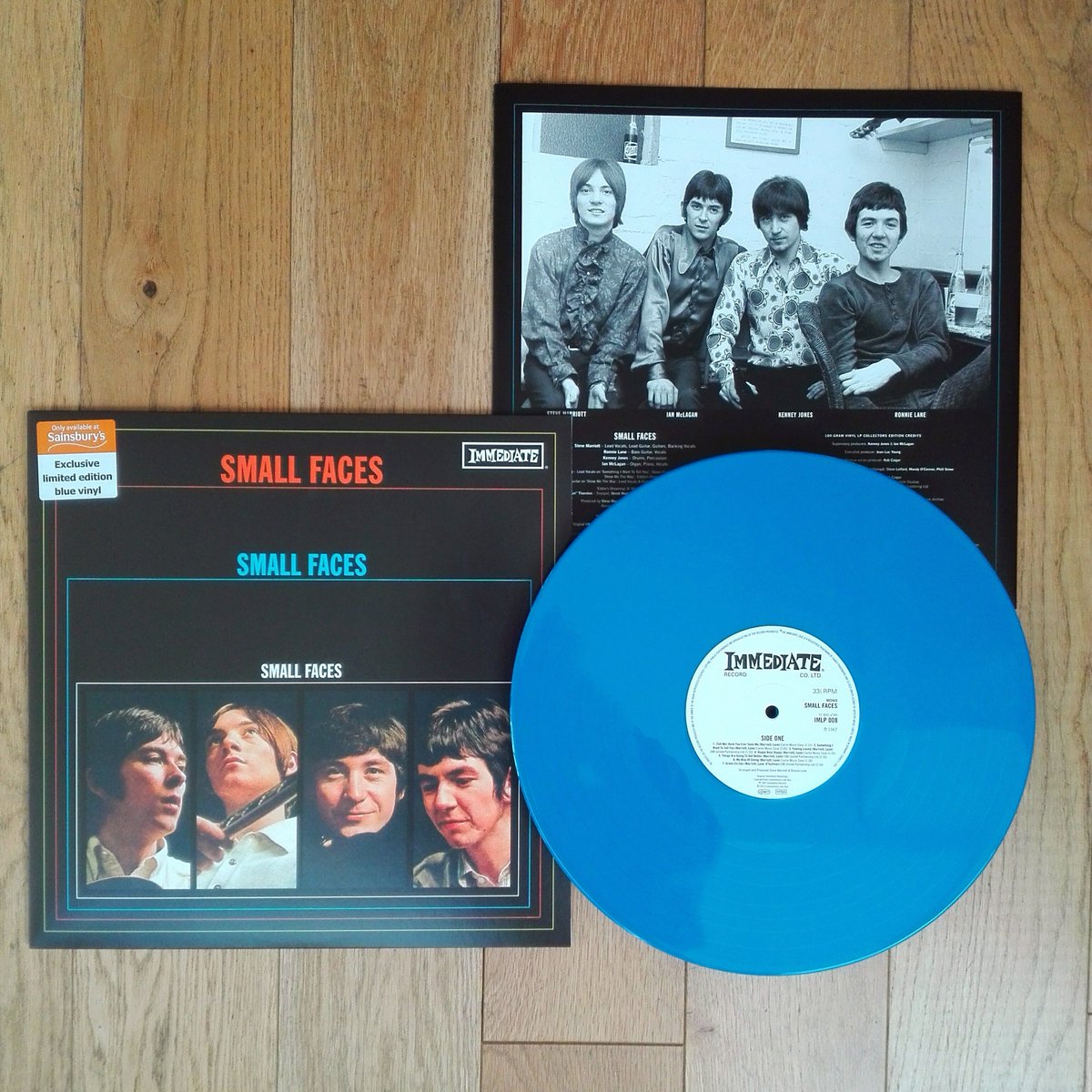
Released in June 1967 the same month as the Beatles’ ‘Sgt Pepper’, ‘Small Faces’ is the band’s first album for Immediate Records, recorded at IBC and Olympic Studios. With lead vocals shared between three band members it has been described as their first “grown-up” record and a “neglected gem” which saw them develop a more fully-formed sound.
The Small Faces were Mod to the core, but could also play instruments. The band members were lead singer/guitarist Steve Marriott, bassist Ronnie (“Plonk”) Lane, drummer Kenney Jones, and organist Ian McLagan (who replaced Jimmy Winston early on). All four stood under 5 feet 5 inches tall (Eric Clapton, upon meeting them for the first time, said they all looked like little “haw-bits”). Their short stature, mischievousness, and stylish Carnaby Street threads made them the most eye-catching band in England for a time,
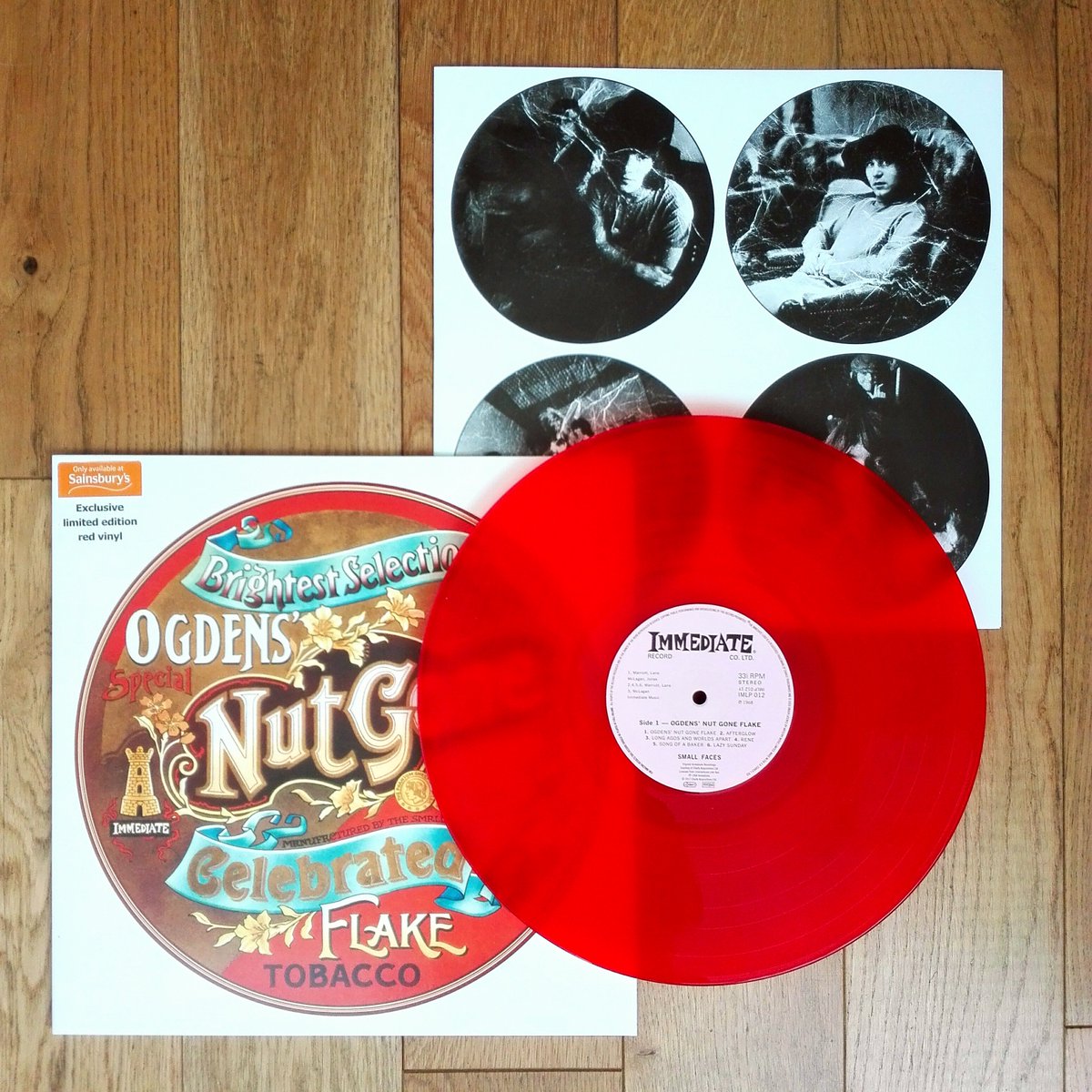
Two extraordinary Small Faces release from Immediate Records albums were requested by Sainsburys as exclusive coloured vinyl editions. Released 1st June and limited to 2,500 and in every UK Sainsbury’s that stocks vinyl. Ogdens‘ is stereo, Small Faces mono. The last five years have seen a massive programme of tape recovery and upgrading with the full co-operation and endorsement of both surviving band members. Kenney Jones has given access to his personal tape archive and many of the band’s original master tapes and session multi-tracks, previously lost for over forty years, have been discovered and re-mastered. It is thus now possible to present the Small Faces’ recordings sounding better than at any time since the 1960s. The Re-Masters series also presents a host of newly discovered tracks and alternative versions, alongside original artwork, photos, rare publicity material and memorabilia with comprehensive new sleeve-notes based around band interviews.
One of Britain’s most influential bands of the Sixties and a major influence on the new wave of Britpop bands, the Small Faces hit their creative and commercial highpoint with their psychedelic concept album Ogdens’ Nut Gone Flake. Released in May ‘68. Ogdens’ Nut Gone Flakeis considered a classic by “those in the know,” but often overlooked when classic rock albums are bandied.
Ogdens’ was the first record released in a round sleeve, designed to resemble an old tobacco tin, and the name parodies an 1899 brand of tobacco. The sleeve unfolds to four circles with moody black-and-white pics of the band members by famous photographer Gered Mankowitz . Musically, Ogdens’ is equally mind-blasting. After the Beatles’ Sgt. Pepper, Ogdens’ was the first “concept album,” preceding both S.F. Sorrow by the Pretty Things and The Kinks Are the Village Green Preservation Society by several months. The second side is a Ronnie Lane-inspired musical fairy tale about “Happiness Stan,” who goes on a quest, assisted by a friendly fly, to find the other half of the “dangly” moon. Linking various musical snips is daft narration by English comic Stanley Unwin, who combined the Small’s cockney slang with his own nonsensical “Unwinese” speak
A bona fide classic of the late Sixties, Ogdens’ was released on the famous Immediate label in the summer of 1968 and went straight to the number one spot in the UK album chart, remaining there for six weeks. A heady blend of cockney music-hall humour, tough rock numbers, blues and psychedelia, it spawned two of the group’s biggest hit singles in Afterglow (Of Your Love) and Lazy Sunday.
The six tracks which made up side two of the original LP are introduced by Stanley Unwin, one of Britain’s most popular comedians of the day, renowned for his inventive use of English.
The fourteen bonus tracks are highlights from the group’s time with Immediate Records from 1967 to 1969.
As well as hit singles such as Itchycoo Park, Here Come The Nice and The Universal, these include live recordings of Tin Soldier and their 1966 Decca number one single All Or Nothing, plus their memorable duet with label mate P.P. Arnold.
The Small Faces : Steve Marriott on Vocals and Guitar, Ronnie Lane on Bass, Kenney Jones on Drums and Ian McLagan on Wurlitzer Piano and Hammond Organ were rogues and rounders,
Written largely in New York between Summer 2016 and Winter 2017, Josh Tillman’s fourth Father John Misty LP, God’s Favorite Customer, reflects on the experience of being caught between the vertigo of heartbreak and the manic throes of freedom.
After converting sharply honed cynicism and rampant misanthropy into a collection of witty, often scabrous and somehow deeply soulful songs on Father John Misty’s 2017 release Pure Comedy, Josh Tillman more fully targets himself on the follow-up. God’s Favorite Customer is a self-lacerating piece of work, mostly written during a six-week stretch in 2016 when he was living alone in a hotel room in the midst of an existential crisis. He’s opaque about the cause, but not the effects: The album plays like Tillman is watching himself have an out-of-body experience as he, or his Misty persona, behaves erratically in public, sends alarming texts to his wife in the middle of the night and repeatedly questions whether love is redemptive enough to save him
God’s Favorite Customerreveals a bittersweetness and directness in Tillman’s songwriting, without sacrificing any of his wit or taste for the absurd. From “Mr. Tillman,” where he trains his lens on his own misadventure, to the cavernous pain of estrangement in “Please Don’t Die,” Tillman plays with perspective throughout to alternatingly hilarious and devastating effect. “We’re Only People (And There’s Not Much Anyone Can Do About That)” is a meditation on our inner lives and the limitations we experience in our attempts to give and receive love. It stands in solidarity with the title track, which examines the ironic relationship between forgiveness and sin. Together, these are songs that demand to know either real love or what comes after, and as the album progresses, that entreaty leads to discovering the latter’s true stakes.
God’s Favorite Customer was produced by Tillman and recorded with Jonathan Rado, Dave Cerminara, and Trevor Spencer. The album features contributions from Haxan Cloak, Natalie Mering of Weyes Blood, longtimecollaborator Jonathan Wilson, and members of Misty’s touring band.
“God’s Favourite Customer” is out 1st June on Bella Union Records.
Dave Matthews Band has released yet another new single, “Again And Again”, from their upcoming album, Come Tomorrow due out on June 8th via RCA Records. This marks the third single released off Come Tomorrow, following “Samurai Cop (Oh Joy Begin)” and “That Girl Is You”.
The track originally debuted along with two others at the band’s 25th-anniversary show in 2016, with Dave taking a rare turn on keys. At the time, Matthews noted that it was as-of-yet untitled, but printed setlists dubbed the track “Bob Law”. Now officially re-named “Again And Again”, the catchy, bass- and synth-forward recording shifts deftly from somber and brooding to sunny and joyous, making for an at-once fresh and familiar sound that DMB fans are sure to love.
Come Tomorrowwill be Dave Matthews Band’s ninth studio release, serving as a follow-up to 2012’s Away From The World, it was created in studios across the United States and with several different producers, including John Alagia, Mark Batson, Rob Cavallo, and Rob Evans.
Once released, Come Tomorrow will be available in CD, digital, and cassette formats. The band also notes that they’ll release a limited-edition white-vinyl 4 LP set exclusively through the DMB and Warehouse Official stores.
Dave Matthews Band is currently in the midst of their extensive summer tour.
Hovvdy’s debut LP was nothing’ short of lovely. there are too many reasons to count why y’all should be excited about ‘Cranberry’ It feels like Austin indie duo Hovvdy have been rolling out their sophomore album, Cranberry, for years — actually, lead single “Petal” dropped in late October and now at last the whole, beautiful thing is here for your enjoyment. In addition to “Petal,” we’ve also heard “Late,” “Cranberry,” and “In The Sun,” all of which provided a good sense of the album’s sighing lo-fi slowcore feel. Surveying the album in full is like being suspended in a state of waking up from a dream in a very comfortable bed. I recommend getting under a blanket and enjoying it on this frigid February day — especially if you’re into (Sandy) Alex G, American Pleasure Club, and the like.
Bass on 1, 2, 4, 6, 8, 9, 12 by Ben Littlejohn
Bass on 10 by Hannah Read
Drums on 1 by Andrew Stevens
Add’l Drums on 9 by Andrew Stevens
Backing Vocal on 9 by Mallory Howard
Pedal Steel on 9 by Ben Littlejohn
The album was written, the tour scheduled, the pieces all in place. It had been almost two years since Natalie Prass’ self-titled debut garnered rave reviews for its luscious, baroque-pop sounds. At the end of 2016, the singer-songwriter’s sophomore follow-up was almost ready to be released. Then the election happened.
“I had a record ready to go,” Prass says. “And I scrapped it.”
What followed was a trying time for the Richmond, Virginia, native, full of soul-searching, dark thoughts, and a protracted fight with her (now former) record label. But Prass was insistent. “I can’t release a neutral record right now,” she says. “I need to contribute to the conversation.” Her determination and focused songwriting has finally led her to her new album, The Future and the Past.
It’s been three-and-a-half years since Prass’ debut, and her newest effort has her returning in fighting form. She once again worked with producer Matthew E. White and the Spacebomb House Band, who are quietly earning a reputation as one of the best house bands around. Prass’ gorgeous orchestral strings are back, but with a smaller role this time around. Instead, she’s rummaged through the thrift shops of music history, dusting off artifacts of funk and soul, Brazilian tropicalia, indie folk, and bedazzled LA rock. The result is eclectic, fun, and thoroughly groovy — a polished statement of raw feeling.
“Oh My”: At the time I was writing these songs in 2016 and 2017, right after the election, I was pretty raw and feeling so many emotions. The news was just pounding down on all of us. It was a lot to handle and feeling like my life was changing and the country was changing and the world was changing really quickly.
So, I would go to my little rehearsal space — I shared this shitty rehearsal space with metal dudes for a while. I would go there in the morning time when there were no metal people playing and lie on the floor and cry. Read, write, play piano for a little bit, and cry. I felt like it was my responsibility to try and put some positive energy into the world and talk about things that were very real. The only thing that was hard about it was convincing the label I was with at the time that it was a good idea, because they were not into it at all.
“Short Court Style”: So, “Short Court” was already gonna be on the other record. For that one, I already wrote the music for a short film called Oh Jerome, No that was written by Teddy Blanks and Alex Karpovsky. They asked me to write the music for it, and I wrote maybe five or six tunes for that little short film. That was the opening track, the montage, without lyrics or anything. Then when the short film came out, people were hitting me up like, “Where do I get that song? I need that song.” So, I was thinking, “Oh, I should just write lyrics to this and make it an actual song I can put on my record.” Usually, the melody and chords come to me pretty effortlessly, and then I start building from there. Usually, when I co-write, I have people who help me fill in lyrics and help me put my thoughts together. Usually, the chords and the melody are what I feel most confident about.
“Interlude: Your Fire”: It’s funny, I didn’t intend for that to be split up. Everybody was like, “”The Fire” should be a single, but we need to split up that intro and make it a separate track,” and I was like, “No!” But I get it. It was intended to be all one piece, but it’s kind of cool; a lot of my favorite records have interludes, so I was like, “Ok, ok, I’ll split it up.”
“The Fire”: I wrote a version of that song in Nashville with my buddy Mikky Ekko. We wrote that a long time ago, and then I couldn’t remember how it went. That song was on an old laptop that died. I’m really bad with technology, so when a computer dies I’m like, “Well, that’s it.” But that one…I went from memory, and kind of re-wrote the whole thing. I thought it was a good story of feeling in-between, of knowing you need to get out of something but feeling stuck at the same time. The whole…the future and the past… stuck in-between, very much in the present – knowing what has happened and what led you here – But what’s going to happen in the future?
“Hot for the Mountain”: That one is a protest song, a political song for staying focused. You might feel like you’re the only one, but you’re not. “Hot for the Mountain”, like, it’s not gonna be an easy way, but just stay positive. It’s kind of like, “You’re not alone.” I feel really numb to a lot of stuff now. I’m just trying to focus on the big picture, doing what I know I can do, making sure I always vote — that is so important to me now. It’s like, “Oh, I’ll do it on the big election.” But now it’s like, “No, I am always going to stay up on it” and be involved in my local elections, especially. I knew it was important before, but now it’s a very high priority.
“Lost”: That one goes with the Me Too movement. I really didn’t want that song to be on the record. I didn’t want to give the person it’s about any kind of ammo against me. The Me Too movement has been really hard on me, personally, because it’s really painful to remember things that have happened to you — but I’m so grateful for it at the same time. Now there’s all this language, there’s all this support, when you just felt like you were so alone … People were like, “You just have to deal with it and move on.” Which, yeah, you have to move on. You can’t live your life in pain like that. It’s nice to know there’s brave women out there and they’re telling their stories. I’m a pretty private person, but I think it’s important to have solidarity with people who have had experiences like myself.
“Sisters”:
Matt’s the producer. He’s been my buddy for a very long time and is like a big brother to me, and he lives a 10-minute walk from my apartment. I went to his house almost every day during those couple months and spent a lot of time sitting in his kitchen drinking coffee. He had this drum machine, and he had this beat he made on his drum machine, and I was like, “Oh, that’s what I’m feeling right now. Let’s write to this beat.” It was a heavy-hitting kind of beat, and I wanted it to be kind of like a fight song for how I was feeling. I was feeling extremely hopeless at the time, feeling that people don’t want to listen to women, people don’t want women leaders, women cut each other down, men cut women down, there are so many deep stereotypes, and women are pitted against one another. Basically that entire song is A Minor. I was listening to a lot of gospel music when the election happened. I wanted to put some of that feeling into the new music I was writing.
“Never Too Late”: The label I was with before I parted ways with them — after this record (laughs) — they were like, “How would you feel about going to LA and writing with some people?” I was like, “Sure, I’ll try it.” And that was the worst month of my life. These people… All right, they’re just trying to get by, like me, and they have to hustle way more than I do because I live in a very cheap city, and they live in LA. Of course, they want to write music that could potentially make money. But that’s not where my interests are. I was miserable. It made me feel like the one thing I know how to do very well I don’t know how to do. People were treating me like I didn’t know how to write music. We couldn’t agree on anything.
My publisher, who I’ve been working with since I was 23 years old, was like, “Hey, Nat, there’s this guy out there, Steve Lindsey, this old LA scene kind of guy. I feel like you might like him.” He’s this old LA session dude. Used to play with Toto back in the day. He knew exactly where I was coming from. It was this bright light in the middle of all the terrible. I was having fun, relaxing, like, yeah, “Let’s write this glitzy, shiny, Steely Dan kind of song.” Of course, I don’t relate to the people my age or the people younger than me. I relate to the people 70 and up. That’s so me. We wrote that song super fast. I had the melody already. For the chorus, either, “It’s too late,” or “It’s never too late.” They helped me tighten up the loose ends. But I had a pretty solid idea of what I wanted to do already.
“Ship Go Down”: I really love psychedelic tropicalia music. Tropicalia music was a huge political movement, and I was taking inspiration from how they expressed their political views. Brazilian music has the most beautiful melodies, harmonies, and it’s groovy: it takes from jazz, pop, R&B, and american blues. The lyrics are really meaningful and thought-provoking and poetic, talking about politics in Brazil at the time.
No place is perfect, and I always thought America had a ton of problems. But I at least felt like we were moving in the right direction. I thought, “There’s no way people are going to vote for this…” I was so naive. I knew it was going to be close. Then the shock. Going out in Richmond — and Richmond is very progressive — but going out, thinking, “Who did they vote for? Who did they vote for?” Feeling like I don’t know where I live anymore. That’s definitely the darkest song on the record.
“Nothing to Say”: I’ve had that one for a long time, and I’ve always wanted to record that one, and I thought the time is right now. There’s so many talking heads. That one was funny when we were recording it in the studio, because Matt was all, “I don’t know what to do with this song,” and I was like, “I got it, I got it, I got it! We’re going to record this marble bouncing off the floor, and then we’re going to have this bell sound!” And then Matt just basically cleaned up the huge mess I made.
“Far from You”: That one’s written about Karen Carpenter. I’ve always loved her; I’ve always thought she was this beautiful soul. She’s very misunderstood, and people often only think about her in terms of how she died [from complications due to anorexia]. But there’s so much more than that. She was from a time when women didn’t play drums; women were up front and singing. She didn’t have a choice. Her label and everybody pushed her out from the kit. Once she got pushed out front, the body shaming started. It got to her head. She started to feel like she didn’t have any control over her career and what she was doing musically. The one thing she could control was her diet. Always in a competition with her family, who favored her brother. You can hear how kind she is and how much she just loves singing and gets a joy out of music. I wanted to write a tribute to her.
“Ain’t Nobody”: That was straight up trying to bring joy into a harsh reality. You have to keep moving and stay energized. We weren’t intending it, originally, to be such an upbeat tune. We were thinking it would be a little more subdued, almost more of a piano, mid-tempo groove sort of thing. But once we got in the studio, I was like, “This isn’t what I need right now. We gotta pick this up.” It took a long time for us to figure out where that one was supposed to sit, but it got there. That’s what’s so fun about creating and putting a production together. If you have a pretty solid song you can mold it to be whatever you want it to be. I wanted to end on a high note.
The Future And The Past is bursting with a myriad of grooves and Natalie’s vocals float on top, light as a feather and tough as nails. Short Court Style dials the tempo into 90s R&B territory – punctuated by handclaps, sampled “woos,” and a Dr. Dre-esque whistling synth line. Lyrically she wields a sharp knife as well. The love tornLost begins with: “Turn up the fader, its like a lightning bolt / we can’t be saved, so now I’m listening on my own / Once there was a time when you had me hypnotized / you realized that your finger prints were on my bones.” Funky feminist anthem Sisters is an empowering rallying cry: “I want to say it loud / for all the ones held down / we gotta change the plan.”
The Toronto singer’s album is a country and gospel-infused meditation on death and mourning that flickers between the broadly universal and the devastatingly personal.
This Ontario singer-songwriter’s latest record is called Angels Of Death, and while the “death” part hangs heaviest on this song cycle about mortality, it’s Castle’s beguiling delivery that justifies the allusion to “angels.” In “Crying Shame,” Castle sounds like a ghost in her own song, floating above a steady drumbeat, a handful of piano notes, and wide swaths of open space.
“Angels of Death” is out May 18th, 2018 on Paradise of Bachelors / Idée Fixe
In the album’s highlight, “Texas,” Castle holds a magnifying glass up to her own experiences. “I go down to Texas/To kiss my grandmother goodbye,” she sings over bouncing acoustic guitar and percussion, before honing on the devastating detail: Her grandmother probably doesn’t remember, because “she forgets things.” It’s an example of Castle’s skill at taking a personal detail—traveling from a big city to a rural nowhere for a heavy and final farewell—and transforming it into something universal. At least that’s how it felt as the song joined me on a similar trip, from Los Angeles to Evansville, Indiana, where my own grandmother was dying from cancer.
Atlanta-based Neighbor Lady is comprised of Emily Braden, Jack Blauvelt, Merideth Hanscom, and Andrew McFarland. Led by the siren voice of front-woman and songwriter Emily Braden, Neighbor Lady began as a solo project. She began writing music by herself and for herself; lyrically, the songs chronicle events in her personal life and her emotions surrounding those events.
Having grown up on a farm in pastoral Rome, Georgia, she moved to Athens, Georgia after high school, met guitarist Jack Blauvelt and formed Neighbor Lady, a small band centered on supporting Emily’s songwriting. As Braden puts it, “Neighbor Lady started because I was too nervous to play a show by myself, so I asked my friends to play with me.”
Neighbor Lady’s debut LP Maybe Later consists of 7 songs that introduce the band’s foundations of country-kissed indie-rock in a poignantly sweet and evocative style — the album shifts fluidly between the dreamy, stripped-down, aching melodies of just Braden and her guitar, to the powerfully noisy and fiery hooks of the full band. Neighbor Lady’s momentum is indebted to their blend of a powerfully dynamic band paired with Braden’s soaring vocal melodies, creating a sensation both comforting yet heartbreaking in the same moment. You’ll feel compelled to put “Let It Bleed” on endless repeat. And there’s an immediate Southern element to Neighbor Lady, emanating from Emily’s voice (which has been compared to Patsy Cline, Dolly Parton, Kate Bush and Nancy Sinatra), some of Jack’s pedal steel-esque guitar melodies, the slower 2-stepping rhythm in the song “I Wish Nothing,” and the fire in songs like “Fine” and “Silently Separately.”
Scarlett Johansson and Pete Yorn’s new collaborative Apart EP. The follow-up to the pair’s 2009 LP Break Up, the EP is comprised of six songs, one of which is a “remix” by Johansson of Yorn’s “Tomorrow”, which appeared on his 2016 record Arranging Time. Johansson and Yorn announced the EP alongside the release of a music video for lead single “Bad Dreams”, though Yorncame under fire afterward by not clarifying that the song was a cover of the Echo Friendly’s “Worried” (the issue has since been resolved).
In a press release, Johansson said of the EP: “Being able to revisit this project with Pete in a totally different context but within the same creative parameters is a unique artistic opportunity for me. It is always a pleasure to sing with Pete because I think our voices and stories complement each other.”
In an interview she further elaborated on their relationship. “I really just love to sing with Pete. I’m a huge fan of his music. I’ve known Pete since I was probably like 15, 16 years old. When you have that much history with somebody, you have a certain kind of shorthand with them. There’s a kind of seamless familiarity between us. Whether I’m working with a writer-director or another actor or, in this case, a singer-songwriter, the idea of continuing to collaborate with the same people on different material in different stages of our lives is really interesting to me. Having that sort of shared creative experience with someone, it’s a pleasure for me.”
Yorn added, “Scarlett is one of the more professional non-professional musicians I’ve ever met. She comes in the studio and she just nails it. She’s one of the quickest studies. She’ll learn a song so fast and make it her own.”