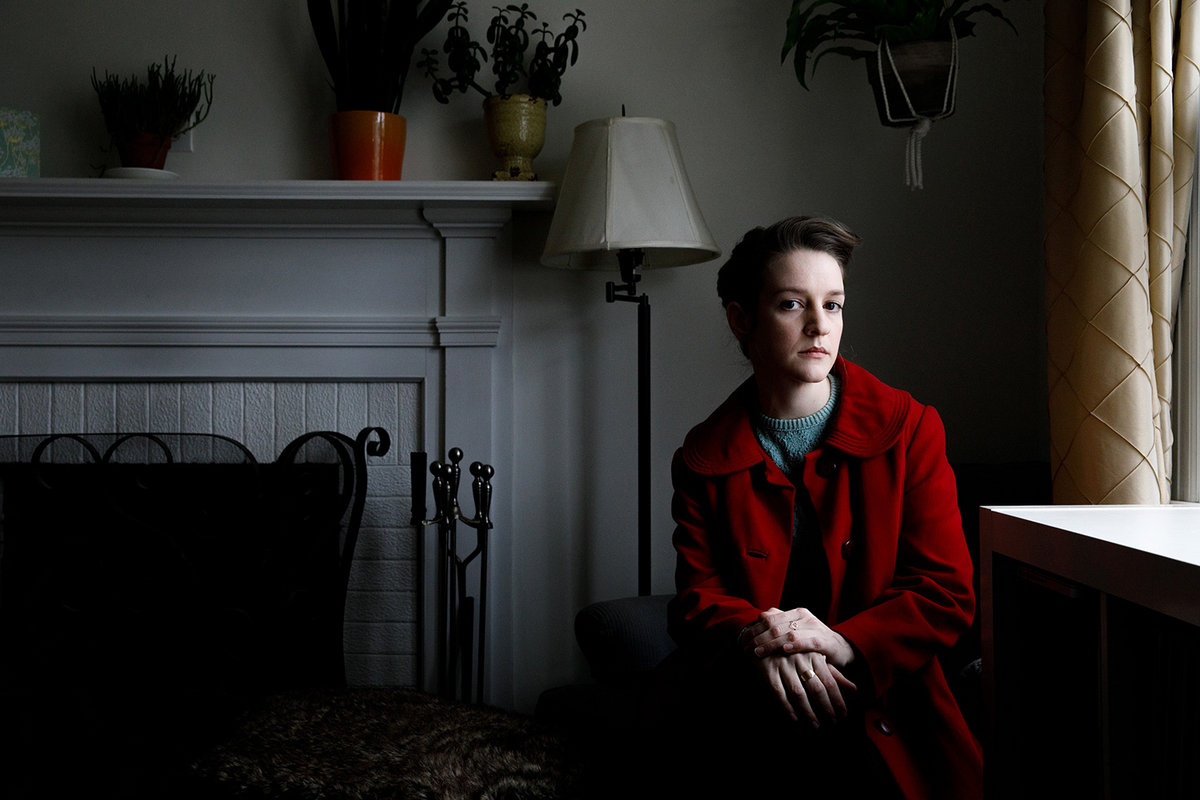
Neko Case returns with her new solo album, Hell-On. The Producer / singer / songwriter Neko Case has won a large and loyal audience for her smoky, sophisticated vocals and the downcast beauty of her music. Now more than 23 years into her musical calling, Case is the consummate career artist – fearless and versatile, with a fierce work ethic and a constant drive to search deeper within herself for creative growth. Anti-Records release Neko Case’s Hell On, an indelible collection of colourful, enigmatic storytelling that features some of her most daring, through-composed arrangements to date.
Produced by Neko with help from Bjorn Yttling (Peter Bjorn and John), Hell On is simultaneously the most accessible and most challenging album in a rich and varied career that’s offered plenty of both. Rife with withering self-critique, muted reflection, anthemic affirmation, and her unique poetic sensibility, the 12 tracks of Hell On – which features collaborations such as Joey Burns, Beth Ditto, Kelly Hogan, KD Lang, AC Newman, Paul Rigby, Laura Veirs, and more. The singer-songwriter also received contributions from the likes of her New Pornographers bandmate AC Newman, Gossip’s Beth Ditto, Doug Gillard, lang, Veirs, and Eric Bachmann (Crooked Fingers/Archers of Loaf). She and Screaming Trees frontman Mark Lanegan duet on “Curse of the I-5 Corridor”.
During recording sessions abroad in Stockholm, her home in the US burned down in a raging fire. The tragic incident is touched on throughout the album, especially on the single “Bad Luck”, but she’s since somewhat come to terms with what happened. Per a statement:
Case is now stoic about the fire. “If somebody burned your house down on purpose, you’d feel so violated. But when nature burns your house down, you can’t take it personally.” The month before the blaze, Hurricane Harvey had slammed into Texas and flooded Houston. Her home burned just as Puerto Rico was plunged into a nightmare by Hurricane Maria and wildfires incinerated California. “In the big picture, my house burning was so unimportant,” she says. “So many people lost so much more: lives and lives and lives.”
In support of Hell-On, Case will soon kick off a sprawling North American tour, followed by a European stint that lasts well into November.
Hell-On marks Case’s first solo record in five years. The 12-track collection is the follow-up to 2013’s The Worse Things Get, the Harder I Fight, the Harder I Fight, the More I Love You; it also comes after her 2016 collaboration with k.d. lang and Laura Veirs and her 2017 album with The New Pornographers, Whiteout Conditions.
Of all the artists who began the new millennium straddling the alt-country world and indie-rock stardom, none have proved themselves more talented or hardworking than Neko Case. Born in Virginia, she grew up in Tacoma, Washington, where she began her musical career drumming in a handful of bands before moving to Vancouver in 1994. She furthered her musical career playing drums for Canadian twee pop group Cub and singing for the punk band Maow in the mid ‘90s before forming her own band for the recording of 1997’s The Virginian under the name Neko Case & Her Boyfriends. Case would later drop the band name , but always worked closely with collaborators, whether through her tours with Carolyn Mark as The Corn Sisters or her years writing and playing with Toronto band The Sadies.
Her most notable collaboration was her time spent as a full-time member of The New Pornographers, a band which she still participates in actively to this day, finding time in between writing, recording, and touring behind her six studio albums and multiple live records.
Neko Case also released the box set Truckdriver, Gladiator, Mule, a collection of six aforementioned records along with an 2001’s EP, Canadian Amp, and her 2004 live album with The Sadies, The Tigers Have Spoken, notable for its inclusion of Case’s takes on songs not featured on any of her other studio albums.
Throughout Case’s solo discography,It’s one that moves slowly away from her more country-inspired beginnings to her more recent albums, which have positioned her as one of the most acclaimed and respected indie rock artists around.
Part of what makes Case such an intriguing artist is her penchant for storytelling. Early in her career, she was frequently compared to legends like Loretta Lynn and Patsy Cline, crafting hard-luck tales about people living in America’s heartland, lifting the spirit of country music and delivering it to an audience who often avoided the genre. Case wrote all her songs with a lived-in approach, giving her characters agency and sympathy while mentioning places and cities specific enough to make her tales feel real and relatable. Some were about love and loss, but many were focused on anger, with Case drawing influence from artists like The Louvin Brothers to put together her own versions of murder ballads. Case has also been an outspoken and humorous artist, be it during her banter between songs at concerts or through her clever wit fully on display throughout her work. She habitually subverts gender norms and stereotypes about sexuality, always writing songs and forging her path forward on her own terms.
While Case’s music has shifted gradually and notably over the past 15 years, part of what makes her discography so inviting is how consistent it is in terms of the quality. She challenges conventional thinking in her songs, the artists she draws inspiration from, and the friends she works with.
THE VIRGINIAN (1997)
“South Tacoma Way”: Of all her records, The Virginian isn’t steeped too deeply in any specific locale. Of the original compositions, the title track is the only one that references an actual place, and the song itself focuses more on a girl who fell away from the lord and was “free to do what she wanted” as she didn’t ask god to take her back into his graces when she died. For the covers, Case’s take on the Everly Brothers’ “Bowling Green” would be the first of many times she would use specific places in the west or Midwest to set her stories.
“Margaret Vs. Pauline”:“Karoline” is the only character who gets named on The Virginian, the “wild and unashamed” cowgirl who draws Case’s desire. Beyond that, much of the album is from a first-person perspective, whether it’s trying to scare away the “Honky Tonk Hiccups” or dealing with heartbreak on “Thanks a Lot”.
“I’m a Man”: On “Karoline”, originally written and recorded with her former band Maow, Case takes a traditional country melody about pursuing a partner for the night, but switches things up. The narrator wants to be the titular Karoline’s “slave” for the night, and while it initially seems an instance of Case taking on the male role in the story, the line “Cowgirl I’ve got that loving that puts all those men to shame” makes the song seem like an excellent gay country jam.
“Deep Red Bells”:The Virginian isn’t notably violent compared to Case’s other records but does feature its fair share of tragedy. “Lonely Old Lies” finds Case trying to drown her sorrows with “Moon River”, and “Jettison” finds her pleading with the “Sandman” to take her “much further than sleep.” The most combative character here is the character in “The Virginian”, who continues to defy God after death.
“Whip the Blankets”:Case’s first album features some of the more eclectic cover choices of her career, showing how she can fit songs by seemingly disparate artists into her own style. The record sees Case taking on traditional country tunes like Loretta Lynn’s “Somebody Led Me Away” as well as ’60s pop through her takes on The Everly Brothers’ “Bowling Green” and Scott Walker’s “Duchess”, finishing up with her version of Queen’s “Misfire”. None sound out of place on the record, and while her take on the Walker track may be a highlight, each shows Case apt at reinterpreting songs from different genres.
Her Boyfriends: The Virginian was effectively Case’s first solo album and the first of two to be labeled under the band name Neko Case & Her Boyfriends. It marked the first of many collaborations with Carolyn Mark, who Case would play with as The Corn Sisters, and Carl Newman, who she would play with in The New Pornographers. Most notably, “Jettison” features a duet with singer Rose Melberg, the Olympia indie-pop artist who played in Tiger Trap, Go Sailor, and The Softies.
FURNACE ROOM LULLABY (2000)
“South Tacoma Way”: Of all her albums, Furnace Room Lullaby seems to be the most focused on Case’s youth growing up in Tacoma. “South Tacoma Way” finds Case returning to Tacoma and remembering the death of a loved one whose funeral she didn’t make it to, as she “Couldn’t pay my respects to a dead man.” Here, Tacoma is a dark place full of memories where “the cross streets bare your name.” On “Thrice All American,” she remembers how removed her town was from the world, a town where “factories churn,” “buildings are empty like ghettos or ghost towns,” and where “you know that you’re poor.” The places in Furnace Room Lullaby are specific since they come from Case’s memory, and while she points out the faults, she still sings fondly of her hometown throughout.
“Margaret Vs. Pauline”: On “South Tacoma Way”, Case sings about returning to her hometown, wishing she could hold hands with J.P. and Mary-Jo. No one else in the album gets named, but there are plenty of characters throughout these songs. There’s the couple in “Whip the Blankets” that is “bound for damnation,” the scorned ex-lover in “Bought & Sold”, and the haunted killer of the title track. The album is full of rich characters, even if they aren’t as detailed as many in later albums.
“I’m a Man”: While there aren’t many songs that directly take on gender, there are plenty that showcase Case’s disdain for societal expectations. On “Whip the Blankets”, Case remarks how the narrator’s “instinct is dirty and morality’s clean.” On “Mood to Burn Bridges”, she takes on people in her town who won’t mind their business and tell other people how to live their life. She calls out hypocrites who rush to criticize her indiscretions and spend all their time waiting for people to slip up so they can judge them. Case says that her “mood to burn bridges parallels (her) mood to dig ditches,” implying she’s ready to take on her enemies.
“Deep Red Bells”: The title track of the album, Furnace Room Lullaby, was inspired by Case’s desire to write a murder ballad in the spirit of The Louvin Brothers. The song indicates that the lover she burned in the furnace still haunts the house, that “all night, all I hear, all I hear’s your heart.” As she becomes “wrapped up in the depths of these deeds that have made” her, she remains trapped with this ghost. On the other side of the coin, a song like “Twist the Knife” finds Case’s narrator bleeding herself, pleading with a lover to stay, saying that she would “pay with the rest of my life” and “tear out my heart” as the other person walks away.
“Whip the Blankets”:Furnace Room Lullaby is one of the few albums in Case’s discography to not include covers, as Case has a writing credit on each song. While all the songs were original compositions for the record, a couple familiar names did stand out in collaborators.
Her Boyfriends:Furnace Room Lullaby features a wide variety of artists, including frequent guests Kelly Hogan, Brian Connolly, Carl Newman, and Dallas Good. Canadian pop artist Ron Sexmith helped co-write “We’ve Never Met”, and “Twist the Knife” features a writing credit from none other than Ryan Adams.
CANADIAN AMP EP (2001)
“South Tacoma Way” (locations mentioned):True to its name, Canadian Amp is an EP centered entirely around place. Granted, Case isn’t technically a native of the Great White North, but it’s where her career started in proper, and she pays tribute to her musical heritage here by covering four musicians from above the US border. The States themselves get name-dropped in “In California”, and Hank Williams’ “Alone and Forsaken” pops up to show Arkansas (and the American South in general) some love.
“Margaret Vs. Pauline” (characters): Though most of the songs aren’t hers, it’s telling that Case gravitated towards tracks rooted in intensely drawn characters, from the fleeing lover in Mike O’Neill’s “Andy” to the doomed fling in “Poor Ellen Smith”. But the most vivid sketch comes from Neil Young, whose “Dreaming Man”‘s spurned, possibly violent lover (he carries a loaded gun in his Aerostar) undercuts the sweetness of the music.
“I’m a Man” (subversion of gender norms and stereotypes): Lots of gender flipping here, especially in the covers of Williams and Young. Case, badass that she is, never switches the pronouns either. This isn’t to specifically place the song from a woman’s perspective, but to show that perspective doesn’t matter. The songs could be a woman singing from a man’s point of view, a woman who’s in love with a woman, or the viewpoint from another character altogether.
“Deep Red Bells” (violence and murder ballads): There’s a threat of violence in “Dreaming Man” that may not come to fruition, and the two Case originals run thick with a redness that may be real or imagined. Closer “Favorite” finds her dreaming about a dead deer spilling blood onto her dress, and the creepier “Make Your Bed” is told by a drifter who promises to “tuck in” a young girl by throwing her in the river and letting the catfish feast on her skin. Canadian Amp’s centerpiece of death, however, comes in Case’s rendition of the traditional murder ballad “Poor Ellen Smith”, which tells the story of a man who kills his mentally challenged lover (one-night stand, really) after she won’t stop following him around.
“Whip the Blankets” (cover songs): Haven’t you been reading? This whole EP (almost) is made up of covers!
Her Boyfriends (personnel): The Sadies once again guest-star on “Make Your Bed”, and elsewhere, we get more brassy harmonies from Kelly Hogan, Brett Sparks of The Handsome Family, Chris Von Sneidern, and even some mournful violin by future chamber-pop wunderkind Andrew Bird.
BLACKLISTED (2002)
“South Tacoma Way”: Blacklisted finds Case preoccupied with signifiers of American life. On opener “Things That Scare Me”, she remarks about being “haunted by American dreams.” On “Lady Pilot”, the titular character flies above the country, noting how Boulder City “looks like coals in the fire” and that the stars in the sky are losing out to city lights. Case’s ideal of America was never perfect or pretty, going all the way back to the encroaching Wal-Marts on “Furnace Room Lullaby”, and while Case never comes across as a “Back in My Day” kind of person, nostalgia and longing for something that is no longer the same is an inherent part of folk and country that Case does so well.
“Margaret Vs. Pauline”: There aren’t many named characters here, but still plenty of stories, from the pilot watching cities burn to the woman murdered on the interstate. The characters in Blacklisted are often longing to be somewhere else or to have things change, especially on the album’s centerpiece and one of Case’s most popular songs to date “I Wish I Was the Moon”. In the song, the narrator repeats how lonely and tired she is, exclaiming that she wishes she was something else for the night besides what she is, something calming and watchful like the moon. It’s a stark yet beautiful sentiment about wanting to escape your problems and fears and find some kind of peace away from it all.
“I’m a Man”: On “I Wish I Was the Moon”, Case exclaims, “God blessed me, I’m a free man with no place free to go” in a memorable passage. Beyond that, songs about gender pervade the record, from “Lady Pilot” to the women murdered by the Green River Killer. One especially poignant song is “Pretty Girls”, inspired by an experience Case once had at a Planned Parenthood in New York. In a 2010 interview with the New York Times, she recounted the event, saying, “I saw these girls waiting there, and it was just awful. It was cold, they were in gowns that didn’t really close, and their boyfriends and parents weren’t with them, and they were sitting under these bright lights, and the people were mean.” This inspired the lyrics “Your hearts are so tried and so innocent, wind your firmly blue gowns tight around you, around curves so comely and sinister, they blame it on you pretty girls.” Case always has a penchant for crafting sympathetic laments around real-life experiences, and this song serves as her message to the girls she saw in that waiting room one day frightened by protestors. Written almost 15 years ago, the song feels as relevant as ever today.
“Deep Red Bells”:Blacklisted contains one of the most harrowing murder ballads of Case’s career, the tragic “Deep Red Bells”, written from the point of view of one of the victims of the Green River Killer. Gary Ridgway was a serial killer who was convicted of killing 49 women in the Washington State area during the 1980s & 1990s, named after five of his victims were found in Green River. He was arrested in late 2001, right after Case had recorded the song, as she indicated in a 2006 interview with the A.V. Club. “I grew up while he was killing women, and on the news, they never talked about them like they were women,” Case said. “They just called them “prostitutes.” Myself and other little girls in my neighborhood didn’t make that distinction; we thought the Green River Killer was going to kill us.” Case taps into that fear here with the memorable song.
“Whip the Blankets”: After the covers-heavy focus of Canadian Amp, Case went back to just selecting two for this album. The first, “Look for Me, I’ll Be Around”, a classic jazz ballad from the ’50s with popular recordings by singers Sarah Vaughan and Ketty Lester, is kept faithful with Case’s smoky, slow rendition. On the second, Case delivers a thunderous take on Aretha Franklin’s “Running Out of Fools”. Unlike the folk or country covers on earlier records, Case took on soul and jazz here, signaling the transition taking place in her own music at the time.
Her Boyfriends:Blacklisted found Case settling into a groove with her band. Kelly Hogan, Brian Connelly, DallasGood, and Tom Ray all returned from previous recordings. Canadian singer Mary Margaret O’Hara provided background vocals, and the album also marked the first of many collaborations with Joey Burns and John Convertino of Calexico.
THE TIGERS HAVE SPOKEN(2004)
“South Tacoma Way”: On her version of The Shangri-Las’ “The Train from Kansas City”, Case’s narrator tries to lightly let down her lover by telling him she got a letter from an ex in Kansas City and has to take the train there to tell the ex-boyfriend it’s over in person. The wit of the song is emblematic of the clever approach Case often took on her own compositions.
“Margaret Vs. Pauline”: In the songs Case chose to cover for this record, she tells the story of a woman asking her dressmaker to make the sweetest dress imaginable, so she can win back the man who left her (“Soulful Shade of Blue”); the woman who leaves her current lover for her ex back in Kansas City (“The Train from Kansas City”); and Loretta, who hugs sweet and low (“Loretta”). The characters in her original songs on the album include the narrator who pleads with her lover to stay rather than leave for the woman who “spends her daddy’s money and drives her daddy’s car” on “If You Knew”, the lonely tiger trapped in his cage on the title track, and the coyotes that yell to the moon on “Hex”.
“I’m a Man”: As the album is mostly covers-based, Case’s most pointed song here is her cover of Loretta Lynn’s“Rated X”, a fun, up-tempo track that takes the piss out of people who go around slut-shaming. The song focuses on the stigma about divorce, with the narrator telling a woman that “the women all look at you like you’re bad, and the men all hope you are.” Originally written in 1973, the song has become a country staple about divorce and the antiquated notions that surround it. The song has remained continuously relevant, to the point where Miranda Lambert made a statement at the ACMs this past September covering the song as a tribute to Lynn, noting that the song spoke to her experience as a divorced woman in country music.
“Deep Red Bells”: There’s no murder here, but on “Hex”, the “lover’s spell” Case puts on her mark seems particularly harrowing, as she tells him that the night his dying and that his punishment for casting her aside is that her heart beating will be the only sound he will hear ever again.
“Whip the Blankets”: The only live album featured in Case’s upcoming box set reissue, The Tigers Have Spokenfeatures more covers than most of her other releases. The album includes a cover of “Hex”, written by Freakwater singer Catherine Irwin, “Soulful Shade of Blue” by Buffy St. Marie, “The Train from Kansas City” by The Shangri-Las”, “Loretta” by The Nervous Eaters, and “Rated X” by Loretta Lynn. Case even concludes the record with her take on traditional folk songs “This Little Light” and “Wayfaring Stranger”. Tigersfinds Case indulging more in the alt-country material of her earlier days while also hinting at the more straightforward rock approach she would move toward with her subsequent records.
Her Boyfriends: Tigersfeatures a murderer’s row of people Case has worked with before. Carolyn Mark of The CornSisters and Kelly Hogan and Brian Connelly of her normal backing band all make appearances. The Sadies, who helped Case write a few of the original pieces on the album, also serve as the backing band for the live performances that make up the record. Of all her records, Tigers does the best job of capturing both the influences that drove Case’s sound as well as the contemporaries she worked with to help form it.
FOX CONFESSOR BRINGS THE FLOOD(2006)
“South Tacoma Way”:St. Angel Church and Spanaway, Washington (in “A Widow’s Toast” and “John Saw That Number”), are the only properly named locations, but all of Fox Confessor Brings the Flood seems to take place in a distinct world where nature is equally as dangerous as killers, drug dealers, and false prophets. There’s some beauty, sure, but it often gets blackened out by the darker elements in the songwriting. There’s a reason Case dubbed this record as “country-noir” upon its release.
“Margaret Vs. Pauline”: Those two very characters make up the opening track, with each one coming from a different socioeconomic background. By the end, we’re painfully reminded how some folks are born with the cards stacked against them, while others aren’t. Later on, John the Baptist becomes a controversial figure in Case’s reworking of the traditional “John Saw That Number”, where even God himself doubts the preacher’s miracles.
“I’m a Man”: There are some pointedly specific comments on gender throughout Fox Confessor, most notably in “Margaret Vs. Pauline”, which posits that, from a class standpoint, young girls are more predisposed to be pitted against each other than boys. There’s a higher currency on what they wear, how they dress, who they hang out with, etc. But there are also some more umbrella statements to be gleaned from all of the violence and mysticism, mainly the blunt idea that all of us — men, women, children, and animals — are all stuck in a world that don’t owe you shit.
“Deep Red Bells”: Where to begin? Fox Confessoris easily Case’s most violent album. Right after the socioeconomic divide of “Margaret Vs. Pauline”, we’re transported to Chicago’s Humboldt Park neighborhood (where Case lived for a time) to wince at the young woman who sees her lover ruthlessly mowed down. Despite some romantic respites throughout (“That Teenage Feeling” is unabashedly nostalgic and sweet), we get God putting out a hit on John the Baptist in “John Saw That Number” and what may be Case’s most gruesome murder ballad of all, “Dirty Knife”. After getting mortally stabbed in his cabin, a woodsman has to contend with the menagerie of vicious wildlife outside. He sings nursery rhymes to try and soothe the beasts, but it’s useless — a pack of wolves is soon upon him, tearing through his three winter coats to get to the soft, very human skin underneath.
“Whip the Blankets”: Given that the album shirks Case’s more traditional early country influences for something more sweeping, ominous, and in touch with the dangers of both the urban and the natural worlds, it’s no surprise that the only cover to be found on Fox Confessor Brings the Flood is “John Saw That Number”. And even then, it feels disingenuous to call it a cover, considering how much Case reworked it.
Her Boyfriends: The usual suspects (Kelly Hogan, various members of Calexico and The Sadies) are joined by rugged songwriters such as Howe Gelb, rockabilly musicians like Dexter Romweber, and GarthHudson of TheBand, who shows up to further rep Canada and brighten some of the shadows with his honeyed organ and piano playing.
MIDDLE CYCLONE (2009)
“South Tacoma Way”/”Margaret Vs. Pauline”: Aside from Mother Earth, no characters — or specific places for that matter — get mentioned by name. That’s because on Middle Cyclone, Case abandons the country-noir of Fox Confessor Brings the Floodfor something warmer and more optimistic. In her own words, it’s an album that yearns for human connection and her realizing that she needs love, just like anyone else. The songs are still stories, but they’re more internal stories about exploring emotion rather than building a linear narrative.
“I’m a Man”: Using a string of ferocious animal metaphors (an angry elephant, a bear in a cave, a killer whale eating his trainer), Case proudly proclaims herself as a man-eater on “People Got a Whole Lotta Nerve”. This predatory kind of approach to romance is usually reserved for AC/DC and KISS songs, so why shouldn’t she get to play along, too? The video takes the beastly content even further, depicting a young, cardboard cutout version of Case wandering around a mansion full of dangerous wildlife. There’s not a man in sight, however — the only people able to tame these creatures are little girls.
“Deep Red Bells”: The violence is expectedly toned down here in favor of pastoral ambience that comes from the barn where Middle Cyclone was recorded (and stocked with a stage and six pianos). Several songs contain real-life animal noises in the background (owl hoots, cricket chirps, etc.), and the final track, “Marais la Nuit”, consists entirely of a field recordings Case conducted at a nearby pond.
“Whip the Blankets”: After the almost cover-less Fox Confessor, she returns with two knockouts here: a more epic, orchestral version of Harry Nilsson’s “Don’t Forget Me” and a more lulling take on Sparks’ “Never Turn Your Back on Mother Earth”, both of which tie into the record’s comforting connection to nature (a far cry from Fox Confessor’s more anxious one).
Her Boyfriends: It’s mostly the same personnel from last time (even Hudson returns), with some additional guitar work from M. Ward.
THE WORSE THINGS GET, THE HARDER I FIGHT, THE HARDER I FIGHT, THE MORE I LOVE YOU (2013)
“South Tacoma Way”/”Margaret Vs. Pauline”: Same deal as Middle Cyclone. The Worse Things Get eschews specific locations and characters to make room for an exorcism of sorts. After Middle Cyclone, Case plummeted into a deep depression after losing her grandmother, and this is the sound of her getting out of it. “Night Still Comes” appears to document this through geometrical and astrological terminology, and much later on, “Ragtime” sees her coming to peace with death by imagining her departed relatives all in a marbled room together, laughing and encouraging her to enjoy life.
We do get one heart-wrenching character sketch, however. “Nearly Midnight, Honolulu” tells a completely true story of Case witnessing a mother being verbally abusive to her child while waiting for an airplane shuttle. The singer empathizes with the kid, telling him to never lose faith, even as his loved ones let him down. “I still love you, even if I don’t see you again”, she reminds him. That story’s a far cry from her murder ballads of old, but also much more relatable to the average listener.
“I’m a Man”:“Man”, the song that gave this category its name doesn’t view maleness as specific to one gender, but as an emblem of toughness. As a result, Case never has to justify the gender swap or explain that she’s not speaking in literal terms. Anyone who’s had to fight is a man, especially her. Devouring bullies, getting dip-shit drunk, and burrowing a home in the fucking moon are just a few of her accomplishments.
“Deep Red Bells”: There isn’t a lot of physical violence here, and not a single murder as far as I can tell, but the emotional turmoil that Case — and many others on the record, especially the kid in Hawaii — had to endure can be just as damaging.
“Whip the Blankets”:“Afraid”, in which Neko Case gets playful and finally covers Nico. Both versions rely mostly on piano, although Case’s sounds as if it were plucked right from a starry sky, probably because she — in a direct bird-flip to her younger self — ditched the original’s country touches of harmonica and fiddle.
Her Boyfriends: More sonic majesty from the likes of Kelly Hogan, Paul Rigby, and company, with some all-star appearances from M. Ward (again), Jim James, Tom Waits’ axe-man Marc Ribot, and fellow Pornographers (at the time, at least) Kurt Dahle and AC Newman.
Other Neko Case recordngs include:
The Corn Sisters
The Other Women (CA: Mint Records, 2000)
The New Pornographers
Mass Romantic (CA: Mint Records; US & EU: Matador Records, 2000)
Electric Version (CA: Mint Records; US & EU: Matador Records, 2003)
Twin Cinema (CA: Mint Records; US & EU: Matador Records, 2005)
Challengers (CA: Last Gang Records; US & EU: Matador Records, 2007)
Together (US: Matador Records, 2010)
Brill Bruisers (CA: Last Gang Records; US: Matador Records, 2014)
Whiteout Conditions (Concord Music Group, 2017)
The Sadies
Make Your Bed/Gunspeak/Little Sadie (7″) (US: Bloodshot Records, 1998)
Car Songs My ’63 / Highway 145 (by Whiskeytown) (Split 7″) (US: Bloodshot Records BS 037, 1998)
‘New Compassion was one of the last songs we wrote for the new album. We wrote it very quickly and it almost felt like a mantra. It’s about connective forces, about love. I think people feel a lot of pain and a lot of people feel very lonely now. But it’s universal and deeply human, and there’s a power in that.’
Though they all reside in Brooklyn, the members of indie-pop band HAERTS originally hail from parts of Germany, England, and the Northeast. Since coming together, they’ve embarked on quite a whirlwind journey. They’ve toured the world and released the excellent Hemiplegia EP, which earned them a contract with Columbia Records.
The bundle of joy born today, June 1st, 2018, Whale City. What a luxury. Welcome to Whale City. 2018. Brain-melting psychedelic riffage, frantic punky percussion and jagged, thumping bass licks. Warmduscher have crafted a dynamic combination of heavy, mindless riffs and meticulously crafted nuanced rock, like only they can.
The second album from Warmduscher. South London recidivists Warmduscher include members of Paranoid London, Fat White Family and Childhood. There is power in repetition. Longtime Warmduscher biographer Dr Alan Goldfarb describes Whale City as “a rock opera so vast in magnitude that – were in not for my being strapped naked to a chair in a garage – could send a man hurtling towards the outer perimeters of uncharted space.” It’s difficult to argue with. The characters that inhabit Whale City are, as the title suggests, larger than most aquatic life forms. A cast of millions. Pretty Lilly, Whale Jimmy, Uncle Sleepover, Ice Cream Keith, Disco Minny. The people you walk by late at night with bottles in their hands and money in their pockets. The woman with bright red lipstick and straight razor smiles. Thrill seekers to a person. Powerful. Intoxicated.
Intoxicating. In the words of Clams Baker, Whale City is “a playground for the people that have stepped above and beyond their comfort zone.” What are you waiting for? If you love the repetition of the Fall, the chaos of Fat White Family and own a Pebbles or Nuggets compilations – then this a must have.
The Dead Tongues is the moniker of Asheville’s Rya Gustafson and he’s part of that North Carolina collective. He’s played with and opened for Hiss Golden Messenger and Phil Cool. And like the music from both of those artists, The Dead Tongues’ music has an inherent, yet subtle, spirituality about it.
Gustafson is a bit of a nomad and free spirit. He’s very comfortable on the road, observing the daily travails of like going around him. “When I’m traveling, it’s like walking into these different windows. I’m a witness, with my mouth shut,” Gustafson says. “The people you meet, the way the landscape speaks to you, how a desert is different than a mountain: It has the potential to bring out something you didn’t know was there.”
The ten tracks that encompass Unsung Passage are a wonderful blend of folky twang. Almost every tune feels like the lyrics could be an old fella spinning a yarn at the end of a bar or sitting on a porch talking to no one in particular. The music backing these tales is a wonderful tapestry of guitars, strings, banjos, etc. Its as if someone blended TBT, Horse Feathers and Ryan Bingham and out poured The Dead Tongues. While the album never veers from Americana, the variety within that genre that Gustafson uses to get his tales across is quite lovely.
This album is a grower. Play it multiple times. Put it away for a couple of weeks. Come back again. That’s what I did and I find myself enjoying it more and more with each listen.
Live from Arbor Ridge Studios in Chapel Hill, NC.
“Won’t Be Long” is from The Dead Tongues’ new LP, “Unsung Passage” Out May 18, via Psychic Hotline.
Manchester trio Beach Skulls are back with their second album Las Dunas, the follow-up to the acclaimed debut album Slow Grind from 2016 which brought the band the attention of the likes of The Line of Best Fit, Clash, GoldFlakePaint and Under the Radar. Summery garage pop mixed with psych and dream pop influences, Las Dunas finds Beach Skulls refining and expanding their sonic palette, coupled with their strongest set of tracks yet.
“I wrote this record partly to strip mental illness of its power,” says Charlottesville’s Juliana Daugherty of her full-length debut. Captured in the Virginia countryside, Light reveals a songwriter finding quiet confidence amidst personal strife and the political tumult of her hometown. Songs gently sway and swell with understated narrative and unwavering purpose. Daugherty’s nuanced craft—moody, minimalist folk penned with an MFA in poetry, lightly supported at times by keys, bass, and drums—brings to mind “anything from Joni Mitchell to Angel Olsen,” says BrooklynVegan. Through darkness and difficulty arrives a stunning collection, out on Western Vinyl.
With his new album You, Forever, Sam Evian, the project of New York-based musician, songwriter, and producer Sam Owens, is here to add some eternity to that sentiment. You, Forever is Owens’s first foray into a more soul-baring sensibility and places the artist directly in the sightlines and heartlines of his listeners. The album (as well as 2017’s Need You, a collaboration with the multi-hyphenate musician Chris Cohen) was written on the heels of his experience touring Premium with his band and was recorded across the latter half of last year. The tours – which included opening shows for bands like Whitney, Teenage Fanclub, Luna, Nick Hakim and Lucius – taught him much about feel and interaction. Further fueled by a desire to escape from the glow of screens and to embrace a sense of limitation, he quickly developed a new set of instrumental songs written for a band rather than just himself and recorded them on a Tascam four-track cassette recorder in his parents’ house in North Carolina. Inspired by these limiting techniques, Owens borrowed an eight-track reel-to-reel tape recorder from a friend, rented a house in upstate New York, and took his band – Brian Betancourt (bass), Austin Vaughn (drums), Adam Brisbin (guitar), and Hannah Cohen (backup vocals) – there to record the new album in July of 2017. Focusing on instrumental grooves and the vibe he had achieved on the original four-track recordings, Owens found the process so enlightening he decided to up the ante yet again by banning tuning pedals from the house. For fans of Whitney, Bonny Doon and Woods.
Recorded to 8-track reel-to-reel and released today on Saddle Creek Records, the sophomore album from NY songwriter Sam Owens has a stomping, 1970s soft-rock vibe to it. “Country” details a dust storm encountered on a cross-country road trip.
Though this band name can feel intimidating, don’t let that scare you off from this exciting Seattle rock outfit. They’ve already won the favour of Pearl Jam guitarist Mike McCready, who pops up on the album as a guest guitarist, as well as Corbin Reiff. According to him, it’s “one of the best rock albums of 2018.”