Abjects are a London-based trio, who are a walking celebration of the cities multi-cultural wonders. Composed of singer/guitarist Noemi from Spain, bassist Yuki from Japan and drummer Alice from Italy, the band are three citizens of the world, making joyous pop-songs with the arty edge you’d expect from a band who met while studying at Goldsmiths. This week the band have announced details of their debut album, “Never Give Up”, as well as sharing the rambunctious title track.
The track is a response to the complications thrown up by the rise of nationalistic, populist politics, and how sometimes, you just have to ignore them, “life is full of problems and obstacles, but we’re never going to give up having fun and living our lives the way we want”.
The track bounds in on a snare drum, so energetic that it seems to almost be jumping out of its stand, as Sleater Kinney-like guitar riffing, and shout-along Hinds-like vocals add some melodic to flare to the mix. Abjects are a band who look at the world’s problems and seem to refuse to be broken by them, their own kind of joyous, celebratory, revolution; if you can’t beat them, dance at them!
“Never Give Up” is out February 15th on Yipee Ki Yay.
The music Cleo Tucker and Harmony Tividad release as Girlpool occupies a transient space. Their constant evolution makes it perfectly impossible to articulate exactly where their project falls within the contemporary musical canon; this is one of the many reasons Girlpool’s music is so captivating.
Never before has a group’s maturation been so transparently attached to the maturation of its members. This is due in large part to the fact that Girlpool came into existence exactly when Girlpool was supposed to come into existence: at the most prolific stage of the digital revolution. Both online and in the flesh, Tividad and Tucker practice radical openness to the point where it may even engender discomfort; this is exactly the point where it becomes clear why theirs’ is such a special project: they accept the possibility of discomfort—Chaos—and show you how to figure out why you might feel it. This is achieved through their ability to empathize as best friends and partners in creation, with the intention of making music that provokes.
In 2017, Washington D.C. band Priests released its debut full-length, Nothing Feels Natural, which became one of our favourite albums of that year. Today, the band announces its follow-up, called The Seduction of Kansas, out in April via the band’s own Sister Polygon Records.
The title track with its accompanying video directed by singer Katie Alice Greer is a reminder of what makes the band’s sharp, cerebral music so exciting. “The Seduction of Kansas” follows in Priests‘ tradition of reckoning with complex questions about identity especially national identity through minute details; via a press release, the band says it illustrates “Kansas’ potent place in our national imagination.” (It also proves that Greer can sing “Applebee’s” more seductively than perhaps anyone else making music today.)
On the album, the band’s core trio (Greer, drummer Daniele Daniele and guitarist G.L. Jaguar) is joined by multi-instrumentalist Janel Leppin, who collaborated on songwriting with the band and played bass. The band also worked with producer John Congleton, recording for two weeks at his studio in Dallas. And should you need a reading list to accompany your anticipation, the band mentions some intriguing references for the album, including Chris Kraus‘ essay “Pay Attention” and Eileen Myles’ The New F*** You to The Twilight Zone.
The Seduction of Kansas is out April 8th viaSister Polygon Records.
Pond have just announced that they’ll will release a new album, “Tasmania”, in a couple months. The project — which is led by former Tame Impala bassist Nick Allbrook put their most recent album, The Weather, back in 2017, and Tasmania is being presented as a “sister album” to that one. As with most of their albums, this one was produced by Allbrook’s former bandmate and Tame Impala head honcho Kevin Parker.
Last year, the band released two songs that will be featured on the album “Burnt Out Star” and “Sixteen Days” and now they’re sharing another new one, “Daisy,” alongside an accompanying music video.
Allbrook had to say about the track in a fan newsletter: “Daisy” includes an interpolation of the Pilgrim Brothers ‘I Feel Like Going Back Home’. It’s about Summertime, the rigs are out, fires burn, bottl’os and dams drained aaaaand photos leaving us warped memories. Blood and lonely saltwater cowfolk.
‘Daisy’ is the new song from POND.
Tasmania is out 1st March via Spinning Top/Marathon Artists/Caroline/Interscope.
Washington DC power rock group Ex Hex came onto the scene in 2014 with their excellent, loud debut Rips. Filled with big, raucous waves of guitar, the album embodied the type of rock ‘n’ roll that genre devotees were hungry for, which made sense; Mary Timony, founder of the influential ‘90s riot grrrl group Helium, helms the group alongside Betsy Wright on guitar and Laura Harris on drums. Their second studio album, It’s Real, which arrives March 22nd via Merge Records, along with the premiere of “Cosmic Cave” a guitar-shimmering single that Timony calls “Old style Ex Hex.” It’s lively garage rock with a bittersweet swirl of a chorus and cavernous-sounding embellishments, best experienced beyond the boundaries of headphones.
Timony and Wright explained that It’s Real found its form through the deliberate collaboration between the pair their knack for continuous refinement feeding into their tightness in sound, execution, and their will to experiment. Whether it’s recording with ten amps at once or indulging in the weird effects of an old ‘80s headphone amp, Ex Hex are fully devoted to crafting the best sounds for blaring at maximum volume.
From the album It’s Real, out March 22nd, 2019 on Merge Records.
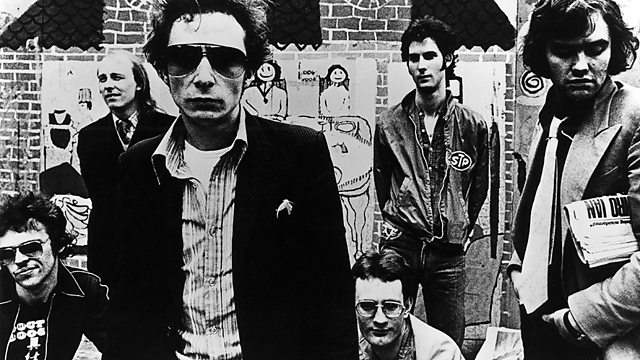
After he emerged in the pregnant pause between pub rock and punk, stardom never quite happened for the Camberley rocker, although his band’s spiky sound has echoed through artists from Elvis Costello to REM.
A few months before punk, the first sign a new order on the way was an awkward little rocker called Graham Parker. he appeared on the bill at Dylan’s concert at Blackbushe Aerodrome in 1978, only a few miles from his Camberley stamping ground, it was already clear by that time that the superior sneer, machine-gun delivery and catchy tunes of Elvis Costello
He was a skinny, T-shirted figure in shades; rough, honest, and angry. Heat Treatment has a Dylanesque snarl to it; a thirst for revenge in the light of the lost years mentioned above, and a sense of cutting to the chase, that there was no more time to waste.
One of the finest English songwriters of the past several decades, Graham Parker made a name for himself as the “angry young man” before the flurry of punk rock took over his native U.K. Sailing in on the smouldering embers of the pub rock scene, Parker came armed with attitude, amplification and an armload of great songs. From his first classic LP ‘Howlin’ Wind’ (produced by Nick Lowe) and right up to his most recent outing with the reunited Rumour, ‘Three Chords Good,’ GP has never stopped traveling his own unique road. Caught between the preceding wave of Bruce Springsteen and subsequent rise of Elvis Costello, GP, through no doing of his own, somehow got lost in those waters.
‘Howlin’ Wind’ (1976)
For most intents and purposes, Graham Parker emerged fully formed on his debut album, Howlin’ Wind. Sounding like the bastard offspring of Mick Jagger and Van Morrison, Parker sneers his way through a set of stunningly literate pub rockers. Instead of blindly sticking to the traditions of rock & roll, Parker invigorates them with cynicism and anger, turning his songs into distinctively original works. “Back to Schooldays” may be reconstituted rockabilly, “White Honey” may recall Morrison’s white R&B bounce, and “Howlin’ Wind” is a cross of Van’s more mystical moments and the Band, but the songs themselves are original and terrific. Similarly, producer Nick Lowe gives the album a tough, spare feeling, which makes Parker and the Rumour sound like one of the best bar bands you’ve ever heard. Howlin’ Wind remains a thoroughly invigorating fusion of rock tradition, singer/songwriter skill, and punk spirit, making it one of the classic debuts of all time.
‘Don’t Ask Me Questions’ put the lid on Parker’s debut, ‘Howlin’ Wind,’ with a perfect swagger. Employing a reggae inspired backdrop, GP delivers an attitude-laced gem. Lines like, “Well I stand up for liberty but can’t liberate /Pent up agony I see you take first place” are delivered with pure venom as GP has this little conversation with God. Often accused of being too much the “angry young man,” Parker used that anger to his benefit. Meanwhile, the Rumour never let up from their rocksteady groove. A live version of the song was released as a single in the U.K. in 1978 and made it up to No. 32.
‘Heat Treatment’ (1976)
On his second album Heat Treatment, Graham Parker essentially offered more of the same thing that made Howlin’ Wind such a bracing listen. However, his songwriting wasn’t as consistent, with only a handful of songs — like “Pourin’ It All Out” and the title track — making much of an impression. Unfortunately, the record was also tamed by the production of Mutt Lange, who polishes the record just enough to make the Rumour sound restrained. Which means, of course, the sheer musicality of the band can’t save the lesser material. Heat Treatment still remains an enjoyable listen — at this stage of the game, Parker hadn’t soured into a curmudgeon, and his weaker songs were still endearing — but it’s a disappointment in light of its predecessor.
In Parker’s early years, the influences of soul music and Van Morrison were a constant presence. ‘Heat Treatment’ is a perfect merger of those influences and one of the highlights of his second LP. The jumpin’ R&B feel of the song is complimented by the horn section, a staple of his early records. The song’s chorus is so irresistibly catchy that if your toes aren’t a tappin’, you better check your vitals. The other great track. ‘Fool’s Gold’ from Heat Treatment is again indicative of Parker’s affinity for soul, and while producer Mutt Lange would go on to fame and fortune after aligning himself with pop-metal sounds of Def Leppard, his production here is crisp, direct and well suited to the sounds Parker was dishing out. A soul classic.
‘Stick To Me’ (1977)
Released in the fall of 1977, ‘Stick To Me’ was Parker’s third LP in less than two years. The album was recorded once again with Mutt Lange at the board, but a problem with the tapes forced a re-recording with Nick Lowe back in the hot seat. The result was a more stripped-down approach that, despite critical indifference, ultimately suited the album perfectly. ‘Watch the Moon Come Down’ is as perfect a GP song as you’re likely to stumble upon. The air of despair never sounded so beautiful. Graham Parker and the Rumour’s third new studio album to be released in 18 months finds the bandleader running short of top-flight material; “Thunder And Rain” and “Watch The Moon Come Down” are up to his usual standards, but songs like “The Heat In Harlem” find him dangerously out of his depth. As a result, although fiercely played, this star-crossed release (it had to be re-recorded when the first version suffered technical problems) is a cut below Parker’s first two albums.
Parkerilla (1978)
In 1978, Graham Parker & the Rumour’s career was on the rise in the U.K. but going nowhere in America, despite rave reviews for his first three albums and a growing reputation as a powerful live act. Most observers, including Parker himself, blamed his U.S. label, Mercury Records, for failing to give him the promotion he needed Stateside; eager to find a more suitable corporate partner, Parker opted to finish off his contract with Mercury via that time-honored form of contractual obligation filler, the double-live album. In many respects,
The Parkerilla practically screams “Let’s get this over with,” from the skimpy running time (54 minutes, including a studio re-recording of “Hey Lord, Don’t Ask Me Questions” that filled side four) and unimaginative set list, to a slightly dodgy mix that keeps losing track of the horn section, and a sequence that has a hard time keeping one of the most exciting acts of the day in forward gear. However, Parker and the Rumour were too good on-stage for The Parkerilla to feel entirely like a throwaway; Parker’s vocals are tough and soulful at every turn, the Rumour get more of a chance to show off their instrumental prowess here than they did on their studio recordings, and when the players connect with the right song, as they do on “Back to Schooldays,” “Soul Shoes,” and “Gypsy Blood,” it’s hard not to wish this hadn’t been such an obvious rush job, since the potential for a great concert set was clearly there. (The live take of “Hey Lord, Don’t Ask Me Questions” is also superb, and makes mincemeat of the silly disco-influenced studio recut that closes out the album.) The Parkerilla has a reputation as a tossed-off disaster, and while it’s a lot better than that, you don’t have to know the back story to hear a band biding their time until something better comes along on this set.
‘Squeezing Out Sparks’ (1979)
Generally regarded as Graham Parker’s finest album, Squeezing Out Sparks is a masterful fusion of pub rock classicism, new wave pop, and pure vitriol that makes even his most conventional singer/songwriter numbers bristle with energy. Not only does Parker deliver his best, most consistent set of songs, but he offers more succinct hooks than before “Local Girls” and “Discovering Japan” are powered by quirky hooks that make them new wave classics. But Parker’s new pop inclinations are tempered by his anger, which seethes throughout the hard rockers and even his quieter numbers. Throughout Squeezing Out Sparks, Graham spits out a litany of offenses that make him feel like an outsider, but he’s not a liberal, he’s a conservative. The record’s two centerpieces “Passion Is No Ordinary Word” and the anti-abortion “You Can’t Be Too Strong” — indicate that his traditionalist musical tendencies are symptomatic of a larger conservative trend. But no one ever said conservatives made poor rock & rollers, and Parker’s ruminations over a lost past give him the anger that fuels Squeezing Out Sparks, one of the great rock records of the post-punk era.
With the 1979 album ‘Squeezing Out Sparks,’ Parker and the Rumour were finally starting to make headway in the American market. Ironically, the band was capitalizing somewhat on the success of acts like Elvis Costello and Joe Jackson, both of whom came late to the party Parker helped establish. Regardless, this new-found “spark” was full of charge, making one of GP’s finest all-around albums. The R&B influences had been usurped by an urgent, straight-ahead pop approach. This proved to be a good move commercially, as well as artistically, as the songs here are all vibrantly full of life. The Rumour are rock solid throughout what may be Parker’s finest LP. ‘Saturday Nite Is Dead’ is a real raver this full-on rocker stands as a testament to the power and urgency of the Rumour in their prime. Straight ahead, no frills, traditional rock ‘n’ roll, delivered full steam ahead, ‘Saturday Nite Is Dead’ was one of many high points on the fourth GP album. The Rumour tear it up while Graham spits it out. Perfection in action.
‘Squeezing Out Sparks’ ranks as one of Parker & the Rumour’s finest hours, and ‘Local Girls’ is one of their catchiest singles. The sound of 1979 is in full bloom here as Parker does his thing amid a pure pop setting. It was released as a single in America with video to accompany it, but failed to even make the Top 100. It’s a shame, since to this day, there’s pop gold to be mined from these grooves.
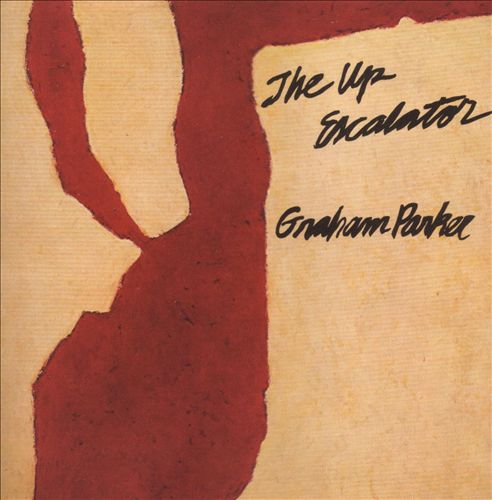
‘The Up Escalator’ (1980)
‘The Up Escalator’ (1980) would be the final album Graham would make with his legendary backup band, the Rumour, until their fine reunion effort ‘Three Chords Good’ in 2012. Produced by mainstream mainstay Jimmy Iovine, the album was an attempt to push Parker more into the mainstream, which worked modestly, as the album barely dented the U.S. Top 40. Chock full of great songs like the classic ‘Stupefaction,’ the album kicked off a rough decade for Parker artistically, as ’80s production values often clashed with his style. Not so on this one though, as the pure pop washed with grit here ranks as one of Parker’s best.
While it was something short of a hit, Squeezing Out Sparks did win a measure of richly deserved American recognition for Graham Parker & the Rumour, and for the follow-up, Parker’s American record label, Arista, paired him up with hotshot producer Jimmy Iovine. The idea looked good on paper; Iovine had produced or engineered great sounding hard rock records for Bruce Springsteen, Tom Petty, and Patti Smith, and his tough but vibrant sound would seem the perfect match for Parker and his band. But one listen to The Up Escalator reveals that Iovine’s trademark sound somehow escaped him for this project; the recording and mix are flat and poorly detailed (Brinsley Schwarz’s lead guitar and Stephen Goulding’s drums suffer the most), and the often mushy audio manages the remarkable feat of making the Rumour, one of the most exciting rock bands of their day, sound just a bit dull. But Parker fights the muddy sound every step of the way, and if his batting average as a songwriter is a shade lower than on Squeezing Out Sparks, he certainly offers up his share of A-list material, including the incendiary “Empty Lives,” the passionate “The Beating of Another Heart,” and “Endless Night,” which features one Bruce Springsteen on backing vocals. Parker’s singing is sharp and commanding, and even though the mix lets them down, the Rumour’s performances are tough and precise throughout. The Up Escalator failed to catch the ears of the mass audience, and Parker would soon part ways with the Rumour, but if this album doesn’t present them in the best light, it shows that they could play tough, passionate rock & roll that could survive even the most adverse recording conditions.
The Real Macaw’ (1983)
Parker’s 1983 album ‘The Real Macaw’ was another solid offering, stocked full of instantly catchy tunes and a solid crisp production. Despite all the checks in the plus column, no one was taking the bait. The album wandered up to No. 59 in the U.S. charts, but fell as quickly as it arrived. ‘Just Like A Man’ is another in a long run of dead-on, glowing pop songs from GP. Street-smart lyrics over a power-pop backdrop should have gone a long way to turn people’s heads, but by 1983, Parker sadly at this point was yesterday’s news to most.
Also check out the “Live at Marble Arch” album, On this promotional live album, Graham Parker and the Rumour combine selections from their just-released debut album, Howlin’ Wind, and their upcoming second album, Heat Treatment, with such influential oldies as “Chain Of Fools” and “You Can’t Hurry Love.”
1977 BBC Top of the Pops with their version of The Trammps “Hold Back the Night” from The Pink Parker EP
As productive as screaming into the void can be, sometimes the most effective way to air grievances is simply with a sigh. Meg Duffy, who has been the longtime lead guitarist for The Kevin Morby Band, switched her focus to Hand Habits in 2017. Duffy’s second album, “Placeholder”, leads off with the title track, a soft yet scathing lamentation of being secondary.
“If you’ve ever held someone’s seat in a theater, if you’ve been a bench warmer, if you’ve ever placed a reserved sign on top of a tablecloth, if you’ve been an ‘extra’ or a ‘stand in’ for something, you’ve experienced what being a placeholder feels like to some extent. You observe,” Duffy says.
The song wearily recounts the age-old story of being someone’s fallback, with Duffy growing more frustrated throughout the song. Additional vocals from Hannah Read (Lomelda) and wry guitar build, until the narrative is flipped — the agitator is now the proxy.
The Hand Habits project emerged after Meg moved to Los Angeles; it started as a private songwriting outlet but soon evolved into a fully-fledged band with Meg at the helm. Hand Habits’ debut album, Wildly Idle (Humble Before The Void), was released by Woodsist Records in 2017. The LP was entirely self-produced and recorded in Meg’s home during spare moments when they weren’t touring. Wildly Idle (Humble Before The Void) is a lush, homespun collection of folk songs that found Meg in an exploratory state as an artist moving out on their own for the first time.
Two years later, Hand Habits has returned with their sophomore album, placeholder, due out March 1st on Saddle Creek. To make this album, Meg chose to work in a studio and bring in collaborators, entrusting them with what had previously been a very personal creative process. Over the course of 12 tracks, Meg emerges with new confidence as both a bandleader and singer. This album is as tender and immediate as anything Meg’s ever written, but it’s also intensely focused and refined, the work of a meticulous musician ready to share their singular vision with the world.
Hand Habits – Placeholder from the album Placeholder
There are songwriters and then there are storytellers, and Steve Earle is very much the latter. His songs, such as “The Devil’s Right Hand,” “Copperhead Road” and “Guitar Town” have been sung by Johnny Cash, Emmylou Harris, Waylon Jennings, Vince Gill, Patty Loveless and many, many more.
Steve Earle’s inspiration came from two main storytellers: Townes Van Zandt and Guy Clark. In 2009, Steve Earle made an album of Townes Van Zandt songs called Townes and now he’s paying tribute to his other hero, Guy Clark by releasing Guy. The album by Steve Earle & The Dukes covers 16 songs by the great Nashville-via-Houston artist and leans toward some of the earlier tunes. The song, “Dublin Blues” is about the day he left San Antonio, headed to Nashville, to meet his hero, Guy Clark (who was playing pool) and quickly became his bass player.
The first new song from the album, “Dublin Blues,” has the band playing with Steve Earle on this album is The Dukes: Kelley Looney on bass, Ricky Ray Jackson on pedal steel guitar, Eleanor Whitmore on fiddle and mandolin, Chris Masterson on guitar and Brad Pemberton on drums. And the record wouldn’t be complete without a load of friends, including Rodney Crowell, Jerry Jeff Walker, Emmylou Harris, Shawn Camp, Terry Allen and more.
Surely does Warren Zevon not belong in the Rock & Roll Hall of Fame?
Well, there are two ways of looking at this. On the one hand, Zevon is more deserving than a lot of selections already in the Hall: Kiss, Yes, Rush, Chicago, Journey, Bon Jovi and so on. On the other hand, Zevon is less deserving than some acts still waiting to get in like: Radiohead, Whitney Houston, Gram Parsons, Graham Parker, the Replacements, the Zombies.
So let’s look at a proper evaluation of Warren Zevon’s place in music history? Last week marked the 15th anniversary of his death at all too young an age of 56 on September. 7th, 2003. This summer James Campion published his critical biography, Accidentally Like a Martyr: The Tortured Art of Warren Zevon, a 290-page argument that the singer/songwriter deserves better from rock history than he’s gotten so far.
In his gushing, heart-on-his-sleeve prose, heavy on first-person pronouns, Campion is trying to transform the standard critical take on Zevon: that the tremendous promise of his early work was left unfulfilled by his struggles with drugs, alcohol and self-aggrandizement. Campion doesn’t evade those struggles, but he argues that Zevon was able to use those challenges as the raw materials for some of his best work on his final records.
Campion has some famous musicians willing to testify on his behalf. In 2004, the posthumous tribute album ‘Enjoy Every Sandwich’—The Songs of Warren Zevon featured contributions from Bob Dylan, Bruce Springsteen, Steve Earle, Jackson Browne, Bonnie Raitt and Ry Cooder, often performing songs from later in the songwriter’s career. The author calls on many of them and their peers in the book to bolster his case.
In the end, though Warren Zevon made one brilliant album, his 1976 breakthrough “Warren Zevon”, almost duplicated it on his 1978 follow-up, “Excitable Boy”, but never came close to such a triumph again. Individual songs stood out subsequently, but they were eclipsed by a lot of showboating, and the recycled musical motifs and underwhelming singing . Zevon never lost his facility with words, but mere cleverness is not the same as great art.
Campion undermines his own argument with the examples he selects. He justifiably raves about the lyrics in “Desperadoes Under the Eaves” (“Don’t the sun look angry through the trees? Don’t the trees look like crucified thieves? Don’t you feel like desperados under the eaves? Heaven help the one who leaves…. I was sitting in the Hollywood Hawaiian Hotel; I was listening to the air conditioner hum.”). But then he later extends the same enthusiasm for the much clumsier lyrics on 2000’s “Fistful of Rain” (“You can dream the American dream, but you sleep with the lights on and wake up with a scream. You can hope against hope that nothing will change; grab a hold of that fistful of rain.”).
Campion devotes each chapter to a song or sometimes an album using that as a lens for examining a certain stage and/or a certain aspect of Zevon’s career. For example, the biographer uses “Desperadoes Under the Eaves” to examine both the events that led up to the 1976 eponymous disc and the colorful songwriting that gave the record its impact.
Then Campion backtracks in the second chapter to examine Zevon’s pre-fame career as an L.A. session musician, jingle composer, songwriter, unsuccessful recording artist and eventually music director for the Everly Brothers’ touring band. To focus this chapter, the biographer uses “Studebaker,” a romantic ballad about an unreliable car, a song that Zevon never released nor performed live during his lifetime.
Zevon struggled to have a solo career until his music was performed by Linda Rondstadt. This launched a cult following that lasted for 25 years with Zevon making occasional returns to album and single charts until his death from cancer in 2003. He briefly found a new audience in the 1980s by teaming up with members of R.E.M. in the rock outfit Hindu Love Gods.
Known for his dry wit and acerbic lyrics, he was a guest several times on Late Night with David Letterman and the Late Show with David Letterman.
Then it’s back to Warren Zevon, this time analyzed through the prism of “Poor, Poor Pitiful Me,” a song sung most lustrously by Linda Ronstadt. Then it’s on to Zevon’s highest-charting album, “Excitable Boy”, which yielded his only top-40 single, “Werewolves of London,” a song that compares bohemian hipsters out on the town to marauding canines.
And yet it still stands as Zevon’s most accessible, most pleasurable recording. It’s precisely because he didn’t take the song seriously that the singer was able to drop his pretentious posturing and artistic mannerisms and just have fun with his natural instincts for melodic hooks and irreverent satire. The fact that he never made such a carefree track again is a clue into his failure to deliver on his promise.
The title track of Excitable Boy offered a similarly hyperbolic satire of masculinity, but the chorus wasn’t as catchy and the vocal wasn’t as relaxed. And by playing the rape and murder of a junior-prom date for laughs, This is even more obvious in his admiration for the mercenary soldier who pillages and massacres his way across the Third World in the ghost story, “Roland the Headless Thompson Gunner.” And in the braggadocio and self-entitlement of “Lawyers, Guns and Money.”
This is where biography and art intersect. Campion is frank about Zevon’s weakness for alcohol, drugs, guns and womanizing. But he discusses these matters as if they were merely obstacles getting in the way of the songwriter doing his work. The biographer never recognizes the ways that weakness seeped into the work. But anyone who has spent much time around alcoholics and gun fanatics can recognize the self-importance and bar-room boasting that increasingly informed Zevon’s work from Excitable Boy onwards.
The singer had constructed a persona—that of a hard-drinking, gun-firing, thesaurus-toting wild man—and that character served him well in winning a following that remained loyal through the subsequent years of sporadic and uneven albums and tours.
Warren Zevon (1976)
Zevon had returned to Los Angeles from Spain, He then roomed with Stevie Nicks and Lindsey Buckingham, who had by now gained fame as members of Fleetwood Mac. There he collaborated with Jackson Browne, who produced and promoted Zevon’s self-titled major-label debut in 1976. Contributors to this album included Nicks,Buckingham, Mick Fleetwood, John McVie, members of the Eagles, Carl Wilson, Linda Ronstadt, and BonnieRaitt. Ronstadt elected to record many of his songs, including “Hasten Down the Wind”, “Carmelita”, “Poor PoorPitiful Me”, and “Mohammed’s Radio”. Zevon’s first tour, in 1977, included guest appearances in the middle of Jackson Browne concerts, one of which is documented on a widely circulated bootleg recording of a Dutch radio program under the title The Offender Meets the Pretender.
Produced by Browne, was his first album to chart .The first edition of the Rolling Stone Record Guide (published in 1979) called it a masterpiece. Zevon’s most realized work. Representative tracks include the junkie’s lament “Carmelita”; the Copland-esque outlaw ballad “Frank and Jesse James”; “The French Inhaler”, a scathing insider’s look at life and lust in the L.A. music business (which was, in fact, about his long-time girlfriend and mother of his son and “Desperados Under the Eaves”, a chronicle of Zevon’s increasing alcoholism.
Excitable Boy(1978)
In 1978, Zevon released Excitable Boy (produced by Jackson Browne and guitarist Waddy Wachtel) to critical acclaim and popular success. The title tune is about a juvenile sociopath’s murderous prom night, referred to “Little Susie”, the heroine of his former employer the Everly Brothers’s song “Wake Up Little Susie”, while songs such as “Roland the Headless Thompson Gunner” and “Lawyers, Guns and Money” used deadpan humor to wed geopolitical subtexts to hard-boiled narratives. Tracks from this album received heavy FM airplay, and the single release “Werewolves of London”, which featured Mick Fleetwood and John McVie, was a relatively lighthearted version of Zevon’s signature macabre outlook .
“Roland the Headless Thompson Gunner” Who better to explain the origins of the final song Zevon ever played live (on The Late Show with David Letterman) than Zevon himself? As he wrote in the liner notes of his anthology, “In 1974 I ran off to Spain and got a job in an Irish bar called the Dubliner, in Sitges, on the Costa Brava. The proprietor was a piratical ex-merc named David Lindell. He and I wrote this song at the bar one afternoon, over many jars.”
“Werewolves of London” Although it was cowritten with guitarist Waddy Wachtel, the title of Zevon’s signature song – at least amongst mainstream audiences – came from Phil Everly who, while Waddy and Warren were part of the Everly Brothers’ backing band, asked them to write a dance song for the Everlys called “Werewolves of London.” Zevon reportedly came up with the opening line (“I saw a werewolf with a Chinese menu in his hand”), after which he and Wachtel traded lyrics back and forth until the thoroughly absurd song was complete.
The rock critic Dave Marsh, called Zevon “one of the toughest rockers ever to come out of Southern California”.. Rolling Stone called the album one of the most significant releases of the 1970s and placed him alongside Neil Young, Jackson Browne, and Bruce Springsteen as the four most important new artists to emerge in the decade. On May 11th, 1980, Zevon along with Willie Nile appeared on the King Biscuit Flower Hour.
His decline wasn’t sudden, and it was never complete. For all its flaws, Excitable Boy was a nearly the greatest album, containing not only “Werewolves” but also Zevon’s most heartfelt ballad (“Accidentally like a Martyr”), his best historical evocation (“Veracruz”) and the funkiest track he ever released (“Nighttime in the Switching Yard”).
Bad Luck Street in Dancing School (1980)
Zevon followed Excitable Boy with Bad Luck Streak in Dancing School, in 1980. This album was dedicated to Ken Millar, better known under his nom-de-plume as the detective novelist Ross Macdonald. Millar was a literary hero of Zevon’s, who met the singer for the first time while participating in an intervention organized by Rolling Stone record reviews editor Paul Nelson, which helped Zevon temporarily curtail his addictions. Featuring a modest hit with the single “A Certain Girl” (Zevon’s cover of an R&B record by Ernie K-Doe) the album sold briskly but was uneven, and represented a decline rather than commercial and critical consistency. It contained a collaboration with Bruce Springsteen, the most negligible song BruceSpringsteen ever co-wrote (“Jeannie Needs a Shooter”) and the ballad “Empty-Handed Heart” featuring a descant sung by Linda Ronstadt, which dealt with Zevon’s divorce from his wife, Crystal, the mother of his daughter Ariel; she has been erroneously described in some sources as his “second wife” (Marilyn “Tule” Livingston, the mother of his son, Jordan, and Zevon had been in a long-term relationship but never married.)
“Play It All Night Long” Although best remembered by many for its reference to “Sweet Home Alabama” and its follow-up lyric (“Play that dead band’s song”), it should never be forgotten that it’s arguably the only song of note to prominently feature the word “brucellosis” in its lyrics, thanks to Zevon having read Newton Thornburg’s BlackAngus around the same time that he penned the tune.
“A Certain Girl” Although Zevon’s cover song inclusions were few, he invariably made the most of them, as was the case with this track by Allen Toussaint. It’s actually credited to Naomi Neville, but that was the name of Toussaint’s mother, who – along with his father, Clarence – occasionally found themselves the beneficiaries of his song writing royalties.
The slide began here earnest on the 1980 follow-up, Bad Luck Street in Dancing School, whose silly title track was only made sillier by its clunky chamber-music frame. and the most formulaic song ever written about teen rebellion (“Wild Age”). On the other hand, the album includes “Gorilla, You’re a Desperado,” a sequel to “Werewolves” that’s even funnier than the original though not as catchy, and “Play It All Night Long,” a fitting answer song to Lynyrd Skynyrd’s “Sweet Home Alabama” and Neil Young’s “Southern Man.”
Zevon also had a knack for writing good songs about athletes, such as baseball pitcher “Bill Lee,” boxer “Boom Boom Mancini” and the fictional hockey player in “Hit Somebody.” And every album seemed to have flashes of the old talent.
Stand in the Fire (1980)
Later in 1980, he released the live album Stand in the Fire (dedicated to Martin Scorsese), recorded over five nights at the Roxy Theatre in Los Angeles.
“I’ll Sleep When I’m Dead” Between being utilized as the title of a two disc anthlogy featuring his best songs as well as the title of the memoir written by his ex wife, Crystal Zevon, it’s fair to say that this was one of Warren’s best-known songs, not to mention the one that summed up his predominant mindset for much of his hard-lived life.
The Envoy (1982)
Zevon’s 1982 release, The Envoy, returned to the high standard of Excitable Boy but was not a commercial success It was an eclectic but characteristic set that included such compositions as “Ain’t That Pretty at All”, “Charlie’s Medicine” and “Jesus Mentioned”, the first of Zevon’s two musical reactions to the death of Elvis Presley; the other is the song “Porcelain Monkey” on Life’ll Kill Ya in 2000. The album also contains the first of Zevon’s writing collaborations with well-known, often respected, writers of fiction: “The Overdraft” , co-written with Thomas McGuane. The title track was dedicated to Philip Habib, U.S. special envoy to the Middle East during the early 1980s. In the liner notes for the 1996 anthology I’ll Sleep When I’m Dead, Zevon stated that after the song came out, Habib sent him “a very nice letter of appreciation on State Department stationery”. The lyrics of another track, “The Hula Hula Boys”, were excerpted in Hunter S. Thompson’s 1983 book, The Curse of Lono.
“The Envoy” Inspired by the career of Philip Habib, American diplomat and special envoy to the Middle East, Zevon later received what he described as “a very nice letter of appreciation on State Department stationery.”
“The Hula Hula Boys” This particular track is a family affair, as it features Warren’s son Jordan providing harmony vocals, but as far as Jackson Browne is concerned, it’s predominantly prime Warren. “Do you know what the chorus of ‘The Hula Hula Boys’ actually means?” Browne asked during an interview. “It’s a saying in Hawaii that loosely means ‘get to the point’, but literally means ‘sing the chorus’. So when they sing the chorus, they’re singing ‘sing the chorus’. That is the funniest f—ing thing I have ever f—ing heard! That’s Warren Zevon at his best. With one stroke, he’s saying nothing and everything. Zevon is a singular writer.”
In 1983, the recently divorced Zevon became engaged to Philadelphia disc jockey Anita Gevinson and moved to the East Coast. After the disappointing reception for The Envoy, Zevon’s distributor, Asylum Records, ended their business relationship, which Zevon only discovered when he read about it in the “Random Notes” column of Rolling Stone. The trauma allegedly caused him to relapse into serious alcoholism and drug abuse. In 1984, he voluntarily checked himself into an unnamed rehab clinic in Minnesota. Zevon retreated from the music business for several years, except for playing some live solo shows, a period of time during which he finally overcame severe alcohol and drug addictions.
Sentimental Hygiene (1987) and The Hindu Love Gods
From his 1976 self-titled “Warren Zevon” LP to his final album, 2003’s The Wind, Warren Zevon regularly garnered some incredible assistance on his recordings. A-list rock stars and music legends happily played second banana to the singer-songwriter on his records – either producing, acting like sidemen or singing backup.
In Zevon’s career, no lineup is more remarkable than the one that helped him make 1987’s Sentimental Hygiene. Guests included old compatriots such as Don Henley, David Lindley and Waddy Wachtel alongside luminaries from a variety of genres, like P-Funk master George Clinton, rockabilly revivalist Brian Setzer, soundtrack star Jennifer Warnes, Heartbreakers Mike Campbell and Stan Lynch, Red Hot Chili Pepper Flea, not to mention legends such as Neil Young and Bob Dylan. The core group for the sessions was three-fourths of R.E.M.: guitarist Peter Buck, bassist Mike Mills and drummer Bill Berry. “Bad Karma”While we could’ve included a number of different tunes from Zevon’s “comeback” album, including the title track and the closing track, “Leave My Monkey Alone,” we’re opting for this one for a very specific reason: like the rest of the album, it features Zevon backed by Peter Buck, Mike Mills, and Bill Berry, but unlike the rest of the album, it features backing vocals by Michael Stipe. That’s right, you get 100% of R.E.M. on this track!.
At the time, R.E.M. was on the precipice of massive success (“The One I Love” and the platinum Document would arrive just after Sentimental Hygiene), although Zevon had begun working with the band a few years earlier. A big fan of R.E.M.’s debut LP, Murmur, the singer had traveled to Athens, Ga., in February 1984 to record some demos of his newest material with the group.
Berry, Buck and Mills became the core of Zevon’s next studio band when he re-emerged in 1987 by signing with Virgin Records and recording the album Sentimental Hygiene. The release, hailed as his best since Excitable Boy, featured a thicker rock sound and taut, often humorous songs like “Detox Mansion”, “Bad Karma” (which featured R.E.M. lead singer Michael Stipe on backup vocals), and “Reconsider Me”.
During the Sentimental Hygiene sessions, Zevon also participated in an all-night jam session with Berry, Buck and Mills, as they worked their way through rock and blues numbers by the likes of Bo Diddley, Muddy Waters, Robert JohnsonandPrince. Though the sessions were not initially intended for release, they eventually saw the light of day as a Hindu Love Gods album. Zevon even joined the newly born R.E.M. side project called Hindu Love Gods for some in concert performances, in which they played some of his new tunes (“Boom Boom Mancini” and “Trouble Waiting to Happen”) as well as “Werewolves of London” and an assortment of covers.
It was a bright spot in a dark time for Zevon, who had recently hit rock-bottom. After 1982’s The Envoy had fizzled commercially, he was dropped from Asylum Records,
Writing was part of the process. For instance, “Trouble Waiting to Happen,” which referenced Rolling Stone and obliquely mentioned his ouster from Asylum: “I read things I didn’t know I’d done / It sounded like a lot of fun / I guess I’ve been bad or something.” Meanwhile, “Detox Mansion” was more specific, but still characteristically tongue-in-cheek, with mentions of “rakin’ leaves with Liza” [Minnelli] and cleaning up the yard with Liz [Elizabeth Taylor].
“I was sitting with Jorge [career-long collaborator Jorge Calderon], and he said, ‘I see you’re drinking Coca-Cola. I guess you don’t wanna go back to Detox Mansion’,” Zevon revealed about the song’s sardonic inspiration.
But Zevon wrote nakedly heartfelt songs about his struggles, too. “Reconsider Me” was about a relationship that his bad behavior had destroyed and a plea for his estranged lover to return. The singer-songwriter would later say that “Reconsider Me” (along with “Hasten Down the Wind”) were the most personal songs he’d ever released.
“Those are about as close as it gets,” Zevon said “Those are close like, ‘Maybe she’ll hear this…’ They’re that kind of close. The women don’t come back, though. They’re impressed, but they don’t come back. They’ll tell their friends.”
Because Zevon was unsigned when he wrote “Reconsider Me,” he offered it to former roommate and collaborator Stevie Nicks, but the album on which she recorded it was shelved (the song was eventually released on a box set in 1998). So the tender ballad was still up for grabs after Zevon was eventually signed to Virgin Records and began making his comeback.
Having kept in contact with R.E.M. – Zevon did a guest spot at an ’85 concert to sing “The Factory” with the gang and Buck showed up to play at one of his solo shows – he invited the group to back him on his new album. They agreed, joining forces to record the bulk of the material in January and February of 1987 at Record One in Sherman Oaks, Calif. Even Michael Stipe got involved, singing backing vocals on “Bad Karma.”
“Warren Zevon is the quintessential L.A. songwriter,” Mills said “I’ve learned to find the good things about Los Angeles and Warren tends to remind both of those and the darker, seamier side.”
In fact, the sessions went so well that the boys ended up with extra time on their hands. After a dinner at which some members were over-served (but not the recently sober Zevon), the quartet decided to return to the studio and bash their way through an assortment of covers – mostly blues classics, but also Prince’s “Raspberry Beret.” Those recordings would have nothing to do with Sentimental Hygiene, but would cause controversy in 1990 when the guys felt that Zevon’s management wanted to capitalize on R.E.M.’s new status as rock stars by putting the session out as Hindu Love Gods.
“I think it’s really great, but unfortunately there’s a whole side to it that’s very black and ugly,” Berry “Basically we were exploited. We love Warren and don’t regret doing it at all, but his management and record company kept begging us to support it with publicity and a tour or something. But we can’t just drop what we’re doing. It was just one fun drunken night long ago.”
After R.E.M.’s involvement with the sessions ended, they continued, with the likes of Jennifer Warnes and DonHenley adding backing harmonies to tracks, as well as other legends stopping by. Neil Young agreed to play dirty lead guitar on Sentimental Hygiene’s title track. And then Bob Dylan also showed up.
“When I walked into the studio and they said, ‘Bob Dylan’s here,’ I said, ‘Why?’ Zevon recalled To see you.’ That’s worth a million records to me.”
Dylan, who Zevon often called one of the greatest (if not the greatest) of his influences, contributed a harmonica part to “The Factory.” In addition, a couple of tracks were recorded without R.E.M.’s involvement. One of them was “Leave My Monkey Alone,” a song about the ’50s Mau Mau uprisings that became a funk tune with the help of Flea and George Clinton. Released as a single, the song earned a unique honor as Zevon’s lone entry on the Dance chart (No. 18) and also turned into a very ’80s music video, complete with awkward dance moves from the singer-songwriter. It was all part of the comeback package when Virgin issued Sentimental Hygiene on August. 29th, 1987. Although Zevon’s sixth album would re-establish him in the music industry the level of success that was achieved was clearly less than Virgin expected. After the follow-up, Transverse City, came out in 1989, Zevon was dropped from a label again. At least this time, he didn’t have to find out in the pages of Rolling Stone.
Transverse City (1989),
The immediate follow-up to Sentimental Hygiene was 1989’s Transverse City, a futuristic concept album inspired by Zevon’s interest in the work of cyberpunk science fiction author William Gibson. It featured guests including the Little Feat drummer Richie Hayward, the Jefferson Airplane and Hot Tuna bassist Jack Casady, the noted jazz keyboardist Chick Corea and various guitarists, including Wachtel, David Lindley, Jerry Garcia, JormaKaukonen, David Gilmour and Neil Young.
“Splendid Isolation”Zevon always managed to score a number of high-profile musicians for his albums, but this LP had the deck stacked in a big way, thanks to appearances by Jack Casady, Chick Corea, Jerry Garcia, David Gilmour,Mark Isham, Jorma Kaukonen, and J.D. Souther. In addition, you’ve got this track, which features guitar work by MikeCampbell of The Heartbreakers and harmony vocals by Neil Young.
Key tracks include the title song, “Splendid Isolation”, “Run StraightDown” (which had a promotional video that featured Zevon singing in a factory while Gilmour played guitar solos), and “They Moved the Moon” (one of Zevon’s eerier ballads).
Mr. Bad Example (1991)
In 1991, Zevon, once again a solo artist, released Mr. Bad Example. This album featured the modest pop hit “Searching for a Heart” and the rocker “Things to Do in Denver When You’re Dead”, later used as the title of the neo-noir film of the same name, directed by Gary Fleder; after some skirmishing over the unauthorized use of Zevon’s song title, the Zevon track was licensed to play over the film’s end credits.
On “Mr. Bad Example” Zevon goes polka! This title track to Warren’s ’91 LP tells the tale of a con-man with an impressive resume of chicanery. Plus, you can do a jig to it!
Zevon also sang lead vocals on the song “Casey Jones” from the Grateful Dead tribute album Deadicated, although the cut is credited to his regular collaborator David Lindley.
Learning to Flinch(1993)
Owing to his reduced circumstances and his health, his performances were often true solo efforts with minimal accompaniment on piano and guitar the live album Learning to Flinch(1993) documents such a tour. The disc received some airplay on college radio and was considered to be Zevon’s version of the MTV series Unplugged. Zevon often played in Colorado around this time to allow for an opportunity to visit with his longtime friend writer Hunter S. Thompson. Zevon also appeared on the Larry Sanders Show on HBO, in 1993, playing himself as a guest on the show, promoting Learning to Flinch. Zevon also played himself on two episodes of Suddenly Susan in 1999, along with singer and actor Rick Springfield.
The Mutineer (1995)
In 1995, Zevon released the self-produced Mutineer. The title track was frequently covered by Bob Dylan on his U.S. fall tour in 2002.Zevon’s cover of cult artist Judee Sill’s “Jesus Was a Crossmaker” predated the wider rediscovery of her work a decade later. The album, however, suffered the worst sales of Zevon’s career, in part because his label, superagent Irving Azoff’s short-lived Giant Records, was in the process of going out of business.
“Mutineer” Another title track, this was originally going to be the final song Zevon performed live, but when he made that appearance on Letterman’s show, there was some confusion over the order of Zevon’s three planned songs, so Zevon rolled with it and performed “Mutineer” first. In the wake of Zevon’s death, Letterman showed the performances again, and this time he rejiggered the running order made sure that Zevon got his wish: “Mutineer” was played last.
Rhino Records released a Zevon“Best-of” compilation in 1996, “I’ll Sleep When I’m Dead”.
Life’ll Kill Ya (2000)
After another five-year layoff, Zevon signed with industry veteran Danny Goldberg’sArtemis Records and again rebounded with the mortality-themed 2000 release Life’ll Kill Ya, containing the hymn-like “Don’t Let Us Get Sick” and an austere version of Steve Winwood’s 1980s hit “Back in the High Life Again”.
“My Shit’s Fucked Up” The song evolved out of Zevon’s lifelong fear of doctors, with its narrator finally visiting his practitioner and being informed, “Your shit’s fucked up.” Ironically – and in a big, big way – this was prior to Zevon actually getting said diagnosis himself. “I might’ve made a tactical error in not going to a physician for 20 years,” Zevon admitted to David Letterman during his final appearance on the Late Show. “It was one of those phobias that didn’t really pay off.”
With record sale brisk and music critics giving Zevon his best notices since Excitable Boy, Life’ll Kill Ya is seen as his second comeback.
My Ride’s Here(2002)
He followed with the album My Ride’s Here (2002), with its morbid prescience of things to come; the album included “Hit Somebody! (The Hockey Song)” (co-written by Mitch Albom, the author of Tuesdays with Morrie, and featuring Paul Shaffer, and the Late Night band, and a spoken vocal from TV host David Letterman) and the ballad “Genius” (later used as the title of an anthology of Zevon’s recordings, in 2002), with a string section that attests to the lasting influence of Stravinsky on Zevon’s work. Comedian and TV host David Letterman was credited by Zevon as “being the best friend my music ever had”
At about this time, he and the actor Billy Bob Thornton formed a close friendship, catalyzed by their common experiences with obsessive-compulsive disorder and the fact they lived in the same apartment building.
“Hit Somebody (The Hockey Song)” This song is a rarity for a couple of reasons, starting with the fact that the lyrics were actually penned by Mitch Albom, best known as the author of “Tuesday’s With Morrie” and “The Five People You Meet In Heaven”. More importantly, though, the voice you hear shouting “Hit somebody!” is none other than David Letterman. Even though Zevon played the song on The Late Show, Paul Shaffer actually does the yelling during the performance, which is why we’ve gone with the studio version that features Dave in all his glory.
One of Zevon’s compulsions was buying and hoarding identical grey Calvin Klein T-shirts.
The Wind
Zevon began recording his final album, The Wind, which includes performances by close friends including Bruce Springsteen, Don Henley, Jackson Browne, Timothy B. Schmit, Joe Walsh, David Lindley, Billy Bob Thornton, Emmylou Harris, Tom Petty and Dwight Yoakam. At the request of the music television channel VH1, documentarian Nick Read was given access to the sessions and made the television film Inside Out: Warren Zevon.
“Keep Me in Your Heart” How better to end things than with the last song written and recorded by Zevon before succumbing to cancer. By this point, he was too weak to keep going back and forth to the studio, so a studio was set up in his home to record this swan song. Just knowing that it was on his last album makes it sad enough, but now that you know the specifics, just go ahead and let the waterworks flow.
The Wind won two Grammys, with the album itself receiving the award for Best Contemporary Folk Album, while “Disorder in the House”, Zevon’s duet with Bruce Springsteen, was awarded Best Rock Performance by a Duo or Group with Vocal.
Preludes: Rare and Unreleased Recordings (2007)
Ammal Records, a new label started up as a partnership with New West Records by Zevon’s former boss at Artemis, Danny Goldberg, released Preludes: Rare and Unreleased Recordings, a two-disc anthology of Zevon demos and alternate versions culled from 126 pre-1976 recordings that were kept in a suitcase. The album contains five previously unreleased songs: “Empty Hearted Town”, “Going All the Way”, “Steady Rain”, “Stop Rainin’ Lord” and “The Rosarita Beach Cafe”, along with Zevon’s original demo of “Studebaker”.
Reissues of the Zevon albums Stand in the Fire and The Envoy were released on March 27th, 2007, by Rhino Records, alongside a Rhino re-issue of Excitable Boy, with all three CDs having four unreleased bonus tracks each. Noteworthy rarities include the outtakes “Word of Mouth” and “The Risk” from the Envoy sessions and “Frozen Notes (Strings Version)”, a melancholy outtake from Excitable Boy performed on acoustic piano with a string quartet.
Check out this documentary about the making of the Grammy nominated album The Wind, Warren Zevon’s final recording Featuring guest appearances: Jackson Browne, Billy Bob Thornton, Bruce Springsteen, Jorge Calderon, Ry Cooder, Waddy Wachtel, Don Henley, Stevie Nicks, Mike Fleetwood, Tom Petty, Timothy B.Schmit, Joe Walsh, Dwight Yoakam, David Lindley, David Letterman… With additional Extras.
So what is Zevon’s place in pop music history? He was too talented to be forgotten, and too self-sabotaging to be lionized. Warren Zevon and Excitable Boy are still classic must have albums.
In the end, Zevon is overshadowed by two other misanthropic, piano-playing singer/songwriters who were working in Southern California at the same time he was: Randy Newman and Tom Waits, both deservedly in the Rock & Roll Hall of Fame. The songs of Newman and Waits sound timeless today, while Zevon’s sound like artifacts of a particular time and place in L.A. warped by alcohol, cocaine, gunpowder and testosterone.
But even when he wrote a song as promising as “Reconsider Me,” “The Indifference of Heaven,” “Splendid Isolation” or “I Was in the House when the House Burned Down,” he often undermined it with a poor performance.
Campion’s is the third book about Warren Zevon, following 2017’s academic study, Warren Zevon: Desperado of Los Angeles,by George Plasketes, and 2007’s oral history,I’ll Sleep When I’m Dead: The Dirty Life and Times of Warren Zevon, organized by ex-wife Crystal Zevon .
Everyone in Jenny Mudarri’s house knew when she was recording what would eventually become So she is really excited to share her new EP, “Starlings” with you all on this wintery day. This 12-minute, 5 track album is chalk-full of harmonies, sarcasm, and a bunch of fuzzy goodness.
“I would close my door and go tell everyone in my house, ‘Don’t come in my room, I’m going to be recording,’” says Mudarri, who created the entire album in her childhood bedroom, on the phone. “I have this MIDI input thing that I plug my guitar into. I didn’t even have an amp or anything, I just recorded everything straight onto my computer. All the frequencies are really low; it was kind of a total mess. But it was really fun to do. My parents knew I was recording but they had no idea what it was going to sound like at all. When they did listen, my Dad would text me like ‘I don’t want you to be lonely. Are you lonely?” I told him, ‘Don’t overanalyze the lyrics,’ but it was a good outlet for me at the time.”
The sound has kind of evolved from the really lo-fi scratchy bedroom sound,” says Mudarri about Feral Jenny’s forthcoming new record. “We tried to record a couple songs for this EP the more traditional way, and we heard them and thought they sounded too polished and clean. So we are going back and recording it half and half; half as it should be done and half as I know how to do it. It’s a mixture between a polished record and sounding dirty.” It’s the finding of that dividing line that makes Feral Jenny’s continuing evolution a pleasure to hear, warts and all.
Band Members
Luke Brandfon – drums
Rob Macneil – bass
Jenny Mudarri – guitar/vox
Released January 8th, 2019
Recorded October 15th to 19th in Boston, MA.