In their first recordings released since the critically acclaimed long-player I’m Bad Now, Haligonian heroes Nap Eyes sail an autumnal wind of regret and longing. “Have You Seen the Light” exposes an inscape of illumination and revelation all too rare today. Hate begets hate, and light begets light. Too Bad?
Have you seen the light?
It’s dawning on you
Do you know what it’s like
To hate things because you’re scared they’ll hate you?
“I’ve Always Known You Care” evinces the affections we do not reveal, as the fall leaves fall, with echoes of Hackamore Brick in the spindly guitar lines. Nigel ends the song with a promise for the future: “Oh yeah, you can count on me.”
I have always known you care
Maybe it doesn’t seem like it
The leaves are turning in the air
And you know I hate to lose,
I can’t stand to winDanika Vandersteen once again made the arresting cover art.
Nap Eyes joins Cloud Nothings on a brief Western tour, beginning November 2nd, 2018.
More superb psychedelic groove rock from Unknown Mortal Orchestra. Sex & Food explores compositional variety and evolving style; from songs that swing and smack to those that simmer and sooth.
Ever since they burst on the scene with blog-favourite ‘Ffunny FFriends’,Unknown Mortal Orchestra have wilfully proved themselves ready to wrong-foot all of us at each turn. Led by New Zealand’s Ruban Nielson, they followed up on that buzzy single with a fully-formed, self-titled debut in 2011 that proved the hype was well placed. Next, ‘II‘, saw them dabble with a mainstream sound while keeping their sound firmly rooted in their scuzzy origins, and 2015’s ‘Multi-Love’ was a glorious psychedelic romp through Prince-tinged pop. It seemed only natural for them to continue boogie-ing towards the dancefloor and build on ‘Multi-Love”s dancier elements.
On their fourth album, ‘Sex & Food’, you’ll be relieved to know that they’re thrown themselves into another bold new direction for a set of fuzzy, funky and fun set of songs that’ll be rattling around your head all summer long. Most notably, on the comforting ‘Honeybee’, Nielson croons a groovy ode to his daughter amid stellar production: “Careful like an orchid / love survives forever / age of paranoia / don’t be such a modern stranger / oh angel.” It may well be the best song they’ve ever done – crafting a tune that’s tender in the right places and a mightily fun summer jam in all the others.
While that song is as soothing a pair of fresh sheets, ‘Sex & Food’ features some of their trickiest and devilishly heavy work to date elsewhere. ‘Major League Chemicals’ squeals and squirms like Jimi Hendrix conquering Woodstock, and ‘American Guilt’ is a riff-heavy delight, as highly charged as anything by T-Rex or Black Sabbath. ‘Chronos Feasts On His Children’, meanwhile, conjures up images as grizzly as Francisco Goya’s 19th century painting of the ancient figure doing just that – “Chronos feasts on his children / like turning mango flesh.” This album is as lurid and unmissable as the title suggests.
‘Sex & Food’ comes with a handful of missteps, like the forgettable ‘Not In Love Were Just High’ and ‘This Doomsday’ in the album’s final third. But by and large, it sees UMO pushing their sound impressively, bending the rule book as crudely as they can before the spine breaks.
On 4th December the Tour plays 2 shows at the City Hall in Newcastle, This time as the joint headline act with The Move on a showcase tour which also featured Pink Floyd , Amen Corner, The Nice and two support bands called The Outer Limits and Eire Apparent. Once again there were two shows – a matinee and an evening performance.
Chas Chandler later told the story of the show: “Jimi had this guitar shaped like an arrow, known as a Flying V. It was one of those nights when everything was going wrong. No matter what happened, an amp was breaking down, there was crackling coming over, and at one point, half way through the act, he was getting so uptight because the world was falling down around him out on stage. He took his guitar and threw it at the amp, and this is where the good luck comes into it – the guitar went into the amp and stuck. It was just like an enormous arrow sticking out of this amplifier. The audience thought it was part of the act, the amp just went ‘rmmmmm’, and from that minute nothing else went wrong. It was just one of those little magic seconds. It just altered the balance of the act and he went on to just tear the place apart.”
December 4th, 1967: Experiencing equipment problems on the penultimate night of a package tour that includes Pink Floyd and Amen Corner, Jimi Hendrix rams his Gibson Flying V into his speaker stacks during a gig at the City Hall, Newcastle. Thinking that it’s part of the show, the audience whoops in delight.
Noel Redding: “In Newcastle we met pleasantly intelligent but coldly determined people like bouncer Dave, who beat up eight guys after they had axed his head in and before he walked to hospital. During the show one guy jumped twenty feet from the balcony to the stage only to be lobbed off by a roadie wielding a mic’ stand.“
[‘Are You Experienced’ 1990 by Noel Redding and Carol Appleby] .
Andy Fairweather Lowe (who was performing with Amen Corner), said that someone was taking cine footage of Hendrix in the dressing room. This footage has never become available.
This filming will most likely have been done using Jimi’s own 8mm cine camera which he had with him on the tour. The Jimi Hendrix Experience’s second album Axis Bold as Love was released in the UK three days before the show on 1st December.
The band stayed at the Station Hotel in Newcastle.
Brian Jones who was at the evening show on the 4th december 1967 and remembers seeing Jimi throw his Gibson Flying V into one of his 6 Marshall cabinets. He recalls …
“When Hendrix and the band came on I seem to remember there were three white strats & the flying v on the stage.
The p.a speakers consisted of 4 or 5 Vox column speakers on each side. Jimi`s guitar was way out of tune and he tried to re – tune it while he was playing, the first song i think was Foxy Lady. I think that somebody was playing a joke on him because all the guitars were out of tune.
The volume they were playing at was so, so loud, one of my friends who was with me couldn`t stand it and after two songs left and went outside. The p.a. systems of the day could not handle volume like that so there was a lot of distortion, my ears were ringing at the end.
He managed to get one of the guitars in tune and carried on. I cant remember all the songs he did but certainly did Hey Joe & Purple Haze.
I think he finished with Wild Thing.
I seem to remember that he used 2 or 3 Marshall stacks. Looking at one of the photographs I think the stacks behind Mitch Mitchell were maybe being used as a monitor for him.
In spite of the incredible volume
Possible songs are Sgt. Pepper’s, Fire, Hey Joe, The Wind Cries Mary, Purple Haze and Wild Thing all of which were played one week earlier at the Blackpool Opera House , a show that was filmed by the BBC. An alternative possible set list would include Foxy Lady, Fire, Hey Joe, The Burning of the Midnight Lamp, Spanish Castle Magic,The Wind Cries Mary and Purple Haze which were all played at the tour’s opening night at the Royal Albert Hall in London. Two witnesses on this page have said that the band opened with Foxy lady at the City Hall so that part is certain anyway. For your 15 shillings admission you were treated to a two-part show with the first half headlined by The Move & the second half by Jimi Hendrix, the running order & set times for the evening show being as follows :-
With the ‘This Is My Truth Tell Me Yours’ 20 Year Collectors’ Edition released on December 7th, Though each and every one of their albums occupies a special place in their long and momentous history, ‘This Is My Truth Tell Me Yours’ holds an arguably more exalted position than most.
Released in the autumn of 1998, Manic Street Preachers’ fifth album marked the start of a new epoch as a three-piece, while building on the sonic journey they’d embarked upon with ‘Everything Must Go’. Taking its title from a quote by Aneurin Bevan, the Labour Minister Of Health who drove the creation of the National Health Service, It is the first Manic Street Preachers album to have its lyrics solely penned by bassist Nicky Wire.
And while the music written by singer-guitarist James Dean Bradfield and drummer Sean Moore was ostensibly more restrained than the spitted slogans of the band’s earlier releases, the album nonetheless housed some of Manic Street Preachers’ most direct and powerful political statements. Taking its title from a Republican propaganda poster displayed during the Spanish Civil War, lead single ‘If You Tolerate This Your Children Will Be Next’ – released a month ahead of the album – perfectly encapsulated what was to follow. Like a fist wrapped in cotton wool, here was a hard-hitting, unashamed political message that was uncompromising in its intent. Debuting at the top of the UK singles charts, it gave Manic Street Preachers their first No. 1 single.
This proved to be a foretaste of what was to come, ‘This Is My Truth Tell Me Yours’ rocketed to pole position in the UK album charts and held off the competition for three weeks as it sold some 250,000 copies per week. And the hits kept coming in the shape of ‘The Everlasting’, ‘Tsunami’ and the Top 5 smash, ‘You Stole The Sun From My Heart’.
Little wonder, then, that ‘This Is My Truth Tell Me Yours’ was showered with well-deserved garlands. In addition to scoring high in their heartland territory of the NME Awards – the band scooped Best Band, Best Single and Video for ‘If You Tolerate This Your Children Will Be Next’ and Best Album, while Nicky Wire was crowned The Pop Personality You Would Most Like As Prime Minister and The Pop Personality’s Brain That Should Be Kept Alive For Posterity – the record was also declared Best Album at the 1999 Brit Awards, with Manic Street Preachers named Best Group.
Crucially, ‘This Is My Truth Tell Me Yours’ brought Manic Street Preachers to a wider, global audience that saw them repeat their domestic success in Scandinavia, Europe and the Antipodes.
Released on 7th December 2018, the ‘This Is My Truth Tell Me Yours’ 20 Year Collectors’ Edition will come as a 3-CD deluxe box set, as well as double vinyl and digital editions.
In addition to the original album, remastered, will be unheard demos and live rehearsal recordings, as well as remixes by Massive Attack, David Holmes and Mogwai and others.
It’s hard to do Shame any justice by writing about their wild live shows. The way I can best summarize the aftermath of going to see Shame is that you’ll suddenly feel like you’ve been christened with the ability to perform some act of superhuman physical strength. Though the melodic, fervent post-punk of their debut album Songs of Praise needs no polite introduction, it’s not an angry “in your face,” it’s more like an “in your face” that’s beaming with happiness and with an overflowing passion that can’t be depleted. Their sweaty, bare-chested frontman Charlie Steen’s stamina and powerful presence is felt, but it’s not overbearing. He consistently reminds the crowd, “Smile! This is entertainment” while bassist Josh Finerty engages in a comical gymnastics routine and guitarist Sean Coyle-Smith embodies his guitar’s vigorous shredding with a similar vibrating fit of energy. By this point, Steen is an experienced crowd-surfer and as long as his motor is running, expect the unexpected at a Shame show.
Shame performing live in the KEXP studio. Recorded February 20th, 2018.
Songs: Dust On Trial Concrete One Rizla Friction The Lick
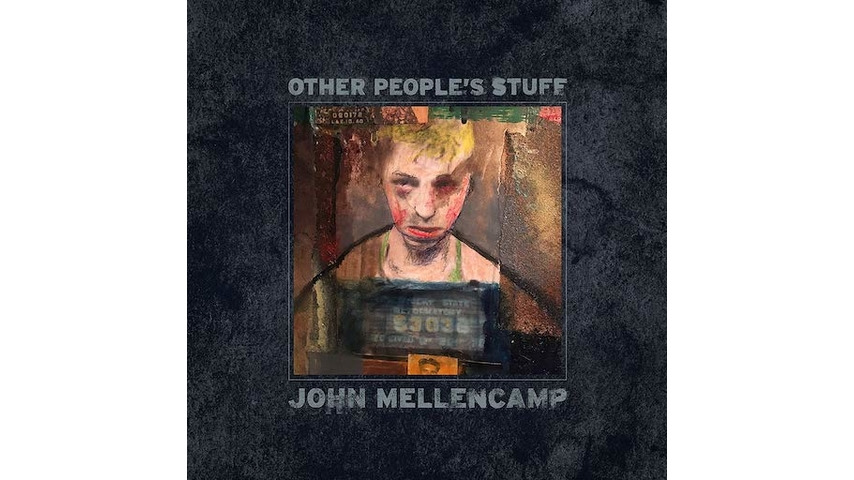
Arriving a year after his rootsy Sad Clowns & Hillbillies, John Mellencamp’s new album is a series of (mostly) previously released folk standards and covers the 67-year-old singer has amassed over the years. The set is a testament to both Mellencamp’s signature sound and his wide-ranging taste. Culling recordings from a nearly 25-year period, Mellencamp’s latest LP is a surprisingly cohesive collection defined largely by the well-worn murky blues-roots arrangements the singer has become known for since his 80’s hitmaking days. The source material ranges from Atlantic Records soul (“Teardrops Will Fall”) to pre-war country (“Wreck of the Old 97”). Taken together, the record serves as a rendering of what Mellencamp’s own Great American Songbook might look like.
Mellencamp noted that he doesn’t “get paid for being onstage, I get paid for leaving home, traveling on airplanes and staying in hotels.” “The part of being onstage, I’ll do that for free,” he said. “I’m pretty much an isolationist and my routine is always the same. I very rarely see anybody except when I walk onstage. It’s not like I hang out with anybody. … I don’t even stay in the same hotel as the band.”
Although the title’s something of a misnomer, it does accurately sum up the vintage sentiments that give this album its common bond. Still, it’s a viable concept, especially given Mellencamp’s reputable stance as a heartland hero and blue collar troubadour.
Nevertheless, the obvious question is why Mellencamp would choose to revisit songs he originally recorded. While these songs suggest varied sources, many revisit earlier offerings Mellencamp sang himself on previous albums. The easy answer seems to lie in his desire to express the outrage that he, like most similarly-minded musicians, feel in today’s maelstrom of polarized politics and increasing division. Fancying himself as a folk singer in the populist tradition—think Dylan, Springsteen, Pete Seeger and Woody Guthrie, he tackles these tunes with a gritty, rough hewn sensibility that reflects both his passion and purpose. The tattered yet timeless narrative “Wreck of the Old 97”,” the craggy folk blues of the oft-covered standard “In My Time of Dying” and the erstwhile narrative entitled “Mobile Blue” maintain that sense of resolve, yet still offer due reverence to the originals.
Consequently, Other People’s Stuff seems more than a mere recap of Mellencamp’s rootsier efforts. It’s an anthology of sorts enveloped within the protest motif. The lively roadway narrative “Dark as a Dungeon” was culled from a National Geographic special. The rugged blues and bluster of “Eyes on the Prize” was Mellencamp’s contribution to a White House gathering during the Obama era celebrating the Civil Rights movement. “Gambling Bar Room Blues” and “I Don’t Know Why I Love You” were culled from tributes to Jimmie Rodgers and Stevie Wonder, respectively.
At the tail end of Boygenius’ penultimate song in their live set, Julien Baker shreds on the guitar, playing a classic rock-inspired solo that’s completely out of place in her or either of her bandmates’ back catalogue. It’s something Lucy Dacus mentioned in a recent interview, that in the recording sessions for the Boygenius EP, Phoebe Bridgers would “suggest an idea as a joke, and then we realized, ‘Wait, this is an amazing idea!’” Those lighthearted, playful vibes are very much on display when you see the folk supergroup live; when Baker begins to solo, Bridgers and Dacus try their absolute hardest to get her to laugh, sometimes waving lighters and other times rolling around on the ground. The trio’s live energy is undeniably infectious and the crowd is more than willing to send it right back, even at the end of a show that spans four whole hours. This round of Boygenius shows, likely to be the only ones of their kind, simply represent three good—and generationally talented—friends at the top of their respective songwriting games, having the time of their lives. While there’s a definite “I was there” feeling to these shows, we definitely hope this likely once-in-a-lifetime tour happens again sooner rather than later.
Boygenius performs “Me & My Dog” for Late Night with Seth Meyers.
Since cropping up on the East Coast DIY circuit in 2009, amassing the sort of fervent cult fanbase that gets tattoos in their honor, Ovlov have had to break up a number of times in order to keep it together. Their most recent disintegration, in March 2015, seemed to suggest a greater degree of finality, however, with Hartlett expressing his uneasiness with demanding a full-time-band commitment from the revolving roster of friends and family members that have helped him realize his creative vision. But after redirecting his energies to his solo project Stove, he returned to Ovlov’s Facebook page in early 2016 to sheepishly announce an intention to reunite the band, “sometimes but not all the time.” Ironically, that commitment to be non-committal has since yielded two years of steady touring, a vinyl compilation of their early EPs, and now, Ovlov’s first proper album in half a decade.
The division between Ovlov and Stove was always blurry—the former may lean on Dinosaur Jr. overdrive while the latter wobbles on a rickety Guided by Voices foundation, but both ultimately forge a symbiotic relationship between Hartlett’s crestfallen melodies and his fuzz-pedal abuse. While Stove began as a wholly solo endeavor, it quickly formalized into a proper band in its own right—one whose bassist, Michael “Boner” Hammond Jr., is part of this current Ovlov line-up. But with Tru, Hartlett soundly reasserts Ovlov’s signature strength: the band’s ability to fortify tender songs with muscular squall in a way that doesn’t obscure their emotional intent, but amplifies it. Harlett’s songs tend to deal in themes of loneliness, estrangement, and the inability to communicate, and the onslaught of noise ultimately serves to make that desire for connection feel all the more cruelly out of reach.
Steve Hartlett sang, played guitar, bass & synth on the best of you Theo Hartlett played drums, sang on stick, guitar soloed on grab it from the garden Morgan Luzzi played guitar Michael Hammond Jr. played bass, guitar on best of you Erin McGrath sang on baby alligator Michael John Thomas III played a guitar solo on grab it from the garden
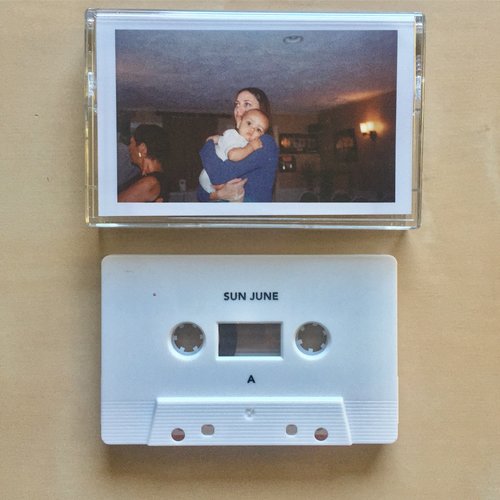
The latest release by Austin label Keeled Scales, Years is the debut album from fellow Austin residents Sun June. The band was formed by founding members Laura Colwell and Stephen Salisbury when they were working in Terrence Malick’s editing rooms, and even practised in the office when Malick was away. Now they’ve added Michael Bain (guitar), Sarah Schultz (drums), and Justin Harris (bass) to become the quintet that is Sun June.
Years is a record shaped and propelled by the gentle forces of the world, The album opens with the swaying slo-mo folk rock song ‘Discotheque’, Colwell showing off her impressive vocals with a kind of husky and effortless passion. The track conjures gentle winds that swirl in plaintive yearning, lifting memories and images and twisting them into a full nostalgic picture with the slow rhythm of nature. ‘Slow Rise II’ is equally patient, beginning with snake-like guitar and a kind of wary soul-bearing. “Go ahead and look me in the eye,” Colwell sings, “tell me everything will be alright, oh I’m lonely too.” It’s a moment of unguarded honesty that closes distances, and which lays the groundwork for the catharsis that comes later. The last minute of the song distils what has until then been encoded between the lines, infused with a golden energy as it whips up into a rousing finale, Colwell repeating the line “I’m coming home” with increasing fervour.
Indeed, repetition forms a key part of Sun June’s sound on Years, a number of the tracks returning to a repeated phrase, cyclical patterns that rise in intensity like incantations, or else echo out into the fabric of the sound. ‘Young’ is an example of the former, a track we described previously as “staring back in time not to find answers or cast blame, but instead for the fleeting chance to warm your face on the now lost glow of past love.” After a restrained start, the song eventually kicks into a little eddy of motion, spurred by the catchy chorus, as though each cycle generates further motion.
Whispered and winey, ‘Johnson City’ features emotions fermented, made velvety with age, the taste haunting tongues beyond the moment, before ‘Homes’ presses forward with a sense of brooding intimacy that oozes and creeps. ‘Records’ is carried as if by a fresh spring breeze, with Colwell singing “I’ll try to love you right” and the rhythm possessing a warmth that goes halfway to fulfilling the promise. This warmth leaks through into ‘Apartments’, intensifying as the crispness is replaced by the humid heat of confused dreams, before ‘Baby Blue’ cools into an icy certainty. This is the darkest, most brooding track on the record, the drums tight and insistent, the vocals likewise, the track gathering momentum under its own motion, and though descending evenly from great height.
Released June 15th, 2018
Laura Colwell, Michael Bain, Justin Harris, Stephen Salisbury, Sarah Schultz
Hull’s artistic renaissance continues apace. Last year saw it taking on the mantle of UK City of Culture and drawing three-and-a-half million visitors in the process; Now, they can add Night Flowers to the admittedly humble list of Humber hometown heroes, albeit ones that have done something that most provincial bands can’t afford to these days and moved to the capital. If they hadn’t, though, there would be no Night Flowers, or certainly not the iteration that’s made this charming debut record; it was in London that the group recruited their singer, Sophia Pettit, who hails from Boston (not the one in Lincolnshire, whilst we’re on the topic of the regional United Kingdom).
This transatlantic lineup of the band toured the country with The Pains of Being Pure at Heart last May and it’s not difficult to understand why somebody thought the two groups would complement each other; Pettit’s vocals are as clear as a bell and very much in the same vein as The Pains’ revolving lineup of female singers, A Sunny Day in Glasgow’s Jen Goma and Fear of Men’s Jess Weiss among them.
Pettit’s warm tones are front and centre on Wild Notion and provide the record with its primary sonic and emotional throughlines, although that isn’t to say that you get the impression that the rest of the band were waiting for the right vocalist to come along to act as an anchor for their instrumental impulses. Night Flowers nod to dream-pop and psych at points on Wild Notion but they never get lost in them; the soundscapes are carefully controlled, with handsome, chiming guitars ringing out over undulating beds of synth.
There’s nothing musically or thematically ground-breaking about this collection of songs and it leaves a slightly sour taste in the mouth that, in the album’s press release, somebody felt it necessary to note that the Hackney studio that the record was cut at is about to be bulldozed ‘to make way for luxury apartments as the gentrification of London continues’. Wild Notion does a good line in endearing melancholy but it’s of the timeless variety; this isn’t a political record and it’s all the better for it.
“Wild Notion” is at the soft end of the collection, but really nice. The female fronted indie rock reminds me on Rough Trade bands from the 90s,