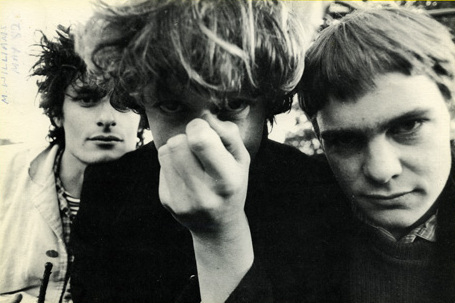
The Clean was a New Zealand indie rock band formed in Dunedin in 1978. They have been described as the most influential band to come from the superb indie Flying Nun label, which recorded many artists associated with the “Dunedin sound”, and one of the first bands to be described as “indie rock”.
Led by brothers Hamish and David Kilgour, the band rotated through a number of musicians before settling on their well-known and longest running line-up with Robert Scott. Hamish and David Kilgour started to write and play music together in Dunedin in 1978, influenced by 1960s pop rock and garage records, punk rock, and psychedelic music. Both brothers were part of a small but growing alternative music scene at the time in Dunedin, which followed the growing American and British punk movements closely through imported magazines and vinyl records. Hamish and David Kilgour, The Clean’s constants, had been playing and writing music together since 1978, building up a fat songbook of primitive punk, minimalist pop, infectious folk rock and adventurous psychedelic instrumentals. Their sound was built around David Kilgour’s off-centre, 1960s-influenced guitar, Hamish’s motorik drumming and melodic driving bass, first from Peter Gutteridge then Robert Scott.
Hamish was friends with Chris Knox through this scene, then-frontperson of early influential New Zealand punk band The Enemy.
The Clean’s debut single “Tally Ho! / Platypus”, was the tied-first release on Roger Shepherd’s Flying Nun Records label, alongside The Pin Group’s “Ambivalence”. “Tally Ho!” reached number 19 on the New Zealand Singles Chart, giving the nascent label its first hit. The band had a brace of instantly memorable songs including ‘Anything Could Happen’, ‘Beatnik’ and ‘Getting Older’.
Pitchfork described The Clean‘s “Tally Ho!” as “a classic of immense proportions, from its Velcro melody, absurdly mixed garage organ and motorik beat, to the crusty, hiss-laden home eight-track recording that embodies it.” Recorded in the middle of a New Zealand tour for a humble NZ$60, the song broke into the country’s Top 20 singles chart at #19, surprising everyone including the band. Its B-side “Platypus” was recorded live at a show just days prior, capturing the band’s buoyant and elastic sound on stage.

Following the release of “Tally Ho!“, The Clean recorded their debut 12″ EP “Boodle Boodle Boodle” in September 1981, engineered by Chris Knox and Doug Hood in an old Auckland hall. The EP was released on Flying Nun in October, debuting at number five on the New Zealand music chart and staying in the top 20 for almost six months.
In November The Clean hit the highway to promote “Boodle Boodle Boodle” before gathering up the rising crop of Dunedin groups – The Verlaines, The Chills, The Stones and Sneaky Feelings
The playful, optimistic tone and Andy Shaw-filmed video of ‘Anything Could Happen’ had instant appeal. There was a lot of promise and freedom in its ringing open chords and allusive lyric. We found the EP had contrasting moods, just like the Velvets. The head-down acid instrumental ‘Point That Thing (Somewhere Else)’ brought the night. ‘Anything Could Happen’ brought the day. A distinctive Chris Knox pencilled sleeve with gold and black inner label and a band-generated comic booklet capped it off. Looking back at ‘Anything Could Happen’ in early 2012, Hamish remembered they were going for a “Highway 61/Rolling Stones country feel” born from a great affection for “20th Century folk, blues and country.”
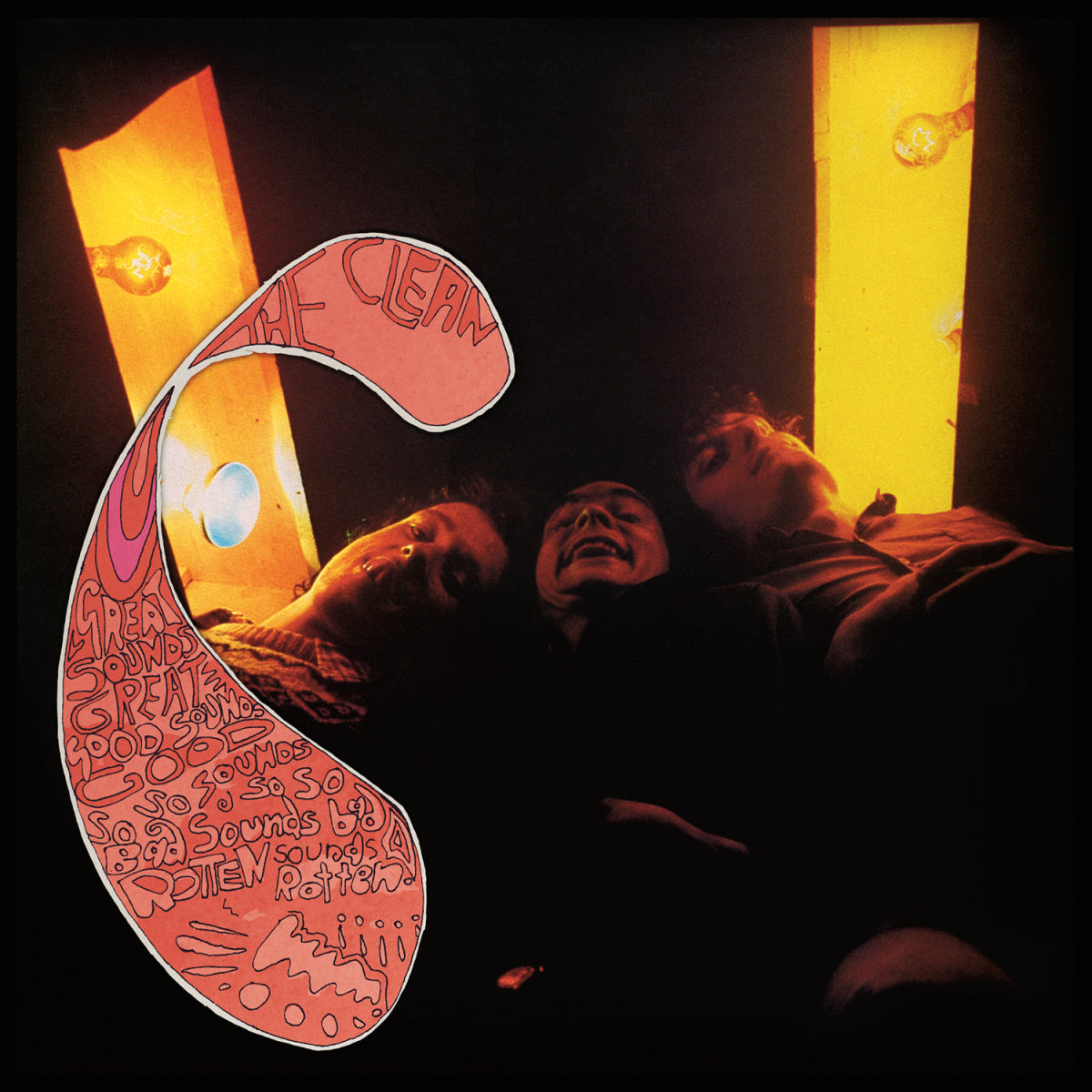
The continued success of the EP gave Flying Nun more financial security, and allowed the label to grow further. In May 1982, the band recorded and released the “Great Sounds Great, Good Sounds Good, So-so Sounds So-so, Bad Sounds Bad, Rotten Sounds Rotten” EP, produced again by Knox and Hood. The release reached number four on the music charts and received positive praise. The keyboard-driven classic ‘Beatnik’ from this second EP “Great Sounds Great.”.. rose as high as No.4, aided by heavy touring and a witty video set in a bohemian coffee bar.
On release in May 1982, Great Sounds Great… debuted at No.4 on the pop charts. This time there was a witty, bang-on video ready to roll, set in a bohemian coffee bar. The songs also sparkled. Despite some critical reviews, the EP is in retrospect a stronger and more consistent record than Boodle. ‘Beatnik’ is a fabulous keyboard driven pop song. ‘Slug Song’ mined similar territory while ‘Fish’ was a trademark Krautrock/psych instrumental, ‘Side On’ a biting Fall-ish riffer, and ‘End Of My Dream’, a thoughtful and persistent psych-folk tune.
For most of the 1980s, The Clean were effectively disbanded but Flying Nun released “Odditties” in July 1983, a cassette of 21 previously unreleased songs, many from the band’s own home recordings made on a Revox B77 tape recorder. We flogged that tape to death, marvelling that The Clean’s songbook was extensive enough to relegate standout numbers such as ‘Odditty’, ‘Success Story’, ‘David Bowie’, ‘Mudchucker Blues’, ‘Hold On To The Rail’, ‘At The Bottom’, ‘In The Back’ and ‘Fats Domino’ to a retrospective tape, when they could have sat comfortably on any of the hit releases.
The brothers released an album as The Great Unwashed named “Clean Out of Our Minds”, which David said was “an extension of “Odditites”, the bedroom mentality. The Kilgour brothers had been busy since the collapse of The band in late 1982. In mid-1983, they’d released “Clean Out Of Our Minds”, a woodsy experimental album of naked acoustic and trippy psych.
“Odditties 1” (1983) finds The Clean experimenting with echo, repetition and reverb on a dub version of ‘Point That Thing’ taped in Selwyn College’s billiard and practice rooms in 1980.
They were an acid instrumental outfit powered by surf and punk and Velvets drone and tempered by folk. It was the perfect sound for that blazing orange-lit gothic interior – two guitars and drums – with David Kilgour’s white Ibanez carving the air with none of the awkwardness of their lo-fi album recording. You couldn’t see the seams live. It was one long psychedelic splurge of folk rock jangle and out-there rockers.
Even with The Clean in abeyance, Flying Nun released live EP “Live Dead Clean” in 1986, a collection of their EPs, singles, and some live recordings called “Compilation” in the same year, and a second “Odditties” tape in 1988. The Clean’s early records featured on “Compilation“, which was released in NZ, Australia, Europe and the UK, where it sold in excess of 7,000 copies. “Compilation” was released in the USA in 1988 on Homestead Records with six extra live tracks.
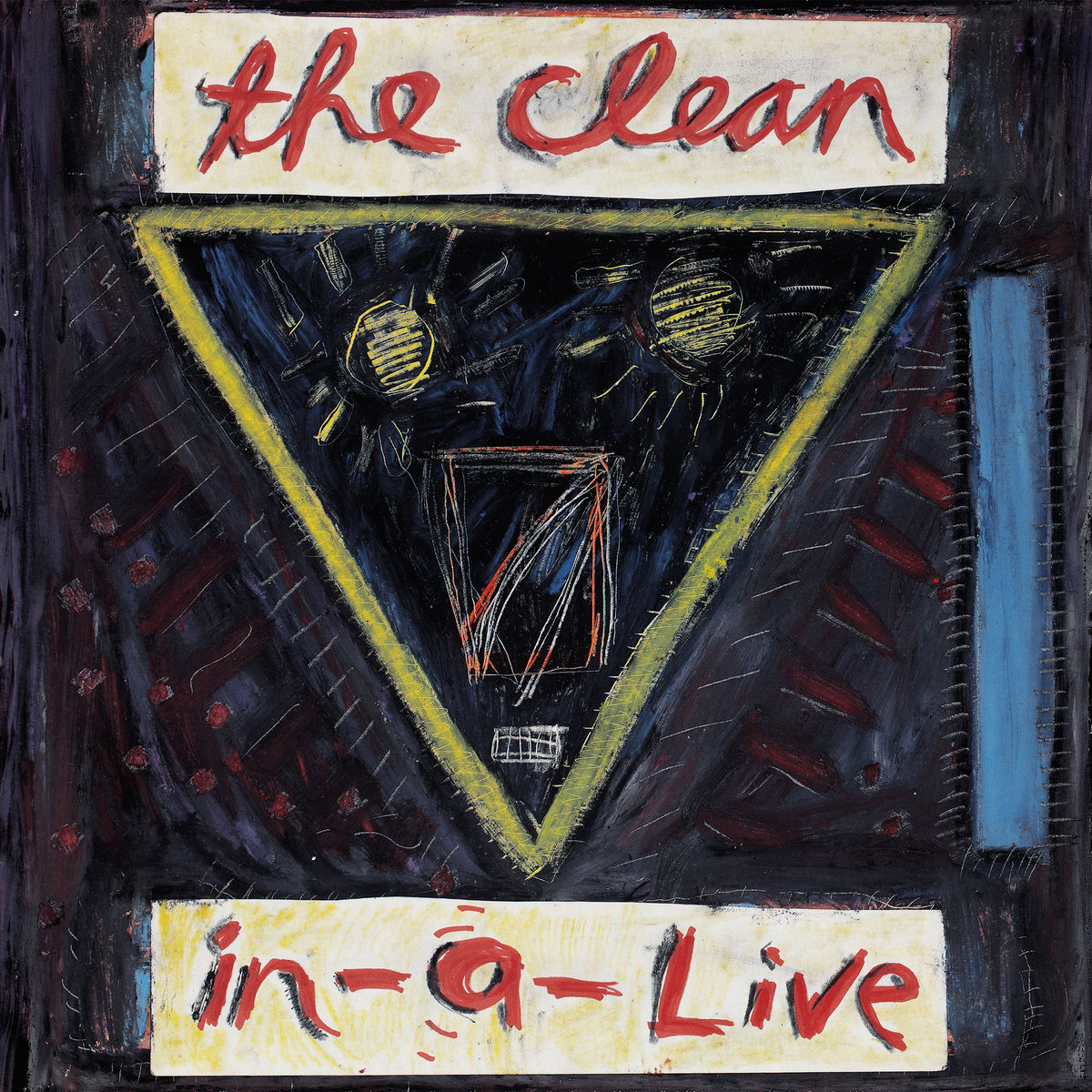
The band reunited in 1988, opening for The Bats twice in London. Some recordings from these shows were later released in the “In-A-Live” 12″ in 1989. The five song live EP called “In-A-Live“, taped at the first Fulham Greyhound show by Jed Town, was released on the Flying Nun Europe label and in the United States, but not in New Zealand.
On it were, Clean perennials ‘Point That Thing Somewhere Else’, ‘Fish’, ‘Flowers’, ‘Anything Could Happen’ and ‘Whatever I Do Is Right’ burn brightly as “David Kilgour twangs away like Tom Verlaine playing at Duane Eddy.” Future praise in Melody Maker pegged the live EP as “a thing of unprecedented fire.”

The Clean played a tour of major New Zealand centres in May 1989, selling out Auckland’s Powerstation. They released the album “Vehicle” in 1990, and toured the United States, Britain and Europe multiple times to promote the record. Geoff Travis, head of Rough Trade Records had been in the audience. His indie label was already well respected in New Zealand, where many of its releases were available.
“It was all recorded live, the way we’d done all the records. We set up, blasted through the songs, did a day’s worth of guitar and keyboard overdubs then a day of vocals, a day of mixing and it was all done,”
Travis hadn’t heard of The Clean before the show, although some of his staff had. What he heard that night moved him to finance a new album, “Vehicle”, featuring 13 of those 15 new songs, “Vehicle’s” reception on release was extensive and positive. The haunting acoustic pieces on “Vehicle” remind me of Love and Spirit at their peak

During the 1990s, The Clean continued to tour internationally, releasing studio albums “Modern Rock” in 1994 and “Unknown Country” in 1996. “Modern Rock” It’s a low key, lo-fi affair featuring strong songs in ‘Secret Place’ and ‘Too Much Violence’.
“Modern Rock” crackles with spontaneous energy, as if The Clean—namely, Hamish Kilgour, David Kilgour, and Robert Scott—couldn’t help but make music together whenever they were in the same room. Following their 1989 reunion tour and the 1990 release of “Vehicle“, those opportunities were rare, with Hamish in New York City fronting The Mad Scene, David releasing his first solo album, and Robert recording albums with The Bats at a breakneck pace. Then, for nine days in April 1994, the stars aligned over Dunedin and “Modern Rock” bloomed into life.
For this reissue, “Modern Rock” has been remastered from the original tapes by producer and engineer Tex Houston and preserves Hamish Kilgour’s original artwork.

“Unknown Country” followed in 1996, having been recorded at Fish St studios in Dunedin in autumn 1995 with Starrett again contributing strongly, but “Unknown Country” is their least compelling album so far.
‘Wipe Me I’m Lucky’ Up in the clouds, zooming and floating, sounds like quite a bit went into the structure and production on this. Played live a lot. Backwards percussion is always good too.
‘Champagne and Misery’ Two great titles so far, always a good sign, “X ray spex didn’t do much good…” A great sound, cohesive and tight, good pop structure with cool changes and a double co-vocal between Hamish and David.
‘Changing Your Head’ Well you need to listen to this album. I like the way the changes happen in the song, a good collaborative example, propulsive. “what we do with our lives…”
‘Balkans’ From memory laid down as a ‘proper’ song then getting Alan Starrett to do his wonderful string stuff, then stripped away the main body of the song just leaving Alan’s overdubs, the feel is somewhere between Turkey and Bulgaria.
‘Clutch’ Dreamtime whimsey, a story I dreamt up. sweet treatment tempered by good wacky overdubs and a co-vocal “I’ve got my mind all opened up”. Feels wobbly and disjointed like it could collapse, that is probably good.
‘Franz Kafka at the Zoo’ Hamish in fine wacky lyrical form, freestyling, I love the backing track, David on bass and high plucked piano strings. You may have to strain to hear the story… it’s worth the effort, there are some cracking lines in there.
‘Whisk’ Enjoying the sound of ourselves mucking around, Keys, plucked strings, exploring sound for the fun of it… Eastern tones?
‘Indigo Blue’ The wild blue yonder, glassy slide shimmering up high, the bass riff anchoring it all. A great Hamish vocal, evocative and moody.
‘Chumpy’ A crowd stomper for a while when it was tackled live. Mutant disco for Cro-Magnons. Great keyboards, bass and drums drive it forward. Alan’s strings provide wonderful tension as it ebbs and flows, mad otherworldly music.
‘Get the Liquid’ Who made up these mad titles, we were on a roll with this stuff, lots of ideas flowing. Misleading intro, then it dives into strange bizarre sections and changes. We were heading down prog road but got well lost, we knew what we were aiming for.
‘Happy Lil Fella’ More madness, lightweight mutant pop from another place. South Pacific Western. Sparkling guitars and the song is constantly changing, never settling in one place for too long.
‘Tweezer’ A bass pattern that stretched my fingers to their limit. Keyboard excursion, background music for a warthog doco.
‘Rope’ Rainy arvo ditty, a sad western story “there’s a rope on the wall, that isn’t for you” Bass, piano and percussion…come to think of it there is a lot of piano on this album.
‘Twist Top’ Wonderful pop, one of my faves. Almost seems out of place on this album, a ray of light in the darkness. It came together easily and all the overdubs and ideas fit well. “3 million people can / can’t be wrong”. It doesn’t muck around and before you know it the outro is happening and it’s a doozy, should have been a hit.
‘Cooking Water’ Dark, claustrophobic at first then sometimes it opens up and lets the light in, sound almost like a normal song then dives back in on itself. A very tight riff, it doesn’t sound like us or anyone else for that matter.
‘Valley Cab’ A song about David and I getting a taxi home to North East Valley each night after recording. Scary overdubs over a sweet Piano and vocal. “Now we’ve lost the night, was it ever ours” Another wobbly gem.
‘Wall Walk’ White boy disco/dub. Quite a swagger to this one, David having fun on the keys conjuring some middle eastern vibes, boom then partway through. It changes into another song, ambitious structure and many changes, strings come in and change the feel, the bass and drums re enter the fray. A one off never attempted live, for good reason.
‘Balkans’ Revisited, possibly from the same original song idea, slightly different mix of Alan’s overdubs, lost in the ether, another world.


Sifting through The Clean’s non-compilation albums is like sifting through garage punk compilations of old. There are real gems to be found such as ‘Stars’ and ‘Jala’ on “Getaway” (2001) released on Matador Records in Europe and Merge Records in the USA. Like all The Clean’s records, “Getaway” started in the practice room, with recording stretching over four studios. Fans Georgia Hubley and Ira Kaplan from Yo La Tengo contributed to two songs.
Originally released in August 2001, the double-LP reissue marks the first appearance of The Clean’s “Getaway” on vinyl and includes an 18-song bonus CD that compiles the hard-to-find, tour-only releases Syd’s Pink Wiring System and Slush Fund. A double-CD version includes the full album plus the bonus disc.
The live version of the pulsing, soaring “Stars”—along with a couple of other “Getaway” songs and Clean classics like “Fish,” “Side On,” “Quickstep,” and “Point That Thing Somewhere Else”—appears on the rare 2003 album “Syd’s Pink Wiring System“. That record is included with the “Getaway” reissue, along with the more experimental, piano-driven EP “Slush Fund” from the same era. These bonus tracks reinforce the idea of the “Getaway“-era Clean as especially plugged in, generating inspired and beautiful music almost on instinct.
Indeed, they’ve done justice to “Getaway”, a key album in The Clean discography—a record that honours the band’s origins as garage-rock-loving New Zealand kids, excited just by the hum of a good, cheap amplifier. Songs like the twangy, easygoing “Crazy,” the jaunty acoustic snippet “Cell Block No. 5,” and the trance-inducing “Circle Canyon” are more fine examples of Robert Scott and the Kilgour brothers’ interest in immediacy and a strong vibe, applied to catchy melodies.

In 2003, the two-disc compilation “Anthology“, released on Merge Records, awakened new interest in the band in the US, building on an international reputation that had been enhanced by endorsements from prominent 1990s indie groups such as Pavement and Yo La Tengo. Starting off with The Clean’s infectiously catchy debut “Tally Ho” this double disc anthology has it all, from rarities to classics, simply put it is the ultimate Clean collection.
The first disc features tracks from the band’s early recordings – the two 12″ EPs, two 7″ singles, the perfectly-titled cassette of ‘Odditties’ and the ‘Live Dead Clean’ EP. It showcases The Clean’s seemingly effortless ability to jump from guitar-drone, off-centre pop and psychedelic songs. Disc 2, follows on from this into even wider musical experiments, from the instrumental riffs of “Wipe Me, I’m Lucky” through to the strange tale of “Franz Kafka At The Zoo”. All in all it captures perfectly all the elements that make this band so great.
The Clean’s story is on-again/off-again purely by design. It suits the trio’s creative desires and keeps them clear of the machinery that threatened to interfere with that process from the moment they threatened to get awfully popular awfully quickly over thirty years ago. The Clean’s modern age has seen them splitting time and hemispheres: David Kilgour has a reputable solo catalog; Robert Scott has The Bats; and Hamish Kilgour has been an endearing and enduring fixture in New York City, playing with assorted combos.
This record is jam packed with everything I love about the New Zealand music scene. Chiming, jangly pop tunes, epic guitar jams, home recorded experiments, “The Clean, truly, is the best there was, the best there is and probably the best that ever will be in New Zealand”
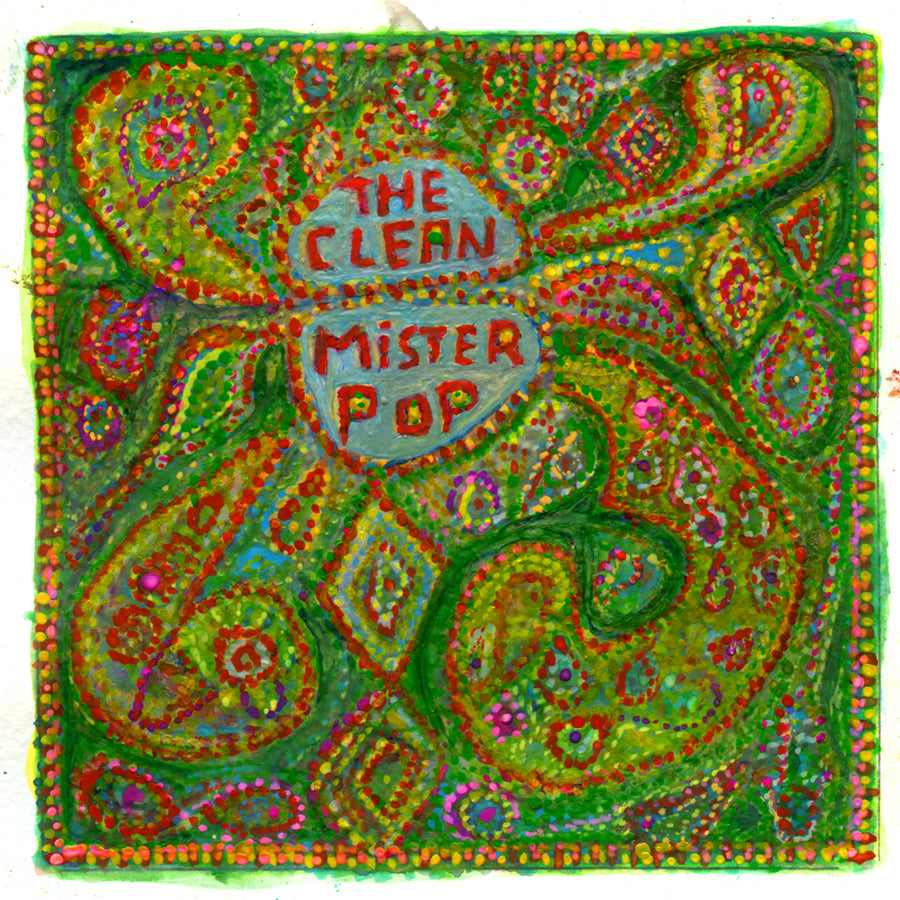
The band released further records and live albums on both American and New Zealand labels, their most recent album being “Mister Pop” in 2009. Hamish Kilgour’s death was announced on December 2022, In 1978, The Clean were the seeds of New Zealand punk. They carved out a big sandbox for everyone to play in, and their influence resonated not only in NZ but around the world. “Mister Pop” sees The Clean continue the great pop pastiche. Circus ragas (“Moonjumper”), hazy sunset anthems (“In the Dreamlife You Need a Rubber Soul”), and the loose Dada approach to word-smithery continue alongside “proper” lyrical forays and a few Autobahn-referential instro moments to boot (“Tensile”).
Delve into David Kilgour’s insights on all 10 songs from “Mister Pop”
‘Loog’ A chord progression I’d had for a while via the piano. In studio Bob and I finished off the arrangement and we laid it down live. I think there may be about three synthesizers on it including an old Juno and a tiny Alesis Micron. Tex came up with the background vocal ideas which was the icing on the cake really. Rainy on BVs. Some Clean instrumentals ended up as instrumentals as we couldn’t think of any decent vocal ideas. A favourite of mine.
‘Are You Really on Drugs’ …this kind of annoys cause I never finished the song and it wasn’t supposed to be the 2nd track on LP. Alluding to a good friend’s drug problem. Almost there.
‘In the Dreamlife You Need A Rubber Soul’ Another favourite Clean track. Explains itself really. I like the feel. It contains a bottleneck solo played on an old Rickenbacker guitar through a Fender Twin. It’s all about the chorus really, but I dig the chug of the verse and the sentiment.I have been asked a few times if its about Rubber Soul by the Beatles, I mean really, though they got there first! Maybe it’s time for a Plastic Soul song. Gorgeous backing vocals from Geva and Rainy from the duo Haunted Love.
‘Asleep in the Tunnel’ I think began at Gary Olsen’s studio in NYC. Inspired by Bob falling asleep in the Holland tunnel.I remember NYC winter was creeping in. I remember I’d been touring in the USA for about 6 weeks and was starting to feel very homesick, especially with winter setting in and Xmas lights going up in NYC.
‘Back in the Day’ Another that was begun in NYC. We had a couple of recording sessions in NYC. Mainly for writing and demoing though some backing tracks like this one made it the whole way. Funnily enough songwriter Michael Hurley was staying at Gary’s at the time and while cooking his brown rice he was forced to listen to a session through the floorboards. He passed on word that he liked this one the best which made us all smile.
‘Moonjumper’ The three of us have a love for German motorik , but also a deep love of the drone. I think everything I’ve done has some kind of drone through it. Nice work by Alan Starrett on viola.
‘Factory Man’ DK songwriting by numbers. I was lying in the bath in Brooklyn, NYC and thought I heard Bob singing this chorus downstairs. He wasn’t, so I wrote this pretending I was Ray Davies of the Kinks. Sorry Ray. Don’t bore us, get straight to chorus! A very good friend of mine hates this song. That’s what friends are for! ha! Rainy on backing vocals again.
‘Simple Fix’ If you listen closely at the beginning you can hear me saying “I don’t (know) what the fuck I’m doin here”. Which is usually the case esp. on a Clean session — just roll tape and see what happens! Also listen close and you’ll hear barking seals. “Seeing as we don’t have any vocal ideas for this one , let’s put some barking seal on it”!
‘Tensile’ More motorik. The lyrics come from a feeling I had driving at night towards Philadelphia. A DJ once asked me if I was drawing attention to myself by singing through a vocoder. I said releasing any kind of music is drawing attention to yourself… hopefully. Drone on.
‘All Those Notes’ One of those times I was told to put a lap steel down on a track but I wasn’t allowed to let it sound like a lap steel. To me a lot of Bob’s Clean songs always sound very biographically Clean — ie. singing about the moment, the tour, the session, the relationships. A sweet way to end the LP.
The Albums:
- Vehicle (1990)
- Modern Rock (1994)
- Unknown Country (1996)
- Getaway (2001)
- Mister Pop (2009)