“The only heroic rule is to be alone, alone, alone…” – Cesare Pavese

“What did Johnny Thunder’s guitar sound like? It was the sound of the…incommensurable.” – Rene Ricard

The music on So Alone is the color of black hair; it is the sound of machines being manipulated by addicts and criminals under conditions of destitution. All love is wretchedness. We listen to rock and roll to escape the terror of history, to escape its fragmentations and ceaseless changes. Johnny’s music does not impart anything approaching ‘truth’ but instead offers a profound sense of the ‘Real’ – the morbid, the uncontrollable, the unwholesome.

Let us dispense with a detailed list of who played what, where and what a toxicology report of each of the (at the time) living bodies might have revealed. All rock music is palimpsest just as is ‘rock journalism’, with its endless recitation of the same words and events. It would be a waste of time to illustrate this point by citing fact after banal fact, so let’s instead simply attempt to situate Johnny in a different milieu, a different light.

Johnny Thunders, like many rock musicians – of a certain, perhaps vanishing ilk – was a consummate sufferer; he cultivated the deepest level of suffering and picked the perfect career to exploit it. A surface examination of this statement would seem easy to confirm. He was a junkie who wasted every opportunity that came his way. A man in revolt, he lived in a permanent state of bad faith. Ignored, of course, is the fact that there was a metaphysical yearning in his search for oblivion, in his self-laceration. With that in mind we should consider placing Johnny Thunders in a tradition alongside Jean Genet, Simone Weil, and Antonin Artaud.
Jean Genet has stated that crime, sexual degradation, even murder were threshold experiences that led to the highest glory. Simone Weil believed that the proof of god’s existence was in His absence, and that the most dire affliction was evidence of this absent God’s love.

Up until quite recently, the heroes of our liberal, affluent society have been its opposite; anti-liberal, anti-bourgeois. They’ve been obsessive, ill-mannered outsiders who used violence in all its variety to leave their mark. Think of Lucien Freud with his spurned mistresses, multi-million-dollar gambling debts and sizable complement of illegitimate children. Sanity to such artists was a form of cowardice. Their impact was to achieve by the extremity of their personal lives and their intellectual points of view, a totalizing vision that went against the grain of our supposedly polite, civilized world. These violent, profligate, destroyers of the self have been considered (perhaps until now) the true heralds of ‘the Real’.

The body of work Johnny Thunder’s left behind is little more than fragments, shards of black glass strewn here and there, mostly overshadowed by the physical, spiritual and moral wreckage of his life. Perhaps, in our own decentered, disjointed time, this can be considered a success; fragments after-all, are the art objects par excellence of the 21st century. As such, So Alone is his masterwork, his one complete statement – a compendium of jagged, melancholy yet perfect fragments.

Perhaps the time of the artist/visionary as extremist is over. Perhaps there will be no more Johnny Thunders; no more near-penniless, globetrotting drug-addicts continuously traversing the capitals of the world, pockets brimming with narcotics, trailing an ever growing arrest record. Such a scenario seems impossible to imagine in 2018.
The same centrifugal forces that compelled Johnny to inject heroin into his arm, to abandon his wives and children, also compelled him to pick up the guitar and leave a permanent mark on the world.

Sometime earlier this summer, Juliana Hatfield was shredding alongside waste treatment machinery on Deer Island, and it was freakin’ awesome. Amidst a million subtle shades of pink and surprisingly industrial imagery, Hatfield’s new video, “Lost Ship”, paints her as the take-no-BS Boston woman we’ve always known her to be.

“No one has any power over me,” she sings, which she quickly follows with “I wanna ride on a spaceship in my mind,” both lyrics that recall her steadfast agency and desire to peace the hell out.

The next taste of her forthcoming 2019 record Weird, Hatfield’s video for “Lost Ship” was filmed on Massachusetts’ Deer Island earlier this year. With a little more than a month to go until Weird debuts on American Laundromat Records to be released in January, from the former Blake Babies member .

“Rachel Lichtman of the awesome Network 77 hipped me to this place called Deer Island in Winthrop, Massachusetts and we shot the video there,” she says . “It’s right in my backyard, practically, but I had never been there before. It was such a cool sci-fi setting, with the wind and those gigantic egg-shaped structures which are part of the waste treatment facility out there. Rachel made this a beautiful haunting video.”

Echoing Hatfield’s cut-off-from-the-world’s sentiments of Weird, director Rachel Lichtman honed in on her blissfully alone beauty for the video’s imagery.

“I feel like Juliana and I created something that so beautifully captures the powerful freedom of the chosen isolation described in ‘Lost Ship,’” Lichtman explains. “Juliana seems a futuristic goddess, luxuriously alone, atop what looks like the remnants of the industrialized world; she’s not bothered or indebted or compromised. We shot it just the two of us on the last warm day of summer, and I think that energy translates through and captures the essence of this brilliant song.”

“Lost Ship” by Juliana Hatfield from the album “Weird” out January 18th, 2019 on American Laundromat Records.

Valentine

All it takes is one song. In the case of Snail Mail, that song was called “Thinning,” and it was released on the band’s debut EP “Habit”, which Lindsey Jordan wrote when she was still in high school. “Thinning” had a riff that sounded like it was underwater, and Jordan’s muscly rasp cut through the surface as she sang about isolation and loneliness in a way that felt distinctly teenaged and still somehow universal. The song gave you That Feeling, the kind that is hard to describe but you’ll know it when you hear it. Simple and anthemic, it’s the type of song that makes you think, “Man, I wish I wrote that.”

It must have been scary for Jordan to write the follow-up to Habit after a dizzying rise that landed her on Matador Records in her senior year. Replicating That Feeling is near-impossible, but Jordan is more than capable of doing it. Snail Mail’s debut full-length, Lush, has songs that are as massive and crowd-pleasing as “Thinning” (“Full Control,” “Pristine,” “Heat Wave”) but there are moments of repose on this album, too, that are just as lovely (“Let’s Find An Out,” “Deep Sea”). It would have been easy for Jordan to tunnel into self-doubt, to question every decision and churn out a work that felt muddled or rushed. Instead, she made a supremely confident, maddeningly catchy guitar rock album equipped to compete with the classics.

Snail Mail’s 2018 debut album “Lush” had the power to ease the pain of a breakup six months before it even happened, and would still be around to patch up the wounds six months after. It became an outlier in an incredibly strong scene of American indie rock stars that came to the forefront in the late 2010s, including Phoebe Bridgers, Soccer Mommy, and Lucy Dacus. Lindsey Jordan’s poetic post-breakup examination perfectly portrayed how absorbing love can be, reaching a wide audience for whom the songs resonated as they began to assign their own meaning to Jordan’s scriptures of fading romance. Inevitably, a relentless tour cycle started, with years spent on the road while quickly transitioning out of her teenage years.

“The tour really fucked me up,” Jordan says. “I was putting pressure on myself and I had nothing to write about, either. It was big for me to wait [on writing a new album] until I had things to write about. If you heard my ‘tour album’ it wouldn’t be anything anyone asked for. Everyone would be like, ‘How am I supposed to relate to this?’” For all musicians who tour relentlessly there are consequences for traveling the world, which you have to accept. “You miss birthday parties, weddings, funerals—they’re hard. It’s a conscious trade off. I choose to be away for a lot of the time, which changes how you sit in people’s lives.”

Jordan had to learn to grow up quickly. Initially wanting to be at every single party or industry event and to make friends with all the other bands around her, this couldn’t be sustained and she soon came to realize the unique skill set that being a touring musician demands. “You learn how to do everything, like how to treat people on a stage,” she explains. she told fans that her second album would be even more depressing than the last. That album, “Valentine”, takes the deepest blows found on Lush and presses hard on the wounds. The title track and lead single show a clear sonic evolution as murmurs of synth stalk in the shadows and Jordan switches from a hushed tone to an almost blood-curdling scream of, “So why’d you want to erase me, darling Valentine?”  Lindsey Jordan gives a lot of herself to these songs, each one relative to her own experience. Here we get to see her in a new, sometimes much darker light, such as on “Ben Franklin.” “Expanding as a writer, for me, meant exploring more avenues of feeling. I realized being as genuine as possible meant portraying myself in an ugly way. ‘Sometimes I hate her for not being you’ is a nasty line. I was like, ‘I think this portrays me as a piece of shit, but it’s true!’”

Meanwhile, the equally bittersweet “Forever (Sailing)” propels love to its most cosmic, overwhelming proportions—it’s about feeling so much for someone that it’s not just all-consuming, but fucking terrifying. The crystalline convergence of starry-eyed tones gives way to a sudden realization: “So much destruction, look at what we did.” Through mutually assured destruction comes the decimation of anything else in orbit. The stakes feel higher than ever, the well is at its deepest.

Jordan has made a career out of sharing snapshots from some of life’s most excruciating moments, some of her own biggest losses and periods of her greatest personal turmoil. When sharing so much, it can be hard for an artist to define their own boundaries as to how much of their world the listener gets to see. “I feel like I gave away a lot in the lyrics, and explaining further in some cases gives away more than I’m willing to. I toed the line so closely with every single song. I’m still trying to stay within the boundaries I set.”  Yet this line in the sand between privacy and tell-all is arguably what makes Snail Mail such an enthralling storyteller—each song feels like an invitation. In being so in touch with herself, Jordan’s musings on how completely shattering relationships can be becomes a tool for us to navigate our own experiences. At the end of “Lush”, Jordan was left feeling a former partner’s absence on “Anytime.” On Valentine closer “Mia” we’re in that moment again, yet this time we’re in the room with the tears falling. We’ve delved even further into Snail Mail’s world of love, longing, and fracturing heartbreak.

One of the most anticipated follow-ups in indie-rock, “Valentine” was written and produced by Lindsey Jordan and co-produced by Brad Cook (Bon Iver, Waxahatchee). Written in 2019-2020 the album is filled with romance, heartbreak, blood, sweat and tears.

‘Valentine’ by Snail Mail, out November 5th on Matador Records.

As its title suggests, Kiss Yr Frenemies is an album about forgiveness. Sarah Tudzin’s debut full-length as Illuminati Hotties sees each stage of the grieving and coping that leads to radical acceptance — digging into the grey areas of flings and relationships, growing up and feeling the same. Her disposition shifts from lighthearted smirking to choking on her words. Mood swings are well-met with Tudzin’s diverse palette of influences and genres. She grits her teeth to synth and static booms, bobs her head to jangly guitars, whispers to echoey acoustics, and makes fart noises to a relentless riff. Moving forward is rarely a straight shot. It’s messy. There are distractions, setbacks, and diversions. Tudzin takes the winding road and brings us along for the ride.

http://

Rarely is there an album that I can listen to and enjoy every song, but this album has certainly been able to get me to listen to it on repeat. Love this album already and looking forward to what else Illuminati Hotties has to offer.

Released May 11th, 2018

tomberlin-1543519099

Sarah Beth Tomberlin’s debut album, “At Weddings”, is an ode to the uncertainty and overall dishevelment of your late teens and early twenties: bogged down by self-doubt, seeking validation from others, rebelling against unsolicited religious beliefs that were pressed upon you as a child (the 23-year-old singer/songwriter was born to strict Baptist parents) and longing for someone even though you know they’re a bad influence. Featuring only an acoustic guitar and various keyboards and effects, the record centers on Tomberlin’s Joni Mitchell-esque pipes, loud in their softness and tenderness and unsuspectedly moving you to your absolute core. The naked instrumentation mirrors the transparency of her lyrics and while the songs consist of just a few elements, her overflowing emotions make the tracks feel full and warm. Many of the songs lack choruses, but the verses are delivered with flowing beauty and genuine conviction. At Weddings is filled with such a powerful, saintly aura that even the most ugly subject matters can spur flawless, beautiful results.

Tomberlin – Seventeen Recorded Live – Paste Studios – New York, NY

Image may contain: 1 person, text and outdoor

Last year, Hurray for the Riff Raff released the much-buzzed-about track “Pa’lante,” a rousing reckoning with Latin identity, as well as lyricist Alynda Segarra’s own past. The song, one of our favorite tracks of 2017, It is stirring, multilayered and emotionally heavy to say the least. The band released an eight-minute short film about a working-class Puerto Rican family, with a spliced-up version of “Pa’lante” providing a sweeping soundtrack. The phrase “Pa’lante” translates roughly to “step forward” in Puerto Rican slang, and, with the wreckage of hurricane-ravaged Puerto Rico as a visual backdrop, it feels more like a call to arms than anything else.

Alongside a collage of other Puerto Rican faces, the video stitches together a story of the island nation’s struggle in the wake of Hurricane Maria. The video, directed by Kristian Mercado Figueroa (aka Kris Merc), is both a story and a call for help at once: Segarra pleads with viewers to help Puerto Rico “step forward.

“Pa’lante” is available on the Hurray for the Riff Raff album ‘The Navigator’

Image may contain: 1 person, text

Image may contain: 3 people, people smiling

Philadelphia indie rock quintet Hop Along’s latest LP Bark Your Head Off, Dog found its way onto our albums of the year 2018 list and one of its singles “How Simple” has a stellar video. “How Simple” offers both a whimsical edge, with its keyboards and guitars, and a familiar sound, with its introspective theme and Frances Quinlan’s rich lead vocals. Its video marks the first time the band has starred in one of their videos. Starring Quinlan and directed by Derrick Belcham, the video features a spotlight that follows the singer as she spontaneously dances, wanders around and eventually eats some cereal as the band performs in the dimly-lit room. Quinlan joyfully dances like no one’s watching amid a flurry of flashing lights and it’s this juxtaposition of a euphoric emotional display and a backdrop of solitude that’s inspiring and immensely gratifying.

Hop Along – How Simple From the album Bark Your Head Off, Dog – Out Now!

Image may contain: 4 people, people standing

“Something often lost: Life is process, not product,” sings Patrick Kindlon on “Unlicensed Guidance Counselor,” perhaps the most poignant track on Cheer. Drug Church’s third album is a tribute to that “process.” Kindlon’s protagonists are studies in humanity, captured with a photographer’s eye, a poet’s ear, and a comic’s timing. The titular “Unlicensed” advisor offers “guidance” via hilarious/horrifying anecdotes as good as anything in Confederacy Of Dunces … mashed up with platitudes lifted from Dark Knight dialogue. It’s perfection: Kindlon is on some zen-master shit and his lessons are delivered over bangers indebted to Pixies, Fugazi, and countless other erstwhile bash-and-poppers largely lost to time. Such is life. Cherish the moments. Trust the process. Buy this product.

http://

Band Members
Patrick-vocals, Chris-drums, Nick-guitar, Patrick-bass, Cory-guitar,

Few people in the UK are aware of the talents of this man. An accomplished singer/songwriter who understands composition and production as well as musicianship. I have followed his career after stumbling upon the album That Sea, The Gambler, and have been increasingly continuously impressed. The orchestration on this album is wonderful, the songs familiar, yet refreshed.  “The Stable Song” is a slice of Americana that is head and shoulders above anything his more well-known contemporaries have produced in recent years. The acoustic guitar and banjo remain in the forefront and his vocals are as warm as a mid-western prairie on a summer day. The orchestration is both beautifully subdued and lush. When he sings the lines “And I ran back to that hollow again/The moon was just a sliver back then/And I ached for my heart like some tin man/When it came oh it beat and it boiled and it rang…oh it’s ringing”

A collaboration with The Colorado Symphony, the eleven track record features favourite songs from Isakov’s previous albums, as well as ‘Liars’, written by Ron Scott. Isakov will embark on an extensive US tour this next year and summer, including performances with the Atlanta Symphony Orchestra, the Vermont Symphony Orchestra, the Philadelphia Youth Orchestra and the National Symphony Orchestra. Club shows will feature Isakov and his band. Recorded at Boettcher Concert Hall in Denver, as well as at Starling Farm in Boulder, Gregory Alan Isakov with The Colorado Symphony was co-produced by Isakov and his longtime collaborator, Jamie Mefford, and was arranged by Tom Hagerman (DeVotchKa) and Jay Clifford (Jump Little Children), and conducted by The Colorado Symphony’s Scott O’Neil. The new album follows

The new album follows The Weatherman, which debuted at #1 on iTunes’ Singer/Songwriter chart and received widespread acclaim including critical notice at NPR’s Weekend Edition, NPR Music, Esquire, Rolling Stone, The Boston Globe, etc. Isakov has toured alongside musicians such as Iron & Wine, Passenger, Brandi Carlile, The Lumineers and Nathaniel Rateliff. Gregory Alan Isakov – a South-African born, Colorado-based musician make a compilation of his work to date and underpin it with an orchestra. He is not the first artist to perform such a feat with Joni Mitchell and Mary Chapin Carpenter releasing albums with full chamber backing. What is special about Isakov and the Colorado Symphony is that his beautiful acoustic songs still maintain their delicacy without the orchestra overwhelming or intruding.

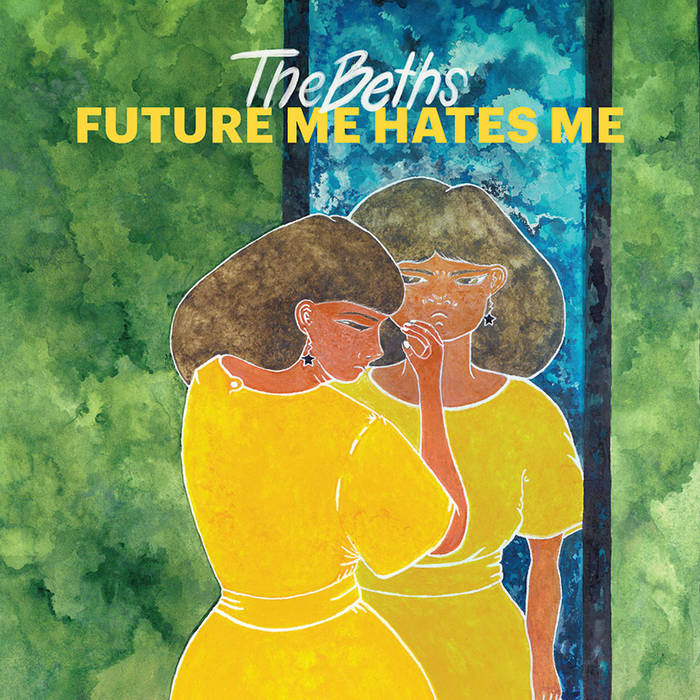
Elizabeth Stokes named her band after herself, or, rather, her nickname. So it should come as no surprise, then, that the debut album from New Zealand-based rockers The Beths, Future Me Hates Me, is sharply self-aware. Stokes, a music teacher who quit her day job to tour the world with The Beths, pairs clever, refreshingly straightforward lyrics with uber-catchy guitar pop, and she never stutters in delivering even the most blunt assessments of her doubts, fears and anxieties. “Sometimes I think I’m doing fine / I think I’m pretty smart,” she sings on the album’s title track before, later, completing the thought: “Oh then the walls become thin / And somebody gets in / I’m defenseless.” On dizzying love song “Little Death,” she captures and tames all the butterflies swarming around in her stomach: “And the red spreads to my cheeks / You make me feel three glasses in.”

The Beths sound as if they’re already three albums in, playing with the musical and lyrical finesse of a much older and more experienced band. Every single song on this record arrives with as many contagious hooks and honest confessions as on the sparkly, frank “Little Death” and the toe-tap-inducing examination of overthinking “Future Me Hates Me.” Indie rock is alive and well in Oceania—The Beths, like their Australian neighbors Rolling Blackouts Coastal Fever, hit it out of the park in crafting one of the sturdiest rock debuts of the year.

“Little Death” is taken from The Beths‘ album, “Future Me Hates Me,” out now on Carpark Records.

A delightful pop collection full of power chords and sing-alongs about the confusion, angst, and pain as we fall in and out of love. Hard not to smile, even while you’re crying. The Beths have a way of giving luminescence and pep to even the most harrowing aspects of love and human relation; bright, bespoke chord progressions and glittering harmonies as the backdrop to self-destruction, the grief of loss, and the pain that can come with finding yourself with a crush. “Broke every window pane/so I can feel the cold rain/when I lie in bed catching death, trying to wash it all away…”

http://