Since first emerging in 2013 with her critically acclaimed ‘All We Can’ EP, Yumi And The Weather have spent the past few years perfecting their unique blend of electrifying technicolour psych-pop, finally emerging with their long-awaited full length offering (released via their own MIOHMI RECORDS imprint). Armed with this new arsenal of unrelentingly catchy and stirring pieces of music, Yumi are ready to continue their path of destruction (which has included a stint supporting British Sea Power, a slot at Secret Garden Party, Bad Pond Festival and heavy radio support from BBC 6 Music’s Shaun Keaveny, Nemone and Radio X’s John Kennedy (including live sessions for BBC Introducing and Radio X)
A beautifully crafted album full of dynamics, their debut offering takes flight over a sprawling soundscape, paying little regard to genre confines. From the sparkling electronic spires of opening track ‘Celebrate’ and subterranean driving energy of hit single ‘Look At The Night’, accented by the arpeggiated neon synth lines of ‘Hustle’ and polyrhythmic guitar patterns of ‘Without You’ – there is some truly incredible musicianship on display here, all the time complimented by frontwoman Ruby Taylors impeccable ear for melody and powerful, yet delicate delivery.
Created in a small studio room above a sandwich shop in her coastal home town of Worthing, UK the album demonstrates Ruby’s song writing prowess, with sounds drawing from her electronic roots, spanning from dark synth heavy production to crunchy garage rock guitars, and soaring power pop anthems.
Having previously been confined to the isolation her bedroom studio, this new space gave birth to a collaboration friend Rob Flynn (of local duo Oslo Parks) who produced the album alongside Ruby, allowing her to explore the furthest reaches of her potential. This new working arrangement provided sanctuary, an escape from her lonely and uninspiring writing environment, one made worse from suffering yearly outburst of mania/bipolar disorder.
On the writing of the album Ruby explains, “It reflects what was going on in my life due to unsteady and uncertain relationships with people, and battling negativity because of overthinking, meanwhile dealing with low self-esteem”.
“Down to the boil, it is very influenced by Love, and the feeling that there is a lack of it for ourselves, and each other at times and the plea for empathy and kindness” Ruby states.
Having become a figurehead of the South-East music scene over the past few years, Yumi And The Weather are set to put themselves on the map much further afield with this incredible debut offering.
The album’s main theme is related to time conception and a transitional journey; where the deepest, darkest place is lit by the furthest, brightest points. The tracklist order depends on the format with one transition on cd/digital, and two transitions (one per side) on vinyl/cassette. Visually inspired by the movie La Cicatrice Intérieure, starring Nico.
released March 23rd, 2012. Never heard an album that contains shoegaze, lysergic psych and stoner rock so successfully. This record pushes all of those buttons effortlessly…a truly unique and epic record. Stars Reach The Abyss is a very accurate musical account of 50 years of drug music.
Arranged and performed by Fernando Nuti (vocals, guitars, sitar), Diego Menegaldo (guitars, vocals), Stefano Bidoggia (bass) & Dario Lucchesi (drums, percussion). Music and words by Fernando Nuti. Produced by Pierluigi Ballarin & Stefano Moretti at T.U.P. Studio (Brescia), except “Salar” produced by Stefano Morbiato & Lorenzo Michieletti at Yack Studio (Treviso) and “Dry Air Everywhere (Breath Into You Mix)” produced by John Wills at The Imaginarium (Perth, UK). Mastered by Jon Astley at Close To The Edge Mastering (Twickenham, UK). Artwork by Fernando Nuti & Diego Menegaldo. New Candys live are Fernando Nuti, Andrea Volpato, Alessandro Boschiero & Dario Lucchesi.
Victoria Legrand and Alex Scully of Beach House described a new kind of freedom in the making of their seventh album. It seems they felt an unwelcome pressure writing and recording in the past, whether that was the constraints of a set studio schedule, or concerns with how their experimentation would translate live. With some adjustments to the creative process, the duo were more liberated this time and the results are stellar. That’s not to suggest they re-invented their sound along the way; in fact, they have stayed true to their particular brand of dream-pop, but you can hear confident strides toward mastering their craft.
As a music fan reared on ’90s-era British indie-rock (Cocteau Twins, Ride, My Bloody Valentine), Beach House have always had an immediate gravitational pull. Peter Kember from Spacemen 3, central to that era in the U.K., took a turn producing this album, and you can hear his fingerprints all over it. “Dive” is a good example, as the song builds from a drone-like church organ to a hard-charging anthem. The dynamics and range of feeling throughout this album are really special: intimate one moment and rolling thunder the next. It’s also a great album listen, which has become something of a lost art in these days of algorithms and streaming playlists.
Over the past decade, Beach House has become synonymous with dream-pop. The duo has consistently written gorgeous music with a hypnotic, almost otherworldly quality that often defies conventional expectation and revels in risk-taking. But by definition, its sound has typically been a little more dream than pop. Album number seven for the Baltimore-based group flips that relationship, but only ever so slightly. And the result is perhaps the band’s finest recording to date. 7 is indeed a cover-to-cover listen. When consumed in one sitting, the record’s 11 songs will reward the complex palates of longtime fans. But Beach House have also created some truly great standalone tracks here. Songs like “Lemon Glow,” “Dark Spring” and “Dive” standout with their less-than-subtle hooks and a surprising drive. And this being Beach House, they get better with each listen.
You can either fear the unknown, or you can embrace it. Beach House has spent the last 13 years worshipping it, each new song and album a dance of devotion to an unnamable, immutable creative force. After following it down to its most elliptical and interior on 2015’s Depression Cherry and Thank Your Lucky Stars, where else was there for Victoria Legrand and Alex Scally to go but outward? 7, the dream-pop duo’s most collaborative and extroverted album yet, springs forth with an urgent and unpredictable energy. It plunges you into dense, interstellar shoegaze (“Dark Spring”), then grounds you in stargazing grunge balladry (“Pay No Mind”), before sending you on a mechanical 808 track through the woozy “candy-colored misery” of “Lemon Glow.” And those are just the first three songs. Breaking from a long partnership with producer Chris Coady, Legrand and Scally began assembling7’s immersive arrangements in a new home studio before finishing them off with space-rock experimentalist Sonic Boom, a.k.a. Peter Kember of Spacemen 3. The shake-up paid off spectacularly. Together they’ve crafted a towering psych record that plays like a radio response to otherworld transmissions like My Bloody Valentine’s Loveless or This Mortal Coil’s It’ll End In Tears. You can try to drift off in its dark, dreamlike textures, but like those seminal albums,7will keep prodding you to witness its mysteries up close. It will keep asking you to search its layers, to savor each image flying by—to give yourself over to the moment. And by now Beach House has well-proven that, whatever the next moment holds, they’ll see you through it. This is a band you can trust with your life.
This Pay No Mind video is directed by our friend Michael Hirsch. We’ve been lucky to have friends join us on the road over the years. They’ve helped us stay sane through all the hard touring. Mike recorded this footage between 2015-2018, and it documents many live performances over that time. We like how it focuses on the audience, as they are the whole reason we go on tour. We also like that it shows some of the scuzzy reality of tour
‘Closer To God’, as with all TVP albums, is mightily personal. Dan Treacy provides the antidote to the opening of the ill-fated Disneyland Paris and the first McDonald’s in China – it’s a white knuckle ride through his innermost hopes and fears with off stage giggling, half heard dialogue and feedback that sounds like an opera is expiring in an adjoining L-shaped room. ‘Closer To God’ is a spiritual rollercoaster that sounds as poignant and pressing as ever.
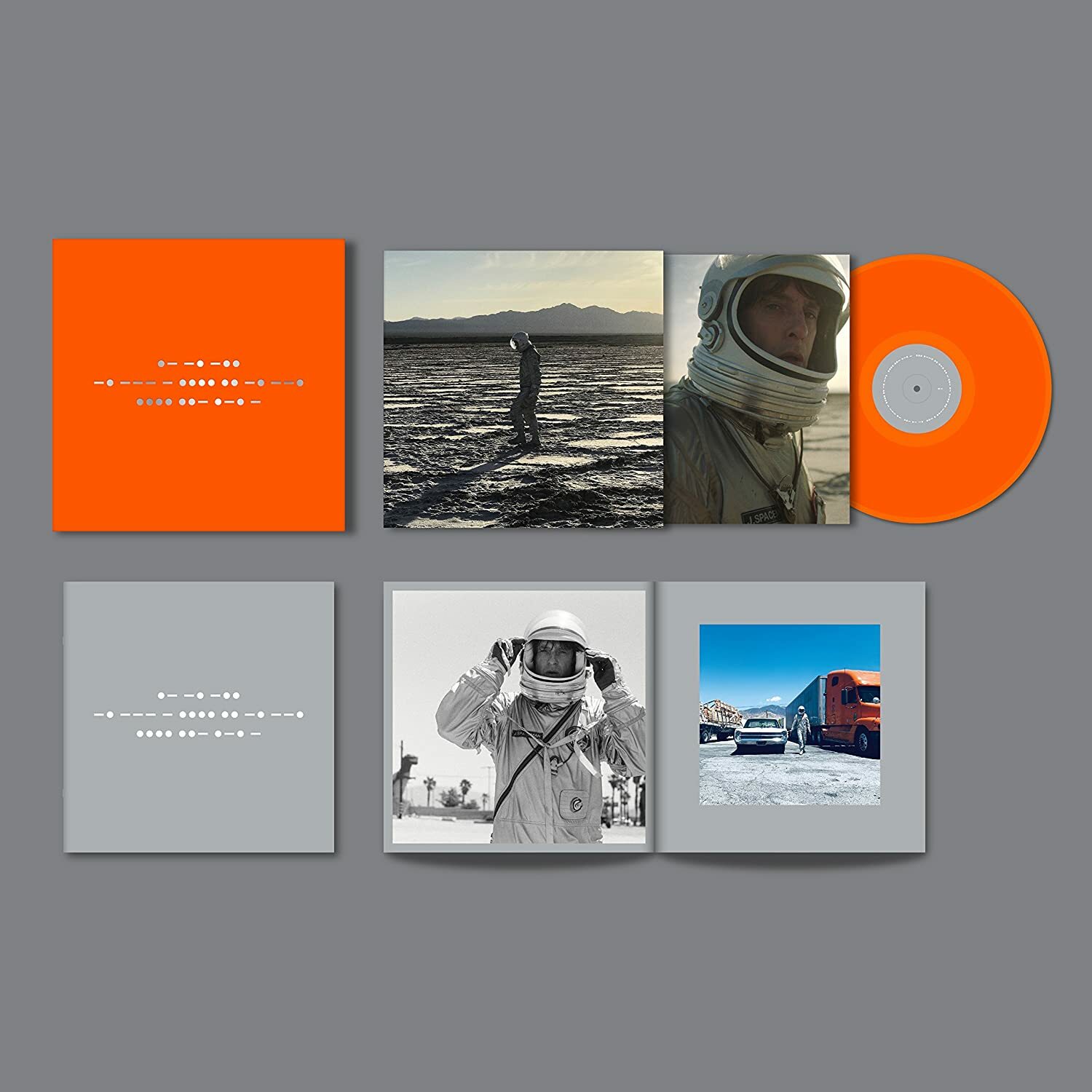
It feels like a statement of purpose, but then again, so do almost all of Jason Pierce’s transcendent musical compositions that employ overpowering bombast in service of the purest emotions—love, hope, sadness, and, um, drugs. But what sets And Nothing Hurt apart is how it distills his previous stylings down to their essence, a polished diamond of the musician’s sometimes excessive past reaching. There are no hundred-person choirs or symphony orchestras accompanying him; it’s just Pierce and his muse—which isn’t to say these songs are any less packed with booming layers of synth swells and soaring vocals. It’s merely that he’s harnessed his ambition in service of tightly structured beauty, from the sweetly plucked ukulele start of “A Perfect Miracle” to the organ-laced and Pink Floyd-ified anthem “Sail On Through.” These are songs of love and devotion, yes, but they’re also elegant expressions of an artist who knows exactly what he wants to say, and has mastered the art of saying it in the grandest way possible.
‘And Nothing Hurt’ the new album from Spiritualized is out 7th September via Bella Union Records.
‘And Nothing Hurt’ rivalled some of Jason Pierce’s most emotive and touching writing of his career to date. Full of wearied upset and despair at the world around him, Pierce’s voice captured human emotion at its most vulnerable and downtrodden: “You gotta take the pain / You gotta give it all away,” he sings on ‘The Morning After’, one of the album’s standout tracks. Despite the pain Pierce sings of, ‘And Nothing Hurt’ is also an album that finds hope in the very darkest of places, capturing the resilience of humans and how they can embrace the fear to work through it, despite the uncertainly of the times we face.
“Magnificent… Bursting with symphonic goodness, musical adventure and dizzying levels of intensity.” Uncut – 8/10
Spiritualized ‘And Nothing Hurt’ will be released on 7th September 2018 on Bella Union + Fat Possum Records.
Jay Som’s “Turn The Other Cheek” technically came out in May of 2017, as part of the Our First 100 Days compilation, a collection of 100 songs from 100 artists that were released following President Trump’s first 100 days in office. All profits raised from the project would go to benefit causes that, even then, were threatened by Trump’s policies: the climate, women’s rights, immigration and fairness.
“Turn The Other Cheek” is now widely available for streaming, and it offers a jarring chance to reflect on how much worse things have gotten since those first 100 days. It’s hard to believe that there was once a time when the depravity of the administration could still surprise us, before the knowledge of child detention camps and apocalyptic climate policies and overwhelmingly illegal campaign activities were commonplace.
But listening to Melina Duterte’s tender, slinky little ballad, it feels like it’s broadcast from a different world. In some ways it is—the song comes to us from a time when a small part of the population believed that Biblical ascription of neighborly love could act as a ward against the administration’s cruelty; that they could, indeed, be killed with kindness. The song now feels like a different sort of broadcast, one that warns of the eroding effects of Trump’s unending cruelty. “If you think I’m not scared, think again / I’m just a wreck, I can’t fight, I won’t try,” Jay Som sings. That’s a scarier thought now more than ever.
Jay Som’s single, “Turn The Other Cheek,” originally part of the Our First 100 Days comp
To many fans, 1971’s “Hunky Dory” is one of David Bowie’s best records. In fact, many consider it to be his first masterpiece. It was Bowie’s fourth studio album and though his previous album “The Man Who SoldThe World” laid the groundwork for something a bit more grand and flamboyant, Hunky Dory took this another step further. It’s full of glam rock-oriented songs as well as more traditional romantic ballads. The album also begins to cement Bowie as a shapeshifter as he’s experimenting with different musical and aesthetic styles. Though this isn’t necessarily one of his more cohesive, purposeful concept albums, he ties the album together with universal themes of love, fame and acceptance.
The album contains two of Bowies’ greatest-ever recordings—”Changes” and “Life on Mars.” In hindsight, the piano ballad and album opener “Changes” is indicative of Bowie’s tendency for constant experimentation and subversion of his own perceived identities. “Life on Mars” explores film as another artistic realm that helps us escape the monotony of life, even though the song’s protagonist is ultimately let down by movies as well.
1971 was also the first time that Bowie made the trip over to America as “Hunky Dory” brought him a higher level of notoriety. Bowie said in an interview of the breakthrough that “Hunky Dory” became, “Hunky Dory” gave me a fabulous groundswell. I guess it provided me, for the first time in my life, with an actual audience—I mean, people actually coming up to me and saying, ‘Good album, good songs.’ That hadn’t happened to me before. It was like, ‘Ah, I’m getting it, I’m finding my feet. I’m starting to communicate what I want to do.’”
David Bowie had three studio albums to his name by the time he released “Hunky Dory” on December. 17th, 1971. Still, in Bowie’s own view, this was the record that most clearly introduced him to the world.
“Hunky Dory gave me a fabulous groundswell,” he told Uncut in 1999. “I guess it provided me, for the first time in my life, with an actual audience — I mean, people actually coming up to me and saying, ‘Good album, good songs.’ That hadn’t happened to me before. It was like, ‘Ah, I’m getting it; I’m finding my feet. I’m starting to communicate what I want to do. Now, what is it I want to do?’ There was always a double whammy there.”
Making his debut with RCA, Bowie once again enlisted the talent of guitarist Mick Ronson, but he invited some new faces as well: co-producer Ken Scott, future Yes keyboardist Rick Wakeman, plus multiple musicians who would go on to be in Bowie’s Spiders From Mars band.
Scott, for one, did not have high hopes for recording sessions that began in the spring of 1971, given that none of Bowie’s previous albums had performed particularly well on the charts.
“I never really thought that David would amount to much at the rate he was going, so if I screwed up, no one would hear it anyway,” Scott said in 2012’s Abbey Road to Ziggy Stardust. “As we were going through the material it suddenly hit me. ‘Hang on, this guy is really fucking good. He could be a lot bigger than I expected and this album might actually be something that a lot of people will listen to.”
A lot of people did listen to “Hunky Dory” eventually. The record finally peaked at No. 3 on the U.K. charts, but only after the release of 1972’s follow-up album, The Rise and Fall of Ziggy Stardust and the Spiders From Mars. In the meantime, “Hunky Dory” simultaneously nodded to a few of his influences, while also declaring that he did not (and would never) fit the traditional rock-musician mold.
From the introspective hit “Changes” to the deep-cut closer “The Bewlay Brothers,” the track-by-track guide below revisits one of Bowie’s strongest pieces of work.
1. “Changes”
From the top of Hunky Dory, Bowie did not hesitate to be transparent. He knew he hadn’t truly established himself yet — “Every time I thought I’d got it made, it seemed the taste was not so sweet” — but that hardly meant he was depleted. Bowie tried some old techniques, harkening back to the Who with his stuttered “ch-ch-ch-changes,” but also incorporated newer ideas – including a saxophone he played himself. He debuted the recently written song on stage six months before the album’s release at June 1971’s Glastonbury festival, teasing his listeners that the best (and most unbelievable) was still to come. “I guess it was me being sort of arrogant,” Bowie said in The CompleteDavid Bowie. “It’s sort of baiting an audience, isn’t it? It’s saying, ‘Look, I’m going to be so fast you’re not going to be able to keep up with me.’”
2. “Oh! You Pretty Things”
The oldest song on Hunky Dory, “Oh! You Pretty Things” began as a idea that came to Bowie in the sleepless early hours of morning. “I’ve always interpreted this song as a fantasy of outsiders taking over,” Phil May from the Pretty Things told Uncut in 2008. May never spoke with Bowie about the reference, but it was evidently a purposeful title. “In terms of using our name, I think we were a beacon to him,” May added. “I think the phrase is a euphemism for how he saw our band when he was starting up, somebody shining a light on his situation, when for the rest of his life, he was on his own.” Bowie was also pulling from more personal places: His half brother, Terry Burns, had been diagnosed with schizophrenia, and was a resident at a psychiatric hospital when Bowie wrote this track. “A lot of the songs do in fact deal with some kind of schizophrenia or alternating id problems,” Bowie told the BBC in 1976. “I haven’t been to an analyst, my parents went and my brothers and sisters and my aunts and uncles and cousins and … they ended up in a much worse state so I stayed away. I thought I’d write my problems out, really.”
3. “Eight Line Poem”
A peculiar number in which a minute-long instrumental introduction takes up roughly a third of the entire song, “Eight Line Poem” features Bowie playing the same grand piano that would later be used on Aladdin Sane. Ronson is the only other performer on the track, lending some delicate, country blues-esque riffs between Bowie’s vocal lines. Bowie’s descriptions of each Hunky Dory song were used as press advertisements at the time of the album’s release, and the one for “Eight Line Poem” was as mysterious as the song’s lyrics: “The city is a kind of high-life wart on the backside of the prairie.” Sonically speaking, the track is comparatively simple next to Hunky Dory’s other numbers, with more focus on the brief but precise lyrics. Phrases like “tactful cactus” implied a deeper literary inspiration, but Bowie disagreed. “I read this eight-line poem of yours and it is very reminiscent of T.S. Eliot,” beat writer William Burroughs said in a 1973 conversation with Bowie for Rolling Stone. “Never read him,” Bowie replied.
4. “Life on Mars?”
After contributing a memorable mellotron part to 1969’s “Space Oddity,” Bowie called up Wakeman again, asking if he might play piano on some new songs. Bowie presented a few demos to Wakeman, who was immensely impressed. “‘Life on Mars’ stuck out as being something very special,” Wakeman told The Guardian in 2017. “He wanted a piano solo. He wanted the album to be very piano-orientated. I was given complete freedom by him.” Bowie later asked Wakeman to join the Spiders from Mars band on the same day he was asked to join Yes. Wakeman said Bowie told him “I’d made the right choice, and he reiterated that on numerous occasions over the years. I heard later that he loved what I did on ‘Life onMars.’ He said it made the track, but that’s not true, the song made the track. The man was a genius.” The bells heard at the end of “Life on Mars?” were recorded by mistake when a phone reserved for outbound calls that was located in the studio’s attached bathroom surprisingly and loudly rang. The band intended to do another take. “It was some time later when we were doing the orchestra overdubs,” Scott said in Abbey Road to Ziggy Stardust, “and they were holding their last note at the end of the song. The end part of the earlier take that apparently hadn’t been erased blasted out of the monitors. Much to our surprise, it sounded great, so we decided that we had to use it.”
5. “Kooks”
There was little hidden meaning behind “Kooks.” A small note next to the song’s title on the back cover of Hunky Dory read, “For Small Z.” Bowie’s wife Angie had given birth to their son Duncan Zowie Haywood Jones in May 1971, and fatherhood “pleased my ego a lot,” Bowie told Rolling Stone in 1976. “I think Zowie’s a survivor. He’s very definitely an independent person, of his own choosing, it seems. And I find it quite easy to think of him not as mine or as Angie’s, but as Gibran has said, ‘a little plant.’ I don’t feel very paternal about him.” The song’s promise of homework being thrown in a fire, however, was never fulfilled. “Unfortunately those lyrics were fantastical,” Bowie’s son tweeted in 2018. “I had to do my homework every bloody time.”
6. “Quicksand”
Bowie wasn’t idly name checking the famous occultist Aleister Crowley when he sang “I’m closer to the golden dawn, immersed in Crowley’s uniform.” He reportedly found the occult quite intriguing, and even carried a Crowley biography in his coat with the title purposefully showing. “Quicksand” became one of Bowie’s most direct acknowledgements of that interest, though he also references World War II figures Heinrich Himmler, Winston Churchill and Juan Pujol, a spy whose codename was Garbo. “The irony is that I really didn’t see any political implications in my interest in Nazis,” Bowie told NME in 1993. “My interest in them was the fact that they supposedly came to England before the war to find the Holy Grail at Glastonbury and this whole Arthurian thought was running through my mind. So that’s where all that came from.” Scott, who was fresh off working on George Harrison’s grandiose All Things Must Pass, chose to layer multiple acoustic guitars on the track. “It made me feel great that he had complete faith in me,” Scott said in Kooks, Queen Bitches and Andy Warhol: The Making of David Bowie’s Hunky Dory. “It starts off with solo guitar and then at a certain point the guitars open up to either side. Because of the way I mixed, I managed to get completely different guitar feels during it.”
7. “Fill Your Heart”
The lone cover to appear on Hunky Dory, Biff Rose and Paul Williams’ “Fill Your Heart” served as the b-side for the famous Tiny Tim update of “Tiptoe Through the Tulips.” “I’ve always noticed that if I put out certain names as my influences to see if people would pick up on them and then say I was definitely influenced by them, then every time I’ve done it has always come back. Always, always, always!” Bowie told Melody Maker in 1978. “I could say that my greatest influence, in fact, was Tiny Tim – and they’ll say, ‘Ah, of course! Quite obviously David Bowie has lifted an enormous amount from Tiny Tim.’ Always it works in that fashion.” Two years after Hunky Dory arrived, Rose and Bowie met when Rose was opening for Bruce Springsteen in New York City. “Bowie came up to me after the show with this shit-eating grin on his face, staring down. He’s taller,” Rose told Nate Waggoner in 2014. “I said, ‘Thank you for doing ‘Fill Your Heart,’ but did you have to sop the whole arrangement?’ He seemed not to hear me or grasp what I was saying, but kept smiling.”
8. “Andy Warhol”
Andy Warhol was “a man of media and anti-message, with a kind of cute style,” Bowie said in his explainer notes for this album. Bowie later played the song during a visit to Warhol’s Factory art space, and the legendary artist was less than amused. “He hated it, loathed it. He went ‘Oh, uh-huh, okay …,'” Bowie told Performing Songwriter in 2003, imitating Warhol’s blasé manner. “Then just walked away. I was left there. Somebody came over and said, ‘Gee, Andy hated it.’ I said, ‘Sorry, it was meant to be a compliment.’ ‘Yeah, but you said things about him looking weird. Don’t you know that Andy has such a thing about how he looks? He’s got a skin disease and he really thinks that people kind of see that.'” Bowie said Warhol opened up, once he looked down. “It was my shoes that got him,” Bowie said. “That’s where we found something to talk about. They were these little yellow things with a strap across them, like girls’ shoes. He absolutely adored them. Then I found out that he used to do a lot of shoe designing when he was younger. He had a bit of a shoe fetishism. That kind of broke the ice. He was an odd guy.”
9. “Song for Bob Dylan”
By 1971, many fans, critics and even fellow songwriters viewed Bob Dylan as something of a lost cause. The previous year’s Self Portrait had thrown listeners for a loop with wild arrangements and an intentionally jarring quality that Dylan himself acknowledged. “We lost your train of thought, your paintings are all your own,” Bowie sings on a track whose title nods to Dylan’s own homage to Woody Guthrie,“Song to Woody.” Bowie said he felt Dylan had fallen off the tracks musically. “It was at that period that I said, ‘Okay [Dylan] if you don’t want to do it, I will. I saw that leadership void,'” Bowie told Melody Maker in 1976. “Even though the song isn’t one of the most important on the album, it represented for me what the album was all about. If there wasn’t someone who was going to use rock ‘n’ roll, then I’d do it.” Bowie recalled chatting with Dylan during a recent post-gig party in a 1976 interview with Playboy, and openly wondered whether Dylan found him all that appealing: “I just talked at him for hours and hours, and whether I amused him or scared him or repulsed him, I really don’t know,” Bowie said, “I didn’t wait for any answers. I just went on and on about everything. And then I said good night. He never phoned me.”
10. “Queen Bitch”
Bowie was still performing with his band the Buzz in the late ’60s when he was given an advance test pressing of 1967’s The Velvet Underground & Nico by his manager Kenneth Pitt. Pitt had gotten it from Warhol, who co-produced the album, while visiting in New York. Pitt said “you like weird stuff. See what you think of this,” Bowie remembered in a 2003 interview with Vanity Fair. “What I ‘thought of this’ was that here was the best band in the world.” He saw the Velvet Underground perform in early 1971, through Bowie was unaware that their line-up had changed in the meantime. “At the end of the show, I went backstage and I knocked on the door, and John Cale came to the door. And I said, ‘Is Lou Reed in there? I’d love to talk. I’m from England, and I’d love to talk, ’cause I’m in music too, and he’s a bit of a hero to me,'” Bowie told the BBC in 1999. Bowie spoke with someone who he thought was Reed for several minutes, only learning later that Reed had left the group. Bowie was actually speaking with Reed’s replacement, Doug Yule. “I thought, what an impostor. Wow, that’s incredible,” Bowie said. “It doesn’t matter really, ’cause I still talked to Lou Reed as far as I’m concerned. And coming back to England, one of the things, one of the memories I brought back was all that, so I wrote ‘Queen Bitch’ as an homage to the Velvet Underground.“
11. “The Bewlay Brothers”
This song’s title would later become a pseudonym for Bowie, Iggy Pop and Colin Thurston as producers of Pop’s 1977 album Lust for Life. By Bowie’s own admission, however, “The Bewlay Brothers” was not intended to make any lyrical sense. “It was the last song we recorded for the album,” “Hunky Dory” producer Ken Scott later told Uncut, “and I remember David coming in and saying, ‘I’ve just written this new song. We’ve got to record it but don’t listen to the lyrics.’ I said, ‘Why?’ He said, ‘Because they don’t mean anything. I wrote it specifically for the American market to read things into it.’ I must’ve heard 10 or 15 different stories as to what ‘The Bewlay Brothers’ was supposed to be about, and I know that David would have agreed with every single one. He took what was given to him and ran with it, quite often.”
“Hunky Dory”, which came out on December 17th, 1971, was not going to set the world on fire, either; with scant promotion from RCA, it barely registered until after The Rise and Fall of Ziggy Stardust dropped the following year. But it’s one of the best albums of Bowie’s career, and the start of him really finding his voice, in the opinion of many music critics. For the first time he was working with the backing band who would help fuel him to interstellar heights as the “Spiders from Mars,” and his song writing skills were in high gear, inspired by a trip to New York in early 1971. “Hunky Dory” is, perhaps, the first real classic Bowie record.
I hope everyone else misses Jason Molina with their whole, entire aching heart? Posthumous reissues like this one generally don’t help much in softening that ache, but they do serve as a reminder of Molina’s genius, which is nearly unparalleled in the 21st century songwriters’ canon—he sits on a tall hill next to the Leonard Cohens and Bob Dylans of the world. This box set reissue of The Lioness, released late last month and containing lost songs, liner notes written by Molina’s friends and collaborators and other memorabilia, is a deliberate homage to the late artist’s life and music. The songs from the Lioness sessions, which were recorded just shy of the new millennium and originally released in 2000, capture a moment in his life so rosy with newfound love, you’ll wonder how this wonderstruck Molina is the same one who later tackled burdensome grief as Magnolia Electric Co. But, on the new, never-before-heard outtakes from the Lioness sessions, he is more rooted in life’s ups and downs.
He does the work of a priest—blessing love, bestowing wisdom for braving life and making sense of death. The Lioness, as well as these outtakes, showcase a Jason Molina rising. His ability to balance dark themes of doom and despair with the warm but complicated matters of the heart was fully realized on this album.
He would go on to write music like this for 13 more years, but, now, five years after his death, that doesn’t seem like a whole lot of time. Molina knew that life was complicated, but his music has a way of making it easier to understand.
“Drowning In The Sound,” is the first single off Amanda Palmer’s newly announced forthcoming album There Will Be No Intermission, is nearly vaudevillian in its heightened drama, all apocalyptic proclamations and barking cello stabs, while Palmer enunciates her verses like a theater kid who tripped, fell and ended up an end-times cult leader. The song was also fashioned in a crowd-sourced manner—its lyrics are pulled from comments on Palmer’s blog, and many of the comments reference Hurricane Harvey, which had made landfall the day before the song was written. It’s all overwhelmingly desperate and bracing, something that Palmer says exemplifies the style of the album. “Most of these songs were exercises in survival,” she said in a statement. “This isn’t really the record that I was planning to make. But loss and death kept happening in real-time, and these songs became my therapeutic arsenal of tools for making sense of it all.”
It’s hard to believe that the Caroline Rose who made I Will Not Be Afraid, her first album and a swinging, folk-fueled rockabilly record, is the same Caroline Rose who, this year, released an absurdist, darkly hilarious pop record called Loner. “Bikini,” from the latter, is weird and wonderful and, like many of Loner’s best tunes, oozes with satire. On standout track “Jeannie Becomes A Mom,” Rose tackles aggressive suburban ideals, but “Bikini” freaks out on the insane expectations facing women in the spotlight (and women in general). In the video, Rose, though still dressed in her signature red, is costumed as her male narrator, barking commands at bikini-clad women. “C’mon shake it,” she sings. “Put on this bikini and dance.” The takeaway: Ladies, you don’t ever have to “shake it” for anyone, no matter how nicely they ask.
Indie-pop artist Caroline Rose has her own take on the subject in the darkly hilarious song “Jeannie Becomes a Mom,” from her album Loner, which was released in February. For the song’s video, the title character fulfills Rose’s predictions of moving outside Topeka, Kan., to assume domestic duties, but not without a few fumbles. On Loner, Rose makes the huge leap from country/folk to dark pop satire, which she executes marvelously. LONER is chock-full of humor and absurd characters, including Jeannie, who tries her gosh-darn best to be a good wife and homemaker in the video, but quite literally falls short.