The hard stuff saga continues with Brown Acid – The Eighth Trip! Yet again, we’ve searched high and low to bring you ten tracks of straight blue flame fire from the golden age of heaviness. As usual, these rare tracks have been carefully curated, analogically sourced, and fully licensed so you can listen guilt free and save a lot of time and money tracking down the original copies. This Eighth Trip comes straight at ya with an all out attack, quite literally. The residents of St. Clair Shores should consider themselves lucky to have been so close to the greatness of Attack! “School Daze” kicks out the jams Detroit-style, but has enough flair and style to have our main man Jimi rolling over in his grave. Another prime example of why Detroit is known as Rock City!
Speaking of rock, White Rock will knock your stank-ass socks off with their 1972 burner “Please Don’t Run Away”. This 45 was privately released by this Houston-based band that reportedly played shows with Josefus, Stone Axe, and Purple Sun. And it was basically unknown until it surfaced at the Austin Record Convention in 2018! The fact that there are still completely unknown records out there to be discovered never ceases to amaze us. They don’t say “Don’t Mess With Texas” for nothin’! Riverside called Austin home way before anyone was worried about keeping it weird. This two-sider from 1974 rips from front to back. It’s also exclusively available here and is virtually unknown. Go ahead, try to look for it anywhere. Currently, there’s no proof anywhere online that it exists.

From our neighbours up north, we bring you Luke and the Apostles! Don’t be fooled by the name, this ain’t no Xian group, even though this 45 is of biblical proportions. The flip of this single “You Make Me High” is a Faces-esque ballad of the highest caliber that will move you to tears if you’re not careful with it, but “Not Far Off” isn’t about moving you emotionally; it’s about moving you physically. Fuck jam? We think so. The Doors and Elektra Records’ producer Paul Rothchild called the Luke and the Apostles LP the “greatest album [he] never got to make”. The lyrics to this 1977 single on Vacation Records are about as boneheaded as it gets. Hard rock songs from working class men about working hard and letting loose is a common theme in the Brown Acid realm, and “I Need My Music” by Mine Hill, New Jersey’s Tourists, is yet another great one to get you through the work week. I think we can all agree: we need our music too…among other things!
Ohio strikes again. This time a bit later than the other Buckeye State singles we’ve comped, but no less bangin’! On the Chance record label, the Bartos Brothers Band is billed as Gambler, but post-release, the band covered at least some of the copies with stickers that corrected this. There’s very little information about the Bartos Brothers Band online, and as of this writing, the release date is incorrect on Discogs and the Popsike hit very wrongly lists the genre as “Glam/Hair Metal” from the 1980s. We’re stoked to be compiling this single for the first time ever and to be setting the record straight.

And yet again, Ohio brings the thunder! We brought you the B-side of Inside Experience’s sole 45 back on the Third Trip and now we exhaust the band’s output by presenting their especially psychedelic cover of Cream’s “Tales of Brave Ulysses”. The band pressed and sold out of 500 copies of this record back in 1968 thanks to some airplay on Detroit’s CKLW, but they never recorded again. However, Inside Experience’s lead guitarist and singer, Marty Soski, went on to play in Lance (as heard on the Fifth Trip) and two metal bands which you will be hearing sooner than later…
Karma, slightly better known as The Contents Are, released an LP and a 45 in 1967 and then followed up with their swan song “New Mexico” in 1969. The single was oddly released under Karma on the Onk Enterprizez label with “N.S.U.” as the B-side and on Rok Records as the flip to “Future Days” as The Contents Are. Apparently, Mercury Records bought the rights to the Rok 45 with the intention to release it nationally, but never actually got around to it. Their loss!
Obviously we don’t need to go into how much great music Memphis, Tennessee has brought us over the years, but Moloch doesn’t usually get mentioned when we’re talking about the “Home of the Blues” and the “Birthplace of Rock and Roll.” Maybe we should change that. Moloch played with The MC5 and The Stooges and recorded an LP in 1969 for the Stax subsidiary, Enterprise Records. Although the band made a great blues rock record, it sadly didn’t get the love it deserved and the band folded. Moloch guitarist, Lee Baker, reformed the band with a slightly different line-up and released this 45 in 1972 against great odds. It too was unfairly overlooked…until now.
While we’re still talking about Memphis, y’all ever heard of this guy, Elvis Presley? Apparently, he was kind of a big deal and popularized a song called “Heartbreak Hotel” back in 1956. That’s cool and all, but damn us if we don’t dig Grump’s 1969 take on the song a whole hell of a lot more than the King’s version. Maybe that’s sacrilege, but nothing’s sacred when it comes to Brown Acid.
Some of the best thrills of the Internet music revolution is the ability to find extremely rare music with great ease. But even with such vast archives to draw from, quite a lot of great songs have gone undiscovered for nearly half a century — particularly in genres that lacked hifalutin arty pretense. Previously, only the most extremely dedicated and passionate record collectors had the stamina and prowess to hunt down long forgotten wonders in dusty record bins — often hoarding them in private collections, or selling at ridiculous collector’s prices. Legendary compilations like Nuggets, Pebbles, ad nauseum, have exhausted the mines of early garage rock and proto-punk, keeping alive a large cross-section of underground ephemera. However, few have delved into and expertly archived the wealth of proto-metal, pre-stoner rock tracks collected on Brown Acid. Lance Barresi, co-owner of L.A./Chicago retailer Permanent Records has shown incredible persistence in tracking down a stellar collection of rare singles from the 60s and 70s for the growing compilation series. Partnered with Daniel Hall of RidingEasy Records, the two have assembled a selection of songs that’s hard to believe have remained unheard for so long.
“I essentially go through hell and high water just to find these records,” Barresi says. “Once I find a record worthy of tracking, I begin the (sometimes) extremely arduous process of contacting the band members and encouraging them to take part. Daniel and I agree that licensing all the tracks we’re using for Brown Acid is best for everyone involved,” rather than simply bootlegging the tracks. When all of the bands and labels haven’t existed for 30-40 years or more, tracking down the creators gives all of these tunes a real second chance at success.
“There’s a long list of songs that we’d love to include,” Barresi says. “But we just can’t track the bands down. I like the idea that Brown Acid is getting so much attention, so people might reach out to us.”

Brown Acid: The Eighth Trip will be available everywhere on LP, CD and download on April 20th, 2019.

Image may contain: one or more people, people dancing, people standing and text

Already a tremendous star, 1969 was a year of change for Janis Joplin. Her legendary performance at Woodstock Festival came just weeks before the release of her first solo album, “I Got Dem Ol’ Kozmic Blues Again Mama!” Both that record and this live set, which is available on vinyl for the first time, pointed to the new, exciting direction her music would take and helped define an incredible moment in music history.

To celebrate 50 years since the Woodstock Festival , Legacy Recordings will release Janis Joplin’s full set from the iconic festival on vinyl for the first time.  Joplin had already had significant success by the time she performed there.  Her first albums had established her as one of the best in the psych-rock scene.  By 1969, she was changing directions with her first-ever solo effort, I Got Dem Ol’ Kozmic Blues Again Mama! which would arrive a few weeks after her performance.

Together, the album and the Woodstock set saw Joplin performing in full gear, but shifting toward soul and blues music, rather than the psychedelic fare that had brought her stardom.  Tracks like “Try (Just a Little Bit Harder)” and her cover of The Bee Gees’ “To Love Somebody” are soul-stirrers on the studio album, and at Woodstock, she imbued them with even more passion and intensity.  Already a tremendous star, 1969 was a year of change for Janis Joplin. Her legendary performance at Woodstock came just weeks before the release of her first solo album, I Got Dem Ol’ Kozmic Blues Again Mama! Both that record and this live set, available on vinyl for the first time on Record Store Day 2019, pointed to the new, exciting direction her music would take and helped define an incredible moment in music history.

No photo description available.

The Rolling Stones release a special, limited edition of “She’ s A Rainbow” (Live) at U Arena, Paris 25/10/17.

She’s a Rainbow is a song by the Rolling Stones and was featured on their 1967 album Their Satanic Majesties Request. It has been called “the prettiest and most uncharacteristic song that Mick Jagger and Keith Richards wrote for the Stones, although somewhat ambiguous in it’s intention.

The original song includes rich lyricism, vibrant piano by Nicky Hopkins and Brian Jones‘ use of the Mellotron. John Paul Jones, later of Led Zeppelin, arranged the strings of this song during his session days.

Backing vocals were provided by the entire band except for Charlie Watts. Notably, all of the vocals sound like soft background singing with the music overshadowing them to the point of the lyrics being difficult to hear. The lyrics in the chorus share the phrase “she comes in colours” with the song of that title by Love, released in December 1966.

The song begins with the piano playing an ascending scale, which returns throughout the song as a recurring motif. This motif is developed by the celesta and strings in the middle 8. Humorous and ambiguous devices are used, such as when the strings play out-of-tune and off-key towards the end of the song,

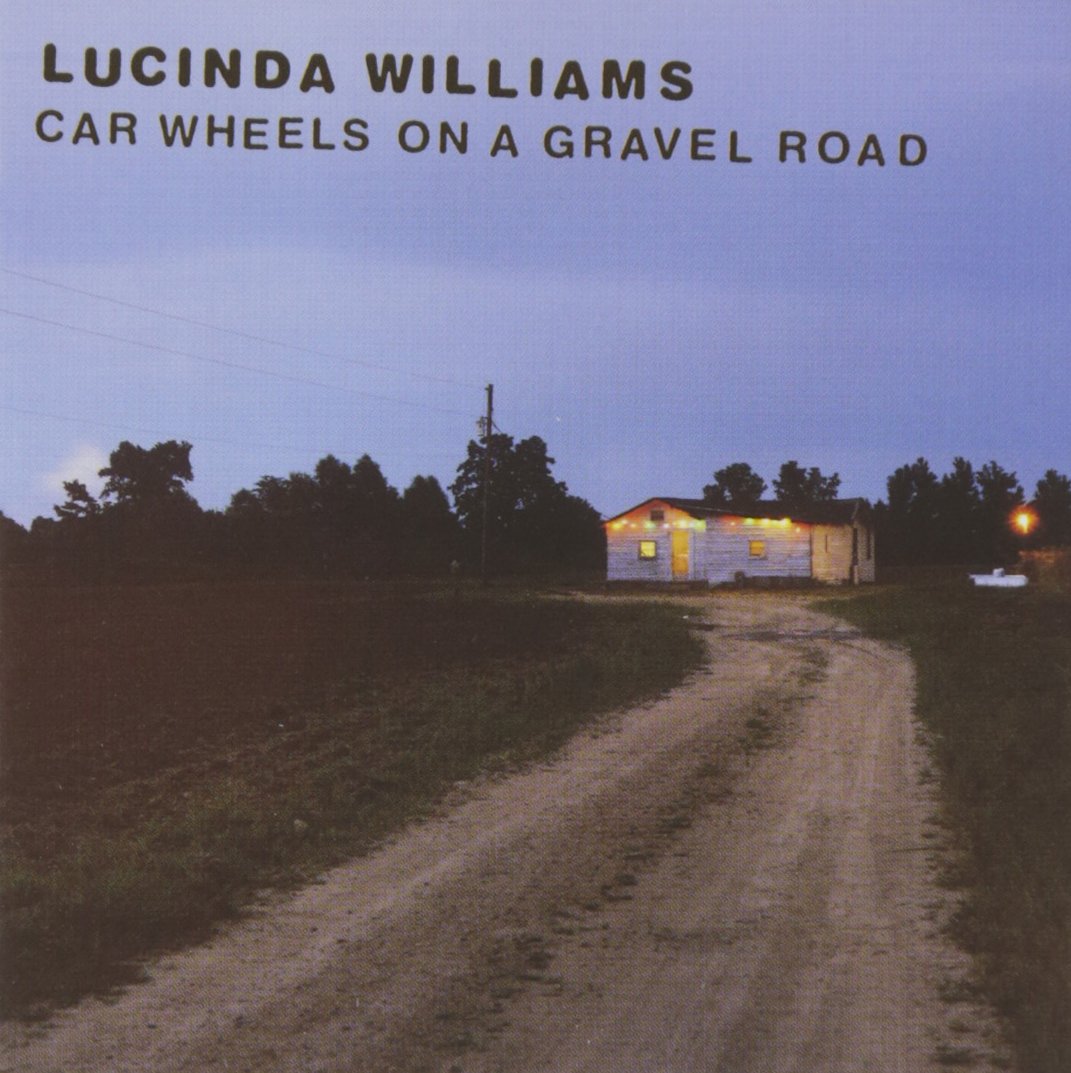
Lucinda Williams recently sat down with Jessie Scott to talk about the 20th anniversary of her groundbreaking album ‘Car Wheels On A Gravel Road’. Williams is touring with her band in celebration of the 20 years of the songs like “Jackson” and “Drunken Angel” which she played and recorded for a session at Colin Linden’s Nashville studio.

It was her fifth studio album by the singer-songwriter Lucinda Williams. It was recorded and co-produced by Williams in Nashville, Tennessee and Canoga Park, California, before being released on June 30th, 1998, by Mercury Records. The album features guest appearances by Steve Earle and Emmylou Harris. It was Willams’ first album to go gold, She also won a Grammy Award for Best Contemporary Folk Album, and received a nomination for Best Female Rock Vocal Performance for the single “Can’t Let Go”.

Lucinda Williams makes this whole music thing seem so simple: Write in plain language about the people and places that crowd your memory; add subtle flavors of a mandolin here, a Dobro there, perhaps an accordion or slide guitar; above all, sing as honestly and naturally as you can. Of course, it took her six years to achieve this simplicity, an amazing achievement considering the number of knobs that were turned. Her exquisite voice moans and groans and slips and slides–she delivers a polished tone in a coarse manner. On the superb “Concrete and Barbed Wire”, soft acoustic guitars are punctuated by electric slide, accordion, mandolin, and Steve Earle’s harmony. Williams’s deeply personal stories are matched with bluesy rumbles, raunchy grooves, and plaintive whispers. The entire Deep South is reduced to a sleepy small town filled with ex-lovers, dive bars, and endless gravel roads.

Williams’s evocations of rural rootlessness–about juke joints, macho guitarists, alcoholic poets, loved ones locked away in prison, loved ones locked away even more irreparably in the past–are always engaging in themselves. And they mean even more as a whole, demonstrating not that old ways are best,

It isn’t surprising that Lucinda Williams‘ level of craft takes time to assemble, but the six-year wait between “Sweet Old World” and its 1998 follow-up, “Car Wheels on a Gravel Road”, still raised eyebrows. The delay stemmed both from label difficulties and Williams‘ meticulous perfectionism, the latter reportedly over a too-produced sound and her own vocals. Listening to the record, one can understand why both might have concerned Williams. Car Wheels is far and away her most produced album to date, which is something of a mixed blessing.

Its surfaces are clean and contemporary, with something in the timbres of the instruments (especially the drums) sounding extremely typical of a late-’90s major-label roots-rock album. While that might subtly alter the timeless qualities of Williams‘ writing, there’s also no denying that her sound is punchier and livelier. The production also throws Williams‘ idiosyncratic voice into sharp relief, to the point where it’s noticeably separate from the band. As a result, every inflection and slight tonal alteration is captured, and it would hardly be surprising if Williams did obsess over those small details. But whether or not you miss the earthiness of Car Wheels‘ predecessors, it’s ultimately the material that matters, and Williams‘ songwriting is as captivating as ever. Intentionally or not, the album’s common thread seems to be its strongly grounded sense of place — specifically, the Deep South, conveyed through images and numerous references to specific towns. Many songs are set, in some way, in the middle or aftermath of not-quite-resolved love affairs, as Williams meditates on the complexities of human passion.

The final version of Car Wheels on a Gravel Road was produced by E.Street Band Roy Bittan

Before we leave for SXSW2019 tomorrow, we thought we’d go ahead and release a lil’ acoustic dual single! So, if you ever wanted to hear what “Power” and “Secret Feelings” sound like Nebraska-style with just me and my tenor guitar,
A dual single featuring acoustic versions of “Power” and “Secret Feelings” from Labrador’s debut EP, “Tell Me About Your Dad” 
released March 10, 2019
Vocals, Tenor Guitar – Hannah Switzer 
All Songs by Hannah Switzer

http://

Image may contain: 2 people, people sitting, people standing, shoes and outdoor

The Other End have been labeled «… one of the most exciting new bands from Scandinavia», and got international praise for their cutting edge sound and exploration of slowcore and dark indie pop when entering the music scene in Norway in 2018.

The release of their 5-track debut-EP saw them being signed by Just Isn’t Music (Ninja Tune) and earned them a spot at ØYA 2018. Super World Indie Tunes hailed the EP as . one of the finest records you’ll hear this year». The EP was recorded live in studio together with renowned producer Iver Sandøy (Enslaved, Wardruna).

Ida Knoph-Solholm and Alexander Breidvik make music for 4 a.m. drives and headphones worn surreptitiously under blankets. But really, there’s no bad setting for music this spare, haunting and gorgeous. The central ingredients in “Far From Home” couldn’t be simpler: Knopf-Solholm sets her huge, radiant voice against crystalline guitar lines that hang heavy in the air. Though other instruments make their way into the mix, there’s not a superfluous sound to be found.

Vocals, bass guitar: Ida Knoph-Solholm Guitar, bass drum, backing vocals: Alexander Breidvik

Debut EP out March 16th 2018!

No photo description available.

The cult London Psychedelic band have quite a history. Founded by Dave Mclean and Paul Lake in 1987, the band are veterans of the alternative Manchester label “Imaginary” and cassette only label “Acid Tapes”; they helped pioneer the late 1980’s neo-psychedelic boom.

The Chemistry Set counted Factory Records boss Tony Wilson amongst their legion of fans (they appeared on his TV show). They also received regular airplay on the legendary John Peel’s Radio Oneshow (Peel even went so far as to sending the band a hand-written fan letter!). The Chemistry Set have been championed by mainstream media such as The Sunday Times, Mojo, Q, Shindig, Record Collector, Classic Rock, BBC 6 Music and Planet Rock as well as underground fanzines like Bucketful of Brains and Freakbeat in the UK, The Bob in the USA, Ruta 66 in Spain and Sound Effects in Sweden).

http://

Releases March 8th, 2019

Moving Panoramas will be at SXSW 2019

In recent years, Moving Panoramas‘ members have undergone lineup changes and health issues, but their new album, In Two, is still an impressive leap forward: a joyous and confident collision of girl-group harmonies and hazy dream-pop, with an agreeably beachy vibe that recalls the best of Best Coast. Bandleader Leslie Sisson enlists a new permanent lineup and an array of guests — including Nada Surf’s Matthew Caws and a few of Moving Panoramas‘ past members — to bring to life a perfect soundtrack to the first blush of springtime.

Wilco - Summerteeth

Summerteeth, released 20 years ago this week, is Wilco’s contribution to a common trope in pop music history: The prettiest songs are often about the ugliest subjects. Summerteeth exists as part of that lineage. It’s the most gorgeously ornate album Wilco ever made, and also the most disturbing.

Tweedy wrote the songs that became Summerteeth at what should have been the happiest time in his life. Rather than sabotaging his music career, the breakup of Uncle Tupelo — his massively influential country-punk partnership with childhood friend Jay Farrar had liberated him to pursue a vision entirely his own. He’d married his longtime girlfriend, Sue Miller, the owner of Chicago music venue Lounge Ax, and together they were raising a young son. The 1996 double-LP Being There had established Wilco as arguably the most talented and ambitious band in alt-country and helped Tweedy escape his reputation as Farrar’s plucky sidekick.

“I dreamed about killing you again last night, and it felt alright to me.” That’s a hell of a way to begin a song, and a hellish way. Just when the sleepy acoustic guitar chords out front of “Via Chicago” have lulled you into a stupor, Jeff Tweedy arrives to announce his shrugging approval toward the prospect of murdering someone he loves.

Eventually the Wilco frontman moves on to increasingly abstract imagery, from “I painted my name on the back of a leaf/ And I watched it float away” to “And crawling is screw faster lash/ I blow it with kisses.” The song builds from those initial chords into a vast soundscape that encapsulates Wilco at their best — that unparalleled ability to pile layers of beauty onto a simple folk song and then artfully rip it to shreds. At climactic moments, Tweedy launches into a slipshod guitar melody like Stephen Malkmus soloing over a disintegrating memory. Following it through to the finish is thrilling, but to get there you have to endure a whole verse of bloody, explosive details. It’s no wonder Tweedy writes in his new memoir Let’s Go (So We Can Get Back) that the album containing “Via Chicago” is “the record that’s hardest for my wife to listen to.”

Yet he writes, “I was probably as unhappy as I’d ever been. I was insecure, homesick, and drug-addled.” Even worse, “I had more love in my life that I’d ever had, and I was still lonely.” Furthermore, Tweedy was frustrated that Wilco had been pigeonholed as an alt-country band, a perception reinforced by Mermaid Avenue, a collaborative album with Billy Bragg setting music to unused Woody Guthrie lyrics. Being There had blown open the possibilities of what Wilco could be, but most of the listening public still saw the band a certain way. “People assumed we had this sort of identifiable, philistine range of influences,” Tweedy wrote, “and we, in our heads, knew that wasn’t the case.”

To upend those expectations, Wilco made their idea of a bubblegum record. The rootsy pop-rockers and ballads that populated 1994 debut A.M. were still in the mix, as were the formal and stylistic experiments that made Being There such a leap in terms of breadth and quality. But now Tweedy and his sideman Jay Bennett were building these songs into small-scale symphonies: Beach Boys harmonies spilling into every chorus, waves of gorgeous orchestration surging in and out of the frame. By this point they were more chamber-pop than cowpunk or whatever term the readership of No Depression favored that week.

It was a different record born from a different process. In many ways Summerteeth was a dry run for Yankee Hotel Foxtrot and its accompanying saga, be it Tweedy’s embrace of abstract, impressionistic lyrics, the introduction of extensive studio tinkering to tear apart the songs, or tearing apart of the band that came along with it. Drummer Ken Coomer and bassist John Stirratt were largely excluded from the sessions while Tweedy and Bennett popped pills and piled on the overdubs. As Coomer complained to Greg Kot in his Wilco biography Learning How To Die, “There wasn’t really a band, just two guys losing their minds in the studio.”

It’s hard to dispute the results Summerteeth continued a run of masterpieces that began with Being There and continued well into the next decade — but Reprise Records did anyway. That’s another way the album presaged Yankee Hotel Foxtrot: The label asked Wilco to go back and record more accessible music to promote to radio. In this case the band played along, leading to a rare instance of label meddling that worked out really well. The glorious guitar-pop onslaught “Can’t Stand It” is a phenomenal album opener and a frankly underrated entry in the Wilco canon. On the other hand, although you can see why the label didn’t want Summerteeth to begin with the drowsy, depressive, dysfunctional “She’s A Jar,” it’s tough to understand why they couldn’t find a single anywhere else on the tracklist especially when they had one readily available just one track beyond “She’s A Jar.”

On one hand, there’s nothing quite like “A Shot In The Arm” in Wilco’s discography. On the other hand, it’s a great case study for what Wilco were doing on Summerteeth: one of the most beautiful and exhilarating pop songs they’ve ever recorded, and also one of the bleakest. Bennett’s cascading piano ripples, a rock-steady Coomer backbeat, and a Stirratt bass line propel it breathlessly forward while an arsenal of squealing synths collide in the sky like fireworks. All the while, Tweedy alludes to strained relations with his wife and seemingly considers whether a heroin habit might jolt him out of his doldrums. It begins and ends in flicker of synthesizers.

He hints at those tensions again on “Pieholden Suite,” a lush multi-part sequence that really earns that “suite” designation: “There’s a whisper I would like to breathe into your ear, but I’m too scared to get that close to you right now.” And again on “We’re Just Friends,”, If love’s so easy, why’s it hard?” And again on the heartbreaking “How To Fight Loneliness,” a lounge-ready acoustic slow-drift that concludes the best strategy for battling alienation is “just smile all the time.” Punchy rock tracks “I’m Always In Love,” “Nothing’severgonnastandinmyway (Again),” and “ELT” course with stress and frustration beneath their cheery veneers. “Can’t Stand It” toggles between strutting Stones-lite verses with a carefree party vibe and a euphoric chorus smothered in keyboards and church bells, yet Tweedy spends the song lashing out at the randomness of both God’s love and his own. Yet again, he evokes a personal life that’s falling apart: “You know it’s all beginning to feel like it’s ending.”

Not everything on the album is so dark. Summerteeth concludes with a stretch of music that feels like a redemption arc. There’s real tenderness in the lullaby “My Darling” and the lazy back porch reverie “When You Wake Up Feeling Old.” The title track finds some kind of resolution as it breezes from snappy twang to sighing rhapsody, though even the apparent reconciliation is oblique enough to keep listeners guessing. And on gentle closing track “In A Future Age,” Tweedy buys into the possibility of change, bookending his album-opening cries that “Your prayers will never be answered again!” with a call to “turn our prayers to outrageous dares.” Yet despite things generally looking up at the end, the album remains a document of Tweedy at one of his lowest moments.

He writes in his memoir that the darkness explored on Summerteeth, while very real, was not autobiographical in the strictest sense. He discusses writing “Via Chicago” and other songs from the era in a fragmented style he compares to mosaic and collage. “When I write in this mode, I write for myself first, pretending that the audience isn’t even there, and will never be there,” he explains. “I can get things off of my chest, I can invent versions of myself that are better than I believe I am … or worse, are even downright awful and murderous. I can expose shadow selves that I believe I should keep my eye on. I can admit things about myself without really having to take ownership of anything.”

In other words, when “She’s A Jar” reaches its twist ending and Tweedy declares, “She begs me not to hit her,” he’s not actually confessing to domestic violence. He’s singing about a fictionalized version of himself, or maybe as a different character entirely, as a way to air out the more disquieting corners of his psyche. Which is not to say it’s wrong to be repulsed by these images or to wish that Tweedy, as the album’s ostensible protagonist, had not verbalized them.

Summerteeth occupies a weird space in Wilco’s history. It stands alone among their output, a product of personal crises and creative friction that would have ended the band if they’d carried on forever. There are people who’ll (wrongly, but earnestly) tell you that actually, this is the best album Wilco ever made. Others see it as the beginning of the end of the band they once loved, a rough draft for future glories. Whatever you make of Summerteeth, I can attest from experience that the album helped Wilco to become for a generation of listeners what the Clash and the Minutemen had been for Tweedy.

Novo will be performing at SXSW 2019

Novo Amor, a.k.a. singer-songwriter Ali Lacey, pieces together his songs using only the finest and most fragile organic ingredients: lightly plucked acoustic guitars and banjos, tender bits of piano, subtle string sweeps. But most exquisite of all is Lacey’s own falsetto — imagine Bon Iver’s Justin Vernon, but more straightforwardly angelic — Novo Amor sends the whole arrangement hurtling heavenward.

http://

The Welsh multi-instrumentalist and singer-songwriter whose 2018 album “Birthplace” is packed full of cinematic soundscapes undercut with more than a little melancholy.

Lifted from the ‘Bathing Beach’ EP out May 26th on vinyl and digital