MIRRORS has just unveiled the first wave of artists for its 2019 event!
Phoebe Bridgers, American Football, Turnover,Sheer Mag, Big Joanie, Just Mustard, Disq, Alfie Templeman, Taylor Janzen, Ada Lea will play at the event on Saturday 2nd November, which will be staged across the Roundhouse, Dingwalls and Camden Assembly.
Inspired by the warm, inviting sounds of ’70s singer-songwriters like Jackson Browne, Carole King, and Graham Nash, Ryan Pollie is the most personal music of the seasoned songwriter’s career to date. Leading the showcase is the video for “Aim Slow,” a touching clip featuring childhood home videos and footage taken during Ryan’s recent chemotherapy. The song is the lyrical centerpiece to the album and addresses the paradoxical nature of life and death, good and evil, yin and yang. Weaved throughout the song is a story of a struggling romance, the beauty and pain of what goes into love, and “Aim Slow” proves to be successful to Pollie personally – it tells his story which is one of love and searching.
Ryan Pollie had released two albums as Los Angeles Police Department, and working on his soon-to-be-released, self-titled studio album, he prepared himself to shed the protective barrier of his old band name — to make music, simply, as himself.
And then he got cancer. Nearing the end of his twenties, Pollie had already been mulling over the big questions: spirituality, purpose, the fleeting nature of existence. “I just wrote a record about mortality and whether or not I believe in anything, and then I’m faced with the biggest challenge of my life,” he says. Open, searching, and vulnerable, Ryan Pollie takes full advantage of the language of 20th century California pop to bolster its queries on the perplexing nature of being human. Piano, guitar, and bass intertwine with banjo, pedal steel, and saxophone to support Pollie’s sugar-sweet hooks.
Bolder and crisper than the albums he’s made as Los Angeles Police Department, the new album emerges from a deeply collaborative place. As Pollie went through chemotherapy in the summer of 2018, he relied on the support of his friends to finish the album. “Mixing is where it all came together for me,” he says. “Because I was sick, it was this new challenge — ‘I have to finish this record. I have to get out of bed. I don’t feel too well, but I’m going to go down the street to the studio and I’m going to give my notes and overdub some piano.’ I finished the record while I was sick, and that was a big thing for me, being sick and being able to finish something. It made me feel strong.”
One song, “Only Child,” addresses that period directly. Ironically, it’s one of the more upbeat tracks on the record, tackling the fear and uncertainty of illness with Pollie’s characteristic levity and humor. “My hair is falling out/My parents are calling now,” he sings amid a buoyant bassline and trills of flute. Other songs work through periods of loss, confusion, and ultimately triumph. The delicate, synth-driven “Raincoat” traces the end of a relationship with careful empathy. Against a briskly strummed guitar, “Leaving California” fleshes out his relationship with his parents and his childhood home in New England, while “Getting Clean” makes use of a glowing West Coast pop palette to articulate the frustration of trying to break out of a deep rut.
Living through illness becomes just one chapter in a record that celebrates living in general, and all the difficulties and surprises that come with it. More than anything, Ryan Pollie is a testament to the power of vulnerability — to the magic that happens when you open yourself up and invite the world inside, no matter how frightening or uncertain it may be.
With all the talk about Fontaines D.C. the Dublin band’s debut, album “Dogrel” pretty great reviews, the Dublin city themes and the PR narratives, The band keep on rolling right into the larger consciousness.
Some radio presenters, papers and publications are hailing the release of the group’s debut LP Dogrel as akin to a new chapter for Irish music. Paul McCloone labelled it the best debut in years . That’s a lot of expectation to put on any group and yet, the Fontaines D.C have found many champions internationally, with KEXP, NME, DIY Mag and lots more heaping praise on the group and album.
Last night, the band made their American TV debut on The Tonight Show with Jimmy Fallon which used to be a crucial rite of passage in the life-cycle of any hyped-up young band. performing Dogrel standout track ‘Boys in the Better Land’.
Fontaines D.C. played two songs on Fallon: “Boys In The Better Land” on the broadcast and “Liberty Belle” as an online bonus. And they ripped both of them, riffing hard and looking intense and generally seeming like they were too cool to breathe , The Music guest Fontaines D.C. gives a bonus performance of “Liberty Belle” for the Tonight Show studio audience.
I already knew about Page and Keith and Clapton but…?! ,Those were the questions going through my head when I discovered this record. I was blown away. I picked this record up on recommendation in my local record shop because the guy who owned the shop—the older, wiser, connoisseur of rock ‘n’ roll vinyl—told me that I must have it.
Put on “Let Me Love You” at a loud volume, and you are instantly a cooler person. It’s just true. I don’t know the science, but it adds up, And Jeff Beck’s solo in that tune… still one of the very best.
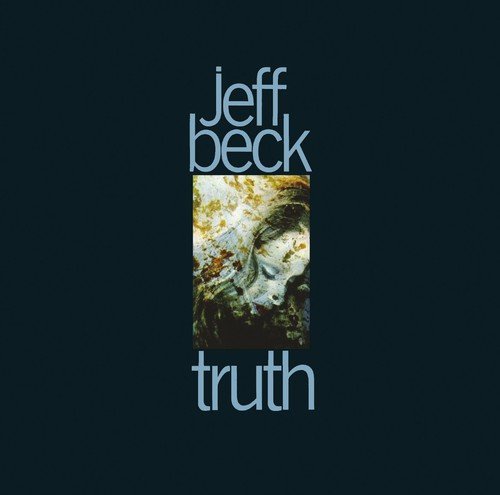
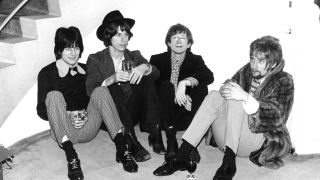
Beck, fresh out of the Yardbirds, released his first solo album in 1968 with help from Rod Stewart and Ronnie Wood. They weren’t yet christened the Jeff Beck Group, but they were clearly a band at this point. (Other luminaries like Jimmy Page, John Paul Jones and Keith Moon also help out.) But most of the flash is provided by Beck, who slings his guitar into some new territory on ‘Truth,’ firing up old traditional and blues numbers with instrumental tricks.
By 1968, Jeff Beck had become a major pioneering force on the electric guitar, following Eric Clapton in the Yardbirds, before clocking up two pop hits with Tallyman and Hi-Ho Silver Lining. By the time he was assembling the band for “Truth” he determined to make an album for himself.
With Beck having established himself as a guitar player of the first degree on a quartet of bold and wickedly wonderful Yardbirds albums in 1965 and 1966 (For Your Love, Having A Rave Up With The Yardbirds, The Yardbirds [Roger The Engineer] and Over Under Sideways Down), producer/manager Mickie Most, thinking to capitalise on the guitarist’s visibility, conceived the notion of turning Beck into a pop crooner. All but forgetting that Beck was first and foremost an instrumentalist, Most shackled him with a series of less-than-guitar-focused songs.
“I always kept my fingers on players,” Beck commented in the 70s. “Every musician around London always knew what the other one was doing. All groups used to come and see each other play, and it was really nice. There seemed to be a purpose. It was like a competition: ‘They’re doing that in their act, so we’ll have to cut that out’. It was great fun; nice, hot competition. I really liked the scene then.
“I had to round up a singer,” he continued. “I couldn’t think of who to get. I always liked Rod [Stewart], I dug him, with the teased hair and all the rest of it. “He was out of work at the time. He was hanging around a [London] club called The Cromwellian. I asked him if he wanted a job and [thinking Beck was drunk] he said: ‘Yeah, but I don’t believe you. Ring me tomorrow’. And I was more sober than I’ve ever been that night. And I couldn’t believe that he said yeah, because I thought he was a snob.”
With a singer in tow, Beck then set out to look for a bass player. Ronnie Wood continues the story: “I knew Jeff, but I’d never had a chance to go and sit through a whole show. I’d just heard little bits of him when he used to play with a band called The Tridents [Beck’s pre-Yardbirds band]. I suppose Jeff was one of my best friends, even though he was in another band.”
After the relative ease of getting the first two band members, finding a drummer was a nightmare. Beck went through Ray Cook, his former bandmate in The Tridents, the Pretty Things’ Viv Prince, ex-John Mayall drummer Mickey Waller (we’ll come back to him), Rod Coombes (later of The Strawbs), and another former Mayall graduate, Aynsley Dunbar. Although the last named held real promise, it resulted in yet another drum debacle. “I played with Jeff for four months,”.
“He was a bastard,” Dunbar complained of Beck. “He was so loud I couldn’t hear. I didn’t have any mics on my drums; the band had 100-watt Marshall amplifiers blaring; no monitors. With drummer Mickey Waller re-hired, and after several months of gigs, the quartet went into Abbey Road Studios on May 14, 1968, to begin recording an album. The material the group recorded was a combination of the live set, reworkings and some odds and ends. The album opens with a devastating slow version of the Yardbirds’ hit Shapes Of Things, with Beck turning in a virtuoso performance. Let Me Love You was part of the stage set and one of the few self-written pieces, setting up the call-and-response sequence between guitar and voice that Beck and Stewart had perfected live.
On July 29, 1968, Jeff Beck, along with a kick-around vocalist, a future Rolling Stone, and a drummer with a lot of bash released Truth. The album was a miracle of fury and berserk beauty, a testament to the jaw-dropping chops of a 24- year old guitarist who, over the course of 10 tracks and around 40 minutes, ran the gamut from electric blues and modified R&B to psychedelically influenced rock, classical, and even a little heavy-metal instrumentalism. With Truth, released just months before Led Zeppelin’s debut album release – and with songs and personnel in common. Jeff Beck, vocalist Rod Stewart, bassist Ronnie Wood, and drummer Mickey Waller (the core band) made an album that would become every guitar player’s bible and every hard rock band’s Holy Grail.
With Ronnie Wood on bass, Rod Stewart on vocals and guests like Jimmy Page, John Paul Jones and Keith Moon Nicky Hopkins, Aynsley Dunbar and Madeline Bell. popping up for guest spots on Beck’s Bolero, it was an album that not only helped establish the British blues rock sound, but featured many of its best exponents. Audacious and experimental, it smashes genre conventions at every turn.
Morning Dew, another song from the touring circuit, is a pulsating interpretation of Tim Rose’s classic, and it’s given a dirge-like solemnity from Beck’s breathtaking mastery of the wah-wah pedal. Here (and on closer I Ain’t Superstitious), Beck demonstrates amazing prowess with the then-new effects pedal.
Then there is the great catastrophe of You Shook Me, the old blues chestnut written by Willie Dixon and originally recorded by Muddy Waters. The song was on Truth, and was then re-fashioned by Led Zeppelin for their debut album some months later.
Ol’ Man River, the Oscar Hammerstein II/Jerome Kern standard is an odd little creature. With Beck on bass, John Paul Jones on Hammond organ, and tympani by ‘You Know Who’ – actually Keith Moon – it is one of the album’s lesser moments. But it did prompt Truth engineer Ken Scott to recall The Who’s drummer living up to his ‘Loon’ nickname. “One has to remember Mr Moon playing tymps.
On vinyl, side two of Truth opens with Beck having picked up an acoustic for a shaky but stirring version of the classical… er, classic Greensleeves. “It was just an idle mess around in the studio while I was waiting for Mickie,” he said. “Why not? It was the vital last track of the album, and nobody could think of what to play, so I just played it. That’s why there’s all the plinking and plonking and bad notes in it. I can’t play acoustic guitar very well.”
Rock My Plimsoul is a track Beck recorded back during his Mickie Most/solo career period. That staggered little drum lick from Aynsley Dunbar (who is uncredited) sets the song in motion, and provides a rhythmic trampoline on which Beck’s guitar jumps and twirls.
Willie Dixon’s You Shook Me and I Ain’t Superstitious are masterfully reinvented, even Broadway hit Ol’ Man River and the Henry VIII-authored Greensleeves are dragged into Beck’s musical vision.
And then there is the timeless and epic instrumental Beck’s Bolero. Recorded in May 1966, this rendition of Ravel’s famous Bolero was the B-side of Hi Ho Silver Lining and was meant to serve as the launching pad for Beck’s idealised supergroup. Players include Jimmy Page on electric 12-string, Keith Moon on drums, John Paul Jones on bass, and Nicky Hopkins on piano.
‘Truth’ is surely one album to consider as a forward thinking, Blues Rock to Rock Metal template for the future of guitar music. Some of the tracks were written as early as 1966, which just makes you realise how cutting this album is for something released in 1968.
Tyler Lyle’s new record. The Native Genius of Desert Plants is a three-and-a-half year introspection that triumphantly sought out a level of understanding in the face of adversity. The album reflects not just on how to make sense of the trials and tribulations we face in life, but on those magic moments that manage to persevere suffering to make life not just livable but an enviable state of being.
In 2011 Tyler Lyle self released his indie-folk debut The Golden Age & The Silver Girl, which NPR’s World Café named one of the top 10 albums of 2011. ‘The Golden Age & The Silver Girl’ was a singular statement written as an effort at catharsis for Tyler over a break up that conjured up a lot of questions that he had not previously been forced to deal with. Fittingly, as Tyler cTyler’sompleted this effort at coming to terms with an event that had fundamentally changed him, he boarded a plane for Los Angeles the next day to start a new phase of his life.
If The Golden Age & The Silver Girl was about reckoning with one’s sadness, Tyler’s follow up, The Native Genius of Desert Plants, is about finally transitioning from dark to light. In contrast to the whirlwind period writing and recording his debut, Tyler was able to take his time to really find his voice on the new album, for which he wrote over 90 songs over four years. Now whittled down to 12 songs, the album maintains an element of eclecticism while speaking from a universal voice of hope and self-discovery.
Ingrained in this record is the change in perspective that Tyler has developed during his time in Los Angeles. The darkness and cynicism that were largely present in the 25-year-old that moved out west in 2011 has largely dissipated in the 29-year-old man that will be releasing The Native Genius of Desert Plants. In words “I found a story to tell. It can be read as dialectic, told from three different lenses, or as a narrative from darkness to light. It can also be read as one single question – one that I ask in earnest and I ask expecting an answer:
Eight tracks into Patience’s debut synth-pop LP, Dizzy Spells, singer/producer Roxanne Clifford is suddenly joined by a second voice, one that complements her airy choruses and misty-eyed melodies with cloudy French phrases. Fans of Clifford’s former band, Veronica Falls, may recognize the guest’s name if they take a look at the liner notes: Marion Herbain, who was the former Veronica Falls bassist. While the band essentially ceased to exist in 2014—when their social media accounts went silent—the two stayed in touch and are still very close friends.
“She has a great voice,” says Clifford. “I intend to persuade her to sing more songs with me, and hope she’ll join me on tour in the U.K. this June.”
There’s a reason for this. Unlike other projects that start in a home studio and get lost in translation onstage, Patience’s shows aren’t limited to a laptop and a mic stand. They’re an ever-evolving affair, involving a reel-to-reel player, live synths, and clean guitar chords, and often rounded out by guests who can help bring Clifford’s layered harmonies and head-circling hooks to life. Smoke machines, proper lighting, and a decent sound system certainly don’t hurt, either.
“Having a couple friends sing backup with me is wonderful,” says Clifford. “It adds to the energy of the show, sounds great, and I have people to dance with.”
Therein lies the contradiction with Patience. Though it’s her face and hers alone on the album cover, Clifford isn’t looking to hide out solo in a bedroom, surrounded by drum machines, keyboards, and samplers. She misses “the gang mentality of being in a band and the confidence that brings,” as well as the immediacy of being able to just pick up a guitar and play.
“I long for the magical organic excitement that comes from playing in a fully live band,” she admits. “When it comes together, it’s a feeling I can’t really get any other way. But I also don’t feel ready to recruit band members or start hauling a backline around with me just yet.”
As for how she went from writing guitar-centric goth songs with Veronica Falls (“Beachy “Found Love in a Graveyard,”“Beachy Head”) to embracing the dancing-while-crying electronics of Patience, Clifford credits a simple Korg Micro Preset synth from the late ’70s. A key element in some of her favorite songs—including ones by OMD and the cult Belgian act Bernthøler—it provided the foundation for her early solo experiments, along with a Roland TR-505 drum machine. While it took her some time to create a compelling and cohesive vision with such “time-consuming and infuriating” equipment, Clifford found the creative process surrounding her new sonic palette liberating. Doubly so, given the time that passed between Veronica Falls’ last album (2013’s Waiting For Something to Happen) and Patience’s early singles (2016’s “The Church,” “The Pressure,” and 2017’s “White of an Eye”). Pursuing a new sound removed the weight of expectations from the equation. The trickiest part of putting Dizzy Spells together was technical obstacles—hangups indie rock acts don’t really have to deal with.
“It doesn’t feel hugely rewarding for me to get wrapped up in the nuances of an oscillator,” says Clifford. “Or to figure out how to program a sequencer properly; I’m too impatient. I usually have a very clear [idea] of how I want something to sound, yet getting to that point can be a different story.
She continues, “I’m learning more as I go, and it’s been important to have people help me with that side of things where possible. I’m also trying to embrace a more experimental approach to songwriting; letting happy accidents lead me somewhere new has felt freeing…. One element alone can be the tiny piece to make everything fit together in a pleasing way.”
And that’s what Dizzy Spells is: an avant-pop and Italo disco-inspired puzzle that fits together perfectly, despite being developed over several years and countless recording sessions. Clifford also worked with such welcome collaborators as U.K. garage icon Todd Edwards (see also: several Daft Punk singles), Free Love co-founder Lewis Cook, and engineer Misha Hering (Virginia Wing), although the end result is distinctly hers
“I chose the title Dizzy Spells because it suggests these disparate events acting as a whole,” she explains, “telling the story so far and mapping the ebbs and flows. There’s something special about that in and of itself, but I wanted the listening experience to feel immersive, the way an album should.”
Patience’s next round of material is poised to further their narrative, taking her “Gemini tendencies” to new heights without having to wait for the approval of other parties—especially since she now has her own label called Winona Records. Impromptu collabs may emerge on the imprint in the near future, but a Veronica Falls reunion is off the table after the passing of drummer Patrick Doyle last year. Forming another group with Herbain and former Veronica Falls guitarist James Hoare isn’t likely either, despite the creative spark they all share.
“Patrick’s death hit us all very hard,” says Clifford. “It’s something that I am still coming to terms with. It’s impossible not to have a spiral of regrets in moments like this. But we’ve all tried to focus on the brilliant times we had together and how cherished they feel in retrospect…. Sharing the memory of someone helps to come to terms with the immense loss that you feel.”
Dizzy Spells will be available in the U.S.A. from Winona Records,
Washington, DC power poppers Dot Dash have announced a series of shows with The Undertones, The Minus 5, and The Vibrators. The trio is still flying high on the momentum created from their excellent LP – ‘Proto Retro’, released last July. Reminiscent of the greatest jangle pop music ever, yet unique and original. Along the way, Dot Dash has played shows with The Brian Jonestown Massacre, Richard Lloyd (ex-Television), The B-52s, The Monochrome Set, Rolling Blackouts Coastal Fever, The Psychedelic Furs, The Chameleons, The Dickies, Ash, Hugh Cornwell (ex-Stranglers), Stiff Little Fingers, Tommy Keene, The Fleshtones, Glen Matlock (ex-Sex Pistols), The Drums, Urge Overkill, The Bats, Ultimate Painting,
Dot Dash is — Terry Banks (guitar & vocals), Hunter Bennett (bass), and Danny Ingram (drums.) Ex-bands within the Dot Dash orbit include power-poppy indie rockers Julie Ocean; hardcore pioneers Youth Brigade and The Untouchables; indie poppers The Saturday People, Tree Fort Angst, Glo-Worm, and St. Christopher; plus Swervedriver and Strange Boutique.
Dot Dash’s new album Proto Retro, the band’s sixth long player, is out now on The Beautiful Music. It’s the label’s 42nd release and was recorded at Inner Ear and The Bastille and produced by Geoff Sanoff.
An Obelisk is the sixth album from Titus Andronicus, which finds the noted rock band under the stewardship of producer and legendary rocker Bob Mould (Hüsker Dü, Sugar, et al.). This trans-generational meeting of the minds has yielded the most immediate, intense, and unadorned Titus Andronicus record to date. Clocking in at a brisk 38 minutes and change, it is also the shortest. Recorded over six breathless days at Steve Albini’s world-renowned Electrical Audio studio in Chicago, An Obelisk presents the sound of Titus Andronicus, rock band, at its most irreducible, as monolithic as the album’s titular monument.
The official audio for “Tumult Around The World” by Titus Andronicus, off the new album ‘An Obelisk’ available June 21st from Merge Records.
Los Angeles’s the Dream Syndicate is thrilled to release these times today, their second album of new music since their 2012 reunion nearly thirty years after they first influenced California’s paisely underground scene. if 2017’s how did I find myself here was a 10 pm record, all swagger and cathartic explosion, then these times is the 2 am sibling, moodier and more mercurial with the band acting as djs of their own overnight radio station as the listener drifts off into dreams and wonders the next morning if any of it was real.“when i was writing the songs for the new album I was pretty obsessed with donuts by J-Dilla,” lead singer and songwriter Steve Wynn explained. “I loved the way that he approached record making as a dj, a crate-digger, a music fan wanting to lay out all of his favorite music, twist and turn the results until he made them into his own. i was messing around with step sequencers, drum machines, loops—anything to take me out of my usual way of writing and try to feel as though i was working on a compilation rather than ‘more of the same’. you might not automatically put the Dream Syndicate and j-dilla in the same sentence, but I hear that album when I hear our new one.”.
The Dream Syndicate recorded these times once again at Montrose studios in richmond, virginia. co-produced by John Agnello (Phosphorescent, Waxahatchee, Hold Steady, Dinosaur jr.), Wynn wrote all of the song’s lyrics in the studio after the band finished tracking, so that the words would be dictated by the sound rather than the other way around. this process contributed to the urgency of the album’s title.“not content to deliver ‘the days of wine and roses 2019’ [the Dream Syndicate] have emerged with a vibrant collection of songs that ranks among the best the veteran group has recorded,” popmatters said of these times. “this is not a band competing with its past but instead carving out a bold new future.”
The Dream Syndicate has a long and storied history. but where are they right now? they’re here. right here. in these times.
The Dream Syndicate from the album ‘These Times,’ available now
The follow-up to 2017’s “Abysmal Thoughts,” which marked the band’s first release as a solo project from front man Jonny Pierce, “Brutalism” isquite possibly the best collection of songs in the band’s ten-year career.
Listen to the latest album single “Loner”. Pierce describes the track below:
Being a bit of a loner is sort of like being gay for me. When I was a kid, I would pray to be anything but gay – and now as an adult, I treasure the fact that I’m gay. I celebrate it daily. Being gay forced me to think differently, develop my creative side, and to carry a punk attitude. It also helped me define my values and find empathy for those who are marginalized. Being a loner is very similar to that. I don’t like hanging out in groups because I feel real connection is often sacrificed in those settings. Since most people seem to disagree and love a group hangout, that means I spend a lot of time along and listen to my heart. It helps me navigate my life, but it still offers sadness that is always there. You can’t be sensitive without carrying some sadness, and that’s okay.
Like Jonny Pierce, who co-produced the album, Brutalism is a bicoastal record – written and recorded between Upstate New York and a studio in Stinson Beach. Following a painful divorce and an incredibly difficult stint living solely in Los Angeles, Pierce decided it was time to face his demons, and the making of this record is a part of that process. “I was exhausted, depleted and sabotaging myself, partying so much but in reality running away from pain. It was a downward spiral.” Pierce knew it was time to go to therapy, and begin to reckon with his depression. “It was do or die,” he says. While he focused on his mental health, the making of Brutalism became an extension of self-care for Pierce, and makes for some of his most honest and relatable music to date.
On Brutalism, a lot is different. The album is defined by growth, transformation and questions, but it doesn’t provide all the answers. It’s rooted in an emotional rawness, but its layers are soft, intricate and warm, full of exquisitely crafted pop songs that blast sunlight and high energy in the face of anxiety, solitude and crippling self-doubt. Pierce was more open than ever, keeping his control freakery at bay while working with others to produce and record the album. He brought in Chris Coady (Beach House, Future Islands, Amen Dunes) to mix it. If there was a guitar part he wanted to write but couldn’t play, he brought in a guitarist. It’s also the first Drums record with a live drummer. Delegating freed up Pierce’s time to produce a more specific vision.
The past year has been transformative for Pierce, who may a permanent rain cloud above his head but is working towards a better, healthier headspace. “I don’t think I’ll ever really find myself,” he says. “I don’t think people do. I don’t think there’s a day that you wake up and you go, Now I know who I am. The best way for me to be an artist is by taking a goddamn minute, being still and listening to what it is that I want and need.” It was a real year of growth for him, but growth towards what? “I don’t really know, and that’s OK.”