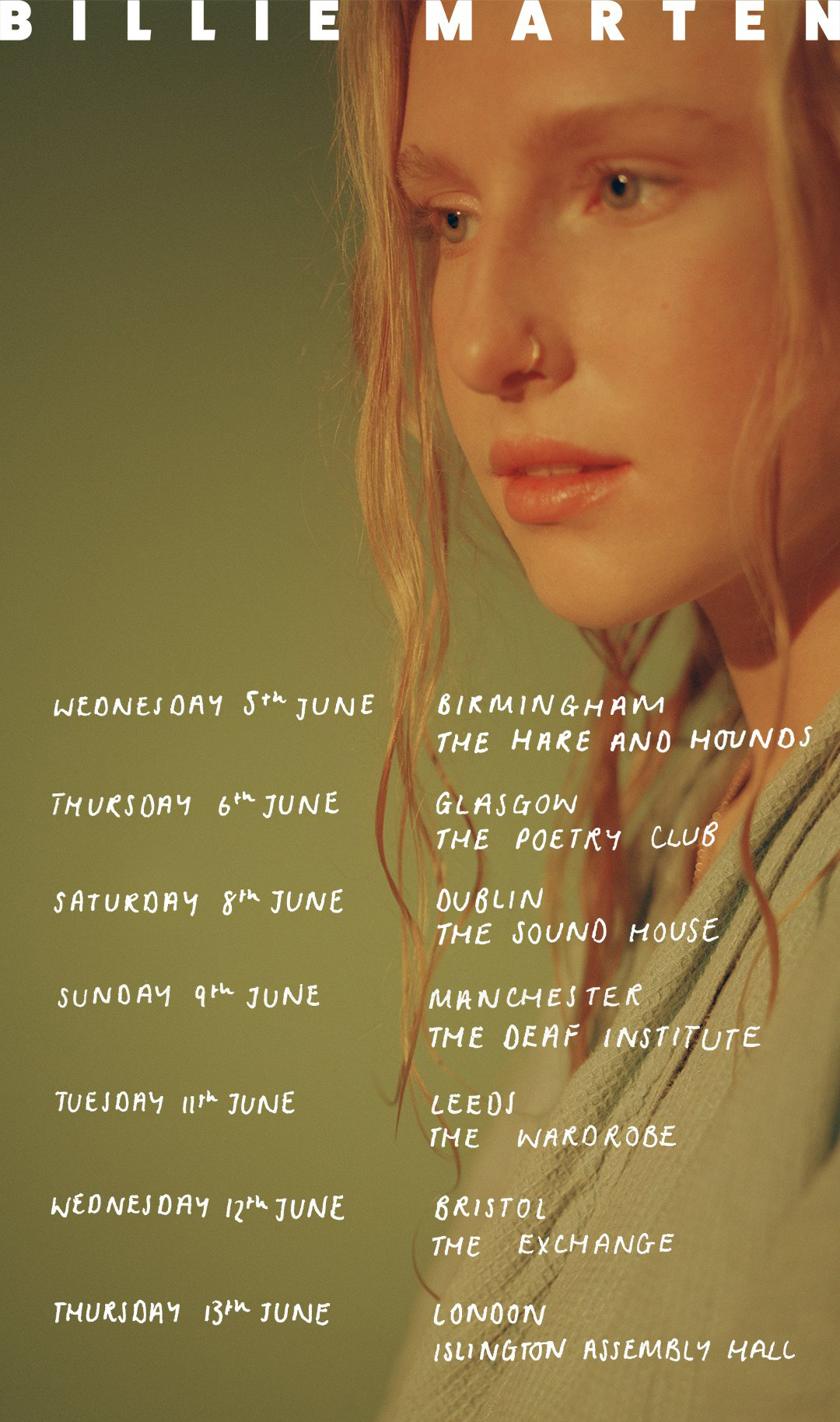
The young singer-songwriter’s sophomore album is a gorgeous work of textured indie folk that generously gives space to her fluttering vocals; it soothes and enchants in equal measure. recorded on four track tape at producer Ethan John’s house – the result is an honest, imperfection-speckled album from an artist unbothered by the idea of achieving a flawless gloss. if you’re a fan of artists like Julia Jacklin, Haley Heynderickx, or Nadia Reid , you owe it to yourself to hear this! “this collection of softly sung songs forms nothing short of a gentle and reserved masterpiece”
Billie Marten: Feeding Seahorses By Hand (Live Album) – BBC York Feeding Seahorses By Hand, the album out now
For over two decades, “The Rolling Stones Rock and Roll Circus” was a lost film, unfinished and unseen, more rumor than pop culture memory. In theory, it captured a lot of what anyone might desire in a rock ‘n’ roll movie from London circa 1968: the Stones, the Who, John Lennon, Eric Clapton and more.
On a sound stage designed like the inside of a circus big top, each of the musicians performed at the height of their powers while mingling with trapeze artists, fire-eaters and other semi-dazzling acts from a traveling circus. “The clowns and the Rolling Stones got along very well,” recalls the film’s director, Michael Lindsay-Hogg, 78.
Yet the film’s planned television premiere was delayed indefinitely for one reason: The Stones thought the Who’s performance was better.
It took 28 years, but the Stones came around in time for Lindsay-Hogg to finish the legendary rock film for a 1996 premiere at the New York Film Festival and release on home video. “You had these little explosions of greatness in the room,” says Lindsay-Hogg of the two-day shoot, “and the Rolling Stones recognized that.”
Now, in time for the North American leg of the Stones’ ongoing No Filter Tour, “Circus” has been remastered for a limited U.S. theatrical run during the first week of April. Last week, Lindsay-Hogg, who now lives in Los Angeles, attended a private screening in Hollywood of the film, recast in vivid Dolby Vision color and Dolby Atmos sound.
“I was thrilled by it anew, which I hadn’t been for a long time,” says Lindsay-Hogg, whose career began in England as director on the ’60s music show “Ready Steady Go!,” where the camerawork could be as frenzied as the acts onstage.
He also directed music videos for the Stones, Beatles and the Who, and made the intimate Beatles documentary “Let It Be.” In the pipeline is a long-awaited restoration of the 1970 Beatles film, which will follow an entirely new film being assembled from the same 55 hours of footage by New Zealand director Peter Jackson. Attending the “Circus” screening was Brett Morgen, director of 2015’s acclaimed “Kurt Cobain: Montage of Heck” and his own Stones documentary, 2012’s “Crossfire Hurricane.” In an onstage Q&A with Lindsay-Hogg following the film, Morgen celebrated the filmmaker’s essential work with these epochal musical figures.
“The man defined the image that so many of us have of the Stones and the Beatles,” Morgen said in an interview with The Times. “He created a new language. You look at the ‘Jumping Jack Flash’ video and what he did is as innovative as what Busby Berkeley did to the musical.”
In “Circus,” the Stones performed several songs from the just-completed “Beggar’s Banquet,” the first of four consecutive album milestones that defined the band’s greatest work. There was also Lennon leading a supergroup he called the Dirty Mac, with Eric Clapton on guitar, Keith Richards on bass, and drummer Mitch Mitchell from the Jimi Hendrix Experience performing a new Beatles song, “Yer Blues.” Yoko Ono then joined for an improvisational jam. Other performers included Marianne Faithfull, Taj Mahal and Jethro Tull. The Who’s playful reading of the mini-rock opera “A Quick One While He’s Away” was close to perfect. Jagger had personally invited all of them.
“In those days, rock ‘n’ roll bands would arrive late. You’d schedule something for 1 and they’d arrive at 4,” recalls Lindsay-Hogg. “But on this particular day, because they all respected each other, everybody was on time.”
A London sound stage was rented and Lindsay-Hogg hired the best camera operators from “Ready Steady Go!” The production also used experimental cameras from France, which shot both 16mm film and provided a video feed to the control room. Aside from having to change film canisters every 10 minutes, the new cameras frequently stopped working. “When one of the cameras had broken down for the 11th time that day, we had a little break,” the director recalls. The musicians would then retreat to their dressing rooms. “I went backstage to see how everybody was, and they were all sitting in a room – John Lennon, Mick Jagger, Pete Townshend, Eric Clapton – playing blues on guitar and harmonica. Keith Moon was playing spoons on a table.”
The Stones didn’t get onstage to perform until 2 a.m. It was the final live appearance of guitarist Brian Jones, dazed and fading from drug abuse, but still able to re-create his heartbreaking slide guitar lines on “No Expectations.”
Within months of filming, Jones left the band and drowned soon after. Jagger went to Australia to star in “Ned Kelly.” Lindsay-Hogg traveled to California to work on a film. The momentum of the era pushed its participants forward, but somehow left “Circus” behind until the footage was rediscovered in the ’90s.
Lindsay-Hogg continued working with the Stones through the early 1980s, directing several music videos, from “It’s Only Rock ‘n Roll (But I Like It)” to “Waiting on a Friend.” He turned his attention to feature films, TV specials and directing theater, though he remains friendly with the Stones. “We knew each other when we were kids,” he says now. “It wasn’t my nature to hang ’round if I didn’t have to. In a funny way, I think they respected that. I was happy to just be working with them.”
Psychedelic Porn Crumpets are pretty much unlike any other band out there. A truly unique live proposition, their other-worldly psychedelia is melded into some startling shapes on incoming album ‘And Now For The Whatchamacallit’.
Due out on May 31st, the record is previewed with bold new cut ‘Bill’s Mandolin’, the title (and concept) seemingly sparked by an object gifted to singer Jack McEwan before the band’s last European tour. Jack McEwan: “I wanted to write an ‘Ode To Bill’ and the travels with the mandolin that summed up the tour and sounded as chaotic as the adventures that ensued…”The video traces a ghostly path to an abandoned castle, where the titular mandolin is magically reconfigured into a sword.
‘And Now For The Whatchamacallit’ will be released on May 31st.
Sardonic and self-aware as ever, Donnelly’s “Die” offers a chipper outlook on the passing fear we’ve all experienced numerous times, most often while driving to work or enjoying an afternoon al fresco: Holy shit, I’m gonna die one day.Donnelly is the victim with a knife to the heart, the frantic nurse trying to administer a shot, the hearse driver; she’s dead, seemingly portraying a fallen runaway bride waiting to be buried alive. (Have we also mentioned that there’s a tuxedo-sporting dog? .
“Stella told us she wrote ‘Die’ as a song for her to run to,” the directors explain. “There’s a stark contrast between the title of the song and its actual mood and musicality. We wanted to make a video that complemented the upbeat spirit while still touching on the idea of death. Couldn’t have done it without our dog Thinly.”
Donnelly’s “Die” comes from the Perth native’s stunning 2019 debut, Beware of the Dogs. The upbeat, ‘80s dancercise cadence of “Die” stands out from the rest of the 13-song affair (“I’m just as shocked as you that it’s on there,” fusing elements of pop, folk and rock for storytelling that’s as empathetic as it is in-your-face. “You know that I love you / Wanna buy you more shit / But I can’t afford it,” Donnelly laments. It’s the kind of self-awareness that demands a visual with camp and absurdity, and deliver camp and absurdity it does. Donnelly offers more camp in the video’s three-minute, 11-second run-time she deserves an invite next year as compensation. Thinly deserves one, too.
“Die” by Stella Donnelly off ‘Beware of the Dogs,’ out now on Secretly Canadian Records.
There’s always been a tenderness beneath the buzzing, brassy noise that has become characteristic of RadiatorHospital. For their latest project, the Philadelphia-based band have chosen to further indulge their sentimental side. True to its title, Sings “Music for Daydreaming”, is introspective and unassuming, the perfect soundtrack to drift away to.
Noticeably more acoustic than past albums, “Stories We Could Tell” opens with a bluesy guitar riff that develops into what can only be described as an upbeat polka-rock song — think the Felice Brothers, only grittier and more garage, the kind of song indie-heads could line-dance to.
On “Guitar,” however, the band strips down to bare essentials: Sam Parrot-Cook’s whiny vocals, which double and harmonize beautifully during the chorus, are accompanied only by a simple, spare piano melody. The song tells the story of how Parrot-Cook left his favourite guitar, which once belonged to his sister, backstage at a dive bar in Savannah. “Never thought I would lose something I loved so much,” goes the chorus.
Music for Daydreaming is a significant departure from the grunginess of Torch Song, for example, but no less raw. Though they rarely pass the three-minute mark, each track is dense and intricate enough to get lost in.
Recorded October 8th-10th 2018 at Uniform Recording in Philadelphia, PA. Produced, arranged, composed, and performed by Sam Cook-Parrott.
Special thanks to Marco at Salinas for putting it out, my band for not being mad that I made a record without them, my roommates for putting up with my loud ass while writing and practicing this, to all my friends and family, and most of all to anyone who considers themself a “fan.” It’s my life’s great honor to rock for you. –Sam
When Washington DC power-trio Ex Hex reconvened to record the follow up to their searing 2014 debut Rips, they slipped into this mindset. “We wanted to open up the sound from the first record, which sounded pretty garagey,” guitarist and vocalist Mary Timony says. “Even in how it was mixed – really overly compressed. We wanted to take it back from being blown out and use really diverse guitar sounds, make it lusher and bigger. We were talking a lot about Mutt Lange.”
Specifically, they talked about Lange’s work on Hysteria, Def Leppard’s 1987 monster hit and one of the most fastidiously overproduced albums of all time. Given the dirt under Rips’ fingernails, and Timony’s rep as a classically trained guitarist who favoured difficult, mathy melodies during her time with Helium and Autoclave, on paper ‘Ex Hex x Def Leppard’ is a weird look. But It’s Real drops that perception with its first couple of punches – this is a muscular, furiously enjoyable record that mainlines brazen riff worship.
With Betsy Wright, who played bass and sang on Rips, stepping up to spar with Timony as a second guitarist and drummer Laura Harris keeping a tight rein on things, behind its day-glo exterior lurks a shared set of blueprints that ensured Ex Hex hit their marks. “It was super collaborative,” Timony says. “If something could be played better by someone else, we’d do that. The parts just became parts.”
Both guitarists took time away from Ex Hex before settling in to write It’s Real. While Timony toured around some Helium reissues, Wright issued an LP with her side project Bat Fangs that set out some signposts for what would follow. Its sound – righteous power chords, Gibson SGs and cranked Orange amps – bleeds into her writing here, bouncing off Timony’s more studied, punk-leaning work.
“I’ve been getting more into 80s metal,” Wright says. “I got really inspired by a lot of guitar players and tried to stretch my ability a little bit by learning a lot of solos – Randy Rhoads, Angus Young, a lot of the songwriting on the solo Ozzy stuff.”
But getting your Mutt Lange on in the studio is expensive and time-consuming. Ex Hex didn’t have an 80s budget for their 80s ambitions, so they had to improvise. Producer Jonah Takagi, who also helmed Rips, provided the meticulousness, while the LP was tracked at several locations, including sessions with engineer Ben Green at Ivakota in DC and in Baltimore with post-hardcore hero J Robbins at his Magpie Cage studio. During their stay in Maryland, that improvisation was facilitated with a room of amps mic’d up at all times, while helping hands also came from the nearby Big Crunch.
Timony and Wright are an achingly cool duo who have riffs and hooks to spare, and on It’s Real, Ex Hex have hit on a formula that works perfectly for them. “We started with: ‘What songs do we have?’ and went with whoever had ideas – it was pretty natural,” Timony says. “There wasn’t a lot of figuring it out.”
From the album It’s Real, out now on Merge Records.
Praised by Stereogum as a “delightfully distorted mess of energy,” the band’s sound is absorbing and urgently hypnotic, with songs that develop at a glacial pace, progressing forward with almost imperceptible momentum to carve deep canyons and valleys through walls of solid rock. Giannopoulos officially launched the group with bassist John Margaris and drummer Jamie Vadala-Doran in 2013, taking their moniker from a Latin phrase that had gotten more than a little lost in translation. The band would spend the next three years refining their studio craft and live show, garnering a devoted following playing DIY gigs around New England as they climbed their way into what Pitchfork described as “the top tier of the Boston house show scene.” In 2016, they released their self-titled debut to rave reviews, with NPR praising the band’s “slow, syrupy rock songs” as “cautiously measured and patiently curious” and Audiotree hailing the “soft spoken, contemplative trio” for their “unique sonic palette and precise compositions.”
They have soft/loud dynamics that remind me of early Mission of Burma. In 2019 Run For Cover Records announced they had signed them.
Published to accompany the blockbuster international exhibition launched at London’s Victoria and Albert Museum, this is the only book to be granted access to Bowie’s personal archive of performance costume, ephemera and original design artwork by the artist, and brings it together to present a completely new perspective on his creative work and collaborations. The book traces his career from its beginnings in London, through the breakthroughs of Space Oddity and Ziggy Stardust and the Spiders from Mars, and on to his impact on the larger international tradition of twentieth-century avant-garde art.
The classic blues track “Statesboro Blues” was originally written by Blind Willie McTell in 1928. Taj Mahal recorded his adaptation of the song in 1968. His version inspired the Allman Brothers Band to record their version which is ranked number nine on Rolling Stone magazine’s list of “100 Greatest Guitar Songs of All Time.” At “Skyville Live” we were lucky enough to have Taj Mahal, Gregg Allman and Chris Stapleton perform this stunning once-in-a-lifetime version of the classic song!.
Skyville Live features live performances by some of the world’s greatest artists spanning generations and musical genres. Each episode is recorded with full HD video in front of an intimate studio audience in Nashville, Tennessee and live-streamed around the world. Some of the biggest names in music today have appeared on the program since its debut in January 2015, including Kris Kristofferson, Gregg Allman, Gladys Knight, Lady Antebellum, Chris Stapleton, Dr. John, Emmylou Harris, Little Big Town, Melissa Etheridge, Cyndi Lauper, Martina McBride, Taj Mahal, Steve Earle and more. Artists of this caliber are the heart and soul of Skyville Live. Backed by The SVL AllStars, an incredible band that features some of the world’s most talented and legendary musicians, every artist comes away from Skyville Live with memories of an experience unlike any other. In this relaxed atmosphere, unexpected and inspired musical pairings can and do happen.
“Walkin’ Blues” is a blues standard written and recorded by American Delta blues musician Son House in 1930. Although unissued at the time, it was part of House’s repertoire and other musicians, including Robert Johnson and Muddy Waters, adapted the song and recorded their own versions.
Taj Mahal with “Walkin’ Blues” from his 2015 appearance on Skyville Live.
After the release of their exceptional debut EP, What’s On Your Mind?, Brighton four-piece Thyla made their American debut at this year’s SXSW. The band performed misty guitar cuts like “Pristine Dream,” “Only Ever” and “Blue,” with enigmatic frontwoman/guitarist Millie Duthie at the helm of their lush dream-pop meets moody post-punk. With an impressively consistent discography thus far and an exuberant live show that does their cloudy atmospherics justice, Thyla have all the bearings of a band worth obsessing over.
Music towns like Brighton often come with a set of contrasts. They’re inspiring, because there are tons of artists milling around, collaborating, figuring out their voices alongside each other as they jump from band to band. You’ll always find one gig or another to go check out. But on the flipside, that means there’s that much more noise to cut through, that many other names from which you have to stand out. In the last year or so, one of those bands that has stood out from the local pack is Thyla, a group that’s putting their own spin on the tradition of dream-pop.
“It’s just crazy, every other person in Brighton is a musician,” Thyla frontwoman Millie Duthie says over a Skype conversation from her home in the seaside UK town. “It’s really competitive and sometimes it can get a bit catty, but you just have to stay above it, and then it’s amazing.”
Duthie who was actually born in the States before her family returned to the UK when she was a small child — is like a lot of other musicians in Brighton, in that she moved there with the explicit goal of being a musician. The same goes for her bandmates — drummer Danny Southwell, bassist Dan Hole, and guitarist Mitch Duce all of whom came from other parts of the UK and relocated to Brighton to attend the British And Irish Modern Music Institute (otherwise known as BIMM). That’s where Thyla came together in its earliest form: Duthie met Southwell on their very first day of school, and the genesis of the band goes back to when the two lived in the same house during their college years.
When they found each other, it was the result of years off exploring by themselves. Southwell, Hole, and Duce all grew up as musicians; Duthie started a little later, picking up a guitar at 16 and discovering she had an innate knack for songwriting despite lacking formal training or theory knowledge. All of them gigged around Brighton with other groups until their own project started to percolate. Duce, the latest addition, joined last year, a moment Duthie locates as Thyla truly coming into their own and beginning to feel a distinct forward momentum.
“Things didn’t really start moving for us until he really started gelling with the band and our sound developed a little bit,” Duthie remembers. “About a year ago, we started playing gigs and people started turning their heads rather than going ‘Oh, this band has loads of potential.’”
The band’s early days and growth have, thus far, been catalogued by an impressive series of singles that span early 2017 up to the present. Earlier tracks like “Pristine Dream,” “Ferris Wheels,” and “Tell Each Other Lies” took a lot of cues from dream-pop: aqueous-then-chiming guitars underpinning Duthie’s vocals, which could escalate from an elusive breeze to a gale-force wind in one beat. Oddly, you can find them compared to Interpol in some write-ups from the time, which doesn’t make a whole lot of sense — aside from the fact that, crucially, they injected a propulsive edge to their soaring dream-pop choruses by grounding them with hard end post-punk rhythms on occasion.
While Duthie still writes solo and sometimes brings a song to the band, she argues that their best material arises when it’s the four of them in a room jamming, ideas developing on the spot within minutes. “That’s where the magic happens,” she says. “You just have to hope for the best, but it’s where the coolest music comes from.”
Combined with the effect of a recently-expanded lineup and the new perspectives that inevitably come out of a fresh band dynamic, the result has been a slightly different aesthetic in their most recent work. Two months ago, Thyla returned with “I Was Biting,” a composition that still had shimmery guitars and Duthie’s voice swooping up into the stratosphere, but now paired those facets with a distorted, grunge-indebted churn — the fire to the air of Duthie’s voice, each element in tension with but also fueling the other.
That’s partially how Thyla concocted their latest single “Blame” as well. The most aggressive and hard-hitting single the band has released yet, it bears the mark of that specific energy — the energy not just of the four of them kicking up then containing a storm together in a room, but also of their intensifying live shows. “We wrote it out of a real want to go for it onstage, and we didn’t have the tune to facilitate that,” Duthie explains. “’Blame’ was written for the need of a live energy we didn’t have before.” She adds with a wry laugh: “It’s 170 [BPM], you could nearly call it drum n’ bass. It’s super fast and it’s wicked to play onstage.”
“Blame” still has traces of the more otherworldly moments in earlier Thyla singles, but there’s a new ferocity, a frantic forward charge and Duthie opting for vocals more percussive than parabolic. The tone of the song mirrors the fact that it came from a more furious and desperate place thematically, influenced by the anxiety and insecurity that can come with trying to make it as an artist and the more detrimental qualities of a music town like Brighton. “’Blame’ is the frustration of that, the pressure to be a specific type of person, to look or sound a specific type of way,” Duthie explains. “The chorus … it’s a bit extreme, but it sums up the attitude of ‘Ugh, what do I do. I know what I want to be doing, but I don’t know how to get there.’”
Topically, these are concepts Duthie often likes to traffic in elsewhere, too. “I tend to write a lot from insecurity, because I’m always scared that it’s not going to be good enough, because it’s all self-taught and a bit untamed,” she says. But she’s quick to point out that, by her estimation, a lot of Thyla’s music comes from a sad source yet counters itself with the brightness of its music.
That’s often the unique quality of dreamy, ambiguous music: It can be what you need it to be in that moment. Out of any of the songs Thyla’s released so far, this might be most evident in the bursting chorus of “Tell Each Other Lies.” You can’t quite tell if it’s defiant, melancholic, or exultant. That’s where a lot of their music’s power is rooted. Whether it’s the burn-it-away catharsis of “Blame” and “I Was Biting” or the gleaming heights and pure beauty of “Pristine Dream” and “Tell Each Other Lies,” Thyla look inward to this emptiness, this feeling of not being good enough, and roar back to prove themselves worthy. “An answer to it,” as Duthie asserts.
Accordingly, these singles have started to catch on, garnering Thyla a bit of buzz in their homeland, earning them some tour slots outside of Brighton’s local music scene. But they’re careful not to let any external pressure threaten the fragility of a still-sorta-nascent project that’s just now taking shape. There’s more music in the works — Duthie’s currently recording new demos — but it remains to be seen when Thyla may arrive with an EP or a full-fledged album. “An EP would be awesome, hopefully by the end of the year, but it just depends on whether we think we have the tunes to do it,” she says. “We’re not just gonna do it because someone thinks we should have an EP out. We want to make sure we have something to say.”
They might be proceeding with level heads, but they are also aware of, and feeding off of, the positive attention that’s been bubbling up around them. As Duthie puts it, there’s a “real cool energy” surrounding Thyla right now, which is the kind of gratifying encouragement you need at some point, the realization that toiling away on music while holding down a day job is worth it when people start responding to your work. Thyla might feel the hype, and want to capitalize on it, but they’re also not letting those reactions impact their focus. “You have to straddle it, and have confidence,” Duthie says of this moment in their early career. “It’s just sheer grind and hard work. Every second we get, we’re in the room writing music. Because that’s what we love doing.”
Brighton dream-pop outfit THYLA are cementing their position as one of the UK’s most promising acts. They’ll be touring the UK this October, including dates in Manchester, London and Bristol.