
Borrowing the name of the building they were living in, Elstow was born out of an appreciation for the melodic folk stylings of sixties heroes Simon & Garfunkel and The Mamas & The Papas. Initially a duo, Jared Shaw and Chel Browne played Peats Ridge Festival in 2012 on the back of a few rough demos before taking some time off to travel and come to grips with their wider musical influences.
In 2013 Elstow expanded to incorporate five members. Drawing on the west coast psychedelic sounds of bands such as Jefferson Airplane and Peanut Butter Conspiracy, as well as nineties alt-psych idols Brian Jonestown Massacre and Mazzy Star, Elstow started work on their debut EP.
To be released in 2014, the result is a five track EP comprised of dreamy psychedelic landscapes fused with a unique folk sensibility. Combining surreal and at times haunting atmospherics with a subtle, personal approach, it’s their own variety of neo-psychedelic-folk pop.
please just listen to the track “Elderflower Bloom” .
Archive for the ‘CLASSIC ALBUMS’ Category
ELSTOW – ” As The Sun Falls ” EP
Posted: November 16, 2014 in CLASSIC ALBUMS, MUSICTags: As The Sun Falls, Australia, Elstow, Psych Folk, Sydney
SHE and HIM – ” Stars Fell On Alabama, Oh No Not My Baby , Time After Time ” and “Stay Awhile “
Posted: November 14, 2014 in CLASSIC ALBUMS, MUSICTags: Classics, M Ward, She and Him, Zooey Deschanel
These days, it seems that every band or artist puts out tracks before their new albums is released, and it’s easy to understand why an individual song purchase costs more than it would in relation to the album, or, if you get the tracks by pre-ordering, you’re locked in for the whole shebang. Most, however, will release a track or two in anticipation. That, apparently, is not She & Him‘s style. In the last few weeks, the easy-listening power-duo of Zooey Deschanel and M Ward” have already released four tracks (out of thirteen total) from their upcoming collection of standards,titled “Classics”, which comes out on December 2nd.
The duo’s take on Carole King”s “Oh No Not My Baby” is more closely to King’s vocals and Maxine Brown’s backing instrumentation, rather than, say, the versions popularized by Cher and Rod Stewart. Faithful without feeling uninspired, “Oh No Not My Baby” falls firmly within the canon of beautifully done recordings of Carole King’s expansive catalog.
and their cover of “Stars Fell on Alabama.” It’s a hard one to attribute, having been written in 1934 and covered by over 100 artists, but the track follows a delightfully early-’50s path, reminiscent of both Patti Page’s recording and the duet between Ella Fitzgerald” and Louis Armstrong”. Deschanel wisely avoids mimicking Fitzgerald or Page while still managing to bring elements of both of their styles into her own vocals. Ward’s gruffness offers up a good stand-in for Satchmo’s own indescribable voice, but takes much more of a back seat to Deschanel’s singing than Armstrong did to Fitzgerald’s. The track forgoes the instrumentals that introduce the older recordings, and it’s sped up by comparison, but nothing gets lost in translation. It’s a quick one, weighing in at under two and a half minutes, but there’s a beauty in its brevity,
Frank Sinatra “Time After Time, which also gives us a vocal duet between M.Ward and Deschanel, the two show us perhaps what makes their approaches to all of these songs so successful they take the later standards of the ’60s and bring a crooner-ish velvet to them, while taking the more “classic” standards of the ’30s and ’40s and applying a mid-century lounge aesthetic. The opening, just a tapping of a high hat and thrumming bass, feels more like we’re about to be launched into Peggy Lee singing “Fever,” and it’s a vibe that lasts all through the song and balances against the still Sinatra-esque vocals fantastically.
Their cover of Dusty Springfield’s “Stay Awhile,” which was the first track put out from “Classics”, takes a ’60s pop ditty and slows it down while retaining all the things that make the subgenre so charming – the ooh’s in the backing vocals, the claps, the lilting chorus.
All told, while the vintage-striving concept of the album might betray the duo’s reputation for twee indie-pop, the songs themselves are expertly and unselfconsciously done. Standards albums are a dime a dozen, and Ward and Deschanel go far above and beyond the generic adaptivity that most of them are plagued by.
The GO BETWEENS – ” G Stands for Go Betweens 1978-1984 “
Posted: November 14, 2014 in CLASSIC ALBUMS, MUSICTags: Australian, Domino Records, Grant McLennan, Indie, Robert Forster, The Go-Betweens
A 4cd or 4LP Anthology with original with rare and archival recordings and extensive liner notes from Robert Forster, Domino Records are honoured to announce the upcoming Autumn 2014 release of an extraordinary anthology for one of the most beloved and influential Australian groups of all-time, The Go-Betweens.

G Stands For Go-Betweens Volume One extensively documents the band’s origins in an ambitious box containing four vinyl albums, four compact discs and an extensive 112-page book, featuring a trove of archival photos and extensive historical liner notes from founding member Robert Forster, along with additional pieces from guest essayists, fans and contemporaries. The box set captures the band’s output from 1978 through 1984 and includes the first vinyl re-pressings of their first three studio albums in over thirty years (Send Me A Lullaby, Before Hollywood & Spring HillFair), all re-mastered from the original analog tapes. G Stands For Go-Betweens also brings together their early classic and collectible singles together on a fourth vinyl LP entitled The First Five Singles, featuring new artwork from its creators. Additionally, the set comes with four compact discs of rare, hard-to-find and unreleased demos, recordings, radio sessions and a complete live concert radio broadcast from 1982. If that’s not enough, the set comes with a silkscreen of their first promotional poster for their debut single, “Lee Remick”, as well as a reproduction of their very first press release from their own Able Label.
http://www.dominorecordsco/gobetweens/
The first three albums, the first five singles, outtakes, demos, radio sessions and a live show…
In the 1980s, Australia’s Go-Betweens were the dark horse among all those sharp-edged, sweet-and-sour guitar bands with literary pretensions. For those who found the cult of Morrissey too messianic and Lloyd Cole too self-satisfied, here was a connoisseurs’ choice: a band who name-checked Jean Genet while blending Sixties pop nous, 80s indie elegance, the brittle intensity of post-punk and the wayward non-conformity of The Modern Lovers.
A vehicle for the songs and voices of Robert Forster and Grant McLennan, the Go-Betweens formed in December 1977 in Brisbane and ended their first act in 1989. Six years into a fruitful post-Millennial reunion, they finally ceased trading in 2006 following McLennan’s sudden death from a heart attack. Forster has been plotting this gargantuan eight-disc slab of cultural excavation since shortly after that unhappy event; the first of three planned anthologies, it’s a beautifully conceived exploration of the band’s origins and early evolution.
Included are the first three Go-Betweens albums, Send Me A Lullaby (1982), Before Hollywood (1983), and Spring Hill Fair (1984), as well as all ten sides of their first five 45s, collected here on a new stand-alone LP titled The First Five Singles. Running parallel to these four vinyl albums are four CDs, arranged chronologically, consisting of outtakes, hard-to-find and unreleased demos, radio sessions and a complete (and excellent) live concert, recorded at the Mosman Hotel, Sydney, on April 23rd, 1982. There are over 100 tracks in all.
Meeting as fellow arts students at the University of Queensland, Forster and McLennan named their band after L.P. Hartley’s 1953 novel, and throughout its lifespan the group’s music was characterised by a darting intellectual curiosity. Debut single “Lee Remick” is a faux-naif piece of fan mail directed at the actress (“She was in The Omen / with Gregory Peck / She got killed / what the heck”), but its dumbness is studied and self-aware; on the B-side, “Karen”, a song clearly in thrall to Patti Smith’s “Gloria”, they’re already name-checking Brecht, Joyce and Chandler.
By 1980, and third single “I Need Two Heads”, the music had started to catch up with the words. Released on Postcard Records following trips to London and Glasgow, the song is an assured blend of The Cure and The Gang Of Four, giving the Go-Betweens their first Top 10 indie hit in the UK. Orange Juice drummer Steven Daly guested on the track, but by the time they started recording Send Me A Lullaby Lindy Morrison had joined on drums. As a settled three piece, the Go-Betweens’ house sound began to emerge: brittle and sharp, with lots of air between Forster’s guitar, McLennan’s bass and Morrison’s idiosyncratic rhythm. “Careless” has the compulsive twitch of early Orange Juice, and the urgent jangle of “Hold Your Horses” has shades of REM’s Chronic Town, but any sweetness is balanced by a sour twist. The vivid psycho-sexual drama of “Eight Pictures” creeps and crawls, the waspish digs at some thespian love-rival (“Same publicity shots for six years”) barely lightening the mood, while “It Could Be Anyone” recalls the neurotic funk of Talking Heads.
Released the following year, Before Hollywood marks a leap forward in both composition and execution, excising any lingering hints of ramshackle amateurishness. Robert Vickers joined as bassist, McLennan moved to guitar, and piano became a more prominent texture, notably on the lovely “Dusty In Here”. The album includes the masterful “Cattle And Cane”, a taut, minimal, bittersweet reflection on McLennan’s Cairns childhood, written on Nick Cave’s guitar. A slightly reconfigured version of the song features on the fourth CD of rarities.
On Spring Hill Fair, the Go-Betweens’ sound shuffles towards something lusher, more pop-savvy. A serrated edge remains on “Five Words” and the lowering “River Of Money”, but by now the band were lining up against the great song stylists of the mid-80s. Washed with synthesisers, “Bachelor Kisses” is animated by the same restrained romanticism as Prefab Sprout’s “When Love Breaks Down” (if anything, the demo is even more swoonsome), while “Part Company” – from its quivering emotional urgency down to its intricate, concentric weave of bass, vocal and fluid guitar lines – is a kissing cousin to The Smiths’ “Reel Around The Fountain”.
Parts of Spring Hill Fair point towards the glossier, more measured elegance of the Go-Betweens next phase, bookended by 1986’s Liberty Belle And The Black Diamond Express and 1988’s 16 Lovers Lane. But that’s another story, for another anthology. For now, Volume One of G Stands For Go-Betweens is a giddy treat, marking the spot where the headlong rush of new beginnings meets the steadying hand of accomplishment.
CREEDENCE CLEARWATER REVIVAL – ” Green River “
Posted: November 13, 2014 in CLASSIC ALBUMS, MUSICTags: Creedence Clearwater Revival, Doug Clifford, Green River, John Fogarty, John Fogerty, Rock, Stu Cook, Tom Fogerty
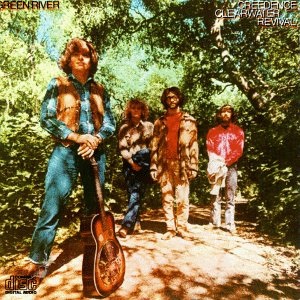
Green River is the third studio album by American rock and roll band Creedence Clearwater Revival, released in August 1969. It was the second of three albums they released in that year,
Green River The album isn’t just an excellent introduction to Creedence Clearwater Revival, but rock ‘n’ roll as a whole. Creedence were huge band and ‘Green River’ is a near-perfect collection of country, blues, soul and rockabilly, resulting in a record that digs into bedrock Americana. The guitars twang, the bass lines tumble down, the drums chug like a locomotive and Fogerty’s foghorn voice barks above it all. The sound is collectively beautiful in its simplicity – the sound of a band locked into a gleeful groove. The songs, on the other hand, , ‘Lodi’ – a dead-end town where Fogerty imagined he might find himself down the road, singing for his supper. Fogerty was feeling the weight of his responsibility when writing many of the songs on ‘Green River,’ weary of urban ‘Commotion,’ wary of his ‘Tombstone Shadow,’ unable to communicate with his love on ‘Wrote a Song for Everyone.’
If I had to pick a favorite song from this album of Credence Clearwater Revival it would hard… but this song would be a contender. It’s the way Fogerty wearily sings the lyrics, he sounds so much older than he was at the time. The song is off of the great “Green River” album. John Fogerty on writing the song.
“Inspired by my young wife at the time. It was early ’69, and I was 23 years old. We had our first child, who, at the time, was two and a half. I was sitting in my room, writing the songs, pushing my career. Without the songs, the career ends. You might be a great band, but without the songs, you’re not going anywhere. At one point, my wife and I had a mild misunderstanding, I wouldn’t even call it a fight, She was miffed, taking our young son out, wishing I would be more involved. But there I was, the musician manic and possessed the only guy holding things up. Without me, it all collapses, so I’m feeling quite put upon. As she walks out the door, I say to my self, “I wrote a song for everyone, and I couldn’t even talk to you.” I looked at my piece of paper and changed gears. How many great leaders can’t even manage their own families? So I went with that. “Pharaohs spin the message/Round and round and true/Richmonds about to blow up” referring to nearby Richmond, California. It was actually a true emotion that took on a larger meaning. It’s still a special song in the sense that it keeps my feet on the ground. You sit and write these songs, yet you try to talk to your own son and daughter and maybe you’re totally inadequate, trying to explain life to a child. We used to record our album very quickly and I remember finishing five different songs in one afternoon. The fifth one didn’t work, and that was “Wrote A Song For Everyone.” I had to start over on that one.”
Even the warm nostalgia of the title track is tainted by the knowledge that ‘Green River’ might be the last refuge. or fear in Fogerty’s heart – between the jaunty chords of ‘Bad Moon Rising’ and the end of all existence described in the lyrics – makes for a rocking listen, again and again.
- Creedence Clearwater Revival
- John Fogerty – lead and backing vocals, lead guitar, piano, keyboards, harmonica, arranger
- Tom Fogerty – rhythm guitar, except on tracks 2-4
- Stu Cook – bass guitar
- Doug Clifford – drums
The FELINES – ” Want “
Posted: November 13, 2014 in CLASSIC ALBUMS, MUSICTags: Alternative, Burger Records, Copenhagen, Denmark, Doo Wop Punk, Soundflat Records, Surf Rock, The Felines, Want

The Felines are a Doo-Wop Surf Pop Rock band From Copenhagen, Denmark, formed in 2010 they Sound Like The Cramps doing a Beach Boys tribute with an extra aloof Francoise Hardy on vocals.
Recent and deserving inductees to the Copenhagen chapter of the League of Extraordinarily Cool Girl Bands, the Felines are like a fully fueled hair flip. Seriously, don’t let the doo-wop descriptor so many blogs and magazines are using fool you. More often than not, the trio dials it down to an eerie, bare-bones saunter — before suddenly amping up and layering in for a thicker sound before they smoothly fade out. If the long buildups weren’t so nonchalantly catchy, the quickness of those great heights would seem pretty tragic.
Four years and two EPs in, bassist Asta Louisa Bjerre, guitarist Ditte Melgaard and drummer Mei Long Bao have finally wrapped up their first proper full-length release “Want”, released through German imprint Soundflat Records, same as its predecessors. This debut LP, however, is also being issued on tape through the US of A’s Burger Records basically, considering that imprint’s current representation and prestige, they’re about to be everyone’s new favorite band.
Even if that’s a bit presumptuous, it’s probable that even rock ‘n’ rollers who aren’t part of the Burger cult will succumb to the allure of The Felines’ spooky, coyly snarling vibe. The blasé badass feel is totally unrelenting throughout the album’s entirety. the band transforms familiar surf and ’60s girl group motifs into a sound that’s fresh, yet magnificently rotten. The lethargic pace and withdrawn sounding vocals make a near mockery of the easy melodies. It’s like that standoffish and mean but undeniably cool acquaintance you should hate, but you just can’t. They’re just too damn cool.
HOOKWORMS – ” Off Screen “
Posted: November 13, 2014 in CLASSIC ALBUMS, MUSICTags: Domino Records, Hookworms, Hum, Indie. Rock
As of this week, and at last it’s finally here. The second album release from “Hookworms” album titled “The Hum” on Domino Records has arrived and the release goes as far as trumping their debut album released in 2013 Pearl Mystic.To celebrate, the band’s next release from the record, ‘Off Screen’.
The song sees “Hookworms” edge slightly away from the high-octane noise they have become most known for, instead a more psych and shoegaze type sound.
.
The ROLLING STONES – ” Wild Horses “
Posted: November 8, 2014 in CLASSIC ALBUMS, MUSICTags: Gram Parsons, Jagger/Richards, Sticky Fingers, The Rolling Stones, Wild Horses

The song was recorded in 1969 but wasn’t released until 1971 due to the band’s legal tussle with their manager. The band’s normal piano player bowed out of the session because he didn’t like playing minor chords. And the track was originally intended by the guitarist to be a song about missing his newborn son, only to be hijacked by the lead singer, who turned it into a depiction of a burned-out relationship.
For The Rolling Stones, such drama has always been par for the course. That they overcame all of that and turned out a gem like “Wild Horses,” the song saddled with all of the aforementioned obstacles, is a testament to their talent, chemistry, and unfailing ability to rise above all the chaos, self-induced and otherwise.
For three days in December 1969, the Stones stopped into Muscle Shoals studios in Alabama and managed to lay down three songs, one of which was “Wild Horses.” (“Brown Sugar” was one of the other two, ) The composition of this plaintive ballad was begun by Keith Richards, whose first child was born in August 1969, causing Keith regret about going out on the road and leaving the boy behind.
“It was one of those magical moments when things come together,” Richards wrote in his 2010 autobiography Lifeabout the song’s genesis. “It’s like ‘Satisfaction.’ You just dream it, and suddenly it’s all in your hands. Once you’ve got the vision in your mind of wild horses, I mean, what’s the next phrase you’re going to use? It’s got to be couldn’t drag me away.”
So Richards wrote the music, using a 12-string acoustic guitar to really draw out the melancholy in those chords, and the chorus. He then handed the song off to his songwriting partner-in-crime Mick Jagger to complete the verses. And that’s when the track took a turn away from Marlon, the name of Richards’ little boy, and perhaps veered toward Marianne, as in Faithfull, Jagger’s on-again, off-again lover of that era.
Jagger recalled his contributions to “Wild Horses” in the liner notes to the 1993 Stones’ anthology Jump Back: The Best Of The Rolling Stones. “I remember we sat around doing this with Gram Parsons, and I think his version came out slightly before ours,” Mick said. “Everyone always says it was written about Marianne, but I don’t think it was; that was all well over by then. But I was definitely very inside this piece emotionally. This is very personal, evocative, and sad.
That heaviness hangs in the air throughout the song. You can hear it in the lazily-strummed guitars of Richards and Mick Taylor, in Richards’ just-right electric solo, in Charlie Watts thudding fills. Jim Dickinson filled in on the tack piano when Ian Stewart famously begged off playing the sad chords. As for Jagger, he holds back the histrionics and plays it straight,
The opening lines hint at a simpler time in the couple’s life together: “Childhood living is easy to do/ The things you wanted I bought them for you.” As time passes, however, they become inseparable in anguish as well: “I watched you suffer a dull aching pain/ Now you’ve decided to show me the same.”As bad as things get though, the narrator’s loyalty never wavers. “You know I can’t let you slide through my hands,” Jagger sings at the end of the first verse. Perhaps alluding to the drama in her life, he uses the metaphor of the stage to describe his steadfastness: “No sweeping exits or offstage lines/ Could make me feel bitter or treat you unkind.” And there’s that chorus, Richards joining in for high and lonesome harmonies with Jagger.
Gram Parsons’ version with the Flying Burrito Brothers does indeed predate the Stones’ release of the song on Sticky Fingers by a year, giving rise to unsubstantiated rumors that he deserved some songwriting credit. Among the many cover versions of the song that have been done through the years, The Sundays of “Here’s Where The Story Ends” fame checked in with a particularly memorable take, thanks to the ethereal vocals of Harriet Wheeler.
The final chorus of the song ends with Jagger changing the kicker line. Instead of the horses dragging him away, he sings, “We’ll ride them someday.” Some might say it’s a hopeful ending, but it also sounds like the kind of thing someone would say as parting words to a loved one they won’t be seeing again. This kind of poignancy isn’t what we often consider when we think of The Rolling Stones.
The YOUNG SINCLAIRS – ” You’re Tied “
Posted: November 7, 2014 in CLASSIC ALBUMSTags: Garage Rock, Roanoke, The Young Sinclairs
Most modern-day garage rock bands aim to sound as hard as possible, but The Young Sinclairs from Roanoke, Virginia, USA, in the Blue Ridge Mountains are a ’60s-influenced group who’ve sworn allegiance to the jingle jangle sound of classic folk-rock and early stirrings of psychedelia. The Young Sinclairs emerged from the Magic Twig Community, like-minded musicians operating their own recording studio, deep in the woods where they have produced and engineered all their own recordings.
SEAFRET – ” Give Me Something “
Posted: November 7, 2014 in CLASSIC ALBUMSTags: Bridlington, Give Me Something, North Yorkshire, Seafret
North Yorkshire Duo Seafret have their debut EP “Give Me Something” released on Sweet Jane Recordings the duo are supporting Hozier on a few dates in December. There’s something moving, something unmistakably chilling about Seafret.
The rising duo – still unfathomably young – are rooted in acoustic fare, songcraft which sounds both deeply traditional and immediately fresh. Hailing from the North East town of Bridlington, the pair took their name from the summer fog which rolls in off the North Sea. Grounded in the North yet currently living in London, Seafret’s music has an odd sense of dis-location, the melancholy which can only come through being surrounded by unfamiliar surroundings. New EP ‘Give Me Something’ arrives on September 21st via Sweet Jane Recordings. A neat introduction to their world, Clash is able to kick off the week by premiering the title cut.‘Give Me Something’ finds Jack Sedman’s vocals nestling gently in Harry Draper’s light, lilting arrangement. The simplicity is devastating, with the tale of lost love gathering in intensity until it collapses at the finale, the end notes vaporising into air.

COWBOY JUNKIES – ” Trinity Sessions ” Released 28 Years Ago Today
Posted: November 6, 2014 in CLASSIC ALBUMS, MUSICTags: Margot Timmins, RCA Records, Revisited, The Cowboy Junkies, The Trinity Sessions

Cowboy Junkies have just recorded the Blind Willie Johnson song “Jesus Coming Soon”. This is for the upcoming Blind Willie Johnson tribute album “God Don’t Never Change” featuring recordings by Lucinda Williams, Tom Waits, Sinead O’Connor, Rickie Lee Jones, The Blind Boys Of Alabama, Susan Tedeschi and Derek Trucks and many more…The release date has yet to be scheduled, but we’ll let you know. Cowboy Junkies will also be looking back at The Trinity Session recording on their Facebook Page this month. They will be posting pictures from behind the scenes of that special day and much more.
The Trinity Session is a 1988 album by “Cowboy Junkies” and was their second album release. Recorded in Toronto at the Church of the Holy Trinity at the end of November 1987, with the band circled around a single microphone. The album includes a mixture of original material by the band and some covers of classic Folk Rock and County songs . including the band’s most famous single, a cover of The Velvet Underground song “Sweet Jane” , based on the version found on the Live 1969 Velvet Underground album rather than the later studio version from “Loaded” . Also included is “Blue Moon Revisited (Song for Elvis)”, which is both a cover and an original, combining a new song by the band with the pop standard “Blue Moon“. Released in early 1988 on latent records in Canada. then released later that year through-out the rest of the world on RCA records.
In 2007 the album was performed live in its entirety as part of the All Tomorrow’s Parties-curated ” Don’t look Back” series. Also in that year, the band returned to The Church of the Holy Trinity to record a new version of the Trinity Session with special guest musicians Natalie Merchant, Vic Chesnutt and Ryan Adams. This new set of recordings was released as “Trinity Sessions Revisited” to commemorate the 20th anniversary Of ” The Trinity Sessions”. release.

