Angel Olsen hails from sunny, gorgeous, post-industrial St. Louis, Missouri. Beginning her performing career at 16 in coffee shops, she honed her craft further in Chicago through both solo performances and contribution to the album and tour for Bonnie “Prince” Billy’s “Wolfroy Goes to Town.” 2014 marks the release of her sophomore album to coincide with an international tour across Europe and the US.
Olsen’s intimate songwriting is coupled with a strong, ethereal tone and hypnotic rhythm acoustic guitar, with varied influences including Skeeter Davis, homespun Americana, Spanish guitar and the French New-Wave chanteuse Francoise Hardy. Her début release Half Way Home” is available through Bathetic Records with new album “Burn Your Fire For No Witness” received critical acclaim is available from Jagjaguwar Records now as a deluxe re-release.
All Mod Cons, released to wide acclaim in 1978, firmly cemented the group’s rise to extraordinary heights. Indeed, for many it was the first essential Jam album and listening to it now its impact has not diminished over time.”
When I think about English records I think of The Kinks’ The Village Green Preservation Society, The Smiths’ The Queen is Dead, The Who’s Quadrophenia and The Jam’s All Mod Cons. To me all those albums are definately English. It’s their third full-length LP. It took it’s title from a British idiom one might find in housing advertisements, is short for “all modern conveniences” and is a pun on the band’s association with the mod revival as well. Of Course it is also Paul Weller’s view on the music business as a ‘con’.The single “Down in the Tube Station at Midnight” was one of the band’s most successful chart hits up to that point, peaking at No15 in the UK charts. In 2000, Q magazine placed All Mod Cons at number 50 in its list of the 100 Greatest British Albums Ever. it is their best album.
British Invasion pop influences run through the album, most obviously in the cover of The Kinks’ David Watts and It’s too bad a song The Who would have been proud of.
To Be Someone (Didn’t we have a nice) time is an early jab at the rock’n roll lifestyle, about the hollow and empty life of a star, supposedly written after a horrible tour pairing in America with Blue Oyster Cult. The Bass line is a cool rip-of of Paul McCartneys bass line to “Taxman”.
I’ve highlighted my favourite tracks, but all the tracks are really strong, great playing and great singing all around. The Production is unusually complex and sophisticated for a punk/new wave album. The song “Down in the Tube Station at Midnight” is a first-person narrative of a young man who walks into a tube station on the way home to his wife, and is beaten by far right thugs. The lyrics of the song “All Mod Cons” criticise fickle people who attach themselves to people who enjoy success and leave them once that is over. The Jam regrouped and refocused for All Mod Cons, an album that marked a great leap in songwriting maturity and sense of purpose. For the first time, Paul Weller built, rather than fell back, upon his influences, carving a distinct voice all his own; he employed a story-style narrative with invented characters and vivid British imagery à la Ray Davies to make incisive social commentary — all in a musically irresistible package. The youthful perspective and impassioned delivery on All Mod Cons first earned Weller the “voice of a generation” tag, and it certainly captures a moment in time, but really, the feelings and sentiments expressed on the album just as easily speak to any future generation of young people. Terms like “classic” are often bandied about, but in the case of All Mod Cons, it is certainly deserved.
Released 3 November 1978, recorded during July through to mid August 1978, at RAK Studios (Upper London) and Eden Studios listed as Punk rock, or Mod Revival,but also Power pop with a running time of just over 37 minutes, produced by Vic Coppersmith-Heaven and Chris Parry and released on the Polydor label 3rd November 1978
1977 TOM PETTY BROADCAST FROM MY FATHER S PLACE, NEW YORK, PLUS TWO BONUS TRACKS After gaining local popularity in Gainesville, Florida with his band Mudcrutch, Tom Petty hooked up with The Heartbreakers (Mike Campbell, guitar; Benmont Tench, keyboards; Stan Lynch, drums; Ron Blair, bass), went to L.A., signed to Leon Russell s Shelter Records, and cut Tom Petty & The Heartbreakers, the debut album released in 1976. Although Petty, as the primary singer and songwriter (and a solid rhythm guitarist), deserved top billing, The Heartbreakers (at the time causing some confusion as ex New York Dolls Johnny Thunders and Jerry Nolan in tandem with Television s Richard Hell were calling their new group the same name) were a great band in their own right, Campbell and Tench (also fine songwriters) in particular being much sought after session players.
Anyway, Petty and co. were unique in 1976 in that they didn t really have an image beyond being a really good 60s influenced (The Beatles and The Byrds most obviously) rock n roll band; while trends such as punk and new wave came and went, Tom Petty & The Heartbreakers have always done their own thing. Tom Petty & The Heartbreakers was a solid debut album that, like much of their consistently strong output, is primarily remembered for its singles: Breakdown , American Girl and Anything That s Rock N Roll . The group supported Nils Lofgren in Europe during the summer of 1977 but returned to the US for the fall and played a number of shows as headliners including the gig presented on this CD, on Long Island, New York at the famous My Father s Place venue on 29th November.
Largely pulling tracks form their debut and sophomore albums (You re Going To Get It would come out in May 1978) they also covered two 1960s classics in the form of Shout and Route 66 , alongside an early version of a song that wouldn t receive its studio album debut until the release of Southern Accents in 1985, the wonderfully titled Petty/Campbell composition Dogs on the Run . What this fine show, broadcast as it was on WMIR FM New York.
This CD illustrates nicely and to full effect is that while Tom and the Boys were largely influenced by the music of the previous decade they were not immune to the energy and dynamism of the punk and new wave genres then making waves in the UK, Europe and in New York, and this show reveals a unit as tight and punchy as any then knocking em dead at CBGB s or at London s Vortex club. Two bonus cuts included on this CD, also from a 1977 radio broadcast, but recorded earlier in the year at LA s Record Plant, are equally vital and make for a fine collection of Tom Petty and The Heartbreakers live in the year of their emergence on the music scene.Now available on Amazon and only £7-99.good price and a great show.
The Jesus and Mary Chain, whose brand of psychedelic noise rock remains hugely influential, are to perform their classic album Psychocandy in its entirety on tour this November. Next year marks the 30th anniversary of the album, and this tour will signify the beginning of “a host of live onslaughts, festival dates and other special plans from the band”, according to a press release. “Psychocandy” was meant to be a kick in the teeth to all of those who stood in our way at the time, which was practically the whole music industry,” said Jim Reid in a statement. “In 1985 there were a great many people who predicted no more than a six month life span for the Mary Chain. To celebrate the approaching 30th anniversary of the album, we would like to perform it in it’s entirety. We will also perform key songs from that period that did not feature on the album.”
The riotous shoegaze band will hit the road in November to perform their debut album in its entirety
The Title of the album itself sums up the band’s sonic style: the group blended sugary girl-group sweetness and insane power on songs, where chugging guitars get swamped by feedback, leaving Reid’s rather pretty voice surfing on top. Their sound helped carve the shoegaze sound of the late 80s and early 90s, and their influence can clearly be heard in contemporary bands like Tame Impala and The Horrors (who also borrowed their leather wardrobe).
Alan McGee, the boss of their label Creation Records, said: “When they released this album in 1985 they were the best band in world this is just a fact. A truly seminal rock n roll band, without them so many other bands after them would have never found there way forwards in a musical sense. The first band I ever worked with that I loved and 30 years later still love.”
The band will play London’s Troxy on 19 November, Manchester Academy on 20 November, and Glasgow Barrowlands on 21 November.
Then and now, confrontation with Captain Beefheart’s music produces polarized and extreme reactions. Take two Rolling Stone reviews from the era, both of which mention 1969’s Trout Mask Replica : one reaction was akin to Montezuma’s Revenge—“I about puked…what is this shit?”—while in another, Lester Bangs crowned the album “a total success, a brilliant, stunning enlargement and clarification of his art…the most unusual and challenging musical experience you’ll have this year.”
Decades have done little to mitigate such responses, and Trout remains as barbed as a blowfish. As a gateway to Captain Beefheart’s singular amalgamation of country blues, psychedelic rock, free jazz, and beat poetry, it puts off as many listeners as it draws in. Which is a shame, in part because rock produced only one figure like Don Van Vliet. He was equal parts inscrutably gruff and warm, and he could be both room-clearing and mesmerizing onstage; the impregnable imagery in his lyrics slid to reveal a sly commentary, and he was able to both howl like a wolf (or Howlin’ Wolf) and purr like a cat. It’s not that he re-imagined Delta blues or Ornette Coleman’s harmolodics (not to mention gamelan or lute music or proto-punk) as much as he took them all in and then presented every angle at once, the closest rock music could get to cubism. Beefheart’s genius can be more easily gleaned on Trout Mask Replica’s 1970 follow-up Lick My Decals Off, Baby, taut and streamlined where the former sprawls and splays. Unfortunately, it’s languished out of print since the early CD era and now reappears as the first disc of Sun Zoom Spark: 1970 to 1972, a handy 4xCD compilation (disc four a fascinating set of outtakes and unreleased material) that captures the good Captain’s cagey albeit failed move towards mainstream rock acceptance. Rather than the impenetrable poses of TMR, Decals finds Beefheart at his wiliest and most playful, a new persona that takes centerstage across this album as well as its follow-ups, The Spotlight Kid and Clear Spot. As the critic Robert Palmer once noted: “The dada-dabbling surrealist has become the teasing, tantalizing back door man who entices crazy little things with almost drooling gusto.” Take the title track, where he shoves aside the Beatles’ boyish sentiments with lines like: “Rather than I want to hold your hand/ I wanna swallow you whole/ ‘n I wanna lick you everywhere it’s pink/ ‘n everywhere you think.” He’s no longer the trench-coated, trout-masked weirdo in a corner.
It’s a strange guise for Van Vliet, but the mischievousness of songs like “Space-Age Couple” and “I Wanna Find a Woman That’ll Hold my Big Toe Till I Have to Go” (not to mention a line that rhymes “dinosaur” and “Dinah Shore’s shoes”) succeeds because of the Magic Band behind him. Featuring TMR holdovers John “Drumbo” French, Bill “Zoot Horn Rollo” Harkleroad, and Mark “Rockette Morton” Boston, augmented by the addition of former Frank Zappa member Art Tripp on marimba, Decals shows off a Magic Band so tight so as to be spring-loaded, as fearless as a daredevil stunt team (check this rare live footage of this short-lived group). On this concise album, death-defying time changes and complex chords abound. There are also two stunning, contemplative and complicated solo guitar compositions, “Peon” and “One Red Rose That I Mean”, that sound at once stately and knuckle-breaking to play.
A song like “Bellerin’ Plain” contains multitudes in its three and a half minutes. It starts with a tough serrated guitar riff that soon unspools as Drumbo’s closed hi-hats and quick drum rolls keep finding more space even as Van Vliet’s surrealist bark about railroad brakemen and black smokestacks pushes to the fore, the music itself metallic and clacking like a train. A considered yet dense bass solo not unlike something from a John Coltrane side comes in before Beefheart and band lurch back. There follows a double helix of marimba and guitar that contains the DNA for most ’90s post-rock in its 45 seconds. The band returns with even more fury, one of the Captain’s Albert Ayler-shrieking solos flares up and carries the song out.
Soon after Lick My Decals Off, Baby, John French was out again, the band was reconfigured, and CaptainBeefheart signed to Warner Brothers, where across two albums from 1972 (The Spotlight Kid and Clear Spot) it sounds like he was being groomed to be the next Van Morrison. But after many albums of being difficult and diffuse, a slightly more mainstream Beefheart is a fascinating beast. Some edges of his sound are sanded, the Martian blues inherent in the guitars decidedly more grounded. The squalls of soprano sax and shenai are shelved, Van Vliet’s force-of-nature voice lowered, revealing it be a more cracked and nuanced instrument as a result. Obtuse as his lyrics could be, there were traces of the real world tucked in there, with nods to ecological concerns, garrulous people, female empowerment. Familiar blues tropes are upended to reveal new imagery, the “Babe I’m Gonna Leave You” re-imagined as a merman returning to the ocean on “Grow Fins”.
Produced by Ted Templeman , Clear Spot is Beefheart perfectly balanced between his aslant sensibilities and the desire for radio play, as on “Circumstances” and the transcendent roadhouse rock of “Big Eyed Beans From Venus”. “Too Much Time”, replete with horns and backing vocals sounds like a lost track from James Taylor or Bob Dylan circa “You Angel You”, is the pop move where Beefheart began to alienate his fanbase. But whether you heard “Her Eyes Are a Blue Million Miles” on the Dude’s headphones during The Big Lebowski or here for the first time, it remains the Captain’s loveliest, most heartrending creation.
Nothing here became a hit or brought Beefheart any closer to popular acceptance. Instead, Clear Spot ultimately marked the end of this particular era of Captain Beefheart and the Magic Band, as they would depart once they discovered his shifty accounting practices, leaving him to assemble a group dubbed “the Tragic Band” by critics for his next two disowned albums. When Van Vliet returned to the critics’ good graces at the end of the ’70s, it was as the hard-edged, irascible crank. This slightly sweeter, gentler Beefheart was dropped like a mask, rarely glimpsed again.
Monica Salazar and Jared Olmsted are both from California but they met and formed Courtship Ritual here in Brooklyn. They describe themselves ,Courtship Ritual are not a chillwave group, they are not a witch house group, they don’t play EDM music and they don’t play dubstep. Courtship Ritual are an original Post-Pop group of 2014, and their ditties are short, succinct and every one a potential swan song.
What do they sound like then The most prominent components to these ears are Salazar’s voice and Olmstead’s liquid bass, giving Courtship Ritual a dark, mossy vibe. There’s a little David J in there, maybe some early Eno or Japan, and they would make good openers for someone like Dum Dum Girls. The band’s debut album, Pith, is out now on GODMODE RECORDS.
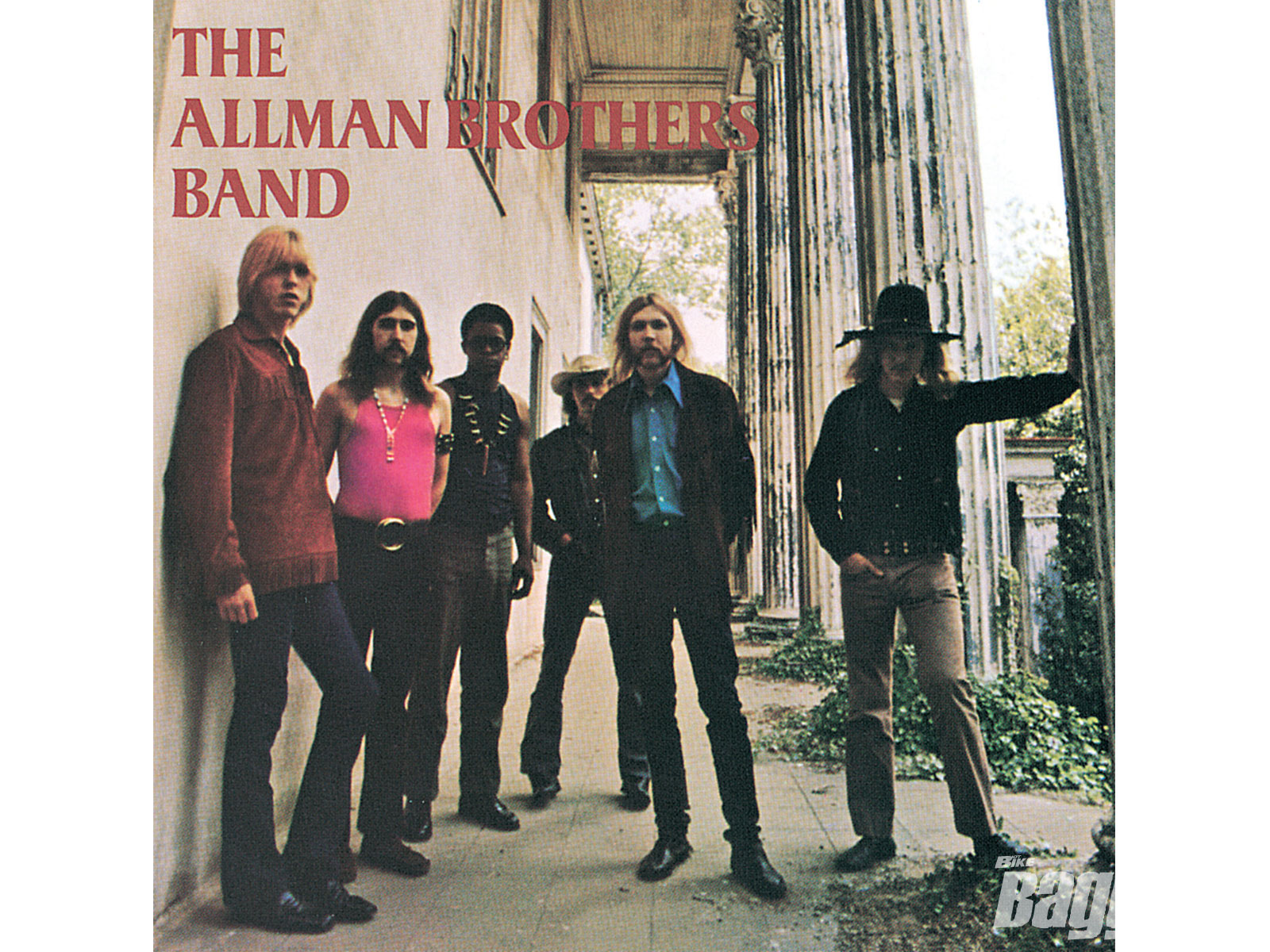
The Allman Brothers Band, released in 1969, was the debut album of the Allman Brothers Band.
In April 1969 the Allman Brothers Band moved from Jacksonville, Florida to Macon, Georgia. They first rented a house at 309 College Street. The front album cover photo was taken at the entrance of the College House (now owned by Mercer University) right next door at 315 College Street. The back cover photo of the album was taken at the Bond Tomb at Rose Hill Cemetery located at 1091 Riverside Drive in Macon. “Don’t Want You No More” is a cover of a 1967 song by The Spencer Davis Group.
“This might be the best debut album ever delivered by an American blues band, a bold, powerful, An essay in electric blues with a native Southern ambience. Some lingering elements of the psychedelic era then drawing to a close can be found in “Dreams” and “Whipping Post” in what became the basis for two of The Allman Brothers’ most famed epic concert numbers.
Plus a solid cover of Muddy Waters’ “Trouble No More.” There isn’t a bad song here, The Allman Brothers Band was recorded and mixed in two weeks,and recording was a positive experience for the ensemble.New York became regarded within the group as their “second home.The Allman Brothers Band saw release in November 1969 through Atco and Capricorn Records,but received a poor commercial response, selling less than 35,000 copies upon initial release.
Burn Your Fire For No Witness is the second studio album by American singer-songwriter Angel Olsen. It was released in February 2014 under Jagjaguwar Records. The album is being re-issued for a deluxe re-issue with extra tracks. The album “Burn Your Fire For No Witness” garnered broadly positive critical acclaim from reviewers called it “spellbinding and beautifully composed,” while further describing it as “an album spilling over with heart-swelling and painfully visceral romance.”
With a new 5 song EP-mini Album out on No Quarter Records ” Intensity Ghost” a mix of Television, Grateful Dead, guitar workouts,
In Television’s classic guitar strung album from 1977, Tom Verlaine issues a shuffling call to action. First, he’s “just waiting,” then “hesitating” for “a kiss of death, the embrace of life” — life only comes to him. But then something shakes Verlaine in the third chorus as a defiant voice finally boasts, “I ain’t waiting, uh-uh.” That’s where the music finds purpose, with the iconic riff suddenly becoming a staccato slash through the dark.
And that’s where guitarist Chris Forsyth & The Solar Motel Band takes the name of a new track, “I Ain’t Waiting,” from its forthcoming album “Intensity Ghost“.


 It’s a strange guise for Van Vliet, but the mischievousness of songs like “Space-Age Couple” and “I Wanna Find a Woman That’ll Hold my Big Toe Till I Have to Go” (not to mention a line that rhymes “dinosaur” and “Dinah Shore’s shoes”) succeeds because of the Magic Band behind him. Featuring TMR holdovers John “Drumbo” French, Bill “Zoot Horn Rollo” Harkleroad, and Mark “Rockette Morton” Boston, augmented by the addition of former Frank Zappa member Art Tripp on marimba, Decals shows off a Magic Band so tight so as to be spring-loaded, as fearless as a daredevil stunt team (check this rare live footage of this short-lived group). On this concise album, death-defying time changes and complex chords abound. There are also two stunning, contemplative and complicated solo guitar compositions, “Peon” and “One Red Rose That I Mean”, that sound at once stately and knuckle-breaking to play.