Field Music return with their sixth album, Open Here. The two years since Commontime have been strange and turbulent. If you thought the world made some kind of sense, you may have questioned yourself a few times in the past two years. And that questioning, that erosion of faith – in people, in institutions, in shared experience – runs through every song on Field Music’s new album.
But there’s no gloom here. For Peter and David Brewis, playing together in their small riverside studio has been a joyful exorcism. Open Here is the last in a run of five albums made at the studio, an unprepossessing unit on a light industrial estate in Sunderland. Whilst the brothers weren’t quite tracking while the wrecking balls came, the eviction notice received in early 2017 gave the brothers a sense of urgency in the recording of Open Here. There probably won’t be many other rock records this year, or any year, which feature quite so much flute and flugelhorn (alongside the saxophones, string quartet and junk box percussion). But somehow or other, it comes together. Over thirteen years and six albums, Field Music have managed to carve a niche where all of these sounds can find a place; a place where pop music can be as voracious as it wants to be.
Taken from the upcoming album ‘Open Here’ (out 2nd February 2018) catch the band at , Nottingham, RoughTrade 7th February
LA singer/songwriter Sunny War began her career as a busker, which is usually the kind of CV that results in loud, strummy songs that emphasize volume and ferocity over nuance and melody (see: those first few Billy Bragg records). So it’s a joy that War’s third album, With the Sun, is not a record of belted-out jeremiads, but instead a gorgeous, meticulously-constructed record that touches on folk and blues and country without ever owing a clear debt to any single one of them. It’s even more remarkable considering War spent her formative years kicking around the LA punk scene, playing house shows with rambunctious bands like FIDLAR. But she emerges clear-eyed and self-assured from the get-go, on the gorgeous album opener, “If It Wasn’t Broken.” War’s guitar fluttering down like falling feathers, and she delicately applies her voice to the spaces in between, delivering the song’s matter-of-fact chorus with wisdom and grace: “How would you know had a heart/ if it wasn’t broken?/ if it wasn’t broken?” When the songs do veer political, they’re handled not with blunt force but with a carefulness that makes the sentiment they express that much more powerful. “I get home and turn on the TV,” War sings on “I’m Human,” against a twitching guitar figure and gently-brushed snare. Then, she sighs out the verse’s dark kicker: “They killed another man who looks just like me.” With the Sun is a powerful showcase for a singer and lyricist who seems to have arrived fully-formed, with a natural gift for simple, gentle melodies and a knowledge beyond her years.
Sleepless Dreamer, is Pearl Charles’ second solo release, is a warm record full of breezy soft rock and quietly dramatic pop songs about love and loss, the kind that emanated out of California in the early to mid ’70s. You couldn’t find a better guide to this classic sound than Charles, who’s been working up to a record like this for years—she started out playing in old-timey duo the Driftwood Singers, then moved on to become the drummer for the Blank Tapes, a rock band with a fondness for softer, country-inspired sounds. Leaving behind the rock and psych-leaning arrangements found on her self-titled debut, on Sleepless Dreamer, Charles embraces a slicker pop sound. Still, despite the step up in production value, Charles writes folk songs. Their strength lies in their simplicity and Charles’ honeyed turns of phrase. The dusty roads Charles is traveling on throughout Sleepless Dreamer are familiar ones, “Charles‘ record takes cues from movements all over the American map. There are hints of Southern folk and alt-country, Midwest Americana, and West Coast acid rock.” –
Marmozets may be in demand, but it doesn’t stop them being punctual. Guitarist Jack and frontwoman Becca turn up promptly for our chinwag at a noisy north London pub, fresh from numerous photoshoots. They’re cheerful, bundled in winter layers and perfumed with cigarette smoke. “We quit for two weeks, and then we went to Paris,” Becca offers by way of explanation. “It’s impossible not to smoke there, because everyone smokes there,” adds Jack. The pair, it transpires, are a couple (“a new thing”).
Quitting nicotine may be a hurdle for Marmozets’ frontwoman – a whirlwind performer with major lung-power – but this rising rock quintet, who have supported the likes of Muse and Royal Blood in recent years, are disciplined where it counts, says Becca. “We’ve been doing this since 2008, so we’ve had our share of ‘fun’. We plan to be around for a long time.” No “live fast and leave a beautiful corpse”, then? “No, no. We want to age beautifully,” she says firmly.
“I don’t,” smirks the band’s guitarist Sam, who wanders in slurping a pint. “It’s over-rated, life.” “Sam’s too cool for school, aren’t ya?” Becca shoots back.
There’s an affable antagonism between the two, Sam playing punk scamp to Becca’s den mother. But when the 25-year-old frontwoman’s health took a nosedive last year, jeopardising the momentum the band had built leading up to their 2014 breakthrough album, The Weird and WonderfulMarmozets, playtime was over. Marmozets consists of two sets of siblings – the Macintyres (Becca, Sam, and drummer Josh) and the Bottomleys (Jack, and bassist Will). The two broods grew up in neighbouring villages near Bingley, West Yorkshire. In the same secondary school class, surrounded by football and rugby jocks, Jack and Sam bonded over guitar music. Their respective siblings were drafted in, and Marmozets was born.
Working out of a rehearsal space in Keighley, the scrappy teens gigged around the UK, earning a reputation for full-throttle live shows and loud, spasmodic, math-y rock. Their 2014 debut charted at 25 in the UK albums chart, and No 3 in the rock & metal chart. Kerrang! named it as album of the year. They were one of the few female-fronted acts to play Reading and Leeds in 2015, and the sole one to share Metallica’s main stage – a fact thrown into sharp relief via the doctored lineup poster that went viral that summer, near empty after removing the all-male bands.
Becca has hypermobility syndrome. The condition, in which joints accrue disproportionate wear-and-tear from moving far beyond the normal range, meant her knee would frequently jolt loose from its socket. Easy enough to dismiss in the whirlwind of touring, boozing and partying, when she would “just pop it back into place”. But when a rugby tackle from an old friend in the press tent after their crowning shows at Reading and Leeds put her good knee out of action, too, it was time to face the music. The last leg of their debut album cycle, a triumphant US tour, was axed and Becca began a series of operations. Everything hinged on the elasticity of her tendons, post-surgery, and physiotherapy: too loose, and she’d buckle; too tight, and she’d lose her ability to bend and jump – far from ideal for this very physical performer.
Bedbound for months, and groggy from painkillers, a crushing depression took over. Recovery became an extended dark night of the soul, a carousel of physical pain and mental panic. “I was like: ‘I’m a rubbish singer; I’m not gonna be able to dance any more; we’ve got no money!’ I had all this energy inside, but I couldn’t release it.” Along with this angst came a rush of delayed grief over the death of her nan in 2014, a formidable Jewish matriarch.
Box sets and binge-eating helped, but it was the unwavering support of family that pulled her through: “It was my boys, telling me how amazing I was, every day.” How did they cope, while the band’s future hung in the balance? “Oh, they were fine,” Becca guffaws quickly.
“No, it was difficult, obviously,” says Jack, trailing off. Complicated, unsaid things seem to hang in the air. Was the uncertainty difficult, I ask gently? “I never had uncertainty, though … ” he says, before Sam cuts across: “We have constant uncertainty. We live on it. Even now.”
There was never any official OK from the specialists about whether she was fit to resume frontwoman duties, says Becca. She just did what she could, throwing herself into a painstakingly slow regime of swimming, dieting and excruciating physiotherapy between low-key jamming sessions. “I had to learn to walk again, literally.”
There is no guarantee for Becca’s joints, looking ahead. Nevertheless, she is grateful for it all, parsing the episode as a blessing in disguise. “It was meant to be, cos I had to learn how to be still, and patient. It renewed me, body and mind. The whole process meant I had to deal with these thoughts, this anxiety, the pressure that was on me. And I learnt to rejoice in it, to laugh at the darkness. I used to wake up every morning and kiss my knees – really. I’d say: ‘We’re gonna get through this’, and I know it sounds weird, but it worked. The brain is an amazing thing.”
Surging, stadium-sized new album Knowing What You Know Now is an electrifying testament to that renewal; Marmozets’ sound has always been wild and spasmodic, but there’s a groove to it now, points out Becca. “When your body changes, your music and your pace changes with it. And there’s freedom in dance, ‘int there? Some people live for the weekend, when they can go out and dance and get drunk – there’s freedom in that.”
As frontpersons go, Becca is a curious breed. She inspires her young female fans to start bands of their own, but has none of her own musical role models, female or otherwise; she doesn’t follow her own press, and therefore has no knowledge of how she might be perceived or the fact she’s been framed as a saviour of stale, male, British rock; she says it was “exciting” to be in the middle of the Reading and Leeds lineup debate, but has no interest in debating the gender play gap herself. Yet for all that, their fans are mostly male, says Jack. “Girls are just … I think its going to take a little bit of time for the girls to understand what I’m about,” Becca says, tight-lipped.
As the #metoo and #timesup movements galvanise the music world, have the band been privy to sexual misconduct in the rock scene? “We’ve heard a lot of rumours, yeah,” they say, exchanging dark looks. “We’re just happy that people are so respectful [of Becca] at our shows,” says Jack. “I remember there was this gig in London where Becca went right into the crowd. And Sam said: ‘Leave her be, don’t take the piss’, and everyone just circled around her, protectively. She just went bouncing into the crowd, doing her thing, and there was no grabbing or groping. There was so much respect in the room.”
What a long, cold, lonely month January has been . very few gigs but some great music so things are looking up.
Sad to say that Anna Burch has been pipped to the post for album of the week. I have been so hyped for her debut album and it really doesn’t let you down, definitely someone you will be seeing a lot of this year. You will be buying this anyway so I went for something you might not know.
Hookworms – Microshift
Microshift marks a seismic shift in the Leeds band’s sound, dynamic, songwriting and production, whilst still bearing all the ferocious energy, intricate musicianship and bruised but beautiful song-craft of the previous releases which have quietly made them one of the UK’s most revered young bands. This is the band’s third studio album technically but arguably the first in which the studio has been central to its creation.
Radiant, immersive and teeming with light, but still heavy and forceful – the music on Microshift acts as a very deliberate counter to some of the difficult topics the album’s lyrics address. Death, disease, heartbreak, body image and even natural disaster are all present here but the overall effect these songs achieve is euphoric catharsis.
Anna Burch – Quit The Curse
Originally from St. Joseph, Michigan, Burch later moved to Chicago to study cinema. She relocated to Detroit a few years ago and quickly immersed herself into the local music scene, and has been involved with acts like Frontier Ruckus and Failed Flowers. After learning the ins and outs of playing live and recording with various acts over the last several years, Burch found herself accumulating a growing amount of solo material. These songs, full of sincerity and undeniable depth, caught the ears of Collin Dupuis (Angel Olsen, The Black Keys) who mixed the tracks and helped develop the final product into her debut full-length album. The nine songs that comprise Quit The Curse come on sugary and upbeat, but their darker lyrical themes and serpentine song structures are tucked neatly into what seem at first just like uncommonly catchy tunes. Burch’s crystal clear vocal harmonies and gracefully crafted songs feel so warm and friendly that it’s easy to miss the lyrics about destructive relationships, daddy issues and substance abuse that cling like spiderwebs to the hooky melodies. The maddeningly absent lover being sung to in 2 Cool 2 Care, the crowded exhaustion of With You Every Day or even the grim, paranoid tale of scoring drugs in Asking 4 A Friend sometimes feel overshadowed by the shimmering sonics that envelop them.
Field Music – Open Here
Field Music return with their sixth album, Open Here. The two years since Commontime have been strange and turbulent. If you thought the world made some kind of sense, you may have questioned yourself a few times in the past two years. And that questioning, that erosion of faith – in people, in institutions, in shared experience – runs through every song on Field Music’s new album.
But there’s no gloom here. For Peter and David Brewis, playing together in their small riverside studio has been a joyful exorcism. Open Here is the last in a run of five albums made at the studio, an unprepossessing unit on a light industrial estate in Sunderland. Whilst the brothers weren’t quite tracking while the wrecking balls came, the eviction notice received in early 2017 gave the brothers a sense of urgency in the recording of Open Here. There probably won’t be many other rock records this year, or any year, which feature quite so much flute and flugelhorn (alongside the saxophones, string quartet and junk box percussion). But somehow or other, it comes together. Over thirteen years and six albums, Field Music have managed to carve a niche where all of these sounds can find a place; a place where pop music can be as voracious as it wants to be.
Kyle Craft – Full Circle Nightmare
Full Circle Nightmare Kyle Craft’s second album is entirely autobiographical. Sonically, thematically, lyrically, it’s a huge leap forward from his 2016 release. A straight-up rollicking rock’n’roll album, it traverses all the different nuances of the genre; from the bluegrass twang of Exile Rag, to the gothic style of Gold Calf Moan, it’s a timeless piece that could exist in any of the past five decades. In terms of contemporary peers, Craft likes to stay in his own lane. He’s an old soul who sticks to his tried and tested influences. The ironic thing is that Full Circle Nightmare sounds exactly like Kyle Craft’s America. That is what he’s built for us: the story of one man’s trials and tribulations to find his passion and voice for art and creativity in this vast opportunistic country. Where did he find it? Among the historic riches of America’s most honest sounds.
Carlton Melton – Mind Minerals
The new Carlton Melton album Mind Minerals is their first full length release since 2015’s widely lauded Out To Sea double opus, itself a languid drifting of drones and psychedically enhanced riffmongering. Sure, there’s been some long EP releases since.. Hidden Lights in 2017 (featuring the immeasurable drone sike float onRememory) and Aground in 2016 (a companion, the Desert Island weather beaten psych-flow follow up to Out To Sea), now its time to soak up.. Mind Minerals. Mind Minerals finds Carlton Melton in fine fettle, all the songs were recorded and engineered at El Studio in San Francisco by Phil Manley on September 3rd and 4th 2016 (except ‘untimely’ – recorded at the Dome by Brian McDougall), the studio setting suits them – a logical progression from a weekend’s recording out at the Dome. Under Manley’s watchful ear / eye, Carlton Melton have created a futurescape soundtrack.., a 3001 Space Odyssey. The drums are more pounding and direct than before, the constantly re-assuring bass creates a helping hand to propel you through the clouds of static and shards of electrifying guitar dazzling your horizon. Synths help soothe the sharp edges and lull you into some out of body experience whilst and orchestrated calamitous scree pulls you back…. This is a breathless, yet deep breathing album. It demands full immersion. Searing guitar piercing the drone with relentless power, the core trio of Carlton Melton; Andy Duvall (drums / guitar), Clint Golden (bass guitar), and Rich Millman ( guitar / synth), have some alchemical bond that’s helped them create a post-rock / psychedelic / freeform organic slab of American Primitivism / space drift , this is unashamed head-music from the melting pot of Northern California.. 5 decades ago this album would have been released on the ESP Disk Label or even Apple.. there would have been no helter skelter if the desert Hippies had locked onto these vibes, plug in, turn on, tune out..float free.. Carlton Melton can provide your own aural microdose to reset your Mind / Psyche!!
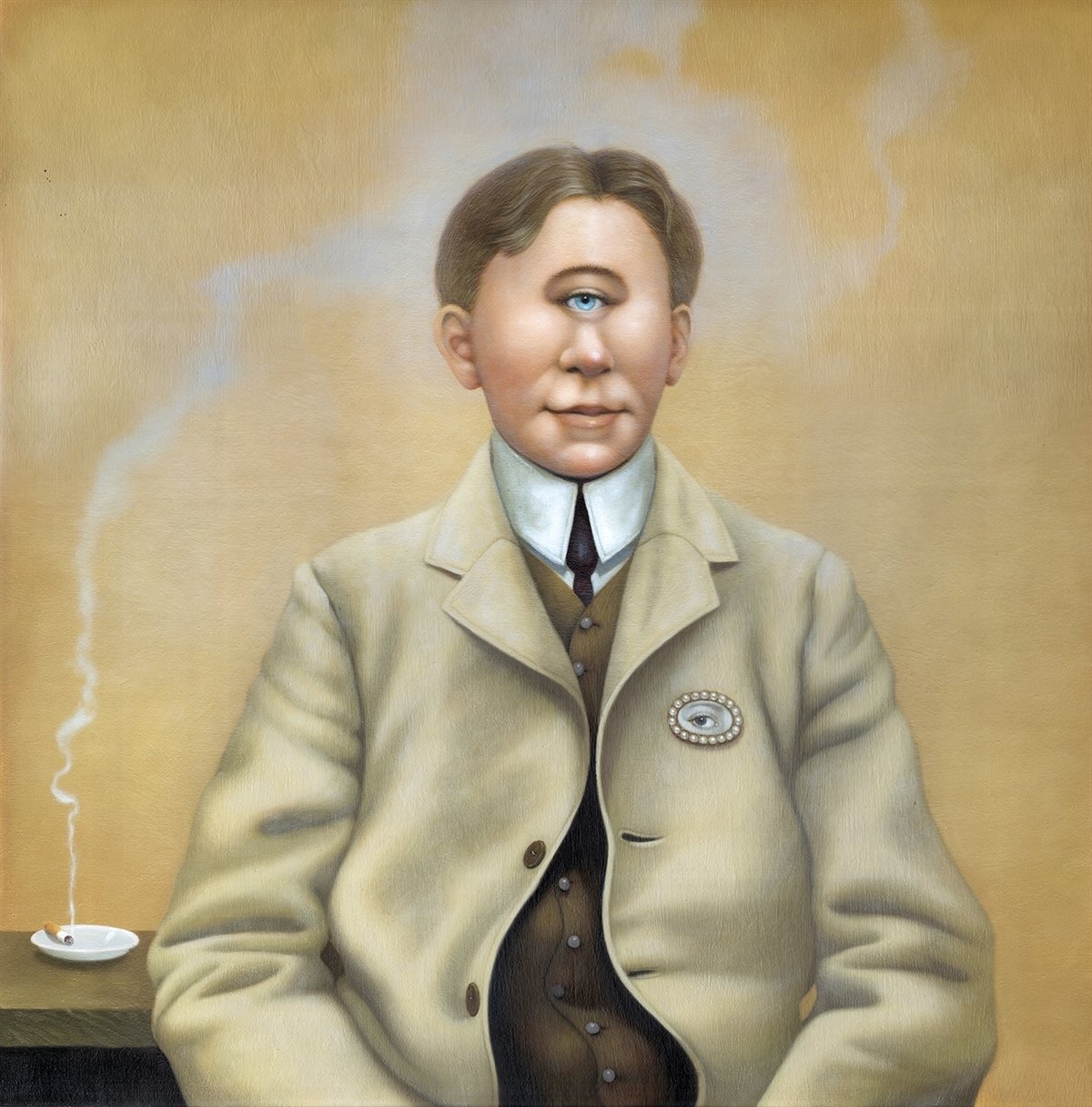
King Crimson czar Robert Fripp has long treated his music as a crown jewel something so precious, it can only be sold in its original form, as a physical product. Until a few years ago, Fripp wouldn’t allow any of KingCrimson’s recordings to be bought on iTunes and, even then, he made only a limited number of their albums available. He had an even stricter attitude towards streaming. He wouldn’t let a single song be experienced in that form.
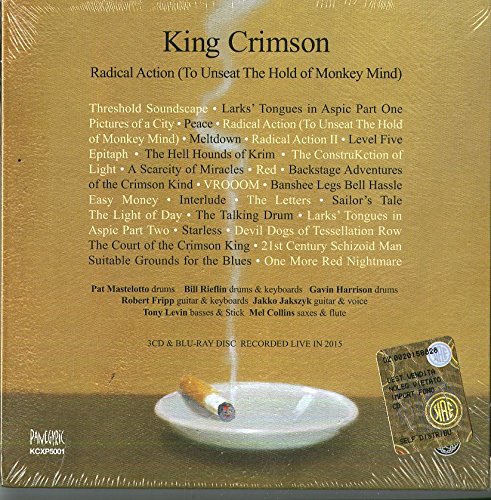
But now, his policy has changed—or at least amended. in June, the latest King Crimson releases showed up on the major streaming services, in the process easing what had been one of the longest hold-outs by a major artist in the most popular current form of music consumption. Fripp only granted permission for two releases to stream, and both are live works released in the last year. Luckily, nearly every song on them comes from deep within Crimson’s canon, including many of the band’s most desired pieces. The music features dazzling fidelity, as well as smart interpretations from Fripp’s latest erudite incarnation of the band. The band’s line-up includes early Crimson member Mel Collins (sax/flute), longtime ally Tony Levin (bass), plus second guitarist/singer Jakko Jakszyk, augmented by three , Yes three drummers. Together, they deliver over three hours of music, contained in sets titled and . No fewer than 14 of the streamable songs come from Crimson’s prime era—’69-’74—plucked from the seven impeccable albums released during that period.
The song, which kicked off the band’s debut album, In The Court Of the Crimson King gave fans a shudder, and a thrill, when it appeared in October of 1969. The full ‘Court’ album is considered by some to be the most influential prog-rock work ever released, but that’s too confining, and loaded, a tag for such a set. “Schizoid” alone combines heavy metal, proto-industrial music, classical influences, jazz, and sheer noise to create something that still sounds startlingly new nearly half a century after its release.
The new take on “Schizoid,” recorded live in Japan, has its own tough textures and alarming dynamics. They’re informed by the use of two guitars, manned by Jakszyk and Fripp, who interlock seamlessly on the serrated riff that slashes through the vocal, and the burning solos that whip out of the chorus. Jakszyk also sings the song and, while his voice lacks the authority of the original recording of frontman Greg Lake, he channels more than enough of the cut’s essential menace. “Schizoid,” the sole piece that has never left Crimson’s live set, finds fresh appeal in this version through two elements. First: a long sax extension from Collins that runs from cool jazz to hot dissonance. Secondly a nearly three minute solo break from the drum trio. Instead of simply pounding away, the players use crystalline cymbals, tribal tom-toms and a wide range of percussion devices to give the rhythm an orchestral richness. The cataclysmic result not only sounds like the end of the world but also like the start of a new one.
The title track from Crimson’s debut hinges on what could be the best-known mellotron riff in modern music. Certainly, it’s the loveliest. In contrast to the hell of “Schizoid,” has a hallowed elegance. The version here, more terse than the original, retains the unique drum patterns created by original stick man Mike Giles, but given a newly holistic reach through the percussion trio. An elegant flute solo from Collins greatly extends the original filigrees Ian McDonald forged in ’69. It’s echoed by Tony Levin’s bass line, which lends the song a new sensitivity amid the dystopian overtones.
One of the most beautiful tunes Fripp ever penned provides a respite amid this often harrowing set. Then again, the song’s lyrics couldn’t be more discouraging. The live version draws special empathy from the sax, shading the mournful mellotron.
In the wake of their well-received debut, Crimson suffered a potentially lethal blow. Three of its four members left, including Greg Lake (who ran away with Keith Emerson to form ELP) and McDonald and Giles (who departed to record a lovely joint album). Luckily for leader Fripp, two key players—Lake and Giles—agreed to appear as guests on the second Crimson album, “In the Wake Of Poseidon”, released in May of 1970. Meanwhile, Collins stepped in to replace McDonald, adding a jazzy new energy. Unsurprisingly, the album often sounds like a retread of ‘Court’, though it does boast its own distinctions. The tranquil interlude appears in three different guises on the album, providing the disc’s connective tissue. In the new version, Jakszyk sings the first verse in Japanese, both to acknowledge the setting of the concert and to embody the theme of cooperation in the lyrics. The delicate new take offers a serene set-up for the severity that follows.
In many ways Pictures functions as a sequel to “Schizoid.” Both tracks boast a similarly snaking riff, a ruthless, stop-start mid-section, as well an overall dedication to darkness. This time, however, the riff has more sleazy swagger. While Levin’s harrowing bass envelops the bottom of the song, there’s a free jazz play to Collin’s mid-section solo. Better, the two guitars ricochet off each other, intensifying the song’s harsh resonance.
Sadly, the new set features no material from Crimson’s third album, Lizard, which appeared at the tail end of 1970. Happily, two pieces appear from the band’s inventive follow-up, Islands, issued one year later. Much took place in Crimson-land between the two albums. Each featured a different line-up, excepting Collins and Fripp. While ‘Lizard’ stands as the most avant-garde, and amorphous, of the band’s early works, ‘Islands’ hardly lacked for daring or variety. “The Letter”, which appeared on ‘Islands’, infuses a hushed ballad with two metal-jazz freak-outs. Pete Sinfield’s lyric tells the morbid tale of a woman who has a relationship with a married man, which she reveals to the wife in a letter. The live version lets Collins expand on his original sax break-down, enabled by more-frantic-than-ever guitar stabs from Fripp and Jakszyk. The violent sections in the music mirror the reaction of the wife who, in the end, sends back a letter of her own: a suicide note.
One of Crimson’s most energetic jazz forays opens with a fierce bass line and tantalizing cymbal work. Together, they spur a meeting between Fripp’s quavering guitar and Collins‘ glistening sax. The mid-section centers on an eruptive fusion solo from Collins. Later, Levin’s walking bass line sets-up a Fripp riff that sounds like a buzz saw cutting through your skull, culminating in mellotron work that suggests the remains of a city after it’s been carpet bombed. They did another total tear-down on their sound, surrounding main member Fripp with entirely different musicians. Only this album featured the eccentric percussionist Jamie Muir, who played gamely off the band’s brilliant new drummer, Bill Bruford, whom Fripp had just poached from Yes. The swishes and clicks created by Muir, which open the song, provide an ideal showcase for the new album’s drum trio. Together, they set-up a guitar assault that sounds like a swarm of bees darkening the sky with murderous intent. The double guitar attack in the new version amplifies the threat, exploding with charging riffs and soaring solos. It’s incredible how many parts make up this piece. The guitars keep morphing, as does the beat, along the way embracing music from Africa, Eastern Europe and Britain, with injections from the world of musique concrete along the way. Levin’s bass plays a thrillingly disruptive role, while Collins subs his fluid flute for the violin parts provided in the original by David Cross. However chilling sections of Larks Tongue may be, the piece resolves in a melody that shimmers.
Despite its title, The Talking Drum anchors on the bass. Levin’s instrument seems to stalk the song, repeating a maddening line that gallops under a grinding sax solo. It’s a similar dynamic to the one that fired “Sailor’s Tale,” but with its own sense of urgency. Levin’s bass has the focus of funk but the feel of threat.
The second part of “Lark’s Tongues In Aspic (Part II)” contained on the 1973 album of the same name, hits even harder than the first. Bass lines scurry, beats brutalize, while a heavy-ass guitar slashes and burns. It’s a scourge as much as a song, a brutalist symphony in hell.
On Easy Money Jakszyk does an incredible job of mimicking the timbre of the song’s original singer, JohnWetton. But the herky-jerky guitars that surround him in the new take have their own sense of disquiet, and the newly added sound effects convey an original whimsey. Fripp’s lunar guitar finds yet another fresh texture while the mellotron lurks in the background like a predator circling its prey.
While the new set lacks any tracks from the band’s tumultuous 1974 album, “Starless and bible Black”, it does feature a run at a like-named track which first appeared on the “Red” album, released six months later. The song’s first half boasts one of Crimson’s most beautiful melodies, which Collins extends through his ruminative sax lines. The second half of the track uses Levin’s anticipatory bass, the percussionists’ pithy asides and metronomic guitar notes to capture Crimson’s favorite state: panic.
“Red” The final album from King Crimson’s classic phase hardened the sound more than ever, suggesting a whole new form of art-metal. ‘Red’ focused on the core threesome of guitar-bass-drum, though Collins‘ colorful sax adds a brighter contrast to the new take. As many leavening as the sax provides, ultimately the track loses nothing in energy or punch.
“One More Red Nightmare” The percussionists sprawl all around Fripp’s architectural guitar in a third track included from ‘Red’. There’s a surprising catchiness to the melody. Even the song’s fierce instrumental section has a rapturous quality, aided by Collins‘ painterly sax. The ‘Red’ album so perfected Crimson’s mission that Fripp wound up putting the brand on ice afterwards, not to revive it for another seven years.
Along with the 14 tracks the new set includes from the classic era, it adds eight re-thought pieces covering material from incarnations of the band that popped up in the early ’80s, the mid-’90s and the early aughts. Highlights include “The Hell Hounds Of Krim” , and “Devil Dogs Of Tessellation Row” , which each give free reign to the percussion, and “The Construkction Of Light” , which finds Levin’s bass creepy-crawling around like a black widow spider. As the title suggests, the ‘Heroes’ EP features areverant take on the Bowie Classic, which includes one of Fripp’s most indelible leads. Best, though, is the title track of ‘Radical Action’, a new, 10 minute opus that proves the guys still have it.
The Band:
Mel Collins: Saxes & flute, Robert Fripp: Guitar & keyboards, Gavin Harrison: Drums, Jakko Jakszyk: Guitar & voice, Tony Levin: Basses & stick, Pat Mastelotto: Drums, Bill Rieflin: Drums & keyboards.
When Mariko Doi of Yuck and James Thomas of band The History of Apple Pie got together to form Parakeet, they sought to create a raucous, thrashing punk band. It turned out that they were better at coating their noise in more of an alt pop patina, however. That’s what put them on the map with 2012’s Shonen Hearts EP, an effort that gained them buzzing popularity abroad in Japan and their UK home. Two EPs later, they’ve continued to refine their sound — one that’s both unabashedly loud and sugary fun — and will unleash it in all of its glory on their debut LP, KASA, via Lunar Ruins.
Following lead single “Sugar Rush”, the duo has returned with a new track called “Summer Apathy”. As the title suggests, the track isn’t as lighthearted as the previous release, but the intricate guitar and bass work still manages to warm the cockles of your heart. With crunchy lines that point just slightly down at your shoes, the song encapsulates all the shine of a glorious summer day right alongside the too-cool sand of a lonely summer’s eve. Or, as the band puts it, “All the instruments are woven like a herringbone. It’s an ultimate heartbreak song.”
“KASA”, Parakeet’s first studio album has the pure spirit of D.I.Y. All the tracks were recorded, mixed and mastered at home in London.
Of Japanese origin, Mariko has named their album KASA after seeing the artwork by Noriko Okaku, a Japanese fine artist and an animator based in London. Mariko learned guitar when she was young and she came back to her roots this time after years of playing bass professionally. Her guitar, bass and vocal parts are well woven with each other. James‘ drum parts are tastefully played and solid. He has the policy of ‘No drum solos’.
Their initial 2 piece, drums and bass approach has not changed. All the tracks make sense with drums and bass as Mariko is conscious of her bass parts not just playing root notes. Mariko’s lyrics are heavily influenced by modern Japanese literature and existentialism. She likes to project a vivid picture of her story as if you are in it.
Welcome to the artists of Alcopop! Records, a UK based independent label born from – and dedicated to – the finest indie pop the world has to offer! Have a listen to our wares, If life gives you lemons… Make Alcopop! Founded in Oxford with strong faces and hearts to match, Alcopop! is the record label home to some of the finest independent music there is. Forged with heart, soul and melody and purveyors of countless talented humans with songs to die for, come join us for hits
With new record Bloody Lovely set to be released on Feb 2nd, DZ Deathrays are driving up a new avenue, exploring a “swagger-rock” sound that’s bigger and nastier than ever before.
The video for Total Meltdown saw you turning into three dimensional versions of yourself in an eerie, alternate reality,frontman Shane says about the song:
The song was written in two parts, originally when we were doing Blood On My Leather I had the riffs of Total Meltdown and I couldn’t finish any vocals for it. And I sort of had a mind meltdown after being under pressure in the studio so I wrote the verses about that, about having a mini meltdown but it’s not really that serious.
The chorus was then written maybe two weeks before we went into the studio, I had written six choruses for that song and was just screaming things into the microphone. So that’s why the chorus and verses don’t have any connection at all. It’s a big dumb rock song.
The upcoming record Bloody Lovely, had a more conscious decision to drop the dance beats from before. We just want this record to have more of a live feeling and a swagger-rock, poppy sound. It took us so long to write it but now its been done for a year I’ve forgotten how different it is from the rest of them. It’s a bit bigger and nastier and I think the songs are a bit more pop.
Los Angeles based singer songwriter Jesse Jo Stark releases the new video for Deadly Doll. Combining vintage horror with rockabilly, the sensual crooner is turning heads. The latest track was produced by Jason Lytle (Grandaddy, Band of Horses) and co-written with Chris Garcia (Lana Del Rey, Demi Lovato). Moreover, she kicked off the new year opening for Jane’s Addiction at Belly Up in LA.
Vocals: Jesse Jo Stark Guitar: Thomas Hunter Guitar, Keys & Theremin: Kirk Hellie Bass Guitar: JulioTavarez Keys: Nick White & Kirk Hellie Drums & Percussion: Dan Gluszak Strings: Paul Cartwright, Artyom Manukyan, Marta Sofia Honer