Owen Ashworth’s albums have always been about the human condition, and his latest is no exception. That may sound strange, given that it’s called “Animal Companionship“, but it’s as human as anything he’s done before.
After hearing problems forced the end of his electronic pop project Casiotone for the Painfully Alone in 2010, Ashworth started making quieter music as Advance Base, releasing A Shut-In’s Prayer in 2012, Nephew In The Wild in 2015 and a slew of tapes and 7” EPs in between. After releasing a 2016 live album, In Bloomington, the prodigious songwriter shifted his focus to his label, Orindal Records, and put his efforts into helping other artists release their music.
This break from songwriting gave him time to explore not just how he makes music, but why he’s driven to do so. “I spent a lot of time thinking about why I write songs and what I get out of writing songs,” he said. “It took a while to get back to writing for myself, unselfconsciously.
“The reason I’ve always made music is because it’s therapeutic for me,” he said. “It’s a way of processing my feelings and understanding my subconscious. I love the ritual of writing a song and performing it over and over again until its meaning reveals itself. It’s the closest I get to meditation.”
The meditative nature of Ashworth’s new songwriting process can be heard in Animal Companionship’s spacious arrangements. Blissful drones and lush synthesizer textures envelop soft electric piano arpeggiations and spare drum programming, creating an almost hypnotic backdrop for Ashworth’s lyrical narratives. And the lyrics themselves have found a new focus: dogs.
“There was a while last year when a bunch of different friends of mine were having problems with their dogs,” said Ashworth, “and even though I don’t have a dog, suddenly I was giving all of this dog advice. I was just thinking and worrying about these friends and their dogs all of the time, and dogs just started showing up in my songs.
“When you explain the relationship you have with a pet, it can sound crazy. We all tend to anthropomorphize the animals we love, talking about them as if they’re children, siblings, even spouses,” said Ashworth. “I wrote these songs to help myself understand what pets mean to their owners, how those animal relationships affect our human relationships, and vice versa.”
Unlike the previous Advance Base albums, which were made at home on Ashworth’s trusty 4-track tape machine, Animal Companionship was mostly recorded at Palmetto Studios in Los Angeles with Ashworth’s old friend and former Casiotone for the Painfully Alone collaborator Jason Quever. Animal Companionship still sounds like Ashworth, but Quever’s production adds more depth and clarity than you’ve ever heard from an Advance Base or Casiotone album. The album opener, “True Love Death Dream,” is full of warm synthesizer textures and lush drum machine tones, the kind that sink deep into your soul and take root there. It shows how much time and consideration Ashworth put into Animal Companionship, and how Quever knew exactly how to capture it.
From the pedal steel atmospherics of “Dolores & Kimberly” to the densely layered oscillations of “Rabbits,” every movement beautifully frames each song’s narrative. Animal Companionship’s production is expansive but always deliberate, allowing Ashworth to speak volumes through subtle, emotional gestures.
Taken as a whole, Animal Companionship is not just a step forward for Advance Base—it’s the culmination of everything Ashworth has been building for the past two decades. It’s a record that’s gentle in approach and endearing in practice, the kind of thing that only Ashworth could create.
“Dolores & Kimberly” by Advance Base off the album Animal Companionship out September 21st, 2018 on Run For Cover Records
This is the recording project of Aaron Powell from Newfoundland, Canada. this band display a unique sound and songwriting that makes this a pleasure to me. Aaron Powell (Born 1993) is better known by his lo-fi singer songwriter moniker Fog Lake where he creates music that’s been best described as “a complex collage of nebulous angst and heartfelt nostalgia” .
Born and raised on the island province of Newfoundland, he’s lived his life in relative isolation writing and recording a total of six releases in four years including his two most current LP’s Virgo Indigo (2014) & Victoria Park (2015) both being released by Brooklyn based tape label Orchid Tapes (Foxes In Fiction, Alex G, Teen Suicide).
Aaron’s relentless and prolific approach has garnered worldwide critical acclaim receiving coverage on The FADER, DIY Magazine, Noisey, Tiny Mixtapes, The 405, BBC, CBC, Earmilk, Chart Attack, Exclaim! and many others. His unrelenting approach to releasing music has lead to an ever-increasing cult following, seeing FogLake featured by the likes of renowned YouTube channel, Majestic Casual for the second time where it has racking up over 400,000 plays. In addition, tastemaker blog Gorilla Vs Bear has named his single ‘Rattlesnake’ one of the Top-25 Tracks of 2016.
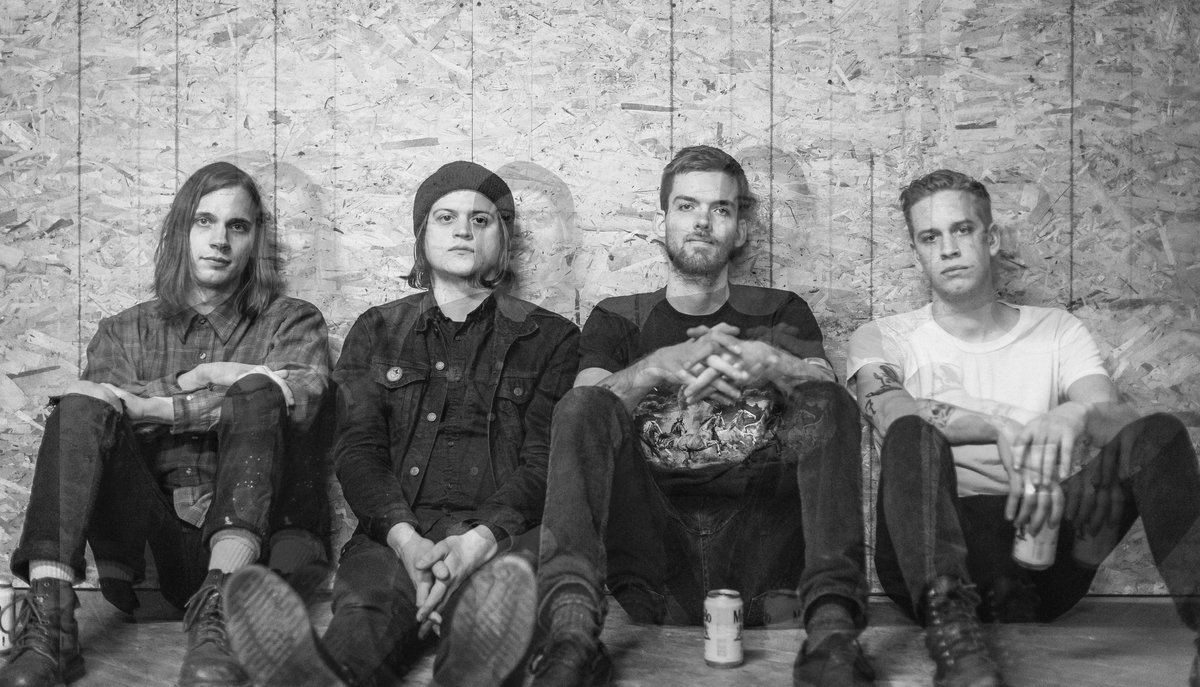
Heaters are back! And on this, their fourth LP in as many years, we find their sound has aged like a fine wine. The evolution of Heaters over those 4 years has been a thrill to hear, from the original sonic maelstrom of three young men to a seasoned 4-piece unit totally finding its groove and its voice the further it ventures on. It’s also true that Heaters have grown exactly 4 years over that time, which is quite substantial when you’re talking about dudes in their twenties. “Suspended Youth” is the first album where Heaters lived in two different places, GrandRapids and Montreal, and couldn’t just come up with songs while hanging together in their GR jam space. This time, ideas were cultivated in separate places and then stitched together when Nolan (Krebs) would fly to Grand Rapids to record in guitarist Ben Taber’s studio. Nolan says it was a longer process, but ultimately just as rewarding.
“Suspended Youth”: is it a full dissolution of youth, or youth put on the back burner till we’re old enough to appreciate it, or is it the actual physical suspension of youth? Youth levitating, if you will. Many of the songs have an overarching theme addressing the march of time and getting older, and valuing peace as much as chaos, the yin and yang that is life; something that comes through in the overall sound, too. You have never heard a Heaters quite as balanced as on “Suspended Youth”; balancing their whirlwind sonic rave-ups with steady motorik lock-ins. For example, marvel at Nolan on bass and Josh (Korf) on drums completely in swingin’ robots mode on the last 3 minutes of ‘Venus,’ a track full of texture and synth vs. guitar compositions from Ben and multi-instrumentalist Ryan Hagan. Never have you heard Heaters vocals as clear as they are here (dig ‘Lysander’ and ‘Monolith’), harmonies so dreamy (hear Nolan and Ben on ‘Highwind’ and ‘Dandelion’), and melodies so beautiful throughout. And Heaters are no strangers to bringing the bizarre vibes, just check out the closing 11 and a half minutes of the album, ‘Nova Prime’ and ‘Lunar Creep.’
At the core of Death Valley Girls, vocalist/multi-instrumentalist Bonnie Bloomgarden and guitarist LarrySchemel channel a modern spin on Fun House’s sonic exorcisms, ZZ Top’s desert-blasted riffage, and Sabbath’s occult menace. On their third album Darkness Rains, Death Valley Girls churn out the hypercharged scuzzy rock every generation yearns for, but there is a more subversive force percolating beneath the surface that imbues the band with an exhilarating cosmic energy.
Death Valley Girls ‘Darkness Rains’ out October 5th, 2018
Beyond-beyond excited to present to you “Disaster (Is What We’re After)” from our new record, DarknessRains, out October 5th on Suicide Squeeze Records. Video starring Iggy Pop and directed by Kansas Bowling,
The Kansas Bowling-directed clip is a direct homage to a scene in Danish filmmaker Jørgen Leth’s 1982 film, 66 Scenes of America, in which Andy Warhol eats a hamburger. Iggy Pop of course puts his own spin on the simple activity, nodding along to Death Valley Girls’ infectious rocker and even taking a healthy, low-carb approach halfway through when he discards one of the buns.
“We’re strong believers in opti-mysticism and connecting with people through rock n’ roll,” Death Valley Girls said of the video. “Having Iggy dig our music was more than amazing for us. When [director] Kansas told us she had a dream about recreating the ‘Andy Warhol Eating a Hamburger’ short film but with Iggy starring for our music video, we were cautiously excited about the possibility. Next thing we know we’re in Miami with Iggy himself, and a rock n’ roll dream became reality!”
Album opener “More Dead” is a rousing wake up call, with a hypnotic guitar riff and an intoxicating blown-out solo underscoring Bloomgarden’s proclamation that you’re “more dead than alive.” The pace builds with “(One Less Thing) Before I Die”, a distillate of Detroit’s proto-punk sound. At track three, Death Valley Girls hit their stride with “Disaster (Is What We’re After)”, a rager that takes the most boisterous moments off Exile On Main Street and injects it with Zeppelin’s devil’s-note blues. Darkness Rains retains its intoxicating convocations across ten tracks, climaxing with the hypnotic guitar drones and cult-like chants of “TV In Jail On Mars”.
Katie Ellen’s debut album, 2017’s Cowgirl Blues, saw frontwoman Anika Pyle kicking against the traditions and norms that come with adulthood—namely, love, major life changes, cohabitation, and domesticity. She penned the anti-marriage anthem with “Sad Girls Club,” a standout track that featured the defiant heartbreaker of a chorus: “Sad girls don’t make good wives.” On the Philly band’s new, five-song EP, Still Life, Pyle is still trying to wrap her head around these things.
On opener “Lighthouse,” Pyle reckons with warring thoughts—wanting to be brave enough to swim into life’s uncharted deep end, but feeling tied down by the anchor of fear and anxiety. Later, on the EP’s title track, she surrenders to the idea that love is more powerful and wild than our capacity to tame it: “You can’t make love stay / Do your best to hold it in place.”
Musically, Pyle flexes a few new tricks she’s trying out, like on “Still Life,” where her voice spirals into borderline operatic delivery, a far jump from the quick and dirty style she cut her teeth on in her former pop punk project Chumped.
Toronto Canadian band Great Lake Swimmers have established their alluring sound through a combination of low-lit ambiance and celestial soundscapes, essential ingredients that have helped lend an atmospheric element to their wholly mellow musings. For their latest opus, titled The Waves, The Wake, these Juno Prize contenders operating under the leadership of chief helmsman Tony Dekker opted to take things down even further in terms of their unobtrusive settings.
The object was to record the album absent one of a key instrument: acoustic guitar. Presumably that means someone was on furlough, but as evidenced by the results, that timbre was barely missed at all. The band still manage to ply their lovely, if elusive, melodies, and if specific tracks—“The Talking Wind,”“In a Certain Light” and “Falling Apart”in particular
“The Talking Wind,” seems especially hushed, it’s merely an outgrowth of their usual unassuming approach. When asked about the new song, Dekker replied, “’Alone But Not Alone’ is a straighter shooter than some of the other tracks on the new album, with a little more of a familiar 12-string jangle, and it’s sort of a bridge back across our fifteen-year, seven-album catalogue. We set out to make a breezy, 1960’s AM radio inspired kind of thing, with a few twists and turns, because it seemed to be what the song was asking for, in the midst of experimenting with sounds for some of the other new songs. As for the lyrics, sometimes it can be easy to find yourself in a crowded place but still feel utterly alone. This song is a reflection on that sense of suffocating connectedness while still feeling disconnected at the same time. In the end it’s a pretty lonely place, but there’s a resolve to keep an open heart and mind.”
The shimmer that illuminate such songs as “Mouth of Flames” and “The Open Sea” are contrasted, albeit briefly, in the upbeat tick of “Alone But Not Alone” and the quiet insistence of “Side Effects,” but it’s the acapella “Visions of a Distant World” that best defines the effort overall. The album was recorded in the 145 year-old Bishop Cronyn Memorial Church in London, Ontario, and given the environs, it gives some indication as to the sedate, worshipful nature of the songs.
While some may tend to interpret those twilight tones as a slumber fest, the overall beauty of The Waves further illuminates its charms. The delicate pluck of strings that resonates throughout “Holding Nothing Back” and “Unmaking the Bed” simulates the sound of a lullaby while underscoring melodies that are both elusive and surreal. Granted, it’s hardly the kind of thing one would play for guests at a wild party or as the prelude to a night out, but it resonates all the same. The Waves, The Wake is simply an extension of Great Lake Swimmers’ ongoing instincts, and in that regard, it finds them following through to until they realize those very last strokes.
Amber Arcades brand new single ‘Where Do You Go’ is out today, accompanied by the final part of the ‘European Heartbreak’ Trilogy.
A beautiful film written & directed by Eliott Arndt.
Annelotte says the following about the third single ‘Where Did You Go’:
“This song is about the irrational nature of love. You need to keep telling yourself you believe in it in order for it to exist at all. On the other hand, maybe it’s a cool thing because of that. If it were more “real” it would just be another “thing” you can choose, like a brand of peanut butter. And I’m not so sure about whether always being able to choose all the things makes us better or happier in the end.
These Films by Amber Arcades – Part 1 of 3 Music – Goodnight Europe Director – Elliott Arndt “A lot of the themes Annelotte de Graaf has written about for her record struck very close to home. What I found especially poignant in her lyrics is how it’s mostly through a study of herself and a nonchalant look outside her window that Annelotte makes us get a sense of the political turmoil that’s affecting her. In that respect, I was interested in trying to represent this sense of “banality” in a young adult couple in 2018, who are not only the fruit of a vibrant European Union, but also perhaps the ones most directly affected by its dismantling. I wanted to depict a static, homesick, glitchy romance. And here it is, trying all it can to grow against, amongst and beyond the constricting geographical barriers surrounding it.”
Music video by Amber Arcades performing Simple Song. Heavenly Recordings
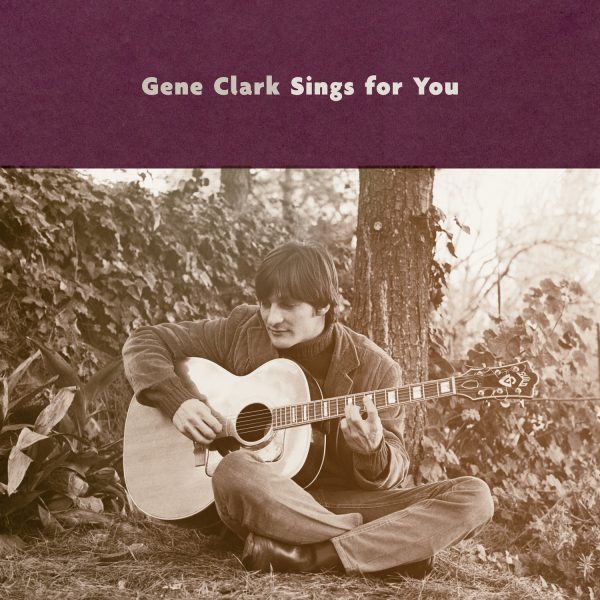
Though he’s been and continues to be the subject of numerous reissues and releases, Gene Clark still remains somewhat of an enigma. The founding member of The Byrds (1944-1991) only released six solo studio albums within his too-short lifetime, bolstering a discography also containing group and collaborative efforts. But he left behind what seems like scores of unreleased tracks, much of which has been mined in the years since his death. In 2013, the Omnivore label issued his demos for the A&M album White Light, and now the label has tackled the holy grail of Clark’s demos – a 1967 acetate entitled Gene Clark Sings for You. An expanded edition of the original acetate has been joined on CD by A Trip Through the Garden from The Rose Garden, a group which enjoyed Clark’s support and patronage.
The eight recordings on the original Gene Clark Sings for You were recorded near the end of 1967 at West Hollywood’s Larrabee Studios and the venerable Gold Star Studios. Clark, accompanying himself on guitar, was joined by simple instrumentation including calliope, Chamberlin strings (a keyboard device similar to the mellotron) and electric piano. Alex del Zoppo of Sweetwater played the piano, though the other musicians’ identities remain a mystery. One track boasts strings, leading to speculation that it may have come from an earlier session led by Leon Russell as arranger-conductor. All of the songs reveal a young, talented singer-songwriter at the crossroads, with plenty of talent and ambition but perhaps lacking a clear vision as to how to best deploy those gifts. The result is a set of original songs in the best sense of the word, even if they may not have been commercial enough to attract an interested label. It’s also worth noting that Clark never released any of these songs, a testament to his prolific nature as a songwriter.
The Dylan influence so evident in The Byrds’ recordings is also clear on “Past Tense,” though Clark’s own evocative poetic sensibility comes into its own with “Past My Door.” Eschewing the expected, Clark also employed a tempo shift midway through. Violins – perhaps arranged by Leon Russell – appear on “That’s Alright by Me,” adding a note of elegance to the folk-rock track.
Clark conjured San Francisco on many of these demos including “On Her Own,” about a beguiling girl he found there, and the mournful “Down on the Pier” (featuring atmospheric, ironic calliope). The similarly doleful “Yesterday, Am I Right” (previously recorded for Hugh Masekela’s Chisa label but unissued) features Clark’s drawl at its most vulnerable. Clark’s well-documented country leanings come to the fore on one track alone: the twangy, laconic “7:30 Mode,” on which he adds harmonica and is accompanied by an unknown guitarist.
This first-time commercial release of Gene Clark Sings for You is bolstered with an additional six tracks intended for The Rose Garden – a five-song acetate and one more demo. The troubadour first encountered the band at the Ash Grove, joining them onstage for a set of Byrds tunes. The awestruck band were thrilled to work with, and receive songs from, their hero. The acoustic tracks on the acetate (which has never been heard outside of band circles) include the Dylan-ish “On Tenth Street,” the upbeat love song “Understand Me Too,” and the moving “A Long Time,” which The Rose Garden opted to cover on the band’s sole album. Two full-band performances were also presented to The Rose Garden: the blues-rocking “Big City Girl” (complete with wailing harmonica) and “Doctor, Doctor,” the most produced and Byrds-esque track on the acetate with double-tracked vocals and harmonies. “Till Today,” also recorded by The Rose Garden, is included here in a Clark demo.
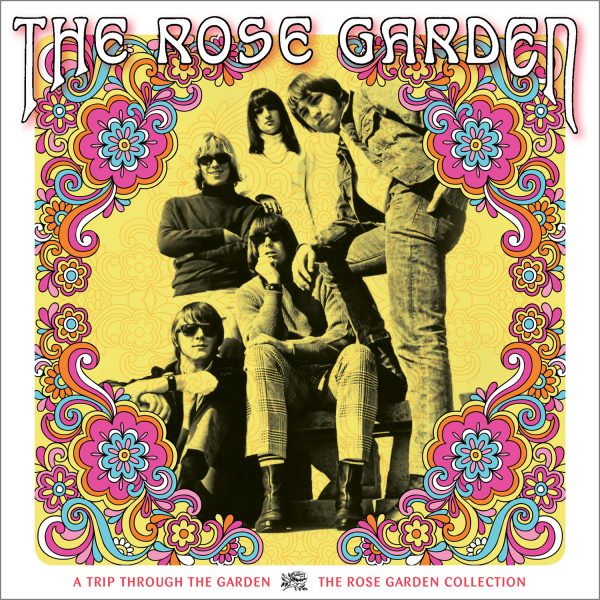
The Rose Garden is the subject of A Trip Through the Garden, the first-ever anthology dedicated to the band. And what an anthology it is, appending 16 tracks (14 previously unreleased) to the group’s lone 1968 album. The band is, of course, best remembered today for the opening track of that LP, “Next Plane to London.” The top 20 hit still gets airplay today, and earned The Rose Garden the “one-hit wonder” tag. But as with most artists given that moniker, there was more to the group than just that one tune.
The Los Angeles-area band (John Noreen, Jim Groshong, BruceBowdin, and Bill Fleming) was enamored with The Byrds, which made it all the more fortuitous when Clark dropped into their set the Ash Grove. (They went by The Blokes at that time.) With the addition of singer Diana De Rose, The Blokes gained a gal and rechristened themselves The Rose Garden (a play on their newest addition’s surname.) A showcase at hot spot Gazzarri’s on the Sunset Strip landed the still-underage band a deal with Buffalo Springfield managers Charles Greene and Brian Stone. They got The Rose Garden signed with the Springfield’s label, Atco, and set about producing their first album.
The Rose Garden is an amiable folk-rock effort with heavy pop leanings and a solid dose of Byrds-esque chime (courtesy of Noreen’s Rickenbacker) and sparkling harmonies. Notably, while emphasizing vocals over instrumentation in Greene and Stone’s production, the band played on the record as a self-contained unit, without any intervention from the Wrecking Crew or other studio aces. The liner notes reveal that the album’s repertoire was selected from songs picked by Greene and Stone as well as the band members. (Only one track is credited to the band: “Flower Town,” a flower-power adaptation of the folk ballad “Portland Town.”)
In addition to Kenny O’Dell’s obviously catchy “Next Plane to London,” featuring Diana’s enjoyably burnished vocals, The Rose Garden offered a trio of songs by future Redbone founder Pat Vegas: the slow “I’m Only Second” (which somewhat recalls “You’ve Got to Hide Your Love Away”), the bright Byrds-meets-Mamas-and-the-Papas confection “February Sunshine,” and the jangly “Coins of Fun” with strong duet vocals from Diana and Jim. (The latter isn’t as trippy as its title would indicate, though.) The group’s lustrous harmonies were also in evidence on the folk adaptation “Rider.” An attractive cover of the Bob Dylan ballad “She Belongs to Me” led by Groshong joined Clark’s “Till Today” (slightly evoking The Fortunes’ “You’ve Got Your Troubles” in the band arrangement) and “Long Time,” which gained a Motown-style bassline. Bob Johnston and Wes Farrell penned the exquisite, soft ballad “Look What You’ve Done.”
Omnivore’s expanded edition now has a running time of nearly 80 minutes, with an impressive array of bonus tracks. Kenny O’Dell’s gorgeous “If My World Falls Through” was backed with the uptempo “Here’s Today,” co-written by John Noreen for a follow-up, non-LP single. The B-side is a surprisingly commercial track that could have held its own as a A-side. These are heard in both mono and stereo versions. They’re joined by tracks for a proposed second album that was never completed, including a take of Neil Young’s “Down to the Wire” performed by Young, Stephen Stills, and Mac (Dr. John) Rebennack. The crunchy backing track was presented to the band by Greene and Stone due to their Buffalo Springfield connection. The illustrious triumvirate of Bob Crewe, Al Kooper, and Irwin Levine supplied “The World Is a Great Big Playground,” which is charming but falls short of the team’s other accomplishments.
Of interest to Gene Clark fans will be two additional appearances of “Till Today”: a rehearsal with Clark himself, and an acetate alternate. Five live songs captured onstage at West Hills, California’s Chaminade High School round out the set: “Next Plane to London” and an array of covers not recorded in the studio by The Rose Garden including The Byrds’ “So You Want to Be a Rock ‘n’ Roll Star” and Clark-penned “She Don’t Care About Time,” Sonny and Cher’s “It’s the Little Things,” and Bo Diddley’s “You Don’t Love Me,” also by way of Sonny and Cher. The sound is better on these tracks than might be expected, and they offer a taste of what the band’s strong live sound.
John Einarson, author of Mr. Tambourine Man: The Life and Legacy of The Byrds’ Gene Clark, has penned the erudite liner notes for both releases, with the story of The Rose Garden proving particularly fascinating. Gene Clark Sings for You and A Trip Through the Garden are essential snapshots of the unparalleled creativity of the L.A. music scene in the late 1960s.
Both titles are available now:
Gene Clark, Sings for You
The Rose Garden, A Trip Through the Garden: The Rose Garden Collection
Untitled (LA) is the second taste from Swearin’s upcoming full length Fall into the Sun, is their first for five years.
It is another cracking track. Opening on the back of a great riff, the song sets off in a hurry and doesn’t look back – melodic, garage punk at its best.
From the album Fall into the Sun, out October 5th, 2018 on Merge Records.
Last month, Chan Marshall, aka Cat Power, teased the release of her 10th album with 80 seconds of scenic views and husky, hymn-like vocals. The visual featured a snippet of the album’s title track: Wanderer, out this fall via Domino Recordings, The release will break the artist’s six-year hiatus following the release of Sun.
Marshall has now shared the first single from Wanderer: “Woman,” featuring supporting vocals from her former tour-mate Lana Del Rey. It’s a pulsing Americana track, with thick vocals from Marshall intermingling with Del Rey’s whispery tones. The track is bolstered by a solid guitar riff that reflects hazy late nights and Marshall’s southern roots. The singers repeat “woman” over and over until it becomes an icy affirmation against the backdrop of a vast landscape. “I’m a woman of my word / Now you have heard / My word’s the only thing I truly need”—a testament to feminine power.
The song also comes with a video directed by Greg Hunt. It’s a simple visual, switching between shots of Marshall and her band on a rooftop at sunset, and in a studio with deeply saturated blues and pinks.
Wanderer was written, recorded and produced by Marshall herself, and it reflects the themes of rootlessness that come with being a touring musician. The album comes out on October. 5th, but you can watch the video for “Woman” below.
“Woman (feat. Lana Del Rey)” features on ‘Wanderer’, the new album from Cat Power, out 5th October on Domino Record Co.