Ian Sweet, the recording project of Jilian Medford, has announced a new album titled Crush Crusher, with a video for its lead single “Hiding.”
Of the song, Medford says “Hiding is a song I wrote for myself to be reminded to never get consumed with anything to the point of forgetting about my own needs. This song is a projection of a sanctuary in which I feel safe and strong in my own desires. It is something I long for, to be confident in the things that make me, me. The song opens with convincing myself that it is ok to hide/shy away from situations when really I should never have to convince myself of anything other than what, just…feels good. This is my admittance to losing and forgetting something to someone else, but demanding to take it back.”
Crush Crusher is due to be released October 26th on all formats.
Additionally, Ian Sweet has announced a Fall tour with Young Jesus that includes dates with Sean Henry.
Big Brother and the Holding Company were a band before the summer of 1967. They had gigs, fans and even a full-length record ready for release. But all that early history was eclipsed after they took the stage at the Monterey Pop Festival in June for a pair of performances that transformed Janis Joplin& her bandmates. from San Francisco scenesters to cultural giants. Joplin herself would describe the weekend as “one of the highest points of my life.” The lonely and misunderstood young woman from Texas proudly wrapped herself in her newfound fame a substitute for the love she was denied during her lonely and painful adolescence.
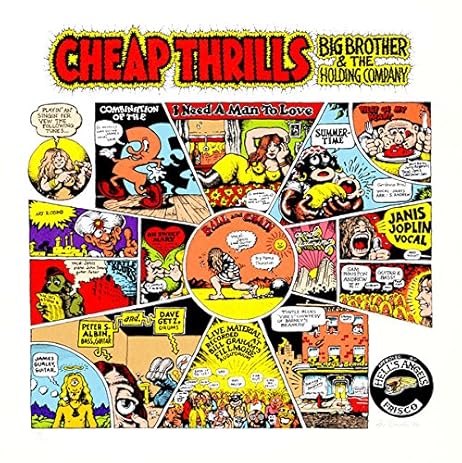
Monterey was a gold rush for the recording industry, and major labels flocked to stake out their claim. For Big Brother, their trajectory would become the quintessential overnight success gone awry. Within a year, the searing spotlight trained on Joplin would cause the band to come unglued. But during its brief big-league run, Big Brother assembled their first and only true artistic statement for a global audience. Issued on August 12th, 1968, Cheap Thrills is undeniably a masterpiece of the psychedelic age, a set of top-shelf electric soul. Yet it also reflects the commodification of the fading hippie dream.
Presented as a document culled from wild, spontaneous San Francisco nights, it was actually crafted in a studio run by one of the largest record manufacturers on the planet. To say Cheap Thrills is inauthentic would be false, but there’s a premature melancholy to the production, as though it were a Gatsby-esque exercise in re-creating good times that had already passed. Joplin’s mournful version of Gershwin’s “Summertime” seems only to underscore the shift in mood from the Summer of Love to the Summer of Violence that greeted the album. A week after its release, police would beat up demonstrators at Chicago’s Democratic National Convention. A month later, Joplin and Big Brother parted ways for good.
The album was supposed to be called Sex, Dope and Cheap Thrills, but Big Brother’s label nixed it. Even so, the rest of the record – produced by John Simon – defined the group with its vibrant blues-influenced rock ‘n’ roll. The breakout star was undoubtedly Joplin, one of the most dynamic singers of her generation who set the template for anyone standing behind a microphone. Just ask Robert Plant where he got part of his banshee wail.
Things kick off with the driving “Combination of the Two,” which boils over at times thanks to James Gurly’s blistering guitar. Joplin and guitarist Sam Andrew share vocals, but she ably steals the spotlight. The band’s celebrated cover of the Gershwins’ “Summertime” ranks as one of the finest takes on this often-covered standard. Joplin delivers a near-fragile performance while the swirling guitars provide a solid web surrounding. Gurly and Andrew’s fuzz-drenched solos in the middle of the song are electric-guitar poetry.
Side one ends with the band’s cover of Erma Franklin’s (Aretha’s sister) “Piece of My Heart,” which hit No. 12 and became the group’s signature song. Joplin’s soulful performance made her a star. “Turtle Blues,” on the other hand, is pure blues, with just acoustic guitar, piano and vocal steering it. The haunting rocker “Oh Sweet Mary” follows, slithering along with mighty fine guitar work anchoring one of the most blatantly psychedelic songs in Big Brother’s catalog.
It all leads up to the album’s tour de force, “Ball and Chain,” a highlight of the band’s live sets (including the career-making one at Monterey), Big Brother take on Big Mama Thornton’s song and turn it inside out, making it their own. Once again, vicious guitars weave in and out of Joplin’s fiery performance. The 10-second pause at the start of the song remains one of the most spine-chilling moments of the era.
Cheap Thrills – which wasn’t quite the live album it claimed to be, since studio recordings and overdubs make up a bulk of the tracks – was a huge hit, staying at No. 1 for eight weeks. Engineer Fred Catero remembered the sessions as being frustrating. “Janis always sounded good, take after take, But it was hard to get the band to play in tune and in time. They just weren’t very good musicians.” Even though they may not have been virtuosos, the members of Big Brother & the Holding Company gave Cheap Thrills a certain ragged glory. The album ended up being the band’s last album with Joplin, who left by the end of the year to launch a solo career.
Cheap Thrills is a showcase for the band at its best, stocked almost exclusively with its most beloved songs, including “Combination of the Two,”“Ball and Chain,” and “Piece of My Heart.” On the album’s 50th anniversary, here are 10 facts you might not know about its creation.
Joplin offered to sleep with Clive Davis to seal the deal on their CBS recording contract. Clive Davis had just begun his tenure as the head of CBS Records when he fell hard and fast for Big Brother and the Holding Company following their performance at Monterey. He wanted to sign them immediately, and the fact that they were already committed to the independent Mainstream Records imprint was of little concern. After some legal wrangling, and the appointment of impresario Albert Grossman as the band’s manager, Davis sent Mainstream packing with a check for $200,000. It was an audacious move for the relatively green label chief — only a year earlier, fellow San Franciscans the Jefferson Airplane made headlines for scoring an RCA advance worth just $25,000.
Cheap Thrills was originally intended to be a live album.
Big Brother and the Holding Company’s self-titled studio debut, issued in August 1967 on Mainstream, was decidedly lackluster. Joplin herself even dubbed it “our shitty record” and it sold accordingly, peaking only at Number 60. For their first major-label appearance, it was felt that a live album would be a better showcase for Big Brother’s abilities. “They had a reputation for inspiring a level of excitement in their audience that was as much a part of their show as their performance,” John Simon, the album’s producer, said in 2015. “In order to capitalize on that excitement they were eager to record a live album.”
They rented a remote recording console and recorded two shows at Detroit’s Grande Theater beginning on March 1st, 1968. Unfortunately, they hit a series of snags. Off the bat, the ear-splitting volume of their live performances pushed the recording meters permanently into the red. What’s more, the audience response was effectively nonexistent. “They’d never heard a woman sound like that,” engineer Fred Catero said in Alice Echols’ Joplin bio Scars of Sweet Paradise. “Every time she’d finish a song, people were just, like, ‘Huh?’ There was no reaction.” Even more troubling for Simon, the band’s “avalanche of energy” couldn’t mask the “mistakes a-plenty” that he heard. The producer decided to move sessions to a formal recording facility, Columbia’s Studio B in New York, where bum notes, wrong chords or fluffed lyrics could be remedied with surgical precision. But retreating to the studio presented another problem, albeit one of the nonmusical variety. “Word had already spread and already a live recording of Big Brother and the Holding Company was enthusiastically expected,” Simon recalled. “I didn’t want their fans to be disappointed.” So instead, they endeavored to make a studio album that sounded live.
Some of the faux-audience background noises were recorded at Barney’s Beanery, where Joplin would have her last meal.
Re-creating the excitement of a swirling San Franciscan psychedelic odyssey in an airless and sterile Midtown Manhattan recording facility would pose a challenge. The fundamental methods of studio tracking ran counter to the way the band preferred to make music. “Everything’s fairly isolated,” bassist Peter Albin observed in Scars of Sweet Paradise. “You have headphones on. The vocalist is in a soundproof vocal chamber. The drummer is baffled like crazy. . . . It’s a very non-together way of recording.” In the hopes of improving the overall vibe, a stage was assembled in the live room, complete with lowered curtains, a spotlight and even the band’s PA system. To enhance the effect on record, Simon created tape loops of fake audience reactions, with studio secretaries, engineers and assorted members of the group’s entourage enlisted as the crowd. “We gave them tambourines and whistles and stuff,” Catero told Echols, “and said, ‘Can you stand out here and whenever you feel like reacting just whoop and holler, shake your tambourines and blow your whistles?’ ”
While the album credits claim that the “live material” was taped at Bill Graham’s legendary Fillmore Auditorium in San Francisco, the sole concert recording — a nine-minute version of “Ball and Chain” with a new guitar solo tracked in the studio — was made at Graham’s other local stronghold, the Winterland Ballroom. “John [Simon] was good — he came up with a real concept for the album that worked,” drummer Dave Getz says in Echols’ book. “It created a picture for people who hadn’t been to the San Francisco ballrooms.” Even the intimate “Turtle Blues” was treated with ambient noise recorded at Barney’s Beanery, a bar on Hollywood’s Santa Monica Boulevard that was one of Joplin’s favorite watering holes. She dined there on the night of October 3rd, 1970, just before heading back to the Landmark Hotel, where she would inject a fatal dose of heroin after midnight
Erma Franklin didn’t recognize Joplin’s version of her song “Piece of My Heart.”
Three of the seven tracks on Cheap Thrills were covers that had been, in Peter Albin’s words, “Big Brotherized.” They include a revamp of “Summertime” and a minor-key reimagining of Big Mama Thornton’s“Ball and Chain” stretched out ad infinitum. But chief among these is “Piece of My Heart,” a tune that would become the band’s first and only Top 20 hit.
The song had been written by producer and Bang! Records founder Bert Berns and his collaborator Jerry Ragovoy. Berns initially passed it to Van Morrison, then signed to the Bang! roster, but Morrison declined. Instead the track was offered to Erma Franklin, Aretha’s elder sister, who had all but retired from music after issuing a string of unsuccessful singles earlier in the decade. By 1967, she was working as an administrator for IBM when Berns coaxed her back with his new composition. Originally arranged as an off-kilter calypso, “Piece of My Heart” was ultimately given a strident soul treatment that sent it to Number 62 on the Billboard charts. A full-length album was planned for Franklin, but Berns’ fatal heart attack on December 30th, 1967, threw the label into turmoil, and the follow-up never materialized.
The members of Big Brother and the Holding Company greatly admired “Piece of My Heart,” and came up with a psychedelicized version to fit their unique style. “We didn’t want to imitate Erma Franklin,” Albin later said. “Erma’s ‘Piece of My Heart’ had a delicacy and a sense of mystery that was just beyond us.” Big Brother’s rendition, with Joplin’s soulful wailing at the fore, would overshadow the original commercially, and become what many feel is the definitive version of the song. If having her song snatched bothered Franklin, she tried not to let it show in interviews. “To be honest, I never even recognized the song when I first heard Janis’ version on the car radio,” she told Blues & Soul in 1973. “Naturally, it would have been great to have gotten the exposure, airplay and sales that she got, but her version is so different from mine that I really don’t resent it too much.”
Clive Davis played Big Brother’s version of “Summertime” to Richard Rodgers. It didn’t go down too well.
Richard Rodgers dropped by Columbia’s New York headquarters one day in 1968 to have lunch with company bigwig Goddard Lieberson and discuss funding for his upcoming musical. As the Broadway icon waited, Davis reverently approached and introduced himself. Over the course of their brief conversation, Davis invited Rodgers into his office to hear an advance tape of Big Brother’s version of “Summertime.” He believed the older man would appreciate a fresh take on the Porgy and Bess chestnut.
Rodgers took a seat and Davis pressed play. “He listened without expression,” Davis writes in his memoir. “When the song ended, he didn’t say anything, which unnerved me.” Fearing that “Summertime” was a little too close to Rodgers’ theatrical wheelhouse for an unbiased response, he changed tactics altogether. “I decided to play ‘Piece of My Heart’ for him. Now, that was a mistake.” Within 90 seconds, the composer of Oklahoma!, The Sound of MusicandThe King and I asked him to turn the tape off. “He told me that not only did he not understand what he was hearing, but he could not understand why anyone would like it,” Davis continued. “As for Janis’ singing, it was impossible for him to imagine why anyone would think she was talented.” By this point Rodgers had worked himself into something approaching a tizzy, apparently telling Davis, “If this means I have to change my writing, or that the only way to write a Broadway musical is to write rock songs, then my career is over.” A flustered and quite embarrassed Davis quickly dropped the issue, accepting that Rodgers “simply couldn’t hear the new sounds.”
The album almost included a brief jam called “Harry,” and a version of the national anthem.
On some early printings of the Cheap Thrills cover, the words “HARRY KRISHNA! (D. GETZ)” are faintly visible underneath “ART: R. CRUMB” in the speech bubble emanating from a man wearing a turban. John Simon’s initial mix of the album was slated to include this brief track before label execs intervened, fearing that it was too ragged. A version of “Happy Birthday” was also reportedly elbowed by Columbia brass, but it was Simon who put the kibosh on another arrangement of an old standard. Guitarist Sam Andrews tried to sell the producer on a run-through of “The Star-Spangled Banner,” but the idea was quickly dismissed — much to his dismay. “A year or so later, Jimi Hendrix did an instrumental version,” he told author Ellis Amburn in Pearl: The Obsessions and Passions of Janis Joplin. “But how much more revolutionary would Janis’ singing of this song have been a year earlier?”
The original album cover featured the group naked in bed together. “I slept with all of them,” Joplin once said of her Big Brother brethren. “They’re like my family — I’ve balled ’em all.” So, on paper, the initial cover concept depicting the band mates tucked up together must have seemed like the perfect choice. But when they arrived at Columbia creative director Bob Cato’s New York set, they found an embarrassment to hippie crash pads: a Madison Avenue mélange of pinks, frills and swirling Peter Max prints. Joplin took one look and shrieked, “Let’s trash it, boys!” And trash it they did, tearing down the offending accouterments and replacing them with detritus from around the studio to get that true Haight-Ashbury edge. “Then we took off all our clothes, jumped in bed, and smiled for the camera,” Sam Andrews told Amburn. “It was a very merry morning.” In the photos taken that day, a carton of Marlboros, Joplin’s fifth of Southern Comfort, and a candle (apparently) for cooking heroin are all visible among the nude bodies. It was all too much for the label executives, who decided to scrap the idea. A cartoon by Zap Comix cult hero R. Crumb, originally destined for the back of the jacket, was used instead.
The label rejected the band’s preferred title: Sex, Dope and Cheap Thrills. The original cover wasn’t the only thing that was too hot for the record company. Columbia also balked at the band’s initial choice at a title, Sex, Dope and Cheap Thrills. Borrowed from the infamous anti-drug propaganda film Reefer Madness, the phrase had taken on special significance for Andrews. “We looked on it as an antidote to being overly serious about our music and what the movement was doing,” he said to Amburn. “It was a way of saying, ‘Lighten up!’ — of being tongue-in-cheek about the whole thing.” In an era when both the Mamas and the Papas and the Rolling Stones were barred from showing a toilet seat on their album covers, the use of “sex“ and “dope” in a title was deemed over the line, and the phrase was shortened simply to Cheap Thrills.
The album sold 500,000 copies before it was even finished, resulting in a rush release and a marathon 36-hour mixing session
Two weeks of sessions in New York that March resulted in only three completed songs, so Simon and the band decamped to Columbia’s Los Angeles studio in April to finish the album. Recording continued there for nearly a month, but work was still far from complete. Complicating matters was the fact that Simon’s perfectionist streak was seriously at odds with the band’s laid-back style. “Here’s this dude from Princeton with perfect pitch telling them that they’re playing their guitars out of tune, and telling her that she’s singing out of tune, and making them do a million takes,” fellow producer Elliot Mazer recalled to Echols. It was probably a relief to all concerned when Simon had to depart in June to honor his commitment to produce the Band’s second album. Now it was Mazer’s job to take Cheap Thrills across the finish line, and a sizable part of his duty was fending off antsy Columbia execs who wanted the project wrapped ASAP. Mazer was still in the midst of “trying to figure out how to put the second side together” when he got a phone call from Clive Davis informing him that the album, which didn’t technically exist yet, had already been certified gold for shipping 500,000 advance units. “That’s the last thing I’d ever want to say to a band trying to finish a record!” Mazer told Amburn.
As the pressure mounted, Joplin and Sam Andrews spent a marathon 36-hour session with engineers to mix the final record. “A day and a half with no sleep and very little to eat,” Andrews recalled. But the grueling sessions and long hours were worth it: “We felt like we had something. We thought there was a good chance it would be well received.”
Joplin announced she was leaving Big Brother and the Holding Company just weeks after the album was issued. The seeds of Joplin’s departure from Big Brother were sown before the band ever set foot in the studio to record Cheap Thrills. Albert Grossman and the rest of the new management team made their intent clear with press kits in which the guys in the group were effectively phantoms. Concert billings suddenly became “JanisJoplin with Big Brother and the Holding Company,” and Grossman kept turning up the heat behind the band’s back. “The first thing Albert told her was to get rid of Big Brother,” says musician and Joplin associate Nick Gravenites in Pearl. “He came at her with a record deal and said, ‘I can get you a quarter of a million dollars, but it’s strictly for you. The deal doesn’t include Big Brother. Think it over.’ ”
Joplin also faced mounting pressure from outside the band’s circle as 1968 progressed. “Once we left warm and cozy San Francisco, the critics attacked Big Brother because we were very limited musically,” Getz admitted to Echols. “Ultimately, that’s what split up the band.” The Los Angeles Free Press insisted that Joplin was “too full of soul for the Holding Company partners,” and Rolling Stone called the band’s Boston gig “messy and a general musical disgrace.” Joplin herself tried to laugh it off, freely admitting that they were “lousy musicians” in interviews but proclaiming that they were like family. Yet even she knew that in order to progress toward the horn-based soul sounds favored by her heroes like Etta James and Otis Redding, she had to go her own way. In mid-September, weeks after the release of Cheap Thrills, Grossman issued a press release announcing her “amicable” split with Big Brother and the Holding Company. They played their last show together on December 1st, 1968, in San Francisco. “It was a very sad thing, man,” Joplin told Rolling Stone’s David Dalton in 1970. “I love those guys more than anybody else in the whole world, they know that. But if I had any serious idea of myself as a musician, I had to leave.”
Big Brother and the Holding Company
Janis Joplin – vocals
Sam Andrew – lead guitar, bass, vocals
James Gurley – guitar
Peter Albin – bass, guitar
Dave Getz – drums
Cheap Thrills was released in the summer of 1968, one year after their debut album, and reached number one on the Billboard charts in its eighth week in October. It kept the top spot for eight (nonconsecutive) weeks, while the single “Piece of My Heart” also became a huge hit. By the end of the year, it was the most successful album of 1968, having sold nearly a million copies. The 1999 re-release of Cheap Thrills features the outtakes “Flower in the Sun” and “Roadblock” as well as live performances of “Magic of Love” and “Catch Me Daddy” as bonus material.
The New Pornographers emerged in 2000, a conglomerate of talent from regionally successful Canadian bands like Zumpano, Destroyer, and Limblifter. Led by A.C. Newman, the band spotlighted Neko Case’s warm, sumptuous voice and Dan Bejar’s offbeat songs on a handful of tracks each album. They had their winning formula in place right off the bat – upbeat songs with complex chord changes, ornate harmonies, and clever arrangements. You could call them indie pop, power pop, pop/rock, but if you’re a fan of intelligent studio crafted guitar pop, The New Pornographers are one of the leading exponents of the genre in the 21st century.
There’s one thing to get straight about the New Pornographers. Even if you’ve ever listened to Limblifter, Immaculate Machine, the Evaporators, and yes, Zumpano, enlisting one member apiece from these bands does not make Carl Newman’s reigning power-pop coalition a “supergroup.” The New Pornographers, long-shining indie stars themselves for 17 years now, contain exactly two members whose solo fame is comparable to or larger than that of the New Pornographers: alt-country brainiac Neko Case, and Dan Bejar, who enjoys rapturous critical acclaim as the simultaneously showy and esoteric Destroyer.
The band is also known for Newman of course, but that ain’t because of his Zumpano work. He earned his winning reputation as a magician of hooks through this very band, and sure, the PR boost from being an alleged “supergroup” (albeit one comprised of artists no one had heard of in 2000) helped that legend in ways that don’t quite make sense in 2017. But ultimately this outfit, currently stocked with eight people, is famous for doing one thing: making loads of catchy, well-harmonized tunes whose often mysterious lyricism genuinely appears to have meaning to it, even if it’s often hard to decipher.
By contrast, their hooks are some of indie-rock’s most roundly pleasurable: “The Laws Have Changed,” “Use It,”“Letter From An Occupant,” “Sing Me Spanish Techno.” Even though this quirky but profoundly normal band has never enjoyed a level of influence to match say, Animal Collective or Yeah Yeah Yeahs’ respective moments in the sun, few recent rock fans dispute the fact that the New Pornographers have made seven albums of rarely challenged listenability. Only Spoon get talked about with such matching consistency, and frankly, their formalism is a lot warier of the sweet spot; even if you disagree, you’re less likely to sing along with long stretches of a Spoon album. This is partly unfair, because the New Pornographers have so many voices emphasizing and counterpointing their most brilliant moments that they’re pretty much showing you how a crowd would already sound chanting them. But rock ‘n’ roll is unfair.
Together (2010)
You’d be hard-pressed to find much of a narrative that explains why six other New Pornographers albums worked more than this one. There are clear anthems (one that even goes “put your hands together”) and the same three DanBejar contributions as usual. Even trying to explain why the usual brightly lit Neko Case single “Crash Years” has some weary element to it is hard; the band’s two most recent albums stake out fairly familiar territory and yet they don’t feel like they’re falling back on something. The New Pornographers’ fifth album just has some unmistakable “another one” feel to it despite plenty of legible hooks and an emphasis of string instruments on the steady-climbing opener “Moves” that should stand out more than it does.
It’s only in the album’s second half that anything emerges that could compete for territory on a best-of: the rollicking “Up In The Dark” with its rousing “What’s love? What’s love?” choruses, the gorgeous, banjo- and piano-employing ballad “Valkyrie In The Roller Disco” with its Fripp-and-Eno-esque guitar solo, and Dan Bejar’s electric orchestral waltz “Daughters Of Sorrow” that finally puts those grandiose strings to memorable use.
The New Pornographers continued the mellower sound of Challengers with their fifth album. Songs like ‘Valkyrie in the Roller Disco’ and ‘If You Can’t See My Mirrors’ are gentle and low key. Challengers is notable for the high number of guest appearances, including St. Vincent, Will Sheff, and Zach Condon, although the guest appearances are subdued enough not to overly influence the sound of the record.
Favourite track: ‘Silver Jenny Dollar’ (Bejar)
Twin Cinema (2005)
For many, the New Pornographers’ third album is the New Pornographers album. That’s largely due to the extravagant goodwill afforded by four of its tunes: the rickety shuffle and heavenly chorus of “Use It,” the chugging, psychedelic ’60s garage of “Jackie, Dressed In Cobras,” the insistent and inextricable-from-your-cranium momentum of “Sing Me Spanish Techno,” whose riff you’re singing along to well before the band adds their own “Listening too long/ To one song” lyric overtop, and, finally, the penultimate “Streets Of Fire,” which is probably the friendliest melody Bejar has ever composed. These are four of this band’s greatest, most joyful successes ever, layered precisely with parts that are in no way simple, yet go down like chocolate to the ears.
Then there are the 10 other songs, such as “Three Or Four” or “The Bones Of An Idol,” which top out at “interesting,” none less than pretty good and none with another hook again as all-encompassing as “Use It.” The bookends “Twin Cinema” and “Stacked Crooked” come closer than others, but the title tune is a particular harbinger of the other thing wrong with the band’s most explicit batch of hits-and-filler to date: Its crude banging and narrow audio scope portends this album’s shocking downgrade in production quality from the band’s first two albums. There’s never a moment that truly bursts from the speakers, and if there’s something else as good as the four best songs here, blame the flat, vaguely cavernous sonics for half-burying anything on the premises that isn’t surefire.
It’s reasonable to categorise The New Pornographers’ first couple of albums as high velocity, and their later albums as more ornate and subdued. Third album Twin Cinema captures them at the perfect place in their evolution between youthful enthusiasm and adult sophistication. And it’s full of great songs like ‘Sing Me Spanish Techno’, ‘The Bones of an Idol’, and ‘Jackie Dressed in Cobras’.
Challengers (2007)
In total contrast to Twin Cinema, its follow-up, Challengers, is the New Pornographers album that’s most guilty-till-proven-innocent. It’s easily the band’s least immediate album, with even fewer obvious hits than Together. But they’re worth finding: The opener and single “My Rights Versus Yours” echoes the widescreen gallop of “UseIt” with even sweeter backing vocals and “Mutiny, I Promise You” is an addictive Rubik’s Cube of a rocker, equally punk and prog in its wall-slamming chord changes and sudden rhythm stops due to its bizarre time signature that switches between 4/4 and 2/4. Best of all may be the title track, a swirling Case-sung ballad that somehow employs the only prominent acoustic guitars in the New Pornographers catalog. Fan favorite “Myriad Harbour” is here too, if Bejar’s idea of a silly song is yours, too.
A.C. Newman’s niece Kathryn Calder joined the band in time for their fourth album, adding a second female voice. While there’s upbeat power pop like ‘All The Old Showstoppers’, the meat of Challengers is in the mellow tunes like ‘Go Places’ and the title track, while Bejar shines with ‘Myriad Harbour’ and ‘Entering White Cecilia’.
But more importantly, Challengers’ filler is just more interesting and harmonically diverse than that of its predecessor. Check out the low-buzzing horns on the bluesy throwaway “Failsafe,” or the multiple hoop-jumps of the key-switching orchestral passages of “All The Old Showstoppers.” This is the band’s least comforting album, as many sequences don’t land where a trained pop ear would expect them to, but the adventurousness has aged better and sounds less aimless than it did 10 years ago.
Brill Bruisers (2014)
Behold, the synths. By 2014, it was declared law that any respectable indie-pop stalwarts still kicking around had to buck up and get a sequencer in the mix. But that’s just décor; it’s the songs that dazzle, the chord changes that spin your head, the harmonies that soothe and formed a backbone to the Vancouver ensemble’s most captivating album in years.
Strong from start to finish, Brill Bruisers uses every weapon in the band’s arsenal, whether charging hard (“Dancehall Domine”), glistening placidly (“Another Drug Deal Of The Heart”), throwing memorable obliqueness into the air (“You’re gonna need your body,” chants the gorgeous “Fantasy Fools”), or a slogan worthy of their craft (“They say we can’t make this stuff up/ But what else could we make?” inquires Case on the candy-coated militaristics of “Marching Orders”). Even the stuff that seems a little annoying at first — the “bo-ba-bo-ba-ba-bo” hook of the title tune, Dan Bejar’s goofy-serious delivery on the burbling “War On The East Coast” — accrues heft over time. If only the last few tunes (hi, “Spidyr”!) didn’t trail off slightly.
I enjoyed the more mellow New Pornographers albums that preceded Brill Bruisers, but the return to a high energy approach is welcome here. The opening track is irresistibly upbeat and energetic, and Newman stated that “I am at a place where nothing in my life is dragging me down and the music reflects that.”
Favourite Track – ‘Brill Bruisers’ (Newman) – but let’s watch Bejar’s‘War on the East Coast’, where Newman lip syncs all the lyrics on Bejar’s behalf.
Whiteout Conditions (2017)
Except for Together, which is kind of a reheated mush of every New Pornographers album, the group’s other six albums all divide neatly into pairs, thusly: Mass Romantic and Electric Version as uncorked power-pop fizz with barely a moment to catch one’s breath, Twin Cinema and Challengers as two different sides of a more prog- and art-rock-informed version of same, and finally, Brill Bruisers and Whiteout Conditions injecting synthesized rhythm elements into a trickier and more urgent version of the formula. Call these most recent triumphs more horizontal and propulsive forward as opposed to the grand architecture of how the older releases stacked up vertically.
The New Pornographers most recent album is their only record not to feature Destroyer’s Dan Bejar, and it feels incomplete without the three quirky songs he usually contributes. But it’s still a very strong record, updating their sound with more electronics, but not departing from their core strengths of melodic, harmony filled songs.
Whiteout Conditions is the most monotonous New Pornographers album by some distance, as Carl Newman explicitly stated it’s chiefly influenced by the train-like motions of Krautrock. It’s also the most explicitly political, because even Canadians can’t keep their jaw from dropping at Trump’s blatant atrociousness. So repetition plus conviction equals, what, punk? Not quite, not on a record whose big showstopper is entitled “This Is The World Of The Theater.” But you can hear it foaming around the edges, in the chunky T. Rex-goes-Magnetic Fields groove of “Darling Shade,” in the robotic, distorted squeal of Neko Case’s glorious opener “Play Money,” or the chugging call-and-response of the anti-Trump single “High Ticket Attractions.” There’s a hard-driving relentlessness to the band’s seventh album, even on a moment of relief like “We’ve Been Here Before,” that hasn’t been heard on a New Pornographers album since their debut 17 years ago. It’s also their least complicated and most explicit record by some distance. So, punk? Maybe.
Electric Version (2003)
For some reason, the New Pornographers never again utilized the grand and vacuum-packed production of their first two albums. Just compare the bleeding-decibel straightness of 2017’s “Play Money” with the beautiful full-room-yet-tight-and-close drum sounds that kick off 2003’s “The Electric Version” and the parent album of the same name. Electric Version is the band’s shiniest record, which doesn’t mean it’s slick. It’s just one of the most wonderfully produced indie-rock albums of all-time, with keyboards sizzling in and around the mix, every lead vocal distinct and upfront, every drum hit bouncing and echoing off what appear to be walls and a floor, while guitars crunch and punch like boxers in a ring.
You can hear every distinct element on Electric Version perfectly balanced with loads of density and space in tandem: the glammy riffage and “woo-hoos” of Bejar’s surprisingly sassy “Chump Change” (though that “lesbian rage” line might scan more groaningly of late), the arcade-game bloops of “From Blown Speakers” that give way to full-chorus chanting, the ear-massaging organ and keyboards all over the place. And Case positively shoots out of the mix on the explosive, strutting “The Laws Have Changed,” which is arguably the most perfect song these unencumbered perfectionists have ever constructed. The others aren’t far behind.
The New Pornographers added more punch to their intricate songcraft on their second album, adding lead guitarist Todd Fancey to beef up their sound. The best known song is ‘The Laws Have Changed’, where Case, as she often does, steals the show, but I’ve always been partial to the tension build and release of ‘From Blown Speakers’.
Mass Romantic (2000)
Bands that write songs this fully realized tend to make their masterpiece down the road after the initial clamour of the debut has died down, and it’s true, “Whiteout Conditions” and even “Brill Bruisers” aren’t far from being “Mass Romantic’s” equals. Electric Version might’ve easily occupied this spot as well, and on the right day it does, though its more than the sum of its parts due to its gorgeous production. “Mass Romantic” has the parts, the whole, and a desperation that storms the castle like few other power-pop records; compare the seasick churn of Weezer’s “My Name Is Jonas,” for instance, to the way the song “Mass Romantic” kicks like a mule from the speakers.
Unsurprisingly, the band’s finest album is the only one to feature songwriting credits from the ever-clever Case, whose sardonic power helps the title track rocket off into Newman’s unfortunately relevant “The Fake Headlines,” and the windmill strumming of “To Wild Homes,” the only New Pornographers song to feature credits from all three of its expert principals: Bejar, Newman, and Case. Every tune on Mass Romantic sizzles and gallops: the bouncing dizziness and endless surprise codas of “The Slow Descent Into Alcoholism,” the spinning-off-a-cliff drumrolls of “The Body Says No,” and Neko Case’s breathless, hiccupping rocker “LetterFrom An Occupant,” an even rawer example of diamond-hard songwriting in its shining final form than “The Laws Have Changed.” Every chorus on this record is topped by another hook, higher and higher, and when the impossibly stacked plates all come crashing down, that’s just as life-affirming. It’s no wonder that on this evidence no one questioned that supergroup thing. Maybe they are one after all.
I’m aware that this is the most controversial placement on this list, placing the band’s popular debut in the bottom half. Mass Romantic is full of creative songs that are much more sophisticated than the usual I IV V chord progressions of power pop, but it lacks stylistic variation – it’s relentlessly uptempo – and feels a bare without a lead guitarist.
We are elated to announce the return of Cloud Nothings. Their fifth full-length album, Last Building Burning, is due out October 19th onCarpark Records (US) and Wichita Recordings (UK/EU). The new album is a culmination of the development of frontman Dylan Baldi’s ever-changing sound, following up 2017’s Life Without Sound. It is an extension of the band’s live performances, capturing the frenetic energy that’s characteristic of their shows and infusing the jagged unpredictability of guitars.
Last Building Burning are available on the Carpark/Wichita shops “I’m obsessed with the idea of energy at the moment,” Baldi says about the making of Last Burning Building. “That’s how I thought of this record: seven short, and one long, bursts of intense, controlled chaos. I wanted to make songs that come across in a way that can actually be felt.”
“The Echo of the World” is taken from Cloud Nothings’ forthcoming album, “Last Building Burning,” due out October . Cleveland’s finest indie rock band Cloud Nothing are planning their return to the UK. Developed out of singer / song writer Dylan Baldi’s solo basement studio recording project, he leads a band that also includes drummer Jayson Gerycz, guitarist Chris Brown and TJ Duke on bass.
Baldi started out by recording at his parent’s basement in 2009 using GarageBand and releasing his material through various fake profiles on MySpace, all of which directed listeners back to his work. Amongst the fake bands, a profile under the name Cloud Nothings proved to be one of the most popular which received an invite for gigs in New York prompting Baldi to seek out real members.
Now an actual band, they began to rise in popularity and soon signed to independent label Bridgetown Records through which they released the eight track EP Turning On which features the single Hey Cool Kid. They released their eponymously titled debut album in 2011 which thrilled critics, Their incredible back catalogue also includes the albums Attack On Memory plus Here And Nowhere Else .
To celebrate their 30th anniversary, The Pixies are releasing a new box set containing their debut releases, titled Come on Pilgrim…It’s Surfer Rosa. Come On Pilgrim… It’s Surfer Rosa is a forthcoming 30th anniversary deluxe edition that brings together Pixies‘ eight-track mini-album Come On Pilgrim(originally released September 1987)and the band’s full-length album Surfer Rosa. (Released March 1988)
Come On Pilgrim was originally issued in September 1987, its eight tracks taken (in remixed form) from the so-called Purple Tape (which contained 17 early demos). Six months later the influential debut album proper, Surfer Rosa, was issued. This includes Where Is My Mind?,which was memorably featured right at the end of David Fincher’s 1999 film, Fight Club
These special editions will be available as a three-CD box set, a standard edition three-LP box set on gold vinyl that includes a soft-back booklet, both released on 28th September, and a deluxe edition three-LP box set on clear vinyl with a hard-back book, shipping around November 2018.
The Boston-based alt-rock band released Come on Pilgrim, which was an eight-song mini-LP, in 1987 and soon followed it with their first full-length album Surfer Rosa the year after. The new box set will contain both albums, as well as a bonus disc titled Live From the Fallout Shelter, featuring an early radio recording of the band from 1986.
Surfer Rosa combined elements of pop music with grunge, and it has been cited as an inspiration by many of the ‘90s alt-rock artists to follow, including Smashing Pumpkins and Kurt Cobain—Surfer Rosa was so influential in the creation of Nevermind that Nirvana hired the album’s sound engineer, Steve Albini, to work on In Utero.
The standard three-disc or triple-vinyl edition of Come on Pilgrim…It’s Surfer Rosa hits shelves September. 28th, with the deluxe edition to follow in November.
Currently, Pixies have been on tour with Weezer (without original bassist Kim Deal, who left the band back in 2013). the Pixies’ promo video for the new box set is below.
Come On Pilgrim… It’s Surfer Rosa, comes in three formats: a 3CD and a 3LP version pressed on gold vinyl that both come with a soft-back booklet, and a limited edition deluxe 3LP version pressed on clear vinyl with a hard-back book, lyric booklet, art book and more.
To mark Surfer Rosa‘s 30th anniversary, Pixies have scheduled a five-night residency at London’s Roundhouse this October, where they will play Come On Pilgrim and Surfer Rosa in their entirety.
In a strange echo of the discovery of Elvis, it was 4AD’s secretary who kept insisting to label co-founder (and boyfriend) Ivo Watts-Russell that they should sign Pixies, on the strength of the so-called ‘purple tape’, a demo that, with a bit of sonic polishing, gave birth to the mini-album Come On Pilgrim. Watts-Russell apparently eventually scored them after pounding the streets of New York sampling tracks like ‘I’ve Been Tired’, a strange lyrical concoction of dubious sexual liaisons and Bible references. ”I wanna be a singer like Lou Reed” comments Black Francis’ hook up, sticking her tongue in her ear. Guitar music was never quite the same again.
Having shared David Nance’s cracked, nerve shredding cover of Merle Haggard’s Silver Wings last year, we now have the anthemic track Poison, taken from his latest full-length album release, Peaced and Slightly Pulverized coming out on Chicago’s excellent Trouble in Mind Records on the 5th October. The album is credited to the David Nance Group and features Nance alongside his recent live band of fellow Omaha musicians; guitarist Jim Schroeder, bassist Tom May, and drummer Kevin Donahue.
Check out the single below – with its fuzzed-out guitar riff that leans into a Crazy-Horsian guitar maelstrom and white-hot solo. It’s a blistering journey that is impossible to not be swept up by – this is deviant rock and roll at it’s best!
Taken from the Omaha, NE musician’s fourth proper album, “Peaced and Slightly Pulverized”, due out October 5th, 2018 via Trouble In Mind Records .
Omaha, NE musician David Nance is nothing if not prolific. Over the course of the past six years, he has released three full-length albums for labels Grapefruit and Ba Da Bing, a 7-inch, numerous cassettes, CDRs and unlicensed “cover albums” of artists like Lou Reed, The Beatles, Rolling Stones and Doug Sahm. His latest full-length is credited to the “David Nance Group” and features Nance alongside his recent hot-shit live band.
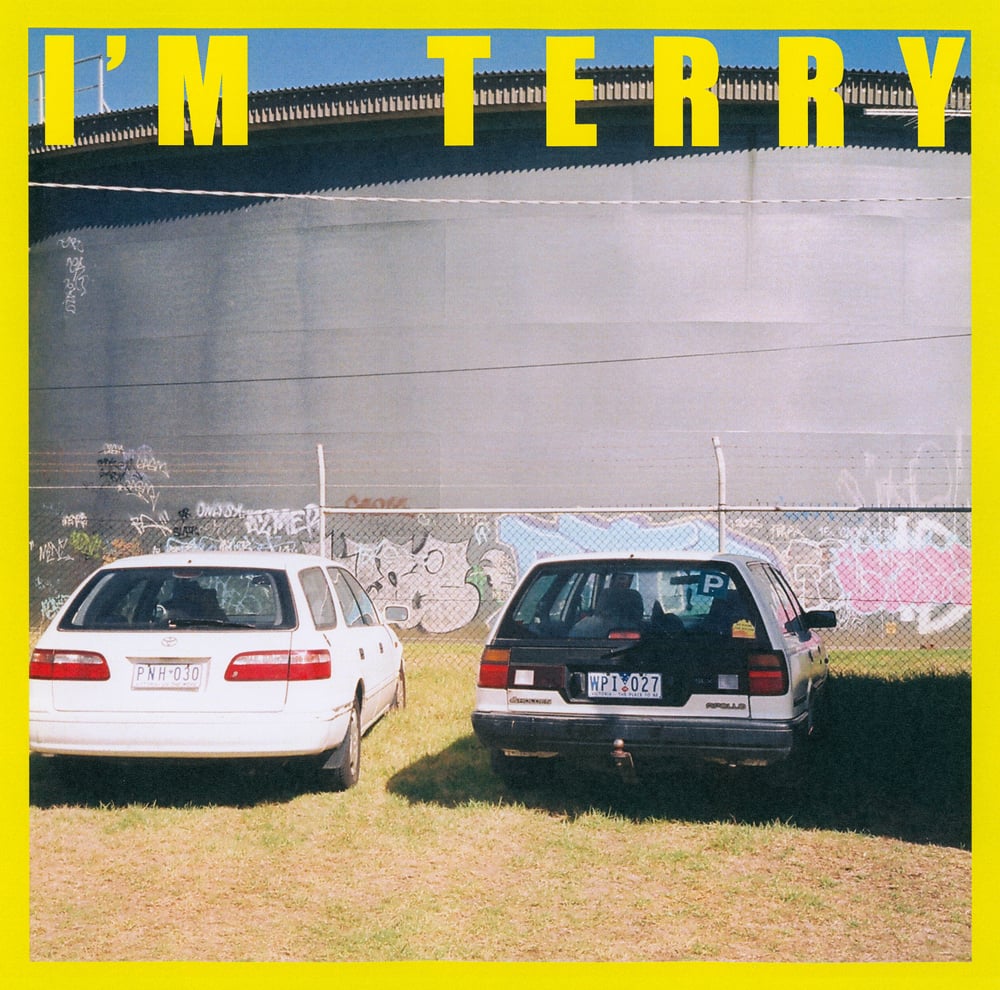
Terry are back with another bundle of joy. Terry are Amy Hill (also of Constant Mongrel, School Of Radiant Living), Xanthe Waite (Mick Harvey Band, Primo), Zephyr Pavey (Eastlink, Total Control, Russell St Bombings) and Al Montfort (UV Race, Dick Diver, Total Control). Guitars, bass, drums, all four sing. New album I’m Terry is like a mix of minimal and childlike indie pop and an obscure post punk album from 1979.
Have I been able to contain my excitement over the new Terry LP? Not quite. The band’s on a streak, with two great LPs under their belts already. The third LP shows no signs of flagging as they continue to mine a strain of post-punk peppered with twang and salt n’ honey harmonies that are soothing yet unpolished. The band let loose one of the album’s most ecstatic singles, “The Whip,” a few weeks back and now they follow it up with the cooler-headed “Bureau,” a stunner in its own right.
Terry’s strength lies in an ability to push past any of the well-worn ruts of post-punk. They’re embracing the ethos of bands who were set free to run dub and punk and pop together into a caustic clash, but they’re not tied down to the set of stencils that so many modern makers seem to use.
This is the 3rd album from this Melbourne group, maintaining the high melodic standards but some of the songs are a bit longer and the atmospheres are a bit darker at times.
They pair the new song with a grit n’ glare video that’s transportation heavy – grabbing the ‘70s aesthetics and pushing them through a DIY filter. Its all good fun and serves to further the excitement for the Upset The Rhythm release of I’m Terry at the end of the month. If you’re in the UK, they’re even trotting the show out live (lucky bastards) so hit that up to see how these songs shake out in the room.
Think a mix of Beat Happening, The Mo-Dettes and The Television Personalties.
‘Oh Helen’ is taken from TERRY’s brand new, third album ‘I’m Terry’, coming out August 31st through Upset The Rhythm.
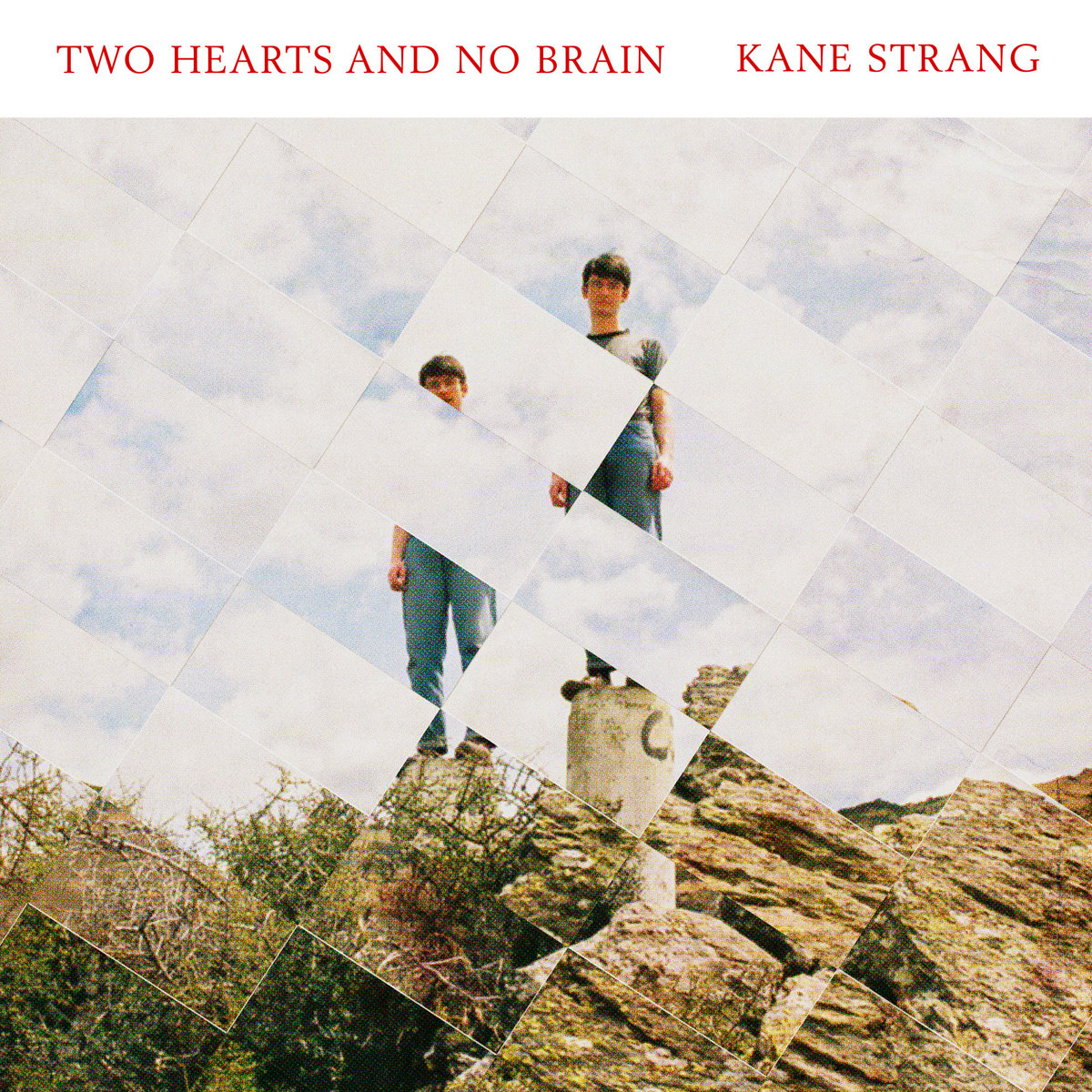
This new number from the Auckland via Dunedin, NZ singer-songwriter’s ‘Two Hearts and No Brain’ album, released last year, is definitely not bad at all. The alt-rock guitar track with grungey overtones is, he says, “kind of an intense, sort of heavy, dark sounding song, instrumental but the lyrics are kinda positive. I was in the record store the other day and did a double take as they played this album. Was it a lost Brendan Benson album? Jason Falkner? maybe It’s been a while since a pop album so immediately seduced me with its melodies and lyrics.
Beauty in simplicity and yet such a large collection of complexities that elude my understanding. Utterly captivating through each and every melody, while exploring emotions that feel all too familiar. A winning blend of careful precision and mercurial abandon, Kane Strang’s new album ‘Two Hearts and No Brain’ is constantly surprising. With a penchant for melodic earworms to rival those of the world’s best pop songwriters, the New Zealand artist’s glittering hooks twist and turn in perfect synch with meticulous band arrangements.
Strang’s proclivity for writing smart, anthemic guitar pop shines brightest now that he has moved away from the bedroom and into the studio. Showcasing his new collaborative approach to recording and writing with his band, the four-piece twists Strang’s melodies upside down and pushes his hooks inside out. ‘Two Hearts and No Brain’ proves emotive and playfully laced with a tongue-in-cheek nostalgia – timelessly old and new in the same breath.
“It’s Not That Bad” from ’Two Hearts and No Brain’ by Kane Strang, out now on Dead Oceans
The Second Princess Chelsea single – after ‘I Love My Boyfriend’ – This singer songwriter from Auckland, NZ’sChelsea Nikkel’s upcoming album ‘The Loneliest Girl’, due out September 7th via Lil’ Chief Records. The alt-pop number melds hazy retro synths, a snare drum, off-kilter keys, trombone, and a choir for good measure. Second single from The Loneliest Girl out September 7th!
The Loneliest Girl is the third studio album by New Zealand musician Chelsea Nikkel, better known as Princess Chelsea. It was recorded by Chelsea between 2016 and 2017 in her home studio in West Auckland, New Zealand.
The Loneliest Girl examines the loneliness and ultimately the artistic satisfaction a strong work ethic can bring, the result of which is this eclectic collection of pop songs. As a studio based artist Chelsea was conscious of not wanting to fall too deep into a production hole for her third album and wanted to more than ever before capture moments of inspiration, madness and spontaneity on record.
Indiana’s Kevin Krauter releases his debut solo LP, Toss Up via Bayonet Records, Kevin is a member of the band Hoops. Useful Solitude is the phrase Kevin Krauter uses to describe Toss Up, his full-length debut, both the conditions in which it was created and the prevailing theme of these nine iridescent indie-pop songs. In between tours the Indiana musician spent long hours in his basement, guitars and vintage keyboards his only company, and tested out ideas, explored new sonic avenues, savored new sounds, and taught himself how to play a few instruments. Toss Up builds on the sonic worlds of Krauters’ first releases, conveying a similar mood with a greater array of instruments and influences. An insightful songwriter with a lyrical style that is both economical and evocative, Krauter crafts unique soundscapes that scramble a range of influences—‘60s flower pop, ‘70s easy listening, ‘80s New Wave, ‘90s alt-radio, ’00s indie rock. The secret tension on Toss Up, the engine that drives these songs: melody propelled by rhythm, melancholy fended off by the exuberance of simply creating art