Every once in a while we hear a record here at Full Time Hobby Towers which stops us in our tracks and demands our attention. Spencer Cullum’s Coin Collection, a record which came out via YK Records late last year, was one of those albums. Recorded in Spencer’s adopted home of Nashville, TN and with a star-studded line-up of musicians in the Collection, the album has brought us continued joy over the last few months. However, it was rather tricky to get hold of over here without opening up our own coin collections and shelling out for hefty shipping costs.
So we’ve worked with Spencer and YK to import some LPs here to London to help keep the shipping costs down a bit. contact Full Time Hobby or the Bandcamp Site:
Spencer Cullum’s Coin Collection — homaging the ’60s and ‘70s folk-rock heroes of his homeland, finds Nashville sideman Spencer Cullum stepping from the shadows to spotlight. And, along with a supporting cast of fellow Music City stage and studio aces — like guitarist Sean Thompson and multi-instrumentalist Luke Reynolds, along with singing and writing partners like Rose, Andrew Combs, Erin Rae, Annie Williams and James “Skyway Man” Wallace — he’s bringing a bit of Britain to Tennessee with him.
Instruments Dom Billet: Drums G. Maxwell Zemanovic: Drums Adam Bernarik: Bass Sean Thompson: Electric Guitar James Wallace (Skyway Man): Piano, Mellotron Luke Reynolds: Tapes loops & Synths . Micheal Rinne: Upright Bass Adam Stockdale: Acoustic Guitar Jim Hoke: Flutes, Clarinet & Saxophone Austin Hoke: Cello Jordan Lehning: String Arrangement
All Songs Written by Spencer Cullum except Jack of Fools (S. Cullum & Andrew Combs) To Be Blinkered (S. Cullum & James Wallace) Dieterich Buxtehude (S. Cullum & Luke Reynolds) The Tree (Mike Heron)
Jay Gonzalez of the band Drive-by Truckers has more in common with polished sounds of The Beatles and The Beach Boys in his solo efforts than he does with the gritty, loud rock of his main employer. As this writer offered on Gonzalez’s first solo album, 2011’s Mess of Happiness – Gonzalez is an excellent translator. As you listen, you can’t help but hearken back to the hooks of great pop records—be it Billy Joel, Todd Rundgren, or the two aforementioned groups. In fact, According to Gonzalez, his inspiration is drawn from Paul McCartney’s“expansive vocal harmonies, multi-song suites, and bittersweet chord progressions. But a bit rawer.” So here he is once again reimagining the sound of classic A.M. radio through his own kaleidoscopic approach.
Again Gonzalez records in his adopted hometown of Athens, GA, and this time enlists some familiar names to longtime DBT fans, Matt Lane (drums) and John Neff (pedal steel guitar) along with an old friend, drummer Joe Rowe (The Glands). Gonzalez of course can play any keyboard or guitar. Although his vocal opportunities in the DBTs are of the supporting background variety, he steps out confidently on the lead vocals, showing some improvement from his first solos effort. From the straight-ahead pop of “(I Wanna) Hold You” and the buoyant “Trampoline” to the emotional Robin Gibb tribute, “Crying Through The Wall,” the album is a fun-filled pop excursion, imbued with adventurous arrangements and timeless song writing. Many of these songs would be equally at home in the ‘60s or ‘70s.
Gonzalez first arrived in Athens, GA from his native Westchester County, NY more than two decades ago. Together with his good friend and bandmate Chris Grehan, he set to work experimenting with his own brand of power pop while also playing in such esteemed local outfits like The Possibilities. Gonzalez officially joined Drive-By Truckers in 2008, first as a keyboard player and later becoming the third guitarist when needed. His contributions have transformed and broadened the band’s sound.
Taking inspiration from such unified conceptual works as The Who’s “A Quick One (While He’s Away)” and The Beatles’ Abbey Road side two medleys. Gonzalez followed up with 2015’s The Bitter Suite EP, a seamless five-song opus hailed on these pages as “a pleasing listen through and through with emotional ups and downs, constant tempo changes, and a kaleidoscope of instruments and sounds performed almost exclusively by Gonzalez.”
Gonzalez was introduced to Portland, OR indie-rock collaborative Eyelids by fellow Drive-By Trucker Patterson Hood and in 2017, contributed instrumental work as a special guest on the band’s acclaimed second album, OR. A series of tours – with Gonzalez backed by his crack live band, The Guilty Pleasures followed. And, more recently, 2019 saw the release of Jay Gonzalez Sings Eyelids Sings Jay Gonzalez, a limited edition 7” single for which each artist wrote an original song for the other to perform and record.
Listening to “Never Felt Bad,” “You Make It Hard (To Be Unhappy),” and the instrumental fare such as the opening “Sunspots” or “Loons on the Lake” is a joy; this album can lift your spirits when you’re feeling down or it can be the perfect soundtrack to a lovely, breezy, sunny Spring day. Yes, those days are coming. When they arrive, bring Gonzalez with you.
“Sunspot” by Jay Gonzalez Released on: 12th February 2021
“The Midnight Broadcast” is the most unusual entry in Peter Case’s extensive and eminently admirable career. The sixteen tracks interweave music, sound effects, and spoken word segments to create a simulation of that quasi-mystical sensation that’s inspired so many music lovers and musicians since the invention of radio. It is ultimately an experience that is as thought-provoking as it is dream-like.
The Buffalo, New York native has done a record something like this before, specifically, the 2007 Grammy Award-nominated “Let Us Now Praise Sleepy John” Serving as a link to that deserved homage, it is thus appropriate folk-bluesman to Estes’ “Oh the Morning”/”President Kennedy” appears here. But it’s an illustration of Peter’s aptitude as a musicologist as well, as are numerous selections from the public domain: “Stewball” and “Captain Stormalong,” among others, are juxtaposed with a pair of astute recognitions of influence in the form of Mance Lipscomb’s “Charlie James” and Memphis Minnie’s “Bumble Bee.”
Two Bob Dylan tunes further reinforce Case’s grasp of history, musical and otherwise. Of a piece with their surroundings, the spare acoustic-based performances of both “Early Roman Kings” and “This Wheel’s On Fire” are unfettered by effect in the singing or playing. In addition, these compositions of the Nobel Laureate’s are quite purposefully sequenced: the former, a cull from The Bard of Minnesota’s splendid “Tempest” album of 2012, appears just as the album is gaining momentum, while the latter, climax to the epochal Music From Big Pinkby The Band, also concludes this LP (and on a comparably ominous note).
Written by Bob with that iconic group’s bassist/vocalist Rick Danko during The Basement Tapes era, this secular fire-and-brimstone narrative gains even more foreboding in this context through its subdued rendition (and as it mirrors the dark grey clouds of this cover art). It’s an extension too of an almost subliminal link of continuity with Dylan’s entire oeuvre, a notion unavoidable before Case’s sole original concludes; on its very own terms, “Just Hanging On” is a sage and patient observation on our trying times, but it gains further significance via its circuitous but nonetheless recognizable echoes (intentional or not) of Dylan’s own “I’ll Keep It With Mine” from 1964.
Setting the tone in more ways than one for The Midnight Broadcast, the deceptively lo-fi audio quality there mirrors the authentically rootsy range of songs including “Grey Funnel Live.” But the sonics are in line with Case’s voice, which, even as it’s retained its fundamentally boyish tone over the years, has gained a weathered quality that lends it even more character. As weighty as some of the performances can sound, like “Going Down Slow,” the musicianship itself is uplifting, deriving as it does from what is essentially a very personalized and intimate simplicity.
Other cuts here manifest those virtues too, and, in doing so help illustrate the evolution of modern folk music. “When I Was A Cowboy,” for instance, was often covered by the late great Irish bluesman Rory Gallagher and attributed to Leadbelly under the title of “Out On The Western Plain.”Peter and his various collaborators, including the versatile likes of Lee Fortier and Bert Deivert, clearly evoke the timeless (and durable) quality of such material, while producer and multi-instrumentalist Ron Franklin’s contributions achieve much the same end: brief as are the likes of the 1:07 duration “Jupiter Holler No.4,” they become integrated with their surroundings because they sound complete unto themselves.
As does the austere remainder of “The Midnight Broadcast”, with its skeletal arrangements adorned with harmonica, Vox organ, and maracas. But then Peter Case has never allowed extraneous ornamentation on any of his records, so this latest execution of his ‘less is more’ concept is not only wholly in line with the rest of his solo discography, but a distinctly memorable exercise in ambition on its own terms.
Sprints are another band leading the charge of thrilling post-punk originating from Dublin. Sprintsare a four-piece alternative rock group.Combining emotive honest lyricism with raw and raucous guitars, their unique rock sound takes influences from post-punk and beyond.
Led by frontwoman Karla Chubb, their ferocious brand of punk is packed with hooks and tonnes of attitude, while recent release Drones suggests they’re about to take a darker direction. Check out these rising Stars Sprints.
They’re signed to Nice Swan Records, home to Sports Team, Malady, Pip Blom, Courting and Hotel Lux. Great company indeed! Give me some Sprints tracks.
I can’t wait for their first album. In a landscape filled with weedy posers it’s such a relief to hear such perfect brilliance – the video alone is sensational but the music and lyrics give you that rare feeling nowadays, that you are watching genius in its formation. The band are so tight, too – wonderful rhythm and terrific dynamics hold the song together, a song that’s just bursting out of itself in its potential. Just how did she do it, become as good if not better than Chrissy Hynde and Deborah Harry in a bare single or two? – this band has few current equals – thanks guys for helping us to remember what passion and guts and brilliance sound like.
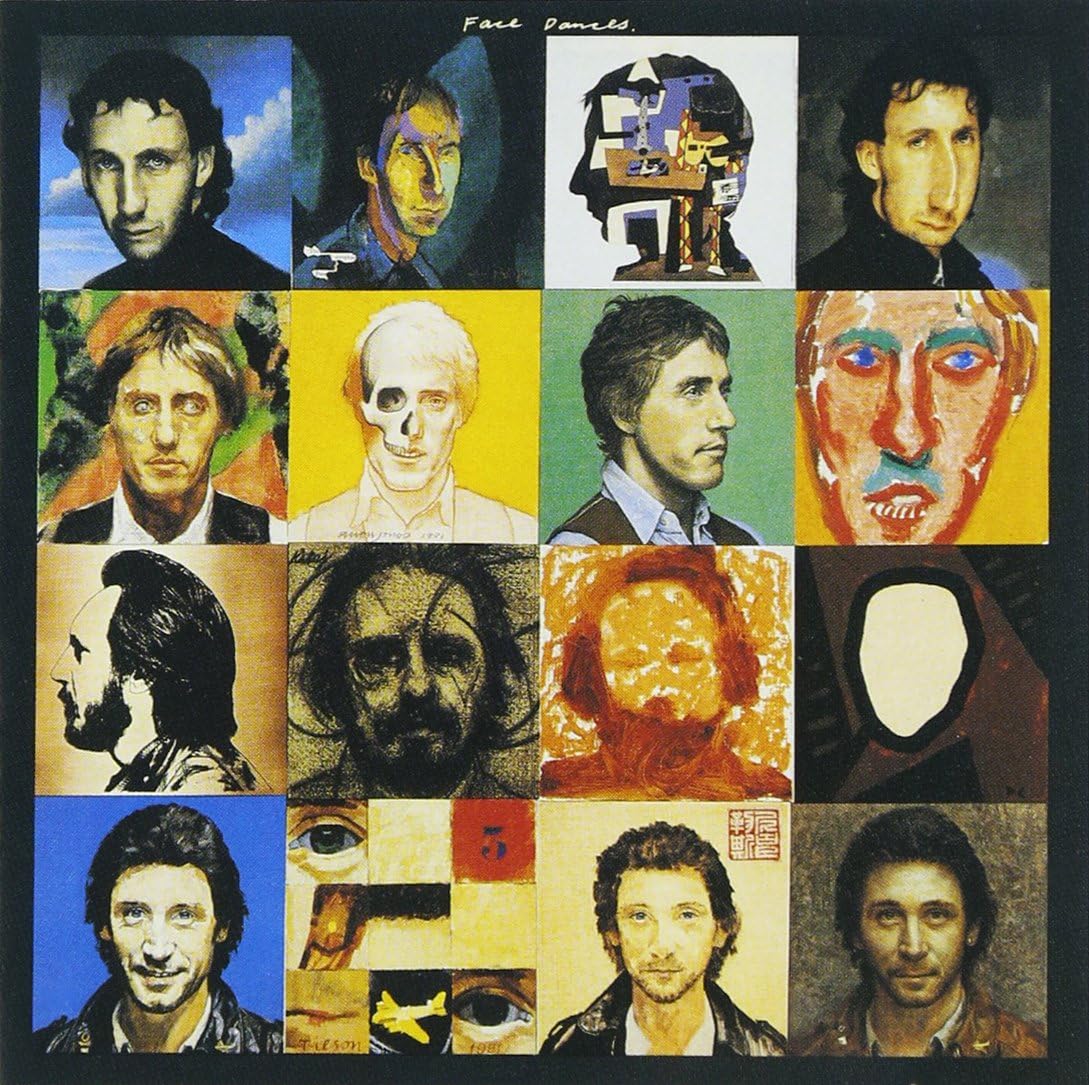
When Keith Moon died on September 7th, 1978, The Who were left without the driving force of their rhythm section, a larger-than-life drummer whose thunderous approach on the kit defined the band’s sound and changed the course of rock drumming. Even with this blow, guitarist and principal songwriter Pete Townshend announced the next day that the band “is more determined than ever to carry on.” They’d already signed deals for several projects and would soon be under contract to deliver albums to the label, the first of which would be “Face Dances”, featuring new recruits Kenney Jones on drums and John “Rabbit” Bundrick on keyboards.
But The Who’s first project following Moon’s untimely death wasn’t a forward-looking studio effort, but a pair of retrospectives: the Jeff Stein documentary The Kids Are Alright, which served somewhat as a tribute to Moon-era Who; and the film adaptation of Quadrophenia, itself based on an album that looked back on the band’s first decade, produced by bassist John Entwistle. The band was set to promote the projects with large-scale tours and had brought on ex-Faces drummer Jones to replace Moon.
“I thought that the best thing I could do was to play the way I play. That’s being honest,” Jones reflected decades later. “I tried to take the best of Keith Moon—all his great fills, which you have to do in certain songs—and use them selectively. But the style would finally be me. And that’s all I could do. I couldn’t do no more.”
His simpler, more pointed style on the kit nevertheless benefits Townshend, who is restrained in his playing both rhythm and solo guitar.Late bassist John Entwistle (who passed most unexpectedly on the eve of a 2002 tour) is likewise unencumbered by the need for keeping the beat, so his inimitably mobile instrumental work reminds of his crucial, stable presence in the group chemistry.As do his two original songs as both serve the same function his compositions always have on a Who album: to provide pacing. “The Quiet One” manifests a light-hearted tone compared to the introspective material of the group’s titular leader, while the savage playing of “You” contrasts its more nuanced surroundings.
For his part there, and throughout the record, Roger Daltrey completely inhabits the material.His voice and phrasing are particularly forceful on those numbers with which he readily identifies, such as “Daily Records,” and while there’s little if any profundity to be found in “Another Tricky Day”(or much of trademarked Townshend the angst in a studio outtake titled “I Like Nightmares”), the frontman’s sly delivery suits the tone of that closing tune, indicative of the nuance he can bring to lyrics.
Jones’ first studio recordings with the band were “Get Out and Stay Out,” a Quadrophenia outtake resurrected for the soundtrack, and “Joker James,” originally written in 1968. Though it was no easy task, Jones gelled with the band and with nearly constant tour dates stretching from spring of 1979 to summer of 1980—not to mention appearances with the other members of The Who on vocalist Roger Daltrey’s McVicar soundtrack project—he became integrated into a new well-oiled machine: The Who, mk. 2.
In early 1980, Daltrey, Townshend, Entwistle, Jones and Bundrick set up at Odyssey Studios in London to begin recording what would become Face Dances. As was typical, Townshend had already recorded multi-layered home demos to present to the group , so it was down to the band to deliver its best performances, and for famed producer BillSzymczyk to record and mix.
Sessions with Szymczyk—whose credits included Michael Stanley, Eagles and the J. Geils Band—were bumpy, as The Who felt the spark fading with each take. As Entwistle recalled, “He recorded everything in groups of three. I don’t like playing a backing track too many times. We’d get a really good one and he’d say, ‘Give me three more exactly the same.’ I lost a lot of confidence worrying about being brainwashed by the song, so I didn’t play as loosely as I might have.” And any momentum was stalled by more tour dates and Szymczyk’s commitment to mixing Eagles Live. Tracking for Face Dances continued at the end of the year and the band was pleased with what it played.
But final mixing was carried out by Szymczyk in Florida without the full band’s input, which led to unsatisfactory, glossy results. While the band blamed each other for what they felt was sub-par material, the album, released on March 16th, 1981, was nevertheless successful.
While the magic of the Moon era might be missing in many spots, “Face Dances” still satisfies, with Daltrey delivering some fine interpretations of Townshend’s increasingly personal lyrics. And its sound, which lies somewhere between classic Who power-pop (“Daily Records”), punk (“Cache Cache”) and Police-like rhythms (“Don’t Let Go the Coat,”“Did You Steal My Money”), managed to reach audiences worldwide.
The flirtatious pop gem “You Better You Bet” was an early MTV staple and became the band’s last Top 20 single, featuring Entwistle’s self-referential “The Quiet One” on its B-side. In the U.K., the band appeared on the BBC’s Top of the Pops to promote the single. There, it reached #9. The breezy “Don’t Let Go The Coat,” inspired by Townshend’s spiritual mentor Meher Baba, Meanwhile, “Another Tricky Day” became a live staple for decades.
In all, Face Dances sees every member of The Who pouring all their energy into their music. In the fallout of Moon’s death, they were overwhelmed—not just by the tragedy of losing a friend and core member of the group, but also by a gruelling tour schedule, continuous side projects and a variety of personal issues. Somehow, they were able to direct all this energy into a fine studio effort that explores new and varied styles. It may not have hit the heights of their past glories, with the occasional belaboured performance and a certain studio sheen unusual for The Who, but it was a success and is far from the worst material The Who would scrape together.
As Townshend and Daltrey continue to look back on their albums with in-depth reissue campaigns (the most recent being a super-deluxe edition of 1967’s The Who Sell Out), one wonders what a deep-dive into 1979-1981 might look like and how it might reshape the narrative of Face Dances as a tired album.
On stage, the band was energized, and unreleased gems and jams show they still meshed. Might revealing monitor mixes exist showing an un-futzed-with Face Dances? Or compelling unreleased songs from Townshend’s library? Perhaps The Who will dust off such rarities in time and give the era its due with all the bells and whistles. Maybe it will give fans a new look at this relentlessly creative period. Until then, Face Dances serves as a document of The Who’s somewhat shaky reinvention just before things really crumbled.
It was reissued in expanded form in 1997 around the same time as other items in the iconic British band’s discography, but apart from a handful of the previously-unreleased studio and live tracks, it was hardly presented with the same discerning hindsight the group, in particular its titular leader Pete Townshend, has afforded other titles, All the more reason, then, to crank up the volume when going back for a retrospective listen to this somewhat forgotten LP and thus at least simulate the accurately visceral punch: then, in a very practical way, it will foreshadow the healthy maturity and adherence to the style that reappeared thirty-eight years later on 2019’sWHO,the 2019 album that, perhaps not coincidentally, sported cover images by the very same graphic artist who commissioned the sixteen paintings on its predecessor.
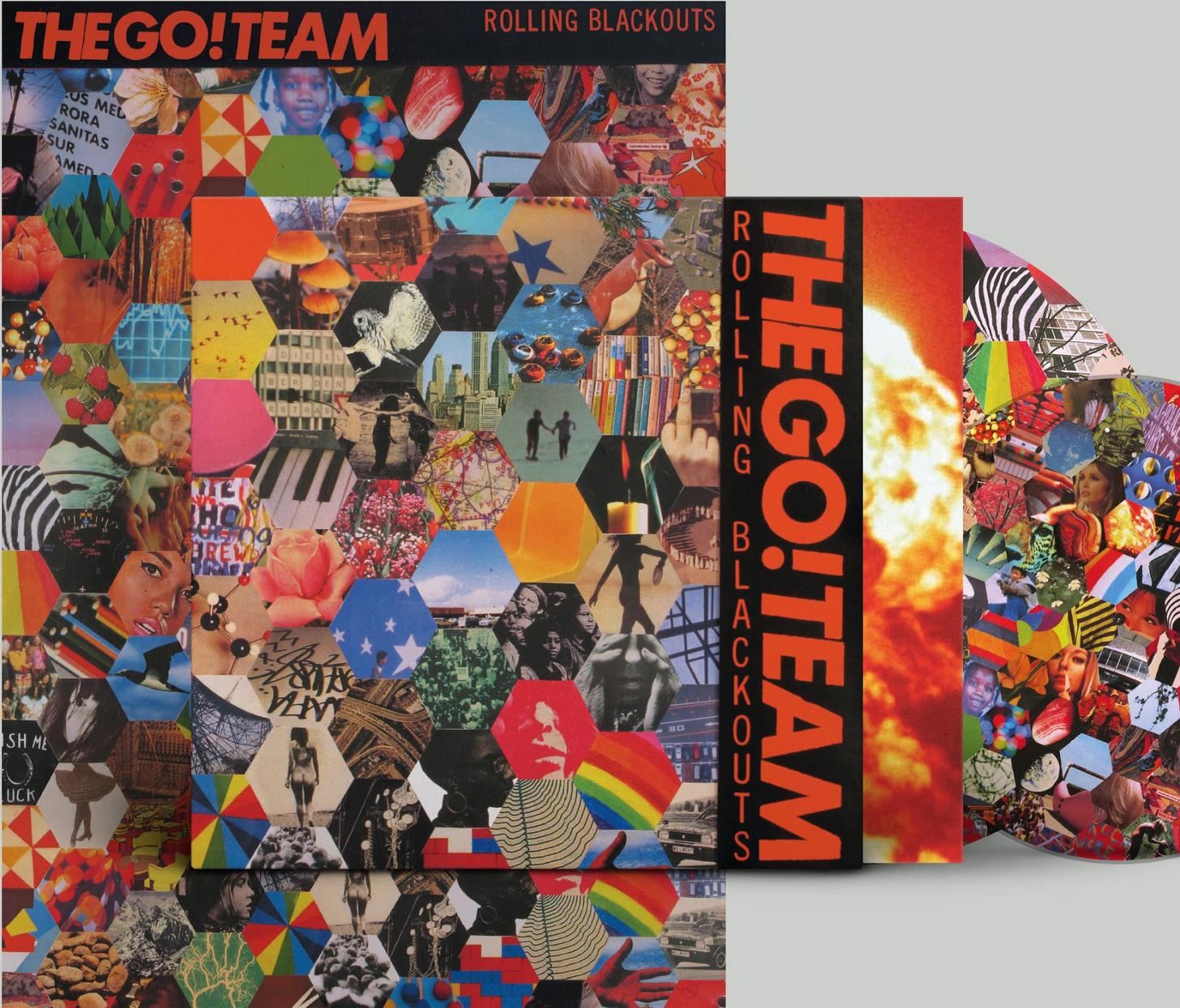
The Go! Team – “Rolling Blackouts” (Dinked Archive Edition)) Yes, in a possibly foolhardy move, we’ve gone and double Dinked, taking the opportunity to create a 10 year anniversary Dinked Archive edition of The Go! Team’s classing Rolling Blackouts. Honestly, a record that has ‘Buy Nothing Day’, ‘Apollo Throwdown’ and ‘Ready to Go Steady’ on it is worth the price of admission alone. But this edtion comes on a collage picture disc, with a bonus 7″ picture disc featuring two rare Go! Team tracks, ‘I’m Not Satisfied’ and ‘Headache in my Heart’ plus fold out poster. Limited to 500,
Originally released Jan 31, 2011 on Memphis Industries
The Go! Team have announced their sixth album, “Get Up Sequences Part One”, which will be out July 2nd via Memphis Industries. The lead single is “World Remember Me Now,” which features singer Ninja with the Kansas City Girls Choir, as well as an infectious steel drum hook. “I’ve always been interested in people’s daily routines – what people do all day” says Go! Team bandleader Ian Parton. “It was written ages ago but has become strangely relevant to the world now. It’s easy to feel forgotten at the moment.” You can watch the video below
While the band’s exuberance is still front and centre, behind the scenes was not as sunny. “I lost hearing in my right ear halfway during the making of this record” says Ian Parton. “I woke up one Thursday in October 2019 and my hearing was different in some way – it fluctuated over a few weeks and at one point everything sounded like a Dalek. I seem to remember listening to music was bordering on unbearable. Over time it settled into just a tiny bit of hi end being audible on my right side. I thought the hearing loss was from playing music too loud over the years but it turns out I was just unlucky and it was a rare condition called Menieres. It was traumatic to keep listening to songs I knew well but which suddenly sounded different and it was an odd juxtaposition to listen to upbeat music when I was on such a downer. The trauma of losing my hearing gave the music a different dimension for me and it transformed the album into more of a life raft.”
Get Up Sequences Part One includes last year’s singles “Cookie Scene” It’s a place where routine is outlawed and perfection is the enemy. Where Ennio Morricone meets the Monkees armed with flutes, glockenspiels, steel drums and a badass analogue attitude. We’re talking widescreen, four-track, channel hopping sounds that are instantly recognisable.
In The Go! Team’s world, old’s cool, the future’s bright and melody is the star. Just check the second cut “Cookie Scene” with a bouncing flute and junk shop percussion it introduces guest rapper Indigo Yaj who delivers an old school vocal that continues this sonic trip. Pow channels Curtis Mayfield and enter stage centre, the inimitable Ninja in full flow and you don’t stop, you wont stop to this flute driven free for all.
By way of demonstrating The Go! Team’s old school manifesto, comes the ‘needle-in-the-red’ “I Love You Better” a defiant message to an ex love, spelling out exactly how he’s fucked up – and then there’s those steel drums. Following that comes the soda fountain soul courtesy of “A Bee Without Its Sting”, a groovy protest song that makes its point with a tambourine – hey only The Go! Team.
The musical wagon train then takes you into the wide screen, windswept western that is Tame the Great Plains heading off into a polyrhythmic panorama that’s full of hope. Slappin’ you back to reality comes “World Remember Me Now”, a timely reminder that when you’re lost in the routine of life, you can always count on The Go! Team.
The new album ‘Get Up Sequences Part One’ is due out 2nd July, and it’s the hazy, gauzy, summer soundtrack of your dreams.“In The Go! Team’s world old’s cool, the future’s bright and melody is the star…” (not our words, the words of the legendary Don Letts).
On “Get Up Sequences Part One”, Ian, Ninja, Nia, Simone, Sam and Adam – The Go! Team – have created a musical world distinctly of their own making
Wye Oak’s Jenn Wasner releases her new album as Flock of Dimes, “Head of Roses”, on April 2nd via Sub Pop, and the latest single is “Hard Way.” “Although I didn’t fully understand when I wrote it,” Jenn says, “Hard Way’ song is an example of the power of the subconscious mind to hide truths from ourselves that we’re not yet ready to see. When I wrote this song I was still in the throes of new love, and I thought I was writing a straightforward, earnest love song. But when I tried to record it, something about the tone of it was eerie, strange, a bit darker than I would have expected. It wasn’t until long after I wrote it that I became aware of its odd foreshadowing of what was to come — that something I intended to be bright and hopeful in the moment was floating on top of a deep current of unease.”
On her second full-length record as Flock of Dimes, Head of Roses, Jenn Wasner follows a winding thread of intuition into the unknown and into healing, led by gut feelings and the near-spiritual experience of visceral songwriting. The result is a combination of Wasner’s ability to embrace new levels of vulnerability, honesty and openness, with the self-assuredness that comes with a decade-plus career as a songwriter, producer, multi-instrumentalist and prolific collaborator.
Simply put, Head of Roses is a record about heartbreak, but from a dualistic perspective. It’s about the experience of having one’s heart broken and breaking someone else’s heart at the same time. But beyond that, it’s about having to reconcile the experience of one’s own pain with the understanding that it’s impossible to go through life without being the source of great pain for someone else. “Part of the journey for me has been learning to take responsibility for the parts of things that are mine, even when I’m in a lot of pain through some behaviour or action of someone else. If I’m expecting to be forgiven for the things I’ve done and the choices I’ve made and the mistakes that I’ve made, it would be incredibly cowardly and hypocritical to not also do the work that’s required to forgive others the pain they caused me.”
Showcasing the depth of Wasner’s songwriting capabilities and the complexity of her vision, Head of Roses calls upon her singular ability to create a fully-formed sonic universe via genre-bending amalgamation of songs and her poetic and gut punch lyrics. It’s the soundtrack of Wasner letting go – of control, of heartbreak, and of hiding who she is: “I think I’ve finally reached a point in my career where I feel comfortable enough with myself and what I do, that I’m able to relax into a certain simplicity or straight forwardness that I wasn’t comfortable with before.” Head of Roses puts Wasner’s seismically powerful voice front and centre. Those vocals help thread it all together — it’s a textured musicality, quilted together by intentionality and intuition.
‘Hard Way’ by Flock of Dimes from the album Head of Roses (Release Date: April 2nd, 2021 on Sub Pop Records.
Two absolute essentials from the Godfather and they’re both on coloured vinyl! Every collection needs these essential collaborations. Iggy Pop’s debut solo album, “The Idiot,” marked a radical departure from the incendiary, guitar-based proto-punk of his former band, The Stooges. First released on March 18th, 1977, it was written and recorded in collaboration with David Bowie, and its electronic veneer and melancholic atmosphere had much in common with Low, “Heroes” and Lodger, the three Bowie albums widely referred to as his “Berlin Trilogy.”
It’s been widely documented that Bowie played a vital role in Pop’s artistic rebirth, not just through shaping The Idiot, but also in helping him get his life back on track during the mid-70s. Indeed, when The Stooges split in disarray after 1973’s Raw Power, Iggy struggled with personal issues, even spending time in a Californian mental institution. Bowie, though, stuck by his friend, later taking Pop along as his companion on his extensive Isolar – 1976 Tour, in support of the Station To Station album.
Following the tour, in July 1976, Bowie and Pop holed up in Château d’Hérouville, the same French location where Bowie recorded his covers album, Pin Ups, in 1973 and would soon record much of Low. Bowie and Pop then set about putting together many of the songs which would feature on The Idiot. The sessions were loose and ad hoc in design, and the two musicians were augmented by bassist Laurent Thibault and drummer Michel Santangeli, who added to rough tracks already taped by Bowie.
During these initial sessions, Thibault supplied Bowie and Pop with a tape loop of industrial noise, which laid the foundation for The Idiot’s remarkable closing track, “Mass Production.” According to Paul Trynka’s Iggy Pop biography, Open Up And Bleed, Bowie was “like a child transfixed by a train set” when he heard the tape, which was spliced together in sections and went on to supply the ominous, droning backdrop for the song. Its oppressive atmosphere was perfectly matched by Pop’s numbed-out lyric, which was inspired by his memories of watching a machine press at Ford Motors’ River Rouge Plant in Dearborn, Michigan.
Iggy Pop later recalled conversations with Bowie “about how much I admired the beauty of the American industrial culture that was rotting away where I grew up,” according to Joe Ambrose in Gimme Danger: The Story Of Iggy Pop. “Like the beautiful smokestacks and factories… whole cities devoted to factories!”
During the Château sessions, Bowie and Pop worked up two future classics, “China Girl” and “Nightclubbing.” The former reflected upon Pop’s relationship with his Asian girlfriend Keulan Nguyen, and Bowie would later re-record it for his multi-platinum 1983 album, Let’s Dance.
“There’s a beautiful obligata, romantic melody at the end… it’s echoed by those sort of gypsy guitars, if you will,” Pop said in a 2019 interview with Sirius XM. “And that [melody] David wrote. I thought it was really lovely.”
“Nightclubbing,” meanwhile, sprang from an incident during downtime at the Château after The Idiot’s initial sessions wound down. Reputedly inspired by some cheap Halloween masks and an old-time melody Bowie began playing on the studio piano, the tune inspired Pop to write a lyric “mostly based on my experiences tagging along to the discos of Europe” with Bowie, in little more than 20 minutes.
The memorable, loping beat for this haunting song – which has since been covered by Grace Jones and The Human League, as well as featuring in the Trainspotting soundtrack – came to fruition out of necessity, simply because there was no one around to play drums that day.
“The only thing left to augment it in the room was a little Roland drum machine,” Pop said in 2019. “[Bowie] said, ‘I can’t put out a song with something like that as a drum track,’ so I said, ‘No, but I can,’ and he got that. So we did it with that and that beat is sampled in a lot of very successful hip-hop records now.”
Additional sessions for The Idiot moved onto Munich’s Musicland Studios and to Berlin’s Hansa Studio 1, where excellent tracks such as the Neu!-esque “Funtime,” the pulsing electro-pop of “Sister Midnight” and Pop’s hypnotic paean to The Stooges, “Dum Dum Boys,” were finished off with overdubs from Bowie’s regular rhythm section of Carlos Alomar, Dennis Davis, and George Murray. Producer Tony Visconti then achieved a final mix at Hansa and the album was issued with a cover photograph of Iggy, inspired by German painter Erich Heckel’s Roquairol.
The Idiot effectively resurrected Iggy Pop’s career. giving Pop the momentum to follow through with the abrasive, guitar-streaked Lust For Life later in 1977.
The album’s reputation has since grown exponentially. Though it was greeted by relatively modest reviews in 1977, Pop biographer Paul Trynka has asserted that TheIdiot “prefigured the soul of post-punk,” and the record’s futuristic soundscapes are still being absorbed by popular culture today. The album has since been cited as a touchstone by influential artists ranging from Depeche Mode and R.E.M. to Joy Division and Nine Inch Nails, though Siouxsie Sioux perhaps put it best when she said The Idiot provided a “re-affirmation that our suspicions were true: the man is a genius.”
Inhaler’s debut album ‘It Won’t Always Be Like This’ a record that sees Elijah Hewson, Josh Jenkinson, Robert Keating and Ryan McMahon turn their early promise into something special, an album teeming with expansive indie-rock grooves and soaring anthems.
The announcement comes after the band previously shared the video for new single “Cheer Up Baby” the lead track captures the essence of their sound.
“It’s always been a cornerstone song for us and our fans are always talking about it. It’s a love letter to our fans and that’s why we wanted to choose it to open up the album,” frontman Eli Hewson explained. “Lyrically, a lot of young people in these times are dealing with mental health issues and they can get stuck in their own heads. I think that’s what this song is, it’s loosely based on a conversation between two people and a lyric that goes ‘when I think of all the things I didn’t do, I can’t help but blame it on you””
The album includes the single Cheer Up Baby, a swooping, epic singalong alongside newly recorded versions of early fan favourites “My Honest Face” and title track “It Won’t Always Be Like This”, the album is released July 16th 2021.
Cheer Up Baby is out now, and we’re also pleased to announce our debut album, It Won’t Always Be Like This, will be out on 16th July. We’ve poured our heart and soul into this record, pulled songs apart and put them back together again but we couldn’t be prouder with the result and we can’t wait for you to hear it.
Pre-order a copy of the new album from the official store by 5pm on Tuesday 23rd March to qualify for an exclusive ticket pre-sale for the band’s new UK & Ireland tour dates (rearranged + 2 additional Irish shows) which will be announced at 9am on Friday 19th March.
The Dublin band – who recently announced that their debut album It Won’t Always Be Like This will be out on July 16th via Polydor Records
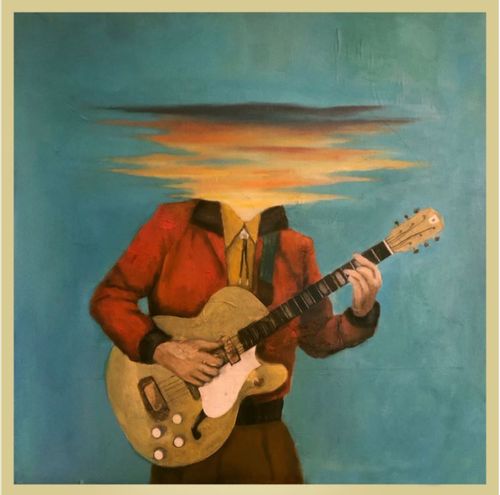
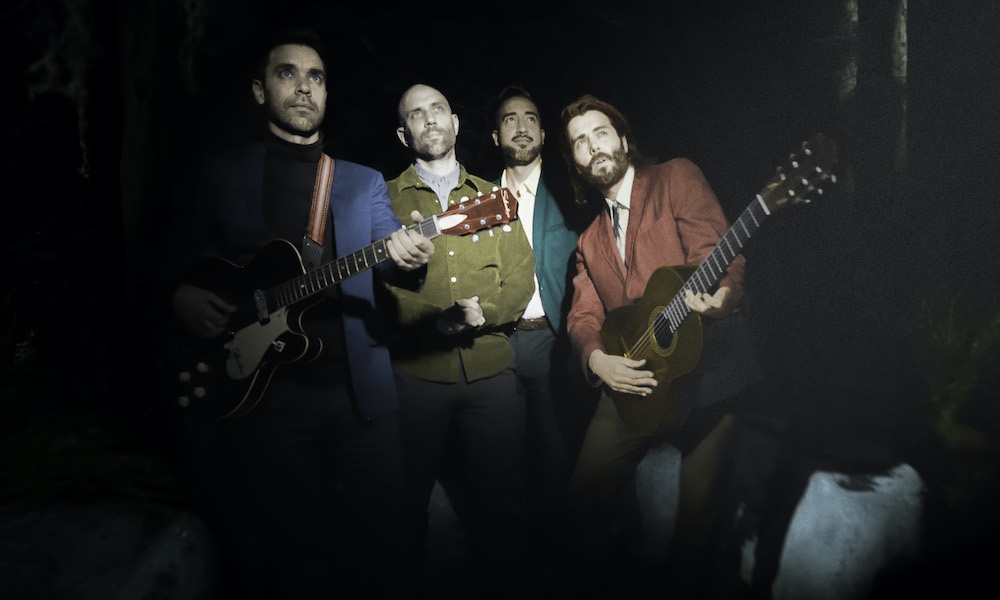
After causing a whole lot of chatter amongst audiences and critics alike, Lord Huron have begun to unwind the little riddle they’ve been spinning over the past few months and announce their fourth full-length album, “Long Lost”.
At the same time, the news only raises more questions. what can fans expect? what did the band lose and how long has it been lost? and who the hell is wbub’s Mr. Tubbs Tarbell? all these questions have been brewing as easter eggs from the upcoming album have been revealed during Lord Huron’s alive from Whispering Pines series. during its first episode, viewers were introduced to Mr. Tubbs Tarbell, fell under the spell of commercials that may very well be lost tapes from the past, and were treated to some incredible performances by Lord Huron.
In the series’ first episode, covering the song “Not Dead Yet,” the band introduced the character Mr. Tubbs Tarbell as a figure to leave clues about their future releases. With “Mine Forever” comes a lenghty letter from Tarbell about the process of creating the single.
“I gave the boys a good round of applause before they launched into a real sunset of a song they called ‘Mine Forever,’ a swingin’, full-on heart-renderer with a bubbly sound,” the letter read. “All of a sudden I heard handclaps and female voices—I swear those ladies must have risen up outta the floorboards! Never saw ’em come in, and didn’t see ’em leave. That’s just the magic of the Pines, I suppose.
The band played some old songs including “Meet Me In The Woods” and provided a sneak peek at some new songs. the episode also featured a hotline where fans could call in and ask Mr. Tarbell questions and request songs from the band.
Episode 2 included additional cryptic clues, more beautiful performances from Lord Huron (including “the World Ender” and “Frozen Pines”). Last night on alive from Whispering Pines, Lord Huron performed their triple-platinum single “The Night We Met” as well as fan favourites “ghost on the shore” and “never ever.” to help answer all these lingering questions, Tubbs has put out an official letter into the multiverse from Whispering Pines studios describing the mythical tale of recording Long Lost with Lord Huron and the origins of its cosmic music.
“Mine Forever” explores a narrative of lost love that ultimately isn’t found again, the group singing: “I’m much too young to die / So long, my love, goodbye / We will always be together / In my mind you’re mine forever.” The single arrives with a music video directed by Anthony Wilson that visualizes the song as a western film Gun Thunder. It continues the narrative the LA indie-folk outfit has been building up through music videos and their live stream series Alive from Whispering Pines,
Lord Huron has announced that their fourth studio album Long Lost will be released on May 21st via Republic Records.



.jpg/:/cr=t:21.36%25,l:0%25,w:100%25,h:36.66%25/rs=w:1240,h:620,cg:true/fx-gs)






 The Fat Angel Sings