The Seeds rock band formed in Los Angeles, California in 1965. The group became known for psychedelic rock music and is considered a prototype for garage punk rock bands.
The Seeds were formed in 1965 when lead singer Sky Saxon had responded to an advertisement. Saxon, who had relocated to Los Angeles from Salt Lake City, Although Sky Saxon was usually credited as bass player, he did not play bass on any of the Seeds’ recordings. This was handled by session musicians, usually Harvey Sharpe. On stage, keyboardist Daryl Hooper would perform the bass parts via a separate bass keyboard, in the same manner as Ray Manzarek later did with The Doors.
The Seeds‘ first single, “Can’t Seem to Make You Mine”, was a regional hit in Southern California in 1965. The song was also played regularly on AM rock stations in northern California (and probably elsewhere), where it was well received by listeners, and eventually went on to become, and is considered today, a 60s cult classic song.
Sky Saxon sounds just as desperate on “Can’t Seem to Make You Mine” as he does on “Pushin’ Too Hard,” but the band must have sweated out whatever uppers they were on before slinking their way through this one. That subdued quality adds an element of darkness to a song that already straddles the line between unrequited love and stalker anthem.
The 1966 eponymous debut album by the mighty Seeds. The album contained their legendary garage punk anthem ‘Pushin’ Too Hard’ which cracked the U.S. top 40 and was featured on the groundbreaking Nuggets album which put 60s garage/psych back on the map in the early 70s. Musically uncomplicated with a flair for simple melodic hooks and dominated by Saxon’s unorthodox vocal delivery, their first two albums, The Seeds and A Web of Sound, are today considered classics of 1960s. There are so many issues of this album, sadly never released in Britain in the 60s, that it’s easier to just say you’re going to need upwards of £50 to find a decent 60s copy. An awesome album and totally essential.
The Seeds have been among the most frequently cited pre-punk influences by American punk musicians since the 1970s. Cover versions of various Seeds songs have been recorded by many bands.
it’s Hard to believe that Grace Barnett Wing was only four years younger than Elvis Presley! Yet she was one of the queens of the San Francisco Rock scene in the 1960s and 1970s. While Elvis was cranking out mediocre films, Slick was beginning to get noticed in a band called the Great Society with her then-husband Jerry Slick (drums), His brother Darby Slick (lead guitar), and David Miner (bass). It wasn’t long after the band made its debut at the Coffee Gallery in the City in October 1965 that Slick composed her signature song “White Rabbit.” about the effects of hallucinogenic drugs. The band’s popularity grew, and they recorded several tracks in late ’65 with Sylvester Stewart at the controls.
One single “Somebody to Love,” with Grace Slick on vocals, piano, and recorder was released. When Signe Anderson left the Jefferson Airplane to be with her daughter, Jack Casady invited Slick to join the band. The group’s musical focus shifted from folk-rock to a more psychedelic-oriented groove. and the landmark album “Surrealistic Pillow,”, was released in early 1967 and became an instant hit, landing at No3 on the Billboard Album Chart, with the singles “Someone to Love,’ and “White Rabbit,” also climbing to the Top 10 at the dawning of the Summer of Love. Suddenly the Airplane became one of the most popular bands in America, with Slick and the Airplane leading the charge for the psychedelic revolution that was in progress.
No less than George and Patti Harrison showed up in the Haight-Ashbury in August wondering what all the hoopla was about. Slick’s powerful vocals, political convictions, and outspokenness catapulted her to into prominence as a female Rock musician who was not afraid to speak her mind. On the Dick Cavett show in 1969, she dared to use a 12-letter word that George Carlin had proclaimed could not be said on television. Up against the wall indeed you ————! At the end of the 1960s after three more successful studio albums, a live album and a visit to Monterey and a trip to Woodstock, Jack Casady and Jorma Kaukonen departed the group. Slick responded by forming the Jefferson Starship with bandmate Paul Kantner, and others, recording: Bark,” (1971), “Long John Silver,” (1972), and a trio of solo albums: “Manhole,” (1974), “Dreams,” (1980), and “Welcome to the Wrecking Ball,” (1981). There was also an album “Sunfighter,” from 1981 with Paul Kantner.
The Jefferson Starship recorded eight albums, including the hugely successful “”Red Octopus,” which zoomed to #1 in 1975, and “Earth,” which went to #5 in 1978. Slick was the only original member of the now truncated band named Starship in the mid to late 80’s with the album “Knee Deep in the Hoopla,” (1985) Slick left the Starship in 1988. The last hurrah was the reunion of the Jefferson Airplane in 1989 including a well-received tour. Slick retired from the music business after the tour, citing that “All rock-and-rollers over 50 looked stupid and should retire.” After appearances with a revamped Kantner-led Jefferson Starship in 1995, and a Post 9/11 appearance, Grace Slick called it quits for good and began painting Although suffering some health issues in 2006, she has fully recovered. Her band the Jefferson Airplane was inducted into the Rock and Roll Hall of Fame in 1996 and was presented with a Grammy Lifetime Achievement Award in 2016. Grace Slick is fondly remembered by those 1960s baby boomers who watched her trajectory from the Great Society to the top of the heap with the Airplane and the Starship and watched her perform at Winterland, the Fillmore, the Avalon, and Fillmore West. Those were the golden days of Rock in San Francisco, and Grace was there to help ignite the spark.
On her debut album Alone at Last, Tasha celebrates the radical political act of being exquisitely gentle with yourself. For years, the Chicago songwriter has dreamed hard of a better world—she’s worked with the local racial justice organization Black Youth Project 100 and has been on the front lines at protests around the city. But as she returned to the guitar, an instrument her mother first taught her to play when she was 15 years old, she began exploring the ways music can be a powerful force for healing. It might not fix a deeply broken world all by itself, but it can offer comfort and respite for those who, like her, dare to imagine a thriving future.
Citing Robin D. G. Kelley’s book Freedom Dreams as a foundational text to her artistic practice, she says, “Black folks’ imagination inherently is a radical thing. In a place of oppression and colonization, the ability to imagine a future, imagine magic, imagine something better, is subversive. People don’t want you to be able to imagine yourself outside of the place that you’ve been put.” So she started asking: “What does my imagination mean tome as a radical thing?” Because Tasha’s music has served her so profoundly as she’s made it, she hopes it can be a source of strength for others, too. “I’m only able to handle the world because I can write these songs,” she says, “so I’d like to think that I help other people deal with the world for the same reason.”
Across Alone at Last’s seven tracks, Tasha sings mantras of hope and restoration over lush guitar lines inspired by the stylings of Nai Palm and Lianne La Havas—both artists who, like Tasha, opt for a sweetness in their playing over the masculinized bravado that often accompanies the electric guitar. “You/Take care of your little body,” Tasha urges on the record’s spoken word opener. On “Kind of Love,” she paints falling for someone as the gateway to a new world where anything’s possible, and on “Something About This Girl,” she notes the profound strength that comes from vulnerability: “All her softness make her tough.”
“These songs are bed songs,” Tasha says of Alone at Last. “Songs about the place that one might go when they finally need to be away from whatever it is that might be causing them stress or anxiety or sadness or fear.” In the world she conjures within the album, there’s plenty of room to forge your own home where you can rejuvenate and heal—where you don’t have to be a superhero and you don’t have to save the world all by yourself, where nothing is expected of you except that you just be. It’s the kind of album you can curl into after a hot summer day in the city: a powerful talisman in a demanding world, and a reminder that kindness toward the self can help unlock the way to a world a little more livable than this one.
Lilly Hiatt’s excellent new album? Well, she is just so consistent in her approach. While the songs aren’t repetitive by any stretch, they are all built on a tasty guitar lick before Lilly’s voice hooks me like a marlin as she paints these vignettes of good times and bad. Overall, this album is a little less personal than Trinity Lane and has a sound that leans a little more to the rock side than the Americana side.
“Don’t you hate when people say, ‘It is what it is,’” Lilly Hiatt sings in “P-Town.” But there’s nothing left to fate on the songwriter’s Walking Proof, a deliberate record of tight jangle-rock songs and ethereal ballads. Like “P-Town,” “Brightest Star” mines R.E.M. Monster-era guitars, while the hypnotic “Drawl” is a meditation on self-repair. In “Little Believer,” she tells a tale of neglect with an author’s attention to detail (“A man caught a shark and he set it free/I started clapping, and he laughed at me”). Hiatt found her voice on 2017’s Trinity Lane; here, she fine-tunes her instrument into the sound of a new Nashville.
The album has a few timely tracks for our self-isolation. P-Town tackles a shitty day with humor and exasperation. Candy Lunch wants you to be able to deal with the shit we can’t control; make the best of the situation. Drawl wants us to find the beauty in the simple things; something I have been trying to do these last couple of weeks. Hiatt continues to cement her place at the table of the best songwriters around these days. She is as consistent as they come.
Lilly Hiatt’s songs are disarmingly personal and immensely endearing, even when she’s singing about fucking up—which is pretty often. There’s an almost parasocial element to Hiatt’s song writing: Her voice is like that of an old friend who’s perpetually in various stages of getting her shit together. Hiatt’s fourth album, Walking Proof, forms something of a thematic trilogy with her last two albums: 2015’s Royal Blue, a portrait of a relationship in its death throes, and 2017’s harder, darker Trinity Lane, which depicted its immediate aftermath. Hiatt spent both albums seeking solace and guidance for her troubles everywhere she could, from family to her favourite records. On Walking Proof, she’s emerged wiser and more confident, ready even to dispense advice of her own. She also finds herself in full command of her broad stylistic palette, melding influences as disparate as backwoods country and garage punk into a cohesive signature sound. There are a couple of lingering references to Hiatt’s past relationship problems. But when, in the hauntingly stark closer “Scream,” she claims, “I swear to God I’m done with him,” it’s convincing this time.
Released March 27th, 2020 Musicians:
Lilly Hiatt: vocals, guitar
John Condit: guitar
Robert Hudson: bass, mandolin
Kate Haldrup: drums
Lincoln Parish: guitar, keys
Travis Goodwin: keys
Guests:
Aaron Lee Tasjan: guitar on “Little Believer,” vocals on “Never Play Guitar”
John Hiatt: vocals on “Some Kind of Drug”
Amanda Shires: vocals and fiddle on “Walking Proof,” vocals on “Drawl”
Luke Schneider: pedal steel on “Move”
Though the word “myrkur” means “darkness” in Icelandic, MYRKUR (aka Amalie Bruun)’s music is far from monochromatic. With its distinct sense of Nordic isolation, MYRKUR’s compositions are at once savage and delicate. Choral and folk elements abound, lending the music a mystical, legendary quality and an untouchable equilibrium between dark and light.
Amalie Bruun has always paved her own path, challenging underground preconceptions of heavy metal ever since the release of her debut Myrkur EP in 2014. Her first two full-length studio albums, 2015’s M and 2017’s Mareridt, recast black metal in the most personal yet expansive of terms, their blending of Amalie’s Danish folk roots with tempestuous internal struggles breathing new life into a subgenre whose followers can be rigidly possessive.
With the release of her new album, “Folkesange”, Amalie Bruun has set out to journey into the very heart of the Scandinavian culture that marked her childhood. Folkesange relinquishes black metal for a refined yet far-reaching evocation of traditional folk, combining songs ancient and new to sublimely resonant effect.
After the nightmare-induced visions that wrought themselves throughout Mareridt, Folkesange offers an emotional sanctuary, a means to reconnect to something permanent and nature-aligned. It’s an awareness that’s become deeply bound to the album’s organic, regenerative spirit, from the opening track Ella’s heartbeat, frame-drum percussion and crystalline vocals that become the grounding for a rapt, richly textured awakening, to the gentle carousel of the closing Vinter, with its nostalgia-steeped connotations of seasonal, snowfall-bewitched awe.
Storytelling, rites of passage, and the invocation of a continuity that passes through time and generation are all part of folk music’s tapestry, and Folkesange taps into all these currents in their most essential form. In part a purist’s approach to the genre, free from over-interpretation and fusion, the use of traditional instruments throughout, such as nyckelharpa, lyre, and mandola offer a deeper, more tactile connection to their source, an unbroken line of communication back to the past.
But the album is no museum piece; it resonates in the here and now, aided by the spacious production of Heilung member and musical collaborator Christopher Juul. Cinematic yet intimate, Folkesange exists in a state of boundless reverie, bourne by string-led drones, cyclical, elegiac rhythms and Amalie’s frictionless voice, all carrier signals for deep-rooted, ancestral memories, and associations felt on an elemental level.
It’s a binding of the otherworldly and the earthy that echoes the the subject matter of many of the tales themselves. Written by Amalie, Leaves Of Yggdrasil’s medieval cadences bind tragic love story and mythology, full of both fairytale wonder and deeply human foible. Tor i Helheim, its dreamily persistent rhythm redolent of both innocence and encroachment, is based on a poem from the Icelandic Eddas, relating a journey into the underworld of Hel where the sparse nature of the accompaniment becomes the medium that carries you along in its thrall.
An immersive experience in its own right, but also belonging to a wider, pagan folk-based renaissance that has attracted a devoted following worldwide, Folkesange answers a need that has become ever more pressing in turbulent times. A zeroing in on a resonance that is both intrinsic and enduring, it’s a rediscovery of personal grounding, and an experience that reaches beyond culture to remind us of a shared, deeply rooted inheritance. A tuning fork that binds the personal and the universal, Folkesange is a reminder that the most transcendent experiences are those closest to home.
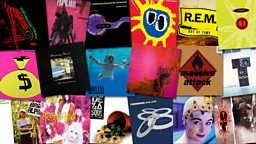
Liz Kershaw’s All Killer No Filler at 30 special celebrates the best albums released in 1991, featuring seminal records celebrating their 30th birthday in 2021 – from Nirvana to De La Soul.
But which are the classic records that define 1991? Here are 19 albums from across 1991’s musical spectrum – and why we love them so much.
From the emergence of trip hop and grunge, through the dance revolution to some classic albums by some classic names, it was quite a year…
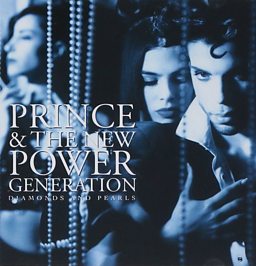
Prince & The New Power Generation – Diamonds and Pearls
Rowan Collinson: It’s easy to forget that, by 1991, Prince had already released 12 (!) studio albums and was cemented as a household name thanks to his Lovesexy album and accompanying world tour. Coming off the back of soundtracks for Batman and Graffiti Bridge, Diamonds and Pearls was the first album with his new band The New Power Generation and arguably marks the end of a purple patch which started with 1999 a decade earlier.
Lead single ‘Gett Off’ may have re-affirmed his risque reputation with the line “23 positions in a one night stand”, but away from that and the double entendre of ‘Cream’, Diamonds and Pearls contains some of Prince’s best, and most affecting, songs.
‘Money Don’t Matter 2Nite’ is a sharp critique of America, whilst the title track – co-written by and featuring the huge vocals of a pre-fame Rosie Gaines – has a huge, soaring chorus and even a fanfare. Contractual shenanigans and an increasingly prodigious work rate meant Prince would never make another album as consistent (or as successful) as this one, but over 25 years on Diamonds and Pearls serves as fitting reminder of Prince at the height of his purple reign.
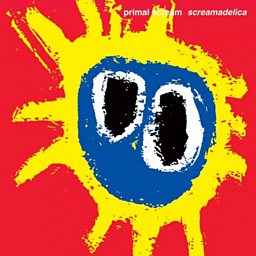
Primal Scream – Screamadelica
Chris Hawkins: Very few 16 year-old’s collect lawnmowers. In fact, the Worldwide Lawnmower Collectors Club hold their AGM in a garden shed. Stay with me… I happened to be friends with a member of this exclusive club when I was at school. Matthew was always dressed in tweed and well polished burgundy brogues. He wasn’t especially studious but neither was he one of the cool kids. Until the autumn of 1991. That’s when Matthew had a birthday party that made my friend one of the in-crowd.
As a kid growing up in rural north Shropshire, exposure to music scenes (or any kind of scenes) and live music was limited. However, the summer before sixth form in 1991 was key for me. It was a year of massive albums by Nirvana, Red Hot Chili Peppers and R.E.M., whose Out of Time was the soundtrack to my GCSE art lessons. I remember choosing to make something out of clay, just so that I could work in the pottery room where there was a CD player. Then, on my birthday, 23 September 1991, Primal Scream released Screamadelica.
Matthew’s party was the following weekend. With an eye for mowers rather than an ear for music, Matthew knew he would need tunes for the party so he went to the only music shop in town, Our Price, and the assistant recommended Screamadelica. I’m not sure exactly what he asked for but I can imagine him requesting, “The best latest one please… something popular and groovy” (thinking back, he actually looked like Austin Powers). It was the only album at the party. Literally. It played on repeat all night and it sounded brilliant.
The album’s first single, ‘Loaded’, had been released a year earlier. It was game changing for the band. With its Peter Fonda sample from the film The Wild Angels; incredible mix of indie and dance, producer Andrew Weatherall created a monster. From the trippy, psychedelic opener ‘Movin’ On Up’ to “E-generation” anthem ‘Higher Than The Sun’, Primal Scream made a record that topped countless end of year polls and that sounds as amazing now as it did back then. It seamlessly crossed previously defined genre boundaries. Even the album’s artwork grabbed you. It’s a piece of work that evokes real passion. ‘Come Together’ played as raves were coming up – it was a hymn for 90s club culture. Meanwhile, the beautiful last track ‘Shine Like Stars’ not only closes the album up but also makes listening to the whole album all over again irresistible.
And that’s exactly what happened on the night of Matthew’s party. Probably 20 times. You might have a radio station, a club or sibling to thank for your first time with the remarkable Screamadelica. I’ve got Matthew, the kid who collected lawn mowers.
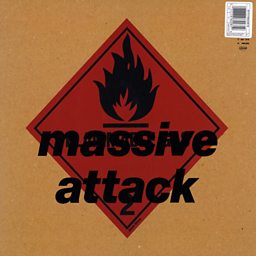
Massive Attack – Blue Lines
Paul Stokes: A perfect storm of vision, collaboration, crate digging and luscious melodies, Massive Attack’s debut album is a multi-faceted diamond that can be appreciated on different levels or enjoyed as a glorious whole.
Always sailing at the creative cutting edge (Tricky made his mainstream debut rapping on the title track), yet boasting performances by the likes of Shara Nelson, Horace Andy and Neneh Cherry that are genuinely timeless, there’s a true atmosphere of excitement that pervades the Bristolian collective’s work.
Of course ‘Safe From Harm’ and the epic ‘Unfinished Sympathy’ provided big, show stopping moments, but just as each track was assembled from creative jams, carefully selected samples and skilled songwriting, Blue Lines ultimately is greater than the sum of its parts, standing together as an edgy, enveloping complete work.
The birth of trip hop before anyone knew what that was, few records have helped to create a new genre while sounding so effortlessly classic.
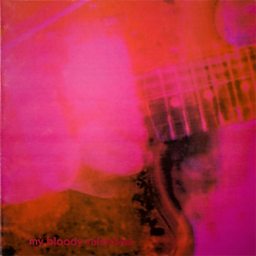
My Bloody Valentine – Loveless
Paul Thomas: Nothing comes close to the wizardry of My Bloody Valentine’s sonic palette and dense textures in Loveless. This masterpiece has provided a blueprint that has often been copied but never beaten.
Loveless is the result of a band tirelessly working in 19 different studios over a two year period on a quest to record the perfect vision of sound, as set out by the band’s leader Kevin Shields. It’s often quoted that the album cost around £250,000 to make and nearly bankrupted the band’s independent record label, Creation Records.
However, Shield’s dogged perseverance and obsession in achieving the ultimate sonic guitar fabric more than paid off. Its bombastic, immersive experimentation using unorthodox production techniques – a multi-layered form, taking in detuned guitar washes, walls of sound, obfuscated vocals, abstract loops and defiant atmospherics. Interestingly, the lyrical content from Kevin Shields and vocalist Bilinda Butcher is mostly charged, intimate and fragile, but often obscured by the maelstrom and brutality of the anamorphic musical background.
Yes, it’s bold, loud, deep, unpredictable and impenetrable in places, but it is also achingly beautiful, timeless and continues to resonate and reveal itself listen after listen.
It’s hard to single out tracks from this flawless collection of songs. It ranges from the shimmering ballad of ‘Sometimes’ to the hazy musical riff of ‘Only Shallow’ to the seductive ‘When You Sleep’. The hardcore fan’s choice is often cited as ‘To Here Knows When’, possibly the opaquest track on the album.
It would be a massive injustice and a deep disservice to try and simply label Loveless as shoegaze. It’s magnificent musical art which has the capacity to mesmerise and engage your soul. Shields has since described Loveless as the “sound of the guitar bending and what you hear in between.” It certainly remains revolutionary, an intoxicating listen and one of the most influential albums of the 1990s.
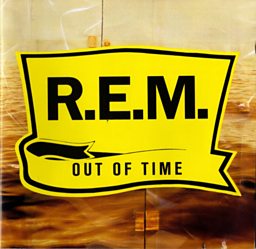
R.E.M. – Out of Time
Kellie While: I grew up in a house filled with folk music and the great singer-songwriters from both sides of the Atlantic. It was a rich diet and I was lucky, but I sometimes found it hard to connect with a lot of pop music as a teenager. When I heard Out of Time’s predecessor, Green, I was instantly hooked. Over the next year or two I went out in search of every tape – legit or bootleg – I could find from R.E.M.’s back catalogue.
I was 14 and a half when I marched up to Town Records in Southport to buy the follow-up, Out of Time, my first proper LP purchase. Listening to it for the first time was a near-spiritual experience and it delivered everything that its single Losing My Religion had promised, and more. It felt as if this album had been dreamed up, played and sang just for me: a patchwork kid whose tastes were more similar to my parents than my peers.
Out Of Time had everything I wanted. It was folk, rock, jangle and pop in equal measure. It had anguish (‘Half A World Away’), weirdness (‘Low’), sing-a-long (‘Near Wild Heaven’) and pure bop-around-the-living-room (Shiny Happy People). The album even had two-part harmonies, counter melodies, mandolins, indie-lilting, a harpsichord… Absolutely perfect – and my dad loved it too!
I mostly cringe now when I listen back to the the beloved records of my school days, but there are just a few that sound every bit as good to me now as they did then. Rites Of Passage by The Indigo Girls is one, Ingenue by k.d. lang is another. 26 years on, Out of Time remains firmly at the very top of that list.
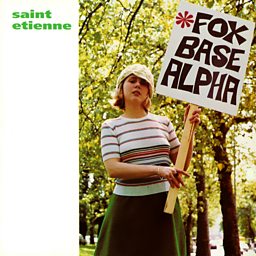
Saint Etienne – Foxbase Alpha
Jeremy Stone: I love Foxbase Alpha because I love the unique set of circumstances that caused it to exist. Those least likely pop stars of 1990/1991 weren’t even musicians for a start. Saint Etienne duo Pete Wiggs and music journalist Bob Stanley employed various female singers before settling on the gorgeous vocals of Sarah Cracknell, but it was their friend – engineer Ian Catt – who largely put the album together.
That 1991 imperial phase for Creation Records (Creation distributed Saint Etienne’s releases for their label, Heavenly) came about because as Bob discussed in a Guardian interview in 2016, most were fans of the DIY label explosion and fanzine culture that came to be known as C86 in the late 1980s. This either connected them to each other or inspired them to make music in the first place.
There was also an impulsive desire to share music with like-minded peers, which provoked the only route open to them then; the production of widely shared and copied compilation cassette tapes of long deleted tracks, oddities and classics, topped and tailed with favourite film and TV clips. Finally, an obsession with the still eclectic and leftfield Channel 4 enabled a whole swathe of fledgling to discover for the first time; the French new wave, 1960s TV oddities like The Prisoner, live music and cult cinema.
For Bob and Pete, keener than most on studio experimentation and more familiar with the flourishing club culture of the time, they ended up overseeing a hit record out of nowhere (the astonishing melancholy cover, with Soul II Soul beats of Neil Young’s ‘Only Love Can Break Your Heart’, sung by Moira Lambert, that came out a year earlier) and were now in a studio tasked with putting together Foxbase.
Afraid they’d never make another album – and it’s fair to say the LP ended up being, what Stanley called it on its 2009 reissue, “a scrapbook” – what emerged was a dizzying mix of lengthy samples of their favourite films (House of Games, Britcrime drama; The Reckoning and er, Richard Whiteley), classic 60s pop soul (Dusty Springfield, The Four Tops, The Crystals, Wilson Pickett), attempts at early Chicago House (‘Stoned to Say the least’), dub (‘Can’t Sleep’) melancholy torch songs (‘Like A Swallow’) and two of the best pop/house singles of the early 90s (‘Only Love…’ and ‘Nothing Can Stop Us’).
Now often unfairly forgotten as a partner to that Loveless, Screamadelica and Bandwagonesque Creation trio of 91, it is the biggest and still most interesting clue as to why any of those albums ever happened in the first place.
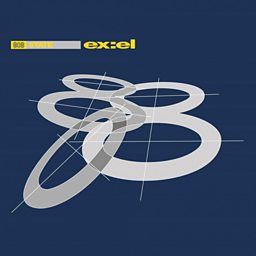
808 State – ex:el
Paul Stokes: “We are the music makers…” If 808 State’s third album’s only achievement was to bring Gene Wilder’s Willy Wonka into the sample canon their achievement would be huge. Cut’n’pasted into ‘Nephatiti’, the snatched phrase (itself a sample of Arthur O’Shaughnessy’s Ode) has reappeared in countless other musical settings. Aphex Twin based track ‘We Are The Music Makers’ around it no less.
But fortunately ex:el went further. Its twitching electronics, chiming chords and chirping beats created a sensory-teasing wormhole. Stretches of hypnotic instrumental prove absorbing, before a left turn delivers New Order’s Bernard Sumner on ‘Spanish Heart’. Bacchanalian vibes and stately synths trade places, before we meet Björk, twice, as she provides guest vocals on ‘Qmart’ and ‘Oops’.
A thoroughly immersive experience, like the chocolate factory 808 saluted, ex:el is full of sweet and sometimes unexpected delights.
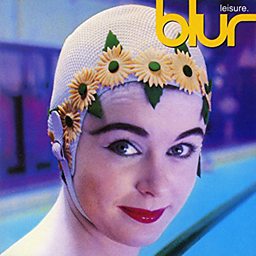
Blur – Leisure
Jeremy Stone: Barely out of their teens, Blur’s first appearance on Top of the Pops in April 1991 introduced by Nicky Campbell (“A four letter word. From Colchester!”) was a bundle of fringes and nerves. Their second gloriously catchy single ‘There’s No Other Way’ had incredibly jumped into the top 10 from nowhere and Damon Albarn’s blue eyes stared into our living rooms for what would be the first of many visits.
Even in 1991 this was unusual stuff – EMI Management spent thousands and deliberately pushed them to exploit visually and musically the current Madchester scene – as Radio 1 was still the home of Bates and Brambles where a single play on Mark Goodier’s evening show was probably the summit of ambition for an admittedly ambitious new guitar band.
Despite all this, the debut album; Leisure released a few months later, seemed to be already past its sell by date. It struggled to Number 7 in the charts, Albarn now unfairly calls it “awful”, and the simplistic lyrics (mostly ten different ways of saying “I love her” with plenty of ah-ahs to fill the gaps) hardly foreshadow the confident storytelling and imagery of their follow-ups and the initial thrill of that optimistic summer of love (well, the second one), Baggy, and er, Candy Flip was all but over.
Yet ‘There’s No Other Way’ is still one of the best pop singles of the era, the hypnotic six minute ‘Sing’ rightfully one of the few tracks from the time that made the set lists and hits collections of their various reunions, and ‘Bang!’ is a terrific 1990/91 relic. Surprisingly, debut single “She’s So High” holds up best, a nice bit of creepy Floyd psych-pop.
Ultimately though, two albums of the era would come to influence Blur’s career – one they imitated palely and one which triggered a triumphant reaction amongst Albarn and co. Leisure cannot escape the shadow of The Stone Roses’ debut, and much of their early success benefitted from filling the vacuum created by the Manchester band’s self-inflicted long weekend of infighting and inaction. The other album? Two short weeks after Leisure hit the racks of HMV, WH Smith, Our Price et al, a certain Nevermind arrived from Seattle. But how that transformed the “Four letter word! From Colchester!” and British pop is another story.
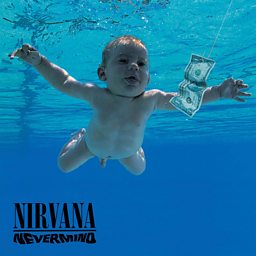
Nirvana – Nevermind
Paul Stokes: From the wrong end of time’s arrow the ascendency Nirvana achieved with their second album may look inevitable – the move to David Geffen’s major label, Dave Grohl’s recruitment and its iconic artwork in particular – but Nevermind’s climb was long and by no means assured. Don’t forget, such was Kurt Cobain and co.’s lack of status that they were thrown out of the launch party for ‘Smells Like Teen Spirit’ for starting a food fight.
Yet once out of the bottle Nevermind spread, slowly at first as it gently scaled the American charts after its release in September 1991, and then at breakneck speed as Nirvana and grunge soundtracked the globe.
Of course Nirvana sounded slicker on their second record, and the band’s often underrated gift for a pop melody was at its most prominent, but Nevermind is not an album of compromise – ‘Come As You Are’, ‘Polly’ and ‘Smells Like Teen Spirit’ only sound like pop songs now because they remade the mainstream in their wake – but a rare moment where thanks to its emotional resonance, outsider art had mass appeal.
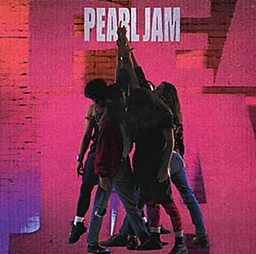
Pearl Jam – Ten
Paul Stokes: Despite being recorded and released before Nevermind, Pearl Jam were accused by some of jumping on Nirvana’s grunge bandwagon when their debut emerged in 1991.
While sharing a jagged urgency with their fellow Seattle residents, whereas Nirvana took a cue from punk, Eddie Vedder and co tapped far more into rock – and impressively found their own original voice within the tradition.
Ten is thus a muscular, swaggering and assured debut, driven on by monster guitar solos and the frontman’s force of nature vocals. It not only established Pearl Jam in their own right, and ensured grunge, American alternative rock, or whatever you wanted to call it, was no one trick pony but was a stable packed with thoroughbreds.
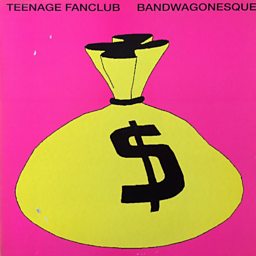
Teenage Fanclub – Bandwagonesque
Rowan Collinson:“She wears denim wherever she goes, says she’s gonna get some records by the Status Quo.” So begins The Concept, the opening song on Teenage Fanclub’s Bandwagonesque, their third album and first for Creation Records. Released in November ’91, the Fannies took the scuzzed up guitars of their debut ‘A Catholic Education’ and added a West Coast sheen to proceedings with ‘What You Do To Me’ and ‘December’ dripping in Byrdsian reverb.
Listening to the harmonies on ‘Star Sign’, it’s hard to believe this was a band geographically closer to Govan than the Grand Canyon. Despite arriving at the tail end of the year, Bandwagonesque famously ended up beating Nirvana’s Nevermind into second place in Spin’s albums of the year list, amplified by a certain Kurt Cobain who called them “the best band in the world.”
While Nirvana’s legacy may be the longer-lasting, affection for Bandwagonesque remains undimmed too; musicians including Tim Wheeler from Ash and Snow Patrol’s Gary Lightbody have professed their love for it, while Death Cab for Cutie’s Benjamin Gibbard was so entranced that he later covered the LP in full.
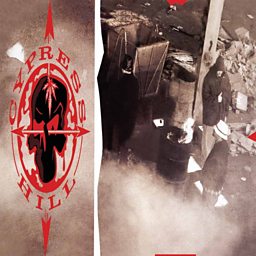
Cypress Hill – Cypress Hill
Paul Stokes: With its off kilter beats, unhinged brass and flute samples and laconic raps, Cypress Hill’s Latin-flecked debut could belong to no-one else, yet it also created a much imitated template for West Coast rap.
With a shuffling old skool funk, there’s an almost joyous feel to the band’s self-titled first record, despite the group’s distinctive voices visiting their fair share of dark topics.
Global smash hits, cross over festival appearances and The Simpsons were all to come for Cypress Hill, but their debut set a distinct tone.
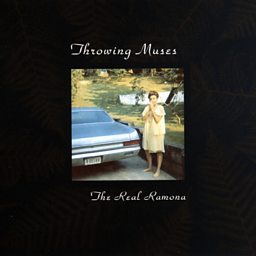
Throwing Muses – The Real Ramona
Paul Stokes: With its glimmering guitars and poppy melodies, The Real Ramona represented new territory for Throwing Muses.
Less emotionally abrasive than some of its predecessors, the band’s fourth album was no less engaging as the shimmering and enchanting ‘Counting Backwards’, ‘Dylan’ and ‘Red Shoes’ prove.
However, The Real Ramona was also an end for Throwing Muses; it was Tanya Donelly’s last album with the band before she left to form Belly. The group would need to change again, but for a final time Kristin Hersh and Donelly’s vocals intertwined beautifully.
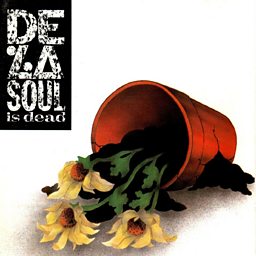
De La Soul – De La Soul Is Dead
Paul Stokes: Faking your own death worked for Ziggy Stardust, although David Bowie waited until the end of the tour to kill off his Spider From Mars, so De La Soul’s decision to kill themselves on record is another level.
Driven via a skit that runs throughout the record – parodying a children’s “now turn the page” read along book and tape – we get to experience the trio’s second album apparently as a discarded mixtape found in the trash.
However, with the likes of ‘Ring Ring Ring (Ha Ha Hey)’, ‘A Roller Skating Jam Named “Saturdays”’ and ‘Who Do U Worship?’ peppering the record, De La Soul emerge alive and very much kicking on their second album.
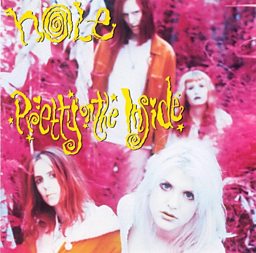
Hole – Pretty On The Inside
Paul Stokes: Brash, stroppy, temperamental, angry, there’s a brilliant, unfiltered directness to Courtney Love and co’s debut album.
Always frank, Love delved into personal, often challenging experiences for her candid lyrics, though with a strident, often brash delivery she attacks the sometimes uncomfortable subject matter from a position of strength.
Bolstered with sloppy punk guitar drones, Pretty On The Inside might not be an easy listen, but it is a truly compelling and engaging one.
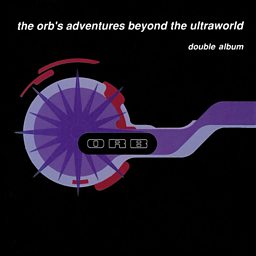
The Orb – Adventures Beyond The Ultraworld
Don Letts: Led by Dr Alex Paterson The Orb were – and indeed still are – essentially an electronic collective who were certified by the late great John Peel (and recorded several full length sessions for him over the years).
This was their debut full length release. It’s a two hour, bass heavy, psychedelic journey, via a seamless mix of genres, studio techniques, vocal samples and sounds effects. As such it’s a non-stop trip from beginning to end.
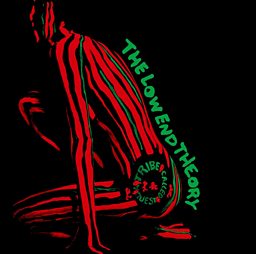
A Tribe Called Quest – The Low End Theory
Paul Stokes: Hip hop recut through a jazz tradition, there’s not only a brilliant artistry to A Tribe Called Quest’s second album, but an understated groove that set it apart from the burgeoning 1991 rap scene.
Built in part with live bass, taut beats and precise flows, there’s a minimalist beauty to Low End Theory that in turn creates some big atmospherics around each song.
Though evocative of smoky, after-hours jazz clubs, don’t be fooled by A Tribe Called Quest’s underplayed hand, behind it are some serious thoughts delivered with a quiet yet deliberate power.
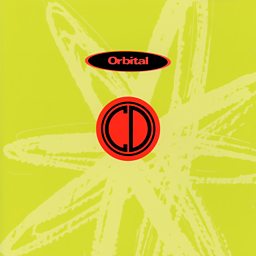
Orbital – Orbital
Rowan Collinson: Known as the “Green Album” in reference to its luminous cover, Orbital’s debut album emerged from the UK rave scene after a run of 12-inch singles and a notoriously mardy Top of the Pops appearance the year before.
A counterpart to The KLF’s proto stadium trance and the numerous Belgian techno records that found their way into the charts during 1991 (T99’s Anasthasia anyone?) the brothers Hartnoll made a record broader and deeper than their peers, nodding their collective heads to acid house on ‘Speedfreaks’ while invoking the spirit of Kraftwerk on ‘Farenheit 303’.
‘Chime’ – first released in 1989 and heard here in its live permutation – may remain the band’s best known work, but it’s the heavenly choral sample and deep synths of ‘Belfast’ which are arguably the album’s high watermark. Three decades, eight albums and numerous Glastonbury performances later, the band have just released a new single ‘Copenhagen’ sounding not dissimilar to those 1991 recordings, meaning like any good Orbital path, the circle is now complete.
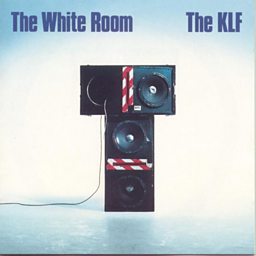
The KLF – The White Room
Tom Robinson: The KLF – or Justified Ancients Of Mu Mu as they’ve always preferred to be known – are simply unique. That said, Bill Drummond and Jimmy Cauty always had that anarchic Malcolm McLaren vibe of “destroy, subvert and undermine expectations…” and of simply improvising their strategy in response to each new idea or opportunity as it cropped up.
That’s why The White Room – far from stemming from some cunning master plan – was the almost accidental result of several years of failed projects, dwindling cash, and creative dead ends.
But Bill and Jimmy well understood that making mistakes and being prepared to wander up blind alleys is an essential part of the creative process. They continued to defy conventional music industry wisdom, went their own sweet way – and kept trying stuff and chucking it at the wall to see what would stick.
Then in 1990 their now-legendary remix of ‘What Time Is Love?’ suddenly propelled them into the commercial stratosphere, crystallising the approach they’d been edging towards all along. And it was the ensuing Stadium House trilogy of singles (‘What Time Is Love?’, ‘3 a.m. Eternal’ and ‘Last Train to Trancentral’) that allowed the JAMs to revisit their failed White Room movie soundtrack and transform it into the landmark album we still know and love 30 years later.
To this day nobody’s heard that initial soundtrack version of The White Room. It was originally conceived for a road movie – featuring Drummond and Cauty on another of their legendary surreal quests – which they were forced to abandon due to a lack of funds. The single ‘Kylie Said To Jason’ was supposed to help bankroll the film, but failed to even make the Top 100. On top of that there’s an entirely different – darker and harsher – version of the album called The Black Room which may likewise never see the light of day. Like Prince and Bob Dylan, the KLF/JAMS are surrounded by myth, legend and rumour, and clearly have no interest whatever in revisiting the past.
It’s hard to remember today the bitterness of the cultural war being fought in the charts around the start of the 90s. Dance Music on the one hand (house, techno and rave) was often underground and anti-establishment and in stark contrast to the ‘Proper’ Pop Music favoured by the music industry establishment. That battle echoed the arrival of punk rock a generation before, and even the birth of rock’n’roll itself. I’m old enough to remember records by Chuck Berry and Little Richard being dismissed as primitive, repetitive and content-free, exactly like 1990s dance music.
The KLF’s major achievement with The White Room – with its trio of Stadium House hits and Tammy Wynette follow-up – was it squared the circle and appealed to both sides of the chart divide at once. Here was brilliantly made dance music with all monster hooks and larger-than-life personalities that are the very hallmark of conventional pop stardom. Its success was sudden and staggering.
For me though, the mark of the JAMS’ true greatness as artists is that acclaim and money completely failed to seduce them. Anarchic to the last, Bill and Jimmy stuck to their situationist principles and walked away from the entire circus at the very pinnacle of their fame.
Following the success of last year’s ‘Somebody’s Knocking’ LP, Mark Lanegan has announced the news of his new solo album, ‘Straight Songs Of Sorrow’, released 8th May via HeavenlyRecordings.
When considering any great work of art, be it a painting, a novel, or a piece of music, it’s natural to wonder what might have inspired it: ‘the story behind the song’.
Mark Lanegan’s new album, “Straight Songs Of Sorrow”, flips that equation. Here are 15 songs inspired by a story: his life story, as documented by his own hand in his new memoir, Sing Backwards And Weep. The book is a brutal, nerve-shredding read, thanks to Lanegan’s unsparing candour in recounting a journey from troubled youth in eastern Washington, through his drug-stained existence amid the ’90s Seattle rock scene, to an unlikely salvation at the dawn of the 21st century.
There’s death and tragedy, yet also humour and hope, thanks to the tenacity which impels its host, even at his lowest moments. As Lanegan writes near the end: “I was the ghost that wouldn’t die.” Today, Lanegan is a renowned songwriter and a much-coveted collaborator, as adept at electronica as with rock, constantly honing his indomitable voice: an asphalt-laced linctus for the soul. While the memoir documents a struggle to find peace with himself, his new album emphasis the extent to which he came to realise that music is his life. “Writing the book, I didn’t get catharsis,” he chuckles. “All I got was a Pandora’s box full of pain and misery. I went way in, and remembered shit I’d put away 20 years ago.
But I started writing these songs the minute I was done, and I realised there was a depth of emotion because they were all linked to memories from this book. It was a relief to suddenly go back to music. Then I realised that was the gift of the book: these songs. I’m really proud of this record.” Straight Songs Of Sorrow combines musical trace elements from early Mark Lanegan albums with the synthesized constructs of later work. The meditative acoustic guitar fingerpicking – provided by Lamb Of God’s Mark Morton – on Apples From A Tree and Hanging On(ForDRC) echo 1994’s Whiskey For The Holy Ghost. Yet one of that record’s touchstones was Van Morrison’s Astral Weeks, echoed in the new album’s opener I Wouldn’t Want To Say, where Lanegan extemporises *à la Ballerina over musique concrète wave patterns generated by his latest favourite compositional tool, a miniature computer-synth called the Organelle. The lyric clings onto the music, emulating his book’s queasy momentum: *“Swinging from death… to revival.” “That song is the explanation, the beginning and middle and end of that entire period of time,” Mark says. “The encapsulation of the entire experience, book and record. So I started with that.” Lanegan affirms that every song references a specific episode or person in the book, albeit some more explicitly than others. Hanging On (For DRC) is a loving ode to his friend Dylan Carlson, genius progenitor of drone metal and a fellow unlikely survivor of Seattle’s narcotic dramas.
“I was always unhappy, and he was the guy who was always smiling, even through my crazy schemes that eventually got both of us into a lot of trouble.” The richly cinematic mood of Daylight In The Nocturnal House, meanwhile, paints a more impressionistic scene: factory smoke, rain, a phone call from *“somebody’s grand-daughter”, who’ll “pay to make somebody crawl/And send you to heaven.” The singer’s perspective is ambiguous. “I got into a lot of shady business in those years,” Lanegan says. Longtime observers will recognise some familiar recurrent themes. Death. Destruction. Bad behaviour. In the case of At Zero Below, all in the same song. “Yes, I did burn someone with a cigarette,” Mark says. “Yes, I did spit in somebody’s face – maybe more than once in my life. Stuff I’m not proud of.
That song is also about one of my many ex-girlfriends who is no longer with us. It’s all linked to the book.” At Zero Below features two of the album’s many stellar guests. Singing admonitory harmonies with himself is Greg Dulli, another ’90s alt-rock veteran, Lanegan’s erstwhile partner in mischief and fellow Gutter Twin. The song’s incantatory fiddle is played by The Bad Seeds’ Warren Ellis. No lesser figure than Led Zeppelin’s John Paul Jones provides Mellotron on the serpentine Ballad Of A Dying Rover (*“I’m just a sick sick man/My days are numbered”). Aside from mandolin, all Daylight In The Nocturnal House’s cobwebbed atmospherics are by Portishead’s Adrian Utley. Ed Harcourt is Lanegan’s pick for album MVP (“He’s all over it – everything that he plays, piano or Wurlitzer, becomes magical”), with special mention to bassist Jack Bates, son of Peter Hook; that duo make especially distinctive contributions to Churchbells, Ghosts a bleakly humorous lament to the drudgery of life on the road (*“I’d ask somebody for a quarter/If there were someone for me to phone”). Ketamine is a numb blues, with Lanegan shadowed by Cold Cave vocalist Wesley Eisold, who inspired the album’s only overt drug song (ironically, about a drug that Lanegan has never actually taken). “Wes is good friends with Genesis P-Orridge,” explains Mark, “and he said the last time he saw Gen she was in a hospital bed, saying to this priest, ‘No thank you sir, I don’t need any last rites, but if you have any ketamine that would be perfect.’” He laughs. “So I immediately wrote that song and had him sing on it. There’s drugs throughout the record – they’re rife in Bleed All Over – but that song was the only real specific one.” The material on the last two Mark Lanegan Band albums had Lanegan’s words set to music by various other sources. But aside from the Mark Morton collaborations,
Straight Songs Of Sorrow was built from the ground up by Lanegan alone, aided by producer Alain Johannes, his longtime consigliere. Only two other songs have shared credits, and even these stay in-house: Burying Ground and Eden Lost And Found were co-written by Mark’s wife Shelley Brien, with whom he also duets on the Rita Coolidge/Kris Kristofferson-style ballad This Game Of Love. “Let’s put it this way,” says Mark. “Every girlfriend I’ve ever had, for any amount of time, left me.
All the good ones left me! Until my current wife. It was great to sing that with Shelley, it really shows she’s a great singer. And it has a depth of emotion that I’m not used to. This is a more honest record than I’ve probably ever made.” A crushing twin-song centrepiece proves that. First, Stockholm City Blues, a sparse, beautiful, strings and finger-picking meditation on the remorse code of addiction (*“I pay for this pain I put into my blood”). Then, the seven-minute epic Skeleton Key, a supplicatory confessional (“I’m ugly inside and out there is no denying”) that also provides the album title. It’s a remarkable performance from a man whose punishment for plumbing the depths was simply to continue further along the road. “My wife called that my ‘redemption song’,” says Lanegan. And indeed, there is a happy ending to this story. Just as his book closes with the hero overcoming adversity and turning, battered but cleansed, towards a new day, so Straight Songs Of Sorrow closes with Eden Lost And Found. *“Sunrise coming up baby/To burn the dirt right off of me,” marvels Lanegan, with his words echoed by Simon Bonney of Crime & The City Solution, an all-time hero. “I wanted to make a positive song to end this record, because that’s the way the book ended,” Mark says. “And what’s more positive than to have your favourite singer sing with you?” Straight Songs Of Sorrow feels both definitive and unique, a culmination of its creator’s arc yet also indicative of the energy that drives him onto future horizons. No wonder Lanegan is proud. “I do feel this is something special for me, something honest,” he says. “’Cos records are not real life, man – in case no one told ya. They’re just a fake version of life!” Mark Lanegan laughs. “Well, at least you have one now that’s a little closer to being real. Unfortunately, it’s by me.”
The album, which is closely aligned to his forthcoming memoir, “Sing Backwards And Weep”, features guest appearances from Greg Dulli, Warren Ellis, John Paul Jones, Ed Harcourt and more
David Blue quit high school at age 17, left home, and joined the Navy, but was soon thrown out for his “Inability to adjust to a military way of life.” Blue became an integral part of the “Greenwich Village” Folk music”scene in New York City which included singer songwriters Bob Dylan, Phil Ochs and Dave Van Ronk Tom Paxton, Bob Neuwirth, and Eric Andersen. … Of the singers and writers on the scene at this time, David Blue appears to have been closest to Dylan…” “He needed a friend,” Blue said. “So he started including me in his scene and I got tight with him.
David Blue is best known for writing the song “Outlaw Man” for the Eagles (band)” which was included on their 1973 “Desperado”.Blue’s original version of “Outlaw Man” was the lead track of his own Nice Baby and the Angel album, re-issued on CD, with the entire David Blue catalogue, in 2007 on Wounded Bird Records.
Blue joined Dylan’s “Rolling Thunder Revue” in 1975 and appeared in Renaldo and Clara the 1978 movie that was filmed during that tour. Blue acted in other films including, “The American Friend (1977), directed by Wim Wenders The Ordeal of Patty Hearst (a 1979 TV movie) and “Human Highway” by Neil Young” premiered in 1983 after Blue’s death. Blue also performed onstage in Stephen Poliakoff ‘s play “American Days” at the Manhattan Theatre Club” in New York City in December 1980, directed by Jacques Levy”
David Blue does write every track but the album is full of inventiveness and cracking tunes with a distinctly alternative edge to it, and dare I say tinges of psych on some tracks… There is, probably inevitably, the feel of a recently electrified Dylan on here including some occasional Bloomfield-esque guitar moments,
Blue died of Heart attack in December 1982 at the age of 41, while jogging in Washington Square Park New York
Do You Wonder About Me? Is the follow-up to 2017’s Swear I’m Good At This. The new record marks a more intentional, self-assured Diet Cig; not only in Luciano’s radically intimate, acerbic lyrics, but in the duo’s sound as well. Luciano and Bowman moved to Richmond, VA in the summer of 2017 as a place to “hide out and make music,” and it was there that they wrote Do You Wonder About Me?, Diet Cig’s ode to growing up.
“We spent a lot of time after the first record growing as people, being humans outside of tour for a little bit, and trying to shed the imposter syndrome.” Luciano says. Spending the time to make the kind of music they really wanted to make and making sure they felt good about it was crucial to the success of tracks like Night Terrors. It’s a slower-paced song than Diet Cig’s usual, but just as biting; a song about reckoning with all the past versions of yourself. As Luciano puts it, “Am I still these people, or have I shapeshifted?” It’s essentially the thesis of Do You Wonder About Me?, considering and accepting the embarrassing aspects of your identity, and how they’re just as much a part of you as the good stuff.
Our second album, “Do You Wonder About Me?” is coming out May 1st! Pre-order the record (https://orcd.co/dietcigwonder) and check out our new song, “Thriving.” Thriving was the first song we wrote for this record!!! Inspired by the melodrama of reality TV and musical theater, we wanted the song to bounce back and forth between a lavish personal anthem and the anguish of feeling forever beholden to others opinions.
Jamal Ruhe played all the bass
Karli Ashlyn Helm sang harmonies and additional vocals and played additional keys
Christopher Daly shredded the arpeggiator more than once
Travis de Jong played saxophone
Brian Christinzio, an American songwriter, wanted to write a road song. The problem was that in 2012 he had moved to Manchester in the north-west of England, a city which did not lend itself to Springsteen-esque anthems. So he wrote “Born to Cruise” instead, a four-on-the-floor drivetime banger that opened: “I’ve had my indicator on since leaving Crewe/That explains the gestures in my rearview.” “Shortly After Takeoff”, on which the track appears, is both desperately sad and unbearably funny.
Brian Christinzio channels ’70s singer-songwriters (Nilsson, Newman) in a very postmodern way on his sad, witty, and very tuneful fifth album. The amazing one-liners are too many to count on this unique, wonderful “examination of madness and loss” that’s his best yet.
When piano playing songwriter BC Camplight (AKA Brian Christinzio) drops a new record, the world takes notice. Blending indie rock with lo fi pop sensibilities, his cult following has swollen to breakthrough into the mainstream and both fans and critics alike have been eagerly awaiting the release of his new album ‘Shortly After Takeoff’.
Hopes were raised high with previous LPs ‘How To Die In The North’ and ‘Deportation Blues’, and fortunately the third and final part of what Christinzio is calling his Manchester Trilogy, All three albums were created after the native Philadelphian had moved to Manchester England. Like Deportation Blues, Shortly After Takeoff spans singer-songwriter classicism, gnarly synth-pop and ‘50s rock’n’roll, with Christinzio’s similarly distinctive, flexible vocal carrying a fearless approach to lyrical introspection, but the new album is a major leap forward in songwriting sophistication and lyrical communication.
It certainly does not disappoint. Continuing his aliens account of a Philadelphian’s experience of living in the north west, his idiosyncratic outlook is matched by an equally unique genre defying sound that blurs the lines between synth-pop, folk, country and space rock.
Seamlessly sophisticated, it’s a clever record loaded with witty insights and packed full of ideas without ever becoming too demanding of your attention to prove a point or explore a genre. See BC Camplight when he tours ‘Shortly After Takeoff’ from September onwards.
Taken from the album ‘Shortly After Takeoff’ by BC Camplight, released 24th April 2020 via Bella Union Records.