Archive for the ‘CLASSIC ALBUMS’ Category

Click to view larger image

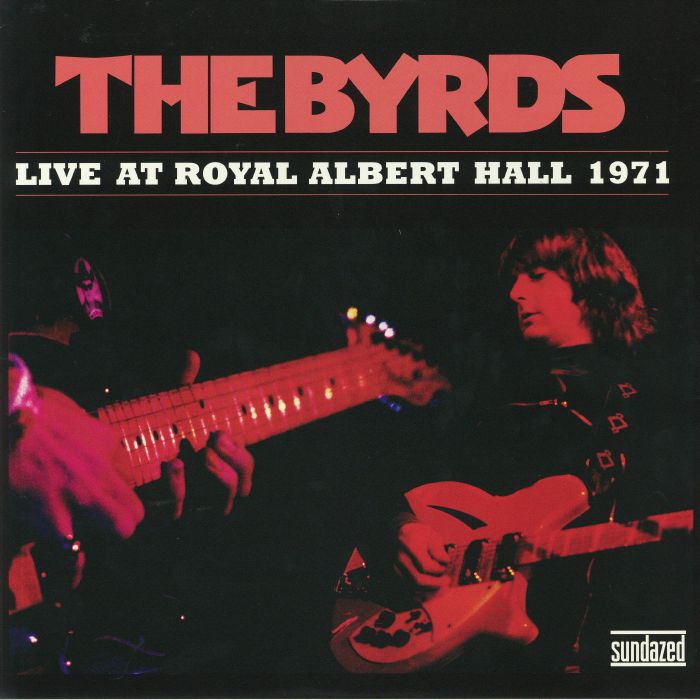
Roger McGuinn discovers a long-forgotten soundboard of the Byrds’ last true live line-up sitting in his garage, sharing the flashback to a time when the band was on its way down while virtuoso guitarist Clarence White was on his way up.

The Byrds weren’t just one of the greatest and most influential bands of all time, they were several of them. There was, of course, the original folk-rock version of the Byrds, which started the psychedelic version of the Byrds, which in turn begat the country-rock version of the Byrds, which in turn begat a hodgepodge of all those iterations before the group burned out once and for all. But each version of the Byrds likewise showcased what could generously be categorized a constant shifting line-up, with Roger McGuinn as the sole constant up through the band’s somewhat unsung end in 1973.

Yet McGuinn’s not the star of the line-up captured on “Live at the Royal Albert Hall 1971”, the masters of which the singer recently found sitting in his archives.

Rather, the focal point is former bluegrass prodigy turned rocker Clarence White, whose short-lived career ended around the same time The Byrds did, when he was struck and killed by a drunk driver while loading gear. White got his start in the Kentucky Colonels, crossing paths with The Byrds several times before McGuinn eventually invited him to join in 1968 as a permanent member. His virtuoso solos and interplay with McGuinn are what kept the band interesting, especially in its later years and particularly for a band never renown for its live prowess.

Albert Hall 1971 isn’t The Byrds‘ only live album– portions of 1970’s (Untitled) were recorded live, and 2000 saw the release of Live at the Fillmore – February 1969. By this point the band’s flame was growing dimmer, its focus diffuse, and you can hear the roots of the nascent jam-band movement as the songs’ melodies give way to relatively aimless noodling. Just listen to how Bob Dylan’s “My Back Pages” is given a rushed and busy reading en route to a rendition of Jimmy Reed’s “Baby, What You Want Me to Do” which recalls what the Grateful Dead (also frequently drawn to Reed) was up to on its parallel folk-rock route.

A few of the Byrds’ better known songs are well represented, but renditions of “So You Want to be a Rock ‘n’ Roll Star” and “Mr. Spacemen” are loose and hardly definitive. The setlist is also distractingly schizophrenic, veering from the likes of “Lover of the Bayou” to Dylan’s laid-back “You Ain’t Goin’ Nowhere” with little in the way of segue. Singing lead on a handful of songs, such as Jackson Browne’s “Jamaica, Say You Will”, White offers a vocal counterpart to McGuinn, but the harmonies from the band’s heyday are largely nowhere to be found. The a cappella “Amazing Grace” that closes the set is a far cry from the McGuinn, Gene Clark, David Crosby, and Chris Hillman frontline that helped make the band famous.

But then there’s the guitar. McGuinn and White tear it up on cuts like “Jesus Is Just Alright” and “Lover of the Bayou”. “There are so many songs we’d all like to hear, and there are so many songs we’d like to do for you, but there’s only a little bit of time,” apologizes McGuinn before someone requests “Nashville West“. “You want to play that one, Clarence?” he asks, before letting White off his leash. Even acoustic, the pair shines. The traditional “Black Mountain Rag/Soldier’s Joy” includes two of the disc’s best minutes, easing into a 12-string free “Mr. Tambourine Man”, Woody Guthrie’s “Pretty Boy Floyd”, and Leadbelly’s “Take a Whiff (On Me)”, tracks that showcase McGuinn and White sans clunky rhythm section.

Indeed, the two later lead a radically reworked “Eight Miles High” past the 18-minute mark, but that also includes a lengthy interlude featuring the plodding bassist Skip Battin and drummer Gene Parsons who, frankly, drag down the John Coltrane-inspired epic (the liners note the section was mostly inserted to give McGuinn and White a cigarette break). It’s partly their fault that Live at the Royal Albert Hall 1971 never quite reaches the heights McGuinn and White aim for, but it’s also clear, instrumental aptitude or not, that The Byrds had moved beyond the logical end of its creative road. Listening to this set, it’s easy to imagine the band deciding to tour forever, like the Dead did, existing for fleeting moments of ephemeral glory while memories of its better days faded away. But that was not to be, and in retrospect, with fine but hardly earth-shattering documents such as this one as proxy witness, pulling the plug was probably for the best.

Setlist:
Lover Of The Bayou (3:35)
You Ain’t Going Nowhere (2:44)
Truck Stop Girl (3:25)
My Back Pages (2:20)
Baby, What You Want Me To Do (3:40)
Jamaica, Say You Will (3:30)
Black Mountain Rag/Soldier’s Joy (2:04)
Mr Tambourine Man (3:33)
Pretty Boy Floyd (2:40)
Take A Whiff (On Me) (2:45)
Chestnut Mare (5:16)
Jesus Is Just Alright (3:16)
Eight Miles High (18:35)
So You Want To Be A Rock ‘N’ Roll Star (3:07)
Mr Spaceman (3:01)
I Trust (5:28)
Nashville West (2:39)
Roll Over Beethoven (3:02)
Amazing Grace (2:36)

Image may contain: 3 people, people sitting and indoor

Nothing but good news from the Haim camp this morning: with the sisters’ new album Women in Music Pt. III getting pushed from an April release to a “late summer” release back in March, the group said “fuck that” and slotted it for June 26th . Additionally, the news arrives the same day as their latest single and video from the LP, “I Know Alone,” which skews the record’s sound in the direction of electronic dance music.

Due to certain understandable limitations, the production value on the new video is significantly less than those of its predecessors, though the trio still keep the eyes engaged with synchronized moves presumably filmed in someone’s backyard post-lockdown. Jake Schreier fills in for Paul Thomas Anderson behind the camera, and HAIM cites Frances and the Lights as a collaborator on their choreography.

I know alone song and video out now. ps- the original plan was to release wimpiii later on this summer well fuck that we are gonna release it on june 26th, just in time for summer.

Still: Why Joy Division’s Archival Collection Continues To Endure

Released following Ian Curtis’ death, ‘Still’ proves that Joy Division’s outtakes and rarities stack up against most bands’ A-grade material. However, the band had recorded prolifically during their short life and they’d left enough rare and/or previously unreleased songs in the vault to warrant the collation of an impressive posthumous collection – 1981’s “Still”.

“Still” is a compilation album by the English band Joy Division, consisting of previously released and unreleased studio material and a live recording of Joy Division’s last concert, performed at Birmingham University 40 years ago on May, 2nd 1980, two weeks before the death of singer Ian Curtis. It was released on 8th October 1981 by Factory Records, and was intended to both combat the trade in bootlegs and give fans access to recordings that were not widely available at the time. The concert was recorded via the soundboard, which was released on the “Still” double LP that included all eleven songs from Joy Division’s set, despite “Twenty Four Hours” not being credited on the sleeve.

Joy Division debuted the track “Ceremony” during this concert, which is not even titled on the handwritten setlist, but instead just credited as “new song”.

Factory Records genuinely had no intention of rush-releasing “Still”, and their motives were honourable. The label absolutely believed they should give fans official access to Joy Division songs which weren’t widely available at the time – and they wanted to combat the trade in bootleg recordings which began circulating following Curtis’ death.

Accordingly, Factory put “Still” together as a double-album, with its first disc covering outtakes from the band’s seminal studio albums, “Unknown Pleasures” and “Closer”, plus a brace of then hard-to-source rarities. The second disc, meanwhile, contained a mixing-desk recording of Joy Division’s final gig, at Birmingham’s Aston University on 2nd May 1980, in its entirety.

“Still’s” studio disc ensured the album was worth the price of admission. The songs weren’t arranged chronologically, but some thought went into the sequencing, as the record kicked off in style with the brooding, soundtrack-esque “Unknown Pleasures” outtake Exercise One, followed by the urgent, anthemic Ice Age and the harsh, metallic “The Sound Of Music” – the hugely potent latter song a leftover from the band’s initial “Love Will Tear Us Apart” session in January 1980.

During the performance of “Decades!” Ian stumbled and had to be helped off stage while the rest of the band played on. He recovered enough to return for an encore performance of “Digital”.

There was much to cherish elsewhere, courtesy of Dead Souls, two further “Unknown Pleasures” outtakes – “Walked In Line” and “The Kill” – and the little-known “Something Must Break“. Though rarely performed live, the latter song (which was recorded during a session at Manchester’s Central Sound studio in July 1979) occupies an important space in Joy Division’s history.

“It was an interesting song for us, being the first time the band had used a synthesiser,” Peter Hook wrote in his memoir “Unknown Pleasures: Inside Joy Division”. “Martin [Hannett, producer] had used them on “Unknown Pleasures“, but the thing about us in Joy Division – especially me, Bernard [Sumner, guitarist] and Steve [Morris, drummer] – was that we were sponges, constantly learning off Martin. So you’d have this situation where on “Unknown Pleasures“, me and Bernard were moaning about using a synth, but then a couple of sessions down the line we were using it ourselves. Bernard embraced all that and on “Something Must Break“, he used a synth instead of guitar – there’s no guitar on the song at all.”

Here is a recounting of the concert Dave Haslam, remembers: “It was a dining room at a student hall of residence. 300 people there I reckon. I was ten rows from the front. It was a ramshackle affair, Ian left the stage at least once”. David Pryke was there: I went as an 18 year old student from the near by Aston University. Joy Division were known as the coolest band on the circuit but I was only familiar (so I thought) with the single “Transmission“.

A few memories – they were very very late! We hung around for a long time listening to ACR sound check. A mixed audience of students, punks and rockers. He Remembers ACR doing a cracking set (I think at the time I enjoyed this more, but it paled rather following the news later in the month). It wasn’t until I heard the first few chords of “Shadowplay”. The other track also played on the night and one of my faves was “New Dawn Fades” – Moby played this at a recent gig at Brixton Academy as homage to Ian Curtis.

The only other versions of “Ceremony” that Ian Curtis recorded are from the soundcheck on May 2nd, and from a studio session on 14th May 1980, four days before Curtis’ suicide. The album includes the only live performance by the group of the song “Ceremony”, which later became a New Order single. For reasons unknown, the recording abruptly begins just before the song’s first chorus, as opposed to at the actual beginning of the song; like all surviving Joy Division recordings of “Ceremony”, Ian Curtis’s vocals are barely audible, though in this instance the final chorus is unusually clear. Another song featured is a cover of the Velvet Underground’s “Sister Ray”, recorded at the Moonlight Club in London on 2nd April 1980.

Effectively closing the door on the band’s brief but brilliant career, “Still” remained the only Joy Division compilation of note until Factory issued “Substance” in 1988, and – as most contemporary appraisals suggest – it remains a necessary adjunct to Joy Division’s two widely acclaimed studio albums.

The Bobby Lees’ Drive,” a title track from their latest album, Skin Suit, out July 17 via Naturalsound, is about good mental health, something that’s so important right now.


“A couple of months ago, we were heading down to Austin, TX for SXSW and playing shows along the way,” the band says. “By the time we got to Tulsa, Oklahoma, our nine SXSW shows had been cancelled because of the virus. So, we made the best of our time in Tulsa and shot a video with our friends, while keeping a safe distance.”

“This song is about needing to connect to other people in order to stay alive/feel alright,” says Sam. “Last winter. for a few months, I was pretty isolated and developed an obsession with wanting to smash my car into a telephone pole or put my head through a glass window. Basically wanting some kind of intense impact to turn my brain off.

“The song’s about that, and the idea of sharing/being open about where you’re at. I didn’t keep it to myself; I told a few people and talked about it instead of doing it, and the obsession thankfully went away. Now I can laugh about it.”

Their new record, Skin Suit, was produced by underground punk legend Jon Spencer of the Blues Explosion and will be released on Alive Naturalsound Records on July 17th, 2020. Skin Suit mixes classic, garage-punk hits with raw and emotive storytelling. In the past year, they’ve played with The Chats, Future Islands, Boss Hog, Daddy Long Legs, Shannon & The Clams, and Murphy’s Law.

“Drive” – off our new record Skin Suit being released on 5/8/20 by Alive Naturalsound Records.

I’ve been thinking of life as one big roleplaying game,” Johanna Warren offers when asked why she chose to title her new album after a Dungeons & Dragons reference. “There’s chance, there’s choice, and there’s alignment—what forces in the universe do I choose to align myself with?”

Chaotic Good is Warren’s fifth full-length album and first for Wax Nine/Carpark Records. It represents a moment of rupture in the singer-songwriter’s career as she transitions away from the quiet, folk-adjacent work that defined her early solo albums with a bold statement piece that demonstrates the breadth of her ambition. Here, Warren flits between crushing admissions set to spare piano solos and muscular declarations of independence that have more in common with grunge acts of bygone years than anything we’ve heard from Warren in the past. “The last few years I’ve had an urge to change my name, or create some alter-ego,” she says. “But I’ve come to realize that ‘Johanna’ is already just a character. We think we know who we are based on what’s already happened, but we’re allowed to make new choices.” The oceanic, soothing single “Bed of Nails” illustrates that realization perfectly when Warren sings: “I tried a little bit too hard to be myself/It turned me into something else.”

Recording Chaotic Good was an exercise in self-reinvention. Warren decided to produce the album on her own, borrowing recording equipment from a friend to do much of the preliminary tracking alone in a garage. She enlisted a few key collaborators to fully enliven her vision, most notably former Sticklips bandmates Chris St. Hilaire and Jim Bertini. On the raucously resilient “Part of It,” Warren is joined by her musical brethren as she addresses a noncommittal narcissist and—a trademark of Warren’s work—the narrator’s complicity in her own suffering: “Don’t look at me like I’m the one holding you back/and I won’t look at you like you have something I lack.” Adding to the album’s dynamism is the fact that it took shape over the course of four years in studios across the United States while Warren was touring her most recent albums Gemini I and II. Warren uses words like “patchwork” and “scrapbook” to describe Chaotic Good; it is a collection of sonic snapshots that transport her to specific places in time with each listen.

“This album is about learning how to be with myself after a lifetime of codependent relationships,” Warren says. You can hear that especially well on “Twisted,” which finds her confronting a former lover, and ultimately, letting them go. “I’m a warrior, but I give up,” Warren howls, the surrounding production warping and distorting as her raw vocal crests to an acidic scream. Though her lyrics are resigned, her delivery is anything but. It is a moment of total abandon, when the multitudinous aspects of a personality coalesce to form something at once dazzling and monstrous. “Chaotic Good is a metamorphosis,” Warren says. “It’s my phoenix moment. Everything I’ve done before was just building the funeral pyre.”

released May 1st, 2020

Music and lyrics by Johanna Warren
Produced by Johanna Warren

Johanna Warren – vocals, guitar, piano, flute, clarinet, synths
Chris St. Hilaire – electric guitar, drums, bass, percussion
Jim Bertini – drums, percussion, bass, synths
Eric Margan – bass, cello, flute, synth
David Rothon – pedal steel

In early 2003 a young Steve McBean was living in Vancouver and in the midst of a transition from his sorely overlooked rock band Jerk With A Bomb into an auspicious new chapter. JWAB was his umpteenth band in as many years woodshedding as both a front-man and a supporting musician in countless punk & hard core bands in the Canadian wilds starting in his teens and going through his twenties. JWAB was arguably the band in which he’d finally found his signature singing voice and started collaborating with drummer Joshua Wells and vocalist Amber Webber.

Around this time his friend Dan Bejar (Destroyer, New Pornographers) sent to Jagjaguwar a demo tape of new songs that Steve had been writing. He wasn’t sure if it they were JWAB songs or something new entirely. The songs were randy & ribald, with a primitive drum machine beat and a Bo Diddley guitar swagger. They were scintillating and taught us things that our parents were too scared to teach. These were the demos for the songs that would be re-recorded as the debut album by Pink Mountaintops, a sister project to the other McBean-fronted rock band that was being born at the same time — Black Mountain. This was an exciting time not only for McBean — who was bubbling with songs & ideas — but a turning point for Jagjaguwar, thrilled to sign two of its most significant projects simultaneously.

http://

We’re very pleased to be able to share these first demos which bred so much inspiration and provided a horny clarion call for things to come.

released May 1, 2020

Image may contain: 4 people, people standing, tree, plant, outdoor and nature

Who doesn’t love cover songs? The aptly named ‘Covers’ album features Surfer Blood covering some wildly disparate artists like Outkast, Pavement, Cream, Mudhoney, Modern English, and of course Polaris (aka, the theme-song from The Adventures of Pete & Pete).

This one time pressing is limited to 1000 foil-numbered copies on amber vinyl with black splatter, and includes instant download of MP3 and WAV.

This release is not available via record stores. The only way to get your hands on this bad boy is to order from JNR, or catch the band on tour. “Good Enough” Mudhoney Cover by Surfer Blood off ‘Covers’ out on Joyful Noise Recordings.

A collection of covers we’ve recorded over the years. Limited Edition!
Released October 18th, 2019

No photo description available.

Rare Bird were an English prog-rock band, formed in 1969. They had more success in other European countries. They released five studio albums between 1969 and 1974. In the UK, they never charted with an album but charted with one single, the organ-based track “Sympathy”, which peaked at number 27. It sold one million copies globally.

The history of Rare Bird began when Graham Field placed an advertisement for a pianist in a musical periodical. He got thirty replies and formed a group called “Lunch”. He met Dave Kaffinetti in November 1968, and together they formulated the basic ideas for Rare Bird. In August 1969, they finally found the ideal rhythm section in Steve Gould, Chris Randall and Mark Ashton. Field and Kaffinetti had originally envisaged that the band would be a four-piece and were looking for a singer/bass player. Gould and Randall, who had both previously been members of the Pop-Psych band “Fruit Machine”, applied to the advert as vocals/guitar and bass respectively and were taken on. Lunch played a few gigs; one notable one was at the Tilbury Working Mens Club for the princely sum of five pounds. The band had no van and they managed to get amps, drums, guitars and Hammond organ into their cars. The gig was marred by Randall receiving a bad electric shock whilst on stage. It later turned out that the founders of the band were more interested in Steve Gould and convinced him to play bass. Randall was now high and dry and was kicked out of the band.

Two weeks later, they had signed management and agency contracts, and three weeks later, were in the studio recording their debut album. Before joining Lunch, Randall and Gould had previously written a song called “To the Memory of Two Brave Dogs”. Rare Bird included this song in their debut album, renaming it “Iceberg” but Randall received no credit on the L.P. Along with Van der Graaf Generator and The Nice, they were one of the very first bands that signed to Charisma Records, the record label that Tony Stratton-Smith had founded.

The eponymous debut album from Rare Bird. Released on the newly formed Charisma label in 1969, this commercial organ based progressive rock album spawned the worldwide hit ‘Sympathy’. Vocalist Steve Gould had previously been in Brit psych band Fruit Machine.

Image may contain: 4 people

Who the a quick live one

The Who’s incendiary live performance at the legendary 1967 Monterey International Pop Festival, available for the first time on vinyl LP: Red / White / Blue striped vinyl. Fancy old fashioned high-gloss tip-on style jacket. Printed inner sleeve. The Who’s set at the Monterey festival in 1967, including tales of psychological warfare with Jimi Hendrix, upsetting Ravi Shankar and more…On June 18th 1967, The Who brought what Rolling Stone magazine called their “pulverising music” to the Monterey International Pop Music Festival at the Monterey County fairground, California. As The Who had only just dented the US market, co-manager Chris Stamp agreed to the group playing for nothing. Stamp had recently permed his hair to look more like his hero Jimi Hendrix, discovered LSD and embraced what he called “love and communication… and all that shit.” But he was still compos mentis enough to know this was a good opportunity for The Who.

The Animals‘ frontman Eric Burdon, his Newcastle accent now softened by California or drugs or both, introduced The Who as “a group that will destroy you completely in more ways than one”. Behind him, the band crashed into Substitute followed by Summertime Blues. It was hard to imagine anything more removed from The Mamas And Papas’ passive California Dreaming or anything else played that weekend.

The other acts on the Monterey bill included Country Joe And The Fish, Jefferson Airplane and Scott McKenzie, whose hit San Francisco (Be Sure To Wear Flowers In Your Hair) was now an anthem for what critics were calling ‘the summer of love’. The stage was wide open for a loud, aggressive group from England.

The Who were due to play on Sunday evening and arrived the day before. Pete Townshend watched Otis Redding work his magic on Saturday night,

Among the festival’s organisers were John Phillips of the harmony group The Mamas And The Papas and The Beatles’ press officer Derek Taylor. The organisers had pledged the festival’s profits to charity, and asked the bands to perform for free. Most accepted, albeit grudgingly, except Indian composer and sitar player Ravi Shankar who pocketed $3,000 for his afternoon performance. The Who tore through Pictures Of Lily, A Quick One, While He’s Away, Happy Jack, and My Generation. Instead of peace, love and flowers, Pete Townshend hacking away at the stage with his guitar, like a lumberjack trying to dismember a log with a blunt axe. In the subsequent Monterey Pop movie, you can hear the gasps from the audience as stagehands rush on to salvage the broken equipment. Ravi Shankar watched the performance and was disgusted by “their lack of respect for their music and their instruments.”

If ever The Who had the opportunity to, as Townshend put it, “leave a wound” it was now. But they weren’t the only Track Records act on the bill. “The Who paid my fare home,” says Keith Altham, who covered the festival for New Musical Express, “but Jimi Hendrix had paid for my flight out.” To add to the frisson, The Who and fellow Track act Hendrix were both due to play on Sunday evening. By then, as many 80,000 people had passed through the gates into the fairground or congregated outside, hoping to see and hear something, anything. The festival had also attracted unprecedented media coverage, with over 1,000 journalists besieging Derek Taylor’s press tent.

“I wasn’t wearing a psychedelic shawl. It was a tablecloth I bought in Shepherd’s Bush.” Roger Daltrey

Backstage, the Grateful Dead’s sound engineer turned chemist, Owsley Stanley, was distributing free LSD trips and Rolling Stone Brian Jones was drifting around dressed like a Regency prince, but looking, as Keith Richards once said, “like a ghost about to leave a séance”. Roger Daltrey recalls Jones joining him, Janis Joplin, The Mamas And The Papas’ Mama Cass and Jimi Hendrix for a jam session in the dressing room under the stage.

recordstore day

“Jimi was playing Sgt. Pepper on his guitar,” said Daltrey. “But, and this was the amazing thing, he was playing all the parts. He would go from a bit of orchestration, to a vocal part, to a solo – the whole thing on one guitar.” The others stood and watched, accompanying Hendrix by beating out a rhythm on anything close to hand.

Others remember it differently. Pete Townshend recalled arguing with Hendrix about who would go on first, as neither wanted to follow the other. At one point Hendrix stood on a stool in front of Townshend to show off on the guitar, as if to say, “Don’t fuck with me, you little shit.” In the end, John Phillips suggested they toss a coin. Townshend won.

This is a Record Store Day 2020 item. It will be available to purchase from 8am 20th June. 

Setlist:
Eric Burdon Introduction
Substitute
Summertime Blues
Pictures of Lily
A Quick One, While Hes Away
Happy Jack
My Generation

All songs written by Pete Townshend except Summertime Blues, written by Eddie Cochran and Jerry Capehart.

The-Who-770.jpg

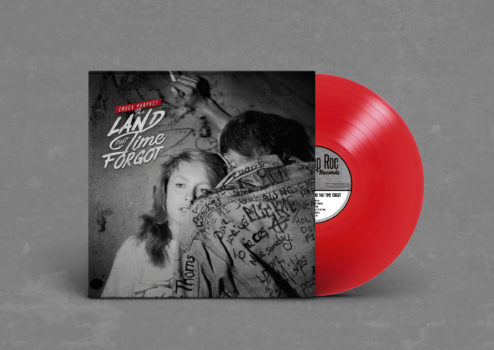
Chuck Prophet The Land That Time Forgot Yep Roc Records

Sultry and smooth, yet sombre before we even start to think about what “Nixonland,” the newest single released from alternative folk artist Chuck Prophet, means on a thematic level, the music alone reignites our excitement for the forthcoming new album it’s featured on, The Land That Time Forgot.

Yet “Nixonland” does have a message to tell, or at least a picture to paint, and it’s brand new video, released yesterday, does that pretty well. The video, which you can watch below, mixes old photographs and video footage of Richard Nixon and company into comic book style graphics and animations, and altogether the piece conjures the gritty, moody atmosphere of Prohpet’s music, as well as the subject it sings. With it’s quiet, folky anger, “Nixonland” brings a vibe really reminiscent to a song like Lou Reed’s “Sword of Damocles.”

Prophet, a Bay Area native since his childhood, has time and again characterized the allure of San Francisco and its surrounding areas across the many albums he’s released throughout his career. Yet The Land That Time Forgot apparently comes as an album about San Fran while being away from San Fran—being that the singer-songwriter recently was forced to move out of his hometown for upstate NY, due to rising housing prices.

This ongoing issue of gentrification is what “Nixonland” decries in part, along with a world of other issues that the rest of the new album hits. The press release for the new song hints at this, saying: ‘“Prophet has described The Land That Time Forgot as a “21st Century Exorcism” from Silicon Valley to the White House.”

The Land That Time Forgot is set to be released on August 21st via Yep Roc Records.

Chuck Prophet Official and the gang land in Nottingham and Birmingham in January 2021 featuring the new album including this damn gem!

Most of the record’s dozen songs were co-written by Prophet and klipschutz, his longtime collaborator. Together, they recall the melancholy wonder of their native Bay Area, a land that, to the acclaimed songwriters, represents the hope and despair that makes rock ‘n’ roll so timeless, even if it’s now full of “robots with ironic haircuts.” It’s a darker, more present take on Americana and all its beautiful losers.

With this announce comes a new single, “Marathon,” which is mutant rock n’ roll at its finest … full of driving motorik bass, Everly Brothers-in-space guitars and vocal harmonies courtesy of Stephanie Finch. As the album reexamines the West Coast, the music video for “Marathon” channels the dance-a-thons of the Great Depression. To Prophet, these were the first reality TV shows, and they’re not too out of place in today’s gig economy. “There’s twisted psychology to the Depression-era dance marathons,” says Prophet. “And like Wrestling or the Kardashians, it’s all rigged. But we don’t want to believe it. The Marathons blurred the line between theatre and reality.”

“Marathon” is from Chuck Prophet’s new album, The Land That Time Forgot.

From the album, The Land That Time Forgot.