Two of the 10 songs from the new album Courtney Marie Andrews “May Your Kindness Remain”,  astonishingly beautiful new album, have the word kindness in the title. This is not a coincidence. The idea of kindness of empathy, of giving unto others, of needing the same from others — is as central to Andrews’ music  Even when it’s not what she’s singing about, it’s what she’s singing about.

One song on May Your Kindness Remain is about an old, broken-down, permanently messy house and about the couple who used to live there. It’s clear that they’re not still together — “There’s a bed upstairs if you’re ever in town / Or if you need a place to get your feet back on the ground” — but there’s still a fondness, a feeling of togetherness. She sings that the house is their home, that it belongs to both of them, and it feels like a powerful act of generosity, a gift of a song. It’s about how that warmth can outlast the end of a relationship. It’s just lovely.

There are some staggering love songs on May Your Kindness Remain, and there are also songs about needing love, about requiring that sort of empathy. “Lift The Lonely From My Heart” is about depression, about needing someone else’s help to get through it: “Pining, mining for a feeling I’m not finding / Looking to you to tell me what I’m worth.” And then there’s a song like “I’ve Hurt Worse” about knowing that empathy is not coming back to you: “I like you when I have to call you a second time / It keeps me wondering if you are mine / Mother says you love who you think you deserve / But I’ve hurt worse.” Andrews herself calls it a sarcastic song, but I hear a note of longing in there, of self-recrimination. Andrews is working within a country-music tradition that’s long prized a brassy toughness, but even at her hardest, that’s not really what she’s about. And that, in its way, is why a song like that cuts even deeper.

The empathy extends, too, to people beyond Andrews’ relationships, to people she might not know. “Two Cold Nights In Buffalo” is a song about getting stranded in an edge-of-oblivion upstate New York town, taking in all the misery around you, and wondering how shit ever got this bad. It gets a little on-the-nose when Andrews starts wondering how this place ever got this bad — “Is that the American dream dying?” — but it hits hard when she takes in the individual scenes of misery, extrapolating from a glance: “A snowy prison out on Main Street, heaters hang from the cells / A bum searches for shelter, so cold he dreams of hell.” And on “Border Song” she imagines the life of a Mexican immigrant trying to get through the desert, dreaming of a better life that’s still a hell of a lot harder than what most of the people reading this website will ever have to endure: “Stand outside that hardware store / Don’t matter the job they need me for.”

Courtney Marie Andrews’ music isn’t country the way “country” is commonly understood now. It’s country the same way that, for instance, the Black Keys’ music is metal, which is to say that it’s something that could’ve been called country in 1971 even if the tag no longer applies. Her voice has a deep twang, the kind that sticks to you. Her voice is huge, warm, expressive. She’s not a soul singer, but she’s got that soul-singer balance of fire and control, the two elements working together rather than against each other. Occasionally, when she’s really cutting loose, she gets some gospel in her voice. The album has some hazy psychedelic tremolo guitar and some sweaty blues-rock organ. She’s an Americana singer, I guess, but she doesn’t have the sleepy reverence that I (maybe wrongly) tend to associate with Americana singers. Her music is heavy and direct and alive.

Andrews is only 27, but she’s already a veteran. She released her first album when she was a teenager, and she’s been steadily cranking out music for about a decade while moving from Arizona to Seattle to Los Angeles. For a while, she was touring as a keyboardist and a backup singer for Jimmy Eat World. And for a while after that, she was bartending whenever she wasn’t touring. That changed in 2016 with the release of Honest Life, the album that finally got her noticed by the kinds of people who notice really good Americana albums. (I still slept on it.) If Honest Life was Andrews’ break, then May Your Kindness Remain is her big reach.

The new album belongs absolutely to Andrews. She sang and played guitar on every song, and she wrote all of them except for the one she co-wrote with a couple of dudes. She also co-produced it with Mark Howard, a veteran studio type who’s been doing mixing and engineering for people like Bob Dylan and Tom Waits for many years. It’s not a huge leap beyond Honest Life, but it’s got the exact right level of musical lushness. Andrews’ voice dominates, but it doesn’t overpower, and the arrangements shimmer like mirages around her. And for someone like me, someone who’s been shamefully ignorant of all the music that Andrews has been making for all these years, it’s a head-spinning discovery, a warm and gorgeous and fully formed piece of work. The kindness isn’t just in the lyrics. It’s in the way music like this can nourish you, can make your insides glow. An album like this can be a refuge.

May Your Kindness Remain is out on 23rd March on Fat Possum Records/Mama Bird Recordings.

http://

thanks to Stereogum

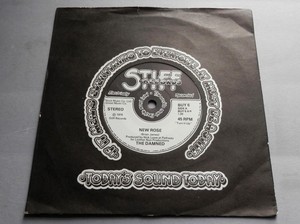
Image result for the damned images

In 1976, Britain was a cultural wasteland for some with prog rock bands like ELP and Genesis and then the dregs of glam rock.  But Mick Jones and Tony James – who’d later play in the Clash and Generation X respectively – were starting a band called the London SS. We were all in a dingy basement auditioning a drummer called Chris Millar, who had scabies at the time, when a rat ran across the floor. So Chris became Rat Scabies.

Mick and Tony liked Rat’s drumming, but said he didn’t look right because he had a shabby overcoat and messy hair. So Rat and I went off to form a band with another guy, Ray Burns, who Rat knew through cleaning toilets at Fairfield Halls in Croydon.

Ray had long hair and was into John McLaughlin, a jazz fusion guitarist, so I played him the Stooges and the Ramones – and he became our infamous madcap guitarist Captain Sensible. Rat suggested a singer called Dave Vanian, who was into vampire stuff. We got our name from two 1960s films: Luchino Visconti’s The Damned, about the Nazis, and the horror movie The Village of the Damned. It was perfect for us.

Captain wore a nurse’s uniform on stage and, at the third gig, poured a pint of beer over his head. After that, it was just chaos every night. Audiences hated us.

I had a bunch of riffs I’d written when I was in a band called Bastard. When I played New Rose to Rat, his drumming set it on fire. We signed to Jake Riveria Stiff Records to do a single, and Nick Lowe produced us in a tiny eight-track studio. We spent more time in the pub round the corner than we spent recording, but Nick captured how wild we sounded.

We thought we were a fast rock’n’roll band, but the journalist Caroline Coon coined the term “punk rock” so suddenly “New Rose” was “the first British punk single”. Everything happened very quickly after that. Contrary to belief, New Rose isn’t a love song. The words were just imagery to go with the riffs: “I got a new rose, I got it good / Guess I knew that I always would / I can’t stop to mess around / I got a brand new rose in town.” . The single’s B-side was a cover of the Beatles’ hit “Help!”, performed about twice as fast as the original. Both songs became staples of the Damned’s live shows,

However, some lines did express my excitement about the early punk scene: “I got a feeling inside of me / It’s kinda strange like a stormy sea.” It was everything I’d ever dreamed of. And there I was in London with everyone going crazy for it.

Dave Vanian, singer recalls The band were auditioning for a singer, and I went early to check out the the guy before me, but he never turned up. Turned out it was Sid Vicious. Could he have become the singer in the Damned, rather than the bass-player in the Sex Pistols? We’ll never know.

Brian shouted the lyrics in my ear while he played guitar, and I did the best I could. He’d seen me in the audience at some shows and told me: “You look like a singer.” Before it became all torn clothes and spiky hair, punk was about individuality. I wore winkle-pickers and was going for that 1920s Rudolph Valentino look. I’d seen a few Hammer horror films, too, and decided I wanted to live in Baron Von Frankenstein’s castle. 

So I left my gravedigger job to join the Damned and everything started moving very fast. We’d rehearse, get in the van, tear up the country doing gigs, then get back in the studio.

“New Rose” was a raw, visceral, classic three-minute pop song. My famous spoken intro – “Is she really going out with him?” – taken is from the Shangri-La’s Leader of the Pack, which I adored. I’d just been clowning around, but everyone liked it so we kept it. We recorded a whole album – Damned Damned Damned – in two days flat. In those days, there was never much food around. We were fuelled by amphetamine sulphate and cider. The Damned were funny and had such a strong image, sometimes that acted against them, and people didn’t recognise and realise how great their records were. As well as being the first, New Rose is definitely one of the very best singles from this era – or any other era to be honest.

Image result for the damned new rose sleeve images

SNAILMAILhoriz.jpg

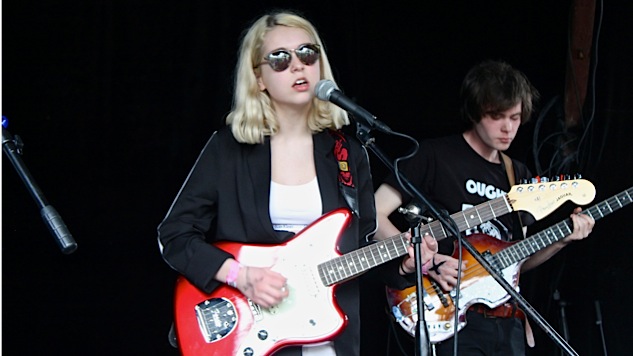
Lindsey Jordan has a lot of firepower for an 18-year-old. The Maryland-based Matador Records signee was stylishly clad with a red guitar in tow and sleek shades. Throughout the set, the band gave way to the commanding Jordan for a powerful 40 minutes in front of what felt like the largest crowd of the day. Something big is brewing here, take note…For Indie rock wunderkind Lindsey Jordan and her band, Snail Mail, have announced the release of their debut album. Lush, which follows 2017’s Habit EP, is out June 8th via Matador Records.

“Pristine” continues the personal, intimate feel of Habit, which was written in Jordan’s suburban bedroom. But “Pristine” aims a bit higher, with soaring choruses and crisp guitars crafting a shimmering backdrop for Jordan’s musings on young love. “Don’t you like me for me?” she sings. “I know myself, I’ll never love anyone else.”

Ah, to be young. And yet, “Pristine” is a grand step forward for a promising songwriter who — despite the hype — is really just getting started.

Ought

After three thrilling but taxing years spent fronting the Montreal quartet Ought, Tim Darcy needed a break. The group had accomplished a tremendous amount in a short period of time; their first album, 2014’s More Than Any Other Day, was remarkably assured, efficiently sketching out the blueprint for the band’s sound: fitful, snarling post-punk, topped with Darcy’s piercing lyrics, which explored the ways that daily choices are subtly influenced by people in power.

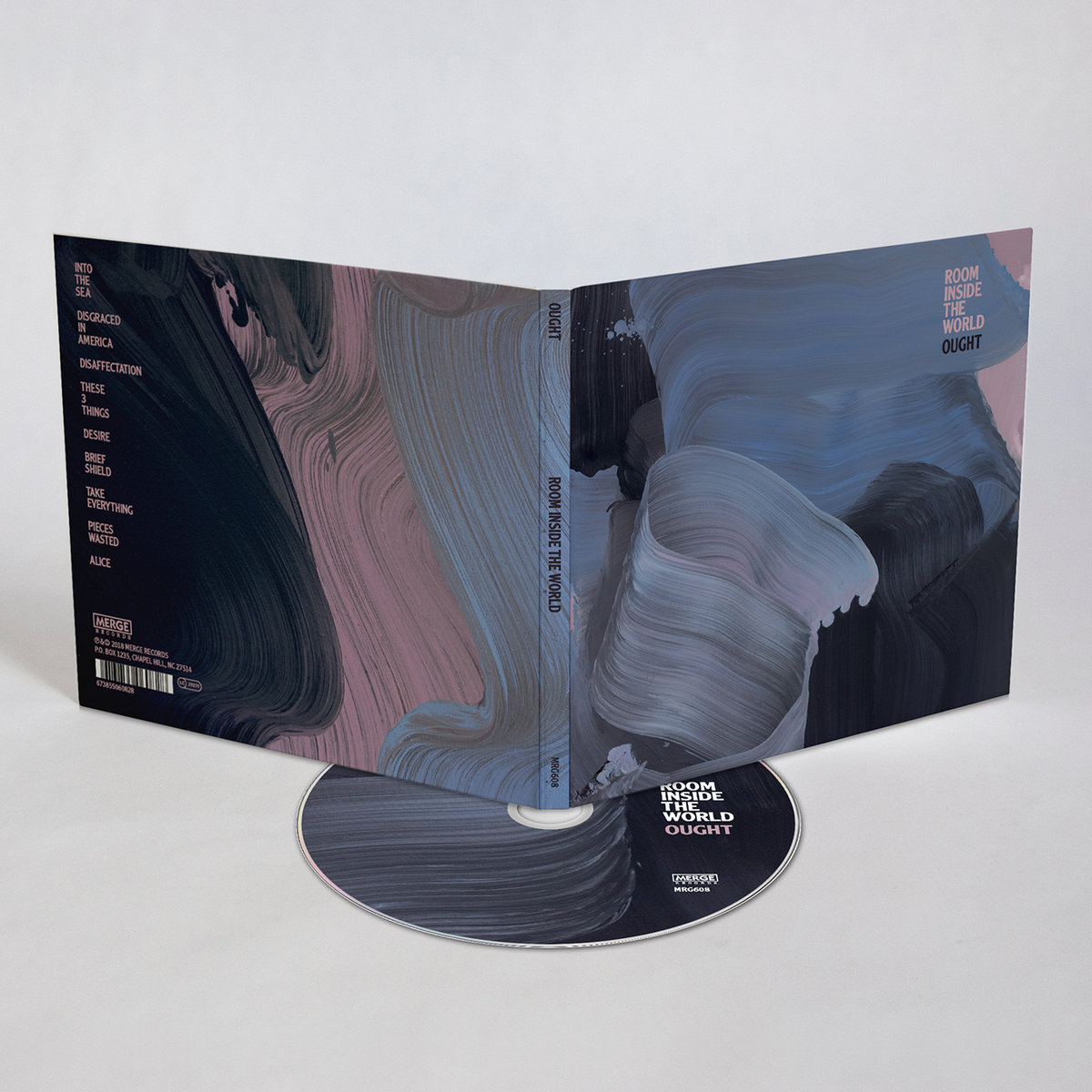
After a world tour in support of that record, they started the process all over again with 2015’s Sun Coming Down. But three years spent globetrotting takes a toll, no matter how romantic it seems from the outside. So for Room Inside the World, their third full-length and first for Merge Records, the band decided to prioritize deliberateness over the ruthless cycle of record, tour, repeat. The result is the band’s finest work to date, and a striking indication of where they may be heading.

“It’s amazing how much a little bit of downtime can do, as far as regrouping yourself,” Darcy says. The relief in his voice is audible; on previous albums, the recording process was a 100-yard dash: write the songs, record the songs, release the songs, hit the road. With Room Inside the World, the band wanted to flip the script, not just in terms of the writing and recording process, but also when it came to the album’s sonic palette.

On first listen, Room Inside the World is a sharp departure from Ought’s signature mix of post-punk precision and Talking Heads-y pop-funk. There’s a stripped-down glam gem (“Into the Sea”), an ode to ‘90s indie rock (“Disgraced in America”), and a ballad that manages to work a 70-person choir into the mix (“Desire”). Room Inside the World is the sound of a band confident enough to edge away from the wiry, worked-up songs that made them successful in the first place. On the whole, the album feels more relaxed and controlled.

http://https://bandcamp.com/EmbeddedPlayer/album=1503174799/size=large/bgcol=ffffff/linkcol=de270f/transparent=true/

“The thing we were able to get with More Than Any Other Day was a really cohesive statement that really matched what was happening in our live show,” says Darcy. “Before that, as a group of four musicians, we were interested in a lot of different tonalities and sensibilities that weren’t present on the recordings we were putting out. [With this record], it’s not like we’re disowning that stuff, we just had a desire to get back in touch with some of the other things we were doing.

Darcy’s lyrics suggest that, while 2017 was an alarming departure from the norm, that norm wasn’t all that great to begin with. The world is still a frightening and unfair place for most of the population, and 2017 simply helped crystallize what Darcy has been singing about since More Than Any Other Day.

https://bandcamp.com/EmbeddedPlayer/v=2/track=3067094640/album=1503174799/size=large/bgcol=ffffff/linkcol=0687f5/tracklist=false/artwork=small/

“Part of what I appreciate about the band and the way it addresses politics is that it’s always been interwoven with more general poetic reflection and thoughts about life,” Darcy says. “That’s more true way to us than, ‘Oh, now we need to write the political song to maintain our image.’”

In short, Darcy views political songwriting and evolution more as a spectrum than a single flashpoint, and much of what has transpired over the course of the last 12 months bears that thinking out. “It’s good to be able to parse out what elements are fleeting versus things that have been ongoing, and to embrace the power of realizing that bad things are happening even when we thought our society was doing so well,” Darcy says. “The #MeToo moment is a product of our era. The light is just being shone.”

With Room Inside the World, Darcy and Ought solidify the ideas they’ve been working through since the band began, which can be loosely summarized as: “Things are bad, but evil isn’t new. Our job is to persist, regardless.” Room Inside the World may feel more streamlined, but defiance—red-hot and electric—still pulses beneath its sleek surfaces.

The Band:

Tim Darcy: voice and guitar
Tim Keen: drums, viola, vibraphone, and synth
Matt May: keys, guitar, and synth
Ben Stidworthy: bass

Nicolas Vernhes: guitar, keys, and noise box
James Goddard: saxophone
Eamon Quinn: clarinet
Choir Choir Choir: additional vocals on “Desire”

Released February 16th, 2018

In summer of 2016, we finished up a North American tour and then headed back to Montreal to start work on our third record. We spent about 4 months writing and recording what would become Room Inside the World. The process in Montreal was the most in-depth for us to date. More Than Any Other Day was tracked in 3 days. Sun Coming Down we wrote in something like 30 practices, and then recorded and mixed over a spotty 2-week period. With Room Inside the World, we had a full month in the studio to record and mix and yet we wasted no time. We worked every day and did 2 rounds of demos on our own before we went down to NYC.

We finished at the end of the year and then took some time off to work on other projects while we sorted out changing labels and the like. In April I recorded Choir! Choir! Choir! in Toronto for “Desire”, the last piece of tracking. The record was done. In August 2017 we got together for our first tours of the year. We did some festivals, a tour with Waxahatchee, and now we’re here, getting ready for a release party in Montreal.

So it’s been a minute, since we’ve released new music at least, and we couldn’t be happier to finally have this thing out there.  It’s an honest statement of where we’re at now and we’re thrilled and honored at the response so far.  We’re really looking forward to seeing you at shows over the rest of the year.

As a final note, we’d like to take this moment as a group of mostly Americans to advocate for increased gun control and medicare for all. These are very achievable things that we should all keep renewing our faith in. Let’s see that happen in our lifetimes.

And as always, please support your local record shop wherever possible. There’s a lot of love in this record, we hope that comes across.

Best, Tim Darcy + Ought

USGIRLSbestHORIZ.jpg

U.S. Girls were hands down one of the best bands seen at SXSW this year. On the heels of their eighth LP, In a Poem Unlimited (4AD), the Meghan Remy led band put down perhaps the best performance we’ve ever seen at the festival. Their mid-week set at Cheer Up Charlie’s had it all: A complex eight-piece arrangement (later in the week at Hotel Vegas, it would be a nine-piece), With fiery performances from every member of the band on every song and, best of all, Remy’s extravagant artistry. She was an impeccable bandleader on “Window Shades” and a benevolent disco diva on “Mad As Hell.” Remy and U.S. Girls have become a revelatory band cut from the same cloth as ABBA and Blondie, with a decidedly modern and avant-garde spin. Their appearances at this year’s festival ought to be bronzed and held up as a model for all future SXSW performers.

Image may contain: 3 people, people sitting and text

Brooklyn-native rock band Sunflower Bean released on Friday a pulsating new single titled “Human For.” The single is the latest release off the band’s highly anticipated sophomore album, “Twentytwo in Blue”, set to be released March 23rd on Mom + Pop Records. Previous tracks from the album include “I Was a Fool,” “Crisis Fest” and “Twentytwo.”

“Human For” steps away from the melodic tones found in these previous tracks and does something truly experimental. The gripping bass lines of bassist/lead singer Julia Cumming start the song off with a high energy that is only amplified by her powerful vocals and unapologetic lyrics. The song then takes a darkly psychedelic turn as dissonant chords begin to play and a sound bite of a reverend can be heard in the background, talking about “salvation” and “sanctification by the spirit.”

The previously released tracks have all tackled issues taken on by a person coming of age, and “Human For” is no different. Like the tracks preceding it, “Human For” tries to accurately describe a unique aspect of the transitional phase from teenager to adult. In this case, the single talks about the unlearning of a belief system in order to find self-meaning and a personal truth. In an interview with The Fader, Cumming spoke more in-depth about the lessons she learned while leaving her teens and about the single itself:

Something I’ve noticed about getting older, at least with myself, is accepting people and being able to comment on the world more. “Human For” is urgent to the point of desperation and not needing someone else’s idea of religion or whatever you need to protect yourself. You can make that yourself. You can find reason in your own meaning.

Sunflower Bean are currently on tour they play the Rescue Rooms on Saturday, and will be touring until the summer, in support of this forthcoming album.

Listen to the band’s latest single below, Then, revisit the music video for their previous single “Twentytwo”


Image may contain: one or more people, beard and indoor

“Standing in the Doorway” was written and recorded during the making of Heart Like a Levee. I think I was trying to understand if and whether luck was related to my life at the time. I always liked this tune, but it didn’t seem to fit the emotional arc of that album for some reason. It also seemed like it could survive on its own, away from other songs that might give it context. Since Heart Like a Levee came out, a lot has changed in the world, of course. I’m currently writing this from the studio where we’re working on our next record and trying to live in this world with some kind of light.  —M.C. Taylor

http://

Starcrawler: Tim Franco, left, Henri Cash, Arrow de Wilde and Austin Smith

Hailing from Los Angeles, Starcrawler formed two years ago when lead vocalist Arrow de Wilde first met drummer Austin Smith. Shortly thereafter, guitarist Henri Cash and bassist Tim Franco joined the band. The group is known for their squalling riffs, thundering beats and incendiary performances, fronted by de Wilde’s otherworldly magnetism. The band have captivated audiences throughout their performances at this year’s music festivals.

This past May, 18-year-old Arrow de Wilde graduated from L.A.’s Grand Arts High School—but it wasn’t easy getting there. Leading up to her final days as a high schooler, de Wilde’s band, Starcrawler, was getting busier and busier: playing shows alongside groups like Ho99o9 and The Lemon Twigs, being featured by publications after their amazing live shows, and spending late nights in the studio with their producer, Ryan Adams.

Starcrawler’s debut single “Ants” b/w “Used To Know” is out now on Rough Trade Records on 7″ vinyl.

This song was recorded with the Spacebomb family—a collection of musicians with deep kinship and connection to Hiss Golden Messenger—in Richmond, Virginia, on February 7th, 2018. They love their families and friends in the same ways that I do mine. I was proud and honored to work with them on this song.

All proceeds from “Passing Clouds” and “Passing Clouds Dub” will benefit Everytown, a movement of Americans working together to end gun violence and build safer communities. I urge you to perform your own small actions of peace whenever and wherever you can. We can make the world we want to live in. 

http://

No spiritual surrender. —M.C. Taylor, Durham, NC

Released March 21, 2018

itemprop

The band’s sound adjusted for this new material. In the past, Field Report staked its name on the singer-songwriter’s M.O.: poetically charged lyricism confessed against an earnest guitar. On Summertime Songs, the bands casts its net wide, drawing in synths, up-tempo rhythms, and chromatic crescendos to electrify Porterfield’s lyricism with a resounding crackle. The opening song “Blind Spot” magnetically captures the moment a person can change another’s life. Porterfield describes himself in terms of space—“This heart is a cold cave, my mind is a parking lot”—but in recounting those absent places, he failed to account for the presence lingering in one. “You were in my blind spot,” he sings on the hook, the band’s backing vocals adding a touch of shoegaze.

Out this week, Summertime Songs is a remarkable step forward for Field Report, electrifying their music with a fresh undercurrent of emotion. Worry and talk—and talk about worry—have a special place within the singer-songwriter tradition, but so does physicality, movement, and life. “I love you in the low light baby, but let’s dance,” Porterfield sings.

The opening conversation in “Summertime Songs” is somebody asking  “Why don’t you try summertime songs?’ and all of the things that that implies, which would be maybe more simplicity, maybe a little more upbeat, maybe a little less verbose. So there’s that, and then also me doubting my ability to be a good parent and maintain sobriety, and be as good as required for that kind of thing. It’s a bit Springsteen, it’s a big Arcade Fire, it’s a bit LCD Soundsystem, it goes into some soaring U2 stuff at the end, all tongue in cheek at first, but then it tied into this thing that felt right.

http://