Jessica’s Brother is the eponymous debut album from London trio Jessica’s Brother, comprised of songwriter Tom Charleston, Jonny Helm (drums, also of The Wave Pictures) and Charlie Higgs (bass, previously of Ramshackle Union Band). Channelling the spirit of the Brothers Grimm to create an otherworldly atmosphere, they weave their motley influences together making a rich and eclectic vision, with nods to Silver Jews, Jason Molina, Nick Cave, Richard Thompson and Neil Young. There are themes of joy, anger and silliness in a carefully crafted world with a colourful cast of characters.
The trio formed in October 2016. Jonny and Charlie worked together in a framing business and had often talked about collaborating in a band together. Fate intervened when Jonny’s girlfriend Jessica introduced him to her brother Tom, and they found a songwriter in waiting. The trio clicked immediately and just nine months later they recorded the album with Laurie Sherman at The Booze Cube in Stoke Newington, with input from Darren Hayman. A few other friends joined them in the studio, including Dan Mayfield (Enderby’s Room), who added a dose of Bad Seeds/Dirty Three vibes on the violin and Paul Rains (Allo Darlin’/Tigercats) lent a hint of country twang on guitar and slide guitar.

With Jessica’s Brother, we see Tom Charleston’s songwriting blossoming in to a tour de force. Influenced more by poets than other musicians, he cites John Ashbery, T.S. Eliot and Philip Larkin as inspirations. He is drawn to how they can be irreverent, unassuming and playful, as he explains; “I suppose I wanted to offer something lyrically engaging and hopefully different.” His modestly lofty ambitions have paid off, with ten startling individual vignettes telling their own stories from a variety of narrator’s points of view.

“Humdinger” is perhaps the one song on the album where the narrator is at ease with himself and the world. Though there are moments where this tranquility is nudged by outside tremors, so we know this moment is ephemeral. If you’re going to call a track Humdinger, it had better be, well, a humdinger, and thankfully these chaps know what they’re doing. Probably their most languid and sun-drenched moment to date, Humdinger, is a wonderful fusion of serenity and the quiet feeling that it can’t possibly last, as Tom explains it is, “the one song on the album where the narrator is at ease with himself and the world. Though there are moments where this tranquillity is nudged by outside tremors, so we know this moment is ephemeral.” Musically, it never gets above a gentle shuffle, yet in the easy languid bass, meandering guitars and steady, perfectly judged drums, there’s more than enough to hold the listener’s attention. This laid-back style also allows Tom’s lyrics to shine, as his vocal, sometimes accompanied by a female vocal (as far as we know unidentified), sing out, “lo humdinger, I’m just a lazy singer with my mind in two.” Always poetic, always musically intriguing; sure it’s unlikely to make much of a fuss, but make no mistake, Jessica’s Brother’s debut album might just be one of 2018’s most exciting .

Weaving a variety of influences from jangly indie-rock to gothic country and contemplative psych folk, Jessica’s Brother create the sound of a band coming together and getting caught up in the rush of starting new and enjoyable. The instruments clamber over each other in a small room, with Helm’s distinctive drumming counterbalances the gothic guitar thrums and wailing violin.

http://

Released by: Fika Recordings, Release date: 4th May 2018
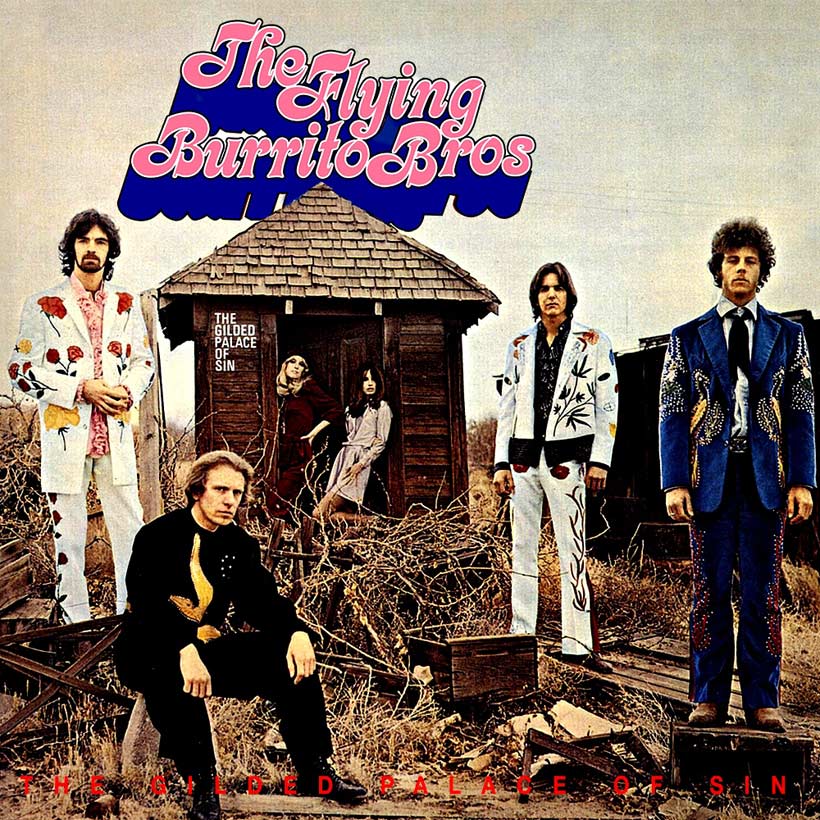
The Flying Burrito Brothers The Gilded Palace Of Sin album cover web optimised 820

When The Gilded Palace Of Sin was released, on 6th February 1969, sales were initially not good but their debut album by The Flying Burrito Brothers has since earned its status as one of the defining albums of country-rock and Americana music. named it as one of the 500 essential albums all music lovers should own.

Gram Parsons and Chris Hillman formed the The Flying Burrito Brothers after both leaving The Byrds. They brought in bassist Chris Ethridge and pedal steel guitarist Pete Kleinow to complete the line-up, appropriating the band’s name from a group of Los Angeles musicians who gathered for jam sessions.

“We’re a rock’n’roll band that sounds like a country band,” said Gram Parsons, a Harvard theology student drop-out who was 22 when the album was made. The singer-songwriter, guitarist and keyboardist is acclaimed as one of the most innovative forces in country music, becoming a huge influence on musicians as diverse as Emmylou Harris, Ryan Adams and Lucinda Williams.

There are 11 songs on The Gilded Palace Of Sin, including the haunting classic ‘Sin City’, which was co-written by Hillman and Parsons, and which included allusions to contemporary figures such as Robert Kennedy (“A friend came around/Tried to clean up this town”), who had been assassinated in June 1968.

Hillman said he woke up one morning with the lines “This old town’s filled with sin/It’ll swallow you in” swimming in his head. He roused his flatmate Parsons and they completed the song in about 30 minutes. “It was just before Christmas and it was about to rain; and we were living in the San Fernando Valley in a tract type home,” Hillman recalled. ‘Sin City’ has been covered by scores of musicians .

There was a spontaneity to the album’s production that helps make The Gilded Palace Of Sin sound fresh half a century later. Chris Ethridge said, “I told Gram I had a couple of old melodies from back when I was growing up. I played them for him and we wrote the two songs that day, ‘Hot Burrito #1’ and ‘Hot Burrito #2’, and then that night went into the studio and cut ’em.”

As well as being full of modern Americana classics – including the achingly beautiful two-part harmonies on songs such as ‘Juanita’ and ‘Wheels’ – there were also innovative cover songs. Hillman said that Parsons opened him up to new musical experiences by setting the challenge of taking great soul songs – such as ‘The Dark End Of The Street’ – and reinventing them.

Hillman said, “We also took the interesting song ‘Do Right Woman, Do Right Man’, which was Aretha Franklin’s big soul song at the time, but we did it country. That was the genius of Parsons. He got me into looking beyond the country parameters.” They brought in David Crosby to sing backing vocals on that track.

Drummer Jon Corneal, who had worked with a teenage Parsons in The International Submarine Band, and went on to work with Loretta Lynn, played on five tracks and was one of four drummers used on the album.

One of the qualities that underscores the whole album, right from the energetic opening track, ‘Christine’s Song’, is the brilliant playing of “Sneaky” Pete Kleinow’s pedal steel guitar. In 1969, the Burritos didn’t really have a lead guitarist so a lot of the solos fell to Kleinow. Parsons used to call him “The Maharishi Of Country Music”, and Kleinow became one of the most sought-after session musicians in the business.

‘My Uncle’ (the only track to feature Hillman on mandolin) and ‘Hippie Boy’ are counterculture songs of the time about the Vietnam draft and the 1968 Democratic National Convention riots in Chicago, which Parsons described as “the toughest challenge on the album”.

The album’s artwork is also special. It was overseen by Tom Wilkes, who had joined A&M after being the art director of the 1967 Monterey Pop Festival. Parsons had arranged for custom-made Nudie suits to be created by the acclaimed designer Nudie Cohn. Parson’s one, which featured red poppies and marijuana leaves, hangs in the Country Music Hall Of Fame. Wilkes said: “We decided to take them out to the desert and do something kind of surreal with the Nudie suits, shot by Barry Feinstein. And they looked great anyway. They looked funky and kind of country western and kind of rock.”

Gram Parsons, who was aged 26 when he died, in 1973, left a marvellous legacy, including The Gilded Palace Of Sin, which helped draw the blueprint for both 70s country-rock, Americana and the alt.country sound. On November. 6th in 1973: road manager Phil Kaufman & friend Michael Martin were charged & fined $300 each for the theft of a coffin containing the body of country rock singer-songwriter Gram Parsons; the court heard that the two men were merely carrying out Gram’s wishes to be cremated in the desert; the pair had stolen the body & driven it to Joshua Tree in a borrowed hearse, where they attempted to cremate it by pouring five gallons of gasoline into the open coffin & throwing a lit match inside, resulting in an enormous fireball…

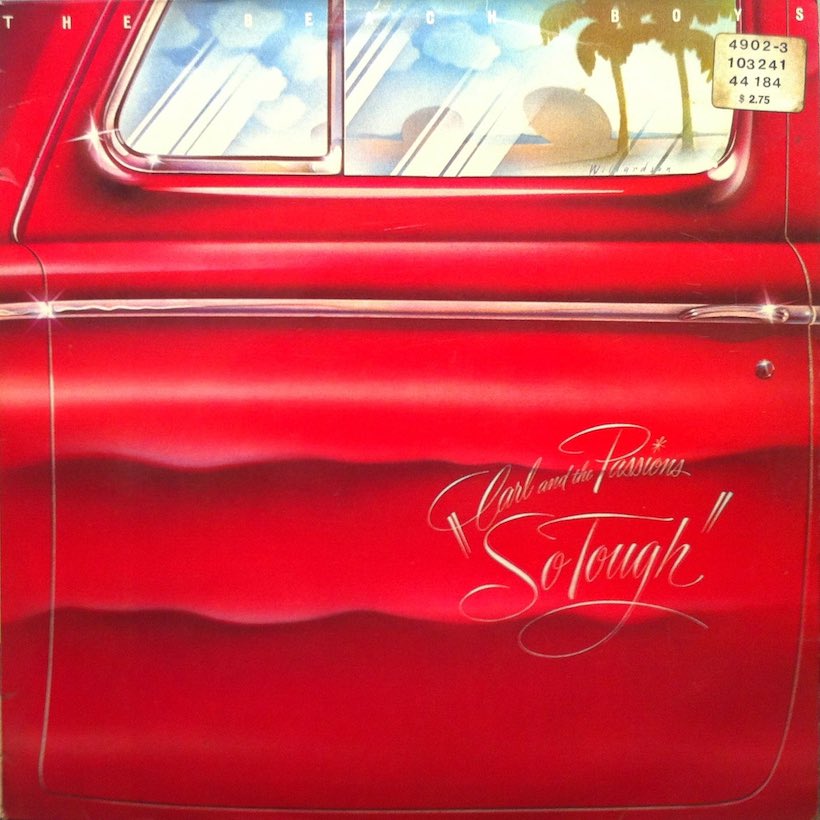
Where next after the album Surf’s Up?That was the question for The Beach Boys as they sailed the uncertain commercial waters of the early 1970s. The surprising answer was an album in which Brian Wilson’s involvement was limited, on which Bruce Johnston barely featured after his sudden (and temporary) departure, and which was named after the band that Carl Wilson and Mike Love had formed in high school.

Carl and the Passions – ‘So Tough’was released on 15th May 1972, and if it failed to deliver any major hits, It was the Beach Boys’ 17th studio album stands as a showcase, especially, for Carl, as he took a greater hand in studio direction. Surf’s Uphad won rave reviews and landed the group on the cover of Rolling Stone in an extensive interview, but it was less than a sales blockbuster, and the group’s direction was to change again.

Sessions for the new record began in December 1971 at the Beach Boys’ new recording studio, Brother, just before the group embarked on some pre-Christmas tour dates. ‘All This Is That,’ written by Carl, Mike and Al Jardine, was one of the first songs to come together, as were ‘He Come Down’ and ‘Marcella,’ which (as Keith Badman’s The Beach Boys diary book detailed) came to life under the title ‘Beatrice From Baltimore.’ 

By the new year of 1973, the factions within the band were prompting Carl to suggest that fresh impetus and new faces may be needed. Not long after the sessions began, Bruce Johnston had a falling out with manager Jack Rieley and left the band. That led to the arrival as official members of South Africans Ricky Fataar and Blondie Chaplin, as the Beach Boys became, in name at least, a seven-piece outfit. Their input was felt on the albums that continued, firstly at Brother, and then at Brian’s home studio in Bel Air.

Fataar and Chaplin wrote and sang on ‘Here She Comes’ and ‘Hold On Dear Brother,’ while Dennis Wilson took lead vocals on the pretty ‘Make It Good’ and ‘Cuddle Up,’ written with Daryl Dragon, later to find fame as one half of the Captain & Tennille. Brian’s main involvement was on the opening ‘You Need A Mess Of Help To Stand Alone,’ which became the LP’s first single, followed by ‘Marcella.’

By the spring, Johnston’s departure through what he called “differences in musical policy” was confirmed. When the album emerged, with the Beach Boys on an extensive European tour, the overall feeling was of a highly listenable if disjointed record, by a group heading in several directions at once.

Carl Wilson described this album as “a scattered project , it wasn’t everybody pitching in…”.it’s certainly an eclectic collection ; “all this is that ” is certainly a hidden gem. I’ve always much preferred side two of “Carl & The Passions” over side one – I’ve always taken “Hold On Dear Brother” to be about Brian.. I think that “All This Is That” is one of The Beach Boys more beautiful songs – kind of their own “Across The Universe” in a way, and the two Dennis Wilson songs are career high points for him, in my opinion…“Marcella” does sound kind of Stones-ish to my ears – the Chaplin/Fataar songs, sound very much to me like something by The Band – but the first five songs on the album, to me, are just so – so. good,

Reprise released it in America as an initial twin-pack with Pet Sounds, a juxtaposition which hardly helped the new record to shine.  Rolling Stone felt that only four of the tracks were “acceptable”, and that Brian Wilson’s lack of genuine involvement hurt the album.

The Beach Boys
  • Blondie Chaplin – vocals
  • Ricky Fataar – vocals; drums; slide guitar; production on “Here She Comes” and “Hold On Dear Brother”
  • Al Jardine – vocals; production on “He Come Down” and “All This Is That”
  • Mike Love – vocals
  • Brian Wilson – vocals; production on “You Need a Mess of Help to Stand Alone”
  • Carl Wilson – vocals; guitar; bass; keyboards; production on “He Come Down,” “Marcella,” and “All This Is That”
  • Dennis Wilson – vocals; production on “Make It Good” and “Cuddle Up”
  • Bruce Johnston — harmony and backing vocals on “Marcella”

Currently in the midst of her debut UK tour, Melbourne’s BATTS has this week shared her new video to the excellent single Shame. The track is the latest taster off BATTS’ upcoming debut album, the follow-up to the superb, space-themed EP, 62 Stars.

While still with one eye on the skies, Shame is in many ways more rooted to Earth than BATTS has ever previously been. The track tackles the great shame of our age, the gradual, or perhaps all too rapid, destruction of our planet, “I was hoping that the way that we think, is not the way that we’ll think in a little while, honey I’m losing hope.” The track casts the romantic notion of shooting off to another planet where, “Bowie watches us through the stars”, while ultimately knowing that is not the answer to our issues. BATTS’ message is delivered with her most musically impressive offering to date; the prominent tumbling bass accompanied by delightfully loose guitar work and the stunning vocal, the middle ground of Angel Olsen’s clipped tones and Lucy Dacus’ more emotive, held notes. BATTS might dream of floating off to the stars, pretty soon she’s going to be a very bright star in her own right.

Shame is out now

Founded in 2014, Men I Trust , is an indie band from Montreal (Canada) who loves smooth sounds, calm melodies and simple rhythms that relax, but make your right foot tap and your chin bounce on the beats. They record, mix, master and shoot their music videos.

MEN I TRUST, are connoisseurs of dreamy disco pop, are back with their latest release ‘Show Me How’. Like their past couple of releases including 2017’s ‘Hope To Be Around’ and ‘Tailwhip’, the single takes listeners away from the dreariness of city reality and into the haziness of road trips and spontaneous camping getaways. And with our summer now at an end, and winter standing stonily at the end of Autumn’s 3-month tunnel, it is a reminder that those sunlit days are sure to come again.

It is a thoughtful track with an endearing hook. The soft guitar caresses the angelic vocals cozily and the drums provide a solid, slightly R&B, base. The corroborating video clip seems to portray a content loneliness where vocalist, Emma, can be seen walking through a luminously lit cityscape. It depicts an obscurity, a dreaminess that comes with the daydreams we associate with new lovers. And like all of Men I Trust’s discography, it is a tender almost bittersweet love song; a slow and succulent but delicate retelling of a pleasant and hopeful adventure.

Image may contain: one or more people, people on stage and indoor

Bodega’s debut single “How Did This Happen” is packed with driving guitars and droll lyricism. After appearing at SXSW in Austin this March and supporting Franz Ferdinand in the U.S., they’re set to release their debut LP, Endless Scroll, via What’s Your Rupture. (The album was produced by Parquet Courts’ Austin Brown.) The quintet’s experimental, fluid sound includes a bit of everything from post-punk and pop to hip-hop and krautrock.

Brooklyn’s finest release their fantastic debut album. With wild minimalism and sharp wit, they revitalize the rock and roll vocabulary under the influence of post punk, contemporary pop, hip-hop, kraut rock, and folk-derived narrative songwriting. it’s itchy, scratchy perfect pop that makes you want to sing along..even without knowing the words. Bodega’s debut LP Endless Scroll is a collective dialogue with the machine and the public. Ping-ponging vocals are set to Ben’s deconstructed guitar, Nikki’s samples of old and new technology, the driving minimalism of standing drummer Montana Simone (IDIO Gallery), the angular spasms of lead guitar Madison Velding-Vandam (The Wants) and the tight, hypnotic bass lines of Heather Elle (Please No Radio). The LP’s fourteen songs offer a high-energy, humorous but earnest thirty-four minutes. For fans of Parquet Courts, The Fall and Wire.

Band Members
Ben Hozie,
Nikki Belfiglio,
Montana Simone,
Heather Elle,
Madison Velding-VanDam,

Image may contain: one or more people and text

The Lord Huron song “The Night We Met” found its way into the massively popular, albeit oft-maudlin, series, 13 Reasons Why with a new take on their hit song featuring the noir-ish indie songstress Phoebe Bridgers. 

“The Night We Met” is a track from Lord Huron’s 2015 release, the spacey indie-folk travel log “Strange Trails”. Bridgers’ vocal contribution expands the song’s already-haunting melody to encompass a deeper sense of melancholia, something she also comfortably emits on her critically adored 2017 LP Stranger in the Alps. Lord Huron’s Ben Schneider and Bridgers are likely collaborators, too: Each have traversed the spectrum of indie-folk sounds, though Bridgers says she isn’t yet committed to a confined style.

Lyrically, her gorgeous 2017 debut album Stranger in the Alps – which she recorded independently before being signed to the Dead Oceans label – grapples a lot with death. The late Lemmy from Motörhead and David Bowie are both referred to, while the song Funeral was inspired by a boy Bridgers knew who died of a heroin overdose. “Jesus Christ, I’m so blue all the time and that’s just how I feel, always have and always will,” she sings, the mournful mood recalling the late American miserabilist Elliott Smith.  Yet, in person, Bridgers could hardly be sunnier. “I didn’t realise there was such a heavy theme on the record until I started recording the album.

The standout single from Stranger in the Alps, was “Motion Sickness” it has amassed more than half-a-million views on YouTube and is an exquisite evisceration of a former lover. “I faked it every time,” she sings, before landing another blow to the solar plexus: “And why do you sing with an English accent?/ I guess it’s too late to change it now.”

The song, she tells me, is about the Grammy-nominated singer- songwriter Ryan Adams, whom she met in 2015. “A mutual friend in LA was like, ‘Ryan would like you’. He really was just trying to get me recording and trying to get Ryan to hear me, but Ryan was like, ‘Let me see a picture of her’.” Bridgers says that she and Adams “ended up hanging out all night and recording a song together called Killer. Then, a couple of weeks later, he was suddenly trying to hook up with me. I was super-down and had just broken up with my high-school boyfriend. We slept together on his 40th birthday and I’d just turned 20.”

She wrote Motion Sickness after they broke up. What did he think of it? “We were back on good terms by then but after I sent him the song he didn’t talk to me for 24 hours. Then he sent me a sweet text saying ‘it’s a great song’,” she says. “Yes, interesting character…”

Bridgers wrote “Smoke Signals” in a cabin outside Ketchum, Idaho, last spring. It finds her somberly emoting against a backdrop of guitar chords and orchestral swells. Sometimes her words are poetic: “I wanna live at a Holiday Inn where somebody else makes the bed/ We’ll watch TV while the lights on the street put all the stars to death.” Other times she’s more straightforward but just as powerful: “All of our problems, I’m gonna solve them/ With you riding shotgun, speeding ’cause fuck the cops.” References to Bowie, the Smiths, and Motörhead might capture your attention, but the recurring image of trash burning on the beach is what will linger with you.

http://

“Smoke Signals” is out digitally and available as a 7″ backed by “Motion Sickness (Demo)” at Bridgers’ upcoming shows.

Phoebe Bridgers

The Ninth studio album In honor of their 20th anniversary, the psych veterans The Asteroid No. 4 return with eight new songs merging paisley vibes with fluid shoegaze moves and dots and dashes of ’60s-style psychedelia.

The Asteroid No.4 are an American psychedelic band based in the San Francisco Bay Area. Originating from Philadelphia in the latter half of the 1990s, the band began their relocation to the west coast in 2011.

Since forming, the band has endured several lineup changes. Over the last ten years, however, they have consistently included Scott Vitt (vocals, guitar), Eric Harms (guitar), Adam Weaver (drums, vocals), Matty Rhodes (bass, vocals), Ryan Carlson van Kriedt (guitars, vocals), and most recently, Nick Castro (keys, guitars, vocals).

The band is known for their dynamic live act, integrating multi-textured guitars and reverb-drenched vocal harmonies over an unwavering rhythm section. However, it’s been their prolific recording output, including what will soon be their ninth full-length album, that’s helped build their dedicated fan base within the flourishing underground psychedelic scene. With well over a dozen compilation appearances, digital-only rarity releases, and multiple singles and EPs, the band is said to improve with each release.

The Asteroid No.4’s sound has been called a “hypnotic hybrid of several different genres filtered through the kaleidoscope of all things psychedelic.” Whether it be “Krautrock”, “shoegaze”, folkrock, or even the occasional dabbling in “Cosmic” countryrock, the band have never shied away from wearing their influences squarely on their sleeves.

http://

guy-clark-3

Guy Clark, one of the most beloved and influential country songwriters of all time, Songwriter, poet, guitarist, husband, troubadour, craftsman, “patron saint of an entire generation of bohemian pickers” as writer Robert K. Oermann once put it, Clark was for nearly five decades one of America’s most important fixtures of country songwriting, a man revered in equal parts by his contemporaries — artists like Emmylou Harris, Willie Nelson, John Prine, Lyle Lovett, Townes Van Zandt, and Kris Kristofferson — and by several younger generations of literary-minded country songwriters — artists like Jason Isbell, Steve Earle, Todd Snider, Ashley Monroe and Andrew Combs — all of whom viewed Clark’s songwriting, which combined dark wit, romantic optimism, and weary skepticism — as the highest form of popular lyric.

Born in Monahans, Texas in November 1941, Guy Clark was raised in his family’s shotgun hotel, where he learned about music and life from men like Jack Prigg, the well driller who would later become the subject of one of Clark’s most famous songs, “Desperadoes Waiting on a Train.” The Clark family moved to Rockport Texas, where Clark came of age before joining the Peace Corps as a young man.

After the Peace Corps, Clark eventually settled in Houston, where he would soon become a fixture in the city’s growing songwriter community alongside young artists like Townes Van Zandt and Jerry Jeff Walker. Townes Van Zandt would become one of Clark’s closest friends and greatest contemporaries in later years, with Clark covering songs like “To Live is to Fly’ throughout his entire career. “Townes Van Zandt is one of the reasons I started writing songs,” Clark said in 1982.

Before long, Clark had met his future wife, Susannah Clark, with whom he’d stay married until her passing in 2012. The two moved to Nashville in 1971, where they would live the rest of their lives. A few years later, Clark released his first two albums for RCA, 1975’s Old No. 1 and, a year later, Texas Cookin.’ Those two records — with their stark talking blues, lonesome tales of a fading America, and rambling travelogues of departures and arrivals — were full of the type of hard-earned wisdom unprecedented for a songwriter releasing his debut album.

But Clark, who was already in his mid 30s when he first became a recording artist, had been amassing material for years, and his first two albums contained songs like “LA Freeway,” “Anyhow, I Love You,” “That Old Time Feeling,” and “Let Him Roll,” compositions that would become some of Clark’s most beloved material.

“Most of the really good songs are dead true,” Clark said in 2011. “You couldn’t make up ‘Desperadoes Waiting for a Train’ or any of that stuff. It had to have happened to have the song be there.”

Clark would continue writing his songs inspired by real life for the next four decades, and in addition to releasing genre-defining albums like 1978’s Guy Clark, 1983’s Better Days, and 1995’s Dublin Blues, Clark’s songs also became touchstones throughout the extended country music world, with artists ranging from Kenny Chesney to Johnny Cash to George Strait to Rodney Crowell all recording his songs over the years.

“Real, poetic, unique, visual, powerful and tough are a few descriptions when describing Guy,” says Scott Robinson, founder of Dualtone Records, Clark’s label at the time of his passing. “He was one of the best in so many ways.”

Throughout his entire career, Clark was also a social focal point of the songwriting community in Nashville, from the drug and booze-fueled song pulls famously depicted in the 1976 documentary Heartworn Highways, to recent years, where getting an invite to write, smoke and hang out with Clark in his notorious basement workshop was just about the highest honor a young songwriter in town could receive.

“I can’t think of anything I would rather have set up than a guitar shop and a table to write in the same room,” Clark said in 2011.

In 2011, dozens of Guy’s closest friends and musical contemporaries joined together for This One’s For Him, a moving 30-song tribute to Clark’s music ended up winning Album of the Year at the Americana Music Awards in 2012. The record’s producer, Tamara Saviano, is also at work on a forthcoming documentary on Clark’s life and music.

Clark’s wife, Susannah Clark, was Guy’s closest collaborator and partner, and after his wife’s passing in 2012, he dedicated his final album to her with his moving 2013 collection My Favorite Picture of You.

Guy Clark was a tireless, meticulous songwriter, an avid self-editor who demanded the highest integrity of his own craft and remained his own toughest critic until the very end. During an interview promoting My Favorite Picture of You in 2013, Clark spent a good portion of the discussion, frustrated, explaining why he should have ended up cutting the third, final verse of one of his new songs, “Romance in Durango.”

Guy Clark died 17th May 2016,

Image may contain: one or more people and text

Never ones to rest on their laurels, The Charlatans are back with a brand new EP, “Totally Eclipsing”, and you can watch the rather excellent video to the title track now.

To be released on 8th June, “Totally Eclipsing” will be available on limited edition 12” green vinyl and the lead track will be backed by ‘Standing Alone’, ‘Indefinitely In Your Debt’ and ‘Hopelessly Hoping’. It’ll also be available to download and will also be included as a 2CD special edition with the band’s latest album, Different Days, which saw contributions from an array of special guests including Paul Weller, Johnny Marr and Sharon Horgan.

Those of you who don’t care about bands getting paid for their efforts will doubtless be able to stream it for free with some platform with questionable attitudes towards royalties.

But the track! ‘Totally Eclipsing’ is one of those classic summer anthems that The Charlatans do so well, and one that wouldn’t sound out of place on their Tellin’ Stories or 1995 eponymous albums. So that’s a thumbs up from these parts.

The video’s a lot of fun, too. Created by animator Chris Walker, the video captures the band in the studio and the removal of several frames per second makes the whole thing feel like stop motion animation.

The title track for the Charlatan’s new EP released 8/6/18