Archive for the ‘CLASSIC ALBUMS’ Category

Our fully quarantine-recorded album came out, called “The Black Hole Understands” It’s me on instruments with strings and singing, Jayson on drums. it is poppy and sort of sad. Cloud Nothings released The Black Hole Understands this summer, a remotely assembled album that followed the free-jazz spirals of frontman Dylan Baldi and drummer Jayson Gerycz in the spring. Then, in December, they shared the Bandcamp-exclusive “Life Is Only One Event”. Soon, they’ll deliver the all-new “The Shadow I Remember” which was produced by Steve Albini, who helmed 2012’s classic Attack on Memory

Part of the proceeds from this will be going to play on Philly and the Rainey institute (in Cleveland), two organizations dedicated to helping provide arts education in areas of Philladelphia and Cleveland where its not generally easy to access.

Cloud Nothings dropped a new song “The Spirit Of,” and it’s the latest glimpse of their forthcoming album The Shadow I Remember, out on February 26th via Carpark Records. “The Spirit Of,” the follow-up single to “Am I Something?,” is a fast-paced track propelled by ascendent guitars, and Dylan Baldi’s punk vocals reach a mighty peak by the end. We are also reissuing our debut album “Turning On” – can’t believe it’s been 10 years since it was originally released! 

Another throwback was Baldi’s return to constant song writing à la the early solo days, which led to the nearly 30 demos that became the 11 songs on “The Shadow I Remember”. Instead of sticking to a tried-but-true formula, his song writing stretched out while digging deeper into his melodic talents. “I felt like I was locked in a character,” Baldi says of becoming a reliable supplier of heavy, hook-filled rock songs. “I felt like I was playing a role and not myself. I really didn’t like that role.” More frequent writing led to the freedom in form heard on The Shadow I Remember. What he can’t do alone is get loud and play noisily, which is exactly what happened when the entire band — bassist TJ Duke, guitarist Chris Brown, and drummer Jayson Gerycz—convened.

The band had more fun in the studio than they’ve had in years, playing in their signature, pulverizing way, while also trying new things. The absurdly catchy “Nothing Without You” includes a first for the band: Macie Stewart of Ohmme contributes guest vocals. Elsewhere, celebrated electronic composer Brett Naucke adds subtle synthesizer parts.

The songs are kept trim, mostly around the three-minute mark, while being gleefully overstuffed. Almost every musical part turns into at least two parts, with guitar and drums opening up and the bass switching gears. “That’s the goal — I want the three-minute song to be an epic,” Baldi says. “That’s the short version of the longass jam.”

Lyrically, Baldi delivers an aching exploration of tortured existence, punishing self-doubt, and the familiar pangs of oppressive mystery. “Am I Something” Baldi screams on the song of the same name. “Does anybody living out there really need me?”, It’s a heart breaking admission of existential confusion, delivered hoarsely, with an instantly relatable melody. “Is this the end/ of the life I’ve known?” he asks on lead single and album opener “Oslo.” “Am I older now/ or am I just another age?” Despite the questioning lyrics, the band plays with more assurance and joy than ever before. The Shadow I Remember announces Cloud Nothings’ second decade and it sounds like a new beginning.

The Shadow I Remember is the hugely triumphant return of Cloud Nothings. It’s pretty raw, but singer-songwriter Dylan Baldi’s ability to write a banger has arguably never been as clear. Melodic whilst still full of grit.

“The Spirit Of” is taken from Cloud Nothings’ forthcoming album “The Shadow I Remember”, out February 26th, 2021.
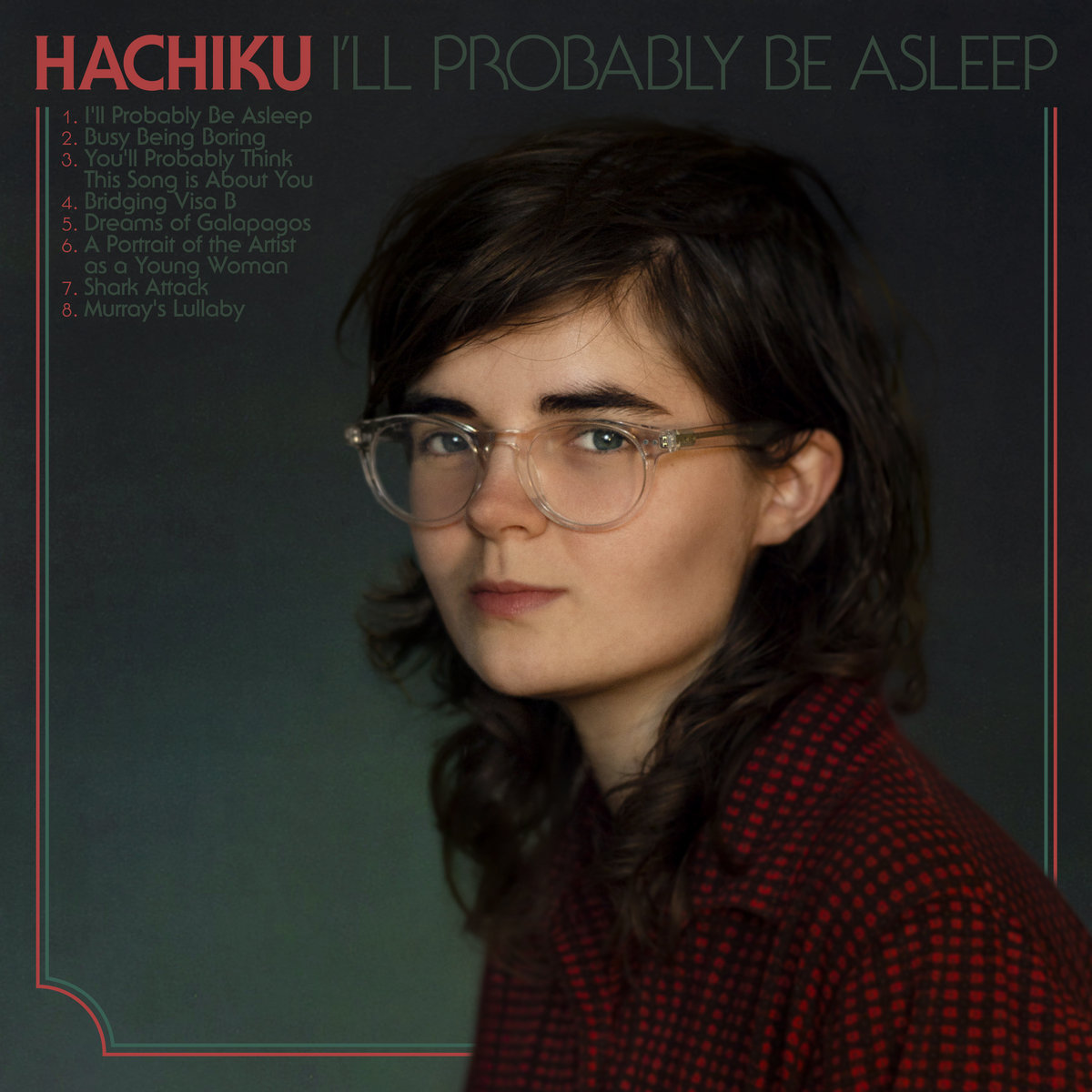
Hachiku, a.k.a Anika Ostendorf, 26, writes and produces dream pop with an avant garde twist from whichever bedroom she is currently inhabiting. Coming from Australia and on the glorious Milk Records is the one and only Hachiku. I got to see her earlier this year opening for labelmate Courtney Barnett on a brief solo tour in the winter. Right away she gripped my ears with her playing and song writing and it’s on full display here. “I’ll Probably Be Asleep” is an absolute scorcher to start the record off, sounding like it came out of the 80’s with a new wave vibe that ends with a guitar solo that climaxes as the song abruptly ends. From there we get a quieter affair in “Busy Being Boring” and “You’ll Probably Think This Song Is About You”. The former is about destroying everything around you and the later is about how to deal with a new love.

She writes in a way that makes you feel like you’re having a private one on one conversation and I find it refreshing. The sweeping guitar riffs in “Bridging Visa B” feel like she borrowed some ideas from Courtney on that winter tour this year. The production she does on the record is so great. There are backwards loops, dropping her voice down a few octaves (“Dreams of Galapagos”), harmonizing with herself. I love when an artist sits down and makes almost an entire album by themselves. It ends with “Murray’s Lullaby”, a song to the dog, Murray, who was at the farm she was on to get her Australian Visa and it’s a sweeping beautiful ode to the companion.

http://

All instruments & vocals by Anika Ostendorf, except
The Band:
Georgia Smith – additional guitar (song 1 & 3)
Jessie L. Warren – bass (song 1 & 3)
Simon Reynolds – drums (song 1)

All songs written, produced and recorded by Anika Ostendorf

Released November 13th, 2020

0.jpg

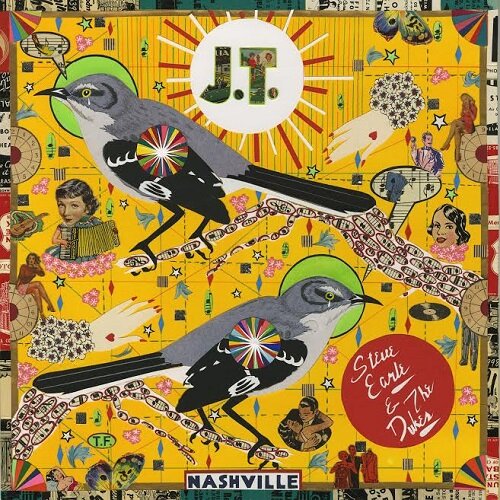
One of the first releases of 2021 comes from Steve Earle and has a tragic back story: The album, “J.T.,” is a tribute to his son, the singer and songwriter Justin Townes Earle, who died from an accidental drug overdose in August. “I’ve never loved anything in this world more than him,” Steve Earle said. “I was connected to him in ways that, you know he’s my first born, he did the same thing I did and we both had this disease.” On the evening of August. 20th, Steve Earle spoke to his son Justin Townes Earle for the last time.

In a phone call initiated by Justin, they caught up on family business and Steve, the country-rock singer-songwriter, who struggled with addiction for years, told his son a lauded musician in his own right that he would support him if he was ready to begin his own recovery. “I said, ‘Do not make me bury you,’” the elder Earle recalled in an interview. “And he said, ‘I won’t.’”

That night, Justin, 38, died alone in an apartment in Nashville of an accidental drug overdose; an autopsy found evidence in his blood of cocaine laced with fentanyl, a powerful opioid. For Earle, the death of his eldest son set off waves of grief. He had watched Justin grow from a scraggly teenage hip-hop fan intrigued by Kurt Cobain to a rising star of Americana music the fuzzy intersection in the Venn diagram of folk, country and rock, where Earle has long been a looming presence.

Justin, who released eight albums and an EP over 13 years, had a mordant song writing style that bore the influence of Townes Van Zandt, the fatalistic folk oracle who was Earle’s mentor and the man he named his son after. It also had the unmistakable imprint of Earle himself, whose best songs, whether performed in loud bands or alone with an acoustic guitar, have always had a certain rock ’n’ roll sneer.

Justin, like his father, also spent years as an addict, using heroin since his teens. Alcoholism plagued him throughout his career, and took a hard toll in his later years. Justin was hospitalized with pneumonia over the summer, having aspirated vomit in his lungs, and was told by a doctor that he would die if he did not quit drinking, Steve said. But while Steve eventually got clean after spending time in prison in 1994 on drug and weapons charges his son succumbed to the disease. Among Justin’s survivors are his wife, Jennifer, and a 3-year-old daughter, Etta St. James Earle.

Within days of Justin’s death, Earle, 65, began work on what would become “J.T.,” an album of 10 of Justin’s songs, and one new track by his father, that will be released on January 4th, which would have been Justin’s 39th birthday. Proceeds from the LP will go to a trust to benefit Etta.

“His best songs were as good as anybody’s,” said Earle, whose Greenwich Village apartment is crammed with photos of Justin, including one black-and-white shot on the wall showing his 3-year-old son chomping on a candy apple. “He was a way better singer than I am, a way better guitar player, technically, than I am. His fingerpicking could be mind-blowing.” “He was just one of those people,” Earle added, “that never felt like he was enough.”

“J.T.” Justin’s childhood nickname is the latest entry in what has become a grim specialty for Earle: the tribute album for a departed musical confidant. “Townes” was released in 2009, a dozen years after Van Zandt died; “Guy,” a homage to the songwriter Guy Clark, came out three years after Clark’s death in 2016. But “J.T.” was made while Earle’s pain was still raw. During recording sessions in October, the official cause of Justin’s death had still not been determined.

Recorded with the Dukes, Earle’s longtime backing band — including Chris Masterson on guitar, Eleanor Whitmore on fiddle, Ricky Ray Jackson on pedal steel guitar, Jeff Hill on bass and Brad Pemberton on drums “J.T.” includes some of Justin’s best-known songs, like “Harlem River Blues,” “Champagne Corolla” and “The Saint of Lost Causes,” the title track of Justin’s final album, released in 2019.

Earle’s craggy-voiced performance underscores dark themes that were there all along. “Harlem River Blues” contemplates a drowning death. (“Tell my mama I love her, tell my father I tried,” it goes. “Give my money to my baby to spend.”) “Turn Out My Lights,” about the phantom-limb ache for a former lover, takes on an eerie double meaning when Earle sings:

Even though I know you’re gone, I don’t have to be alone now
You’re here with me every night, When I turn out my lights

Recording the album “wasn’t cathartic as much as it was therapeutic,” Earle said. “I made the record because I needed to.”

“J.T.” is, in a sense, a double portrait of father and son. Justin was born in 1982, while Earle was a journeyman songwriter in Nashville. He and Justin’s mother, Carol Ann Hunter, split up when Justin was 3, around the time that Earle’s recording career began to take off. For much of Justin’s youth, Earle was touring or lost in the depths of drug addiction.

By Justin’s teenage years once Earle was clean and out of prison he was living with his father, and they developed a close musical bond. Earle recalled a pivotal moment when Justin, still a guitar novice, was stunned by Cobain’s stark acoustic performance of “Where Did You Sleep Last Night” with Nirvana on “MTV Unplugged,” unaware of the song’s provenance from the folk icon Leadbelly. Earle pointed his son to the L section of his record collection, where Leadbelly abutted the bluesmen Lightnin’ Hopkins and Mance Lipscomb.

“Next thing I knew,” Earle said, “he was playing Mance songs that I had never been able to figure out.”

Justin played in two bands, the Swindlers and the Distributors, before going solo in his 20s. In 2007, Justin’s debut EP, “Yuma,” introduced him as a stylish traditionalist with a hint of punk-rock attitude. Within a few years, he was building a reputation in New York, appearing frequently (as performer or patron) at a bar near his East Village apartment. He developed an irresistible persona for the media, dressing in retro suits and hats, blithely recounting his struggle with drugs while revelling in the notoriety it brought. “There’s really no such thing as bad press,” he told The Wall Street Journal in 2010.

Shooter Jennings, the country-rock singer and son of the outlaw country legend Waylon Jennings — recalled Justin during this period as an almost intimidating talent, albeit one who still lived under the shadow of a famous father. “When you get out there, there’s going to be this built-in audience of people that are curious to see what Steve Earle’s son is like, or what Waylon Jennings’s son is like,” Jennings said. “So there’s this bit of distrust with the audience from the very beginning. Are they here because they like my music, or are they here because they like my dad’s music?”

http://

To record “J.T.,” Earle, with the help of his son Ian, 33, winnowed Justin’s work to a list of 10 songs — two of them, “Turn Out My Lights” and “Far Away in Another Town,” Justin wrote with Scotty Melton and booked a week at Electric Lady Studios in New York. He worked fast, sending his band preparatory notes by text message. By the time they began recording, Justin had been dead for less than two months. (They began sessions before October 20th.) Earle, who had largely avoided speaking publicly about Justin’s death, wanted the album to be his statement.

He was also wary of being roped into anyone else’s memorial. “I did not want to be asked to be on a tribute record with several people that I thought absolutely were enablers and helped kill him,” Earle said, his words flecked with expletives. “So I thought the way to nip that in the bud was to make a record of my own.”

At this point in his career, Earle bespectacled, with a long salt-and-pepper beard is a Renaissance man for whom mortality and addiction have been perennial subject matter. In addition to his many albums, Earle has written a play about a woman on death row and a novel about the spector of Hank Williams, and contributed music to a recent play about a mining disaster in West Virginia. Lately he has been writing a science-fiction story intended for television.

The night before the first session for “J.T.,” Earle gathered the band at his apartment for a sushi meal. Ray Kennedy, Earle’s longtime engineer, recalls the time in Electric Lady as being celebratory but focused. They began each day at 10 a.m. and finished by 4 p.m., so that Earle could take care of his youngest son, John Henry, 10, who has autism. “It felt positive,” Kennedy said. “It felt like we were taking an expression of somebody’s art and creativity and giving it back to the world in a different package.”

Earle, slouching on his sofa with a green bandanna as a face mask, seemed almost bemused by the question of whether recording his dead son’s songs was difficult to get through.

“I inoculated myself to some degree,” he said. “I was prepared for it to be horrific. But the truth is, it was kind of business as usual in a lot of ways.”

Justin’s catalogue, with its frequent themes of the entanglements and disappointments of family, might seem a minefield for Earle. He did not record anything from his son’s albums “Absent Fathers” or “Single Mothers.” He also avoided one of Justin’s best-known songs, “Mama’s Eyes,” which begins: “I am my father’s son/I’ve never known when to shut up.”

Those songs, Earle said, simply didn’t hold up as well as others he chose, which showcase Justin’s economical storytelling voice. The choices also contrast the two men’s styles. “J.T.” opens with “I Don’t Care,” a jaunty, fingerpicked ditty from “Yuma.” The Dukes play it as a rollicking hootenanny, with Earle growling its sardonic twist on a folk cliché: “I don’t know where I’m going no more/I don’t know, and I don’t care.”

Steve Earle and Justin Townes Earle in 1999.

Other songs reveal an interplay between the two men and their music. Justin’s “Lone Pine Hill,” a Civil War ballad with a Townes Van Zandt-style guitar part, Earle sees as indebted to his “Ben McCulloch,” about a disillusioned Confederate soldier. For two of Justin’s earliest tunes, “Maria” and “Ain’t Glad I’m Leaving,” Kennedy dug out tapes of Justin’s original arrangements with the Swindlers, which he and Earle recorded in 2001, when Justin was just 19.

Earle said that in writing “John Henry Was a Steel Drivin’ Man,” from his most recent album, “Ghosts of West Virginia” (2020), he “deliberately emulated” Justin’s guitar part on his song “They Killed John Henry.” “It always made me incredibly jealous that Justin had a John Henry song and I didn’t,” he said.

The song that was the most painful to record is also the album’s most powerful: “Last Words,” a heartbreaking synopsis of a father’s journey, from holding his newly born son to speaking to him for the last time. Earle wrote it less than a week after Justin died, and he described it as “maybe the only song I’ve ever written in my life that every single word in it is true.”

“Last thing I said was ‘I love you,’” Earle sings, over acoustic guitar and ominous, droning feedback. “Your last words to me were ‘I love you too.’”

Steve Earle – Guitar, Mandolin, Octave Mandolin, Harmonica and Vocal
Chris Masterson – Guitar, Mandolin, 1 Finger Piano and Vocal
Eleanor Whitmore – Fiddle, Mandolin, Organ and Vocal
Ricky Ray Jackson – Pedal Steel Guitar, Dobro and Vocal
Jeff Hill – Acoustic and Electric Bass, Cello and Vocal
Brad Pemberton – Drums, Percussion, and Vocal
All songs written by Justin Townes Earle

Recording the album “wasn’t cathartic as much as it was therapeutic,” Steve Earle said. “I made the record because I needed to.”

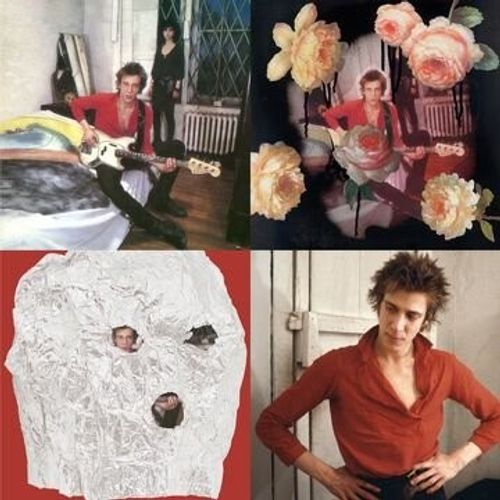
Destiny Street Complete

The punk classic finally made available as the artist originally intended • Four complete records under one banner • The release contains new liners for Richard Hell outlining the Destiny Street saga “I’ve finally taken it all the way, and at this late date the album now moves me.

I can feel it rather than just feel frustration about it. the emotions in it are largely fear and desperation and longing, but that’s life, and can even have some kind of majesty.” Richard Hell Destiny Street was the follow-up album to one of the greatest punk albums of all time, 1977’s Blank Generation. the album was originally recorded in 1981 and released in 1982, but not to Richard Hell’s satisfaction. As he says in his new liner notes to destiny street remixed, “the final mix was a morass of trebly multi-guitar sludge.” now, for the 40th anniversary of its creation, the album is at last presented the way Richard Hell originally intended, “the sound of a little combo playing real gone rock and roll.” Richard Hell co-founded his first band, the Neon Boys, with Tom Verlaine in 1973. that band became Television. when Hell left Television in 1975, he formed, with Johnny Thunders and Jerry Nolan, both formerly of the New York Dolls, the Heartbreakers. after another year, Richard Hell departed the Heartbreakers and created Richard Hell and the Voidoids, which group, along with other CBGB’s bands of the era, such as the Ramones and Patti Smith, formed the template for punk, the effects of which are still being felt.

Apart from Hell on vocals and bass, the original Voidoids comprised Robert Quine (guitar), Ivan Julian (guitar), and Marc Bell (eventually “Marky Ramone”). the Destiny Street era band retained Quine, but otherwise the backing lineup became Naux (Juan Maciel) on guitar and Fred Maher on drums. Richard had wished forever that he could remix the original Destiny Street, but was told by the record company that the original 24-track masters had been lost. in the early 2000s, Hell discovered a cassette from 1981 that contained just the album’s rhythm tracks (drums, bass and two rhythm guitars) and he realized he could add new guitar solos and vocals to that to obtain a cleaner, improved version of the songs.

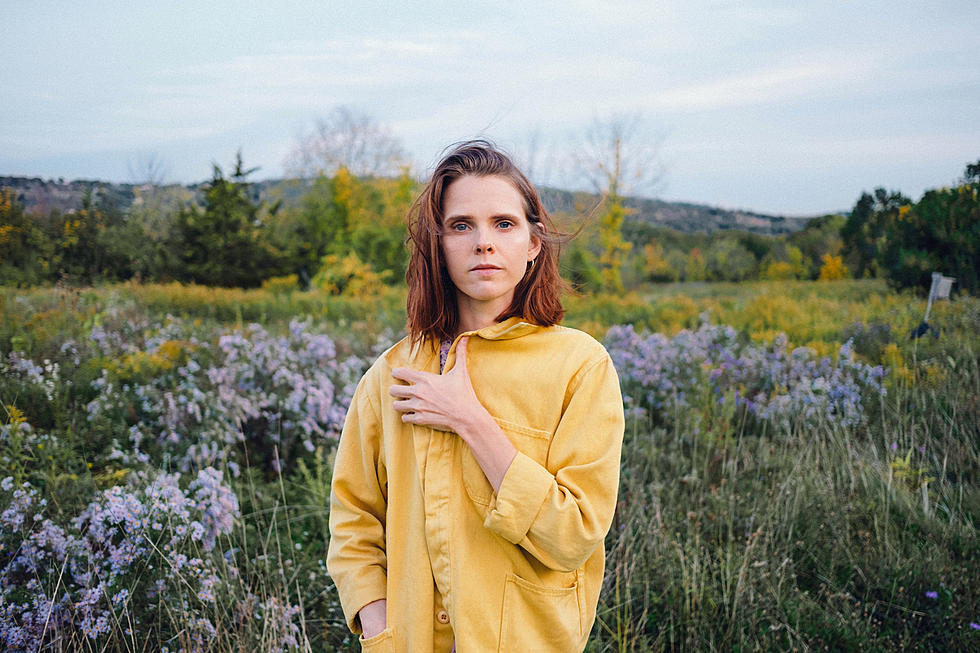
Nothing ever really disappears,” Cassandra Jenkins says. “It just changes shape.” Over the past few years, she’s seen relationships altered, travelled three continents, wandered through museums and parks, and recorded free-associative guided tours of her New York haunts. Her observations capture the humanity and nature around her, as well as thought patterns, memories, and attempts to be present while dealing with pain and loss. With a singular voice, Jenkins siphons these ideas into the ambient folk of her new album.

“An Overview on Phenomenal Nature” honours flux, detail, and moments of intimacy. Jenkins arrived at engineer Josh Kaufman’s studio with ideas rather than full songs — nevertheless, they finished the album in a week. Jenkins’ voice floats amid sensuous chamber pop arrangements and raw-edged drums, ferrying us through impressionistic portraits of friends and strangers. Her lyrics unfold magical worlds, introducing you to a cast of characters like a local fisherman, a psychic at a birthday party, and driving instructor of a spiritual  bent. 
Jenkins’ last record, 2017’s Play Till You Win, confirmed the veteran artist’s talent. Evident of Jenkins’ experience growing up in a family band in New York City, the album showcased her meticulous song writing and musicianship, earning her comparisons to George Harrison and Emmylou Harris. Jenkins has since played in the bands of Eleanor Friedberger, Craig Finn, and Lola Kirke, and rehearsed to tour with Purple Mountains last August before the tour’s cancellation. Her new record departs from her previous work in its openness and flexibility, following her peripatetic lifestyle. “The goal is to be more fluid, to be more like the clouds shifting constantly,” she says. The approach allowed Jenkins to express herself like she never has.

On album opener “Michelangelo,” before the heavy drum beat and fuzz guitars enter, Jenkins sings quietly “I’m a three-legged dog, working with what I’ve got / and part of me will always be looking for what I lost // there’s a fly around my head, waiting for the day I drop dead.” Phenomenal Nature thrives in this dichotomy between ornate sonics and verbal frankness, a calming guided tour to the edge. Later, on “Crosshairs,” amid lush strings, she sings conversationally: “Empty space is my escape / it runs through me like a river / while time spits in my face.” 

“Hard Drive,” the third track and album center piece, opens with a voice memo Jenkins recorded at The Met Breuer: a guard muses about Mrinalini Mukherjee’s hybrid textile and sculpture works, which were then on display in a retrospective titled Phenomenal Nature. “When we lose our connection to nature, we lose our spirit, our humanity,” she explains. Stuart Bogie’s saxophone & Josh Kaufman’s glittering guitar make way for Jenkins’ spoken word which constellates scenes from her life, gradually building and blossoming as she recreates a meditation guided by a friend who incants, “One, two, three.”

Sounds of footsteps and bird calls run through the album’s glittering conclusion, “The Ramble.” Meditative and bright, it recalls how Jenkins felt while writing and recording her new material: “Everything else is falling apart, so let’s just enjoy this time,” she said. If Phenomenal Nature has a unifying theme, it’s the power of presence, the joy of walking in a world in constant flux and opening oneself to change. .

http://

Releases February 19th, 2021

Cassandra Jenkins– vocals, guitar
Josh Kaufman– guitar, voyager, harmonium, banjo, synth, bass, piano, organ
~and~
JT Bates– drums, auxiliary percussion
Eric Biondo– drums
Michael Coleman– synth
Stuart Bogie–  flutes, saxophone
Oliver Hill– violin, viola, string arrangement  
Annie Nero– bass
Aaron Roche– synth
Ben Seretan– drone
Will Stratton– guitar

All songs written and performed NYC singer/songwriter Cassandra Jenkins will release her sophomore album An Overview on Phenomenal Nature in February via Ba Da Bing Records,

See the source image

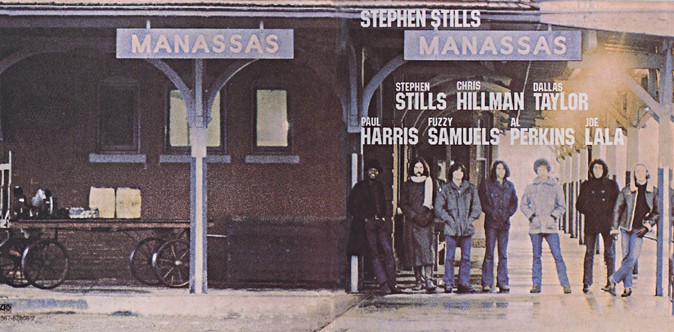
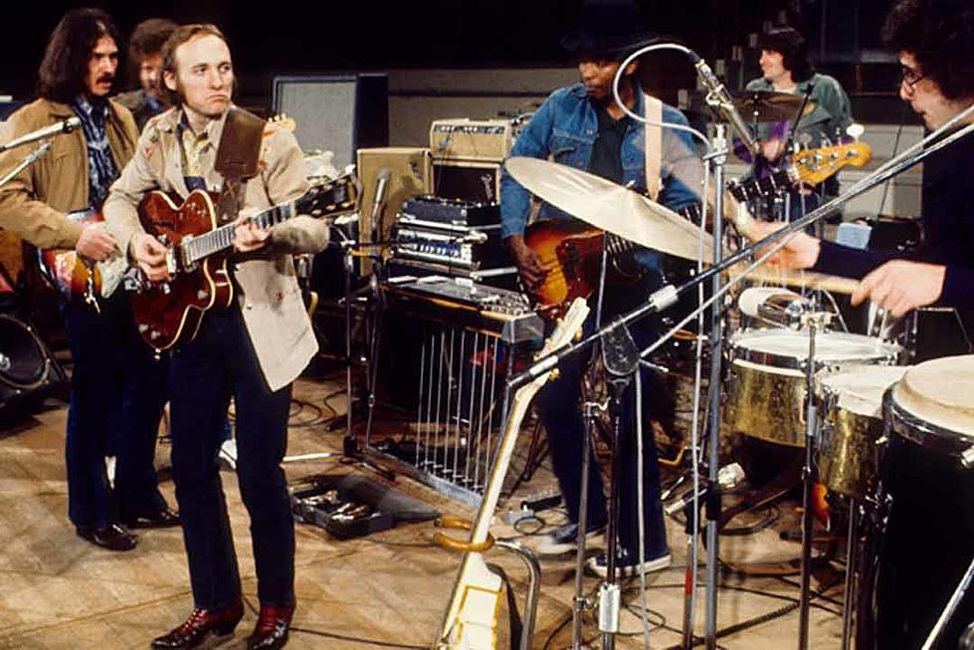
With Manassas, Stephen Stills reconciled warring impulses between obsessive control and solid musical partnerships to forge the best band and consistently strongest album of his solo career. Stills’ name loomed over the title, but unlike his studio instrumental dominance on Crosby, Stills and Nash’s debut or the kitchen-sink indulgences that marred the two previous solo albums, his third full-length as  band leader showcased a collaborative ensemble flexible enough to cover a broad stylistic palette that ranged from Stills’ folk-rock country, bluegrass, Latin and hard rock elements.

The genesis for the Manassas band stemmed from a chance encounter with fellow folk-rock veteran Chris Hillman as Stills toured behind “Stephen Stills 2″ in June and July of 1971. Hillman, then soldiering on as the surviving founder of the Flying Burrito Brothers, would later recall, “Stills was playing a concert in Cleveland with the Memphis Horns. I was sitting in the audience, going, ‘Jesus Christ. They’re making 25,000 bucks and they’re shitty. The Burritos are better than this.’ I went backstage, and that’s when we renewed our friendship.”

In 1966, Hillman had helped Stills and Buffalo Springfield snare a gig as house band at the Whisky a Go Go that jump-started their career. Beyond that early debt, Stills recognized that the ex-Byrd as a kindred spirit seasoned beyond his years, a former bluegrass prodigy on mandolin and guitar before joining the seminal folk-rock band on bass. His skill at working with volatile partners including the Byrds’ Roger McGuinn and Gram Parsons, with whom Hillman defected to launch the Burritos, contrasted with the internal rivalries that had undermined Crosby, Stills, Nash and Young a year earlier. Encouraged by the reunion, Stills invited Hillman to join him in Miami to jam during studio sessions.

If the band Hillman heard in Cleveland turned in a lackluster set, it included journeyman players: bassist Calvin “Fuzzy” Samuels, veteran keyboard player Paul Harris, vocalist and percussionist Joe Lala and drummer Dallas Taylor, all joining Stills and Hillman for the recording sessions. With some new material leaning toward country, they added three more Burrito alumni, starting with guitarist Al Perkins, who would become a formal member of the Manassas band, and fiddler Byron Berline and acoustic double bassist Roger Bush, who would guest on the set’s bluegrass arrangements. While flexing his multi-instrumental prowess on guitars and keyboards, there was no need (and little room) for Stills to cover all the bases as he had with CSN.

How effectively the band invoked different styles is illustrated by “It Doesn’t Matter,” a graceful mid-tempo ballad, co-written with Hillman, that seamlessly integrates Stills’ concise electric guitar figures, Perkins’ gliding pedal steel, and Lala’s timbales beneath plush vocal harmonies from those four members.

The resulting studio band (abetted in a few sessions by Rolling Stones bassist Bill Wyman, two additional keyboard players and an uncredited Jerry Garcia) jelled quickly during the sessions at Criteria Studios. Stills brought an already substantial set of new songs, having originally planned his previous album as a double LP. With that bumper crop of originals, he envisioned four thematic album sides: The first would be devoted to songs inspired by his doomed romance with Rita Coolidge, organized as a would-be suite titled “The Raven”; side two, “The Wilderness,” would lean into country and bluegrass; side three, “Consider,” evoked Stills’ more melodic folk-rock instincts; and side four insisted “Rock & Roll is Here to Stay” with a trio of rockers that led to Stills’ solo acoustic elegy, “Blues Man,” saluting departed comrades Jimi Hendrix (who had appeared on Stills’ self-titled debut), Duane Allman and Canned Heat’s Al Wilson.

Preceding that lament was “The Treasure” a full-throttled rocker verging on progressive rock sprawling over eight minutes. A showcase for the ensemble’s collective power, the song would emerge as a live highlight during the band’s subsequent maiden tour.

That grand design was consistent with the album’s ascendance as the dominant focus for Stills and his rock peers, even if lyrically the songs largely plumbed more modest and familiar romantic themes with a few stabs at philosophizing, as on the unintentionally ironic “Rock & Roll Crazies,” warning of rock lifestyle hazards then handicapping Stills more than the song’s intended audience. That track stalled as a single, as did “It Doesn’t Matter,” but the album, which was released on April 12th, 1972, was able to land in the top five on the Billboard album’s chart while largely restoring Stills’ critical esteem after the criticism he experienced on the previous two solo sets.

On balance, Manassas impresses most through Stills’ melodic gifts, soulful vocals and instrumental chops. If the lyrics suffer by comparison with his strongest songs with Buffalo Springfield and CSN&Y, the material succeeds overall through the ensemble’s collective taste and the ambitious array of styles. More than any other project, the album documented Stills’ eclectic influences as absorbed during an itinerant upbringing as a military son in the South, along the Gulf Coast, and Central America, where Afro-Cuban styles would join his more familiar folk and blues.

Relaxing the obsessive need for control that shaped earlier solo and band projects, Stills found common ground with his band mates, sharing writing on selected tracks with Hillman, Lala, Taylor and former Burrito (and future Firefall member) Rick Roberts.

It’s tantalizing to consider what Manassas might have become had those bonds had the time to deepen. Instead, a follow-up was hastily recorded following a hiatus prompted by an ill-fated album reunion for the five original Byrds. That project took Hillman out of the picture in the first of a series of recombinant band distractions that would gradually dismantle the original septet. Hillman would be lured into a new supergroup proposed by manager David Geffen, teaming him with Eagles collaborator J.D. Souther and Buffalo Springfield/Poco survivor Richie Furay. Stills himself would be pulled away first by his wedding to French singer Veronique Sanson, then by CSN&Y reunion talks on Maui that soon collapsed.

By the time Stills reunited with his band Manassas, they had lost Dallas Taylor to a crippling heroin addiction, as well as Calvin Samuels, defecting for personal reasons. With a new bassist and drummer, the band limped through a 1973 tour before one of the final dates on that circuit, at San Francisco’s Winterland, signalled their impending end when David Crosby and Graham Nash joined them onstage, with Neil Young stepping in later in the set, prefiguring the 1974 CSN&Y reunion tour. Hillman would depart as planned for the Souther Hillman Furay Band, taking Paul Harris and Joe Lala with him.

Another Troy, NY act to make the list (there’s something in the Capital Region water folks). These guys make some catchy indie rock songs. You can’t listen to “Funny” without bopping along to it. The guitar riff is bound to get stuck in your head, as well as the 80’s Prince-like synthesizers near the end of the track..”Dreamboat” has The Killers written all over it with that driving drum beat and an infectious chorus. The ending of “Prisoner” makes me want to experience live music again because it absolutely goes insane with everyone playing as fast as possible. I can only imagine who that would leave an audience with their mouths wide open in amazement. “Dark Honey” is probably the biggest swing into pop-rock territory on the record, with a continuous build that once it hits the peak you just want to stand up and shout, whether someone is around or not. The piano lad ballad “Rare Feathers” lets you back into the world on a more contemplative note than the rest of the record. It’s a beautiful end to the 13 track effort.

Lyrically rich Guitar driven indie-pop-rock with the heart of a singer songwriter and the soul of an emo kid,  This album is awesome! Upstate NY rockers who kick ass musically and lyrically

http://

Released July 10th, 2020

And another band from the Capital Region of New York coming in hot to this list. Coupons is a band made up of some of the best songwriters of the area. This album wasn’t supposed to exist as everyone was doing their own thing, but the universe brought the group back together to make this happen. They also had a preview show for some of these songs the weekend before lockdown and it was magical and one of the best memories of the year. Dan LaFave and Collin Reynolds are the main songwriters of the group, but Dan Maddalone’s songwriting contributions on this record are fantastic. “90’s Kids” kicks us off with a pseudo Kinks tune with those beautiful weird 60’s organ noises that hit right before the chorus. “Moz Disco” rips with soaring guitars, a disco drum beat, and strong vocals by Collin.

“I Wanted” would have fit right in with the punk of the early 2000’s with its gruff vocals and driving guitar chords. “Synesthesia” shows the band can get loose and jam a little, letting some funky guitar solos fly all over the place. “Hard Candy” continues the weirdness, going in and out of this spacey whirlwind and a more folky vibe. “Ansel” is easily one of the saddest songs of the year, dealing with the death of a friend. “The Beginning” and “Tongues” are both upbeat rockers musically ready to make you bop around the house. The record ends on a cathartic “Cars (Part 2)” loosely connecting their two albums, this and Number One Hit Album from 2016, together. This band truly could play any room in the country and wow you, but you know pandemic.

http://

Coupons is:
Dan LaFave,
Collin Reynolds,
Shannon Straney,
Dylan DePice,
Dan Maddalone,

Recorded at Soundcheck Republic, The Chateau, and Headroom Studios June-October 2019

Released September 4th, 2020

The announcement that Lush’s Miki Berenyi had formed a new group called Piroshka was pretty exciting on its own but learning the rest of the line up made it even more so. The rhythm section is former Elastica drummer Justin Welch (who was Lush’s drummer on their 2016 comeback tour) and Modern English bassist Mick Conroy (who filled in for Phil King who quit Lush right before their final show). But the real excitement for me was learning that KJ McKillop of Moose (and who has two kids with Miki) was part of the band too.

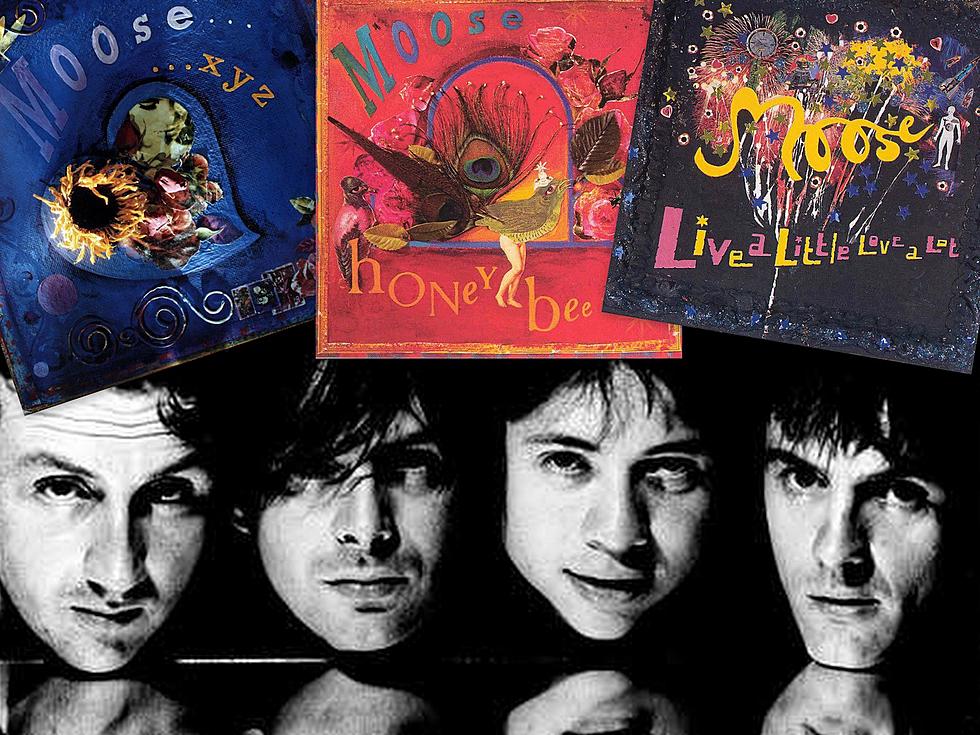
Not a lot of people remember Moose, who formed in 1990 and were part of that initial UK wave of bands that formed right after My Bloody Valentine and Ride blew up in ’88/’89. It’s also generally accepted that the term “shoegaze” was first used in a Sounds review of an early Moose gig — they said singer Russell Yates spent more time looking at the lyric sheet taped to the floor than the audience so they earned their place in indie history right there. But they were also one of the best bands to come from that scene, even though they largely abandoned the loud guitar miasma sound after their first two (great) EPs. Starting with 1991’s Reprise EP, Moose let singer Russell Yates‘ vocals come more to the fore (it turned out he had an appealing, low key melancholic voice) and distortion pedals gave way to jangly guitars and country influences.

With their debut album ...XYZ, which they made with Let’s Active main man and early R.E.M. producer Mitch Easter, there were no heavy elements in their sound, though “dreampop” still applied. They also discovered strings which, along with even stronger country flourishes, really shaped the sound Moose would carry out through the rest of their career. XYZ is one of the ’90s great lost albums — their label Hut dropped them and deleted it a week after being released — filled with sparkling, understated guitar pop with gorgeous, inventive arrangements that reveal new layers with repeat listens. It’s also got a cover of Nilsson’s “Everybody’s Talking” and guest vocals from Dolores O’Riordan whose band The Cranberries were still a year away from releasing their debut album. XYZ was, from the start, almost impossible to find (especially in America) but Cherry Red reissued it on CD in 2014 with a bunch of bonus tracks, including the U.S. Sonny & Sam compilation of Moose’s early EPs (which I think was their only U.S. release ever). If you’ve never heard this album, fix that today!

After an EP on their own label, Moose signed with PIAS for their next two records: 1993’s Honey Bee, which furthered their string-laden country dreampop sound; and 1995’s Live a Little, Love a Lot, which took them into jazzier territory. Both records featured Mick Conroy (who’s now in Piroshka) and The Cocteau Twins’ Elizabeth Fraser on guest vocals (which wasn’t too hard of a get as Moose bassist Lincoln Fong was a recording engineer at the Cocteau’s studio, and his brother [and Moose guitarist] Russell makes handcrafted guitars and basses that Robin Guthrie and the band used). Around this era they also had incredible drummer Richard Thomas who played on records by Cocteau Twins, The Jesus and Mary Chain, Felt, Dif Juz, The Wolfgang Press, and more.

Moose’s final record would come five years later — 2000’s High Ball Me! which saw them incorporating loungey, Mondo Morricone-esque elements to their sound. Moose went silent almost immediately after High Ball Me!’s release though they never officially broke up. All four of their albums are terrific and worth seeking out, though only ...XYZ and Live a Little Love a Lot are on streaming services.

One more note: Even though onetime 4AD artist Chris Bigg designed the Piroshka logo, I would love to see the group work with Laura Lockton, who designed the stunning covers to Moose’s first three albums.

No photo description available.

My name is A. A. Khan (a.k.a. “King Khan” or “the artist formerly known as The Blacksnake“). Welcome to the Art of Khannibalism… featuring music I have recorded and produced from my Moon Studios in Berlin, Germany. Music is my religion and can heal all wounds…. Enjoy these sounds and share them with the ones you love.

King Khan has worn many hats over the years and this year he has added jazz artist to that hat collection. With members of Sun Ra Arkestra and Calexico, as well as some regular collaborators, King Khan goes all-in right off the bat. Opening with “Wait Till The Stars Burn” a song that has a psychedelic tribal acid free-form jazz to it that only King Khan could cook up in his bag of tricks, we know we’re in for a ride immediately. I mean this record goes far out into the realms of space and never touches down to Earth. If you listen closely throughout the album, there are hints of Ennio Morricone sprinkled about, which feels like a beautiful tribute for an absolute legend that we lost this year. While the record is only 37 minutes long, it feels far longer, in a good way, as not a single track is in a rush to leave your ears. The trumpet playing by Martin Wenk in “Theme of Yahya” just envelopes your ears like a hug. “Mister Mystery” is freeform jazz meeting garage rock in an intertwining tussle where everyone wins. “Follow the Mantis” feels like film noir, but in a song. Go in with an open mind and let this band of misfits into your soul. 

Sometimes a work of art comes unintentionally from a place from deep within the soul. It meanders and flops onto a table and sits and waits for its birth. The album begins with “Wait Till The Stars Burn”, a planetary ode to the Sun. The second track “Tribute to the Pharoahs Den”, is a requiem for Danny Ray Thompson (R.I.P.) of the Sun Ra Arkestra, his music and legacy now floating above us in the infinity of space. Both tracks and featuring Marshall Allen and Knoel Scott (of the Sun Ra Arkestra).

http://

The song “Theme of Yahya” was a song I wrote for Yahya El Majid who played for many years with the Arkestra. I met Yahya in 2005 during my first meeting with the Arkestra. He shared many stories with me about the teachings of Sun Ra, the discipline he learned from him, and the many adventures he had all over the world travelling with the Arkestra. He told me these tales while playing a chinese harp, jamming to the sounds of Tuvaan Throat Singers, while burning a large amount of frankincense and myrrh. When I recorded the song I had four harps panned in stereo to form a sonic flower. When Yahya heard the track he telephoned me and told me that he was really moved by the piece and was proud of me. Yahya had been struggling for years with cancer and sadly passed away late August, 2020. I did not realize that my tribute to him would become a requiem, and it means the world to me that he was able to hear his tribute before he left the planet.

feat. Marshall Allen & Knoel Scott (Sun Ra Arkestra)

John Convertino & Martin Wenk (Calexico)
Brontez Purnell (Younger Lovers)
Ben Ra (King Khan & The Shrines)
Davide Zolli (The Mojomatics)

The album ends with a requiem for Hal Willner (R.I.P.) whose devotion to celebrating the weird and insane was like an insatiable thirst leading to deep introspection and joy in harmony and sonic dissidence.