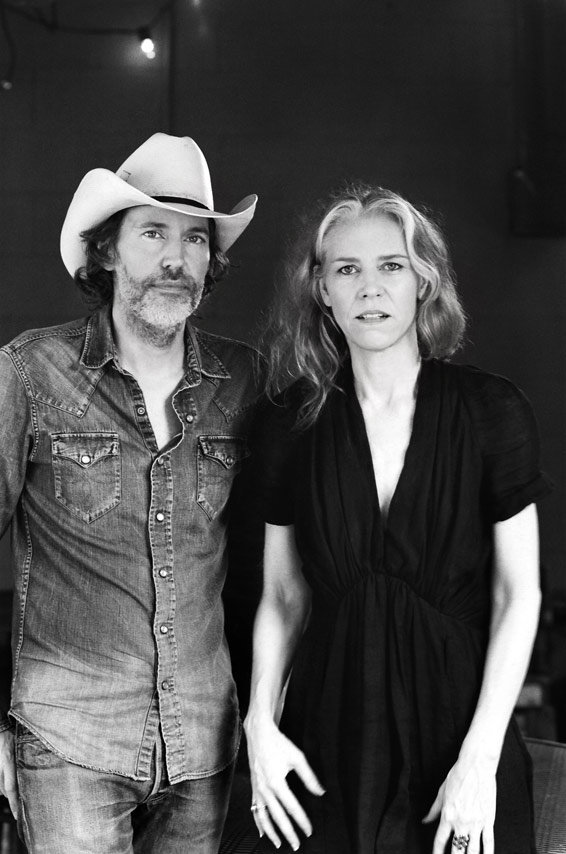
Rarely does an album title suggest the truth in advertising that Keeper conveys with this, the seventh outing by the Canadian alt-country conglomerate that shares the name Elliott Brood. For the better part of the past 20 years, this talented trio has been making music that’s tasteful, tuneful and easy on the ear, and indeed, this latest release is no exception. These shimmering acoustic melodies are both hopeful and uplifting, a welcome respite from today’s troubled times. Various upbeat entries — “Bird Dog,” “Oh Me” and “Stay Out” — find an ideal fit with the reflective ballads “Merciless Wind” and “A Month of Sundays,” as well as with the tempered twang of “Full of Wires.” Indeed, the combination provides a reassuring sound that resonates throughout. That’s appropriate; according to the press material, the album’s overall theme revolves around “loyalty and longevity…the strength of conviction, and how that strength is tested over time.” No wonder then that the overall delivery is both buoyant and engaging, with every encounter as satisfying as the first. Consider this a keeper indeed.
Elliott Brood is a three-piece alternative country band from Toronto, Ontario, Canada, consisting of Mark Sasso on lead vocals, guitar, banjo, ukelele and harmonica, Casey Laforet on guitar, backing vocals, bass pedals, keys and ukelele and Stephen Pitkin on percussion,
When an artist receives any kind of tribute treatment, it’s generally a sign of some well-deserved recognition. It means that the music has become so iconic, reverence is readily assured. Likewise, when a salute of that sort spans two discs, it’s also evident that there’s plenty of source material that can be considered. Not surprisingly then, the iconic rocker Willie Nile gave the musicians that contribute to his particular tribute, Willie Nile Uncovered, plenty of songs to choose from. Nile, whose career was originally spawned during the Greenwich village folk scene of the mid to late ‘70s, eventually turned his gaze towards the insurgent sounds that drew Springsteen, Patti Smith, Elliott Murphy, and various arch denizens of his city’s post-punk scene.
That said, the music represented here is strikingly diverse, whether it’s Emily Duff’s take on the celebratory sing-along “Hell Yeah,” the appropriate Band-like sound given Quarter Horse’ read of “When Levon Sings,” the tender tones of James Maddocks’ version of “She’s Got My Heart,” or, naturally enough, the rousing revelry found in Nils Lofgren’s performance of “All God’s Children.
A varied list of rock, folk and Americana luminaries take part — which, aside from those mentioned above, include Graham Parker, John Gorka, Caroline Doctorow, Slaid Cleaves, Richard Shindell, Richard Barone and Lucy Kaplinsky — and they not only offer appropriate homage, but also ensure that the appreciation Nile so decidedly deserves is served up quite sufficiently.
“The subtitle to this 2 CD set of songs of native New Yorker Willie Nile is ‘Celebrating 40 Years of Music.’ 26 sterling interpretations of his oeuvre have resulted in one of the most playable and entertaining tribute album in years. Incorporating Americana, roots rock, folk rock, country rock and the kind of singer-songwriter smarts that a fella named Bruce pioneered just over the Hudson River on the Jersey side, there are no clinkers. Not one… So many highlights!” – Mike Greenblatt- Goldmine Magazine, November 2020.
“…it’s consistently excellent…it’s a dependably absorbing listen”. Hal Horowitz – American Songwriter – 8/20/20
“The range of Willie’s music has been captured brilliantly on Willie Nile Uncovered… It’s been lovingly packaged with complete credits and extensive liner notes… The album reveals the richness of Willie’s catalogue… Thanks to Willie for his unwavering rock & roll heart and thanks to Paradiddle for giving Willie his due.” – John Platt – New Folk Initiative – 8/28/20
“An effort with something for everyone, Americana, rock, folk, country and roots rock are all explored here and interpreted in thoughtful, exciting ways that certainly puts Nile’s work at the highest regard.” – Take Effect – 8/30/20
“A delightful compilation by many. Willie Nile has great friends. John Apice – Americana Highways – 8-20-20
“…all of the contributing artists bring something fresh to the material while remaining true to its spirit. The album will likely make you want to explore Nile’s recordings and also investigate some of the folks who cover them here.” – Jeff Burger – Americana Highways August 2nd, 2020 & TMR August 5th, 2020
“It’s an extraordinary tribute that gives justice to the brilliant Willie Nile catalogue.” —6/30/2020 – Norm Prusslin, co-founder of the Long Island Music Hall of Fame – New Jersey Stage
Working in tandem with her erstwhile musical collaborator David Rawlings, singer/songwriter Gillian Welch searched through her vault and uncovered a rich cache of home demos and reel-to-reel recordings that she then assembled into three volumes of archival offerings. Collectively titled The Lost Songs and delineated as Boots Vol. 1, 2 and 3, she shares 48 songs in total, thus allowing fans and followers an opportunity to bear witness to Welch’s creative sensibilities and the unreleased music she and Rawlings recorded in the fertile period between her critically-acclaimed albums Time (The Revelator) and Soul Journey. An aural sketchbook of sorts, the three volumes reflect a certain creative consistency and Welch’s willingness to indulge her muse wherever it might lead.
Fans of Gillian Welch and her long time songwriting foil David Rawlings’s reimagining of early country and bluegrass are used to being patient. Until a month ago, the pair had only released five albums proper under her name, and three in his, since Welch’s 1996 debut, “Revival”. But after their studio, with all their old recordings, was almost destroyed by a tornado in March, they’ve changed tack. Hot on the heels of July’s covers album, “All the Good Times Are Past and Gone”, comes the follow-up to 2016’s first batch of archive recordings, The Official Revival Bootleg, with two more volumes.
While most of the offerings are rendered in stripped-down settings, all reflect a propensity to tap traditional sources and pay heed to a strong roots regimen. It’s music that’s rendered with a genuine folk finesse and a sound of a vintage variety. The charm is manifest in both the novelty and the nuance. Although they are demos, with little more in play than guitar and Welch’s voice, they sound fully realised.
First Place Ribbon, about barefoot Kathy, “the kinda girl likes the dust between her toes”, rattles along with an irresistible momentum; the narrator of the brooding Shotgun Song fantasises about escaping the chain gang; Valley of Tears is as desolately beautiful as its name suggests. That Welch and Rawlings have sat on such inspired recordings for almost two decades makes you wonder what other hidden treasures might be forthcoming.
Unearthed from a cache of home demos and reel-to-reel recordings, Boots No. 2: The Lost Songs is the second release of archival music from the vault of Gillian Welch and David Rawlings. This remarkable 48 song collection, spread over three volumes, was recorded between the making of Time (The Revelator) and Soul Journey. It is an intimate glimpse at the artist’s sketchbook, containing some lifelong themes as well as some flights of fancy.
Dregen has serious form with punk and garage rock through various groups – most prominently Backyard Babies and The Hellacopters, though fans will also recall stints with Michael Monroe and Tyla (of Dogs D’Amour) as well as highly charged supergroup (with Ginger Wildheart) Supershit 666. Now the busy Swede has teamed up with countrymen Grande Royale for this jet-packed blast of shouty, in-yer-face (yet deceptively sweet) garage rock’n’roll, fresh out of 90s Scandinavia with a twist of 70s London. Grande Royale has a history of working together with prominent names of the Swedish rock scene. The band has previously worked with Nicke Andersson (The Hellacopters, Imperial State Electric) and Ola Ersfjord (Dead Lord, Honeymoon Disease, Lucifer). For the release of the band’s fifth studio album “Carry On” they teamed up with Dregen, who adds vocals to the third single ”Just As bad As You”.
Grande Royale’s upcoming album ”Carry On” contains 11 tracks of high energy rock n roll. The Band has applied a rawer and more back to basics- approach for the album, keeping production simple while focusing on strong and catchy material. Orange fuelled electric guitars, crushing bass tones and thundering drums inspired by 90’s rock. Vocalist Gustav Wremer sings with more grit than on previous albums, adding a ton of attitude to the new songs. All put together, ”Carry On” offers an energetic and straight forward take on garage rock. Produced by the band members themselves, and mixed by Robert Pehrsson .
”On our previous record ’Take it Easy’ we experimented a lot with different instruments and sounds to challenge ourselves. To make something that, to us, is a bit unusual and that stands out from our other albums. On ’Carry On’ we’re focusing on what we’re best at – dirty garage rock n roll. We’ve basically recorded and produced the entire record ourselves. I think it ended up great. No fuzz, no muss, just rock!” – Gustav Wremer (guitars/vocals)
Dregen (The Hellacopters, Backyard Babies) has joined forces with Grande Royale for the release of the single and music video “Just as Bad as You”. The single is released on Friday, January 22 on The Sign Records, and is the third single leading up to Grande Royale’s upcoming album “Carry On”. With special guest Dregen on vocals, the band has created a highly energetic piece, delivering garage rock to a new generation.
Official music video for Grande Royale’s single “Just as Bad as You”. The track is featured on the band’s fifth studio album “Carry On”, released On The Sign Records
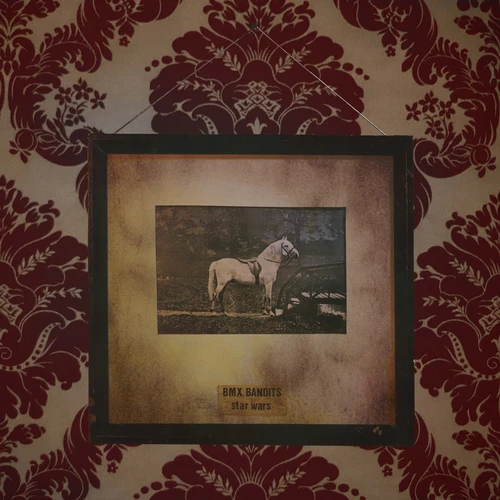
To celebrate the 30th Anniversary of BMX Bandits seminal sophomore LP Star Wars, Past Night From Glasgow will release the remastered album on Vinyl on May 4th (Star Wars Day)
Featuring the classic BMX Bandits line up: Stuart, McAlinden, Blake, Kelly, Keen and MacDonald the album is jam packed full of chiming guitars and catchy choruses not to mention the odd spectacular ballad. The sleeve has been updated (new wallpaper no less) and now features a die cut photo frame with an inner printed horse, how’s that for classy updates?, Rock & roll is not a game for those with innocent hearts. Fortunately, there have been a few people with innocent hearts who have slipped through the cracks and brought a real sense of joy to the music scene. One of them is Jonathan Richman and the other is Duglas Stewart and his BMX Bandits cohorts (including Francis MacDonald, Norman Blake, and Joe McAlinden, amongst others).
Perhaps these artists are not literally innocent, but the music they bring to the table is passive, pure, and carefree, not aggressive or mean spirited in nature. The Bandits, of course, are one of Scotland’s great unsung bands, sharing members with Teenage Fanclub, the Soup Dragons, Superstar, and others, yet steering a clear path of their own with captain Stewart and co-pilot MacDonald at the helm. Stewart’s voice is a strange mix of Mike Love, Lou Reed, and Richman, but works perfectly within the context of the Bandits’ music. With the sweet-voiced McAlinden (later of Superstar) handling lead vocals on a few tracks (and backing vocals throughout), there is a nice balance that saves the album from certain monotony.
Loaded with pop songs galore and beautifully produced by Duncan Cameron and the band, Star Wars is the first in a line of great Bandits albums. From the joyful “Come Clean,” “Students of Life,” “Life Goes On,” and “Do You Really Love Me?” to the heart-tugging “Extraordinary,” there is hardly a wasted moment within earshot. If you can imagine the sheer pop genius of Teenage Fanclub with Mike Love singing lead, then you may have an idea of what you’re in for. And if you could put wide-eyed innocent pop back onto the charts, then BMX Bandits would be superstars.
Joey Molland’s first solo record in close to a decade is a collaboration with the talented/wacky producer Mark Hudson, and a very pleasant listen from front to back. It finds Molland (who co-wrote the ten tunes with Hudson) playing up the pop-oriented strengths he first exhibited with Badfinger, and Hudson (who also plays and sings throughout) once again embracing the “Beatlesque mad wizard” guise he displayed during his tenure as Ringo Starr’s producer and musical director. Truth be told, it’s not much of a stretch to imagine Starr singing many of the tunes on “Be True to Yourself”, particularly the inspirational title track (with its oh-so-Beatles ’67 end bit), “This Time,” or the sunny-sounding “Rainy Day Man.” Hudson does a good job of masking some of Molland’s slightly gruff vocalizing by utilizing guests such as Julian Lennon, Jason Scheff and Micky Dolenz to lend some vocal support, while former Wings drummer Steve Holley mans the kit.
The Pete Ham-like vocal affectations on “I Don’t Wanna Be Done With You” and the cute little wink to “No Matter What” at the close of “All I Want to Do” should make the listener smile, as will most of the rest of Be True to Yourself.
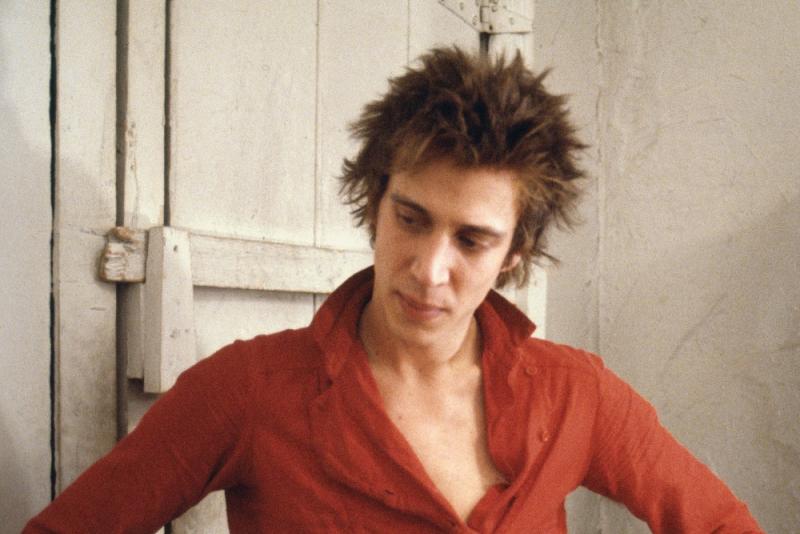
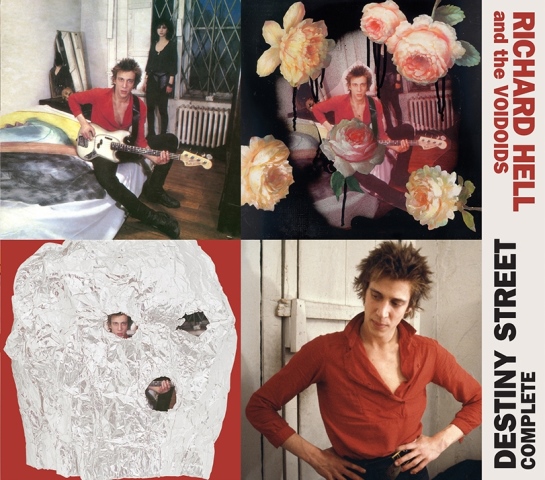
Three plus versions of the same album. It’s ridiculous, but I’m glad.” The first paragraph of Richard Hell’s text in the booklet accompanying “Destiny Street Complete” lays it out. There are, indeed, three versions of his and his band The Voidoids’s album released originally in July 1982 album “Destiny Street” on this double-CD set. It seems excessive but this is a major release of a classic in the making .
Reviews of “Destiny Street” at the time of its release were positive. Creem Magazine said “Hell himself has hit on a style – part Nuggets-era basement rock ‘n roll, part speed-balling protest (not in content, but in attitude) rock, part confrontational CBGB psychodrama – that gives the album its pungent reverberations.” When considering the album, the New York Times frothed “Mr. Hell is the most soulful, emotionally compelling singer to have emerged from punk rock, and his lyrics are in the tradition of Rimbaud and Lautremont.”
Really though, Destiny Street was scrappy, overly short and bulked-out with cover versions and reworked old tracks. There was Dylan’s “Going Going Gone”, The Kinks’s “I Gotta Move” and Them’s “I Can Only Give You Everything”. There were also remakes of “The Kid With the Replaceable Head”, first heard on a single three years earlier, and of “Time”, which had been on an April 1980 EP. New inspiration appeared to be lacking. Destiny Street sounded messy too. Its trebliness was counterbalanced by muddiness. In his text for Destiny Street CompleteHell says “The final mix [of the album] was a morass of trebly multi-guitar sludge.”
Even so and despite its flaws, the original Destiny Street has some power-packed moments. The version of “Going Going Gone” is poignant. “Downtown at Dawn”, “Lowest Common Dominator”,“Staring in Her Eyes” and “Time” are all superb songs, however scrambled they come across.
What’s collected for Destiny Street Complete is the original album and a version titled Destiny Street Repaired, which was issued in 2009. This was created from a cassette of the album’s rhythm tracks which were overdubbed with new guitar solos (by Bill Frisell, Marc Ribot and former Voidoid Ivan Julian) and vocals.
These are on Disc One. On Disc Two is Destiny Street Remixed: a new mix of most the original album fashioned from the three of the four original multi-track master reels (one reel has been lost). The gaps in Destiny Street Remixed are plugged by three tracks from Destiny Street Repaired.
Destiny Street Repaired is a curio, an exercise in post-fact bricolage which is neither a new album or a remake – a half-way house. The new Destiny Street Remixed is aurally more up-front and punchier than the original album but doesn’t alter perceptions about the source album’s creative shortcomings.
Another inescapable problem with the original Destiny Street is that it was released close to five years after the debut Richard Hell & The Voidoids album, October 1977’s Blank Generation. It came too late. The moment had passed. Hell was integral to the New York scene, had been in Television, then The Heartbreakers and first played live with The Voidoids in November 1976. But the forward motion of 1976 and 1977 dissipated, and momentum was lost. Thereafter – fits and starts. Hell should have made a second album in 1978 or 1979, rather than 1982 (Destiny Street was recorded in 1981).
A broad hint at what could have been a more timely second album comes with what follows Destiny Street Remixed on Disc Two. There’s the careening January 1979 UK-only “The Kid With the Replaceable Head” / “I’m Your Man” single , nine demos from July 1979 (three of which are previously unreleased) and a live track from 2004.
The demos open a window into Hell’s pre-Destiny Street world, when he was still being facilitated by former Dr Feelgood road manager and Stiff Records co-founder Jake Riviera. A Hell supporter, Riviera had seen The Heartbreakers in 1976, tried to get the newly band-less Hell to play August 1976’s Mont-de-Marsan punk rock festival with Nick Lowe, issued the “Blank Generation” single on Stiff Records and organised support slots for Hell with Elvis Costello. “The Kid With the Replaceable Head” single was on Riviera’s post-Stiff label Radar. The 1979 demos heard here were made for Riviera and could have become the ground floor of an album, but in his essay Hell says “It was clear by the end of the summer that I wasn’t going to be dependable enough to warrant Jake investing in a full-scale album. So that plan was scrapped.”
Of these nine tracks from 1979 (misleadingly credited as “Destiny Street Demos”), six have been out before: “Don’t Die” and “Time” were on the 1980 Shake label EP mentioned above; “Crack of Dawn”, “Going Going Gone”, “I Lived my Life” and “Ignore That Door” were on the 1984 cassette album R.I.P. In full, the 1979 recordings sound terrific. Coherent, kinetic and spikey, this is wonderful stuff. The previously unheard “Smitten” brings in a Gang Of Four slant. But there was no immediately ensuing album, and Destiny Street arrived three years later.
Anyone with a passing interest in this ever-intriguing figure will need the 1979 demos. They’re as essential as the “The Kid With the Replaceable Head” single. But overall, the thought-provoking Destiny Street Complete says more about Richard Hell’s urge to wrestle with his past than it does about the original Destiny Street album itself.
Hell may have saved the best for last. Disc two of this set also includes Destiny Street Demos, an essential collection of raw early recordings and singles spanning from 1978 to 1980. This stuff smokes, plain and simple; it might even be the best argument for the Voidoids as one of the finest bands to emerge out of NYC during this period. Almost all of Demos has shown up on various collections in the past, but presented as a whole here, it’s as powerful a statement as Hell and co. ever made. Worth the price of admission alone.
Richard Hell, under exclusive license to Omnivore Recordings. Released on: 22nd January 2021
Taking a break from his gig as the drummer for The Posies, multi-talented musician/producer/studio owner Frankie Siragusa “covers and rediscovers” 14 tunes that the Beatles wrote for other artists but never officially released themselves. A similar tack has been taken by numerous combos over the years—Apple Jam, Revolver, Sgt. Pepper’s Band and The Beatnix are a few of ’em—but there is still room for talented, Beatle-loving musicians to put their stamp on these songs.
Siragusa sings lead on six of the songs, including the gorgeous, McCartney-penned rarity “Penina” and a version of “A World Without Love” that glides along with a distinct “I’m Only Sleeping” vibe. Keith Slettedahl (The 88) sings the bulk of the rest and particularly shines on “Goodbye” and “Woman.” (He’s credited with “McCartney vocals.”) Taking one lead vocal each are the Posies’ Ken Stringfellow (on George Harrison’s funky “Sour Milk Sea”) and Roger Joseph Manning Jr. (on the boppy, poppy “I’ll Keep You Satisfied”).
The whole deal was recorded on four tracks and the thing that distinguishes it from other releases of the same ilk is that some modern-sounding instrumental touches are seamlessly incorporated into several of the songs. It’s all just Wonderful.
Royal Blood have today shared “Trouble’s Coming”, the rock duo’s first new track since releasing their 2017 album “How Did We Get So Dark?”.
Serving as a sample of the Brighton band’s forthcoming third LP, “Trouble’s Coming” adds a bit of glitz to their grit. It pulls in influences from Daft Punk and Justice, turning Royal Blood’s usually hammering sound into something much groovier. According to the band, the muscular dance floor style of the song set the groundwork for the rest of their new LP.
Said vocalist/bassist Mike Kerr in a statement,
“It was the moment something started to click — where we started playing over those much more rigid dance beats. The breakthrough was realizing that there was real common ground between that and what we’d done before. It’s that AC/DC aspect: where the quality that makes the riffs seem so cutting is because of that beat. Although on the surface we were stepping outside what we’d done before, it didn’t feel at all unnatural; it felt like we were returning to music we’d loved from the very beginning: Daft Punk, Justice, things that were really groove-orientated. It was all about the beat. It felt like familiar territory, but something we’d censored in ourselves.”
blues-rocking sons continue to stoke the fires of anticipation for their new album (due on sale 30th April) – this time with a strutting, boot-stomping groove so addictive it can’t possibly be good for you. Expect fuzz and sass by the caseload. If Josh Homme and Muse got stuck in a disco together, they’d have come up with something like this. How tasty does that sound?
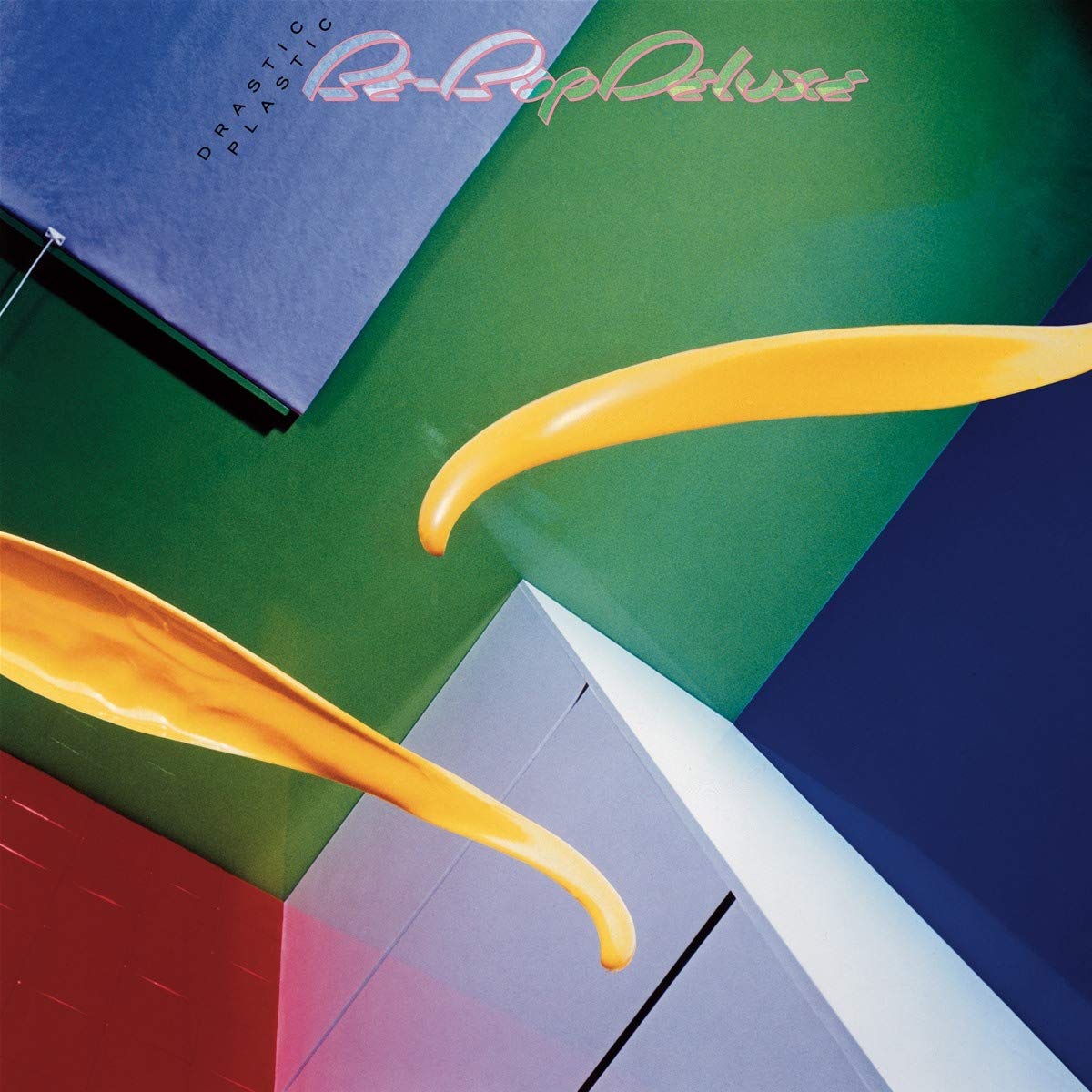
The final album from Be-Bop Deluxe, “Drastic Plastic”, is getting an expanded release. The 1978 recording is receiving a newly re-mastered, limited edition, 6-disc deluxe (naturally) boxed set (comprising four CDs and two NTSC – Region Free DVDs), including 43 previously unreleased tracks. The set arrives March 5th, 2021, via Cherry Red Records.
“Drastic Plastic” was recorded in the summer of 1978 in the south of France utilizing the Rolling Stones’ mobile studio, with final sessions taking place at The Manor Studio and Abbey Road Studios. The record saw Bill Nelson (vocals, guitars, keyboards), Charles Tumahai (bass, vocals), Andy Clark (keyboards) and Simon Fox (drums) venture into new musical styles, with the album being ground-breaking in its move to more art rock and new wave influences.
Co-produced by Nelson and John Leckie, the English progressive rock band’s Drastic Plastic featured such songs as “Electrical Language,” “Panic in the World,” “New Mysteries,” “Islands of the Dead” and “Surreal Estate.” The recording sessions produced many more tracks which would appear as singles and others that were originally planned for release as an EP set, all of which eventually appeared on the retrospective compilation The Best of & the Rest of, later that year.
This expanded deluxe reissue has been newly re-mastered from the original master tapes and features an additional 88 tracks, drawn from new 5.1 surround sound and stereo mixes from the original multi-track tapes by award winning engineer Stephen W. Tayler, previously unreleased out-takes from the album sessions, a BBC Radio John Peel Show session from January 1978, along with a CD of Nelson’s previously unreleased demos for the album, A Feeling of Playing.
Also included is an additional DVD featuring Be-Bop Deluxe in the south of France, (a collection of Bill Nelson’s 8mm home movies shot while recording Drastic Plastic) and the band’s “Sight & Sound in Concert” performance for BBC TV from 1978.
“Drastic Plastic” (1978 album; remastered four-CD, two-DVD box set, featuring an additional 88 tracks, 43 of which are previously unreleased, drawn from new 5.1 surround sound and stereo mixes from the original multi-track tapes by engineer Stephen W. Tayler, etc.; Expanded & Remastered Edition, two CDs; Esoteric Recordings / Cherry Red)
The boxed set includes a lavishly illustrated 68-page book with many previously unseen photographs and an essay of recollections by Nelson. The set includes postcards and a replica poster.
The set arrives March 5th, 2021, via Cherry Red Records.