Field Report have been one of the most steadfast contributors to the Wisconsin music scene that birthed BonIver. (Head honcho Chris Porterfield played in DeYarmond Edison with Justin Vernon in the years before Vernon’s fateful cabin trip.) The band will return this year with third album Summertime Songs, and lead single “Never Look Back” signifies some subtle but significant changes in their approach. It’s the sort of hearty folk-rock we’ve come to expect from Porterfield, but also, is that a talkbox I hear on the bridge? Like the song says, we must plunge fearlessly into the future. OK, technically, the title does not refer to musical evolution, as Porterfield explains:
“Never Look Back” is about those people we find ourselves inexplicably drawn to and then entangled with. The narrator tries to give this other person the benefit of the doubt, because, hey, something about them was appealing in the beginning. But the constant drama and disappointment leads them to discover that if you can walk away from the car crash, you have to walk away. And never look back. It’s a celebration of self-preservation.
In early 2016, the release of Talk Tight put Rolling Blackouts Coastal Fever on the map with glowing reviews from SPIN, Stereogum, and Pitchfork, praising them as stand-outs even among the fertile landscape of Melbourne music. Chock full of snappy riffs, spritely drumming and quick-witted wordplay, Talk Tight was praised “for the precision of their melodies, the streamlined sophistication of their arrangements, and the undercurrent of melancholy that motivates every note.”
Born from late night jam sessions in singer/guitarist Fran Keaney’s bedroom and honed in the thrumming confines of Melbourne’s live music venues, the band began to take shape as audiences got moving. Sharing tastes and songwriting duties, cousins Joe White and Fran Keaney, brothers Tom and Joe Russo, and drummer Marcel Tussie started out with softer, melody-focused songs. The more shows they played, the more those driving rhythms that now trademark their songs emerged. Since then, Rolling Blackouts Coastal Fever rode that wave from strength to strength.
Since the band’s inception, Rolling Blackouts C.F. have carved out a unique place in the local musical landscape with their penchant for hooky guitars and undeniable melodies, married to lyrics that are intelligent and wide-eyed, with an unmistakably-Australian dry wit.
‘The French Press’ EP landed on many ‘Best Of 2017’ lists, including The Guardian/The Observer ‘Hidden Gems’. Meanwhile, lead single ‘French Press‘ made countless end of year lists
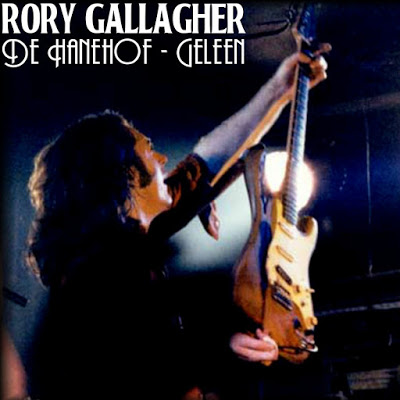
I can’t imagine one single person without a happy face when leaving the hall after being at this show. Even so, this recording has one big problem: it is too short!
So, here’s about 51 minutes of Rory Gallagher at De Hanenhof, Geleen, Holland on the 12th of November 1987 and beware, this is the kind of show that turns you addicted to Rory’s music!
Rory Gallagher -Live set from De Hanehof, Geleen, Holland 12th November 1987
Setlist:
1 Walkin Blues 2 Pistol Slapper Blues 3 Messin With The Kid 4 Out On The Western Plain 5 Don’t Start Me Talkin 6 When My Baby She Left Me 7 Bullfrog Blues 8 All Around Man 9 Nadine
The second album from Stockholm-based songwriter Hannes Ferm, aka HOLY, considers where our subconscious goes at night: dreams, pent-up emotions, possibilities of unknown dimensions. “I wanted to go beyond my outer limits,” he says, leaving behind the garage pop of his 2015 debut for widescreen studio-science and rock opera ambition. The record borrows its name from astronomer Jon Willis’ book All These Worlds Are Yours: The Scientific Search for Alien Life. “Ferm’s search starts within his own head, “says KEXP, likening his sound to Tame Impala and glam-era David Bowie. “A pervasive feeling of alienation feeds into the dynamism of the album.” It sees release on PNKSLM Recordings.
Brooklyn noise-pop duo Sleigh Bells – vocalist Alexis Krauss and guitarist Derek Edward Miller – have shared their new video, directed by Miller, for ‘Favorite Transgressions’, taken from last year’s ‘Kid Kruschev’ mini-album. Last year, Sleigh Bells released a new mini-album, Kid Kruschev, and today they’ve shared a video for one of the tracks from it, “Favorite Transgressions.” It was directed by the duo’s own Derek Miller, and it acts as a sort of frantic, bloody eulogy for both him and Alexis Krauss who, according to the video, both died in a car crash in Florida in 1999
Dead Meadow are happy to announce they will be releasing a new album, ‘The Nothing They Need’ at Xemu Records, on 30th March 2018 in the UK. They have just shared their first single, “Keep Your Head” which perfectly exemplifies the band’s unique marriage of Sabbath riffs, dreamy layers of guitar-fuzz bliss, and singer Jason Simon’s melodic croon
Will Toledo always knew he would return to Twin Fantasy. He never did complete the work. Not really. Never could square his grand ambitions against his mechanical limitations. Listen to his first attempt, recorded at nineteen on a cheap laptop, and you’ll hear what Brian Eno fondly calls “the sound of failure” – thrilling, extraordinary, and singularly compelling failure. Will’s first love, rendered in the vivid teenage viscera of stolen gin, bruised shins, and weird sex, was an event too momentous for the medium assigned to record it.
Even so, even awkward and amateurish, Twin Fantasy is deeply, truly adored. Legions of reverent listeners carve rituals out of it: sobbing over Famous Prophets, making out to Cute Thing, dancing their asses off as Bodysclimbs higher, higher. The distortion hardly matters. You can hear him just fine. You can hear everything. And you can feeleverything: his hope, his despair, his wild overjoy. He’s trusting you – plural you, thousands of you – with the things he can’t say out loud. I pretended I was drunk when I came out to my friends, he sings – and then, caught between truths, backtracks: I never came out to my friends. We were all on Skype, and I laughed and changed the subject.
You might be imagining an extended diary entry, an angsty transmission from a bygone LiveJournal set to power chords and cranked to eleven. You would be wrong. Twin Fantasy is not a monologue. Twin Fantasyis a conversation. You know, he sings, that I’m mostly singing about you. This is Will’s greatest strength as a songwriter: he spins his own story, but he’s always telling yours, too. Between nods to local details – Harper’s Ferry, The Yellow Wallpaper, the Monopoly board collecting dust in his back seat – he leaves room for the fragile stuff of your own life, your own loves. From the very beginning, alone in his bedroom, in his last weeks of high school, he knew he was writing anthems. Someday, he hoped, you and I might sing these words back to him.
Early next year, Car Seat Headrest will release a new version of Twin Fantasy. “It was never a finished work,” Will says, “and it wasn’t until last year that I figured out how to finish it.” He has, now, the benefit of a bigger budget, a full band in fine form, and endless time to tinker. According to him, it took eight months of mixing just to get the drums right. But this is no shallow second take, sanitized in studio and scrubbed of feeling. This is the album he always wanted to make. It sounds the way he always wanted it to sound.
It’s been hard, stepping into the shoes of his teenage self, walking back to painful places. There are lyrics he wouldn’t write again, an especially sad song he regards as an albatross. But even as he carries the weight of that younger, wounded Will, he moves forward. He grows. He revises, gently, the songs we love so much. In the album’s final moments, in those apologies to future me’s and you’s, there is more forgiveness than fury.
This, Will says, is the most vital difference between the old and the new: he no longer sees his own story as a tragedy. From the new ‘Twin Fantasy’ available February 16th on Matador Records
Kevin Morby and Waxahatchee toured together and collaborated on stage last year, and now they have teamed up once again to cover two songs by the late Jason Molina (Songs: Ohia, Magnolia Electric Co). They did “Farewell Transmission” from Songs: Ohia’s The Magnolia Electric Co and “The Dark Don’t Hide It” from Magnolia Electric Co’s What Comes After the Blues. They turned both songs into duets, and they also sing some gorgeous harmonies together in the chorus of the latter. Here’s what Morby says about the project:
My love for Jason Molina began only a few years ago. I had overlooked him for years, too overwhelmed by his many monikers and sprawling catalogue. Then on a European tour in 2016 our driver put on Magnolia Electric Company and my mind was blown – and so began my obsession with the man and his music. A few months after hearing him I was on tour with Waxahatchee where Katie and I bonded over our mutual love for Molina, and we got the idea to record two of our favorite Songs: Ohia songs – which is what you have here today; Farewell Transmission b/w The Dark Don’t Hide It.These were recorded in Upstate New York with my live band at my drummer’s studio, The Chicken Shack, with both Katie and I splitting vocals duties. We would record all day, eating eggs from all the chickens running around, taking breaks to read old articles and watch live footage of Jason and his band. He’s a true inspiration and there’s no other songwriter or vocalist quite like him. We are deeply honored to be able to sing his songs, and we do hope you enjoy listening as much as we enjoyed creating them. The cover art was done by William Schaff, who is responsible for the iconic Magnolia Electric Co. album art. All proceeds of the digital sales will go to MusiCares® – an organization that provides support and community services to musicians in need of medical, personal & financial assistance – and also helped Jason in his struggle with addiction, as well as paid to have a polyp removed from my vocal chords in 2014. A truly wonderful cause.”
Peace and Happy New Year, Kevin Morby, 2018
Kevin Morby & Waxahatchee – Farewell Transmission
Kevin Morby & Waxahatchee – The Dark Don’t Hide It
In 1971, Island Records released a double sampler album called El Pea. This compilation cost the princely sum of £1.99 and featured many fledging artists who would go on to become household names,this album was a revelation, and changed my attitude to music forever.
Island Records started out with a catalogue of Jamaican music but the charismatic founder, Chris Blackwell, soon diversified into an eclectic stable of contemporary acts. Some didn’t make it, some did, but all of them appeared on one or other of the samplers Island Records released in the early 1970s.
The appeal of the samplers was clear. Punters got a chance to hear some of the best new music at a heavily discounted price, whilst the record company got to promote music that did not readily lend itself to radio or TV airplay. Some of the compilations were classic recordings in their own right, and Island Records probably came out with the classiest.
El Pea was released in the UK in 1971, but it has an enduring appeal. This was probably the folkiest of the Island samplers, with the inevitable influence of Joe Boyd. However it had its heavier moments, a touch of prog and a little reggae to make for a heady brew. The album cover was hardly arresting and probably played too much on the pun in its name – a long-playing double LP called… El Pea, However the slapdash artwork disguises a classic album. They couldn’t even get the track listing right – you might be pleased to see Nick Drake on the album but the track listed as “One Of These Things First”, is actually the even better, astonishing, “Northern Sky”. Another track worth the purchase price is by McDonald and Giles, previously of King Crimson fame, and the album from which the track comes is one of those forgotten gems you won’t regret checking out.
You can’t get El Pea on CD, but all of the tracks are available on subsequently released CDs. Additionally a number of compilation CDs have come out over the years to reprise the glorious days of the Island sampler.
With selections ranging from much-anticipated new albums by superstars Traffic, Free, and Cat Stevens; cult demigods Mott the Hoople and Quintessence; and a handful of names that might well have been new to the average browser: Mike Heron, slipping out of the Incredible String Band with his Smiling Men With BadReputations debut; Nick Drake, still laboring away in absolute obscurity; and so on.
There was also a spotlight shone on Emerson, Lake & Palmer, the so-called supergroup whose own eponymous debut was still awaited with baited breath, and the choice of the virtuoso “Knife Edge” over any of the album’s more accessible tracks further confirms El Pea’s validity. Any other label would have gone for “Lucky Man,” knowing that no one could resist its plaintive charms. “Knife Edge” let the ingenue know precisely what to expect from Emerson, Lake & Palmer.
And so it goes on — from Jethro Tull to Blodwyn Pig, from Fairport Convention to Sandy Denny, 21 tracks spread across four sides of vinyl serve up one of the most generous and alluring label samplers you will ever lay your hands on
Side A
A1 – Traffic – Empty Pages
A2 – Sandy Denny – Late November
A3 – Alan Bown – Thru The Night
A4 – John And Beverley Martyn – Auntie Aviator
A5 – Fairport Convention – Lord Marlborough
Side B
B1 – Jethro Tull – Mother Goose
B2 – Quintessence – Dive Deep
B3 – Amazing Blondel – Spring Season
B4 – McDonald & Giles – Extract From Tomorrow’s People – The Children Of Today
B5 – Tir Na Nog – Our Love Will Not Decay
B6 – Mountain – Don’t Look Around
Side C
C1 – Free – Highway Song
C2 – Incredible String Band – Waiting For You
C3 – Cat Stevens – Wild World
C4 – Bronco – Sudden Street
C5 – Mike Heron – Feast Of Stephen
Side D
D1 – Emerson Lake & Palmer – Knife Edge
D2 – Nick Drake – Northern Sky
D3 – Mott The Hoople – Original Mixed-Up Kid
D4 – Jimmy Cliff – Can’t Stop Worrying, Can’t Stop Loving
D5 – Mick Abrahams – Greyhound Bus
On the Beach is the fifth studio album by Neil Young, released in 1974. It was unavailable on compact disc until it was released as a HDCD-encoded remastered version on August 19th, 2003 as part of his Archives Digital Masterpiece Series.
Recorded after (but released before) Tonight’s the Night, On the Beach shares some of that album’s bleakness and crude production—which came as a shock to fans and critics alike, as this was the long-awaited studio follow-up to the commercially and critically successful Harvest—but also included hints pointing towards a more subtle outlook, particularly on the opener, “Walk On”.
While the original Rolling Stone review described it as “One of the most despairing albums of the decade”, later critics used the benefit of hindsight to conclude that Young “[w]as saying goodbye to despair, not being overwhelmed by it”. The despair of Tonight’s the Night, communicated through intentional underproduction and lyrical pessimism, gives way to a more polished album that is still pessimistic but to a lesser degree. Much like Tonight’s the Night, On the Beach was not a commercial success at the time of its release but over time It’s attained a high regard from fans and critics alike. The album was recorded in a haphazard manner, with Young utilizing a variety of session musicians, and often changing their instruments while offering only bare-bones arrangements for them to follow (in a similar style to Tonight’s the Night). He also would opt for rough, monitor mixes of songs rather than a more polished sound, alienating his sound engineers in the process.
[The best song on the album…] Ambulance Blues:
“Ambulance Blues” closes the album. The melody ‘unintentionally’ quotes Bert Jansch’s “Needle of Death”. In a 1992 interview for the French “Guitare & Claviers” magazine, Young discussed Jansch’ influence:
“As for acoustic guitar, Bert Jansch is on the same level as Jimi (Hendrix). That first record of his is epic. It came from England, and I was especially taken by “Needle of Death”, such a beautiful and angry song. That guy was so good. And years later, on On the Beach, I wrote the melody of “AmbulanceBlues” by styling the guitar part completely on “Do You Hear Me Now?”. I wasn’t even aware of it, and someone else drew my attention to it.”
The second side of On the Beach ends with “Ambulance Blues,” it’s a stunningly brilliant, stream-of-conscious epic that ranks as one of Neil Young’s greatest lyrical achievements, taking on everything from Richard Nixon (“I never knew a man could tell so many lies”) to the sad state of Crosby, Stills and Nash (“You’re all just pissin’ in the wind/You don’t know it but you are.”) But it begins in a better place, looking back on the “old folky days” when “the air was magic when we played.” But time made that magic fade away, and sorrow mixed with pity quickly seeps into the verses. The song sat dormant for a good many years, but in 1998 he made a shocking return at the Bridge School Benefit and then he played it every night on the 2007-’08 theater tour.
If there’s any doubt that Neil Young was super bummed out when he made On The Beach in early 1974, listen no further to the title track that kicks off the second side of the LP. “The world is turnin’,” he sings in the opening lines. “I hope it don’t turn away.” It only gets worse from there as he contends with a radio interview where he winds up “alone at the microphone” before he decides to simply get out of town. “I head for the sticks with my bus and friends,” he sings. “I follow the road, though I don’t know where it ends.” The road took him to a disastrous CSNY reunion tour later that year that did little to lighten his mood, though by the end of the year he met future wife PegiMorton and things turned around. He played “On the Beach” at a bunch of 1974 CSNY shows, though it’s a super rarity this days. Since 1975 he’s only played it twice: at a 1999 solo acoustic show in Chicago and in 2003 at a Greendale acoustic show in Hamburg, Germany.
“Good times are coming, I hear it everywhere I go,” Neil Young sings on 1974’s “Vampire Blues.” “Good times are coming, but they sure are coming slow.” Featuring guitarist George Whitsell (who played with Crazy Horse in their 1960s band the Rockets) and bassist Tim Drummond scraping a credit card on his beard for a cool sound effect, “Vampire Blues” is a typically bummed-out On the Beach song where Young compares himself to a vampire bat seeking out “high octane” blood. The only time he ever played it live was at an Eagles show in 1974, though it has been rehearsed for his upcoming summer tour.
David Crosby got roped into playing guitar on this creepy On the Beach tune, but the tale of a Charles Manson-like figure freaked him out and to this day he says he doesn’t care for the song. It’s certainly hard to imagine the former Byrd writing a song from the perspective of a murderous psychopath with lines like, “Well, I hear that Laurel Canyon is full of famous stars/But I hate them worse than lepers and I’ll kill them in their cars.” But it was a reflection of the difficult time when the (supposedly) peaceful 1960s had given way to the violent, coked-out 1970s. Young hasn’t touched the song since a one-off Crazy Horse gig in 1987.
Personnel:
Neil Young – guitar on 1 3 5 6 7 8, vocal, Wurlitzer electric piano on 2, banjo on 4, harmonica on 7 8
Ben Keith – slide guitar on 1, vocal on 1 4, steel guitar on 2, Dobro on 4, Wurlitzer electric piano on 3, organ on 5, hand drums on 6, bass on 7 8
Tim Drummond – bass on 2 5 6, percussion on 5
Ralph Molina – drums on 1 5 6, vocal on 1, hand drums on 7 8
Additional personnel
Billy Talbot – bass on 1
Levon Helm – drums on 2 3
Joe Yankee – harp on 2, electric tambourine on 8
David Crosby – guitar on 3
Rick Danko – bass on 3
George Whitsell – guitar on 5
Graham Nash – Wurlitzer electric piano on 6
Rusty Kershaw – slide guitar on 7, fiddle on 8
On the Beach was savage and, ultimately, triumphant. “I’m a vampire, babe,” Young sang, and he proceeded to take bites out of various subjects: threatening the lives of the stars who lived in L.A.’s Laurel Canyon (“Revolution Blues”); answering back to Lynyrd Skynyrd, whose “Sweet Home Alabama” had taken him to task for his criticisms of the South in “Southern Man” and “Alabama” (“Walk On”); and rejecting the critics (“Ambulance Blues”). But the barbs were mixed with humor and even affection, as Young seemed to be emerging from the grief and self-abuse that had plagued him for two years. But the album was so spare and under-produced, its lyrics so harrowing, that it was easy to miss Young’s conclusion: he was saying goodbye to despair, not being overwhelmed by it.