Massage is five friends who live in Los Angeles. Massage is a band that meets up on Monday nights to bash out songs that crudely approximate their heroes, past and present. Massage is guitarist Alex Naidus, formerly of Pains of Being Pure at Heart, who moved to L.A. in the winter of 2013; furniture designer Michael Felix, who got Alex singing and writing songs when he said he wanted to learn the drums (they didn’t know any covers so they needed something to play together); their friend Andrew Romano, a journalist, who invited himself to their second practice (and now shares singing, songwriting and guitar duties); bassist David Rager, a designer and childhood friend of Michael’s, who tagged along that night, too; and visual artist Gabrielle Ferrer, Andrew’s sister-in-law, who was soon playing keyboards and singing harmonies.
These are two separate singles, but I fell so in love with both them, and I could not just mention one here. Massage could be your next favourite finds this year. They mention several fine influences, – The Go-Betweens, The Feelies, The Lemonheads, Twerps, bands from Sarah Records and Flying Nun Records. Instead of going too deep into their influences, like many indiepop bands sadly do, Massage do their own thing. They sound fresh, and although their inspiration is in the 80s and 90s, they sound very much 2018. Their guitarist Alex Naidus was once a member of The Pains of Being Pure at Heart.
Part of what inspired us to start Massage was this new generation of Australian bands like Twerps and Boomgates and Dick Diver, who are ostensibly doing a very retrograde thing – I mean, they’re mostly white guys playing guitar rock – but somehow finding a sweet spot that Americans, who tend toward the muscular and melodramatic, always seem to miss: messier and more casual, but also catchier somehow. ‘Oh Boy’ is our California version of that ramshackle vibe. When I wrote it, I was listening to a lot of ’16 Lovers Lane”’-era Go-Betweens – ground zero for today’s Aussie scene – and I think their influence may have come through in all the droning chords and the domestic imagery. The last lines of the song were dummy lyrics that stuck. I realized what they were about – how honest they were about things I hadn’t even realized I was feeling; about family and fatherhood and settling down and ambition – and the rest of the words were written in response. Sometimes a song tells you what it wants to be.
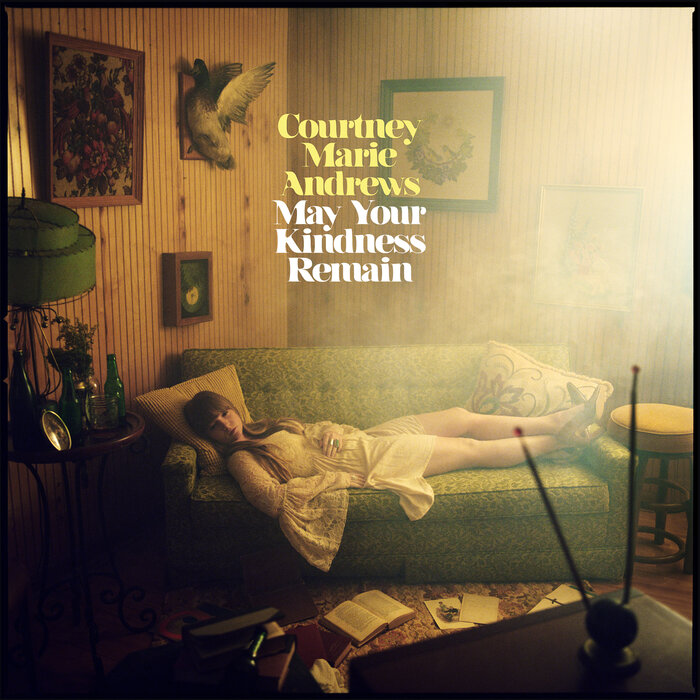
The layers of singer-songwriter Courtney Marie Andrews’ May Your Kindness Remain are vast as the music is enchanting. Her sixth record is easy to fall for, with her dusky soprano rising atop an easy-going, yet sultry band. Her groove is reminiscent of Linda Ronstadt, particularly with the way she slides around the spectrum of Americana: country, folk, gospel and something else you can’t quite put your finger on. Lyrically, Andrews is in touch with her own loneliness, kindness and empathy and that shines through songs like “I’ve Hurt Worse,” “May Your Kindness Remain” and “Two Cold Nights in Buffalo.” The inspiration for these songs came from meeting people on her tours and realizing that everyone is suffering from the same types of sadness. May Your Kindness Remain is an accurate, passionate account of facing problems directly and dealing with depression head-on.
The Beths occupy a warm, energetic sonic space between joyful hooks, sun-soaked harmonies, and acerbic lyrics. Their debut album Future Me Hates Me, forthcoming on Carpark Records, delivers an astonishment of roadtrip-ready pleasures, each song hitting your ears with an exhilarating endorphin rush like the first time you heard Slanted and Enchanted or “Cannonball.”
Front and center on these ten infectious tracks is lead singer and primary songwriter Elizabeth Stokes. Stokes has previously worked in other genres within Auckland’s rich and varied music scene, recently playing in a folk outfit, but it was in exploring the angst-ridden sounds of her youth that she found her place. “Fronting this kind of band was a new experience for me,” says Stokes. “I never thought I had the right voice for it.”
From the irresistible title track to future singles “Happy Unhappy” and “You Wouldn’t Like Me,” Stokes commands a vocal range that spans from the brash confidence of Joan Jett to the disarming vulnerability of Jenny Lewis. Further honeying Future Me Hates Me’s dark lyrics that explore complex topics like being newly alone and the self-defeating anticipation of impending regret, ecstatic vocal harmonies bubble up like in the greatest pop and R+B of the ‘60s, while inverting the trope of the “sad dude singer accompanied by a homogenous girl-sound.”
All four members of The Beths studied jazz at university, resulting in a toolkit of deft instrumental chops and tricked-out arrangements that operate on a level rarely found in guitar-pop. Beths guitarist and studio guru Jonathan Pearce (whose other acts as producer include recent Captured Tracks signing Wax Chattels) brings it all home with an approach that’s equal parts seasoned perfectionist and D.I.Y.
“There’s a lot of sad sincerity in the lyrics,” she continues, “that relies on the music having a light heart and sense of humor to keep it from being too earnest.” Channeling their stew of personal-canon heroes while drawing inspiration from contemporaries like Alvvays and Courtney Barnett, The Beths serve up deeply emotional lyrics packaged within heavenly sounds that delight in probing the limits of the pop form. “That’s another New Zealand thing,” Stokes concludes with a laugh. “We’re putting our hearts on our sleeves—and then apologizing for it.” The result is nothing less than one of the standout records of 2018.
Hoick is the solo album from Allo Darlin’ drummer Mikey Collins, who combines his love of solid grooves and joyous harmonies to create a fun and sonically varied record. Mikey played most of the instruments and mixed the record himself, with some assistance from Laura Kovic (Tigercats) on vocals and fellow Allo Darlin’ member Paul Rains on lead guitar. The flicker of his previous band provided the building blocks of an upbeat, positive record, but Mikey wanted to add his own quirky, disco spin & sonic expansiveness, aided by co-producer John Winfield (who has worked with Jimmy Somerville), with the aim of making a record that people stood a chance of being able to dance to. To create this eclectic sound, Mikey draws on influences as far flung as Dexy’s Midnight Runners, Bruce Springsteen & Todd Rundgren as well as more current artists such as Night Works, Matthew E White and Father John Misty.
Mikey began working on the album while he was still touring with beloved Fortuna POP! signed indiepop outfit Allo Darlin’ and as a result it took a pretty long time to complete. The last few years were a conveyor belt of change as he; got married, had a child, bought a house, moved from London to be by the Kent coast (Ramsgate) and opened a residential studio Big Jelly Studios (where they’ve recorded albums by Girl Ray, Metronomy, Pete Doherty and the Puta Madres, Mt Wolf, Seamus Fogarty and many others including Elizabeth Morris from Allo Darlin’s new band, ELVA).
In short, he grew up. The record journeys through these changes but has its roots firmly grounded in his new seaside habitat. His identity with and connection to the area is even incorporated into the album artwork – a startling photograph by local photographer Jason Evans (who has worked with Radiohead and Keiran Hebden/Fourtet), incorporating flora and fauna of the region, an outer ring of pop glow that hints at the neon din of the seaside. The idea for the image emerged after a discussion about the relationship between organic and synthesised sounds on the record and its need to represent the area.
Moving to the coast had a more profound effect on Mikey than he imagined, as he explains; “Mostly it’s about a seismic shift in life. I probably delayed growing up in a lot of ways, touring can kind of help that – it’s a fantasy world in some ways! I hadn’t really stopped to appreciate what I had until I got a little bit of time and space to think. Being by the sea is good for that. I realised how many positives there are in my life and I wanted to channel some of that into a record.” Unsurprisingly there are a lot of references to the sea, falling in love and friendship on the album. This is evident in songs such as as “Falling”, which is about proposing to his wife – something he swore blind he’d never do! – to “Pinata”, a song about handing over your heart, wrapping it in a piñata and giving someone the bat (in a humorous way). “Side by Side” is a reflection on having spent a lot of time with a group of people and that, hopefully, the Allo Darlin‘ friendship would always endure.
“West Coast” is another uptempo disco-vibe, reflecting on time spent with long term tour buddies The Wave Pictures in California. In “Home Bird”, Mikey tried to pay homage to to the grooves of older RnB tunes with a simple arrangement, Rolling Stones-esque riffs and thoughts about the dichotomy of missing home, but loving being on the road. The finger-picked, delicately arranged acoustic song, “Moving On”, was recorded in one take in the upstairs flat of a cafe/bar (called Caboose) that Mike opened with his wife when they first moved to Ramsgate. An airplane flew overhead at a seemingly poignant moment, so Mike decided to keep that take, as explains; “it seemed like a perfect moment captured!”.
If Joe Strummer had never done anything outside of the Clash, that would’ve been enough. That band, they’re one of the absolute Greats, one of those groups that is so iconic and influential that Strummer’s legend in rock history was easily solidified by that alone. But though his releases were more sporadic after the Clash fell apart, he still recorded a lot of other great music before his untimely death in 2002. He is getting an everything-and-the-kitchen-sink treatment for the many reels of unreleased tape he had archived in his barn.
In 2013, The Clash Sound System box set compiled everything of that band’s varied and sundry discography, with the standard live sets, first-, out- and mis-takes, in a package designed like a boom box. A new book, available in the box set and deluxe editions, is filled with “rarely seen and previously unpublished memorabilia from Joe’s personal collection as well as historical press reviews and technical notes about the albums,” according to a news release.
Joe Strummer 001 looks to be a more modest affair than that package in every way except the actual music it contains, covering the complete cross-section of Strummer’s solo musical development, inextricable as it is from his work with The Clash; the dead-standard early bar band material, his late-’80s hip-hop-influenced four-on-the-floor slams, bonfire-and-whiskey folk globe-trotters and the weed-smokey collage-pop of The Mescaleros, stretching back to 1975. Among the gems inside are rare soundtrack songs (including an outtake of “Crying on 23rd,” from Sid & Nancy), collaborations with artists like Johnny Cash and a particularly rare unreleased cassette demo from the mid-’70s called “Letsagetabitarockin.”
An incomplete list of the various projects included here should make it clear: The 101ers, The Astro-Physicians,Radar, Electric Dog House, The Soothsayers, Pearl Harbour, Joe Strummer and The Mescaleros, collaborations with Jimmy Cliff and Johnny Cash and post-Clash work with Mick Jones and Paul Simonon.
Below, find a sample single from it, titled “London Is Burning” — a song that was reworked into the (better) Mescaleros‘ song “Burning Streets (London Is Burning).” “London Is Burning,” recorded with the Mescaleros, was later issued as “Burning Streets” on Streetcore, a 2003 posthumous release. The cassette edition of Joe Strummer 001 is where you’ll find the “U.S. North Basement Demo,” recorded by Strummer and Jones in 1986.
Joe Strummer 001 will be released September. 28th on Ignition Records.
Taylor Goldsmith and his band Dawes latest album release. “Passwords”, This Is Dawes’ sixth studio album, It features 10 new soft-rock songs indebted to Laurel Canyon circa 1972 and in particular the sound of Jackson Browne, with plaintive melodies, soothing piano and lyrical platitudes that are just unspecific enough to feel relatable, like the scenarios in self-help books. There’s the earnest, if self-satisfied, attempt to find common ground on “Crack the Case,” where Goldsmith murmurs rueful lyrics as piano and acoustic guitars mingle behind him. His regretful would-be lover on “Mistakes We Should Have Made” wishes he’d gone for the kiss despite the obstacles, his ardor framed by the prominent snap of a snare drum pushing a mix of acoustic guitar and keyboards, with distant backing vocals from the girls of Lucius. “Feed the Fire” slides around on a slippery guitar riff and shimmery synth parts, and Goldsmith reflects on empty ambition at the top of his vocal range in a way that calls to mind Private Eyes-era Hall & Oates.
Passwords, inspiration pulls guitarist/ singer Taylor Goldsmith, drummer Griffin Goldsmith, bassist Wylie Gelber, and keyboardist Lee Pardini into their most universal, topical territory to date. This is a record about the modern world: the relationships that fill it, the politics that divide it, the small victories and big losses that give it shape. Taylor’s writing is personal at points – the result of his recent engagement, which lends a sense of gravity and self-reflection to album highlights like “Time Flies Either Way” and “I Can’t Love” – but it also zooms out, focusing not on the director himself, but on everything within the lens.
Some artists are naturally loathe to discuss their work in microscopic detail, lest any telling trade secrets be revealed. Not perpetually-disheveled Dawes frontman and main songwriter Taylor Goldsmith. At the mere mention of the Los Angeles group’s slightly sinister new sixth set Passwords, he sings like a canary over every last nuance of the Jonathan-Wilson-produced set, which opens with the Brontosaurus-stomping “Living in the Future” and the abject ode to apathy and ennui, “Stay Down.” And he holds nothing back.
“On one hand, it was important for me to start the record with those two tracks, since they were the bleakest of all he songs, and I felt like if the album were to end with either of those songs, we would have been sending a listener off in the wrong mood,” he explains. “And that’s a mood that we don’t believe in or subscribe to. Other more upbeat numbers like “Crack the Case” and “Time Flies Either Way” are a reaction to that attitude, so I was questioning certain things in life, of what it means to be alive at this moment in time.”
Elsewhere, he expands on these theories, like in “Feed the Fire,” wherein his need for stardom is the same flame that will eventually consume him, and on “I Can’t Love,” which—without cynicism—celebrates the new love he’s found with his fiancée, actress Mandy Moore. “And ‘Greatest Invention’ is a swan song to an image of a woman that never existed,” he says. “And the whole record is about where we’re living, how dark I might feel about it, and then finding some sort of purpose and some sort of meaning in a connection with just one person.”
After serving as a backing vocalist for the likes of Bob Weir, Kevin Morby, Benjamin Booker and Elizabeth & The Catapult, singing in girl-group doo-wop trio The Bandana Splits and performing as Dear Georgiana, Lauren Balthrop is at last stepping into the spotlight to release her debut album, This Time Around. Balthrop says “Don’t Ever Forget” was inspired by Lou Reed’s “Perfect Day,” a meditation on the evanescence of joy and its accompanying nostalgia. It’s a steady-moving reverie highlighted by—what else?—Balthrop’s dulcet vocals, which are layered over fuzzed-out electric guitar and bright acoustic strumming.
Very quietly, for six years, a band had been brewing. Recruited as the Hawks by Arkansas rockabilly veteran Ronnie Hawkins, the quintet had notched years as road warriors playing Canadian and U.S. clubs and casinos, further seasoned by combat duty on Bob Dylan’s tumultuous 1966 tour, Still in their 20s (save for keyboard polymath GarthHudson), they looked and sounded decades older; the black and white portrait on the album jacket. It was sort of hip to know who they were outside of Toronto.
Few game-changing albums open as quietly as Music From Big Pink, the 1968 debut for The Band. A languid but brief motif of single Telecaster notes wheezing through a Leslie speaker staggers in on top of weary, muffled drum beats, anchored by gospel piano chords. And then Richard Manuel begins singing, his soulful, broken-hearted voice breaking as it climbs:
“We carried you in our arms on Independence Day
And now you’d throw us all aside, and put us all away
Oh what dear daughter ’neath the sun, would treat a father so
To wait upon him, hand and foot, and always tell him ‘no’?”
The antithesis of a conventional, radio-friendly earworm, “Tears of Rage,” written by Manuel and his erstwhile boss, Bob Dylan, was a lagging dirge of inventoried betrayal and lost innocence against brooding organ. A mournful duet of soprano and baritone saxophones punctuated later verses,
They came home to Woodstock with Dylan and put down firm roots for two-years. It was Dylan’s “out of touch” year and they began to spawn this music, this hybrid that took its seeds in the strange pink house. Whereas the Dylan “sound” on recording was filled with Bloom-fielding guitar, Kooper hunt and peck organ and tinkly country-gospelish piano, a fortunate blending of the right people in the right place etc., the Big Pink sound has matured throughout six years picking up favorites along the way and is only basically influenced by the former.
The Dylan tracks on Big Pink already carried the Band’s DNA from their gestation in the Saugerties, N.Y., house that conferred the album’s title, an acknowledgement that the very essence of the group’s ensemble style had been pared away and rebuilt from its foundations as a result of the collaboration.
On “The Weight,” Levon Helm, the group’s lone American, recounted a journey that seemed part pilgrimage, part parable, part shaggy dog story written by guitarist Robbie Robertson. The music itself was at once plainspoken and deliberate, Hearing three distinctive voices build the vocal harmonies on the choruses evoked a brotherhood that itself emerged as part of the album’s mystique and the Band’s identity.
Robbie Robertson makes an auspicious debut here as a composer and lyricist represented by four tunes. Two are stone knockouts: “The Weight” probably the most commercial item in the set with a most contagious chorus that addicts you into singing along… “take a load off Fanny, take a load for free, take a load off Fanny and… you put the load right on me…” “To Kingdom Come” starts out smashing you in the face with weird syncopations and cascading melody lines and then goes into that same groovy bring-it-on-home chorus that earmarks “Weight.”
Hudson’s pitch-bending Lowery organ and Manuel’s piano provided the ensemble’s foundation throughout, with Hudson and producer John Simon adding horns . Vocally, the arrangements highlighted Manuel’s lyrical growl, steeped in Ray Charles’ protean influence, Rick Danko’s buoyant yelp and Helm’s Arkansas drawl; gospel’s call-and-response interplay capped by wide intervals rather than the close harmonies of most bands. Robertson stepped up as a lead singer on just one of his compositions, “To Kingdom Come.”
Individually what makes up this album is Robbie Robertson whose past discography includes “Obviously Five Believers” on Blonde on Blonde, the “live” version of “Just Like Tom Thumb’s Blues” and the much ignored Dylan single, “Crawl Out Your Window.” Rick Danko, on bass and vocals, is one of the more outgoing people in the band, he can be depend upon to give you a lot of good matured shit whenever you see him; he of the new breed in bass players, the facile freaks like Harvey Brooks, Jim Fielder and Tim Bogert. He is only different from these three in his tasteful understating. Bassist Rick Danko also steps up with his own Dylan co-write on “This Wheel’s on Fire,” decorated with twinkling keyboard accents on a cheap Roxochord keyboard Hudson had hot-rodded with a telegraph key, while the set’s third Dylan contribution, “I Shall Be Released,” further extends the scriptural atmosphere.
Richard Manuel is affectionately called “Beak” or was at one time; a deft pianist with a strong feeling for country-gospel big pink music. A strong contributing composer: “Tears of Rage,” “In A Station,” “We Can Talk,” and “Lonesome Suzie.” “We Can Talk” offers a hearty mid-tempo rocker framed between Manuel’s rollicking piano and Hudson’s organ arpeggios as the three singers traded overlapping lead vocal lines through lyrics that nodded to the era’s political turmoil with a playful allusion to the group’s Canadian majority. As impressive as that song remains, however, it’s as a balladeer that Manuel would be most compelling. “Lonesome Suzie” is a tender, sympathetic portrait of romantic rejection and abject loneliness that implies Manuel’s own inner pain, while “In a Station” is a hushed reverie that sonically and lyrically evokes a borderland between waking and dreaming.
Garth Hudson is one of the strangest people I ever met. If Harvey Brooks is the gentle grizzly bear of rock and roll then Garth is the gentle brown bear. He is the only person I know who can take a Hammond B3 organ apart and put it back together again or play like that if it’s called for. While backing Dylan on tour he received wide acclaim for his fourth dimensional work on “Ballad Of A Thin Man.”
Levon Helm is a solid rock for the band. He is an exciting drummer with many ideas to toss around. I worked with him in Dylan’s first band and he kept us together like an enormous iron metronome. Levon was the leader of theHawks. If Big Pink consciously rode the throttle to focus on the quintet’s collective sound, they did flex their power on “Chest Fever,” a semi-nonsensical paean to a wild lover that builds upon Hudson’s formidable intro, itself a virtuosic goof on Bach’s Toccata in D minor that would metastasize over the years into a concert highlight.
John Simon, a brilliant producer-composer-musician, finally has this album as a testimonial to his talent. The reason the album sounds so good is Simon. He is a perfectionist and has had to suffer the critical rap in the past for what has not been his error, but now he’s vindicated.
Music From Big Pink set its hooks into fans gradually but deeply. Musicians, on the other hand, were stunned by the Band’s musicianship, songcraft and democratic spirit, inspiring artists from both sides of the pond to search such fellowship, with Eric Clapton and George Harrison just two of the more prominent acolytes. The rich roots music sensibility underpinning the album with folk, gospel, blues and country elements meanwhile planted vital seeds that buttressed the imminent rise of country-rock, as well as the subsequent emergence of Americana at the turn of the millennium.
These are fiery ingredients and results can be expected to be explosive. The chord changes are refreshing, the stories are told in a subtle yet taut way; country tales of real people you can relate to (the daughter in “Tears of Rage”) the singing sometimes loose as field-help but just right. The packaging, including Dylan’s non-Rembrandt cover art, is apropos and honest (there’s that word again). This album was recorded in approximately two weeks. There are people who will work their lives away in vain and not touch it.
The eighth album from Marissa Nadler, For My Crimes, is the sound of turmoil giving way to truth. The songs stare down the dark realization that love may not be enough to keep two people together through distance and differing needs. By asking these difficult questions about her relationships, Nadler has found a stronger sense of self and a sharper voice as both a songwriter and a vocalist, culminating in her most evocative entry in an already impressive discography. The album is set for release on September 28th, via Bella Union and Sacred Bones.
Following the release of 2016’s acclaimed Strangers, Nadler’s relationships were put to the test as she left the Boston area on tour. She wrote throughout 2017 about this tension, and ended up with three times as many songs as she needed. But after reviewing the demos with her co-producers Justin Raisen and Lawrence Rothman,Nadler wrote a flurry of tight but no less intense new songs in the week before arriving at Rothman’s Laurel Canyon studio, House of Lux, in early January. She considered it a challenge to herself, applying new strategies and structures to the craft of “slow music” she’s honed over the last 15 years. From that group of songs came nearly all of the singles on For My Crimes, some of the most indelible of Nadler’s career.
The opening title track is classic Nadler: a sweeping, vaguely Southern drama of voices, strings, and acoustic guitar, that walks the fine line between character song and personal indictment by metaphor. “For My Crimes” spawned out of a songwriting exercise in which Nadler wrote from the perspective of someone on death row, but the song casts a dark shadow over an album that turns marital conflict into inner reflection. Helping Nadler dig down into the song’s remorseful soul is her old friend Angel Olsen, who serves as a distraught echo from beyond in the chorus.
“Blue Vapor” has an intoxicating raw energy luring you in, somewhere between Springsteen and a grunge band playing MTV Unplugged back in the day. It feels at once tight and improvisational, balancing on little more than Nadler’s steady strumming and vulnerable harmonies with Kristin Kontrol (of Dum Dum Girls), until the heavy, purposeful style of Hole drummer Patty Schemel conjures chaos in the second half. This slow burn feeling is all too appropriate for a song centered around repeating patterns and creeping numbness in a relationship. “Blue Vapor” names that strange ambivalence and turns it into a chant that hangs in the air long after the song ends.
Dreaminess and eeriness have often been two sides of the same coin in Marissa Nadler songs. Where “For My Crimes” and “Blue Vapor” come from her dark side, the album has plenty of moments that twinkle in their sadness and sentimentality. “I Can’t Listen to Gene Clark Anymore” is one of those highly specific songs you’ll get if you’ve ever lost a favorite band to your own broken heart. It sways perfectly in its bittersweetness, like a slow dance you never want to end. After the strings swell and the bass pedals kick in, Nadler coos, “Cause I remember/The songs you sang/To me when it was you/I was falling for.” Later, closing track “Said Goodbye To That Car” turns a final odometer reading into a rhythm for a catchy, wistful hook: “1-1-9-6-5-7, and the engine blew/“1-1-9-6-5-7, and I thought of you,” Nadler lulls, harmonizing with herself. It’s an ingenious way to capture the end of an era in one small moment, and she moves as delicately as you would handling an old photo with her sweet oohs.
Bolstering the intimacy of these songs is the strong feminine energy that defined their recording. Between Rothman’s fluidity with both gender and genre (as heard on his 2017 album The Book of Law), and Raisen’s track record of successful collaborations with strong women (Olsen, Kim Gordon, Charli XCX), Nadler felt empowered to explore without judgement in the studio. With the exception of a single saxophonist, every player on the album is a woman of notable pedigree and distinct style, many of whom have played with Nadler over the years. In addition to the cameos by Angel Olsen and Kristin Kontrol, Sharon Van Etten sings backup on “I Can’t Listen to Gene Clark Anymore” and “Lover Release Me.” Mary Lattimore joins on harp for “Are You Really Gonna Move to the South,” while the great experimental multi-instrumentalist Janel Leppin plays strings throughout the record.
These women and others helped make For My Crimes as dynamic as it is intimate, but Nadler’s mesmerizing voice—stripped of nearly all reverb—is what sits at the center of these songs. You can hear the emotional range of her performances more than ever before, from the spectral harmonizing of “Are You Really Gonna Move To The South” to the cheeky boredom of “All Out Of Catastrophes,” two other highlights. As a singer, she has never sounded more confident than she does here.
Adding to the album’s deeply personal feeling is its abstracted artwork, featuring Nadler’s original oil paintings. Though Nadler is a graduate of the Rhode Island School of Design and a semi-retired art teacher (she has one student left—a 95-year-old named Doris), For My Crimes marks the first album cover bearing one of her paintings. She also channeled the album’s themes into paintings corresponding to specific tracks, which will be included as prints in the limited edition version of For My Crimes (and in some cases, for sale as originals on Nadler’s website).
Releases September 28th, 2018 The album is set for release on September 28th, via Bella Union and Sacred Bones.
The full-length debut from Los Angeles-based band Valley Queen, “Supergiant” takes its title from the most massive and luminous yet fastest-burning stars in the universe. “The song ‘Supergiant’ is about how we’re all made up of the same stuff as stars, and I liked the idea of tying the whole album together with that metaphor,” says Carol. “It takes all the drama you hear on the record—the aggressive, chaotic moments, and the more beautiful or quieter moments—and puts it all into a more galactic perspective.”
With the album finished and ready to be released into the world, it’s now easier for Carol to take a step back and be philosophical but there were moments when it almost seemed like Supergiant would never come to light.
The first iteration of Valley Queen formed not long after Carol moved to L.A. and crossed paths with NeilWogensen through the local music scene. With Shawn Morones and drummer Gerry Doot later joining the lineup, the band named themselves Valley Queen in a nod to the region where ancient Egyptians buried their deceased matriarchs. They released the singles “In My Place” and “High Expectations,” as well as 2017 EP Destroyer to widespread critical acclaim. The band also supported artists including Laura Marling and Thao & the Get Down Stay Down on tour. Musically and creatively, they were in a place they never dreamed of.
As the band’s profile grew, so did days on the road and time spent away from home. Any touring band will testify to the intensity of togetherness, tight finances, being away from significant others, physical exhaustion, unhealthy diets and habits, etc., but they were doing what they loved and it was resonating with people. The band had found their own magical pocket musically but, ultimately, the strain was too much for Morones and Doot who left the band after years on the road. They were replaced with session musicians and the band continued to win fans and play bigger rooms, but the chemistry that Carol had come to depend on was gone.
The growing success earned them a record deal—a dream finally coming to fruition—but Carol was unable to find the creative cohesiveness she knew she needed to make the record. “I wondered how to record the record. I believed in myself but I had also believed in the people around me. I write these songs in solitude but ValleyQueen is not my solo project. I thrived in the collaboration. I came back from these new tours feeling creatively depleted, like something important was missing.”
Carol knew ultimately what needed to happen. Like a parent knowing what’s best for their child, she understood that Valley Queen was more than lyrics and sessions musicians. It was about people, chemistry and the relationships that created such a powerful musical force to begin with.
“I knew nobody else could record this record with me but our original line up. They had grown into the arrangements, had a personal understanding of what the songs were about.” Doot couldn’t rejoin—the strain touring had put on his newborn baby and wife was too much for him to reconsider—and Mike DeLuccia came forward, which was a godsend. Then Carol called Morones. The time on the road had strained their relationship significantly and there was healing that needed to happen. After long discussions and sharing, they all decided it would be worth the risk to try to create this album and tell the story of what had happened. Two months later, Valley Queen was in the studio.
Carol reflects, “Recording the album was a transformative experience for the band. It certainly trod the ground of the past, the difficulty and disappointment we had faced. But moving through and completing the project brought with it a sensation that the chapter was over. All of us will always be in process, we will always be learning how to better work with each other and ourselves. But a power was created in actively choosing to meet with that process.”
The result is Supergiant, produced by Lewis Pesacov (Best Coast, Fool’s Gold, Nikki Lane, FIDLAR). Not surprisingly, the album emerges with raw production and relentless intensity. It’s a record that could not have been made any other way, each member bringing their own creative force and energy to every song. It’s about self-exploration, not just as an individual, but also as a collective whole.
“It can be really painful and isolating to go through something that doesn’t really look like anybody else’s experience but your own,” Carol says in reflecting on Supergiant’s intensity. “But ultimately that’s part of the beautiful orchestration of being alive—instead of trying to go around that experience, you need to go fully into it. I think that’s the only way to get a deeper understanding of who we really are.”