Interpol used their last single “The Rover” to follow the meandering adventures of a guru in the making, but now, in a follow-up track entitled “Number 10,” the band tackle subject matter a little more familiar: the modern office romance. The new song,is the second single from the band’s forthcoming sixth album Marauder.
“Number 10” describes the secret office relationship between Ella and one of her employees. Blending romantic dialogue with more standard office banter, the song begins with lead singer Paul Banks assuring that “Your secret’s safe here,” before Ella encourages her employee to “Go and talk to Steve about it.” In compliance with standard office procedure, we can only assume Steve is the head of HR.
By the sound of the track’s fast-paced dueling guitars and anxious lyrics, “Number 10” is a far cry from a love song as this pair navigates the tricky ethical waters and power dynamics of interoffice romance. In a Beats 1 interview with Zane Lowe, Banks described the grungy new track as an attempt to “sound faithful to a live recording.” .
Interpol recently announced an expanded tour to support Marauder,
Lumerians long-overdue new LP, Call Of The Void, is officially unleashed into the world this Friday. Four years in the making it see’s the Oakland band return on top form, a face-melting combination of synth-heavy dancefloor grooves, oddball prog wig-outs and exploratory psych.
Oakland, CA outfit Lumerians are a prodigious force in the extra-terrestrial realms of modern psychedelia. Since forming in San Francisco back in 2006, Lumerians have traversed their way through multiple different genres – offering mind-bending adventures into everything from space rock, kraut and noise to zamrock, free jazz, drone and dub. Drawing from a range of influences, both familiar and esoteric, past and present, Lumerians conjure up sounds from far into the future. In their twelve years as a band they’ve toured with everyone from My Bloody Valentine to Killing Joke and Black Moth Super Rainbow, putting out a number of critically-acclaimed releases including two ‘official’ albums and two collections of improvised compositions called Transmission from Tellos III & IV. On June 22nd the band will be returning with their third album, Call of the Void, on London-label Fuzz Club after four years under the radar. The album is dedicated to the memory of Barrett Clark, Lumerians’ long-time friend, sound engineer and collaborator who passed away in the tragic Ghost Ship warehouse fire in Oakland 2016.
It may have taken the band four long years to put their latest album together but it was definitely worth the wait, their mystical exploratory soundscapes at their finest. Eclectic and vastly multifaceted, the album is further proof – if you needed it – that Lumerians are a singular force in contemporary psychedelia. Talking about Call of the Void, vocalist Jason Miller explains: “If ‘Transmalinnia’ represented the exploration of an alien world and ‘The High Frontier’ a voyage through space, ‘Call of the Void’ is a penetrative exploration of Earth through an alien gaze gone native – the weight of gravity, the build-up of pollution and sediment, experiences of ecstatic revelry and tragedy.”
For all the appeal of Lord Huron’s elegiac, ethereal Americana, Fleet Foxes and Bon Iver were ahead of them in a very crowded field. So after two albums of hymnal beauty with acoustic guitars – and the track, The Night We Met, the Michigan band led by Ben Schneider have changed course.
Now on a major label, the songs no longer conjure up vast rural or mountainous landscapes but the even more widescreen spaces of the cosmos. The title means “black void”, and vast swaths of reverb and echo (sculpted by Flaming Lips’ producer Dave Fridmann) create a celestial wall of sound; many of the songs have astral themes or metaphors. Writing on bass guitar has given the music a more powerful chassis, from Killers-like throb to subtle funk. Any remaining acoustic guitars have been blasted beyond recognition.
With their first release on a major label, Los Angeles based band Lord Huron are more popular than ever. Their third album Vide Noir is beloved by critics and fans alike and we welcome them for a live set in the midst of a nationwide headlining tour.
Lord Huron has morphed from the solo project of Ben Schneider to a full-fledged band and their sound has grown with it. It’s a bountiful collection of texture and rhythm from one of our favorite american bands.
Schneider’s best songs tap into the desolate beauty of the loner, who now has a much bigger universe to get lost in
Musicians:
Ben Schneider – lead guitar/lead vocals
Mark Barry – drums
Thomas Renaud – guitar/backup vocals
Miguel Briseno – bass
Brandon Walters – guitar/backup vocals
April Boyce – keys/backup vocals
After a nearly five-year hiatus, Phosphorescent, the musical project of Matthew Houck, is returning this October with a new album called C’est La Vie.
You can hear the project’s lead single,” New Birth In A New England,” below.
The album was recorded in Nashville, in a studio Houck built by hand after relocating to Music City with his family after a long stint in New York. C’est La Vie, which enters the world on October 5th via Dead Oceans, was mixed by Houck and Vance Powell (Jack White, Chris Stapleton, Arctic Monkeys).
‘New Birth in New England’ from Phosphorescent’s new album ‘C’est La Vie’, out October 5th on Dead Oceans.
Phoebe Bridgers track Scott Street an exclusive live performance for Vevo DSCVR, the channel for the best in new music. It’s a real skill to wax forlorn without submitting to the depths of despair. In the last two years Phoebe Bridgers has shown us just how articulate she can be regarding the throubled side of life while still touting the small joys that mark most day to day experiences. Again and again, the singer-songwriter revels in the marvels of the emotional deets that shape who we are. After critics erupted over the eloquence of the 23-year-old’s ‘Stranger In The Alps’ (get the ‘Lebowski’ reference?), the Silver Lake-based Bridgers went through a wave of Joni-Jackson comparisons.
Elements of the masters dot her songs, but some of her more recent heroes are Sun Kil Moon’s Mark Kozelek and Elliot Smith – tender wordsmiths whose best work is both vulnerable and poised. If you know Bridgers’ “SmokeSignals” and “Motion Sickness,” you might’ve heard her “Scott Street” before, too. But not like this. Our DSCVR performance turns the tune, inspired by a sunset stroll through her Echo Park hood, into an epic lament. Swirling fiddle lines and cloudy guitar flourishes prove the singer knows exactly what she needs to bolster her designs as she closes with farewell line of “don’t be a stranger.” Masterful.
Throwback rock quartet Greta Van Fleet made their Tonight Show debut on July 26th, playing their new single “When The Curtain Falls,” and eliciting a standing ovation from the studio audience.
And while their Tonight Show performance saw the band at the top of their game, a few days later the quartet was forced to cancel their performance at the Panorama Festival due to a persistent hand injury by drummer Daniel Wagner.
“Danny has been playing with injured fingers for the last two weeks, and they have not been able to heal properly,” the band wrote in an official statement. “It has now reached the point where we cannot pick up a drumstick because of it… There’s no greater joy than sharing music, and we are disappointed to miss time spent with you. We promise to make it up to our fans in NYC this year.”
The band is also clear in prioritizing Wagner’s recovery: “It is out top priority for Danny to heal from this injury and be able to play for all of you soon.” Watch the Michigan-based band perform “When The Curtain Falls” off their untitled sophomore album
Solemn, dreamlike 1971 Sea Of Joy documents a period of massive change for Sydney band Tully. For the previous two years, they had been arguably Australia’s most dynamic Folk rock group, renowned for their wild, largely improvised concerts. Their rise was meteoric, from Sydney house band for tribal love-rock musical Hair in 1969, to starring in six-part ABC TV series Fusions. By 1970, when they released their self-titled debut album, Tully were rock stars of a very rare order in Australian music, feted by highbrow critics and teenage groupies alike.
Within a year, however, almost everything changed. Showstopping drummer Robert Taylor departed the band, swiftly followed by vocalist Terry Wilson, and the remainder of Tully joined forces with members of gentle, exploratory folk group Extradition. Suddenly Tully were rockers no longer.
Flautist, clarinetist, saxophonist and de facto band leader Richard Lockwood had approached surfing director Paul Witzig after his now iconic 1969 film Evolution (for which Tully had contributed some music alongside Sydney colleagues Tamam Shud), offering to record an entire soundtrack to his next film. Witzig had agreed when Tully were a towering rock band, driven by Michael Carlos’ massive Hammond organ and Lockwood’s exploratory reeds, but by the time Sea Of Joy came to be recorded, they were a drummer-less, contemplative folk-psych outfit, dedicated to spiritual guru Meher Baba.
Although unexpected, the results were luminous. Sea Of Joy radiates a serene purity, miles removed from what people generally think of as surf music, but as Witzig wrote on the back cover, “Tully are not surfers, but there proved to be many things common to both our worlds: a feeling for peace, beauty, simplicity and freedom.”
New member Colin Campbell contributes I Feel the Sun, also recorded by Extradition for their lone, celebrated album Hush in 1971. The miraculous voice of Shayna Stewart is also heard for the first time in Tully on the Lockwood-penned title track. As an added bonus,
Humble, disarming and sublime, Sea Of Joy is a record like very few others
Escape these end times. Free yourself from mind control. Prepare to celebrate the new world order. ‘Columbia’, the debut album by The Blinders, is ready. Nominally, it’s the work of three young men living in Manchester by way of Doncaster. Spiritually, ‘Columbia’ is the beacon to show a better, freer life. Past cult leaders have promised spiritual awakening, true. But the way of The Blinders is more benign and relies only on possessing open ears to gain enlightenment.
You may well have already heard them on Radio 1, Radio X or 6 Music, who playlisted recent single ‘L’Etat C’est Moi.’ You may have seen The Blinders supporting Idles, The Charlatans or Cabbage, or at festivals including Reading And Leeds, Isle Of Wight, Kendall Calling, TRNSMT, Festival No 6 and Neighbourhood Weekender, where they drew a huge crowd to their headline slot at the new bands stage. They’re impossible to miss live, where singer/guitarist Thomas Haywood dons warpaint to assume the fearless persona of Johnny Dream, whose tribal gaze adorns the sleeve of ‘Columbia.’ “Once the warpaint is on, we become monsters, thunder riders,” says Haywood of his alter-ego. “As Johnny Dream, I can totally lose myself in the music and become a shamanic Jim Morrison character. We can do anything, be anyone.”
That shamanic, compelling mood is captured perfectly in ‘Columbia’. Ably produced by Gavin Monaghan (Editors, The Sherlocks, Goldblade), the album sees childhood friends Haywood, bassist/co-writer Charlie McGough and drummer Matt Neale follow Johnny Dream on his spiritual awakening, from the coruscating swagger of the opening ‘Gotta Get Through’ to the raw, beautiful and ultimately redemptive finale ‘Orbit (Salmon Of Alaska)’. Inspired as much by literary touchstones such as George Orwell and Jack Kerouac as much as Nick Cave, Kanye West and The Wytches, ‘Columbia’ is often as dark as you’d expect from an album named after the utopia Charles Manson promised his Family. But, as Haywood notes: “We didn’t want the album to be totally negative. We’re holding a mirror up to society, and there is good in society, so it was absolutely important to end on the optimism of Rat In A Cage and Orbit.”
The latter song was recorded after a schoolfriend of the trio committed suicide. “We’d been struggling to get the song right and were on the verge of abandoning it,” Haywood recalls. “But we read over the lyrics after what happened to our friend and realised we had to get it down. The vocals are one-take.”
Having grown up in Doncaster, The Blinders moved to Manchester to go to University Of Manchester after their A-Levels, though Haywood and Neale soon dropped out to leave McGough to complete his degree in politics and history this spring. “We’d been in bands before, but we’d only just started The Blinders when we finished sixth form,” the bassist recalls. “We felt there was something there, and Manchester was the perfect next step to live a more creative lifestyle. I don’t think it matters where we’re from, ultimately. We say we’re from Doncaster and we love the place, but the community spirit among bands in Manchester who’ve helped us out has been a godsend to us.”
McGough speaks fondly of university giving him both structure when The Blinders aren’t on tour, and of bringing fresh ideas to bring to his songwriting – he studied the Spanish Civil War as part of his degree, with Orwell’s writing a recurring influence on Columbia, not least the eerie campfire feel of ‘Ballad Of Winston Smith’. (“A song you could sing after the apocalypse,” notes Haywood.)
The album contains a reworked version of 2016 debut single ‘I Can’t Breathe Blues’, but daringly leaves off ‘Swine’, the appropriately infectious single which had critics raving. Early Blinders songs were inspired by specific outrages, with ‘I Can’t Breathe Blues’ written after the chilling recording of police brutality victim Eric Garner in New York was made public. The trio’s writing has since become broader in scope, without losing that feeling of rage. “We didn’t know when we started that there’d be such a theme to our songs,” admits McGough. “It was fascinating seeing that narrative come together once we’d recorded the album, realising that even early on in our songs we were expressing that yearning and that hope.”
McGough and Haywood share songwriting duties, with the latter noting: “If you listen closely, you can tell which songs are mine and which are Charlie’s. His songs are more poetic, while I’m always trying to slip a chorus in, but lyrically I’m more ambiguous and Charlie is straight to the point. The credits just list them as being written by the three of us: that equality is the philosophy we preach, and it was important to put that into practice in our own small way.”
Drily witty drummer Neale adds: “With two writers, you’re not defaulting to one vision. And it helps that we’re a trio, because if there are any arguments, it’s going to be two against one. So we’re always a democracy. The fact we’re so loud as a three-piece on stage? That’s partly down to the secret of reverb. But as a trio, you can’t have any unnecessary elements. If you take any one element out, it all collapses.”
Although there’s a timeless power to The Blinders’ songs, the trio are keenly aware of needing to express the malaise at the heart of Western society. “We try to write about the times we’re in, and we try to write daily,” says McGough. “We’re always going to want to get our songs out to the world as soon as possible, so that the events we’re inspired by aren’t out of date. Then again, the nature of social media and 24-hour news channels means the news cycle moves impossibly quickly.” That’s a frustration expressed in ‘Ballad Of Winston Smith’, where Haywood sings: ‘Forgotten stories on the news, a week or so and it’s adieu.’ “It’s one of the reasons we’ve moved slightly away from specific issues,” McGough nods. “We want justice in general, not just for specific topics.”
That sense of injustice is there in the title of ‘Columbia’, drawn from The Blinders’ fascination with cult leaders. Haywood explains: “The rise of populism here and in America means you can draw a line from Trump to Mussolini to Stalin, then through to cult leaders like Jim Jones and Charles Manson. Also, we’re a fan of one-word album titles, like ‘Humbug’ by Arctic Monkeys. One word can strike you, and you can draw so much from it.”
‘Columbia’ was recorded in a month at Gavin Monaghan’s studio Magic Garden in Wolverhampton, with Haywood enthusing: “Beautiful moments happen all the time with Gavin. He takes our ideas and makes them even more epic.” McGough continues: “We’re so hungry, we didn’t need anyone pushing us further than we push ourselves. Gavin was that calming influence on us that we needed.”
‘Columbia’ moves from the brutal brevity of ‘Free The Slave’ and ‘Et Tu’ to the seven-minute sprawling epic ‘Brutus’. “’Free The Slave’ and ‘Et Tu’ are short, sharp shocks,” says Haywood. “They say what they need to.” As for ‘Brutus’, Neale admits its initial inspiration is a mystery to the band too. “That song has changed so much, even we’ve no idea where it came from,” the drummer laughs. “Some of our older songs, we feel like we’re covering them when we play them. It’s the centrepiece of our shows, so it was important to get it right in the studio. It could have gone on for 25 minutes, let alone seven, but as with the other songs, it only says what it needs to say.” McGough admits ‘Brutus’ psychedelic atmosphere was initially tough to capture. “We’d just come off tour when we recorded it,” he recalls. “We went at ‘Brutus’ far too fast, and it sounded awful. The key to getting it right was slowing it down just enough.”
‘Columbia’ also features the powerful ‘Brave New World’, familiar from its use in a William Hill TV advert. “We thought about doing it for a long time and we were initially sceptical,” says Haywood. Adds Neale: “Ultimately, there are few quicker ways of getting your message out there than in a huge TV campaign. You can’t just preach to the converted and get your message out there to people who already support you. You need to reach out to people. That said, it’s a nightmare when the ad comes on when we’re back in Doncaster watching football with our mates. You have to go for a long piss during the ad breaks to avoid your mates ripping it out of you.”
It’s that feeling of being mates, united against the world, that helps the essentially hopeful message of The Blinders and ‘Columbia’. There’s a powerful gang mentality in danger of vanishing in an increasingly gentrified music society, but an elixir which The Blinders possess in abundance. They talk of wanting to move quickly in music, babbling excitedly about new songs they’ve written already since Columbia was recorded. “We’re very certain we’ll be even more ambitious, lyrically and musically,” vows Haywood.
For now, the next chapter will have to wait. Dive into ‘Columbia’. A tangible utopia awaits.
The Blinders live + signing
Wednesday, 26th September 2018 Rough Trade Nottingham
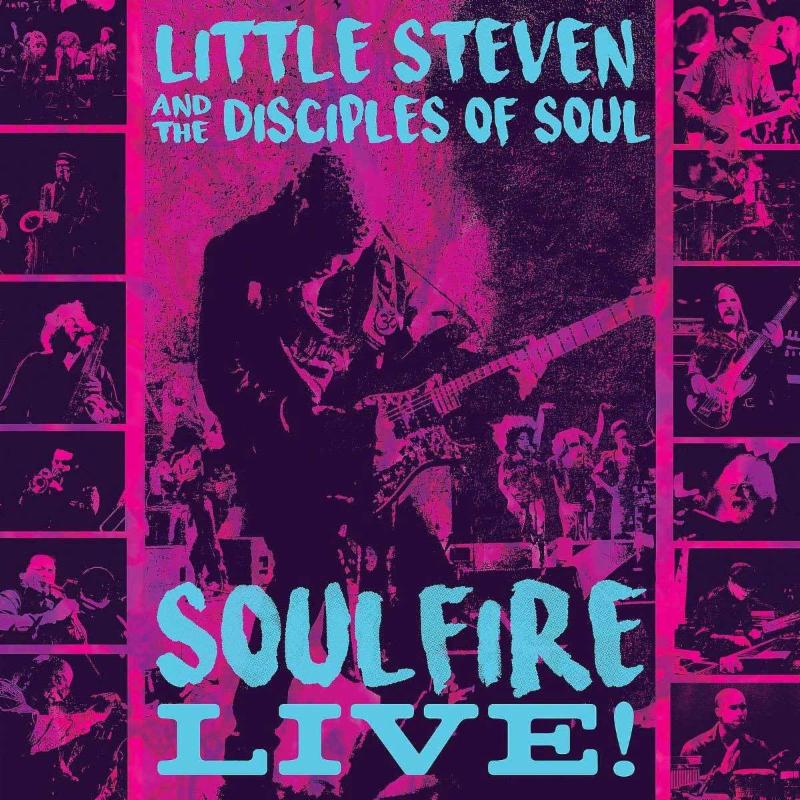
Soulfire Live! is an epic and electrifying journey through rock ‘n’ roll history led by one of its most passionate practitioners, showcasing Stevie Van Zandt’s limitless knowledge, talent, and sheer love for the genre in all its many shapes and guises. Among the album’s many highlights is the introduction made by the legendary Mike Stoller, who along with partner Jerry Leiber, are widely considered to be the first successful and the most enduring rock songwriters and producers of all time.
Other highlights on the album are the original songs from throughout Little Steven’s illustrious career – including classics like “Standing In The Line Of Fire” and “I Don’t Want To Go Home” alongside a number of favourite cover versions like The Electric Flag’s “Groovin’ Is Easy,” Etta James’“Blues Is My Business,” and James Brown’s “Down And Out In New York City,” the latter two songs also featured on last year’s critically acclaimed Soulfire. In addition Soulfire Live!, includes Van Zandt’s inimitable introductions, detailing each song’s unique history and singular spot in his life and illustrious career.
The Macca To Mecca concert audio has also been added to a newly expanded 4 CD version of Soulfire Live!, also out now. Culled from the best performances from the band’s North American and European concerts, this live collection features Van Zandt and the Disciples of Soul taking listeners through a musical history lesson as they blast through an arsenal of songs spanning rock, pop, soul, blues, funk, doo-wop, reggae and everything in between.
Soulfire Live! was produced and arranged by Stevie Van Zandt; the album was mixed by Bob Clearmountain and mastered by Bob Ludwig.
In addition, “Soulfire Live!” includes Van Zandt’s inimitable introductions, detailing each song’s unique history and singular spot in his life and illustrious career.
Disc 3 showcases special guest appearances from some of Van Zandt’s closest friends, collaborators, and favourite artists and includes inspired versions of Moby Grape’s “Can’t Be So Bad” performed with the legendary San Francisco band’s founding member, Jerry Miller; the Motown classic, “Can I Get A Witness,” performed with New Jersey’s own Richie Sambora; The J. GeilsBand’s “Freeze Frame” with vocals from the one and only Peter Wolf; and “Tenth Avenue Freeze-Out” and Little Steven’s own “I Don’t Want To Go Home,” both joined by Bruce Springsteen.
Little Steven (aka Steven Van Zandt) and his powerful 14-piece band The Disciples of Soul performing live around the world! Includes guest appearances from Bruce Springsteen, Richie Sambora, Peter Wolf, and Jerry Miller!.
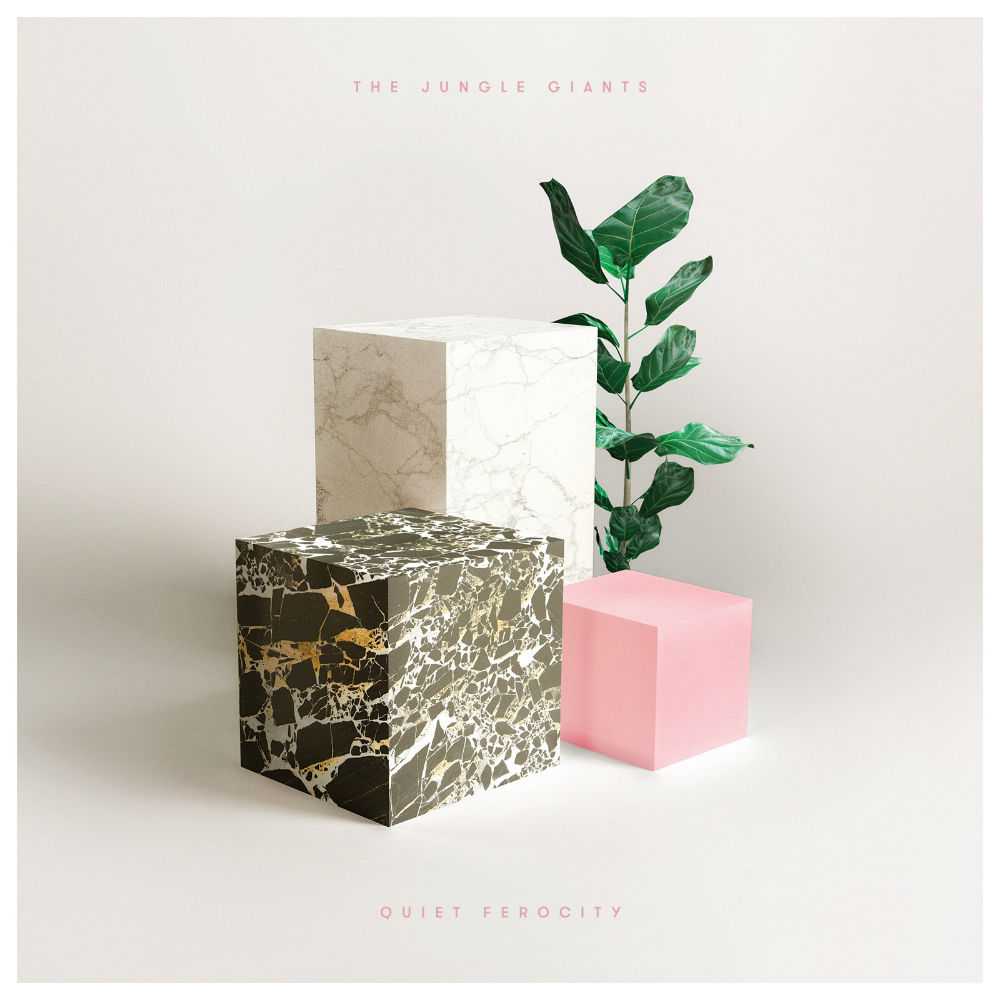
Jungle Giants are back for their third album, “Quiet Ferocity”, and let’s just say, it’s anything but quiet.
Sam Hales and co have created a fun, jangly release that surely holds hits that will see you through to the warm summer months. Opener On Your Way Down is solid, with its catchy beats and riffs, and a chorus you just won’t be able to get out of your head. Feel The Way I Do finds some of that ferocity mentioned in the title, a tight number that you can already picture crowds bopping their head to.
Quiet Ferocity marks a change in concept for The Jungle Giants, with Hales taking to the producers chair for the first time. What results is an album that focuses on quality over quantity, choosing to build the record through their musical ability rather than a multi-layered approach that is so often hard to translate into a live environment. Tracks like People Always Say and Time And Time Again show maturity and growth in The Jungle Giants sound and it’s easy to hear that producing the works themselves has influenced their updated sound. Look out for Used To Be In Love and the eponymous Talking Heads-eque Quiet Ferocity, they’ll be with you for days.
Frontman Sam Hales has given us a track-by-track breakdown of the album, explaining the inspirations and stories behind each of Quiet Ferocity‘s 10 tracks.
‘On Your Way Down’
One of the main sonic identifiers on the album, On Your Way Down showcases the band’s ability to combine simple arrangements with melodic intensity. “It makes you want to dance, but also clench your fists,” Sam says. “When I wrote it I knew it was going on the record and everything else would have to make room for this song and nod towards it.”
On Your Way Down is one of the main sonic identifiers for me on the record. It has a simple arrangement, though melodically it’s very intense. I love how it makes you want to dance, but also clench your fists.
‘Feel The Way I Do’
Feel The Way I Do combines charging dance hooks with a contagious scream-your-lungs-out chorus. “The song came from nowhere and I wrote it start to finish. I just had to get it down. It felt like a gift.”
I’ll never forget the day I wrote this song. I always test out a song by dancing to it and when this song appeared to me out of nowhere it made me dance so hard. I saved it 19 times in different folders on my computer because I was scared I was going to lose it.
‘Bad Dream’
‘Bad Dream’ was the last song written for the record. We were having a party at my house. I hadn’t show anyone the song and then I played it over the speakers and everyone was like, ‘That should be on the record!’ And then it was.
‘Used To Be In Love’
When we first recorded this song it wasn’t even a dance song. The song was being super stubborn and I told it, ‘If you don’t want to get on the bus and go to the beach with everyone else then you can stay at home.’ But then we put a 4 x 4 dance pattern in the song and it became something else entirely.
‘Quiet Ferocity’
And then there’s Quiet Ferocity, the album’s title with its massive bass lines that lead into the nostalgic hell-yeah chorus: ‘when we get together/I forget the time’ before right-turning into 3am eyes closed where-are-my-limbs-wait-I-want-to-kiss-you territory.
I wanted huge ass repetitive bass lines that were really aesthetically pleasing. I love how this song has barely any lyrics, and how at the end it takes a complete right turn to dance town.
‘Time and Time Again’
Cesira is a guitar nerd. I realised I was writing three lead guitar lines into the song at once, and then I thought, ‘Why not!’ It’s going to be fun to play live.
‘Waiting For a Sign’
I’m really proud of this song. It formulated like a pop song but it feels like a slow burner. It’s hectic but still retains its chill. It’s got a lot of lyrics and that’s something I don’t often do.
‘Blinded’
Blinded is our Madonna moment. In the studio we were playing with the production elements trying to improve it and then we said, ‘Fuck it. Lets go Madonna.’ When I showed it to Mum she said it sound like ABBA and I was like, ‘Yes, this is what’s happening.’
‘In The Garage’
I really like how people include instrumentals in their records and I wanted to do that too. It’s great being in a different mindset. You don’t have to follow the normal rules you use to make a song. I’m into this song because it shows off all the sounds that are relevant to the album.
‘People Always Say’
People Always Say, Sam says, “Initially, the song wasn’t even going to make the album.” He’d tried so hard he’d over produced it, but the band agreed there was something about it they liked. In the studio, they worked together and simplified it but something was still missing. So Sam pulled out a synth and began hitting different keys. Cesira and Keelan and Dooris would yell, “Yes!” and then “No!” They worked together until they were all screaming, “Yes!” and they knew they’d found the sound. It was a happy accident,” Sam says. “But we had a lot of those, working together. It was awesome and validating, all of us being there in the studio on the same level. It’s the deepest dance-driven song on the record and that’s why we put it last. It felt like a full stop, like we’d built people up to the point where all we could do was say goodbye, until next time.”
‘People Always Say’ is the deepest dance-driven song on the record and that’s why we put it last. It felt like a full stop, like we’d built people up to the point where all we could do was say goodbye, until next time.
Quiet Ferocity is a brilliant reflection of everything the band have released so far, but most of all, it showcases their evolution. Through combining elements of their earlier releases, the four-piece have really started to carve out their sound, with lead vocalist, guitarist and writer Sam Hales producing some of his best work to date with the help of band mates, Cesira Aitken, Andrew Dooris and Keelan Bijker.