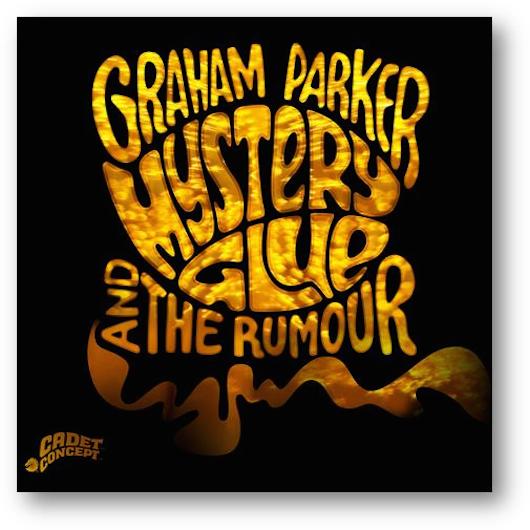
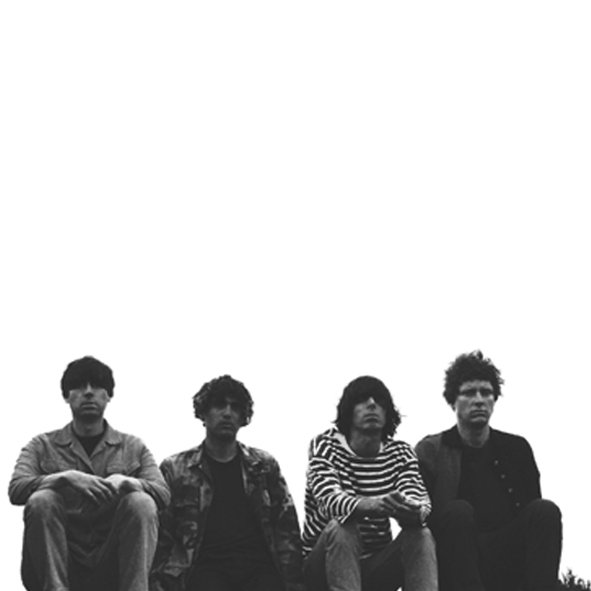
Graham Parker & the Rumour Returned, One of the most significant groups to emerge in the new wave boom of the 1970s, Graham Parker & the Rumour, one of the UK’s pioneering pre-punk bands return with a new album, Mystery Glue through Chess’ cutting-edge imprint Cadet Concept. Written in Graham’s second home of New York and recorded in just 6 days in the legendary RAK studios in London, Mystery Glue is an album of conscious rock that harks back to a genre-defining music of the 70s whilst paying homage to Dylan, reggae, soul and rock ‘n’ roll.” released their new album, ‘Mystery Glue,’ in May. The album will be released on the newly-relaunched Cadet Concept label.
The new record follows the band’s successful reunion with the 2012 album ‘Three Chords Good,’ their first album together since 1980’s ‘The Up Escalator.’ The new set contains songs about their love for London and features many subtle references to their own much-travelled history. The track ‘Railroad Spikes’ was launched on their own Vevo channel at the end of March.
The band put together a UK tour, billed as the Graham Parker Duo featuring Brinsley Schwarz, After a long gap of over 30 years, their 2nd recent album in relatively quick succession. Graham is in good voice, obviously not the angry young man of the late 1970’s, but he still has plenty of relevant things to say for himself. The original Rumour band are back together, and provide accomplished support, sometimes veering maybe towards a more country style. The track listing for the album is as follows:
1. Transit Of Venus
2. Going There
3. Wall Of Grace
4. Swing State
5. Slow News Day
6. Railroad Spikes
7. Flying Into London
8. Pub Crawl
9. I’ve Done Bad Things
10. Fast Crowd
11. Long Shot
12. My Life In Movieland
We Started Nothing is one of the best pop albums of the (featuring mega hits ‘That’s Not My Name’ and ‘Shut Up and Let Me Go’). This album takes a dark visual and sonic dark, but still yields plenty of subtle rewards at every turn.
Official video for the the second single ‘Estranged’ taken from The Ting Tings 4th studio album ‘The Black Light’out now!
We have been overwhelmed by the love and support from you all. We are very proud of this independent release of our 4th album ‘The Black Light’. Connecting directly with you all on these songs continues to inspire. Thanks to all involved: Jon Foster, Dennis Dicker, Ditto Music, Sony Músic Japan, Mushroom (Liberator) , Sony/ATV Music Publishing, Dave Spain, Geoff Pesch, all the remixers, all our friends and families.
The Proper Ornaments have been through a lot together. Essentially hinging on the friendship between James Hoare (also of Ultimate Painting/Veronica Falls) and Max Claps (Toy), the pair’s second album was largely an escape from drug issues and mental health problems.
Emerging from this, subsequent sessions took on a brighter, more upbeat hue, with a gentle, uplifting energy permeating their music. New album ‘6 Lenins’ is the result. Out on April 5th via Tapete Records, it was recorded at James‘ flat on a newly installed 16 track Studer machine.
“We started writing new songs in the summer. I was in bed recovering from hepatitis and very broken and tired so couldn’t do anything else apart from playing guitar,” says Max, “and the songs slowly started to appear. In August we realised we had five new songs each and free time, so we decided to record them. The actual recording only took two weeks and it was considerably easier than our previous recordings.”
Stripped from the LP, ‘Song For John Lennon’ is a curious return, with its warm tones seeming to envelope you from every side. A tip of the cap to the titular Beatle, ‘Song For John Lennon’ oozes out of the speakers like aural honey; completely addictive.
M. Ward is a singer-songwriter and guitarist who rose to prominence in the Portland, Oregon music scene.
2019 release from the acclaimed singer/songwriter, his first studio album since 2016’s More Rain. “What A WonderfulIndustry” takes on a subtler shade of music industry beef, writing about the heroes and villains he’s encountered over 20 years.
M. Ward: “This album is a reminder to keep your friends close, your enemies closer and don’t let the ones that just need an extra couple hours of therapy bring you down.” M. Ward’s solo work is a mixture of folk and blues-inspired Americana analog recordings; he has released nine albums since 1999, primarily through independent label Merge Records. In addition to his solo work, he is a member of pop duo She & Him and folk-rock supergroup Monsters of Folk, and also participates in recording, producing, and playing with multiple other artists.
Over the last decade Ward has released a string of acclaimed solo albums, as well as six LPs with Zooey Deschanel in the duo She and Him. Ward is also a member of the group Monsters of Folk alongside My Morning Jacket’s Jim James, Bright Eyes’ Conor Oberst, and Mike Mogis, as well as a producer on albums for
Mavis Staples, Jenny Lewis, and Carlos Forster.
Via Ward: “This is a record inspired by people in the industry I have known – heroes and villains in equal measure. There’s some beautiful moments when you travel for a living, and I’m grateful for being part of an industry that’s taken me around the world so many times – but you quickly learn there’s a perfectly imperfect balance of cold-blooded and warm-blooded animals in the zoo. This record visits the most memorable characters. There’s a lot of very inspirational people I’ve had the pleasure to work with but there are also a few I wish I’d never met. It all tragically ends with an imaginary Griffin Mill-
inspired murder ballad. This album is a reminder to keep your friends close, your enemies closer and don’t let the ones that just need an extra couple hours of therapy bring you down. Anyway I hope you like it. All names have been changed to protect the innocent”.
Pedro the Lion has always been David Bazan, but it took a long time to get back there. In August 2016, during what he now recognizes as his lowest point, Bazan was touring the country alone in an aging minivan and found himself in his hometown of Phoenix, AZ. In need of a break from the road, he spent a night off at his grandparents’ house instead of driving on to San Diego. Before leaving town the next morning, after realizing that even the most familiar places can become unrecognizable, Bazan gave himself the gift of a quick detour past the house he grew up in, and on the way, experienced a breakthrough – one that would lead him both forward and back to another home he had built many years before.
From the beginning, Pedro the Lion didn’t work like the bands Bazan had played drums in, where each player came up with their own parts. Instead, like scripting scenes of dialogue for actors to play with, Bazan recorded and arranged all of the skeletal accompaniments for his obsessively introspective lyrics and spare melodies. Each player would then learn their parts and, together as a band, they brought the skeleton to life. While bandmates played on a few recordings, Bazan often played all or most of the instruments himself.
“I found so much joy working this way,” Bazan remembers. “It came naturally and yielded a feeling and a sound that couldn’t have existed by any other process. At the same time, I was also aware that not everyone wanted to play in a band where the singer wrote all the parts and might perform them on the record. Someone even suggested it might not be a valid approach to having a band in the first place. Being insecure and wanting to find camaraderie, I became conflicted about my natural process.”
By 2002, after recording Control, the high rate of turnover in the band finally caused Bazan to ditch his “natural process” in favor of a collaborative writing process. When, after a couple more years, this move did nothing to stabilize turnover, Bazan was perplexed. In November 2005, Bazan decided to stop doing Pedro the Lion altogether.
Ironically, Bazan didn’t see “going solo” as a chance to revert back to his original process of writing and playing all the parts. For the next decade Pedro the Lion felt off limits, even forgotten, like a childhood home Bazan had moved out of. He pushed forward with releasing solo albums & relentless touring in living rooms and clubs, through every part of the US and beyond, sometimes with a band, but mostly on his own. It took a toll on his family and more acutely on himself. By the summer of 2016, he still hadn’t found the personal clarity or the steady collaboration he’d been seeking and was at the end of his rope.
“I had abandoned my natural way of working in the hopes of creating space for a consistent band to write with…and it hadn’t worked. So I got a rehearsal space, mic’d up drums, bass, and guitar, and really leaned into my original process again. It immediately felt like like home. Before long I realized it also felt like Pedro the Lion.”
In June 2018, with Bazan on bass, vocals, and arrangement writing, Erik Walters on guitar and backing vocals, and Sean Lane on drums, Pedro the Lion went into Studio X and Hall of Justice with producer Andy Park to create Phoenix, the first new Pedro album in 15 years.
The songs themselves are the result of mining your past for who you are now. On opening track “Yellow Bike,” Bazan encapsulates a core ache he’s been exploring since 1998’s It’s Hard to Find a Friend with the line:
My kingdom
For someone to ride with
Phoenix also deals with having to be better to yourself in order to be better to others on “Quietest Friend,” and harkens back to Control’s “Priests and Paramedics” with a story about EMTs facing a gruesome scene, and storytelling as coping mechanism, on “Black Canyon.” It bears witness to both what was around and what was inside, with the signature kindness and forgiveness that lightens Pedro the Lion’s darkest notes.
The result is a twisting, darkly hopeful introspection into home and what it means to go back, if you ever can. It is rock and roll wrapped in tissue paper, its hard edges made barely soft. Every melody is careful, a delicate upswing buoyed by guitar lines that hold each tender feeling together like string before ripping them apart to see what’s inside. It is an ode to the place he still loves despite how alien it can appear to him now. It is the story of a life from the beginning, but not a linear one. This life is a circle, and Phoenix goes back to that first point, to show that when we are looking for home we’ll eventually run into it again, whether it’s in the desert, in a rehearsal space, or on a stage.
released January 18th, 2019
Is this stretching the word “rising” too far? Purple Skies, Toxic River was pretty much the best album from 2013, and there’s been nary a peep since from Canberra’s TV Colours since, a one-man project from Bobby Kill. The band did release some new t-shirts in 2018, with a note promising more music soon—that Facebook post is almost a year old at this point. That first LP was criminally underheard in the States, though, even with a domestic release on Comedy Minus One, and so it’d be negligent of us to leave them off a list like this. On Purple Skies TV Colours delivers a pop-punk album in the best possible meaning of the term, a modern day successor to the terminally catchy disquiet of bands like the Buzzcocks and the Mice, but recorded on what sounds like a four-track from the early ‘90s.
Bobby Kill squeezes more warmth and color than you can imagine out of that lo-fi set-up, brightening up the programmed drums and classic riffs tightly coiled together on every song. Look, it’s true: “Beverly” is a song that should be on every “best of ” list, and blasting out of every bored, anxious, unsettled kid’s window every summer night for the rest of existence. And hey, it’s from Australia, so good job, island continent.
For over a decade, guitarist/vocalist Steve Gunn has been one of American music’s most pivotal figures – conjuring immersive and psychedelic sonic landscapes both live and on record, releasing revered solo albums ranking high on in-the-know end of year lists, alongside exploratory collaborations with artists as diverse as Mike Cooper, Kurt Vile, and Michael Chapman (whose most recent studio album he produced). Gunn is known for telling other people’s stories, but on his breakthrough fourth album, “The Unseen In Between”, he explores his own emotional landscapes with his most complex, fully realized songs to date. The lyrics evoke voyages, tempests (actual and emotional), and a rich cast of characters met along the way — the work of an artist finding a place of calm in the midst of a storm. Produced by frequent collaborator James Elkington and engineered by Daniel Schlett, the immaculately recorded Unseen forces a reassessment of Gunn’s standing in the pantheon of the era’s great songwriters. Getting to The Unseen In Between itself was not easy for Gunn.
In the summer of 2016, Gunn released Eyes On The Lines, his winning and elliptical debut for Matador Records. It should have been a triumphant moment, but exactly two weeks later, Gunn’s father and namesake died following a two-year struggle with cancer. This experience yielded the emotional centerpiece of the album. “Stonehurst Cowboy” is a duet for Gunn’s raw acoustic guitar and spare basslines by Bob Dylan’s musical director Tony Garnier, whose featured throughout the album. The song distills the lessons Gunn learned from his father and it is a solemn but tender remembrance, a tribute to his father’s reputation as a tough, wise, and witty guy from far west Philadelphia. A sense of musical renewal and emotional complexity fits the new songs perfectly; “Luciano” seems to be about the chemistry between a bodega owner and his cat, an unspoken romance of gentle obedience and quiet gestures. But Gunn peers below the relationship’s surface and wonders about the owner’s lonely future once the cat is gone, a devastating meditation wrapped in soft strings.
And then there’s “Vagabond,” Gunn’s graceful attempt to humanize a rich cast of characters whose lives have gone astray, wanderers who live outside of society’s modern safety net, who pursue “a crooked dream” in spite of what the world expects. Supported by the perfect harmonies of Meg Baird, Gunn finds something lovely in the unloved. In a final contrast, “Morning is Mended” is an acoustic beauty so resplendent it ranks alongside Sandy Denny or Jackson C. Frank. Buoyed by a melody that sparkles like sunlight on still water, Gunn acknowledges the hardships around him, the feeling of being a “nothing sky,” and then moves forward into the world, walking tall into the fresh morning. The song is an apt encapsulation of The Unseen In Between, a gorgeously empathetic record that attempts to recognize the worries of the world and offer some timely assurance. It is a revelatory and redemptive set, offering the balm of understanding at a time when that seems in very short supply.
Released January 18th, 2019
Steve Gunn – Guitars, Vocals James Elkington – Guitars, Keys, Percussion, Harmonica, Tony Garnier – Bass TJ Mainani – Drums Meg Baird – Vocals Daniel Schlett – Keys, Percussion Macie Stewart – Strings Lia Kohl – Strings Jacob Daneman – Clarinet
The looming dissolution of the Beatles, after a stirring run of creative genius, signaled that everything would be different in the ’70s. They released their final album in Abbey Road, though the earlier-recorded Let It Be would follow, after some post-session doctoring from Phil Spector. They weren’t the only ones who departed: The original Jimi Hendrix Experience, Eric Burdon and the Animals and the Jeff Beck Group fell apart, even as Rolling Stones co-founder Brian Jones died. The warm feelings of Woodstock were quickly forgotten in the bloody aftermath of Altamont.
The death of Brian Jones, July 3rd , Brian Jones had long since relinquished his role as a major contributor to the band he founded, the Rolling Stones, when he drowned in his swimming pool at his home in Cotchford Farm, the estate formerly owned by A.A. Milnes, author of the ever popular children’s book, Winnie the Pooh. He had been fired by the Stones the month before due to drug use and increasingly erratic behavior, leaving Jones more or less out in the cold as far as any further recording ventures were concerned. Initially ruled “death by misadventure,” the verdict was later questioned when rumors spread that a construction worker named Frank Thorogood actually murdered Jones and had made a deathbed confession to a confidante. In 2008, the Sussex police department declared it was no longer investigating the claim. Nevertheless, Jones became the first member of the so-called 27 club, whose membership now includes Jimi Hendrix, Janis Joplin, Kurt Cobain, Amy Whitehouse and a number of other artists whose lives ended at the fateful age of 27. His death also ended a prolific and profound era for the Stones, which many still argue, was the most creative period of their collective career.
At the same time, bands appeared that would dominate the decade to come. Led Zeppelin released their acclaimed first and second albums in ’69, laying a sturdy foundation for superstardom. Zeppelin seemed to arrive as a fully formed new blues-rock variant, harder and louder than anything that had come before. In fact, after touring together extensively, the band arrived in the studio with this material so well rehearsed that they only needed 36 hours spread out over two weeks to complete the album. Its influence, however, has endured – not just as a template for their own career, but also for untold legions of soon-to-be-famous heavy-metal purveyors.
In the summer of 1969, Zeppelin was a band on the rise. Its self-titled first album, released in January of that year, reached Number 10 on the Billboard charts in the U.S., and peaked at Number 6 in the U.K. The band’s pairing of blues, folk and psychedelia eventually would make it the biggest band of the 1970s, “as influential in that decade as The Beatles were in the previous one,” Zeppelin would play more than 40 gigs on their Summer of 69 tour of U.S.A.
Chicago issued the first of what will eventually be four straight multi-album projects, A band with a bright horn section and a scalding guitarist, Chicago was really all about dichotomy back then. Four songs from their introductory double album would enter the charts, through to 1972’s Chicago V.
Mick Taylor joined TheStones, sparking their most heralded period – though one that was marked by a turn toward darker subject matter. Rolling Stones, ‘Let It Bleed’ was aptly titled, the second in a quartet of genius albums by the Stones echoed all of the very real apprehensions surrounding this era – like a gritty yin to the Beatles’ utopian yang on ‘Abbey Road.’ Mick Taylor’s arrival also ushered in a harder-edged sound, which combined to create one of rock’s most visceral triumphs. It’s sexy, foreboding, topical and dangerous, sometimes all at once.
Altamont – December 6th was one of the darkest days in music history, Altamont sealed the lid on the promise of peace and love that was capped by Woodstock, and did so within mere months following that celebratory event itself. The Stones, who headlined the sprawling festival in the California desert, may have had good intentions to offer a free concert, but enlisting the Hell’s Angels as security was a terrible idea. Though the line-up was stellar—CSNY, Santana and Jefferson Airplane reprised their roles from Woodstock, along with the Flying Burrito Brothers providing an excellent add-on—an aura of violence and uncertainty pervaded the proceedings. Both Jagger and Airplane singer Marty Balin were accosted the former as he left his chopper, the latter onstage and the death of concert goer Meredith Hunter by a pack of Angels who claimed they saw him wielding a gun, ensured the fact that an idyllic utopian era of the ’60s was quickly come to an end.
‘Abbey Road’ was always a far more fitting send off for the Beatles than ‘Let It Be’ could have ever been. It’s among Paul McCartney’s brightest, most artistically satisfying, moments. But John Lennon’s punctuations (and, to a quickly emerging degree, George Harrison’s) undoubtably make it so. Moments away from imploding, they arrived for these sessions as distinct individuals, rather than stylized mop-topped group. Yet, for a moment in time and for this one last time, the Beatles’ separate personalities seemed to work again in service of the whole.
The Beatles Final Concert, January 30th, Although the Beatles’ impromptu performance on the rooftop of their Apple headquarters in London’s central environs was rumored to be a tryout for a return to live concerts, it was in fact part of the band’s final hurrah. The tumultuous sessions for their album Let It Be exposed a group in disarray, and indeed, a mere nine months after this live six song set—all culled from tracks they had been working on at the time The Beatles were officially broken. Filmed to provide a cap on the ill-fated Let It Be film, it’s still an exhilarating experience to watch the four former Fabs giving it a final go for the curious crowds below. “Hope we passed the audition,” John says before vacating the premises on orders from the police. Yes, Mr. Lennon, indeed you did.
Nick Drake, ‘Five Leaves Left’ was an autumnal yearning which surrounds these folk-rock recordings, and that’s likely the reason Drake was overlooked in his time. Even smart assists from Richard Thompson, then of FairportConvention fame, couldn’t push this delicately conveyed album into the public consciousness back then. Sadly, Drake only had five years left. He died at age 26 in 1974 of an overdose.
This daring debut by prog rock band King Crimson, ‘In the Court of the Crimson King’ still remains prog’s standard bearer, the best example of a then-emerging movement that sought to combine musical concepts with rock. ‘In the Court of the Crimson King’ was also a template for how this seemingly ever-evolving band would operate, as their lineup almost immediately flew apart. The core pair of Robert Fripp and Greg Lake was all that remained by the time King Crimson set about recording a follow-up.
The Kinks ‘Arthur,’ a triumph of rock with a British sensibility subtitled “Or the Decline and Fall of the British Empire,” never gets the short-hand praise of contemporary works like the Who’s ‘Tommy.’ That’s likely because it’s less ambitious. But it’s also far more listenable – like a rock musical, rather than a rock opera. Hailed as one of rock’s first great concept albums, ‘Tommy’ – like so many examples in that genre – sometimes suffers creatively at the expense of furthering the plot. But at its best, this represents the Who at their finest. And there’s no questioning how the album opened up new narrative possibilities for pop composers.
The Who Performed Tommy for the First Time, April 22nd Notably, the concert in Devon, England, preceded the album’s official release by a month. Although other offerings can claim to be the first real rock operas—The Pretty Things’ S.F, Sorrow and the Kinks’ Arthur, among them—The Who were the only band to take the unusual step of performing an album in its entirety. They’d later take Tommy to some of the world’s great opera houses, elevating rock in both intellect and intent.
The debut of supergroup Blind Faith, June 7th, Heralded as the first true “super group”—a term that would resurface continuously in the years that followed Blind Faith was based on an all-star union between guitarist EricClapton and drummer Ginger Baker of Cream and vocalist/keyboard player Steve Winwood of Traffic, with bassist Ric Grech, formerly of Family, added later on. Although Clapton in particular was wary of the implications involved in such a high profile ensemble and equally concerned about inviting the tempestuous Baker into the fold—he agreed to pursue the possibilities, owing in small part to the fact that he and Winwood had worked together in a short-lived ad hoc outfit called Powerhouse a few years before. The group’s less than spectacular live debut at Hyde Park further exacerbated Clapton’s concerns, and after a single spotty album and tours of Scandinavia and the U.S., the group disbanded later that year.
Dylan Reemerges at the Isle of Wight, August 31st, Dylan had been largely absent from public view since a 1966 motorcycle accident drove him into self-imposed seclusion. Other than his work with the Band at Big Pink, he chose to spend time with his family and record an album, Nashville Skyline, a shocking departure from any album he had offered before. Consequently, the announcement of his appearance at England’s Isle of Wight Festival attracted an extraordinary amount of interest, including the curiosity of various Beatles, a Stone, Eric Clapton, Pink Floyd’s SydBarrett and a still gestating Elton John. Rumor had it that Lennon, Harrison and Starr might join Dylan onstage, and although that proved false, Dylan alone was enough to mesmerize the masses. Dressed in a beige suit, his hair cut short, he performed a 17-song set with backing from the Band, a concert that included several classics from his catalog as well as tracks from Nashville Skyline and its immediate predecessor, John Wesley Harding. It’s still considered a landmark performance today.
That was probably to be expected for a generation still reeling from shocking assassinations and an ever-escalating war. So, too, was a move toward nostalgia for the old ways. Bob Dylan Having hinted at his intentions on the more rustic ‘John Wesley Harding,’ Dylan definitively left behind protest music for a head-long dive into deep country for the charming, determinedly happy ‘Nashville Skyline.’ In its own way, this was revolutionary too as he went country, even as his old backing musicians in The Band released a determinedly homespun self-titled masterpiece. The Byrds also splintered, with two members Gram Parsons and Chris Hillman left to dive deeper into their passion for country and western music. The resulting album, unfortunately, did little on the charts – but it proved to be a well-spring of inspiration for descendent bands like the Eagles. breaking away to form the Americana-focused Flying Burrito Brothers.
Although there had been several gingerly moves to find common ground between the disparate realms of country music and rock ’n’ roll early rock pioneers Elvis Presley, Carl Perkins, Buddy Holly, Jerry Lee Lewis, the Everly Brothers and Rick Nelson all had claims on country—in the divided America of the late ’60s, followers of the two styles were decidedly distinct. Nevertheless, the Byrds and the Buffalo Springfield effectively made efforts to narrow that divide, making it only natural that the two groups they spawned, the Flying Burrito Brothers and Poco respectively, would, to paraphrase the title of the latter’s debut album, pick up the pieces. As a result of releases like The Flying Burrito Brothers’ debut, The Gilded Palace of Sin, in February 1969, country-rock blossomed, spearheaded by the influence of “cosmic cowboy” Gram Parsons (a member of both the Byrds and the Burritos) before later finding a permanent bond with the release of the Nitty Gritty Dirt Band’s Will the Circle Be Unbroken, featuring members of both the new guard and the old, two years later.
The Stooges, ‘The Stooges’ This album’s wiry, first-take feel was no put on: Three songs from the Stooges‘ titanic debut were written in a single day, after their label said the album needed more material, then banged them out live. The ferocious results gave the nascent heavy metal genre new fire, presupposed far-off punk, and scared the hell out of parents everywhere.
Creedence Clearwater Revival began to come into their own here, reaching heralded high points with “Born on the Bayou” and “Proud Mary.” The rest of ‘Bayou Country’ doesn’t always reach that level, but the album is nevertheless surrounded by a sense of expectancy. They’re discovering themselves with every revolution of this album, and it’s a fizzy joy to hear. The second of an incredible run of three CCR albums from 1969 codifies every great thing the earlier ‘Bayou Country’ pointed toward. Sharply drawn, ‘Green River’ is just as sharply played – with none of the period-piece noodling that had occasionally seeped into their first two albums. John Fogerty dilated his muse on ageless cuts like “Bad Moon Rising,” the title track and “Lodi,” and Creedence finally found its true voice.
The Allman Brothers Band an accomplished debut as they blended rock, blues, jazz and a distinctly Southern sensibility to came up with something uniquely and forever their own. Taken for granted in today’s multi-cultural melting pot, ‘Santana’ marked the big bang of Latin rock. Within a year, congas and timbales had found their way into the music of the Rolling Stones, Sly Stone, Jimi Hendrix and Miles Davis, among many others. But it all started here, as ‘Santana’ blended mind-blowing, genre-bending musical explorations with more compact songs like the rambunctious Top 10 hit ‘Evil Ways’.
Jimi Hendrix forms the Band of Gypsies, October and with the release of Electric Ladyland, Jimi Hendrix was at the height of his prowess, but the break-up of the Experience left him without a band and bereft of new recordings. His band at Woodstock, ostensively dubbed “Gypsy Sun and Rainbows,” found him expanding his original trio concept and reuniting with his former army buddy, Billy Cox. The aggregate, which Hendrix referred to as “a band of gypsies” when interviewed on The Dick Cavett Show, fell apart soon after, although Cox continued on bass and joined Hendrix for some informal recording dates with Buddy Miles. It was a natural combination; Miles had subbed for Experience drummer Mitch Mitchell on two tracks used for Electric Ladyland, and the trio went on to record a few demos and rehearse for an upcoming concert at the Fillmore East that would span New Year’s Eve. The self-titled album, released on Capitol Records to satisfy a contractual obligation, became the band’s only official recording, but clearly pointed the way to a more racially charged sound Hendrix was working on for the future.
Woodstock, August 15th-18th, If ever there was a single gathering that served to define the spirit of the ’60s, those three days spent in the muddy fields of Yasgur’s farm in upstate New York takes the prize. It wasn’t always pleasant—despite an amazing array of rock’s most influential artists (Jimi Hendrix and Janis Joplin, CSNY, Santana, Jefferson Airplane, Richie Havens, et. al.), the traffic, the mud and the scarcity of supplies (other than the acid of course) tended to test the resolve of all involved. Still, it was that spirit of love, peace and music that pervaded the proceedings over all, assuring a communal embrace while setting the precedent for festival gatherings, a basic blueprint that remains relevant to this day.
Jefferson Airplane, ‘Volunteers’ was the last album to feature both Marty Balin and Spencer Dryden,‘Volunteers’ blended a few bucolic moments (featuring guest stars Jerry Garcia and members of CSNY) in with the now-expected psychedelic rock – but that’s not this album’s best-remembered legacy. Instead, it’s a series of molten, occasionally profanity-laced rebukes of the American status quo. They left the ’60s with a bang.
Joining together for the first of what would become a string of free-wheeling, muscular successes alongside his band Crazy Horse, Neil Young blows a hole in the comfy folk-rock conventions of ‘Everybody Knows This Is Nowhere’ in fact, has a lot more in common with the wild eclecticism of his work with Buffalo Springfield, but with a new tone that’s both sharper and looser.
Records in heavy rotation in my bedroom included the debut album from Led Zeppelin, Led Zeppelin II,The Beatles Abbey Road , The Who’s Tommy, King Crimson’s In The Court Of The Crimson King a great record,one that for its time was truly unique, The Rolling Stones Beggar’s Banquet which never left my turntable and the follow-up release Let It Bleed, Neil Young’s masterpiece Everybody Knows This Is Nowhere, Zappa’sHot Rats which help change my musical perspective, Fleetwood Mac’s Then Play On, CSN debut, Blind Faith’s one and only official release which is also a very strange record, Nashville Skyline by Bob Dylan, The MC5’s Kick Out The Jams, Isaac Hayes’ Hot Buttered Soul which arrived unexpectedly when I did not respond in time to a record company selection deadline and glad I got this gem,Chicago Transit Authority double set before they shortened their name to Chicago, Jethro Tull’s Stand Up, Live Dead, The Doors Soft Parade,Pink Floyd’s Live Ummagumma, Jefferson Airplane’s Volunteers, and Procol Harum’s A Salty Dog.
Few events in American history caused as much upheaval as the war in Vietnam. Young people took to streets and college campuses, protesting a conflict that they viewed as little more than an excuse for a murder machine entangling thousands of young draftees. Not surprisingly, musicians supplied the soundtrack against which protest was pursued. With the sound and imagery flashing across television screens night after night, it was only natural that people would find respite in an array of anthems—“Fortunate Son” by Creedence Clearwater Revival, “StreetFighting Man from the Rolling Stones,” “For What It’s Worth (written about the riots on Sunset Strip) by Buffalo Springfield, “Machine Gun” from Jimi Hendrix, Country Joe and the Fish’s “Vietnam Song” and “Volunteers” which came courtesy of Jefferson Airplane. All served to remind the youth of the country that they weren’t alone in their determination to sway some sentiment and avoid the bloodshed overseas.
The Silver Field, is Coral Rose, her debut album, “Rooms”, out on Tim Burgess’s O Genesis Recordings that comes out this new year. Was recorded in Coral Rose’s bedroom using loops and layers generated by instruments such as the double bass, cello, guitar, mandolin, harmonium, harmonica and a bagpipe chanter, with her father’s old SPX-90 drenching the rich sounds in delays and reverts, Rooms is the introduction to the sound world of CoralRose and friends. A touching sound collage patching together voice, tapes, bass, strings, reeds, drums, small sounds, big sounds, sunlight, moonlight, a lot of water.
Rooms is a coming out album in queer sense, and Rose feels it shows her encountering herself as an adult and more specifically, a human being. Coral Rose explains, “This plays out through the metaphor of leaving a house behind – a house of the stuff that builds up around you as you grow up – leaving that behind to make your own decisions about how to live. The last track, ‘Rooms’, is just a little snippet but to me it’s a moment of looking back, seeing it all in a new light with a different perspective from outside, seeing all the feelings and meanings that were once so all-encompassing as something different – as just part of the landscape.” The Silver Field takes the field recording techniques and moves them inside housing them in a touching patchwork of the homespun and the barely awake, magical.
Coral Rose co-opted mates Cathy Lucas from Vanishing Twin and Kiran Bhatt from Red River Dialect and has for “Rooms” embraced an earthy recording process, weaving real tape loops among digital time lines for a texture that’s off-kilter but on point. The reel to reel player used was picked up for a mere pound at a car boot after Coral spoke to the kindred spirited seller about Daphne Oram, and if you really concentrate you can hear the ghosts in the machine, warm warps and pleasing wobbliness. Literally home spun genius, and following on from some inspired recent releases on O Genesis.
Angelo De Augustine writes and records music in Thousand Oaks, California — a suburb north of Los Angeles, where he grew up. His self-released debut album, “Spirals of Silence”, and 3-song EP follow-up, “How Past Begins”, earned praise from The FADER, Stereogum, Vogue, My Old Kentucky Blog, and more. His next project “Swim Inside The Moon”Written in the aftermath of a devastating breakup, Angelo De Augustine’s hushed journal of the stream-of-consciousness thoughts that fill the silence when a gaping hole opens up, revealing that there never really was anything else. De Augustine whispers intimately.