With so many bands flitting in and out of Melbourne, it can be hard to keep track of who’s worth listening to. Tiny Little Houses, a four-piece, self-described “whatever rock” band from Australia’s second-biggest city, cut through the noise. Aside from having a great title, their debut LP, Idiot Proverbs proves there’s more than just happy-go-lucky rock coming out of their home city. At times, Idiot Proverbs is downright self-deprecating: On the first track, the band compare themselves to a literal “Garbage Bin.” But the album examines poor self-confidence with a sense of humor, leaving the listener feeling more entertained than depressed.
Band Members
Caleb Karvountzis,
Mo Sullins,
Clancy Bond,
Al Yamin,
Tiny Little Houses “Idiot Proverbs” ℗ Ivy League Records Released on: 2018-01-12
Just 16-year-old Gabriella Dunn has just released the second single from her upcoming debut EP, “Lost In Translation”, and it’s a doozie. In ‘Welcome to the Dollhouse’, Gabriella explores her very personal mental health journey which ultimately culminated with a brief stay in a psychiatric ward. It’s a beautiful and honest song that’s bound to help a lot of young people going through issues similar to what she sings about here. Wishing everyone a mentally happy and healthy 2019.
In 1986, relations between Keith Richards and Mick Jagger were at an all-time low. The Rolling Stones were on hold while Jagger toured as a solo act behind his 1987 album Primitive Cool, and the two traded endless insults in the press.
So Keith Richards decided to do something he’d always held off on: form his own solo band. The X-Pensive Winos featured an eclectic crew including Waddy Wachtel (Warren Zevon, the Everly Brothers), drummer Steve Jordan (who played with Richards in the Chuck Berry tribute concert film Hail! Hail! Rock & Roll), bassist-drummer Charley Drayton and keyboardist Ivan Neville.
Recording outside Quebec, the chemistry was clear when they laid down the swaggering opener “Take it So Hard.” “I went back to the house going, ‘we’ve conquered Everest already?’ Wachtel said later. In his autobiography Life,Richards agreed. “There’s no way you can stand in front of the Winos without getting off. It’s a surefire high. It was so hot you could hardly believe it.”
The result was Talk is Cheap, an endearingly ragged classic considered by many fans the best Rolling Stones-related release of the last three decades. From the stomping open-G anthem “Take it So Hard” to the Memphis soul ballad “Make No Mistake,” it captures Richards nailing everything he’s good at – hear the throwback Sun-style in the rocker “I Could Have Stood You Up.”
To celebrate its 30th anniversary on March 29th, the album will finally be reissued as a huge box set that includes the album on CD and vinyl, six unreleased tracks from the sessions and an 80-page book featuring a new interview with Richards. There an even more extravagant “super deluxe” box set that comes in a case that replaces Richards’ guitar case made by the Fender Custom Shop.
“This album holds up,“ Richards said. “I’ve been listening to it and not through the mists of nostalgia either because it doesn’t affect me that way. This is more than the sum of its parts. I really admire it. We were having fun and you can hear it.”
Hospice turns 10 years old this year. Let that one sink into your old, shriveled hearts. The Antlers third and most beloved full-length album, “Hospice” opened our collective eyes to The Antlers’ achingly brittle anthems, a sound that could pierce the far-reaching souls of the festival grounds just as easily as the intimate bars and clubs. Peter Silberman’s vocals could morph from almost-inaudible whispers to thunderous falsettos, especially evident on tracks like Sylvia and Wake. These weren’t the kinds of tracks that you could put on in the background. They moved us emotionally, but more importantly, they reminded us of our mortality.
“We’ll be playing a limited number of acoustic shows to celebrate, too. But it will be a bit different this time as the core band now consists of Peter Silberman and drummer Michael Lerner longtime multi-instrumentalist, producer, and engineer Darby Cicci is no longer with the band.”
So far, the band have announced a host of shows, including five shows in the UK and Ireland.
“Though we’ve pared down for the time being, these shows will feature some old friends and guests, and together we’ll perform ‘Hospice’ in its entirety,” the band said.
“We’re truly looking forward to revisiting these old songs in a new light and seeing your friendly faces again. Your patience and support means so much.”
Now, does anyone have the original pressing? I was one of the many listeners who immediately went out to buy the vinyl when it came out in 2009 and, like all of those other buyers, was shocked at how horrid the sound quality was. No hyperboles here, that first and only pressing of Hospice is one of the worst-sounding records I have ever laid ears on. Today is the day for redemption, friends. Remastered and now on a double LP, our Hospice comes back home to rest. Grab the white vinyl from the band’s online store after the ‘buy’ link.
Hospice 10th Year Anniversary 2xLP
Newly remastered as a 2xLP and pressed on white vinyl, with deluxe artwork and packaging courtesy of the album’s original artist, Zan Goodman.
When Peter Silberman finished writing Hospice in the summer of 2008, he didn’t expect anyone to hear it.
A pretty big reputable label, according to him, got their hands on the record, his third under the name The Antlers following two self-released albums, soon after its completion. Silberman, then playing with a band for the first time—The Antlers were, for all intents and purposes, a solo act up until this point—booked a tour on his own, which included a show in the city where the unnamed label was based, hoping to sign their first record deal.
The show didn’t exactly go as planned and the imprint essentially lost all interest.
“I can’t say that we were great at the time either,” Silberman, the lead singer and lyricist of The Antlers, reminisces. “I wouldn’t blame them. We were hoping that was going to happen and it didn’t really have much of an audience. We thought it’d be our big break and it just didn’t materialize. At the top of the next year, I was just feeling like, ‘I need to get this record out somehow.’”
The product of an ultra-intense period of his life, Hospice is so personal of a record that Silberman never fully told the story about the abusive relationship the lyrics painstakingly describe through the guise of a hospice worker and a terminal female patient. While he initially pushed for a label to help promote the record, he never really assumed people would listen to it, that his deeply autobiographical stories, soundtracked by some of the most compelling whispers and crescendos in the history of indie rock, had an actual audience.
And initially, it didn’t.
“We assembled these CDs ourselves, these digi-packs, we put them together ourselves and printed them ourselves and burned all of these CD-Rs and we announced—maybe we sent out to our mailing list and sent out to MP3 blogs at the time because that’s how you did it back at the time in 2009—that we would put this out,” Silberman explains. “We were selling everything through PayPal, packing and shipping ourselves. It was a very DIY operation. I was still sending out to blog and press contacts I had myself and I was putting tours together.”
But then Hospice landed in the hands of Bob Boilen and Robin Hilton at NPR, and everything changed. Mind you, this was a period when music publications and blogs could still drive sales and create hype to a point that’s completely unheard of 10 years later. So when Hilton wrote, “Frontman Peter Silberman is only 23, but has produced one of the most beautiful and moving works I’ve heard in a long, long time. Just astonishing,” in a piece titled “2009 Already Better Than 2008” towards the end of February, 2009, it had a massive effect on The Antlers’ trajectory.
“NPR got very excited about it and posted about it in a way that brought a lot of people to our pre-orders and a lot of people started ordering the record and we started feeling like, ‘Oh wow, this kind of fell out of nowhere,’” Silberman says. “One after another, this started catching on and people started listening to it. We had at this point self released it and a few labels did come calling and I talked to them and we met with some folks and met with publicists and booking agents. We just hit the road and just stayed on the road while this was growing. It just continued to accelerate and we were rarely, if ever at home, and the shows were getting bigger. We entered into this new position. It really felt like word of mouth at the time. The people who liked it felt very strongly about it, and they felt like this was something that they really wanted other people to hear. There were plenty of people who were not into it who were like, ‘This is not my thing,’ but I think the people that liked it, it was an unusually strong bond they formed with it.”
Similar to how masses of people grew attached to the brutally honest lyrics of Scott Hutchison’s Frightened Rabbit across the Atlantic a year prior when The Midnight Organ Fight rapidly spread through a word-of-mouth campaign, The Antlers became a spiritual American counterpart of sorts as loads of listeners quickly latched onto the sweeping, complex, and authentically emotional themes of Hospice.
That sudden hype presented Silberman with a major challenge, one that influenced the trajectory for the rest of his career—how do you keep your sanity and privacy intact as your almost-too-honest work begins to gain traction? At what price does indie fame come with?
“I definitely took a step back after Hospice, and part of that was feeling what it was like to be that vulnerable in public, which wasn’t something that had really crossed my mind with any reality when I made Hospice because I didn’t really have an audience then,” Silberman says. “It wasn’t until Hospice caught on and there was an audience that I suddenly became aware of the kind of personal toll that laying yourself bare to a lot of people can take. I think that it was absolutely vital for what Hospice is and possibly how other people connected to it; it’s vital that it be as raw as it is and explicitly personal.”
That rawness Silberman mentions is what initially drew a passionate legion of fans to The Antlers’ shows, leading them to sell 13,000 copies of Hospice by October 9th, 2009, only two months following the re-issue by Frenchkiss. The label, alongside a handful of others, heard the loud chatter amongst the Brooklyn indie-rock community and quickly signed them to give the record a proper release. The Hospice album campaign, which initially began in disappointment at not partnering up with a label prior to the self-release, kept exponentially growing with a new partner in Frenchkiss, never peaking at any point throughout 2009.
“I think on a certain dimension, my dreams were coming true and not only were they coming true, but they were being surpassed really quickly,” Silberman remembers. “I set a pretty low bar for myself is what I came to realize as things began to actually take off. There was something really validating about that, going from no audience to kind of what felt like hysteria around that record at the time. It was very validating and it felt like it kind of turned that ugly situation that inspired the situation inside out. I think now is actually the happiest time of my life and what was happening back then was a succession of adrenaline rushes that felt really good, but were a total shock to my system and were invigorating but I wasn’t prepared for them. I came to lose myself in that excitement for a while until I burnt out on the other side of it.”
Though it wasn’t the highly personal nature of Hospice’s lyrics that contributed to that burn out—rather a combination of touring and the lifestyle that goes along with it—the sudden visibility and interest in the relationship that Silberman detailed throughout the record did push him to slightly sensor himself for future records, including its excellent follow up, Burst Apart, released in 2011.
“I think I became aware of the consequences of pulling details directly from your life and putting them in a story for the public to hear, for strangers to hear,” Silberman explains. “My approach to writing started to change. Throughout songs and albums that followed Hospice, there are specific references in there, but they’re kind of inside language for the people that they’re written about. I think I also became aware of the temptation to include a lot of really specific details and think that that makes for a good story. There were times where I tried that and found that it didn’t always call for that, that it didn’t necessarily make a song better, and that it didn’t necessarily make a story easier to understand. But with a story like Hospice, which is a lot about a kind of psychological fog and losing yourself and about the intricacies of a really dysfunctional relationship, I think the details are really important.”
Ten years later, The Antlers are currently in the midst of their first tour since 2015, giving Hospice the 10 year anniversary treatment, playing the album in full as a duo, this time just Silberman and percussionist Michael Lerner, following a deluxe edition re-issue to mark the occasion earlier this month. Hitting their original launching spot, Brooklyn, for two nights this weekend, Silberman has recently begun revisiting the album that sent him into the upper echelon of bands at the peak of the indie-rock era, noting how far removed he is from his mindset when he wrote the complex and vivid story.
“I’ve been surprised to find that when I’m listening to it, it’s not really putting me back in the events that brought it about—the relationship that the record is based on,” Silberman explains. “I’m just kind of getting a picture of where my mind was like at the time, the way that I was experiencing the world and the way that I was interpreting the things that were happening to me. It’s like reading old notebooks or something and it’s funny to be at a removed perspective from it now and to be able to see that you’re a long ways away from it. It’s occurring to me now that the chorus of ‘Bear’ kind of applies here, this simultaneous feeling during making the record where I felt that I was very old and I had lived a lot of life at that point. To look back 10 years later and say, ‘I was very young at the time when this happened’ and just having the benefit of some time, it just makes it a surreal experience.”
That chorus he refers to, “We’re too old / We’re not old at all,” breaking up a starkly minimalist song with an explosive refrain, feels just as uplifting as it did 10 years ago upon its release. While revisiting Hospice, a revolutionarily raw rallying cry that propelled Silberman and The Antlers to indie stardom, is no doubt as odd of an experience as he lets on, it’s also an interesting look back at how hype and word of mouth could push a band to unimaginable success. And 10 years later, Hospice is every bit as vital, emotional, and true as it was then, providing a gentle reminder why The Antlers reached the fame they did—owing completely to the story, the lyrics, and the instantly infectious melodies that drive the whole record, all leading up to one final falsetto scream.
Townes Van Zandt, has a previously unreleased collection of songs titled “Sky Blue” to be released via Fat Possum on the 7th March (which would have been his 75th birthday).
The recordings were made in early 1973 with the late Bill Hedgepeth, a journalist, musician, and most crucially a close friend of Townes Van Zandt. The singer-songwriter was splitting his time between Texas, Colorado, and a shack outside Franklin, Tennessee: an itinerant life that informed many of his most famous and beloved tunes. Throughout his life he would often return to Hedgepeth’s home studio in Atlanta, later with family in tow, to record, re-work, and experiment with new songs as well as some of his most iconic.
In addition to a handful of old favourites, Sky Blue also includes two new songs that have never been heard before “All I Need”and “Sky Blue”. There are early, raw versions of Pancho & Lefty and Rex’s Blues, covers of songs by Richard Dobson and Tom Paxton, a smoky version of Blue Ridge Mountain Blues and a scarred and scarring interpretation of Hills of Roane County, an East Tennessee murder ballad from the 1880s that was popularized by Tony Rice.
Fort Frances return after two years with the new single and lyric video for “Double Take,” the Fort Frances’ rallying cry and a perfect way to start 2019. The band’s first piece of new material following 2016’s third album Alio and a beachy follow-up single “Summertime,” “Double Take” finds Fort Frances returning to the fore in style with a resounding rejection (that’s right) of the sh*tstorm that’s come to be our daily lives.
“I have been writing these songs as the wheels of the world feel they are falling off,” says Fort Frances’ David McMillin “Double Take” is about stopping the car in the middle of the road to take another look around — to see beyond the headlines and look out to the horizon, to take some extra time and figure out a real direction forward. It’s taken more than two years to me feel like I’m actually capable of taking a breath and letting my brain disconnect from the cycle of did-you-hear-what-happened-now breaking news. Now that I have, I think we have the most complete and cohesive collection of songs Fort Frances has ever finished.”
Together with bandmates Jeff Piper, Aaron Kiser, and Jason Ryan, McMillin takes the audience on a journey of endless news cycles and social media feeds; of theoretically “massive” stories that surrender to the next day’s trend overnight; of a deluge of push notifications, emails and texts:
First and foremost, to have this album on vinyl – is incredible! because as you’ll clearly hear – this baby rocks! HumblePie had to rock because they followed a blazing performance by Slade. From a concert on May 6th, 1973 at San Francisco’s Winterland Theatre. Opening this show was a little known band then named Steely Dan. Marriott is on fire from the fist note to the last.
there is more material from this show, maybe so. Most gigs from this time period, however, did not run too much over an hour’s worth of material, especially, when three or more bands shared the bill. My only gripe with this package is the packaging, itself! Open the gate fold & do we get a concert photo of the band at Winterland? No! A generic photo, instead. Winterland has some historic significance that should have been highlighted with some photos of that gig or at least the marquee.
And, why is the included poster that of a gig in Europe? Why not a replica of the hand bill that Bill Graham had reproduced of the gig at Winterland? Cleopatra Records gets an A+ for releasing this on vinyl. The sound is fantastic! Cleopatra Records gets a D for liner notes. Do your homework, guys. This is historical stuff and deserves the full package and better information.
This live recording of Humble Pie was made at San Francisco’s Winterland Ballroom in May of 1973, during what many consider to be the band’s creative peak. This Winterland show being only the fifth show recorded for the then brand-newly syndicated King Biscuit Flower Hour radio concert series, features a blistering set of material. From “I Don’t Need No Doctor” to the infectious Top 10 hit “Hot ‘N Nasty” this recording features all the essential music from the Humble Pie catalogue. And since the band built their reputation on legendary live shows, is arguably better than anything the band ever did in the recording studio.
Humble Pie first came together on New Year’s Eve, 1968/69. Marriott had just played a disastrous gig with The Small Faces, whose opening act, oddly enough, was Ridley’s Spooky Tooth. Frampton had already left The Herd and was forming a new band with Shirley, a child prodigy drummer, who was only 16 at the time. Marriott called Shirley after the show and asked if he and Ridley could join the new band he and Frampton were assembling. According to Shirley, he couldn’t believe a singer as acclaimed as Steve Marriott was even interested, and was “thrilled” at the prospect of what the new band could achieve.
The band made its debut in April of 1969, but almost collapsed at the onset. Despite the media hoopla surrounding their supergroup status and a slew of critical raves, Humble Pie’s early albums (As Safe as Yesterday Is and Town and Country – both on Oldham’s Immediate label) were not commercial hits. Marriott and Frampton couldn’t decide if the band should move in an acoustic or electric direction, a dilemma that made the initial records hard to market. The band also had to hit the road before they really had time to work out their live show, and early tours were mostly lackluster as a result. Then, in 1970, the tides began to turn.
The band hired Dee Anthony as its manager, who promptly signed them to A&M Records. The band recorded Humble Pie and Rock On in 1970 and ’71, respectively. Both albums forged the band into a solid – and very electric – blues/rock machine. The critics got behind the band en masse, and records began selling in large numbers. By the time the band had recorded and released Rockin’ The Fillmore in 1971, the word had spread: Humble Pie was one of the hottest live band since the Jimi Hendrix Experience. Just then, Frampton decided he didn’t feel comfortable in the band’s hard rockin’ blues direction and left to pursue a solo career. While the most memorable material from Rockin’ The Fillmore (“I Don’t Need No Doctor,” “4 Day Creep” and the soulful remake of Ray Charles’ “Hallelujah I Love Her So”) also appear on this LP, but the versions differ dramatically, as Frampton had since been replaced by Dave “Clem” Clempson.
Though some in the rock press predicted the band’s demise upon Frampton’s departure, the opposite seemed to happen. Clempson revitalized the band, and helped take it in an even harder direction. When the band returned in 1972 with Smokin’, they had become a well-oiled rock ‘n’ roll dynamo. Five of the album’s tracks – “Hot ‘N Nasty,” “30 Days In The Hole,” “Road Runner,” “You’re So Good For Me” and Eddie Cochran’s classic “C’mon Everybody” – soon became radio staples. Smokin’ became a multi-platinum Top 10 smash, and remains the best selling album of the band’s career.
This concert was recorded while the band was promoting Eat It!, a double LP that featured three sides of studio songs and one side of live material. Though Eat It! went to the Top 15, and Humble Pie had firmly established themselves as a powerful live act, the band’s powers (and their popularity) seemed to gradually decline following this tour. The band returned in 1974 with Thunderbox, but the constant focus by the media and the fans on Steve Marriott began taking its toll within the group. In 1975, Humble Pie reunited in the studio with ex-manager Andrew Oldham, and recordedStreet Rats, a quirky collection of tracks, including three Beatles covers. The band embarked on a “Farewell” tour, and called it a day.
Though Humble Pie never quite reached the commercial status of Led Zeppelin or Eric Clapton, they did leave an indelible mark on the contemporary rock music. The passion of Marriott’s blue-eyed soul, the powerful blast of the band’s clever rhythm section, compounded by the skillful guitar work of Frampton (and later, Clem Clempson), will forever keep Humble Pie near the head of the blues/rock class of legends.
Another Milk! Records signee, the mint rock trio Loose Tooth dropped their second LP, “Keep Up” in 2018. I must admit I was skeptical: How can Melbourne keep up the guitar-pop bands of such quality, But Loose Tooth were a pleasant surprise. Their transcendent rock certainly takes cues from bands like The Cure and that classic Melbourne jangle, but it’s nevertheless some of the freshest sounds coming out of the Australian metropolis. Etta Curry, Luc Dawson and Nellie Jackson know a thing or two about hooks, and “Keep On” is especially infectious, like a pleasant nag. With Barnett on their side and plenty of catchy rock melodies in their heads, this Loose Tooth won’t fall out anytime soon.
‘Keep On‘ is taken from Loose Tooth’s album ‘Keep Up’ out now:
Australian singer/songwriter Stella Donnelly has announced her debut album, “Beware of the Dogs“, due out on March 8th via Secretly Canadian, and the news arrived with a great new single, “Old Man” and its accompanying ‘90s-inspired music video. On the song, Donnelly serves up more of her signature biting critique with extra helpings of humor and ballsiness. “Oh are you scared of me old man, or are you scared of what I’ll do?,” she sings, almost teasing, but meaning business. Another timely lyric follows: “You grabbed me with an open hand. The world is grabbing back at you.” Donnelly sings sweetly, but the men in her songs ranging from her mean boss in “Mechanical Bull” to the powerful desk-dwellers in “Old Man” are anything but.
Donnelly sticks up for herself with grace and wit, and if this first single is any indication, Beware of the Dogs will be a smart, satirical introduction to what’s sure to be an exciting career in music. The Perth songwriter has a U.K Tour set for April/May She will be at the Bodega on the 5th May 2019.
Aztec Camera a Scottish Indie/pop/new wave band was formed by Roddy Frame, the group’s singer, songwriter, and only consistent member. Formed in 1980, Aztec Camera released a total of six albums: “High Land, Hard Rain” (1983), “Knife” (1984), “Love” (1987),“Stray” (1990), “Dreamland”(1993) and “Frestonia”(1995).The band garnered popular success for the songs “Oblivious”, “Somewhere in My Heart” and “Good Morning Britain” (a duet with former Clash guitarist Mick Jones).
The band’s first UK single release was sold in a 7″ vinyl format by Postcard Records a Glasgow-based independent record label co-founded by Edwyn Collins and Alan Horne—in 1981. The single featured the song “Just Like Gold” and a B-side entitled “We Could Send Letters”; an acoustic version of the latter song appeared on a collectable compilation album, entitled C81, that was released on cassette in 1981 through a partnership between NME magazine and Rough Trade Records. Frame, was just aged 16 years, He met Collins for the first time during the Postcard period when the latter was 21 years old.
A second single, also released in 1981, featured the songs “Mattress Of Wire” and “Lost Outside The Tunnel”. Following the two 7″ vinyl releases with Postcard, the group signed with Rough Trade Records in the UK and Sire Records in the United States for their debut album. At this point, the band was officially a quartet: Roddy Frame (vocals, guitar, harmonica), Bernie Clark (piano, organ), Campbell Owens (bass) and Dave Ruffy (drums, percussion).
High Land, Hard Rain (1983)
When it appeared in the spring of 1983, Aztec Camera’s debut album, High Land, Hard Rain, was an acoustic-driven breath of fresh air. Led by teenaged singer/songwriter/guitarist Roddy Frame, the Scottish band offered a batch of memorable songs that deserved a broader audience than they reached at the time, from the infectious “Oblivious” and “Pillar to Post” to the introspective “The Bugle Sounds Again.” Frame went on to release another five Aztec Camera albums before recording under his own name.
Aztec Camera’s debut album, “High Land, Hard Rain” was produced by John Brand and Bernie Clarke for the Rough Trade record label. The album was released in April 1983 and was distributed in different formats on Domino Recording Co. The album was successful, garnering significant critical acclaim, Frame later revealed that the song “Oblivious” was consciously written as a Top of the Pops type pop song and received a corresponding degree of popularity.
During the recording process for the album, Frame used a different guitar for every song. For the song “Orchid Girl”, Frame explained in 2013—during the 30th anniversary tour that he was attempting to merge the influences of his favorite guitarist at the time, jazz player Wes Montgomery, and punk rock icon Joe Strummer. In a late 1990s television interview, Frame explained that a “boy” image was associated with him during this era, and that he was annoyed by it at the time, as he was taking his music very seriously—”you don’t want to be called ‘boy’; especially when you’re listening to Joy Division” but he eventually stopped caring about it.
After “High Land Hard Rain”, Bernie Clarke left the band, and was replaced by Malcolm Ross on second guitar and backing vocals. Aztec Camera changed record labels once again for the release of their second album, “Knife”, which was released through Warner Music .
Frame revealed in a May 2014 BBC radio interview that he was not informed of the ownership arrangements of the record deal, stating that he was unaware as an 18-year-old that the record company would own the rights to all of his corresponding recordings. After “High Land, Hard Rain”, Frame spent a significant amount of time living in New Orleans, listening to Bob Dylan’s album “Infidels”. Upon reading that Dire Straits’ guitarist and singer MarkKnopfler produced the album, Frame began writing songs based on a sound that he thought Knopfler could work with.
Knife (1984)
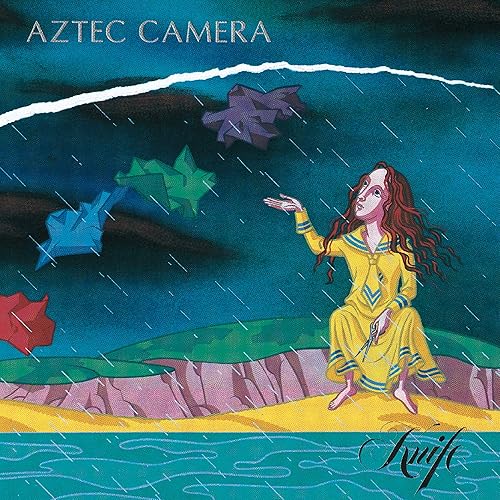
Frame signed the band to the WEA record label—at the time his manager was Rob Johnson and he secured Knopfler as the producer for Aztec Camera’s second album,“Knife”, which was released in 1984; Frame explained in 1988 that Knopfler was very “professional” and efficient during the recording process. Frame’s experimental mindset in relation to music emerged on “Knife”, as the duration of the titular song is nearly nine minutes and synthesizers appear throughout the album. Prior to the album’s release, the band previewed a selection of songs as part of a performance for the BBC television show Rock Around The Clock and the song “All I Need is Everything” received radio airplay subsequent to release. In a 2007 interview alongside Collins, Frame explained further:
He’s [Knopfler] a great guitarist. recording techniques were great—you [Collins] would have liked him, ‘cos that was then, it was quite a thing. ‘Cos everyone was going digital, and going MIDI and all that, and his thing was all about using the right microphone. If you use the right microphone, then you don’t have to use too much EQ and all that stuff, and it was all about that. Yeah, I kinda liked that—the right mic[rophone], the right amp[lifier], the right kind of board and stuff.
“Love” (1987)
At the time that the band’s third album “Love”(1987) was created, Frame was the only original member of the band involved with the project; Love and future Aztec Camera albums were written and recorded by Frame under the “Aztec Camera” moniker, and session musicians recorded with Frame on a track-by-track basis.
Frame explained in August 2014 that he contemplated the conception of “Love” during a three-year hiatus following the release of “Knife”. Frame said that he moved even further away from the British “indie ethic” and was listening to the “pop end of hip hop”, Frame wanted to make a record based on such influences and “Working In A Goldmine” the first song to achieve this aspiration.
Frame relocated to the US to record the album—”pretty much against the wishes of Warner Brothers“, who were unsure of his decision-making at the time—and was primarily based in Boston, Massachusetts, and New York. Frame recorded with American session musicians, like Marcus Miller and David Franke, and explained that his audience was “mystified” by the transformation of the band, but he was “too far gone” to care and just wanted to do his “own thing” by that stage. Due to the significant change of musical direction, the album’s first three singles did not make a strong impression in the marketplace.
The “Love” album produced the popular song “Somewhere In My Heart”, recorded by Frame with dance, R&B and pop producer Michael Jonzun in Boston. Frame said in 2014 that the song has been “great” for him, but at the time of creating the album, the song was not “in keeping” with the rest of “Love”, Frame revealed in a radio interview with the “Soho Social” program, presented by Dan Gray, that he considered “Somewhere In My Heart” an odd song and initially thought it would be best as a B-side.
“Somewhere in My Heart” is the twelfth single and biggest hit by the Scottish band. It was released as the third single from their 1987 studio album “Love”.
Frame was asked during a television interview, following the release of “Love”, about the new sound of the album, and he referenced artists like Anita Baker and Luther Vandross. When asked if the album could be labelled “Middle of the road (MOR)”, Frame replied: “Call it what you like. I don’t really mind.”
Stray (1990)
For the band’s fourth album, “Stray”, Frame collaborated with the Clash’s Mick Jones on the song “Good Morning Britain”, He and Jones also toured with the band following the album’s release. Jones performed as Aztec Camera at the Glasgow Barrowlands and the Ibiza Festival in 1990.
In a 1990 interview, Frame explained that he wrote “Good Morning Britain” in 45 minutes after a two- to three-hour conversation with Jones in the canteen of a London rehearsal studio that both Big Audio Dynamite and AztecCamera were using. In an August 2014 radio interview, Frame elaborated further, stating that at the time he wrote the song, Jones lived near his London home; Frame had visited Jones after recording the song and said to the Clash guitarist, “You’ll either sing on it, or you’ll want to sue me”, as Frame believed the song was so similar to Jones’ previous work.
“Dreamland” (1993)
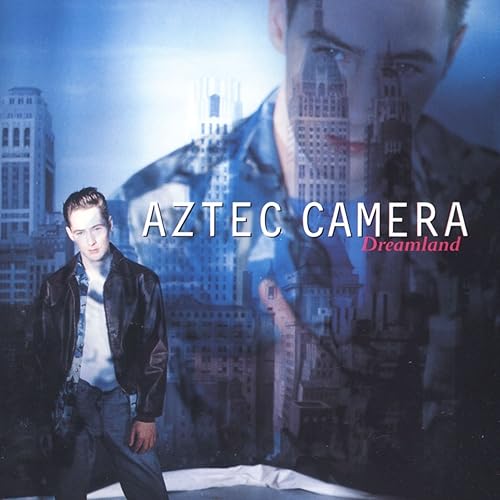
Frame then recorded the next Aztec Camera album,”Dreamland”, with Japanese composer Ryuichi Sakamoto. Released in 1993, While mixing the album at Hook End Manor, an 18th-century red-brick building that had been converted into a studio in the Berkshire countryside of England, UK, Frame explained that he waited for a lengthy period of time to work with Sakamoto, due to the latter’s busy schedule. Frame finally met with Sakamoto in Ibiza and both eventually recorded the album in New York City, US over a four-week period. Frame’s interest in Sakamoto was elaborated upon in a latter interview.
I liked what he did when he was in the Yellow Magic Orchestra, and I also liked that album where he plays the music from Merry Christmas Mr Lawrence on piano. That’s where you realise that the atmosphere around his compositions is actually in the writing. Frame’s routine consisted of: working in the studio from the early afternoon until around 2. a turkey sandwich at a deli off Times Square (“because it was possible to get one at two in the morning, and for no other reason”); a cab-ride back to the Mayflower Hotel, where he was staying; an hour of listening to Shabba Ranks; and then bed.
“Frestonia” (1995)
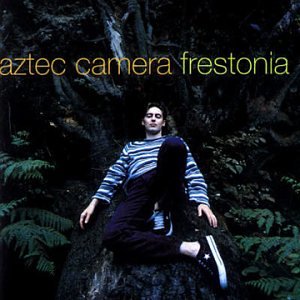
For Frame’s final album under the Aztec Camera moniker, and the last original studio recording for the WEA label, Frame worked with renowned production team Langer-Winstanley, who had previously worked with Madness and Elvis Costello. “Frestonia” was released in 1995 and the Reprise Records label issued it in the US. “Sun” (1996) was the only one song from the album that was released as a single. After the release of “Frestonia”, Frame finally decided to record under his own name in the future and was no longer a Warner artist.
There has been three Aztec Camera “Best of” compilations released: “The Best Of Aztec Camera” was released in 1999 by Warner ESP. that specialised in compilations; in 2005,Deep and Wide and Tall was released by the WarnerPlatinum series; and “Walk Out To Winter: The Best Of Aztec Camera” , a two-disc collection that was released by the Music Club Deluxe label in 2011.
Since the Stray Tour in 1990, Frame has merged a segment of the Bob Dylan song “It’s Alright Ma (I’m Only Bleeding)” into “Down The Dip”, from “High Land, Hard Rain”, and this version of the song was played by Frame at subsequent live shows, Around 2012, Frame included a segment of the Curtis Mayfield song “People Get Ready” in live solo versions of the song “How Men Are”, from the “Love” album. In October 2013, a book entitled The Lyrics: Roddy Frame containing the entirety of Frame’s lyrical work with Aztec Camera.




 “Love” (1987)