Wild Pink songwriter John Ross has shared “Holopaw”, his second album as Eerie Gaits. Ross grew up near the Florida town that shares this album’s name, which has a population of less than 5,000 people. It follows his 2017 full-length Bridge Music, and while both are warm, guitar-based instrumental albums that fold in ambient elements, Holopaw adds percussion and feels more expansive. It’s the perfect fusion of mystical and meaningful. The Wild Pink leader John Ross is releasing another album of instrumentals under the name Eerie Gaits. It’s called Holopaw, and today Ross follows lead single “What’s Eating You” with another new track called “Saw You Through The Trees.” This one’s short and sweet, beginning as a study in flickering beauty and ending like some snappy old Sufjan Stevens instrumental or, like, Architecture In Helsinki.
While many of their peers burned bright and quick, Pearl Jam made up of vocalist Eddie Vedder, guitarists Mike McCready and Stone Gossard, bassist Jeff Ament, and drummer Matt Cameron — is all about longevity, durability, and solidarity while continuing to push their well-established sound into new directions. After three decades, four drummers, and countless weathered industry storms, Pearl Jam have proven their mettle as rock’s most bulletproof band.
Along with fellow Seattleites Nirvana and Soundgarden, Pearl Jam will forever be synonymous with grunge, the heavy, revolutionary rock’n’roll sound from the Pacific north-west which thrust alt.rock onto the world stage on the cusp of the 90s. Their initial rise to prominence was truly astronomical, with the 15 million sales from the band’s first two albums rapidly catapulting them from obscurity to superstardom. In a career spanning almost 30 years, Pearl Jam have delivered a total of 10 studio albums.
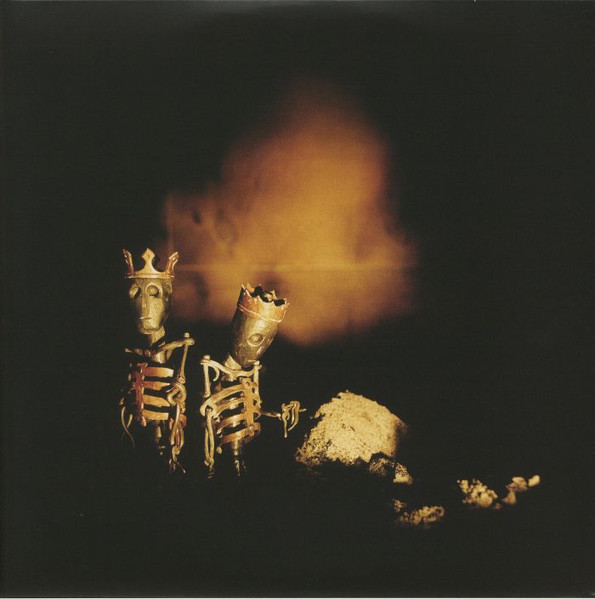
The bar was set pretty high with their debut release, 1991’s “Ten“. Along with Nirvana’s “Nevermind“, it’s one of the main reasons grunge became a mainstream phenomenon, and it launched Pearl Jam from local small Seattle clubs to stadium shows around the world. Lesser bands could easily have folded under the pressure, but Eddie Vedder and company hung on in there, outstripping their plaid-clad contemporaries and carving out their own highly individualistic niche. Revered for their integrity and passionate live performances, Pearl Jam remain one of rock’s most successful modern rock acts and their ten studio albums to date have collectively moved around 60 million copies worldwide.
The band’s roots can be traced deep into the Seattle underground of the 80s. Bassist Jeff Ament and guitarist Stone Gossard originally played alongside future Mudhoney stars Mark Arm and Steve Turner in legendary Seattle noiseniks Green River, whose aggressive 1984 mini-LP, “Come On Down“, is often cited as the blueprint for grunge. However, Green River called it quits when Arm and Turner formed Mudhoney in ’87, leaving Ament and Gossard to form Mother Love Bone with flamboyant vocalist Andrew Wood
Having inked a deal with PolyGram, Mother Love Bone promised great things, but Wood tragically died prematurely from a drug overdose and the band folded before their lone, critically acclaims album, “Apple“, was released in 1990. Devastated by Wood’s loss, Gossard began jamming with fellow Seattle guitarist Mike McCready, who encouraged Ament back into the fold. Mutual friend and ex-Red Hot Chili Peppers drummer Jack Irons declined an invitation to join their new band, but he passed the fledgling trio’s first demo to vocalist and basketball buddy Eddie Vedder (birth name Edward Louis Severson III) who was then working in a gas station in San Diego, California.
Digging what he heard, Vedder composed early versions of key Pearl Jam tunes ‘Alive’, ‘Once’ and ‘Footsteps’. Suitably impressed, Ament, Gossard and McCready flew Vedder to Seattle for an audition, after which the new band’s line-up was completed with the addition of drummer Dave Krusen. The quintet initially played live as Mookie Blaylock (the real name of a favourite New Jersey Nets basketball player), but by the time they signed to Epic, they’d become Pearl Jam: the name reputedly (but actually erroneously) attributed to a peyote-based hallucinogenic preserve supposedly prepared by Vedder’s great-grandmother, Pearl.
Minus Krusen, Pearl Jam’s first proper studio session was with Soundgarden duo Chris Cornell and Matt Cameron, where they cut a self-titled album as Temple Of The Dog for A&M in tribute to the late Andrew Wood. As Pearl Jam, however, the band recorded their fully-fledged debut, “Ten”, in March 1991, with Alice In Chains/Blind Melon producer Rick Parashar manning the console.
“Ten“
Released in August ’91, “Ten” was a dark, anthemic rock record which introduced the wider world to the unforgettable sound of Vedder’s charismatic, honey’n’gravel-soaked growl. Capturing the mood of the times, his lyrics mostly dealt with disaffection and social dysfunction, with ‘Even Flow’ dealing with homelessness and the dramatic ‘Jeremy’ reputedly inspired by a true story in which a high school student shot himself in front of his classmates.
The “Ten” ballad “Oceans” starts the journey. Imagine you are front row, and the lights have just come up on the band. Eddie Vedder is at the mic singing, “Hold on to the thread / The currents will shift / Glide me towards you … know something’s left / And we’re all allowed to dream of the next time we touch.”
“Ten” initially sold slowly, but when the band’s reputation as an unmissable live act kicked in after they supported Red Hot Chili Peppers in the US during the autumn of ’91, the album gradually went gold and kept right on selling. It peaked at No.2 on the US Billboard chart in 1992, eventually going on to sell a phenomenal 13 million copies worldwide.
With Dave Abbruzzese replacing Krusen behind the kit, Abbruzzese joined Pearl Jam at a stressful time, forced to reckon with the band’s growing fame — and, of course, learn their entire setlist, pronto. Intrigued by the anthemic sound of ‘Ten’ he moved from Dallas to Seattle and finished out the tour Chamberlain left behind. “I think ‘Ten’ was a good record,” he told Modern Drummer in 1993. “People got a lot out of it, and I enjoyed playing the songs live with the band. But to me, being on stage and playing those songs didn’t have anything to do with the record. I had no idea about the emotions that went into it or where that music came from. I had to find where the music fit into my heart before I could put everything I had into it.” Pearl Jam toured “Ten” relentlessly across 1992. However, while the Seattle quintet quickly established themselves as one of the rock acts mostly likely to storm the mainstream, they were uneasy about some of the music industry’s standard promotional practices, later refusing to release “Ten’s” emotional centre-piece ‘Black’ as a single (or make a video for it) and insisting on scaling back their interviews. The origins of this popular song can be traced to an instrumental composed by guitarist Stone Gossard in 1990. The demo found its way to a gas station attendant in San Diego by the name of Eddie Vedder. After some initial back and forth. On the journey north, he penned lyrics about painful lost love. And “Black” was born. In 1992, with ‘Ten’ already a worldwide success, Pearl Jam’s label, Epic Records, pushed to have the song released as a single. Due to the personal and emotional nature of the track, the band refused. They didn’t want “Black” to become a radio phenomenon like previous singles “Even Flow” and “Jeremy.” “Some songs just aren’t meant to be played between hit No. 2 and hit No. 3,” Vedder told ‘Rolling Stone’ in 1993. “You start doing those things, you’ll crush it. That’s not why we wrote songs. We didn’t write to make hits.” Despite the band’s concerns, radio programmers could sense the song’s mass appeal.
“Vs”
The band’s anti-establishment stance ensured they again refused to make promotional films for the songs on their second album, “Vs”, released in October 1993. Commercially, it made little difference: “Vs” sold over a million copies during its first week of release and topped the Billboard 200 for five weeks. Overseen by producer Brendan O’Brien (Red Hot Chili Peppers, Stone Temple Pilots), Vs significantly broadened Pearl Jam’s sonic palette, taking in everything from raw, feral punk (‘Go’, ‘Rats’), motorik funk (‘Animal’) and even wracked acoustic ballads such as ‘Daughter’ and ‘Elderly Woman Behind The Counter In A Small Town’ were the big radio hits off of Pearl Jam’s sophomore release, but no song on the album has endured as a fan favourite more than “Rearviewmirror.” The drums and guitars propel the track with a nervous energy until Eddie Vedder explodes with the chorus around the three-minute mark, proclaiming “Saw things so much clearer, once you were in my rear view mirror.” The song is a highlight at every Pearl Jam show, often resulting in a cathartic crowd sing-along.
Pearl Jam were arguably the biggest rock band on the planet when they started to record “Vs.” in March 1993, but they had only about 20 songs in their repertoire. They’d spent the last two years playing those songs over and over and over on a relentless tour, and they were quite ready to lay down some new material. Reaching back to 1993’s “Vs.” this pummeling track “Leash” comes out of the gate with Vedder howling, “Troubled souls unite / We’ve got ourselves tonight / I am fuel / You are friends / We’ve got the means to make amends.
Like its predecessor, “Vs” sold in droves, eventually moving around seven million copies, but the next couple of years were a rollercoaster ride for Pearl Jam. Always admirably keen to keep concert ticket prices down for their fans, the band locked horns with music ticket colossus Ticketmaster across 1994, yet their attempt to play shows in non-Ticketmaster-controlled outdoor venues failed and they were forced to cancel that summer’s proposed US tour. There were personnel problems behind the scenes, too, with drummer Abbruzzese fired and replaced by Jack Irons after recording Pearl Jam’s third album, “Vitalogy”. The Former Red Hot Chili Peppers drummer Jack Ironsinitially spurred an invitation to join Pearl Jam back in 1990. However, upon Abbruzzese’s firing in 1994, Irons himself reached out to offer his services — and after playing with Pearl Jam onstage, he officially joined the line-up the following year. Though he’d technically already made his recorded debut with the group, adding to the free-rock madness of ‘Vitalogy’ deep cut “Hey Foxymophandlemama, That’s Me,” he was a full creative force on their next two records, 1996’s ‘No Code‘ and 1998’s ‘Yield’ Irons co-wrote multiple tracks, including the wide-eyed hit “Who You Are” and his experimental drumming approach – more based on texture and groove than unhinged power.
“Vitalogy“
Initially released solely on vinyl in November 1994 (it emerged on CD and cassette two weeks later), Vitalogy was abrasive, grunge-y and highly eclectic, embracing everything from raw, frenetic punk (pro-vinyl anthem ‘Spin The Black Circle’) to Tom Waits-esque blues (the accordion-led ‘Bugs’) and the peculiar, mantra-esque funk of ‘Aye Davanita’. The experimentation was, however, balanced out by the inclusion of several of Pearl Jam’s most enduring tracks, such as ‘Corduroy’, the radio-friendly ‘Better Man’ and the haunting, anguished ‘Immortality’ – the latter reputedly a tribute to the then recently deceased Nirvana frontman Kurt Cobain.
Despite its relatively left-field content, “Vitalogy” came close to repeating the success of “Vs“, quickly selling over a million copies in the US and earning multi-platinum certification. Pearl Jam toured Asia, Oceania and the US during 1995 to support the album’s release, and also realised a collective dream when they performed as Neil Young’s backing group on his gold-selling album “Mirror Ball“: a loud, aggressive record featuring long, Crazy Horse-esque tunes which was created spontaneously in the studio over just a few days. After Pearl Jam joined forces with Neil Young in 1995, two works resulted: the Young;s album “Mirror Ball” and a Pearl Jam EP called “Merkin Ball”. “Long Road,” which features Young on pump organ, was written in memory of one of Vedder’s mentors in high school. The uplift is real. Throughout, there’s a sense that we are all in this together: “We all walk the long road. All the friends and family / All the memories going around It’s little wonder that Vedder chose this song to perform on the telethon in the wake of 9/11 along with Young and McCready. The final lyric sums up its sentiment: “The sun will rise another day.
“No Code”
Released in August 1996, Pearl Jam’s fourth album, “No Code”, was a transitional affair, mixing pent-up garage-rock (‘Hail Hail’) with world music influences (‘Who You Are’, ‘In My Tree’) and elegant acoustic flourishes such as Vedder’s moving ‘Off He Goes’.Not initially known as an “experimental” band, Pearl Jam stepped outside of their comfort zone on their fourth album, ‘No Code’ With its wild drumming and electric sitar a band still looking to musically grow without fully abandoning the sound that launched them into stardom in the first place. Fame was starting to seem like a prison for Eddie Vedder, and he poured much of his frustration into the songs on “No Code“. The 63-second “Lukin” tells the tale of a psychotic stalker who broke into his home. The band was also falling apart, and bassist Jeff Ament nearly walked out of the sessions. Despite the tension, the band produced a pretty remarkable album.
It was, however, largely well received by the critics (Rolling Stone’s David Fricke proclaimed, “No Code basically means no rule books, no limits and above all, no fear”) and it again topped the Billboard 200.
“Yield”
Welcomed as a return to their original anthemic rock sound, 1998’s “Yield” was trailed by one of Pearl Jam’s most enduring, radio-friendly singles, ‘Given To Fly’, which also provided Vedder and company with a US Top 30 hit and Top 20 success in the UK.The soaring, airy feel of “Given to Fly” was a result of Eddie Vedder’s song writing approach. In a 1998 interview with the ‘Philadelphia Inquirer,’ the singer admitted he envisioned the lyrics as a “20-page cardboard book with a line on each page and a picture to go with it. It’s a fable, that’s all. The music almost gives you this feeling of flight”. “Yield’s” gem comes in quiet with Mike McCready Led Zeppelin-inspired riff, but by the time the chorus hits, you’re pogo-ing and clapping wildly. Vedder’s voice soars: “First he was stripped and then he was stabbed by faceless men / Fuckers, he still stands / And he still gives his love, he just gives it away.
The band had permitted several singles to be released from “No Code” and their stance towards promotional duties continued to soften with the release of “Yield“, for which they even consented to commission comic book artist Todd McFarlane to produce the Marvel-influenced promo video for the album’s fourth single, ‘Do The Evolution’. A song that constantly comes up in fan discussions about getting through tough times, self-doubt or any other trouble, “Present Tense” (from 1996’s underrated No Code was written by Vedder. During a Scotland show of the 2000 Pearl Jam tour, he noted that it was a kind of reminder to himself to be played when he needed to know he could weather a bad time. “You can spend your time alone / Re-digesting past regrets / Or you can come to terms and realize / You’re the only one who can’t forgive yourself / Makes much more sense to live in the present tense” he sings. The band members’ jam that makes up the second half of the song gives it even more of a sense of soaring hope.
“Yield” peaked at No.2 in the US and the album’s hugely successful US tour during the summer of 1998 was facilitated by the band’s decision to again work directly with the Ticketmaster agency.
“Live On Two Legs“
A celebratory live album, “Live On Two Legs“, appeared in November 1998, Without a doubt, Pearl Jam are one of the best live bands to emerge in the past 25 years. But for some reason, it took them over eight years to release a proper live album. Thankfully, “Live on Two Legs” was worth the wait. The 16-track album draws from the band’s 1998 summer and fall tour, which was their first outing with new drummer Matt Cameron. The set wisely skips obvious hits like “Jeremy” and “Alive” in favor of deep cuts like “MFC” and “Off He Goes.” Nearly every song on here is superior to its studio version. The only flaw is that it’s only a single disc and doesn’t capture the scope of a single great concert. The band must have been happy with the results, though: two years later, they began releasing live albums from every single concert on their tours.while in 1999 the band’s emotive cover of Wayne Cochran’s 1961 ballad ‘Last Kiss’ gave Pearl Jam their biggest single success, peaking at No.2 on the Billboard singles chart. The song also featured on the compilation No Boundaries and the band donated the proceeds to refugees of the Balkan civil war in Kosovo.
“Binaural“
With ex-Soundgarden drummer Matt Cameron replacing Jack Irons, Pearl Jam cut their sixth LP, “Binaural“, in 2000. The record’s title referred to new producer Tchad Blake’s adoption of the binaural recording technique, wherein two microphones are used simultaneously to try and simulate the experience of being in the room with the band. Lyrically, this dark, brooding album frequently railed against injustice, with tracks such as Vedder’s ‘Grievance’ inspired by the anti-corporate World Trade Organization protests in Seattle in 1999 and Gossard’s ‘Rival’ based on the Columbine High School massacre.
Going gold, “Binaural” peaked at No.2 on the Billboard 200 and, in support, the band embarked on lengthy tours of Europe and North America. Having long since held a relaxed view of fans bootlegging their shows, Pearl Jam began recording their gigs professionally across 2000-01 and subsequently issued a Grateful Dead-esque series of official live albums available through both record stores and the band’s fan club. The group eventually released 72 live albums during this period and set a record for the most albums to debut on the Billboard 200 at the same time.
Cameron was already part of the larger Pearl Jam family, having played on the Gossard demos and collaborated with everyone in Temple of the Dog. So when Irons dropped out of the ‘Yield’ tour, it was obvious who they’d frantically call with a daunting request. “I got a phone call out of the blue, from Mr. Ed Ved, Stoney and [manager Kelly Curtis],” the drummer told Spin. “I was ambushed. It was really short notice. He called and said, ‘Hey what are you doing this summer?'” It was a perfect match: Cameron, a consummate professional, was able to seamlessly put his stamp on all the previous drummers’ parts, and he became an instant writer and collaborator when they hit the studio for 2000’s ‘Binaural.’ Using the heavy but intricate style he’d already showcased with the then-defunct Soundgarden, Cameron became the definitive Pearl Jam drummer, staying on through their next four LPs: 2002’s ‘Riot Act,’ 2006’s ‘Pearl Jam,’ 2009’s “Backspacer” and 2013’s ‘Lightning Bolt’ Equally important was his personal chemistry with the other four. “Somehow we were so fortunate, you know, we’ve had a few drummers,” Vedder said in the band’s Rock and Roll Hall of Fame speech. “And you know, taking that seat in the drum school or the throne, because they’re all kings. We’re so fortunate. Every one of them is great. But Matt Cameron’s really been the one that’s kept us alive for these last 15, 16 years. At a time when we didn’t know if – we weren’t sure what was going to happen – he enabled us not just to survive, but to thrive. I mean, he’s been one of my brothers.
Both the European and US legs of the tour were well received, though tragedy struck when nine fans suffocated to death during the band’s set at Denmark’s Roskilde Festival in 2000. Devastated by the experience, Pearl Jam considered splitting up, but eventually poured their emotions into the making of their next album, 2002’s “Riot Act”. Perhaps inevitably, ruminations on death loomed large in the record’s lyrics, though the album included some of the band’s most sublime material, courtesy of the folksy ‘I Am Mine’ Written in 3/4 time signature, which is more commonly heard in waltzes or folk tunes than in rock songs, “I Am Mine” ebbs and flows at a jaunty pace. The lyrics tackle existential crises and what it means to feel safe. We mainly get lost in the rhythm.
The Beatles-y psychedelia of ‘Love Boat Captain’ and the looming art-rock of ‘Save You’. Even though the title is kinda silly, this song was written in the wake of the 2000 tragedy at the Roskilde music festival (“Lost nine friends we’ll never know. Vedder finds solace just where John Lennon did, name-checking a Beatles song,I know it’s already been sung / It can’t be said enough / Love is all you need / All you need is love. He then sums it all up: “Once you hold the hand of love / It’s all surmountable. George W. Bush was near the peak of his popularity, but Eddie had the balls to write “Bu$hleaguer,” a scathing indictment of the president who was “born on third, thinks he got a triple.” The disc also marked the first effort with organist Kenneth “Boom” Gaspar; he’s been with them ever since. The group took a four-year recording break after Riot Act, and when they emerged, they seemed a little less afraid of pop hooks.
Having concluded their Epic contract with the self-explanatory anthology set “Rearviewmirror(Greatest Hits 1991-2003)”,Pearl Jam initially opted to self-release new records, including ‘Man Of The Hour’, a single issued in partnership with Amazon, and rarities collection Lost Dogs. Inspired by historian Howard Zinn, author of “A People’s History of the United States” and friends with Vedder since a 1998 interview they sat down for together, the central idea of this 2002 B-side — “You can’t be neutral on a moving train comes straight from a Zinn book title. Pick what you care about and support it, the song says: “Rise / Life is in motion If hope can grow from dirt like me, it can be done.
Eventually, however, they signed a short-term deal with Sony subsidiary J Records for 2006’s long-awaited Pearl Jam, an exhilarating hard rock album which Rolling Stone cogently declared was “as big and brash in fuzz and backbone as Led Zeppelin’s Presence”. With the band’s loyal fanbase in wholehearted agreement, Pearl Jam debuted at No.2 on the Billboard200 and climbed to No.5 in the UK, where the band also headlined the prestigious Leeds and Reading Festivals in 2006.
“Backspacer”
Pearl Jam’s ongoing resurgence continued with the release of 2009’s “Backspacer”, released through the band’s own label, Monkeywrench, via Universal Music Group. By some way Vedder and the team’s most uplifting and life-affirming set of songs to date, the album found producer Brendan O’Brien returning to the control room for the first time since 1998’s Yield, and the record delivered 11 songs in an exhilarating, brevity-fuelled 36 minutes. Ranging from the swaggering ‘Gonna See My Friend’ to the nervy, Elvis Costello-esque new wave of ‘Johnny Guitar’ and the heart-melting acoustic love song ‘Just Breathe’, Pearl Jam are hardly the first band to use strings to enhance the emotions of a song, but damn if they weren’t able to take it to another tear-inducing level Pain, love, mortality — the band checks all of the heart-wrenching boxes on this one. There was great singles like “Got Some” and “The Fixer” grabbed the attention of many fans who had given up on Pearl Jam sometime around 1999. By 2009, the band just didn’t have anything more to prove. They’d proven they could thrive without videos or any other conventional promotional tools. It was time to have fun and do whatever felt right.
“Backspacer” captured Pearl Jam on superlative form and it rewarded them with their first US No.1 since ‘96’s No Code.
A lot of Pearl Jam’s early music spoke of people navigating despair: the abused, the suicidal, even the homicidal. By 2006, despite political tumult in the world, the band itself seemed in a brighter but no less empathetic place. With a sharp guitar sounding the opening, Vedder pleads, “I have faced it / Life wasted / I’m never going back again.
“Lightning Bolt”
Arriving in the wake of director Cameron Crowe’s acclaimed Pearl Jam “Twenty” documentary, hotly-anticipated tenth album, “Lightning Bolt”, continued the band’s renaissance. In many ways the logical extension of “Backspacer“, it was a tad darker in hue, yet every bit as accessible, with the muscular ‘Getaway’, soaring ‘Yellow Moon’ and shape-throwing, Who–esque titular song all up there with the very best in the band’s illustrious canon. Confidently becoming Pearl Jam’s fifth US No.1 album, the consistent quality of its content suggests that the best may be yet to come from this most formidable of rock’n’roll institutions. “Sirens” built around an acoustic guitar and piano, this luscious ballad unfolds slowly and thoughtfully. Eddie Vedder’s emotional vocals range from powerful to trembling, as if he’s about to cry. There’s a real sense of fragility in the words, evident in phrases like “Someday this will be over,” “All things change” and “Nothing lasts forever.” This is the grown-up Pearl Jam, a group of rock stars turned fathers and family men. They’ve faced the highs and lows that life has thrown at them and still stand to press forward to another day.
“Gigaton”
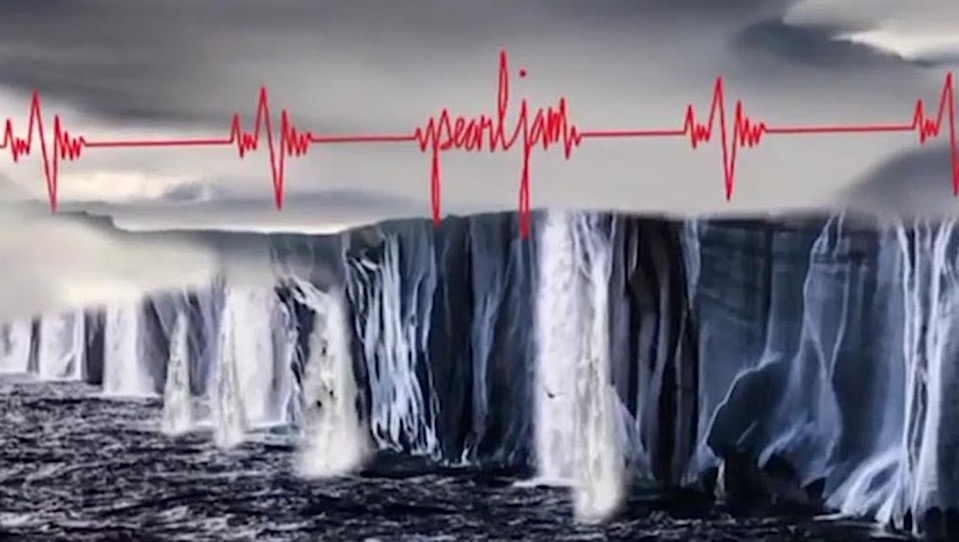
It took six and a half years, the longest stretch ever between Pearl Jam albums, but “Gigaton” is finally here, In the 10-week run-up from “Gigaton’s” announcement until today, the band released three of the 12 songs from the album in full: the Talking Heads-inspired “Dance of the Clairvoyants,” “Superblood Wolfmoon” and “Quick Escape”
“Gigaton” found Pearl Jam working with a new co-producer, Josh Evans, who also contributed keyboards to “River Cross” Vedder plays the pump organ on this “Gigaton” closer that’s filled with dire thoughts of thunderclouds and “drifting off in the undertow.” But he chooses a silver lining instead: “Look around at the promise now / Here and now / Won’t hold us down / Share the light.
Although it’s his first production effort with them, he previously served as an engineer on a pair of songs — a cover of Brandi Carlile’s “Again Today” that appeared on a 2017 benefit album and the 2018 standalone single “Can’t Deny Me” — and has worked on solo and side projects by bassist Jeff Ament and guitarist Mike McCready.
However, the band’s plans to promote “Gigaton” have not gone as expected. The outbreak of coronavirus forced them to postpone the North American leg of their tour, which was scheduled to begin March 18th.
“Dark Matter”
Released in April 2024, Pearl Jam’s twelfth studio album carries significant weight within their extensive discography. Produced by Andrew Watt, the album is notable for its raw energy and the band’s return to a more collaborative, fast-paced recording process, reminiscent of their earlier work.
Musically, “Dark Matter” delivers powerful rock anthems alongside more nuanced tracks, showcasing the enduring chemistry and musicianship of the band members, particularly Mike McCready’s visceral guitar work. As a later-era album, “Dark Matter” serves not as a reinvention, but as a potent reminder of Pearl Jam’s vital and continuing artistic relevance, satisfying long-time fans while potentially capturing new listeners with its immediacy and emotional depth.
“Born out of magic and hopelessly romantic. A message from the fire. The flames are burning higher and ever so brightly, softly, sweet scars & beauty, death like, so lovely. Ghosts and Gods sing Pharaoh melodies”. Natalie De Silver founder of The Dandelion describes her band. This four-piece group take 60s psych influences and ghostly sounds into modern world. We had a lovely chat with Natalie, while the flute and the organ ring out in the night…My studio is my home and I mostly record music in my lounge room. Sometimes I write songs in my kitchen or bedroom. I like composing songs on either guitar, organ or drums first, then I just make the rest up. I have an old cassette recorder I like to record on. However, the next Dandelion record we’re going into a proper studio which is really exciting!. for independent artists like us who sell our own music through sites like Bandcamp or at our own shows and mange our own social media platforms it’s very personal. The Dandelion originally began as a solo recording project for Daniel Poulter (1981-2015) who recorded Strange Case of The Dandelion.
During the recording of The Dandelion’s 2nd album “Seeds Flowers & Magical Powers of The Dandelion” 2014/2015, Daniel gracefully handed over all creative duties to Natalie de Silver who can be heard subtlety coming through the album’s mix and main themes. Natalie is currently working on a third album to be released very soon!
True spirituality is also taking responsibility for your role within the creation process and once you find a positive rhythm within in it then you will begin to truly understand what God is. I strongly recommend to anyone who is even remotely spiritual, that you find a disciplinary belief system or religion to subscribe to Otherwise you’ll have no spiritual structure or grounding and what often happens to the “spiritual but not religious” is a false self justification of being on the “right path” and this often leads to spiritual gluttony, substance abuse and self indulgence which will ultimately disconnect you from reality and God.
Sure, so the first step is to discern what is good for you and what is bad for you and how it might affect other people. This is not an overnight process, however, if you have the ability to feel remorse and empathy towards anything other than yourself, then discernment should come quite easily, It’s much more beneficial to see how your bad habits might be negatively affecting others as opposed to just yourself as bad habits are often strangely enjoyable and, if you give up a bad habit just for yourself, then you’ll most likely just trade it for another bad habit to meet your own needs.Last year, The Dandelion joined the Gizzfest, curated by Ozzie favorites King Gizzard and the Lizard Wizard.
“There’s something about this record,” Benson says, describing his Third Man Records debut album “Dear Life”. “A friend of mine called it ‘life-affirming.’ I thought it was a joke at first but then realized, well, it’s about life and death for sure. I don’t know if that’s positive or optimistic or whatever, but that’s what’s going on with me.”
Brendan Benson finds himself in an enviable spot as he enters the third decade of a remarkably creative, consistently idiosyncratic career – an accomplished frontman, musician, songwriter, producer, band member, husband, and dad. Benson’s seventh solo album, and first new LP in almost seven years, “Dear Life” is this consummate polymath’s most inventive and upbeat work thus far, an 11- track song cycle about life, love, family, fatherhood, and the pure joy of making music.
Produced and almost entirely performed by Benson at his own Readymade Studio in Nashville, the album sees the Michigan-born, Nashville-based artist – and co-founder, with Jack White, of The Raconteurs – reveling in a more modernist approach than ever before, fueled by a heady brew of cannabis, hip-hop, and a newly discovered interest in software drum programming.
The result is an untapped playfulness that elevates expertly crafted songs like the opener, “I Can If You Want Me To,” and the first single, “Good To Be Alive,” with voluble arrangements, elastic grooves, and incandescent power. Imbued with revitalized ambition and confidence, DEAR LIFE is Brendan Benson at his very best.
Iggy Pop has announced new 2xCD reissues of his classic albums “The Idiot” and “Lust for Life”. In addition to remastered versions of the original albums, the reissues feature bonus live discs: Live at The Rainbow Theatre, recorded at London’s Finsbury Park in 1977, and TV Eye Live, respectively. The classic David Bowie-produced albums ‘The Idiot’ and ‘Lust For Life’ are being reissued through a special deluxe boxset.
1977 the story of Iggy Pop and David Bowies Collaboration on two of the most iconic albums of the decade is told in a new seven CD box set which features the albums remastered, a disc of out takes and Three discs of live recordings officially released (with the endorsement of Iggy Pop) for the first time. In 1977, Iggy Pop signed with RCA Records and with the help of David Bowie the two of them wrote and produced The Idiot and Lust for Life, Iggy Pop’s two most acclaimed albums as a solo artist, the latter featuring one of Pop’s best-known songs “The Passenger”. Among the songs David Bowie and Iggy Pop wrote together were “China Girl”, “Tonight”, and “Sister Midnight”, all of which David Bowie performed on his own albums later on (the last being recorded with different lyrics as “Red Money” on the album Lodger). David Bowie also played keyboards on Pop’s live performances, some of which are featured on the album TV Eye Live in 1978.
Both released in 1977, the records remain highly-influential to this day – spawning hits such as ‘Nightclubbing’, ‘The Passenger’ and the title track ‘Lust For Life’.
On May 29th, a special collection titled ‘The Bowie Years’ will be released via UMC. The reissue will comprise 7 CDs containing remastered versions of the original albums, as well as rare outtakes, alternate mixes and a special 40-page book.
The Stooges founder expansive box set is called The Bowie Years, a 7xCD collection that includes those two reissues, as well as demos and rarities and other live recordings from his time working with David Bowie in Berlin. All of these arrive May 29th via UMe. Check out an alternate mix of “China Girl” below, taken from the larger box set. The song was originally the second single from ‘The Idiot’ before it was taken on by Bowie for 1983’s ‘Let’s Dance’. Outside of TV Eye Live, the three March 1977 live concerts featured in The Bowie Years — Live at the Rainbow Theatre – Finsbury Park, London 07/03/1977, Live at The Agora – Cleveland 21/03/1977 and Live at Mantra Studios – Chicago 28/03/1977 — are all previously unreleased.
Iggy Pop’s most recent album, a collaborative LP with Noveller and Leron Thomas titled Free, was released last year. Earlier this month, he joined Jane Birkin on Fallon for a rendition of Serge Gainsbourg’s “Elisa.”
Limited Edition 7CD Boxset + Exclusive Deluxe A2 Screenprint, numbered and signed by the artist, Chris Hopewell at Jacknife Studios (best known for his animation with Radiohead for ‘Burn The Witch’. Strictly limited to 500 worldwide.
Gauzy dream pop has made a nice little renaissance for itself over the past few years, to which this reviewer, who wrapped himself in its progenitors’ plush layers during his formative years, offers a hearty “Huzzah!” Of course, the flip side of this is the droves of like-sounding bands proffering this sound that is, admittedly, ripe for accusations of peddling nostalgia. Austin, Texas quartetWhy Bonnie started out as one of those bands, offering perfectly fine and wistful shoegazey fare across their first pair of EPs. Their third, Voice Box, however, breaks the band from this mould.
While lead track, “Bury Me”, fits squarely in the dream pop aesthetic, its production is sweeping and cinematic, country miles beyond the band’s previous work. Furthermore, the title track’s concretizing a woman’s voice as her literal voice box to illustrate frustration with expression lends the proceedings a welcome depth typically absent from a sound known more for its style over substance. While thematically, “Voice Box” is the spoke around which the entire EP revolves, the heady whiplash pairing of “Athlete”s skulking, vampirish dissonance followed by “Jetplane”s diaphanous fingerpicking are the prime exhibits of Why Bonnie’s growth. Pulling elements from their bread and butter and pushing them toward their boundaries elevates Voice Box above merely enjoyable dream pop.
Really, there’s one quibble and one thing left to say – we need more, Why Bonnie, bring on the LP.
“Naked Winter” is an angsty track from the New Orleans band Mighty Brother. Bending genres, Mighty Brother seems to traverse sonic landscapes of folk, rock, funk, and jazz. The video captures familiar feelings of isolation, uncertainty about the future, and the feeling of being held hostage by uncontrollable forces…. a timely watch during these isolating times. As the first release from their upcoming double album (no, that’s not a typo) we can’t wait to see what comes next from this group.
Based in New Orleans, Mighty Brother carves a unique space in today’s modern soundscapes with a distinct mashup of styles that has been described as a “blend of Avett-Americana and Radiohead-esque art rock” (Offbeat Magazine). A menagerie of musical influences led Mighty Brother to develop an indie-rock sound that simultaneously pays tribute to folk, singer-songwriter, funk, and alternative soundscapes with soaring harmonies and striking melodies that knit an eclectic sound, guiding the listener through unconventional grooves and adventurous lyricism. Their third album – a double album – The Rabbit. The Owl. is an introspective look into the band’s emerging theme of duality in both their music and their writing. Straddling the lines between genres The Rabbit. The Owl. is a prime showcase of the band’s unique musical flair and serves as an introspective look into Mighty Brother’s exploration of sound, concepts, and ideas.
Band Members
Ari Carter, Nick Huster, Quinn Sternberg, Jonah Tarver
Naked Winter is the first single from Mighty Brother’s upcoming Double Album “The Rabbit. The Owl.”
In the ever-expanding universe of Americana music, I have a few criteria, two of which are 1) is the instrumentation, for the most part, real and 2) can I drive to it .When considering the newest release from neo-psychedelia practitioners The Dream Syndicate, I found The Universe Inside chock-full of amazing musicianship and suitable for a long, winding road trip.
The songs on The Universe Inside are, to say the least, expansive, clocking in between seven and a half and 20-plus(!) minutes. That latter opus is the lead track, “The Regulator.” Paired with a video shot by David Dalglish, the song, at times lounge-y, other times nearly frantic and swirling with sax (courtesy of guest Marcus Tenney), paints a picture of adulthood in decay and youth stepping up to take over. Band founder Steve Wynn, in heavily-manipulated vocals, sings of “Calendar boys dusting off the rust/The scarcity of the soul/Blown fuses.” A little apocalyptic, but aren’t we all feeling a little that way right now?
Since the band’s 2012 return, their music has been based around four-minute rock songs with an experimental flair, with occasional detours into jam territory. Here, though, there are no such limits or boundaries. Perhaps guided by a sense of mortality that shows in his lyrics, Wynn has decided to make the album he’s long wanted. “(All That’s Left Is) The Longing,” a somewhat more straightforward song, directly addresses a life of efforts made, summed up during one last death rattle – “All that’s left from before/Is the final twitch and spasm.” “Apropos of Nothing” has a little bit of twang amongst its nine and a half minutes before a drastic tempo change two-thirds of the way through. And “Dusting Off The Rust” has the band doing just that, prog playing their hearts out in a nearly 10-minute instrumental.
The Universe Inside wraps with its most song-like offering, “The Slowest Rendition,” a two-parter stretched across eleven minutes. Part One, the most lyrical offering on the record, is a frank examination of putting away childish things – “To think I once would have welcomed/In delight, this chaos that flickers in the night” – and a true look at aging – “The waking hours and questions slowly seep/Into one another.” It’s a good damn song. Part Two features a tempo change, more sax, and a man grasping one last time for some measure of control: “I’m the amateur director/On a badly lit mystery.” We all want control. And, right now, none of us have it.
The Universe Inside was produced by John Agnello, Adrian Olsen and the band, recorded and mixed by Agnello and Olsen, and mastered by Greg Calbi. The Dream Syndicate is Wynn (lead vocals, guitar and harmonica), Jason Victor (guitar), Chris Cacavas (keys), Mark Walton (bass), and Dennis Duck (drums). Featured players include Stephen McCarthy (electric sitar, guitar, bass, pedal steel and background vocals), Marcus Tenney (sax and trumpet) and Johnny Hott (percussion).
“The Longing” by The Dream Syndicate from the album ‘The Universe Inside,’ available April 10th
The Dream Syndicate is:
Steve Wynn – lead vocals, guitar, harmonica
Jason Victor – guitar
Chris Cacavas – keyboards
Mark Walton – bass guitar
Dennis Duck – drums
Special guests: Stephen McCarthy (electric sitar, guitar, six-string bass, pedal steel, backing vocals)
To celebrate the new single and EP Methyl Ethel will be supporting Peter, Bjorn & John on their American tour dates throughout March and April. On return to Australia, Methyl Ethel will tour in solo mode at intimate venues in Perth, Melbourne, Sydney and Brisbane.
“Hurts To Laugh” marks the ongoing output of Methyl Ethel producer and multi-instrumentalist Jake Webb’s restless mind. Time and again he’s proven that while there’s no distinction between music and art, psychologically speaking there is a difference between feeling and emotion. One is a conscious response to a set of circumstances, the other is the unconscious conditions of our very being that only occasionally surfaces through feelings. Hurts To Laugh excavates this ambiguous site, implied by its very title. You can laugh so hard it hurts – pure joy. Or laugh despite the pain – despair. These paradoxes run throughout the EP, as well as everything that came before.
‘Majestic AF’ stumbles into its bubbling oscillator and analogue polyrhythms, while a kick-free drumbeat marches right into an atonal synth melody supporting Webb’s equally idiosyncratic falsetto.
It’s been four years since the last Elvis Depressedly full-length, 2015’s New Alhambra, but there’s been no lack of new music from Mat Cothran. He’s released two solo albums in that time, 2017’s Judas Hung Himself In America and last year’s My First Love Mends My Final Days, and he’s wrapped up his Coma Cinema project with Lost Memory. But now the North Carolina-based musician is returning to his Elvis Depressedly moniker this year with a new album called Depressedelica.
“I wanted to experiment and try new things and do weird shit and fail,” Cothran said in a press release. “Everybody’s so scared to fail these days because everybody’s trying to keep up with everybody else on social media, but I just reached this point where I realized that none of it mattered. I’m not trying to pretend I’m too cool to care — I genuinely hope people love the music I’m making — but ultimately all that I wanted to do was make something that I loved, and there was real freedom in that.”
Depressedelica first single is “Jane, Don’t You Know Me?,” which wraps guitars around pitch-shifted vocals, a drum machine, and a persistent barking. There’s a sense of well-worn history, of disappointment and regret and a heavy weight. “I am tangled up in our past/ I am falling off the wagon,” Cothran sings. “On and off the wagon, crazy for you.”








![Iggy Pop: The Bowie Years: 7CD Boxset + Exclusive Numbered A2 Screenprint [signed by the artist]](https://dvfnvgxhycwzf.cloudfront.net/media/SharedImage/imageFull/.fE6e6fFX/SharedImage-101931.png?t=e1735502fc8260c6d3ad)


