“Do You Wonder About Me?” Is the follow-up to 2017’s Swear I’m Good At This. The new record marks a more intentional, self-assured Diet Cig; not only in Luciano’s radically intimate, acerbic lyrics, but in the duo’s sound as well. Luciano and Bowman moved to Richmond, VA in the summer of 2017 as a place to “hide out and make music,” and it was there that they wrote Do You Wonder About Me?,Diet Cig’s ode to growing up.
“We spent a lot of time after the first record growing as people, being humans outside of tour for a little bit, and trying to shed the imposter syndrome.” Luciano says. Spending the time to make the kind of music they really wanted to make and making sure they felt good about it was crucial to the success of tracks like Night Terrors. It’s a slower-paced song than Diet Cig’s usual, but just as biting; a song about reckoning with all the past versions of yourself. As Luciano puts it, “Am I still these people, or have I shapeshifted?” It’s essentially the thesis of Do You Wonder About Me?, considering and accepting the embarrassing aspects of your identity, and how they’re just as much a part of you as the good stuff.
New York City’sDiet Cig have a new album entitled Do You Wonder About Me? on the way, and you can hear its thundering, lucent “Who Are You?” as of today. The LP is out through French kiss Records on May 1st. You can pre-order glow-in-the-dark-green-vinyl, CD, cobalt-blue-cassette and digital editions of it either from the band’s webstore or from their Bandcamp page now.
Band Members
Alex Luciano-vox/guitar
Noah Bowman-drums
From the album, ‘Do You Wonder About Me?’ out May 1, 2020 on Frenchkiss Records.
This is a Record Store Day 2020 item. It will be available to purchase from 8am 20th June.
From Kevin…Paris was the first city to really get behind my career as a solo artist. From the first time I played there in 2014 til now, it’s always had an extra spark of magic to it. It’s always the stop I look forward to the most on my European tours as the audience comes with a very unique and kinetic energy, and because of this, so does the band. I had wanted to document this reciprocating fever between us and the crowd for some time now and saw our sold out show at the beautiful Cabaret Sauvage as the perfect time to do so. I also knew I needed to document a night with my new band, the Oh My God Band, which is made up of some of the most talented and tasteful musicians on the planet. And so here and now, in this recording, I have captured the best band I’ve ever played with as well as one of the best crowds I’ve ever played for – all together on a very sweaty night beneath a carnival tent in Paris. xo km
With his four acclaimed solo albums and myriad records of various collaboration, Kevin Morby has become a true musical auteur. Each record possesses its own unique persona and explores intriguing themes and fertile terrain through shifting, focused textures and dexterous, dedicated skill. And now, with the lavish, resplendent, career-best double LP Oh My God , Morby delivers a grandiose director’s cut of his biggest statement to date, epic in scope as well as sound
Brave is a sword song. Writing it made me feel armed to face my lesser self. Because becoming a better version of myself requires taking account of the painful missteps along the way and fighting the anguish of facing them. And to ultimately (and hopefully) come out better than who I was before. Taller and stronger. This is the highest achievement a human being can hope for, everything else is secondary.
In conjunction with the song, Kelly will release a new “Brave” t-shirt today with a design featuring his handwritten lyrics. All proceeds from t-shirt sales will be donated to MusiCares.
The new song adds to a breakthrough series of years for Kelly, whose most recent project, Dirt Emo Vol. 1, was released this past fall via Rounder Records (stream/purchase here). Co-produced by Kelly and Jarrad K, the eight-song release consists of Kelly’s favorite songs including a rendition of Dashboard Confessional’s “Screaming Infidelities” featuring the band’s lead singer Chris Carrabba, a live cover of Wheatus’ “Teenage Dirtbag” and new versions of The Carter Family’s “Weeping Willow” and Taylor Swift’s “All Too Well.” Kelly’s version of “All Too Well” was released to widespread critical praise and garnered attention from Swift herself. Billboard declared, “Kelly puts his own haunting spin on the track with yearning vocals, delicate percussion and soaring instrumentation,” while UPROXX praised, “his rendition is a beautiful tribute to the raw emotionality of the original. He makes the song his own with atmospheric instrumentals, replacing Swift’s driving percussion with drums that sound more soft and searching.”
The EP follows the release of Kelly’s critically acclaimed, full-length debut album, Dying Star, in the fall of 2018 . Co-produced by Kelly and Jarrad K, Dying Star landed on several “Best of 2018” lists including Rolling Stone, Paste, UPROXX, American Songwriter and NPR Music, which declared, “Kelly digs down deep on Dying Star to fearlessly put forth a set of songs steeped in emotional twists, turns and complications…This here is powerful stuff.”
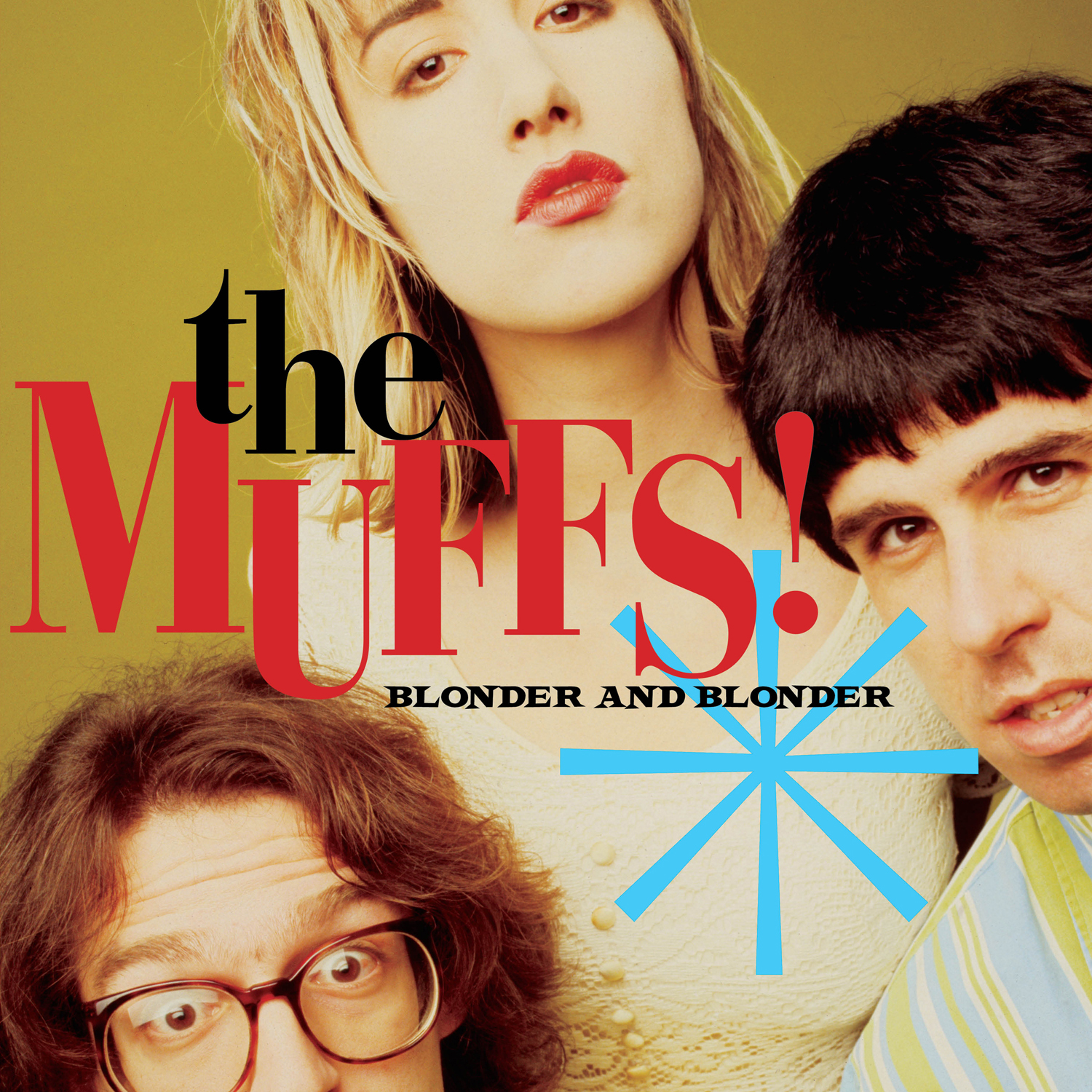
The Muffs’ debut hit the scene in 1993, and was an instant smash. Any fear that they could follow it up successfully was answered when Blonder And Blonder arrived two years later. The Muffs burst onto the California music scene at the beginning of the ’90s, and after a few independent singles and EPs, they were quickly snapped up by Warner Bros Records. Entering the studio with David Katznelson and Rob Cavallo (who would go on the helm records from Green Day, Goo Goo Dolls, and more), The Muffs roared from speakers across the country in 1993. According to renowned critic Jim DeRogatis, “You’d have to reach all the way back to Blondie’s Plastic Letters to find punkish power pop this endearing.
If you’re curious why so many sing the praises of the late, great Kim Shattuck, “Blonder And Blonder” is the perfect place to start. The Muffs’ second album sees the screamer-guitarist joined by bassist Ronnie Barnett and drummer Roy McDonald, and the trio bash out these 14 Shattuck originals with spirit and skill. Green Day producer Rob Cavallo knows more than a little about punk-pop, and together with the Los Angeles band helms this collection, whose catchy hooks, droll lyrics and instrumental fury shine on such highlights as “Agony,” “Oh Nina” and single “Sad Tomorrow.” The Reprise set turns 25 this weekend, and any alternative rock fan will have more fun with “Blonder And Blonder”.
The band propelled by Shattuck’s material to even greater heights, and Blonder became the band’s biggest selling album. Omnivore Recordings is proud to present this ’90s milestone on CD with 7 bonus tracks (2 U.K. B-sides, and 5 previously unissued Shattuck demos) and on LP for the first time in over two decades.
Like 2015’s reissue ofThe Muffs, debut album the full-color packaging includes photos, drawings, memorabilia, and essays from Barnett and McDonald, as well as, track-by-track commentary from Shattuck. 21 years later, Blonder And Blonder still sounds as vital and visceral as it did upon its original release. Face it, you to have this record in your collection.
Reuniting and issuing their first new release in a decade last year, garnering critical lauds and playing to enthusiastic crowds, it’s time to go back to where it all started. It’s time for The Muffs!
Blind Faith, live set from Hyde Park, London 1969 was THE year of the festival – a stellar year by which all others have been judged. Across North America and the UK there seemed to be a festival happening somewhere, almost every weekend of the summer. The Blind Faith concert was the first of four concerts scheduled for 1969. Opening the show was the Third Ear Band along with Richie Havens, Donovan and the Edgar Broughton Band (no UK festival seemed to be complete without them). The stage they all played on was somewhat makeshift in appearance and was only about a meter or so high.
Blind Faith’s debut was the most hotly anticipated gig of its time, and took place in front of 100,000 people on a sweltering Saturday afternoon. Although they were nervous and under-prepared, they turned in a frequently superb set spanning originals and covers. London Calling presents the incredible performance at Hyde Park, London on June 7th 1969, broadcast by BBC2. It is presented in its entirety here, together with background notes and rare images.
It was on Saturday 7th June that Blind Faith headlined the free concert that was organized by Blackhill Enterprises. Peter Jenner and Andrew King who were stalwarts of the London underground scene, having helped start the UFO club in Tottenham Court Road, ran Blackhill. Jenner had been a lecturer at the London school of Economics, and Blackhill ran their five-person business out of a converted shop just off Ladbroke Grove. Blackhill were principally agents, and it was their acts that gained most from the Hyde Park concerts, which gave them a higher profile than they would have expected from gigging around Britain laying low-key gigs. During 1968, when Blackhill first approached the UK’s Ministry of Public Building and Works about the possibility of staging concerts in Hyde Park they were met with a resounding ‘no’. However, their persistence paid off, and on 29th June 1968 Pink Floyd headlined, supported by Tyrannosaurus Rex, Jethro Tull and Roy Harper. Among the crowd were Mick Jagger and his girlfriend Marianne Faithfull. Having watched Blind Faith perform, soaked in the vibe and seen how many people there were watching, Mick decided that a free concert in Hyde Park to promote The Rolling Stones’ new single and get them back in the public eye would be just the thing for the band that had been through something of a low period. As a nod to Mick, who stood watching from the side stage, Blind Faith played ‘Under My Thumb’.
Blind Faith took to the stage about 5pm and began their set with ‘Well All Right’ before going on to perform most of their debut album. It was a more bluesy set, closer to the kind of thingsTraffic had been playing than toCream. According to Ginger Baker, “Eric had been doing amazing stuff, but at Hyde Park I kept on wondering when he was going to start playing. ” According to Clapton, “I came off stage shaking like a leaf because I felt that, once again, I’d let people down.”
Blind Faith’s first show, a free one in Hyde Park! , Steve Winwood, Eric Clapton, Ginger Baker and Ric Grech.
Tracklisting: SIDE ONE:
1. Intro 1:25,2. Well Alright 6:27, 3. Sea Of Joy 6:13, 4. Under My Thumb 6:06, 5. Can’t Find My Way Home 6:13 SIDE TWO:
1. I’d Rather See You Sleeping In The Ground 4:41, 2. Do What You Like 5:30, 3. Presence Of The Lord 6:28, 4. Means To An End 4:21, 5. Had To Cry Today 6:56, 6. Outro 0:43
Marillion released its studio album debut, “Script for a Jester’s Tear”, in March 1983. The record was certified platinum in the band’s native U.K. where it reached number seven on the Albums Chart and spawned two Top 40 singles: “He Knows You Know” (#35) and “Garden Party” (#16).
Rhino Records will shine a spotlight on this neo-progressive favourite with a 4LP/CD/Blu-ray set of “Script for a Jester’s Tear” Deluxe Edition.
Originally produced by Nick Tauber, “Script for a Jester’s Tear” is the only Marillion album to feature Fish (vocals), Steve Rothery (guitar), Pete Trewavas (bass), Mark Kelly (keyboards) and Mick Pointer (drums).
The new five-piece line-up of Marillion wasted no time in getting down to business, and kicked off an intense 10-week rehearsal at Leyland Farm Studios in Buckinghamshire before playing their debut gig, at Bicester’s Red Lion Pub on March 14th, 1981, in front of an audience of 65. In July, with four months of serious gigging under their belt, they entered Roxon Studios in Oxfordshire, with local musician Les Payne producing, where they recorded a new demo featuring the more recognisably titled “He Knows YouKnow, Garden Party” and “Charting The Single”, which they’d sell at gigs for the princely sum of £1.25.
With such an imposing frontman as Fish, Marillion were slowly carving out a reputation as a band you needed to take notice of. At almost six-feet-five he struck a dominant figure, whose choice of face paint, initially to mask his own on-stage insecurities, helped make Marillion stand out yet further, and the band opted for stage effects and early costumes to strengthen their identity.
The band finally got the nod from the BBC to record a session for The Friday Rock Show, which at the time was about the only outlet for rock music on national radio and television. It was recorded with producer Tony Wilson at the BBC’s Maida Vale Studios on January 29th, 1982.”
“The Friday Rock Show session was a real boost for us,” states Kelly. “I think that came about because we had opened for a band called Spider. Spider’s manager was a woman called Maggi Farran, and she was married to Tony Wilson, who was there at that gig and invited us to come and do some songs. That must have tripled or quadrupled our audience. They recorded two sets of demos for EMI in July and September, the latter seeing them hooked up with, ironically, former Genesis producer David Hitchcock. It was also Hitchcock with whom they would record their debut single, “Market Square Heroes”, at Park Gate Studios in Battle, East Sussex that September. Which is somewhat ironic, seeing as it had been decided that the B-side of the 12-inch version would be the 17-minute epic “Grendel” – a song many had quickly pointed out bore a striking resemblance to Genesis’ 1972 epic Supper’s Ready,
Marillion’s first single was released on October 25th, 1982. It captured both sides of the band’s character, with the catchy, up-tempo “Market Square Heroes” and “Three Boats Down From The Candy” showing a more immediate side to the band, the lengthy take of “Grendel” a startlingly mature take on classic prog. It was housed in stunning artwork from a young artist called Mark Wilkinson, whose jester character went a long way to establishing a visual identity for Marillion, which would last for Fish’s entire tenure with the band.
Recorded between December 1982 and February 1983, debut album “Script For A Jester’s Tear” was released on March 14th. Two weeks later it was nestled at number seven in the UK album chart, a phenomenal result for a progressive rock band in the early 80s. In the space of three years, Marillion had gone from a local pub band to – which they would do at the end of the Script UK tour – headlining two nights at Hammersmith Odeon.
The Deluxe Edition opens with a newly remixed stereo version of Script for a Jester’s Tear by Andy Bradfield and Avril Mackintosh. In addition, the collection also features new stereo remixes for the b-side “Charting The Single” that was released in January 1982, as well as the “Market Square Heroes” EP that followed in October that same year.
It also include the debut of a previously unreleased concert that captures Marillion performing in London at the Marquee Club on December 29th, 1982. Recorded a few months before “Script for a Jester’s Tear” was released, the show features live versions of all six album tracks: “He Knows You Know,” “The Web,” “Garden Party,” “Chelsea Monday,” “Forgotten Sons” and the title track.
The concert also features performances of non-album tracks like “Three Boats Down From The Candy” and the 19-minute epic “Grendel” from the “Market Square Heroes” EP. A live version of “Margaret” is also included. A different version of that song appeared in June 1983 as the b-side for the “Garden Party” single.
The Blu-ray features 96k/24-bit versions of the new stereo remixes for “Script for a Jester’s Tear” and the “Market Square Heroes” EP, as well as the Live at the Marquee Club concert. The disc also includes a 5.1 Surround Remix of Script for a Jester’s Tear. Rounding out the collection is a new documentary with band interviews that covers the 1979 formation of Marillion in Aylesbury through the release of “Script for a Jester’s Tear” in 1983.
Marillion’s line-up remained solid for a further five years. They released three more studio albums, hitting the top spot with “Misplaced Childhood” in 1985 (they also reached number two in the UK Top 40 with Kayleigh) and following it with the number two album “Clutching At Straws” in 1987.
Legendary drummer, Mick Fleetwood enlisted an all-star cast for a one-of-a-kind concert honouring the early years of Fleetwood Mac and its founder, Peter Green which was held on 25th February 2020 at the London, Palladium.
The bill included Billy Gibbons, David Gilmour, Jonny Lang, Andy Fairweather Low, John Mayall, Christine McVie, Zak Starkey, Steven Tyler, Bill Wyman, Noel Gallagher, Pete Townshend, Neil Finn, Kirk Hammett and many more. Legendary producer Glyn Johns joined as the executive sound producer and the house band featured Fleetwood himself along with Andy Fairweather Low, Dave Bronze and Ricky Peterson.
Fleetwood, who curated the list of artists performing, said: “The concert is a celebration of those early blues days where we all began, and it’s important to recognize the profound impact Peter and the early Fleetwood Mac had on the world of music.
Peter was my greatest mentor and it gives me such joy to pay tribute to his incredible talent. I am honoured to be sharing the stage with some of the many artists Peter has inspired over the years and who share my great respect for this remarkable musician. ‘Then Play On’…”
When John Cale left the influential iconic The Velvet Underground it was mostly because of his tense relationship with the late great legend Lou Reed. But in 1990 they both teamed up again to honour their inspirator Andy Warhol, with the masterly album ‘Songs For Drella‘, released over 30 years ago, on 11th April 1990. Warhol had died three years before, in 1987. Drella was his nickname, a contraction of Dracula and Cinderella.
Lou Reed & John Cale forgot about their intolerable differences that drove The Velvet Underground apart back in 1968. Well they did as long as it toke to create this exceeding album in honor of versatile artist Andy Warhol who died in 1987. The fact that Reed & Cale became musical friends again, at least temporarily, proves that Warhol must have had an enormous impact on the giant duo when they picked up an instrument for the first time.
Even more than we knew. In return the pair created this beauty of an album. The warm and charismatic voices of both Reed and Cale are upfront all the time. They tell stories about their relationship with Warhol, they sing to celebrate their inspirer, they play intimate in respect for an eccentric and stirring mind. Even after his death Warhol pushed the legendary duo to produce an especial work of art.
This memorable record shows, once again, how brilliant these two splendiferous artists could be together. Thanks to their huge songwriting skills and imposing voices they made out of each of the 15 songs a compelling experience. A masterpiece indeed!.
Rolling Stone magazine wrote: “Both now nearing fifty, Reed and Cale are the survivors Warhol wasn’t fated to become. In popular music, only bluesmen and country greats have managed the maturity these two display. Fashioning a litany out of Warhol’s off-kilter pantheon Edie Sedgwick, Billy Name and Valerie Solanis (whose attempted murder of Warhol prefigured the shooting of John Lennon) “Drella” memorializes an era the way narrative folk music generally has done. Reed and Cale add rare intelligence to their nostalgia, but it’s on a more soulful level that Drella finally hits. The subtle values of modesty, hesitance and loving observation dignify this sweet and knowing tribute to these men’s mentor, prod — and friend.”
Top Tracks: “Nobody But You / Open House / Style It Takes / Small Town”
The Sonics were an American garage rock band from Tacoma, Washington that formed in 1960 by teen-aged guitarist Larry Parypa, with the encouragement of his music-loving parents. The earliest lineup included Parypa, drummer Mitch Jaber, and guitarist Stuart Turner; Parypa’s brother Jerry briefly played saxophone, and their mother occasionally filled in on bass at rehearsals. In 1961, Parypa’s older brother Andy became the bass player, and Tony Mabin took over as their new saxophone player.Their aggressive, hard-edged sound has been a major influence on punk and garage music worldwide, and they have been named as inspirations to Nirvana, Bruce Springsteen, the Fall, and other major artists. Rich Koch (who had previously played with the Wailers) joined as lead guitarist, and Marilyn Lodge became their first singer, the band having been an instrumental combo up to that point. A new drummer, Bill Dean, replaced Jaber. Koch and Lodge left the band in 1963. Local star Ray Michelsen became the band’s singer after having sung with several other popular bands on the local scene. Larry began looking for a drummer to replace Dean, who he felt was uncommitted to the band, and found Bob Bennett playing in a band called the Searchers, with keyboardist Gerry Roslie and sax player Rob Lind. Ray Michelsen was looking to leave the band, so the Parypas hired Bennett, Roslie, and Lind, and let their previous saxophonist Mabin go. The well-known lineup was in place, but the Sonics’ career did not begin in earnest until 1964, when Gerry Roslie started singing lead vocals. With Roslie as lead singer, the band started playing gigs
The Sonics are often-cited contenders for the title of “the first punk band,” due to their wild and ground-breaking style. The band also have a clearly marked influence on American punk bands such as the Cramps and the Dead Boys in their brash, menacing style and attitude, and on 1980s grunge bands (who originated in the same area), especially Mudhoney, who adopted some of the darker themes from Sonics music, and a lot of their techniques on over-driving and distorting electric guitars. Their reach stretched beyond the U.S.; influential Manchester post-punk group The Fall covered “Strychnine” during a session for the late John Peel’s programme in 1993 and they repeatedly performed the song live around this time. As well as all these, there have been whole generations of garage rock revival bands (such as The Thingz) who make no bones of plagiarizing The Sonics and their ilk. The early 21st century saw the arrival of another garage rock band that lists the Sonics as a major influence, Eagles of Death Metal. New Zealand power-punk band Cut Off Your Hands have covered “The Witch” several times in concert.
Kurt Cobain of Nirvana said in an interview with Nardwuar the Human Serviette on CITR-FM, discussing drum sounds,”I, I have to admit... The Sonics recorded very, very cheaply on a two track you know, and they just used one microphone over the drums, and they got the most amazing drum sound I’ve ever heard. Still to this day, it’s still my favorite drum sound. It sounds like he’s hitting harder than anyone I’ve ever known.” . The White Stripes named The Sonics as one of the bands that influenced them the most, calling them “the epitome of ’60s punk” and claiming they were “harder than the Kinks, and punk long before punk”
The band performed several early rock standards such as “Louie, Louie”, and “Skinny Minnie” as well as original compositions like “Strychnine”, “Psycho”, and “The Witch”. Their catalogue is generally based around simple chord progressions, often performed with a speed and tonal aggression that was novel for the time, making the band a notable influence on later punk rock bands.
Their first single was “The Witch” (with Little Richard’s “Keep a-Knockin'” as the B-side) in November 1964. The record was immensely popular with local kids, and went on to become the biggest selling local single in the history of the Northwest despite its radio airplay being restricted because of its bizarre subject matter.
Early in 1965 Etiquette released the Sonics‘ debut “Here Are The Sonics”, which was produced at Audio Recording in Seattle, Washington with famed Pacific Northwest recording engineer Kearney Barton. It was recorded on a two-track tape recorder, with only one microphone to pick up the entire drum kit. It was here that they began to pioneer some of their infamously reckless recording techniques. A second album, “Boom”, followed in February 1966. During the recording, the Sonics ripped the soundproofing off the walls at the country and western-oriented Wiley/Griffith studio in Tacoma to “get a live-er sound.” The covers of both albums feature the moody photography of Jini Dellaccio.
Their heyday began to come to a close when the band transferred to Jerden Records in late 1966, and headed to Hollywood to record the poorly selling album “Introducing the Sonics” with Larry Levine at Gold Star Studios. Although it has been rumoured that Jerden executives pushed the Sonics into a more polished sound, the band itself had decided to follow new influences in modern music, resulting in songs that were quite different from their raucously early recordings. The band, however, was not satisfied with the material on Introducing the Sonics, calling the cleaner, slicker recordings “the worst garbage.”
Here Are The Sonics!!
At the time of its release, “Here Are The Sonics” made very little noise of the group’s home state of Washington – but within said home state, the Sonics themselves were making enough noise to blow down every brick wall between Tacoma and Torrance, California. Seldom has a group ever been better named. The youthful aggression in their music, coupled with singer Gerry Roslie’s ‘80 razorblades-a-day’ vocal attack and a selection of overwhelmingly brilliant riffs that underpinned some of the most wildly recorded music ever to be committed to tape, should have made the Sonics one of the biggest groups the world has ever known or heard. Instead they went on to become celebrated by generation after generation of collectors, and other young people with an urge to rock ‘n’ roll.
The overwhelming importance of tracks like “The Witch”, “Psycho” and “Boss Hoss” has provided a template for countless groups who’ve come up in their wake, and who have achieved a level of commercial success that they could never have achieved without the inspiration (direct or spiritual) of the Sonics – fellow Pacific North-Westerners Kurt Cobain’s Nirvana and their successor the Foo Fighters being, perhaps, the most obvious examples.
Here Are The Sonics, exactly as seen and heard 42 years ago on its original Etiquette pressing – albeit in a smaller-sized package, of course! Its tingling mix of group originals and sonic – in every sense of the word! – shreddings of Hall Of Fame rock’n’roll classics (including their recently-used-in-a-car-ad decimation of Richard Berry’s Have Love, Will Travel) remains the musical equivalent of sticking your finger in a live light bulb socket for 25 minutes. Its contents, like all good rock‘n’roll, will never date or die.
Boom
We follow or recent reissue of “Here Are The Sonics!” with a 180g black vinyl replica of “Boom”, the band’s second album. Originally released in 1966 on Etiquette Records in wonderful mono, “Boom” still does much more than merely deliver on the promise of their debut. Few records have ever packed as much of a musical punch from start to finish, offering a representation of what the Sonics must have sounded like at the peak of their powers. Recorded in the most glorious no-fi you could ever wish for, and with anthemic originals such as ‘Cinderella’ and ‘He’s Waitin’’ vying for attention with what is possibly the most violent version of ‘Louie Louie’ there will ever be, “Boom” is an album that has always justified the esteem in which it is held by collectors around the globe. All the modern bumph like barcodes and whatnot is on a disposable sticker, leaving your copy of “Boom” as original as possible.
Now that enough time has elapsed for listeners’ heart rates to come back to normal, we are more than merely pleased to add the Sonics second album – the entirely appropriately entitled “Boom” – to our ever expanding range of Hip Pocket titles.
Most bands down the years have tended to work off much of their initial youthful aggression on their debut album. Come album two, an amount of mellow has likely as not crept into the proceedings, along with an increased musical professionalism. Not so the Sonics. Not content with being able to play in their hometown of Seattle and to be heard in Sacramento without the aid of amplification, they upped the pressure and the volume to an extent where they could probably be heard south of San Diego without the benefit of a prevailing wind.
“Boom” still does much more than merely deliver on the promise of their first Etiquette album, “Here Are The Sonics”. Few records have ever packed as much of a musical punch from start to finish. Even more so than their first album, it offers a representation of what the Sonics must have sounded like ‘in the dance’ at the peak of their considerable powers.
Here it is, issued in its original format for the first time on a UK CD, to make the Hip Pocket series even hipper…
Psycho-sonic
Back in the mid-1960s, the legendary Sonics took rock’n’roll by the scruff of the neck and thrashed it to within an inch of its sorry life, leaving a legacy of some of the most savage, visceral recordings ever made. Compiling their no-holds-barred Etiquette sessions, “Psycho-Sonic” is the ultimate Sonics anthology.
One of the best selling Big Beat releases of recent years has been Psycho-sonic , a comprehensive collection of all the sides the much-feted kings of garage rock recorded for the Etiquette label in 1964/65. Only the most cloistered of music fans would be unaware of the mighty Tacoma combo’s influence and importance, now stronger than ever thanks to young bucks such as the White Stripes, Hives, Vines etc constantly dropping the band’s name. With access to first generation tapes uncovered by Big Beat’s ongoing celebration of the catalogue of Sonics’ mentors, the Wailers, we gave this compilation a spring clean back in 2003, this month we have given the cover a refresh.
Psycho-sonic features many tracks presented in ear-blistering true stereo remixes, taken from the actual tape the band recorded onto, and mastered with Big Beat’s customarily sensitive mastering.
The set’s sequencing and flow deliver an entertaining and invigorating programme from start to finish. Track for track, the first half-hour of this disc is the wildest, most visceral rock’n’roll listen you’re ever likely to have. Also included is an in-depth overview of the group’s career by reissue producer Alec Palao, based on, first-hand interviews with the band and their associates, including the legendary Sonics’ lead singer/ songwriter/ screamer Jerry Roslie. The package also includes a feast of unseen outtakes from the band’s famed photo sessions – photographer Jini Dellaccio granted us full access to her incredible archive of Sonics pictures. Plus the usual memorabilia and label shots.
The original band fell apart between 1966 and 1968, with members leaving to attend university or join other bands; saxophonist Rob Lind became a fighter pilot in the Vietnam War. Eventually, all of the original members left, with new members continuing on with the name Sonics (later ‘Jim Brady and the Sonics’) until 1980, although it was a completely different band, at times even incorporating string and horn sections.
Jeff Buckley is my musical icon for a number of different reasons. Not only is he, in my humble opinion, one of the most arresting and transcendent voices to have ruled the planet – still influencing singers and making its mark some many years after his death.
At a time (1993) when Grunge and Rock were topping the charts and inspiring legions of new bands: embracing something like Jeff Buckley’s “Live at Sin-é” might seem like an insane notion. You cannot deny the pleasures and beauty that lie within.
“He moved to New York City in February 1990, but found few opportunities to work as a musician. He was introduced to Qawwali, the Sufi devotional music of India and Pakistan, and to Nusrat Fateh Ali Khan, one of its best-known singers. Buckley was an impassioned fan of Khan, and during what he called his “cafe days,” he often covered Khan’s songs. In January 1996, he interviewed Khan for Interview and wrote liner notes for Khan’s Supreme Collection, Vol. 1 compilation. Buckley also became interested in blues musician Robert Johnson and hardcore punk band Bad Brains during this time. Buckley moved back to Los Angeles in September when his father’s former manager, Herb Cohen, offered to help him record his first demo of original songs. Buckley completed Babylon Dungeon Sessions, a four-song cassette that included the songs “Eternal Life“, “Unforgiven” (later titled “Last Goodbye“), “Strawberry Street” (a different version of which appears on the “Grace” Legacy Edition), and punk screamer “Radio”.[40] Cohen and Buckley hoped to attract attention from the music industry with the demo tape.
Buckley flew back to New York early the following year to make his public singing debut at a tribute concert for his father called “Greetings from Tim Buckley”. The event, produced by show business veteran Hal Willner, was held at St. Ann’s Church in Brooklyn on April 26th, 1991. Buckley rejected the idea of the concert as a springboard to his career, instead citing personal reasons regarding his decision to sing at the tribute. With accompaniment by experimental rock guitarist Gary Lucas, Buckley performed “I Never Asked To Be Your Mountain”, a song Tim Buckley wrote about an infant Jeff Buckley and his mother. Buckley returned to the stage to play “Sefronia – The King’s Chain”, “Phantasmagoria in Two”, and concluded the concert with “Once I Was” performed acoustically with an impromptu a cappella ending, due to a snapped guitar string. Willner, the show’s organizer, later recalled that Buckley’s set closer made a strong impression. Buckley’s performance at the concert was counter-intuitive to his desire to distance himself musically from his father. Buckley later explained his reasoning to Rolling Stone: “It wasn’t my work, it wasn’t my life. But it bothered me that I hadn’t been to his funeral, that I’d never been able to tell him anything. I used that show to pay my last respects.” The concert proved to be his first step into the music industry that had eluded him for years.
On subsequent trips to New York in mid-1991, Buckley began co-writing with Gary Lucas resulting in the songs “Grace” and “Mojo Pin“, and by late 1991 he began performing with Lucas’ band Gods and Monsters around New York City. After being offered a development deal as a member of Gods and Monsters at Imago Records, Buckley moved back to New York to the Lower East Side at the end of 1991. The day after Gods and Monsters officially debuted in March 1992, Buckley then decided to leave the band”.
Sin-é was, and sadly no longer is, an Irish coffeehouse in New York’s East Village. Just look at the cover for Live at Sin-é and you can see how ‘cosy’ and small the place is. It is, in this rare and ultra-commercial time, a throwback to simpler, honest times – an independent coffee house that is not subjected to brand marketing and identikit shop banners – a million chains of Starbucks on your doorstep. It is one of my lasting regrets I never got to step into Sin-é and witnessing the magic go down. Back in 1993, just before Buckley signed his record deal, it was host to some modestly successful music nights. You had some great talents walk through the door but none like Buckley: as though medium and location were married in harmony the first time he opened his mouth.
You can practically hear spoons drop and coffee being made; little throat clears and people applauding – so intimate and homely. For that reason, it feels like you are right in the mix with Buckley: sitting with him as he unveils performances of immense beauty.
Aside from the sparse and cloistered space – the confined and raw setting – there is oceans of atmosphere, sound and reflection. Just listen to these little conversational snippets and Buckley’s charming and quirky personality comes through.
The album is not a set of ramped-up album songs with stilted conversation in-between. You do not get a band awkwardly shuffling between numbers and re-tuning. There is a real person speaking directly to the audience: they, in turn, are in Buckley’s palms and at his mercy. The music is not your typical live affair. Most live albums (the average ones anyway) have the classics and they are performed to a typically assured level – enough to please the punters and get the crowds singing. Throughout Live at Sin-é there are songs being performed like never before. Buckley covers – as you will see in some selections later – such a wide range of songs from so many different eras. Many of the patrons that saw Buckley perform would not have heard many of these songs played. Even tracks that would appear on “Grace” – the title track and Last Goodbye – were in their early stages and being experimented with. It was a young man starting to find his feet and taking his first steps. Ragged, loose and rough around the edges: just a human, guitar and amp – surrounded a choice few New York gig-goers. Even though it was released in 1993 it translates incredibly well and sounds as divine and seductive as the day it was released.
Before I get down to the finest double album ever I want to look at my favourite: Jeff Buckley’s New York-based gem, Live at Sin-é. In 1993, Columbia Records – who signed Jeff before he made Grace – released a four-track E.P. that showcased Buckley’s interpretative talents and singular talent. The label decided to release a two-disc version of two separate recordings at the coffeehouse – taped over two afternoons in 1993. It is not just the cover versions that struck a chord. Included in the covers were versions of tracks by Billie Holiday (Strange Fruit) and Bob Dylan (If You See Her, Say Hello and Just Like a Woman). In the intimate surroundings, the young Buckley was at his most comfortable and natural. Limos were lining up the block to see the young master – record executives fighting to get that wet signature on their contracts. Live at Sin-é finds Buckley interacting with the small crowd – ad-libbing and cracking jokes and shooting the breeze- armed only with his trusty Telecaster. Soon-to-be-released songs like Grace and Last Goodbye (titled Unforgiven (Last Goodbye) on the live album) were taking shape: a snapshot of someone still finding their true voice but perfectly capable of seducing when portraying someone else’s.
As live albums go, it has to be right up there – indispensable for every much fan out there. Buckley was keen to never repeat himself as a performed – no two renditions of the same song – and you can hear that here. He is always thinking and working as the song prevails; taking it in a new direction and keeping the audience alert. The sign of a true master is one who can make old songs sound new and reborn: something you will see