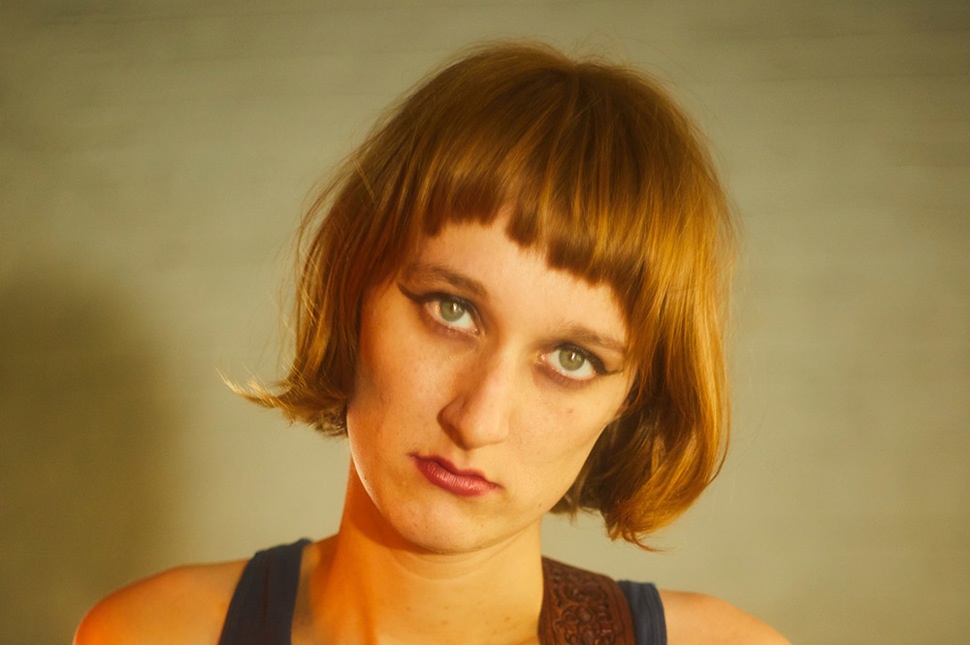
Carla Geneve released her debut self-titled EP on Friday 7th June via Dot Dash / Remote Control Records.
Carla explains the meaning behind latest single, ‘Yesterday’s Clothes’ – “Yesterday’s Clothes is about falling out of love with someone and feeling guilty about it. I wrote it at time when I was burning the candle at both ends and had no energy left to try to deal with the end of a relationship. Most of the words came when I was doing a long drive back from some gig or another in regional Western Australia. I’d been up all night and had to be somewhere the next day, so I hadn’t had a shower or changed clothes. When you’re on your own driving for hours and hours it’s hard to avoid thinking about stuff that you don’t want to, so I guess I wrote the song to try to come to terms with my thoughts and situation.”
With a captivating live show and relatable lyricism, Carla Geneve burst onto the WA scene in 2017. After being hailed by Pilerats as one of their ’18 Artists to Watch in 2018’, her debut single ‘Greg’s Discount Chemist’ was released to overwhelming support including love from radio stations triple j, triple j Unearthed . The single was the #1 most played track in Perth community radio station RTRFM.
After releasing her second single ‘Listening’ and garnering praise for her showcases at BIGSOUND, Carla Geneve has landed back-to-back grand prizes at the coveted West Australian Music Song of the Year awards. the Albany-born country rock artist took out the top gong with her song 2001, which was inspired by the Stanley Kubrick classic film 2001: A Space Odyssey.
Geneve also won the Rock category with 2001 and the Folk category with Things Change. Her album was released June 7th, 2019.
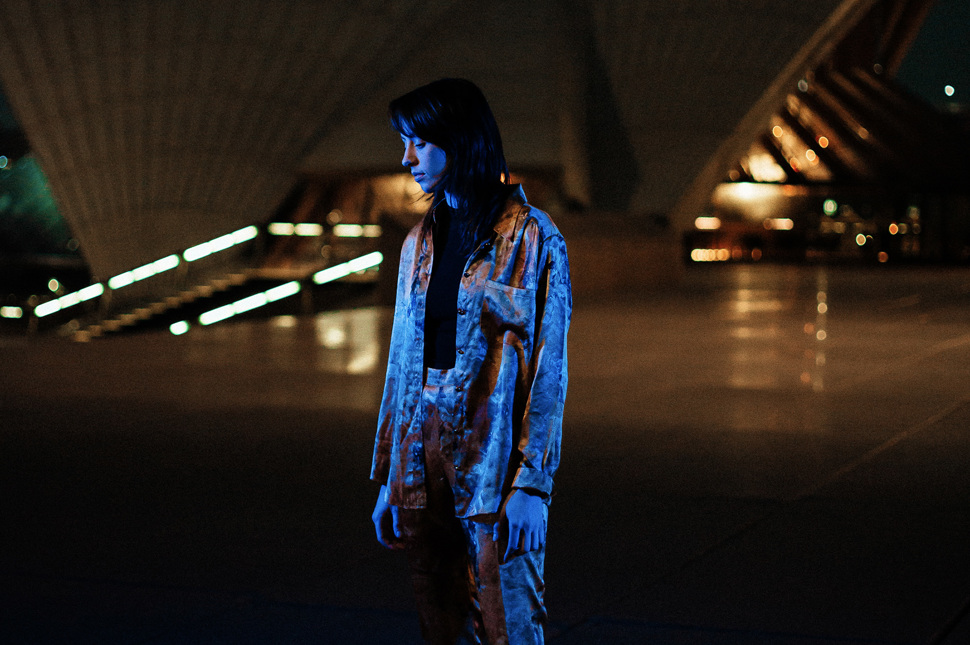
Australian folk-pop singer and producer Gordi is set to play her official international album launch show for her latest record, “Our Two Skins”, released Friday 26th June. Gordi Performed a full set with her four-piece band, this special one-off event will be Gordi’s debut Opera House performance,
Gordi launched her new album “Our Two Skins” to stunning effect across the weekend, performing in the picturesque surrounds of Sydney Opera House’s Joan Sutherland Theatre.
The special launch show featured Gordi performing to an empty room at the iconic venue as part of its From Our House to Yours digital program, which has seen fans gifted exclusive content from the venue’s archives (including this performance from Empire Of The Sun). The album has received critical acclaim and many blogs have it as their Album Of The Week, describing it as “a ten-song story of love, acceptance and self-discovery”.
Setlist:
Introduction 00:00 Aeroplane Bathrooms 01:36 Volcanic 07:57 On My Side 11:25 Can We Work It Out 16:16 Extraordinary Life 20:56 Heaven I Know 26:16 Sandwiches 32:51 Unready 37:47
Our Two Skins chronicles the intense and impossible time Gordi spent renegotiating who she is and how she fits in the world. The writing of the album began after a nervous breakdown while pacing around an Etihad flight from Australia to Europe in late 2017. Sophie Payten, known professionally as Gordi, had finished exams to earn a medical degree and after trading her “nice, safe relationship” for a new one, she began coming to terms with a new truth in her identity. That identity struggle and her new relationship, which played out against the backdrop of the marriage equality plebiscite in Australia. Gordi’s versatility as a musician combined with her open and disarming disposition have helped establish her as an in-demand collaborator. Payten has collaborated with artists including Bon Iver, Alex Somers, Julien Baker, The Tallest Man On Earth, Asgeir, Fleet Foxes and many more, helping shape her artistic voice.
Album single Unready’s music video also featureda very special cameo appearance from Family Guy and The Marvelous Mrs Maisel’s Alex Borstein.
Gordi is set to embark on an Aussie tour in October, ‘Our Two Skins’ out June 26th Jagjaguwar Recordings.
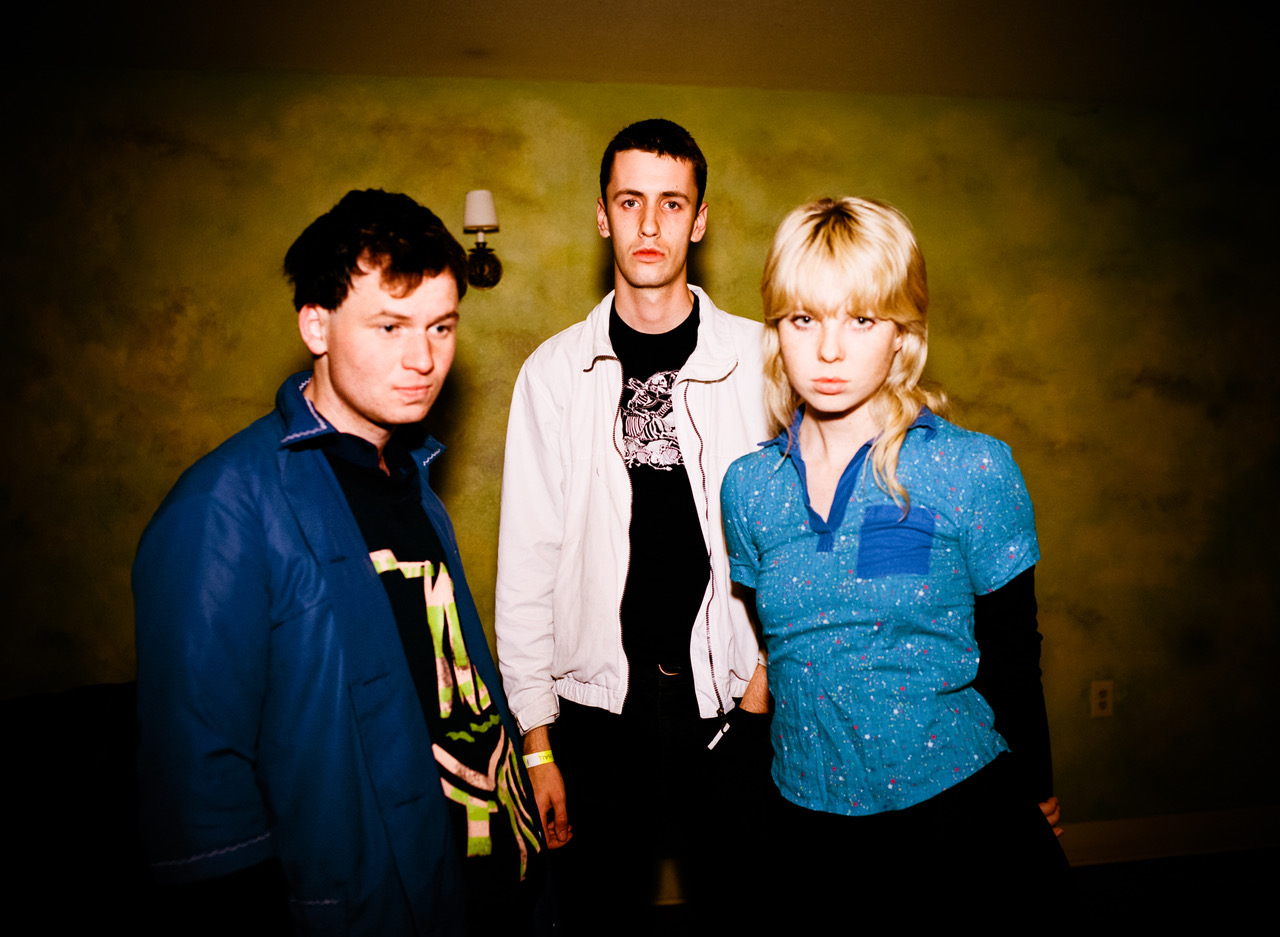
The Goon Sax have something natural, unforced. Formed while still in high school, their debut album drifted from Jonathan Richman to The Go-Betweens via Beat Happening, while never truly replicating those influences. Charting a nexus of ideas that is truly their own, the band’s debut album was a sleeper hit in the global indie pop community, a record passed from friend to friend.
2018’s ‘We’re Not Talking’ found The Goon Sax maturing a little, developing in confidence and ambition. Since then the group have toured far and wide, travelling a long way from their native Brisbane. Heading to the UK, The Goon Sax are ready to unleash a new video for album cut ‘Strange Light’.
Shot by the band’s own Riley Jones the grainy lo-fi quality has a real immediacy to it, and it perfectly suits the music.
Because they’re the greatest teen band in the world, or at least they were when they dropped 2016’s jaw-dropping Up to Anything and 2018’s refined We’re Not Talking, the former a catalogue of awkwardness from a world before incels weaponized it, and the latter an astoundingly arranged follow-up that matures (castanets! Motown strings!) without dulling out. Now in their 20s, Louis Forster, Riley Jones, and James Harrison— all of whom sing and write — probably know more about love than their parents, which is notable because one of Forster’s sang in the Go-Betweens. But that doesn’t stop them from agonizing over it on the horn-flecked “She Knows,” or for that matter their debut single “Sometimes Accidentally” (“I don’t care about much but one of the things I care about is you”).
Harrison has a knack for nauseated anxiety anthems, but the unusually tense “A Few Times Too Many” duels against his own bassline and loses.
Taken from the album, We’re Not Talking (out September 14th on LP, CD and digital) via Wichita Recordings and Chapter Music
If you’re nostalgic for infectious twin-guitar licks and Thin Lizzy-style late ’70s rock —whose late singer Phil Lynott is literally tattooed on Sheer Mag vocalist Christina Halladay — Sheer Mag demands and exceeds satisfaction. The Philly five-piece pays homage to traditional rock‘n’roll but with postmodern lyrical concerns that extend to their extracurriculars: Guitarist Kyle Seely started offering guitar lessons last month to raise money for the Philadelphia Community Bail Fund. But Halladay and her soulful vocal range are the stars, toggling between aggressive grunts in the nearly Iron Maiden-reminiscent “Steel Sharpens Steel” and softer, higher-pitched crooning. The rare throwback act who revise history entirely for the better.
2019’s A Distant Call is their most polished and varied production to date, with a significant ‘80s influence compared to past releases, and a wider sonic spectrum than ever: “The Killer” manifests Brian Johnson-era AC/DC, while “Silver Line” maintains a shimmering Pretenders vibe
“Hardly to Blame” by Sheer Mag, from the 2019 album A Distant Call on Wilsun Recording Company.
Like irony-breathing critic-turned-rockers from Blue Öyster Cult to Pet Shop Boys, Elizabeth Nelson writes the kind of lyrics those of us still unturned just want to quote at you all day. “An icepick deep in Trotsky’s back — his last thought is that it’s understandable.” “U put the ‘u’ in ‘cruel and unusual’ / But u typically put urself first.” “He went to Julliard / Which isn’t as easy as it sounds.” “What in the world’s come over me? / Asking for a friend.” “They digitally removed the coke from Neil’s nose, you know / Or so the rumour goes. I don’t know.” “I’m pretty sure ‘Ana Ng’ is the best one / But ‘They’ll Need a Crane’ is certainly a close second.” And these are all from 2019’s A Goddamn Impossible Way of Life alone — their seven-year catalogue keeps going back like this; may it keep going forward too. It may be healthier that Nelson and husband Timothy Bracy head up one of the most confident and muscular garage-rock bands going, threading all that deadpan text deftly through darting-needle melodies that stitch together hurtling hard-rock rave-ups. You’ll forgive them for being critical darlings because they’re also the goddamn life of the party.
The many moods of wishing ‘A Goddamn Impossible Way Of Life’ a happy first birthday. The Paranoid Style released our second full-length LP a year ago today, and few things quite literally have ever been the same. I loved making this record so much and only regret not going with my first instinct for an album title: “More Songs About Grover Norquist And Food.” Thanks to everyone who purchased it. The late-adopters and heretics are forgiven.
If all of the above didn’t sell you, “Turpitude”‘s “I smoke for the following reasons — the Contract With America / I smoke because of Pulp Fiction / I smoke because of Mojo Nixon” can’t, can it?
The Paranoid Style Presents: A Girl’s Gotta Eat. The Paranoid Style is Elizabeth Nelson and Timothy Bracy from The Mendoza Line. On this song they are joined by Ken Flagg (MC Frontalot, Edible Norris) and Bruce Bennett (The A-Bones). All songs are written by Nelson and Bracy except where noted.
Meet Me @ The Altar so lovingly summon the cues of ‘00s-era pop-punk and emo with an emotional intelligence and maturity that the genre’s most visible sad boys never really lived up to. Based in three different states after discovering each other on YouTube, singer Edith Johnson, guitarist and bassist Téa Campbell, and drummer Ada Juarez command their instruments with an attention to detail that belies the fact that they usually only get a day or two to practice in person before shows (and that was pre-pandemic). These three young women of colour create with a care befitting internet friends, paying homage to and carving out their own place in a genre notorious for gatekeeping its sound and sadness from anyone who isn’t a suburban white boy, and hold Paramore as a sacrosanct influence. The challenges of social distancing during the pandemic are real for any band, and must be especially for these three, but they’ve already overcome separation with ease.
Their strong online presence has been attracting fans to their comical personalities, but more importantly to their music. They released an EP titled “Bigger Than Me” in 2019 consisting of intricate guitar parts, fast paced drumming, and emotional lyrics.
The delicious, math-y first 20 seconds of their 2020 single “Garden” grow into one of 2020’s hardest, tenderest punk choruses.
Band Members:
Edith Johnson – Vocalist – GA
Téa Campbell – Guitarist – FL
Ada Juarez – Drummer – NJ
Kaylie Sang – Touring Guitarist
El Xiques – Touring Bassist
Yumi Zouma‘s glorious Polyvinyl Records debut, “Truth or Consequences”, arrived back in March and today we get an official music video for fan-favourite track “Sage“. the video was filmed by Jack Shepherd in 2019, and edited by Austin Roa, in the band’s native New Zealand. Watch below.
Earlier this month, the band shared a remix of their ToC standout, “Cool For A Second,” courtesy of Australian singer/producer Japanese Wallpaper. Look for more exciting news in the coming weeks from the zoomies!!!
“The video for ‘Sage’ was shot by the brilliant Jack Shepherd, who managed to discreetly capture us in-between our various band activities on his Super 8 camera, before passing the footage onto our good friend Austin Roa, to create a beautiful homage to one of our most loved songs from the new record.” – Yumi Zouma
“Sage” is taken from Yumi Zouma’s third album, Truth or Consequences, out now.
The new record from Sufjan Stevens as he returned with new single “America,” the first offering from his upcoming album “The Ascension”.
He’s recently officially released the b-side of “America,” the equally lengthy 10-minute track “My Rajneesh.” It’s another sprawling epic that even goes back and steals from himself, using the flutes from Age Of Adz track “Vesuvius.” It’s another stunning offering from Stevens, maybe even the better of the two tracks and it’s just released as a b-side. Which makes us wonder how good the rest of the songs on The Ascension must be.
Following up his series of drive-in live show performances in Anaheim earlier this month, Andrew McMahon in the Wilderness has returned with new single “Get On My Wave.”
The tune first debuted at one of McMahon’s live drive-in shows in Orange County. McMahon later tweeted that the tune would be available today.
In his online comments about “Get On My Wave,” McMahon says, “I wrote and produced ‘Get On My Wave’ with Kyle “King Tuff” Thomas the day we met last summer.” McMahon tweets “It’s about love, alienation and how in a world where things can look perfect on the surface, there are currents running beneath and tides which push and pull at the shore.” The track is romantic and reminiscent of McMahon’s former projects, Jack’s Mannequin and Something Corporate.
What really stands out about “Get On My Wave” is the driving acoustic guitar and shaker. The piano takes on more of an accent to McMahon’s voice, following the melody line in the chorus and shining through at the beginning of the bridge.
I wrote and produced “Get On My Wave” with Kyle “King Tuff” Thomas the day we met last summer. I’ve struggled with releasing the song during the pandemic because it felt too happy; detached from the tumult of our current world. Lately it’s been making more sense to me. It’s a song about love and alienation and how in a world where things can look perfect on the surface there are always currents running beneath and tides which push and pull at the shore. It’s about finding your people and acknowledging your relationship with those forces outside of your control and saying, “let’s ride this out together.”
As to whether the single will be featured on a new full-length or EP, only time will tell. His last full-length, “Upside Down Flowers” was in 2018.
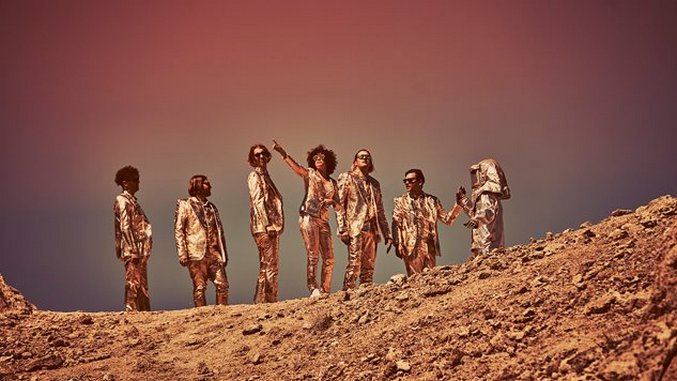
On Arcade Fire’s greatest album (to date), the band creates something of an alternate universe where the suburbs are literally a post-apocalyptic wasteland. Win Butler and pals spotlight their uncanny ability to slip into the sights, sounds and feelings of childhood, melding memories (both happy and unhappy) into a greater portrait of comfort and rebellion in the outer environs. The theme unifies a diverse palette of relentlessly exciting rock ’n’ roll, from the punky “Month of May” to the synth-pop stunner “Sprawl II (Mountains Beyond Mountains).” On the latter, Regine Chassagne belts the eternal credo of tortured teenage artists: “I need the darkness, someone please cut the lights.”
“It has left me restless and endlessly frustrated, thinking about this, about a place that isn’t necessarily just a place but is also a state of mind.”
That’s how Eric Eidelstein begins his personal yet overarching look at Arcade Fire’s monumental 2010 album The Suburbs. The indie rock outfit is responsible for a handful of impeccable releases—from their sweeping 2004 debut Funeral to 2013’s daring Reflektor—but none triggers the imagination quite like The Suburbs, named one of the best albums of the 2010s. That restlessness Eidelstein describes in his 33 1/3 book is what makes The Suburbs such an inescapable and timeless classic. No matter how much bigger the urban/rural divide gets, people will always get stuck places—whether metaphorical or physical. And they’ll always find reasons to be restless.
The Suburbs, their third studio album, turns 10 this Sunday, August. 2nd, and in the years since its release, Arcade Fire have found themselves both at the forefront of the critical conversation and general rock music discourse. For most of the last 20 years, it seemed like they could do no wrong. They released four rock-solid albums, and then, in 2017, they dropped a dud (critically, at least). Even though this writer (and this writer) has found certain aspects of it to be redeemable, Everything Now was panned by everyone from Pitchfork to SPIN (who went so far to say it was a “deeply cynical, joyless album”). The Suburbs has endured throughout these conversations, perhaps because it cleanly offers social criticism and satire without cynicism. Everything Now attempts grand critique of culture in the same way The Suburbs does, but only the latter really pulls it off. Arcade Fire take more chances on this ambitious concept album, but the payoff is enormous.
Anyone who has lived somewhere small will understand what The Suburbs is getting at. For frontman Win Butler and his brother Will, this album was inspired by their upbringing in The Woodlands, Texas, a suburb outside Houston. I grew up in a small sweaty town in Alabama, not some cookie-cutter community lingering in the shadow of Chicago or Orlando or New York, but I still understand American mundanity and what it feels like to be trapped. This Arcade Fire album approaches that feeling more than just a sketch of a certain kind of place. “The Suburbs” could be anywhere. As Eidlestein also wrote, “I want you to think of the suburbs, whatever they may mean for you.” And as Win himself said, the album is “Neither a love letter to, nor an indictment of, the suburbs – it’s a letter from the suburbs.” The Suburbs continues to outlast other concept albums from this time period because it can be about anywhere. There are certain moments on The Suburbs that capture that aforementioned restlessness. Some sound more like freedom. And others seem to reflect American culture on a larger scale. One does all three, and it’s therefore the high point of the album. Régine Chassagne takes the spotlight on the massive, disco-inspired second “Sprawl”—“Sprawl II (Mountains Beyond Mountains)”—and, like a great coming-of-age film, it somehow encapsulates everything about growing up, chasing dreams and the ache so many of us felt when we imagined a life somewhere beyond our seemingly small worlds. “These days, my life, I feel it has no purpose / But late at night the feelings swim to the surface,” Chassagne sings. “’Cause on the suburbs the city lights shine / They’re calling at me, come and find your kind.” It’s an invitation to make good on those dreams and aches.
Arcade Fire are fond of creating a specific atmosphere or universe with each record—even if that landscape is one already familiar to us. Other key tracks include “The Suburbs” itself, which introduces us to the metaphorical ‘Burbs where the next hour of music will take place. “The Suburbs,” which attempts to tear down some of the utopian-like notions about suburban communities, is the project’s thesis statement, one that addresses themes like uniformity and toxicity in Western culture that they had only touched on in previous albums. The next song, “Ready to Start,” is a fast forward to fresh beginnings, the sparkling “Rococo” observes bored trendy teens and “Month of May” describes the wild feelings that come around when the world finally starts to thaw out every year. Lyrically, it’s a picturesque and vivid record from start to finish, but The Suburbs is also just a really good indie rock album. “Modern Man” is a bouncy rock jam, “Half Light I” swells with experimental strings and “Deep Blue” sinks into a cool, dark escape from the miles and miles of concrete. The synths, guitars and drums on The Suburbs make it a delight to behold even if you’re ignoring the lyrics, which are—let me be clear—still of the utmost importance.
What it did: Stripped the sound back to something altogether more immediate – from the jaunty title track to the raw punk power of ‘Month Of May’ – and touched on the fear of growing up. Poor old Win – it comes to us all. Fun fact: The album was inspired by a letter Win received from a childhood friend back home in Houston, Texas.