Archive for the ‘CLASSIC ALBUMS’ Category

“Interzone” is the third full-length album by New York’s electro post-punk duo The Vacant Lots, to be released on Fuzz Club, Friday, June 26th, 2020. A genre-blending synthesis of dance and psych, Interzone is made for secluded listeners and all night partygoers, meant for headphones and the club.

Uninhibited by the limitations of two people and continuing their mission of “minimal means maximum effect,” The Vacant Lots’ Jared Artaud and Brian MacFadyen create an industrial amalgam of icy electronics and cold beats with detached vocals and hard hitting guitars. Interzone’s trance-like opener ‘Endless Rain’ and the kinetic krautrock stomper ‘Into The Depths’ are followed by scintillating dark disco anthems ‘Rescue’ and ‘Exit’. Side 2 kicks off with 80’s synth-pop track ‘Fracture’ and haunting after-hours minimal wave ‘Payoff,’ while ‘Station’ and album closer ‘Party’s Over’ deal with disillusionment and conquering one’s indifference to make real change.

The album creates order from chaos and delves into escapism, isolation, relationship conflicts, and decay. With nods to William S. Burroughs and Joy Division’s song of the same name, “Interzone is like existing between two zones,” Jared says. “Interzone doesn’t mean one thing. It can mean different things to different people depending on their interpretation. Working on this album was a constant struggle reconciling internal conflicts with all that’s going on externally in the world. Interzone in one word is duality.”

“Jared and I bounced ideas back and forth while working in seclusion on opposite coasts. We would just send files to each other until the songs were arranged. Then we met up at the studio in Brooklyn where we were fortunate enough to borrow Alan Vega’s Arp synth and finished recording with engineer Ted Young. We then worked with Maurizio Baggio to mix it,” recalls Brian. After the band finished producing Interzone, long term visual collaborator Ivan Liechti designed the album artwork.

The Vacant Lots have released singles with Mexican Summer and Reverberation Appreciation Society, collaborated on their debut album Departure with Spacemen 3’s Sonic Boom, their second album Endless Night with Alan Vega, and most recently on their two EPs, Berlin and Exit, with Brian Jonestown Massacre’s Anton Newcombe at his studio in Berlin. The group has toured with Black Rebel Motorcycle Club, Suicide, Brian Jonestown Massacre, The Growlers, Dean Wareham, The Dandy Warhols, and Spectrum.

http://

Reflecting on the new album, Jared says, “We don’t want to waste people’s time and we want people to play it over and over. Our mantra is ‘is it bulletproof? 8 songs. 30 minutes. It’s about intention and vision.”

Released June 26th, 2020

All Songs & Music Produced by
the Vacant Lots,  Are Jared Artaud & Brian Macfayden

Troye Sivan Australia EP In A Dream NME cover story

Pop singer Troye Sivan is back with his highly anticipated new EP “In A Dream”, which he only just announced last month. The record features previously released singles “Easy” and “Rager teengager!” (listen below). Sivan recorded most of the album alongside producer Oscar Görres (The Weeknd, MARINA, Tove Lo) between Stockholm and Los Angeles just before the pandemic caused everything to shut down. “A story that’s still unfolding, this small collection of songs explores an emotional rollercoaster period in my life when the feelings and thoughts were most shockingly fresh,” Sivan said in a press statement. “Revisiting these songs and moments is tough, but I’m proud of this music and excited to have it out in the world.”

For the first time in years, Troye Sivan is bored. When the COVID-19 pandemic was beginning to loom earlier in 2020, Sivan retreated from his Los Angeles home to spend time with his family in Melbourne – only to find himself subject to the city’s restrictive lockdown, stuck inside for longer than he could have imagined.

Not since Sivan was a teenager has he been so removed from the head rush of life as a global pop star.  “It’s crazy to be doing this again at 25… I slipped back into old habits so quickly. It’s funny – give me three months, six months, however long it’s been to do absolutely nothing, and I completely regressed back to 17-year-old Troye, lying in my bed, just watching dumb shit on YouTube.”

Sivan was widely expected to release his third album this year, but instead returned from stints in LA and Sweden with the six-track, 19-minute ‘In A Dream’, a record he describes as “this very intense, potent little thing”. So why release an EP, and not an album?

‘Easy’ is shockingly intimate even by Sivan’s standards, with a chorus that drops us into the fire of a lovers’ reunion: “What the hell did we do? / Tell me we’ll make it through / ’Cause he made it easy / Please don’t leave me…” It’s so raw that it’s almost uncomfortable to listen to, if not for the song’s warm synths: ’80s-styled yet utterly timeless. “There’s a lot of different sonic moods on this EP, and I truly think the only throughline is that they’re all extremely personal, and precise in their emotion,” he says. It’s true: on ‘In A Dream’, his perspective is sharper, more cutting than before, with a hint of gentle self-deprecation – even when he’s singing in metaphor.

Troye Sivan’s music palette and reference points are so tasteful that it’s easy to discredit what the 25-year-old pop prodigy has to say. He sidesteps the crowd-pleasing ‘80s-indebted synth-pop of 2018’s Bloom for an EP that’s more contemporary and intimate, even claustrophobic. He’s at his most heartbroken on the restrained ballad “Easy” while elsewhere he uses harsh electronic dissonance (the experimental “Stud” and “Rager Teenager!”) to work through the push and pull of his more aggressive sexual and emotional fantasies. Finally, no one can say he’s just a twink with a good ear.

“Easy” and “Rager teenager!” available now: ‘In A Dream’ EP:

While drumming for Ottawa, Canada pop punk trio White Wires in the early 2010s, Allie Hanlon began a side project for her songs. Taking the name of the band from a Redd Kross track, Peach Kelli Pop’s tunes were short, sticky pop songs about made-up dances, summertime, and having fun in the cutest way possible. Hanlon played all the instruments herself, recording them in time-honored lo-fi fashion. She made a series of records for Burger, moved to Los Angeles when White Wires ended, and with a live band bringing her songs to life, became a fixture on stages around the world. With each album, Hanlon expanded the band’s sound a little, even bringing in other musicians to help out, and by the time of her 2018 record Gentle Leader, Peach Kelli Pop had moved to Mint Records (once the home of the band’s spiritual forebears Cub) and established themselves as a first-rate punk pop band.

http://

Releases October 9th, 2020

The band:
Allie Hanlon – Vocals / Guitars
Barry Johnson – Guitars
Allison Young – Bass
Daniel Pope – Drums


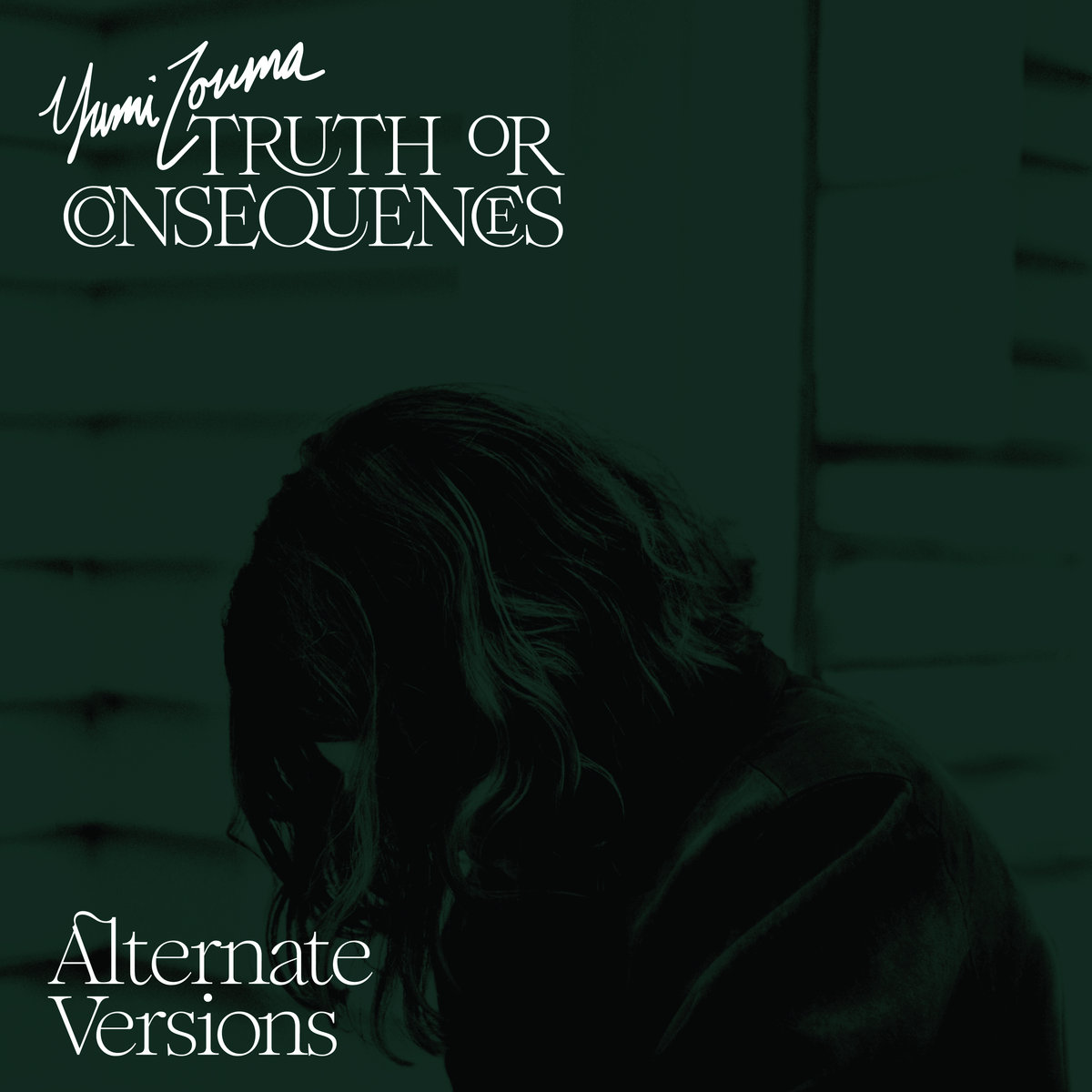
The day before the release of our third album, ‘Truth or Consequences’, the World Health Organisation declared COVID-19 an official pandemic. We’d arrived in the United States that morning to play the first show of our North American album release tour in Washington D.C. At this point, all of the tour dates were still set to go ahead, and we were excited to promote an album we had worked on for the last two years. This run was set to be our first ever fully sold-out US tour. The atmosphere was excitable, a little tense, optimistic. However, the chain of events that followed meant that by the time we finished our set that evening, restrictions on venues had been enacted by local governments across the country, and one-after-another, all of our remaining tour dates were cancelled. The performance at DC9 was the first and last show of the ‘Truth or Consequences’ album tour. It was all over, we went our separate ways and flew home the next day – on our album’s release day.

Touring is often the final piece of the puzzle that is an album campaign – the part you fixate on alone in a room, when you perfect a song and imagine how a crowd will react. You may have listened to certain songs a hundred times during the making of the record, but when you’re out on stage, face-to-face with an audience, this is when you start to truly re-contextualise and re-interpret the music, exploring the boundaries, focusing in on different parts of each song’s musical fabric. A new vocal harmony there, a new bassline there – perhaps you add different chord voicings on guitar, or new drum fills that set a new-found intensity to a section.

So after returning home and spending a few numb weeks adjusting to this strange new way of life, April came, the reality set in, and we quickly started to miss that feeling of exploring our new songs by night. We’d missed out on such a crucial part of the process – with no concrete idea of when we might next get the chance. It felt too soon to move on – we felt the pull to work on new music, but still felt a strong attachment, an unresolved connection to this new record that we’d laboured over and had waited so long to release.

Writing new music around them, we took the songs of ‘Truth or Consequences’ and found ourselves a new way of re-contextualising them safely, amidst the tragedy and fear going on in the world outside our windows – and the Alternate Versions were born. We encouraged each other to be bold, fearless, and to experiment like we would on stage – but from the comfort of our own bedrooms, living rooms and hallways. This new reimagining of ‘Truth or Consequences’ is the result of that process. Ten new arrangements that reflect our feelings of optimism, helplessness, and a desire to keep exploring.

Yumi Zouma are:
Christie Simpson, Josh Burgess, Charlie Ryder, and Olivia Campion.

Releases October 28th, 2020

Kidsmoke

With their songs appearing on Black Mirror and Made In Chelsea before their debut album was even released, Kidsmoke are proving that there’s plenty of life in guitar music yet. Echoing the sounds and mood of both The War On Drugs and The Cure in equal measure, the North Wales five-piece have stumbled upon a brand of glistening guitar-pop and heartlands rock that is packed to the rafters with shimmering arpeggiated guitar melodies and lustrous, beautifully crafted rhythms and vocal hooks. By way of a bright blue beginner’s guitar Sophie Ballamy tells us how it all began, “When I was about 13 a few of my friends at school were learning guitar and I just thought it was the coolest thing ever.

My Dad is pretty handy on guitar, but I’d somehow never known about that before, so when I mentioned I’d like to learn he dug out an old electric guitar from somewhere that my uncle had built. That was it, I was hooked. I’m not sure what that guitar was or where it is now – all I know is that it was bright blue, and I immediately wanted to be Jimi Hendrix.” I tend to play quite intricate, melodic guitar parts for Kidsmoke so I think that’s where that comes from. For me, it’s most important to put down what’s right for the song, so whatever I end up playing it’s always carefully considered.

There were a lot of different influences really, but I think you can hear how much we love 80s bands like The Cure, Prefab Sprout and The Smiths – there’s a balance of light and dark that runs through a lot of our work and you can definitely hear that in those bands.

Kidsmoke are proud to present “The Bluest You”, from their album ”A Vision In The Dark” (released via Libertino Records, 2020)


“The Fountain” was supposed to be a full length album but as the songs took shape, I realized that there was something cohesive going on with a smaller batch. They all focused on the theme of platonic love with a sense of gratitude. I think that traditionally, I had mostly written yearning, romantic odes and it was nice to focus on what was right in front of me and have a record be about that for a change. A big part of this project for me is about trying to reflect on the years I’ve spent touring and playing in different bands, mostly punk bands who played in warehouses and never released records. I want this project to be a part of that legacy.

So much of those old scenes were about celebrating the time we were living and the friendships we were forming and so this is sort of my older take on those excited sentiments. Basically, what does a punk song about friendships look like 20 years later? Probably a little slower, a little softer and a little more melancholy.

The Night Shop is the Song writing project of Justin Sullivan (Kevin Morby, The Babies, Flat Worms). Songs from the cafe of eternal youth.

Justin Sullivan: vocals, guitar Tiffanie Lanmon: drums Jarvis Taveniere: bass, guitar, piano Anna St. Louis: vocals

Releases September 25th, 2020

See the source image

The music world this week lost a massive talent far too early when it was announced that Americana singer-songwriter Justin Townes Earle had passed away from undisclosed causes at the age of just 38.

He was the son of country music mainstay Steve Earle, and named for his father’s friend and mentor Townes Van Zandt, and this rich pedigree flowing through his veins was wrought clear by both his obvious musical acumen plus the way he was so defiantly determined to forge his own path and do things his own way.

Earle leaves behind eight beautiful albums – the most latest being 2019’s The Saint Of Lost Causes – and a tragically young family (he and wife Jenn Marie only welcomed daughter Etta St. James into the world in 2017), but also the indelible marks he made on the lives of countless people whose paths he crossed along his too-short but action-packed journey. A genuinely fun guy to be around, he was charismatic and opinionated and incredibly open about his own past, completely willing to steer conversation towards the many trials and tribulations he’d faced, and the addictions he’d battled since his early teens.

The impact of his immaculately authentic song writing and consummate performance skills was immediate and invigorating, and when he burst into a stripped-back but hauntingly beautiful cover of The Replacements’ Can’t Hardly Wait, a great version of which followed on Justin’s subsequent album Midnight At The Movies (2009).

From the very beginning was that this was a guy who was not living in his father’s shadow. He didn’t have to come out and say it, but you just knew it. He wanted to pave his own path, and he wanted to lay those bricks – rightly or wrongly – in the way that he saw fit and the way that he thought it should have been. I admired that, because it would have been very easy for Justin in the early stage of his career – around that first album [2008’s The Good Life] and EP [Yuma(2007)] – when it would have been very easy to talk up his father and milk those connections. There were references to it in interviews, but he’d never use it as a calling card. The Americana genre with which Earle is usually synonymous is a large and often nebulous catch-all, but Earle was equally at home mining sounds and emotions from the soul, blues, folk and even rock’n’roll realms as he was from the country music at Americana’s heart. More than that it was the way he so effortlessly brought a modern spin to those old-timey foundations that made his music so widely accessible. But they didn’t see a country act in Justin, they saw a guy onstage who knew his craft and knew his songs and knew how to deliver those songs in a way that made you feel sitting in the audience like you’re the only person there, in the way that Bruce Springsteen does.

“And you kind of get locked in this zone where you think that you’re the only person in the room and that is a gift – an absolute gift – that not many artists possess, but Justin Townes Earle, was one of those who could do it. He’d take you to a place night in, night out that you wanted to go to, because that’s why you were there. “And he knew that, because that was his job. He rolled up the sleeves, put the guitar on and went to work. There was a lot of fun along the way. But seeing Justin playing live is that every time he walked out onto a stage he was doing the best he could at that point.”

“I feel like Justin was a lynchpin to a whole lot of people who lifted their game because of him,” he offers sadly. “He came out kinda rippin’ at his guitar and it inspired a whole generation of songwriters to rip at that claw-hammer finger-pickin’ style and not be timid when you’re writing songs. “He had that Replacements kinda snowball – that relentless drive and that punk element – to country and modern song writing, . He was an important figure for everyone, it was just crazy. He was also a great raconteur – he’d always tell stories and he was always quite open onstage and quite honest. He was a great, great showman. The breadth of fans at his gigs was incredible, Justin would attract people like 70- and 80-year-olds who loved that classic throwback country songwriting – that dusty 78s-era gramophone country – but then you’d have rockabilly kids in their 20s and punk kids, people who love The Replacements. He had that extraordinary breadth of reach.

“Justin was such a rollercoaster ride of confidence and fragility – he was the extreme of every adjective you can imagine – and people could relate to his journey and his ride. People followed him and they related to him on his ups and his down and his variation from tour to tour in his states of mind, and that made him approachable and incredibly easy to follow and kind of befriend.

He was always incredibly interesting and a song writing genius – so you couldn’t really ignore him, and that’s really rare. He had a force of personality that’s really rare in the music industry these days, apart from the obvious loss – is just the talent that Justin had, it was so immense but in many respects it didn’t reach it’s peak, and that’s terribly sad.

He was a guy who gave a lot onstage, and the talent that Justin possessed was almost inconceivable. He brought a whole lot of rock’n’roll to Americana, he was a real rock star – and sadly you can’t help but feel that he had so many great songs left in him, that his best work was still to come.


“If you have a vacancy for another favourite new band on your listening device, Pom Poko would like to apply for the role,” tweeted Tim Burgess last April, as Norway’s finest punk-pop anti-conformists revisited their joyous debut album, “Birthday”, for one of Tim’s mood-lifting twitter listening parties.

Pom Poko pimp their cv on all fronts with their glorious second album, “Cheater”, is due for release via Bella Union in November. between the quartet’s sweet melodies, galvanic punky ructions and wild-at-art-rock eruptions, Cheater is the sound of a band celebrating the binding extremes that make them so uniquely qualified to thrill: and, like Tim’s listening party, to fulfil any need you might have for a pick-you-up. as singer Ragnhild Fangel explains of the leap from “Birthday” to “Cheater”, “I think it’s very accurate to say that we wanted to embrace our extremes a bit more. in the production process I think we aimed more for some sort of contrast between the meticulously written and arranged songs and a more chaotic execution and recording, but also let ourselves explore the less frantic parts of the Pom Poko universe.

I think both in the more extreme and painful way, and in the sweet and lovely way, this album is kind of amplified.” both sonically and thematically, that sense of amplification asserts itself right off the bat with the tearaway title-track. bursting into life on the back of a blast of fractious guitar noise, a thrashing riff and a sweetly sardonic vocal, “Cheater” laces its serotonin rush with tangy lyrics about dreams and, says Ragnhild, the kind of “cheating kid who doesn’t understand why they didn’t get things exactly like they wanted on their first try”: thematic motifs that reverberate throughout the album. from here, Pom Poko court their extremes with firecracker confidence. its lilting melody laced with a critique of gender stereotypes and set to a breeders-style lurch, “like a lady” is sharp and catchy. “Andrew” upholds a facility for simplicity in one of Pom Poko’s loveliest choruses, though a band such as this will never settle for the obvious: Martin Miguel tonne’s jazzy guitars seem to do everything except what you expect them to.

Further evidence arrives in the contrast between the thrilling, think-on-its-feet thrash-pop of “My Candidacy” – made in less than three hours – and the mellifluous “Danger Baby”, a tale of irrational fears with Ragnhild’s vocal and Martin’s guitar merged in unexpected union. That love for surprise synchronicities, slanted sounds and unexpected subject matter propels “Andy Go To School”, where a tempo-tweaked guitar line accompanies a lyric extolling the pleasures of water parks and a free-flowing sonic palette. “Towards the end one of the guitar pedals made a huge bzzz sound in a pause, but we thought it was cool and raw so we just rolled with it,” says Ragnhild. “We like to mix the feeling of a surgically produced piece of music with the random sounds that also happen when you are a band playing together.” after its opening, almost Bolan-esque belches of guitar, “Look” extends that spirit of openness to an invitation to look outside of one’s self, before “Body Level” ends the album on a characteristically generous, unguarded – amplified – note of positivity. “Things Get Better,” sings Fangel, embracing directness with the same readiness as Pom Poko exult in giddy intricacy. The sound of four distinct personalities driving in divergent directions towards one destination, the result is an evolved snapshot of the bracingly contrary chemistry forged when Fangel, Tonne, Jonas Krøvel (bass) and Ola Djupvik (drums) united to play punk during a jazz gig at a literature festival in Trondheim (the band-members studied jazz there.) taking their name and spirit from japanese animation visionaries studio Ghibli’s marvellously out-there film about raccoon-dog rebels with unfeasibly large testicles, Pom Poko showcased that convulsive individuality to exuberant effect on 2019’s Birthday. along the way, they drew praise from NME, interview magazine, DIY, Popmatters, the Line of Best Fit, the Independent and BBC radio 6, where Miranda Sawyer was moved to note that Birthday’s “Crazy Energy Night” seems to contain about 20 songs in one.

Meanwhile, a huge touring schedule included countless sold-out headline shows and a rapturously received uk jaunt with Ezra Furman. Written in the same run that produced interim releases “Leg Day” (with its playful dance-based video) and “Praise”, and recorded/produced in cooperation with Marcus Forsgren (jaga jazzist, broen, arc iris), Cheater does its predecessor proud on every front. bursting with colour and wonky life from its cover art (by close collaborator Erlend Peder Kvam) outwards, it differs from Birthday primarily in that its songs did not have a chance to be road-tested before going into the studio. but you wouldn’t know it. as Ragnhild explains, “that meant we had to practice the songs in a more serious way, but it also meant the songs had more potential to change when we recorded them since we didn’t have such a clear image of what each song should/could be as the last time.” in other words, consider that vacancy for free-thinking punk-pop adventurism in your life filled.

A first album happens the same way that Great Britain acquired an empire, in a fit of absence of mind. You write a song – a sheepish exercise at best, because only songwriters write songs, and you can’t be a songwriter until you’ve written one – and then you write another, and a few more, and pretty soon you have a bunch of them. You play them for your friends at beer parties, but it’s hard to know what else to do with them besides make an album. If you weren’t going to record them, what the hell have you been up to? In the Midwest, where a bent toward art that isn’t immediately financially remunerative is often treated as a type of infirmity, if you aren’t a songwriter working toward an album, you may be just a self-absorbed person with an odd private habit. It’s a fine line.

The second album happens because you made the first one, some people liked it, and now you’re in the terrifying position of having to prove that it wasn’t an accident, which you’re pretty sure it was. So you hire a producer (in this case the fantastic David Goodrich) and book a week to record, lying through your teeth that you have a lot of great new songs, and then spend a couple of fevered weeks drinking multiple pots of coffee a day, desperately trying to fill out the forty-odd minutes of an album.

That’s how “Stripping Cane” went down. I was trying to understand form, taking various types of American music into the shop and putting them up on the lift – country, country blues, gospel, murder-ballad, twelve-bar – to understand how they worked. I’d been a student of songs, but I’d always paid more attention to the the spiritual charisma of the singer, or to the language. You will hear people say that form is content. You should be suspicious of those people.

I didn’t pick up the guitar until I was seventeen, and I was writing, recording, and eventually even touring before I’d acquired the hours I needed for anything like mastery of my instrument, or my voice. So I spent a lot of time after my first album came out (and ever since, really) holed up trying to become a better musician, and a more concise writer.

I still play about half the songs on Stripping Cane – songs like ‘Northbound 35,’ ‘Cross of Flowers,’ ‘4&20 Blues,’ – and they’ve mostly worn well. They’re songs about the polarities of the life I was living at the time: home and away, leaving and left, right and wrong, love and its absence, and I was between 24 and 27 when I wrote them.

This is how I make a living right now, so if you have the wherewithal and these songs have meant something in your life, you can square up for a show via Paypal, Venmo, or the U.S. Mail (assuming we still have it), as you see fit. I don’t have to fly anywhere, and you don’t have to hire a sitter, so whatever seems like a reasonable cover charge ought to be fine.

“Stripping Cane” Signature Sounds Recordings

Image may contain: 1 person, on stage, playing a musical instrument and hat

Justin Townes Earle, an acclaimed US songwriter and son of Steve Earle, has died, in news confirmed on the artist’s Facebook page on Sunday night.

“It is with tremendous sadness that we inform you of the passing of our son, husband, father and friend Justin,” the post read. “So many of you have relied on his music and lyrics over the years and we hope that his music will continue to guide you on your journeys. You will be missed dearly.”

Named for his father’s friend and idol Townes Van Zandt, Earle, 38, battled addiction throughout his life. He released eight albums across the course of his career, which saw him honoured twice at the Americana Music awards including for his best-known song, “Harlem River Blues”.

Many have paid tribute to the artist on Twitter, with the musician Samantha Crain reflecting on their friendship: “Such a tremendous songwriter. He took me on two tours and always treated me so kindly. He understood struggle, he understood joy I saw him at the peaks and valleys of both through the 13 years I knew him.” His friend and collaborator Jason Isbell said: “Had a lot of good times and made a lot of good music with JTE. So sad for his family tonight.”

“When you start with my middle and last names,”said  Earle, “how much worse can the expectations be? My father is one of the greatest songwriters who’s ever lived, and I couldn’t write a song like [revered singer-songwriter] Townes Van Zandt if my life depended on it. But you know going through the door you’re gonna be judged based on that, so you better be ready.”

By the time he was 14, Earle was doing residencies in the competitive Nashville songwriter’s scene. It was the mid-1990s, and artists in the so-called alternative country movement, spearheaded by acts such as Uncle Tupelo, BR-549 and Neko Case, were mixing post-punk energy with honky-tonk twang. Earle’s first three records were released by Bloodshot Records, one of the drivers of the scene and inheritors to Steve Earle’s 1980s blue-collar barroom country. Earle was an on-and-off member of the raucous country-rock band the Sadies. As Earle gained confidence, he committed to being a solo artist.

The writer and cultural critic Hanif Abdurraqib praised Earle as “an incredible writer of narrative – stories that flourished beyond the music they were laid over”. the NPR music critic Ann Powers described his last album, “The Saint of Lost Causes”, as “a powerful road map of America … we’ve lost someone with real vision.”

Earle is survived by his mother Carol-Ann Hunter, his wife, Jenn Marie, and their daughter, Etta St. James Earle.

Image may contain: 1 person, text that says 'Justin The Townes Saint Of Earle Lost Causes Out Now'