New West Records has created a rad compilation album exclusively benefitting their artists. The album is available today, in conjunction with Bandcamp’s pledge to waive fees for artists. 100% of proceeds go to the artist. The setlist is included below. The album is only available digitally, and only from Bandcamp or at newwestrecords.com. Link to purchase: http://newwst.com/forthecure.
Any collection that kicks off with Nikki Lane channeling Wanda Jackson is worth having by definition. The rest is just fine, too, especially Seratones’ apocalyptic take on State Trooper. New West clearly curated this collection with care.
1. Nikki Lane – Funnel of Love
2. Justin Townes Earle – Rocket 88
3. The Texas Gentlemen – Dream Along (Bonnaroo Haybale Session)
4. Jaime Wyatt – I Miss Drinkin’
5. Ron Gallo – Always Elsewhere (Bonnaroo Haybale Session)
6. Andrew Combs – You’re Like The Country
7. Sammy Brue – Before It Gets Good Again
8. Seratones – State Trooper (Live on WFUV)
9. Robert Ellis – Heartbeat
10. Kacy & Clayton – The Gallery
11. Dan Luke and The Raid – Be Good
12. Caroline Rose – More Of The Same (Bonnaroo Haybale Session)
13. Sam Doores – True To My Luck
14. American Aquarium – Darkness on the Edge of Town (Outlaw Session)
15. Lilly Hiatt – No Good
16. Pokey LaFarge – Oval Room
All proceeds from the sale of this album go to the artists involved.
Ten Million Lights are an indie shoegaze band from Portland, Oregon who tap into something special on their new single “Myanmar.”
The band captures a level of rocking fuzzy goodness that creates a stirring non-stop atmosphere that still finds room for the heavenly floating vocals that mix with the shoegazey guitar work that feels like a mix of bands like Ride and Slowdive. Even better yet is the band’s description of the song:
The lyrics are highly imaginative about looking over the Event Horizon into a black hole to try and meet your maker only to find out its a praying mantis lizard who is turning our sun into a crystal. Have fun with this quick ditty. You just might have to play it twice…It doesn’t get much better than that.
Joe D’Agostino talks about his new solo album and why his former band decided to call it quits, and debuts the album opener “Marian.”
How do you dissolve a beloved band you’ve devoted your life to since the age of 18?. If you are Joe D’Agostino, frontman of Cymbals Eat Guitars, you do so as quietly and tastefully as possible. In late 2017, the New Jersey-bred indie heroes performed three farewell shows, including a raucous gig at Manhattan’s Bowery Ballroom, which was packed with fans who had no idea it was a farewell. They shared the stage with home-state idol Charles Bissell, of elusive Jersey favorites The Wrens fame, and dusted off early-career gems like “Indiana” and “Some Trees.”
And then, without a word, one of the decade’s most rewarding and emotionally searing rock bands simply ceased to exist. There was no announcement. (Consequently, many fans have continued hoping for a new album) “We wanted to quietly deep-six it,” D’Agostino explains two years later. “We could have told everybody that our December 2017 shows were gonna be our final shows, but — I dunno. It just seemed a little gaudy to do so. We were never people to draw attention to ourselves in that way.”
Causes of the breakup included deep exhaustion with touring, bassist Matt Whipple’s decision to return to school for interior design, and a brooding sense that — despite consistent acclaim and a committed cadre of fans — “there was nowhere else for us to go.” During that grueling final year, the band toured with alt-rock legends the Pixies, “which was just crazy — like, dream scenario stuff,” the singer says. “And then we went back to the same cities that we played with Pixies in to headline, three months later. And nobody came.”
It was bleak, the bleakness compounded by brutal summer temperatures and self-destructive patterns that had emerged across lengthy touring cycles. “It was over many years,” D’Agostino says. “And it was like, I had to drink to perform. Especially towards the end.”
Eventually, the band updated its Twitter bio to resemble a tombstone: “2007–2017.” If that suggests an untimely demise, the subsequent years, 2018–2019, signify rebirth. D’Agostino has spent them carving out some semblance of domestic bliss with his wife, Rachel Browne (singer of Philly indie band Field Mouse), in their adopted hometown of Philadelphia and figuring out what it means to make music post-Cymbals. For much of 2018, he was cooped up on the first floor of an old Victorian in West Philly — the couple’s home of two years — writing, arranging, and self-producing an ambitious set of solo songs. (Kyle Gilbride, Swearin’ member and prolific indie engineer, co-produced and engineered.)
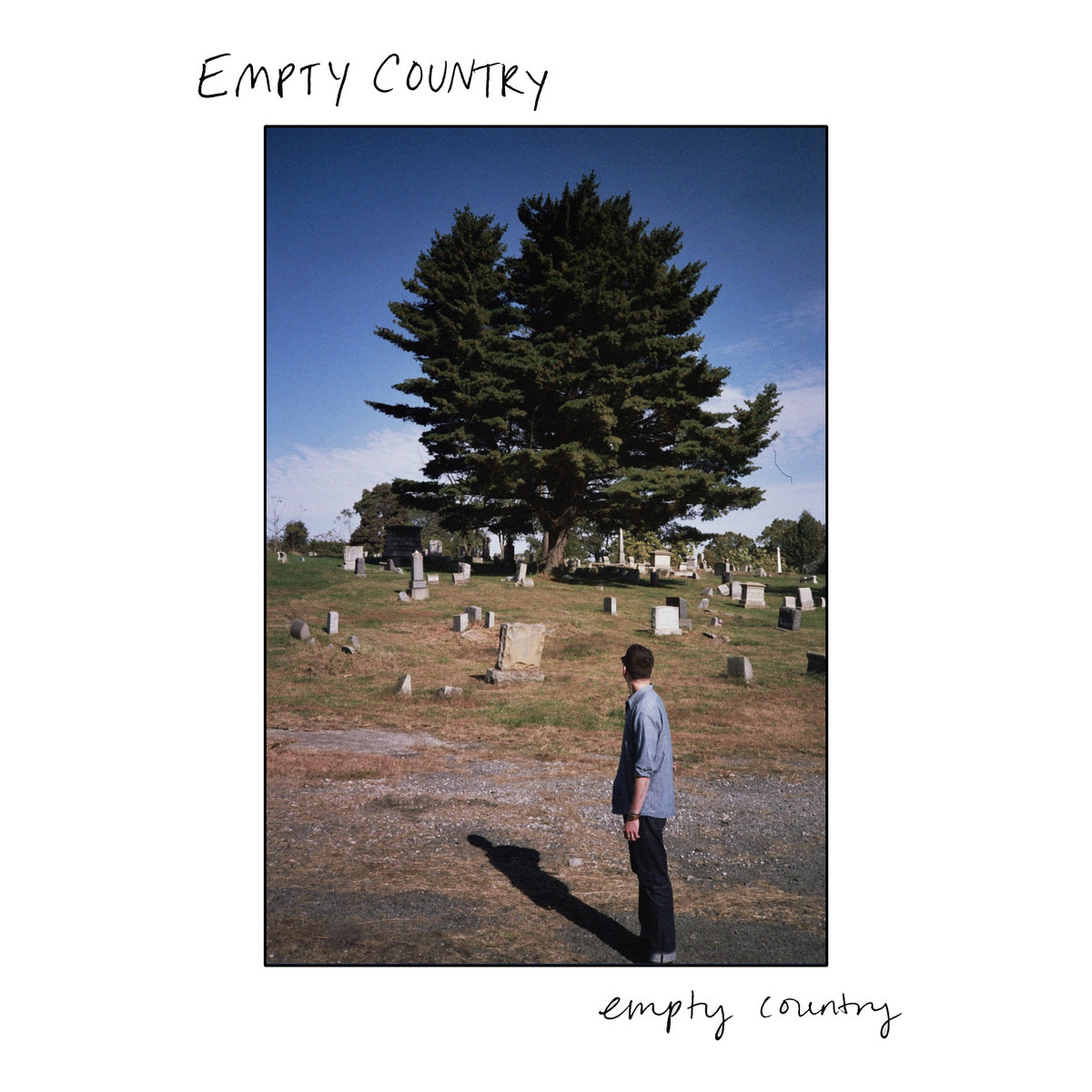
The result is his new project, Empty Country, whose self-titled album will be released by Tiny Engines (The Hotelier, Somos) next February. The title comes from a Cymbals deep cut, “Wavelengths.” (At Browne’s suggestion, D’Agostino scoured his band’s old lyrics when stuck on a name: “For whatever reason, those two words jumped out at me.”) The album combines D’Agostino’s knack for vivid, impressionistic imagery — capable of summoning a romantic LSD trip or a nightmarish cancer scare — with arrangements more ornate than anything from his former band: “Untitled” is a bleary-eyed excursion into acoustic psychedelia, while “Swim” closes the album with a gorgeous reverie of string swells.
Though billed as a solo album, it’s very much a family affair, inhabited by loved ones both alive and dead. Anne Dole, Cymbals’ former drummer, performed drums; her twin brother, Pat, handled bass. Browne and her sister Zoë contributed backing vocals. “Chance,” with its gushing a cappella break, is an affectionate tribute to the sisters’ dad — D’Agostino’s father-in-law — the longtime cartoonist Robert “Chance” Browne. And the opening track, “Marian,” is named after D’Agostino’s grandmother, who was killed by a drunk driver in 1983. It’s an expansive epic that coaxes unexpected sunlight from one of the singer’s most generous falsetto hooks. Lyrically, it’s sung from the perspective of a clairvoyant miner who foresees his own death in 1960s West Virginia: “The mine collapses in spring of ʼ67/ I was a bastard anyway.” .
Meanwhile, the intensity that once landed Cymbals a tour with emo stalwarts Say Anything roars to life on “Ultrasound,” home to the record’s most screamable chorus. The song, with its mortified reference to “a shadow on the ultrasound,” is about a cancer scare. Browne’s sister is a survivor of metastatic breast cancer, so Browne goes in semi-regularly for routine imaging. In early 2018, doctors found “what looked like something that could be very serious,” D’Agostino says. “I was with her at the doctor, and — I mean, the doctor just scared the shit out of us.”
The song describes the nightmarish week that followed: waiting for the biopsy report, collapsing into fits of crying every hour. “I wrote the lyrics over the course of like two or three hours,” the singer says, “and I was just weeping the entire time.” (The health scare, fortunately, turned out to be a false alarm.)
Tragedy struck anew the day “Ultrasound” was issued as Empty Country’s first-ever single: August 7th, 2019. D’Agostino was full of nervous energy about debuting the project. He was also due to open for Purple Mountains — the new project of Silver Jews songwriter and veteran rock cult hero David Berman — in three days, so he went to get a haircut. D’Agostino was to join Purple Mountains for two dates, in Jersey City and Philadelphia. He had extensively rehearsed a six-piece band, which included Browne and her sister, for the occasion. He was leaving the barber when Browne called with news: Berman was dead.
“[It was] just utterly devastating,” D’Agostino says. He gets choked up recalling how much Berman meant to him. As a teenager, he blasted Silver Jews records on roadtrips. A decade later, he met Berman by chance during the LOSE tour in 2015. Cymbals had just played a sparsely attended show at a Nashville dive bar.
“I was loading up a van after that show, kind of dejected but whatever,” D’Agostino recalls. “He walked up to the back of the van. He asked if the music was over. I recognized his voice immediately. I was like, ‘You’re David Berman.’ He was like, ‘Yep.’ And we talked for a long time that night… I left town feeling like, whatever this career is or isn’t, it brought me to this exact moment in time where this person — this idol, this hero of mine — and I could just cross paths in this way.”
A year later, D’Agostino received an email from Berman, which he describes as “long and free-associative and beautiful.” The two began corresponding regularly. Berman told D’Agostino he could be a poet and attend the Iowa Writers’ Workshop on the strength of the LOSE lyrics. Before his death, Berman listened to Empty Country demos and was quick to offer encouragement. “He was just such a brilliant and kind man,” D’Agostino says. “I will forever hold memories and correspondences that I have of him. But I haven’t listened to his music since he passed.”
Ten years ago, D’Agostino was in the eye of the hurricane that was Cymbals Eat Guitars’ sudden ascent. “I was blown out of the cannon at age 19 and 20,” he says, “with all of this praise — the indie-rock bubble, the hype.”
It was 2009, the golden age of “blog rock,” when guitar music still reigned and a few impressive songs on a MySpace page could, and did, earn a band like Cymbals a glowing Pitchfork review and major festival slots seemingly overnight. The band’s debut, the impressively expansive Why There Are Mountains, drew raves despite being self-released: “Are Staten Island’s Cymbals Eat Guitars indie rock’s next big thing?” blared one headline from a local outlet. Suddenly, D’Agostino and his bandmates found themselves in London opening for The Flaming Lips, and being courted by managers and agents.
He’d been a nerd at his Central Jersey high school. Now he reveled in the sudden validation — behaving callously, abusing prescription meds. “It went to my head,” he admits. Now 30, he barely seems to recognize that kid. “I concentrated on one thing for so long. All I wanted from when I was 15 to when I was 20 — and I got it! And I don’t think I knew how to handle it, emotionally or ego-wise or physically. I was always just destroying my body, getting sick on the road.”
Alcohol became a problem. It got worse near the end, when D’Agostino found himself needing three or four drinks just to go onstage — especially in places like Oklahoma City, where only five people would show. How else could he summon the vigour to obliterate the scream in signature anthem “…And the Hazy Sea?” His health became compromised, his blood pressure unusually high. “I was just utterly consumed with anxiety and deep depression, and it was compounded by the lifestyle of touring,” he says. “There’s a bottle of fucking booze and a case of beer in your green room every night.”
Since the band’s breakup, D’Agostino has been in treatment for Bipolar II disorder and on psychiatric medication. (He no longer self-medicates with alcohol, though he does use pot and hesitates to identify as sober.) He has a day job in customer service, which lets him work from home and eases the financial precarity of a career in music. The end of Cymbals seems to have delivered some relief from the nonstop jockeying for status and success. “I didn’t make this [solo] record to be famous or to be a career musician, though that was my ambition as a younger man,” he texts me after our interview. “I made it to document and honor my human experience and that of my family.”
Ten years removed from indie fame is a weird place to be. D’Agostino sometimes jokes that Cymbals will reunite at Riot Fest in 2039 for the 30th anniversary of Mountains. When asked if he feels proud of what Cymbals accomplished, he lets out a long, heavy sigh. “I do,” he says finally. “I feel very proud of the four records we made together. And incredibly proud of a lot of the shows that we did. I have beautiful memories of each of my bandmates and all of us together.”
He is careful not to seem bitter about the fact that none of Cymbals’ other albums matched that level of commercial success. Yet some bitterness might be warranted, especially considering the band’s real masterpiece, LOSE, a sweeping and cathartic excavation of adolescent grief, did not arrive until 2014. That was the album that established D’Agostino’s astonishing eye for lyrical detail, set in a world of failed drug deals and deceased friends’ MySpace pages. Pretty Years, the 2016 follow-up, proved it wasn’t a fluke and even teased out some stadium-ready hooks. But the mercurial engine of hype no longer seemed to be on the band’s side. In retrospect, it seems obvious that the band’s ambition often brushed up against the impatient expectations of the market (or of a manager who pressured them to write “their ‘Two Weeks’”).
Much of the Empty Country album is inspired by D’Agostino’s reckoning with things he’s ashamed of from his past life. You could trace this reflective gene back to 2016’s “Have a Heart,” a song about falling in love and finding a new capacity for empathy. On “Swim,” the new album’s elegiac finale, he sings: “I was a blue-eyed sociopath / Black out, often / Not sure / Think I might have hurt someone.” Though the song describes a fictional character — the singer is neither blue-eyed nor a sociopath, he assures me — who has a 9/11 tattoo, it clearly carries personal resonance.
“Come and live it down with me,” D’Agostino sings at the song’s climax, luxuriating in a mournful string refrain that seems to echo long after the song has faded away. It’s the record’s emotional peak. As for the string players, “I didn’t even have charts for them,” D’Agostino texts me when I ask. “I just sang them the parts five minutes beforehand, and what you hear is what they delivered.” He sobbed when the violin took the lead for the final refrain. “You might actually be able to hear me,” he adds. I can’t hear it, but I trust that it’s there.
Throughout Cymbals’ career, D’Agostino’s songwriting was remarkably adept at capturing dimensions of loss — loss of a friend (“XR”), of youth (“Dancing Days”), even loss of a family dog (“Chambers”). Empty Country retains this talent. Except here, the songwriter also takes profound stock of what he’s gained.
That includes wisdom, and a new sense of purpose in music-making. “It’s not a vehicle for your ego, or so you can get somewhere in life or get tours or get whatever the fuck you want,” he says. “It’s the moment of creation — when you make something that’s true to you and to the people that you love.”
It seemed like a huge loss nearly a year ago when LVL UP, the group behind Double Double Whammy and the presumed heirs to Robert Pollard’s eclectic lo-fi throne, called it quits after only three albums. But in the same way that band heroically rose from the ashes of the also-great Dave Benton–led Spook Houses, its split has led to a slew of promising recordings from several of its four members. On the heels of a stellar 2018 debut from Benton’sTrace Mountains, Am I is the first release from Mike Caridi’s project The Glow, and it doesn’t sound too far removed from the output of his former band. But as a solo endeavor, it’s evident from opener “Am I Good” that the project is an outlet for experimentation with sonic textures left unexplored by Caridi’s previous band—even “Orchard,” the single LVL UP released to announce their breakup, feels totally fresh here, redone with a more prominent drum beat and less tamed guitar riffs, along with the recurring flourish of higher-pitched vocal harmonies.
Despite its brief runtime, Am I feels entirely less claustrophobic than the equally brief Space Brothers, which crammed thirteen songs—not to mention three vocalists—into twenty-four minutes.
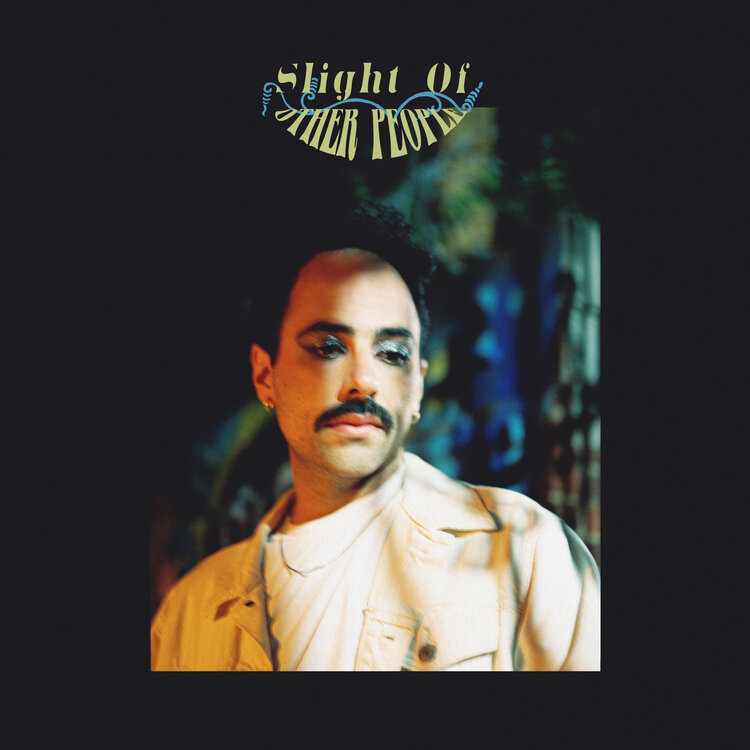
Empathy, often confused with sympathy, requires a little more push, surrendering yourself and embodying other people. On the follow up to Slight Of’s 2017 album Life Like, songwriter Jim Hill brought new depth to his music by looking outward, learning more about himself in the process and creating his most ambitious work to date. The appropriately titled sophomore album “Other People” is an exploration of different perspectives, an anthology of friends and strangers who helped him make sense of an ever-changing world.
Hailing from Rochester, New York, Hill sought to explore the sounds of his past with vintage keyboards, organs, and shimmering guitar licks. “I was listening to a lot of classic rock throughout the process of making this record,” Hill recalls, “stuff that was on the radio when I was forming my first memories.” The songs on Other People paint sonic landscapes of post-industrial cities, townie bars, and the working class. Tracks like “Sage”, “Americana” and “Sweet Caroline” utilize hypnotic harmonies that invoke comfort and familiarity while exploring the difficult space between patriotism and the dark realities of suburbia.
Other People kicks off with energetic synth-driven track “The Sims” — an ode to suburbia reminiscent of 80s pop and The Cars (“When we would shut ourselves in / All night just playing the Sims / The time we’ve wasted on a world / That doesn’t even exist”) From there, the title track follows to display the band’s knack for making the old sound new and epitomizes the graceful fusion of pop and classic rock elements that define the album.
In 2014 Hill left upstate New York to settle in Brooklyn. From there, Hill immersed himself in the DIY community, playing shows and spending time at now-defunct venues Silent Barn and Shea Stadium. The classic influences of his youth began to naturally intertwine with the sounds of his contemporaries. Hill spent years touring the US with Slight Of and other notable bands he joined (Trace Mountains, Painted Zeros, Bethlehem Steel). “On tour, you inevitably find yourself in some pretty strange situations with people you would never meet otherwise.” Hill remembers. “My bandmates started to recognize this pattern where I would attract all of these people who wanted to tell me their life story. There was a guy who cornered me at a house show in Illinois who had just gotten out of prison, a man at a bar in Omaha who told me he was possessed by a ghost, and an ex-Marine who threatened to kill me. We eventually had to come up with a code word so I could signal them to get me out of uncomfortable situations. I started to imagine larger stories for these people as a way to make sense of the pain they were trying to express to me.”
Moments like these incited a transition for Hill as an artist, shifting his focus outward for inspiration, and eventually leaving room for collaboration on his songs. After writing and recording 2017 album Life Like in isolation, Slight Of developed into a more familial and collaborative project. “It was really important to me that my bandmates be more involved with the arrangement and vocal textures of this album.” Hill says. Recorded in friend’s homes, practice spaces and studios in New York, Hill imagines Other People as “a study of American rock styles.” What’s a study without its subjects? It’s the friends, artists, strangers, places, and other people that give it all meaning.
Releases August 28th, 2020
All songs by Jim Hill with arrangements by the players.
Jim Hill: Vocals, Guitars, Bass, Synths, Piano
Alex Northrup: Organs, Electric Piano, Guitars
Jacob Rosse: Vocals, Synths
Bernard Casserly: Guitars
Izzy Rosse: Vocals, Bass
Alberto Casadevall: Vocals, Drums
Leah Beck: Vocals, Organ (track 8)
Erick Perrine: Guitar (track 6)
Brooklyn’s Jeanines specialize in ultra-short bursts of energetic but melancholy minor-key pop. With influences that run deep into the most crucial tributaries of DIY pop — Messthethics, the Television Personalities, Marine Girls, early Pastels, Dolly Mixture — they’ve crafted a style that is as individual as it is just plain pleasurable. Alicia Jeanine’s pure, unaffected voice muses wistfully on the illusions of time, while My Teenage Stride/Mick Trouble mastermind Jed Smith’s frantic Motown-esque drumming and inventive bass playing provide a thrilling rhythmic foundation.
“Winter In The Dark” and a lovely, jaunty cover of The Siddeleys’ “Falling Off Of My Feet Again” provide great insight into what Jeanines are about. 60s-meet-80s melodies combine with timeless guitar jangle in a way that recalls everything from The Aislers Set and Saturday Looks Good To Me to more recent DIY pop groups like Parsnip and Chook Race. Album opener “Either Way,” “Hits The Bone” and “Where We Go” hearken back to some of the most intriguing bands of the C86/C88 era, when bands like Jesse Garon & The Desperadoes crafted perfect pop gems enlivened by the inspiration of punk.
Gorgeous songs like “Where I Stand,” “Too Late” and “In This House” are windows into Alicia’s lyrical style and inspiration. She expands: “I’m kind of obsessed with mortality and how weird the passage of time is so I think my lyrics reflect that. I definitely lean into that kind of melancholy state of mind when trying to think of lyrics, while trying to avoid cliches!” The marriage of the minor-key melodies and melancholic lyrics is powerful and make Alicia’s songs all the more memorable, especially so on songs like “No Home,” with its echoes of girl harmony post-punk groups like Grass Widow and Household.
Clearly, with 16 great songs included, there is a lot at work here on this standout debut album. Jeanines have been compared to such cult pop icons as Dear Nora, Black Tambourine, and more recent acts like Veronica Falls and Girl Ray, but their dark, modal melodies and pensive, philosophical lyrics, along with Smith’s versatile but ever-economical musicality, ensure them a place of their own in today’s crowded but boisterously healthy DIY pop scene.
When Rachel Angel sings “I wanna be a renegade,” she is speaking to the experience of personal transformation and resilience, like putting on a protective coat of armour to meet the world with grace and courage. While the songs on the EP were inspired by the spirit of outlaw country, her sense of the outlaw is metaphorical rather than literal. These songs are about taking the unconventional artists path, and staring in the face of danger, fear, and pain. In her latest EP “Highway Songs,” the country-folk troubadour takes the listener on a wild journey— physical, emotional, spiritual, and everywhere in between.
These songs were written in the midst of a harrowing time for Angel— she was physically sick with an auto-immune disease, self-quarantined in her Brooklyn apartment, writing at a feverish pace. She reflected on her recent travels, both as a touring musician, and time spent in Mexico during a 7.1 earthquake with her family.
“Highway Songs” was recorded live in two days with an all star lineup at Figure 8 Studios in Brooklyn, NY.
Released August 21st, 2020 The Band:
Rachel Angel – Vocals/Guitar
Brian Betancourt – Bass
Sam Owens – Lead Guitar/Keys
Noah Hecht – Drums
Dan Iead – Pedal Steel Guitar
Clyde Daley – Trumpet on “Mexico”All songs written by Rachel Angel (BMI)
Sometimes it feels like you hear a Bright Eyes song with your whole body. From Conor Oberst’s early recordings in an Omaha basement in 1995 all the way up to 2020, Bright Eyes’ music tries to unravel the impossible tangles of dissent: personal and political, external and internal. It’s a study of the beauty in unsteadiness in all its forms – in a voice, beliefs, love, identity, and what fills up the spaces in-between. And in so many ways, it’s just about searching for a way through. When Bright Eyes announced their first new album since 2011, the media excitedly reported on the band’s reconciliation. But, in reality, Bright Eyes never really broke up. They wandered in different directions, sure, but there were no hard feelings. Gathering to record Down in the Weeds Where the World Once Was was a matter of good timing and schedules aligning. Frontman Conor Oberst suggested the idea for a new record at bandmate Nathaniel Walcott’s Christmas party in 2017, and the pair called the third member of their trio Mike Mogis from the bathroom to pitch the idea.
The year 2020 is full of significant anniversaries for Bright Eyes. Fevers and Mirrors was released 20 years ago this May, while Digital Ash in a Digital Urn and I’m Wide Awake It’s Morning both turned 15 years old in January. The latter, a singer-songwriter tour-de-force released amidst the Bush presidency and Iraq war, wades through incisive anti-war rhetoric and micro, intimate calamities. On the title track and throughout the record, Oberst sings about body counts in the newspaper, televised wars, the bottomless pit of American greed, struggling to understand the world alongside one’s own turmoil. In its own way, I’m Wide Awake It’s Morning carved out its place in the canon of great anti-war albums by being both present and prophetic, its urgency enduring 15 years later.
In 2011 the release of The People’s Key, Bright Eyes’ ninth and most recent album, ushered in an unofficial hiatus for the beloved project. In the time since, the work of the band’s core members – Oberst, multi-instrumentalist Mike Mogis, and multi-instrumentalist Nathaniel Walcott – has remained omnipresent, through both the members’ original work and collaboration.
In recent years, Mogis produced records for beloved folk acts First Aid Kit and Joseph, among others, as well as mixed the fine-spun ennui of Phoebe Bridgers’ breakthrough 2017 debut, Stranger in the Alps. Mogis and bandmate Walcott also teamed up to write the original scores for The Fault in Our Stars, Stuck in Love, and Lovely Still, and Walcott worked as a solo composer scoring number of independent feature-length films. Walcott spent extensive time on collaboration; in addition to his arrangement work for Mavis Staples, First Aid Kit, and M. Ward, he contributed studio work to artists ranging from U2 to jazz guitarist Jeff Parker, and also toured heavily as a member of the Red Hot Chili Peppers.
Oberst, who’s nearly 30 years into a prolific musical career, spent the last decade in similarly productive fashion. Across three years he released a string of solo albums: Salutations (2017), Ruminations (2016), and Upside Down Mountain (2014), as well as guested on records by First Aid Kit, Phoebe Bridgers, and Alt-J. His punk band, Desaparecidos, emerged from a 13-year hiatus in 2015 with the thunderous sophomore LP, Payola, a white-knuckled disarray of hollered political fury. And at the top of 2019, Oberst and Bridgers debuted their new band, Better Oblivion Community Center, digitally dropping the critically-lauded eponymous debut LP alongside a surprise performance on The Late Show with Stephen Colbert.
The heart at Bright Eyes’ songwriting still looms culturally, in films and TV shows and through re-imaginings by other artists. Mac Miller covered both Lua and First Day of My Life; Lorde’s version of the penultimate The People’s Key track, the funereal-waltz Ladder Song, was a focal point of The Hunger Games’ soundtrack; The Killers covered Four Winds for their Spaceman EP; and Lil Peep’s Worlds Away samples Something Vague while Young Thug’s Me Or Us samples First Day of My Life.
Bright Eyes’ expansive catalogue has traversed genre, sound, and countless players; unpolished demos or fuzzy folk, electrified rock or country twang. The sharp song writing and musicianship is all anchored in Bright Eyes’ singular ability to flip deep intimacy into something universal. For so many, for so long, listening to Bright Eyes has been like hearing yourself in someone else’s song – a moment of understanding or illumination, knowing you’re on the same team looking for a way to move through of all this shit.
And while 2020 is a year of milestones for the band, it’s also the year Bright Eyes returns, newly signed to indie label Dead Oceans. Amidst the current overwhelming uncertainty and upheaval of global and personal worlds, Oberst, Mogis, and Walcott reunited under the moniker as both an escape from, and a confrontation of, trying times. Getting the band back together felt right, and necessary, and the friendship at the core of the band has been a long time pillar of Bright Eyes’ output. For Bright Eyes, this long-awaited re-emergence feels like coming home.
They certainly did some of their best work on Down In The Weeds… The album sounds undeniably like a Bright Eyes record, but it ebbs and flows with new anxieties and darknesses. Fans will delight in a true-to-style Bright Eyes record, but, at the same time, any music fan will be able to appreciate the gruesome grandeur of this folk-rock mastery.
Bright Eyes’s Down in the Weeds, Where the World OnceWas feels less like a monumental happening and more like a seamless continuation, the sound of a band shrugging off a long hiatus and simply getting back to work. They’re still making deeply emotional indie rock songs, still flirting with the same grandiosity that helped cement the legacies of albums like Lifted and Fevers and Mirrors, and the songs still revolve around Conor Oberst’s warbling search for the reasons we insist on continuing to exist when the world quite frankly seems to be crumbling all around us. No matter how much time has passed, Bright Eyes continues to be unmatched at tackling the biggest questions with a profound, heart-wrenching intimacy.
Death Valley Girls are an indie rock quartet from Los Angeles, Calif. Through their punk-infused, fuzzy garage rock sound, they’ve caught the attention of Iggy Pop, who’s called the group “a gift to the world.” He even starred in their video for the single “Disaster (Is What We’re After).” While singer and multi-instrumentalist Bonnie Bloomgarden and guitarist Larry Schemel knew their intention for the album before a single note was written, the actual nature and direction of the music was a mystery. The initial inspiration for the record came from the jubilant spirit of Ethiopian funk records the band had been listening to on tour, but once they began to channel the songs it seemed like the music came from somewhere not in the past but in the future. In the weeks leading up to recording, Death Valley Girls relied on their subconscious and effortlessly conjured Under the Spell of Joy’s eleven tracks as if they’d tapped into the Akashic Chronicle and pulled the music from the ether.
The rockers have teamed up with the legendary shoe company Dr. Martens for a special mini-doc as part of their new Dr. Martens Music & Film Series. In the video, vocalist Bonnie Bloomgarden, guitarist Larry Schemel, bassist Nikki Pickle and drummer Rikki Styxx give a brief summary of their mission as a band, and there are also clips of the energetic live performances.
Death Valley girls recently released their new single “Dream Cleaver,”
“Making music and being in a band is like a religious conviction,” the band said in a Q&A with Dr. Martens. “We are nomads for most of the year, and a gang, and that’s the way we like it! When you travel around spreading the good word of rock and roll you are like a missionary!”. The album opens with “Hypnagogia,” an ode to the space between sleep and wakefulness where we are open to other realms of consciousness. The song slowly builds along a steady pulse provided by bassist Pickle (Nicole Smith) and drummer Rikki Styxx. Tripped out saxophone bleats from guest player Gabe Flores swirl on top of the organ drones laid out by guest keyboardist Gregg Foreman.
The band’s choral objectives for Under the Spell of Joy are established right off the bat, with Bloomgarden’s melodic invocations bolstered by a choir, giving the album a rich and vibrant wall-of-sound aesthetic. The song ominously builds on its hypnotic foundation until it opens up into a raucous revelry at the four-minute mark. The portentous simmer of the opening track yields to the ecstatic rocker “Hold My Hand,” where verses reminiscent of Velvet Underground’s “I’m Waiting For The Man” explode into big triumphant choruses. From there the band launches into the title track, which marries the griminess of The Stooges with an innocence provided by a children’s choir chanting the album’s primary mantra “under the spell of joy / under the spell of love.”
Death Valley Girls have always vacillated between lightness and darkness, and on “Bliss Out” they demonstrate their current exuberant focus with a patina-hued pop song driven by an irrepressibly buoyant organ line laid down by keyboardist The Kid (Laura Kelsey). A similar cosmic euphoria is obtained on “The Universe,” where alternating chords on the organ help elevate soaring saxophone and keyboard lines out beyond the stratosphere. If you’re looking for transcendental rock music, look no further.
Death Valley Girls Under the Spell of Joy out October 2nd, 2020, on Suicide Squeeze Records
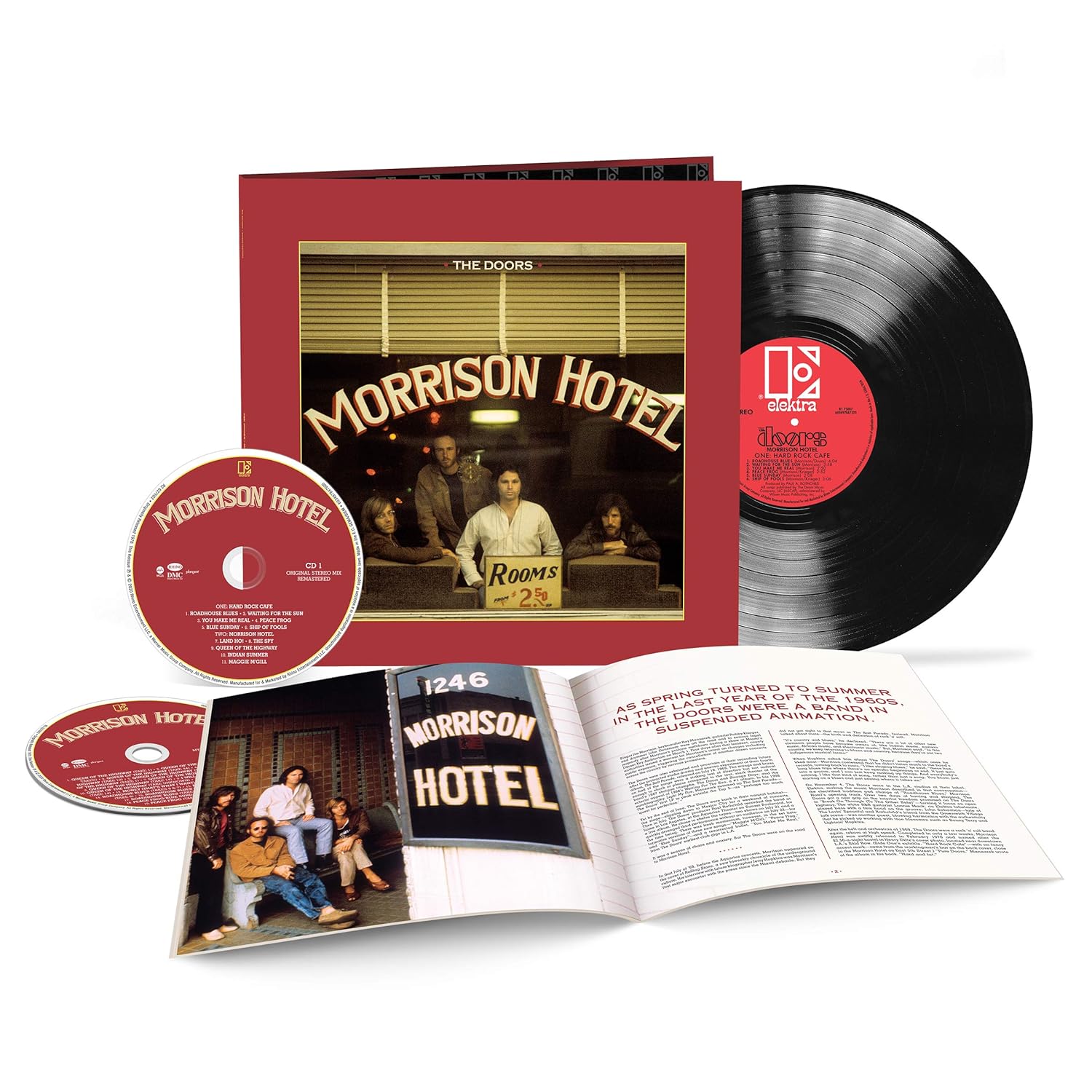
The Doors went back to basics when they checked into Morrison Hotel for their 1970 studio album. The band’s fifth LP, it’s now being reissued by Rhino on October 9th as a 2-CD/1-LP 50th Anniversary Deluxe Edition. This release follows the label’s similar reissues for The Doors’ first four albums including The Soft Parade which expanded their sound to include orchestration. Morrison Hotel got them back to blues-rock in striking fashion.
The box set features original engineer Bruce Botnick’s remastered version of the 1970 album produced by Paul Rothschild on both CD and vinyl. While Morrison Hotel didn’t yield any major chart hits – “You Make Me Real” b/w “Roadhouse Blues” only made it to No. 50 on the Billboard Hot 100 – it’s since been recognized as a powerful full-length album statement. Henry Diltz’s cover photography has since become one of rock’s most familiar images. The LP made it to No. 4 on the albums chart, and became the band’s highest-charting album in the United Kingdom with its No. 12 berth.
The new box set expands the original album with a second disc of 19 outtakes – totalling more than one hour’s worth of session material. Botnick states in the press release, “There are many takes, different arrangements, false starts, and insightful studio conversations between the band – who were in the studio – and producer Paul Rothchild – who was in the control room. It’s like being a fly on the wall.”
Disc Two kicks off with three sessions for “Queen of the Highway” and continues with another three for “Roadhouse Blues,” arguably the album’s most beloved track. The latter song evolved with different bass players including Soft Parade veteran Harvey Brooks and Lonnie Mack. The pseudonymous John Sebastian (appearing as “G. Puglese”) appeared on the final take with Mack on bass. The disc concludes with the “Peace Frog”/”Blue Sunday” session. Along the way, the set presents the previously released outtake “I Will Never Be Untrue” (indicated here as in an unissued version or mix) and outtake jams on Barrett Strong’s Motown classic “Money (That’s What I Want)” and B.B. King’s “Rock Me Baby.”
David Fricke has penned the liner notes which place the album in the context of its creation, when legal troubles plagued Jim Morrison and threatened to curtail the band’s activity. The Morrison Hotel: 50th Anniversary Deluxe Edition is due from Rhino on October 9th. You’ll find pre-order links and the track listing below!
The Doors, Morrison Hotel: Deluxe Edition (Elektra/Rhino, 2020) (Amazon U.S. / Amazon U.K. / Amazon Canada)
CD 1: The Original Album (Elektra EKS-75007, 1970)
Side One: Hard Rock Cafe
“Roadhouse Blues”
“Waiting For The Sun”
“You Make Me Real”
“Peace Frog”
“Blue Sunday”
“Ship Of Fools”
Side Two: Morrison Hotel
“Land Ho!”
“The Spy”
“Queen Of The Highway”
“Indian Summer”
“Maggie M’Gill”
CD 2: Mysterious Union
Black Dressed In Leather (“Queen Of The Highway” Sessions)
First Session (11/15/68)
“Queen Of The Highway” (Take 1, She Was A Princess) *
“Queen Of The Highway” (Various Takes) *
“Queen Of The Highway” (Take 44, He Was A Monster) *
Second Session (1/16/69)
“Queen Of The Highway” (Take 12, No One Could Save Her) *
“Queen Of The Highway” (Take 14, Save The Blind Tiger) *
Third Session (Date Unknown)
“Queen Of The Highway” (Take 1, American Boy – American Girl) *
“Queen Of The Highway” (Takes 5, 6 & 9, Dancing Through The Midnight Whirlpool) *
“Queen Of The Highway” (Take 14, Start It All Over) *
“I Will Never Be Untrue” *
“Queen Of The Highway” (Take Unknown) *
Money Beats Soul (“Roadhouse Blues” Sessions)
First Session
“Roadhouse Blues” (Take 14, Keep Your Eyes On The Road) *
“Money (That’s What I Want)” *
“Rock Me Baby” *
Second Session
“Roadhouse Blues” (Takes 6 & 7, Your Hands Upon The Wheel) *
“Roadhouse Blues” (Take 8, We’re Goin’ To The Roadhouse) *
Third Session
“Roadhouse Blues” (Takes 1 & 2, We’re Gonna Have A Real Good Time) *
“Roadhouse Blues” (Takes 5, 6 & 14, Let It Roll Baby Roll) *
Dawn’s Highway (Peace Frog/Blue Sunday Session)