No other songwriter in rock during the 1960s portrayed life in the British Isles as richly and as pointedly as The Kinks’ Ray Davies. In songs such as “A Well Respected Man,” “Autumn Almanac,”“Dedicated Follower of Fashion” and “Dead End Street,” and on albums like Village Green Preservation Society and Arthur, Davies captured vividly the class-driven lifestyles and peculiarities of the English, both present-day and in times gone by. By the time the 1970s kicked in, though, Davies had begun reaching into a deeper well for inspiration. The albums Lola Versus Powerman and the Moneygoround, Part One (1970), which took aim at the inequities of the music industry, and the following year’s country music-influenced, nostalgic Muswell Hillbillies, found Davies and the Kinks extending their lyrical and musical range.
The Kinks’ tenth studio album, 1972’s double LP “Everybody’s in Showbiz”, is about to get the Legacy Edition treatment from Sony’s Legacy Recordings. The classic studio/live hybrid album will be reissued along with a full disc’s worth of previously unissued studio outtakes (recorded at London’s Morgan Studios) and concert material (recorded March 2nd-3rd, 1972 during The Kinks’ Carnegie Hall concert stand). or Everybody’s in Show-Biz, released on RCA Records in the summer of 1972, the Kinks went the double-live album route—one studio disc consisting of 10 brand new songs, and a live LP recorded at Carnegie Hall in March of that year. The latter consisted primarily of songs drawn from the recent studio albums, while Davies’ new material—the writing of which coincided with the Kinks’ trend toward more theatricality in their live performances—mixed the autobiographical (a few songs focused on the touring life—and the crappy food consumed along the way) and the observational.
While not quite fully a concept album—not in the way that the following Preservation Act 1, Preservation Act 2 and Soap Opera were, anyway—the studio half of Everybody’s in Show-Biz was the most unified statement the band had made since 1969’s Arthur. It was, as all of their output had been over the past several years, exceptional.
It was also a relative bomb. In the United States, where the Kinks’ popularity had ebbed and flowed—largely due to a legal snafu that kept them from touring in the States between 1966-69—the album only reached #70 in Billboard, 35 points lower than Lola had (but better than Muswell Hillbillies, which stalled at #100). Show-Biz also failed to produce a hit single, whereas the title track of Lola had given them their first U.S. top 10 in five years.
In retrospect, what’s most astounding, perhaps, is how American radio—and, consequentially, record buyers—utterly failed to initially recognize what was easily one of Davies’ finest compositions to date: “Celluloid Heroes.”
Incredibly, the song failed to chart. Today, it’s considered something of a Kinks Klassik—one of those songs that defines the band and is often cited as being among Davies’ finest creations. The ballad finds the singer looking wistfully at the heyday of Hollywood, that era when all it took was a dream, a modicum of talent and a bus ticket to Los Angeles for fame to turn from a dream to reality—or not.
In the opening stanza, Davies sings: “Everybody’s a dreamer and everybody’s a star/And everybody’s in movies, it doesn’t matter who you are/There are stars in every city, in every house and on every street/And if you walk down Hollywood Boulevard, their names are written in concrete.”
The latter reference, to the iconic Hollywood Walk of Fame, is Davies’ nod to the many who’d come and gone, “Some that you recognize, some that you’ve hardly even heard of/People who worked and suffered and struggled for fame/Some who succeeded and some who suffered in vain.”
He name-checks several: First there’s Greta Garbo, who “looks so weak and fragile, that’s why she tried to be so hard.” There’s Rudolph Valentino (who “looks up ladies dresses as they sadly pass him by”), Bela Lugosi, Bette Davis, George Sanders and Mickey Rooney. And, of course, “dearest Marilyn,” the most glaring example of the star system’s lures and failures: “She should have been made of iron or steel/But she was only made of flesh and blood.”
Recorded with the piano of recent recruit John Gosling taking a prominent role, “Celluloid Heroes” was tender and melancholy, both tribute and admonition. It’s not the stars themselves that our narrator identifies with; it’s who they play. He doesn’t want so much to be a Hollywood star himself; he wants his own life to disappear into those of the characters on the screen. “Celluloid heroes never feel any pain, and celluloid heroes never really die,” Ray Davies sings. It’s a gem of a song that was almost lost amidst the indifference to an underrated album. Fortunately, its own star rose and hasn’t faded since.
Often seen as a transitional album pointing the way towards producer-songwriter-frontman Ray Davies’ more theatrical style, Everybody’s in Showbiz took its inspiration from Davies’ life on the road. The album’s songs were originally intended as the soundtrack to The Colossal Shirt, an unrealized film about The Kinks’ touring life. The LP showcases the band lineup of Ray Davies, guitarist Dave Davies, bassist John Dalton, keyboardist John Gosling and drummer Mick Avory, joined by brass and woodwind players Mike Cotton, John Beecham and Alan Holmes (all of whom played on Muswell Hillbillies, recently reissued by Legacy.)
The Carnegie Hall tracks on the original LP include Kinks originals such as “Lola” and “Brainwashed” as well as an eclectic variety of cover versions including “Mr. Wonderful” (from the 1956 Sammy Davis Jr.-starring Broadway musical of the same name), the 1926 chart-topper “Baby Face” and “The Banana Boat Song” (best known in its rendition by Harry Belafonte).
The 17-track bonus disc of the new Legacy Edition premieres never-before-heard live versions of “Sunny Afternoon,” “Get Back in Line,” “Muswell Hillbilly,” “Complicated Life” and the rarely-played “Long Tall Shorty” as well as the outtake “History,” alternate mixes of “Supersonic Rocket Ship” and “Unreal Reality” and “Sophisticated Lady,” an embryonic rehearsal version of “Money Talks.”
The remastered Legacy Edition includes new liner notes by journalist David Fricke. It’s due in stores on CD and vinyl from Legacy Recordings on June 3rd; the vinyl 3-LP edition contains the original album and a selection of nine bonus tracks (noted below). Both versions can be pre-ordered at the links below!
The Kinks, Everybody’s in Showbiz: Legacy Edition (RCA VPS-6065, 1972 – reissued Legacy Recordings, 2016)
CD 1: The Original Album
Here Comes Yet Another Day
Maximum Consumption
Unreal Reality
Hot Potatoes
Sitting In My Hotel
Motorway
You Don’t Know My Name
Supersonic Rocket Ship
Look A Little On The Sunny Side
Celluloid Heroes
Top Of The Pops (Live)
Brainwashed (Live)
Wonderful (Live)
Acute Schizophrenia Paranoia Blues (Live)
Holiday (Live)
Muswell Hillbilly (Live)
Alcohol (Live)
Banana Boat Song (Live)
Skin And Bone (Live)
Baby Face (Live)
Lola (Live)
Tracks 1-10 Recorded March-October 1972 at Morgan Studios, Willesden, London
Tracks 11-21 Recorded March 3, 1972 at Carnegie Hall, New York, New York
CD 2: Bonus Tracks
‘Til The End Of The Day (Live) (previously issued) (*)
You’re Looking Fine (Live) (previously unreleased commercially) (*)
Get Back In Line (Live) (*)
Have A Cuppa Tea (Live) (*)
Sunny Afternoon (Live) (*)
Muswell Hillbilly (Live)
Brainwashed (Live)
Acute Schizophrenia Paranoia Blues (Live)
Holiday (Live)
Alcohol (Live)
Complicated Life (Live) (*)
She’s Bought A Hat Like Princess Marina (Live) (previously issued)
Long Tall Shorty (Live) (*)
History (studio outtake) (*)
Supersonic Rocket Ship (alternate mix) (*)
Unreal Reality (alternate mix)
Sophisticated Lady (early rehearsal version of “Money Talks”)
All tracks previously unreleased except where noted
(*) denotes bonus track included on vinyl edition
Tracks 1-13 Recorded March 2-3, 1972 at Carnegie Hall, New York, New York
Tracks 14-17 Recorded at Morgan Studios, Willesden, London
The Super Deluxe 50th anniversary edition of The Beatles, a.k.a. “The White Album”, is a deep behind-the-scenes look at how that 30-song, double-album masterpiece came to be. It’s been a trope since the album’s U.K. release, on November. 22nd 1968, that the White Album—so nicknamed because its cover was all-white, save for a stamped serial number on each LP produced in the early pressings—was the sound of The Beatles dissolving. That’s true to a great extent—many of its tracks are the work of a sole Beatle or partial-group performances.
“The Beatles”, also known as “The White Album“, was the ninth studio album by the band, released on 22nd November 1968. It was a double album, its plain white sleeve has no graphics or text other than the band’s name embossed, which was intended as a direct contrast to the vivid cover artwork of the band’s earlier Sgt. Pepper’s Lonely Hearts Club Band. Although no singles were issued from The Beatles in Britain and the United States, the songs “Hey Jude” and “Revolution” originated from the same recording sessions and were issued on a single in August 1968.
Paul when asked about the 50th anniversary package” of the 1968 double album and responded by saying it’s really good.” He went on to say that “The album itself is very cool and it sounds like you’re in the room; that’s the great thing about doing remasters. But we’ve also got some demos of the songs, so you get things stripped right back to just John’s voice and a guitar. You just think, how fucking good was John?! Amazing. We were just doing it; it was amazing. We were having a good time.”
All The other tracks, and much of what we can now hear on Super Deluxe commemorative edition, display a quartet that still enjoys making music together—and takes the group quite seriously (some songs required dozens of takes in the studio until the band was happy with one). At the same time they were maturing, they were preparing to leave behind the phenomenon that was the Beatles.
The history has been meticulously documented: the arrival of Yoko Ono into John Lennon’s world: the group’s time together at the Indian meditation compound of the Maharishi Mahesh Yogi, where several of the White Album’s songs were written; Ringo Starr’s decision (short-lived) to walk out on the group. It’s all spelled out in vivid detail in the comprehensive, lavishly illustrated hardcover book that houses the CDs that comprise the Super Deluxe Edition.
Housed in its legendary plain white, subtly embossed sleeve, came out in November 1968. It arrived at a time when both the group and the world had changed irrevocably: the former since their first forays into fame and fortune, the latter scarred by the ongoing war in Vietnam and the assassination of Martin Luther King, to touch upon the tip of the iceberg.
The music on the original White Album is, like all of the Beatles’ output, the product of a very specific time; the new anniversary releases (also available in abbreviated standard and deluxe editions) aim to put it into context. In addition to the music of the original album, newly mixed by producer Giles Martin (the son of original Beatles producer George Martin) and Sam Okell in stereo and 5.1 surround sound, the Super Deluxe includes the 27 so-called “Esher Demos”: early, stripped-down working versions of songs that would appear on the album plus others that would find their way to other projects (including Abbey Road and solo albums). It also includes 50 session recordings of in-progress and outtakes galore. They are, to be sure, a revelation.
The Super Deluxe, like the similar treatment afforded Sgt. Pepper’s Lonely hearts Club Band in 2017, is nothing less than fascinating; even fans who have owned the bootleg releases containing much of this music will savoir the enhanced audio and newly discovered tracks that populate the six discs. There are in-studio jams, rehearsals, instrumental backing tracks, drastically different and unfinished lyrics and so much more.
For all of the excitement and revelation generated by the expanded releases though, in the end there remains—to paraphrase from the landmark they released the previous year—the album we’ve known for all these years.
From the inside looking out, maybe everything wasn’t going to be alright, despite John Lennon’s assurances on the rousing “Revolution 1″, just one of many highlights on what is perhaps The Beatles’ most ambitious studio album.
After writing dozens of songs while meditating in India in the spring, the group returned to Abbey Road and Trident, in Soho – to record over 30 tracks of new material up until the summer. During these sessions, arguments broke out among the foursome over creative differences. Another divisive element was the constant presence of John Lennon’s new partner, Yoko Ono, whose attendance at the sessions broke with the Beatles‘ policy regarding wives and girlfriends. After a series of problems, including producer George Martin taking a sudden leave of absence and engineer Geoff Emerick quitting, Ringo Starr left the band briefly in August. The same tensions continued throughout the following year, leading to the eventual break-up of the band in April 1970.
When you think of how unrest had started to simmer within the group’s ranks – Yoko Ono arriving in the studio; Apple forming; Ringo leaving and then returning – and how broad the album’s palette of sounds (blue beat, heavy metal, folk and doo-wop, to name a few), The Beatles still manages to hang together like few other works.
The John Lennon and Paul McCartney stereotypes are at once reinforced, yet also dismissed – few would have thought Good Night was the product of Lennon’s pen, and likewise “Helter Skelter” didn’t immediately scream McCartney. Away from such showpieces, it’s the doodles that delight – George Harrison’s “Savoy Truffle” is a fine counterweight to “While My Guitar Gently Weeps”, and “Everybody’s Got Something to Hide Except For Me and My Monkey” balances the gravitas of “Revolution 1”.
Given that it also contains Lennon, Ono and Harrison’s nine-minute noise collage “Revolution No 9″ and McCartney’s genuinely pointless “Wild Honey Pie”, it’s little wonder that producer George Martin always opined that The Beatles could have made a splendid single album. That said, without such variety on offer, the compiling of one’s own version wouldn’t be the national pastime it is today.
Side one
Back in the U.S.S.R.
One of many songs on the album written (this one by Paul) during the Beatles stay in Rishikesh, India, to study Transcendental Meditation with the Maharishi, the Beach Boys tribute/parody was recorded without Ringo, who had temporarily left the group due to what he said was criticism of his drumming. The song includes a mention of the Hoagy Carmichael composition “Georgia on My Mind,” included by Paul because the nation of Georgia was part of the Soviet Union at the time. Minutiae: The airplane sound effects are different on the mono and stereo versions.
Paul McCartney wrote “Back in the U.S.S.R.” as a surreal parody of Chuck Berry’s song “Back in the U.S.A.” field recording of a jet aeroplane taking off and landing was used at the start of the track, and intermittently throughout it, while the backing vocals were sung by Lennon and Harrison in the style of the Beach Boys at the request of Mike Love, who had accompanied the group to India. The track became widely bootlegged in the Soviet Union and became an underground hit.
Dear Prudence
Prudence Farrow, sister of actress Mia Farrow, was one of the Westerners meditating in India with the Maharishi the same time the Beatles were there. She was being reclusive, and John wrote the song to try to convince her to “come out and play. “Dear Prudence” was one of the songs recorded at Trident. The style is typical of the acoustic songs written in Rishikesh, using guitar arpeggios. Lennon wrote the track about Mia Farrow’s sister Prudence Farrow, who rarely left her room during the stay in commitment to the meditation.
The song was recorded sans Ringo, who was into his brief departure from the band. Sean Lennon later covered the track, as did Jerry Garcia, Siouxsie and the Banshees, Leslie West, Alanis Morissette and others.
Glass Onion
John refers to five other Beatles tunes in his lyrics: “I Am the Walrus,” “The Fool on the Hill,” “Strawberry Fields Forever,” “Fixing a Hole” and “Lady Madonna.” John later said that his line “The walrus was Paul” was a joke. Glass Onion was also a name suggested by Lennon for a new band originally called the Iveys that signed to the Beatles’ Apple label. They chose Badfinger instead.
“Glass Onion” was the first backing track recorded as a full band since Starr’s brief departure. MacDonald claimed Lennon deliberately wrote the lyrics to mock fans who claimed to find “hidden messages” in songs, and referenced other songs in the Beatles catalogue – “The Walrus was Paul” refers back to “I Am the Walrus” (which itself refers to “Lucy in the Sky with Diamonds”). McCartney, in turn, overdubbed a recorder part after the line “I told you about the Fool on the Hill”, as a deliberate parody of the earlier song.A string section was added to the track in October.
Ob-La-Di, Ob-La-Da
The title comes from an expression Paul heard spoken by Nigerian conga player Jimmy Scott-Emuakpor: “Ob-la-di, ob-la-da, life goes on, brah.” John reportedly hated the song and some fans must agree because it’s been named among the worst songs ever in several music polls. Nonetheless, the song, which took on a Jamaican ska-influenced rhythm after much studio experimentation with the tempo, was released as a single in some countries and topped the charts in Japan, Australia and a few others. That conga player, by the way, later tried to sue the Beatles for royalties—he did not prevail.
Lennon went straight to the piano and smashed the keys with an almighty amount of volume, twice the speed of how they’d done it before, and said “This is it! Come on!”
Recording engineer Richard Lush on the final take of “Ob-La-Di, Ob-La-Da”. Written by McCartney as a pastiche of ska music. The track took a surprising amount of time to complete, with McCartney demanding perfectionism that annoyed his colleagues. Jimmy Scott, a friend of McCartney, suggested the title and played bongos on the initial take. He demanded a cut of publishing when the song was released, but the song was credited to “Lennon-McCartney”. After working for three days on the backing track, the work was scrapped and replaced with a new recording. Lennon hated the song, calling it “granny music shit”,while engineer Richard Lush recalled that Starr disliked having to record the same backing track repetitively, and pinpoints this session as a key indication that the Beatles were going to break up McCartney attempted to remake the backing track for a third time, but this was abandoned after a few takes and the second version was used as the final mix. The group, save for McCartney, had lost interest in the track by the end of recording, and refused to release it as a single. British pop group Marmalade recorded a version that became a number one hit. In 2004, an online survey of 1,000 people in the UK by Mars ranked the song as the worst ever.
Wild Honey Pie
The recording lasts less than a minute and feels like something tossed off in the studio, which it basically was: Paul wrote it and is the only performer on the track, contributing all of the vocals and instruments. Most of what you hear in the background is a harpsichord.
McCartney recorded “Wild Honey Pie” on 20th August at the end of the session for “Mother Nature’s Son”. It is typical of the brief snippets of songs he recorded between takes during the album sessions.
The Continuing Story of Bungalow Bill
Another Lennon composition stemming from the Rishikesh visit, this one was inspired by John’s scorn for Richard Cooke III, a wealthy American college student who was present at the Maharishi’s ashram and went out on a tiger-hunting caravan. The little flamenco guitar line heard at the song’s start was actually played on a Mellotron by studio engineer Chris Thomas.
“The Continuing Story of Bungalow Bill” was written by Lennon after an American visitor to Rishikesh left for a few weeks to hunt tigers. It was recorded as an audio vérité exercise, featuring vocal performances from almost everyone who happened to be in the studio at the time. Ono sings one line and co-sings another, while Chris Thomas played the mellotron, including improvisations at the end of the track. The opening flamenco guitar flourish was a recording included in the Mellotron’s standard tape library.
While My Guitar Gently Weeps
No big secret that the lead guitar, uncredited on the album, was played by George’s friend Eric Clapton. Harrison wrote the song after returning from India and recorded an acoustic demo. The other Beatles were not all that impressed with it at first, perhaps because the lyrics partially reflect the disharmony that was brewing with the group. Upon the album’s release, and ever since, the track—one of four by Harrison on the White Album—became one of the band’s most popular.
“While My Guitar Gently Weeps” was written by Harrison during a visit he made to his parents’ home in Cheshire. He first recorded the song as a solo performance, on acoustic guitar, on 25th July – a version that remained unreleased until Anthology 3. He was unhappy with the group’s first attempt to record the track, and so invited his friend Eric Clapton to come and play on it. Clapton was unsure about guesting on a Beatles record, but Harrison said the decision was “nothing to do with them. It’s my song.” Clapton’s solo was treated with automatic double tracking to attain the desired effect; he gave Harrison the guitar he used, which Harrison later named “Lucy”.
Happiness is a WarmGun
“Happiness Is a Warm Gun” evolved out of song fragments that Lennon wrote in Rishikesh. According to MacDonald, this working method was inspired by the Incredible String Band’s song writing. The basic backing track ran to 95 takes, due to the irregular time signatures and variations in style throughout the song. The final version consisted of the best half of two takes edited together. Lennon later described the song as one of his favourites, while the rest of the band found the recording rejuvenating, as it forced them to re-hone their skills as a group playing together to get it right. Apple’s press officer Derek Taylor made an uncredited contribution to the song’s lyrics.
Considering how we lost John, it’s chilling to think that he wrote this song after seeing the title on the cover of a gun magazine. (What might be even more stunning is that the gun magazine was playing off the Peanuts cartoon’s phrase, “Happiness is a Warm Puppy.”) The track is one of few on the album that features the traditional Beatles configuration of John and George on guitars, Paul on bass and Ringo on drums, without any additional instrumentation or outside help.
Side two
Martha My Dear
It was written by Paul for his Old English Sheepdog, Martha, although some accounts have McCartney’s ex-girlfriend Jane Asher being the real inspiration (the lyric “You have always been my inspiration” was said to be the giveaway). John and Ringo do not appear on the recording.
The entire track is played by him backed with session musicians, and features no other Beatles. Martin composed a brass band arrangement for the track.
I’m So Tired
John missed Yoko Ono terribly while he was in India for the meditation retreat, and wrote this ballad while unable to sleep. The nonsensical mumbling at the beginning of the track is actually John saying, “”Monsieur, monsieur, how about another one?” Some fans, however, misheard it as a masked reference to Paul being dead, fueling a rumor that McCartney had died and been replaced by a look-alike/sound-alike.
“I’m So Tired” was written in India when Lennon was having difficulty sleeping. It was recorded at the same session as “The Continuing Story of Bungalow Bill”.The lyrics make reference to Walter Raleigh, calling him a “stupid git” for introducing tobacco to Europe, while the track ends with Lennon mumbling “Monsieur, monsieur, how about another one?”. This became part of the Paul is Dead conspiracy theory, when fans claimed that when the track was reversed, they could hear “Paul is dead man, miss him miss him”.
Blackbird
Paul wrote and recorded this solo after hearing a blackbird while in India. But he has long said that it actually refers to the Civil Rights movement in America at the time. The recording consists entirely of Paul’s acoustic guitar, double-tracked vocal and foot-tapping, as well as the sound of a blackbird singing. McCartney has performed the song during every tour he’s done since going solo. Among the many cover versions is a beautiful harmony-rich take by Crosby, Stills and Nash.
“Blackbird” features McCartney solo, accompanying himself on acoustic guitar. According to Lewisohn, the ticking in the background is a metronome, although Emerick recalls capturing the sound via a microphone placed beside McCartney’s shoes. The birdsong on the track was taken from the Abbey Road sound effects collection, and was recorded on one of the first EMI portable tape recorders.
Piggies
One of the four George Harrison-penned numbers on the album, “Piggies” was meant as social commentary—the word pig, at the time, referred to both a police officer and any “Establishment” type who was deemed to be greedy or ultra-conservative. Many found the song somewhat humorous, but one person who did not was Charles Manson, the California-based cult leader who believed the Beatles were speaking directly to him. Manson interpreted the song’s lyrics as a call for him to start a race war. When his followers committed their notorious murders, they wrote the word pig in their victims’ blood on the walls.
Harrison wrote “Piggies” as an attack on greed and materialism in modern society. His mother and Lennon helped him complete the lyrics. Thomas played harpsichord on the track, while Lennon supplied a tape loop of pigs grunting. The harpsichord was left in one of the studios at EMI after a classical session and Harrison decided to incorporate it into his song.
Rocky Raccoon
Paul’s attempt to write a cowboy song about a near-fatal love triangle began at the Rishikesh ashram. The piano on the recording was played by producer George Martin. Donovan, also present at the ashram, is said to have had some part in writing the song but was not credited.
“Rocky Raccoon” evolved from a jam session with McCartney, Lennon and Donovan in Rishikesh. The song was taped in a single session, and was one of the tracks that Martin felt was “filler” and only put on because the album was a double.
Don’t Pass Me By
This was Ringo’s first solo composition for a Beatles album but it was not new when he cut it with the group in 1968. In fact, “Don’t Pass Me By” dates all the way back to 1962, to shortly after the time he joined the band. The lyrics certainly underwent some changes over the years though, and the bizarre line “I’m sorry that I doubted you, I was so unfair, you were in a car crash and you lost your hair” was later cited as another clue by the conspiracy theorists who spread the “Paul is Dead” rumour, as McCartney had supposedly died in a car crash. Ringo and Paul are the only Beatles on the track—the wild violin solo was contributed by Jack Fallon, a British jazz musician.
“Don’t Pass Me By” was Ringo Starr’s first solo composition for the band, he had been toying with the idea of writing a self-reflective song for some time, possibly as far back as 1963. It went by the working titles of “Ringo’s Tune” and “This Is Some Friendly”. The basic track consisted of Starr drumming while McCartney played piano. Martin composed an orchestral introduction to the song but it was rejected as being “too bizarre” and left off the album.
Why Don’t We Do It In the Road?
Less than two minutes long, it was written by Paul after he witnessed two monkeys having sex in the open in India. Other than Paul, Ringo is the only musician on the track. “Why Don’t We Do It in the Road?” was written by McCartney in India after he saw two monkeys copulating in the street and wondered why humans were too civilised to do the same. He played all the instruments except drums, which were contributed by Starr. The simple lyric was very much in Lennon’s style, and Lennon was annoyed about not being asked to play on it. McCartney suggested it was “tit for tat” as he had not contributed to “Revolution No 9”.
I Will
There is no bass on this tune—Paul (who wrote it) supplies “vocal bass” instead. There is also no George Harrison on this all-acoustic song: Paul plays nearly everything except for some percussion from Ringo and John. Despite its simplicity, the Beatles did 67 takes of the song. During take 19, Paul improvised a bit that’s come to be known as “Can You Take Me Back?,” half a minute of which was later excised and included on the album between “Cry Baby Cry” and “Revolution 9.” (You can hear the full tune now on the Super Deluxe White Album.) “I Will” has been covered by everyone from Diana Ross to Phish to Art Garfunkel.
“I Will” was written and sung by McCartney, with Lennon and Starr accompanying on percussion. In between numerous takes, the three Beatles broke off to busk some other songs. While recordings of Cilla Black’s hit “Step Inside Love” and a joke number, “Los Paranoias”, were released on Anthology 3.
Julia
John is the only person who appears on the song, which was written about his late mother while the Beatles were in India. John employs a finger-picking acoustic guitar style he learned from singer Donovan. The phrase “ocean child” in the lyrics was, however, a nod to Yoko Ono, whose Japanese last name translates to Ocean Child. The opening line is taken directly from the poem “Sand and Foam” by Kahlil Gibran, which reads (in the original version), “Half of what I say is meaningless, but I say it so that the other half may reach you.”
“Julia” was the last track to be recorded for the album and features Lennon on solo acoustic guitar which he played in a style similar to McCartney’s on “Blackbird”. This is the only Beatles song on which Lennon performs alone and it was a tribute to his mother Julia Lennon, who was killed in 1958 in a road accident while Lennon was only seventeen, and the lyrics deal with the loss of his mother and his relationship with Ono, the “ocean child” referred to in the lyrics. Ono helped with the lyrics, but the song was still credited to Lennon-McCartney as expected.
Side three
Birthday
One of the rare instances of a song truly co-written by Lennon and McCartney (although mostly by Paul) in the latter Beatles years, “Birthday” was composed in Abbey Road Studios.
According to McCartney, the authorship of “Birthday” was “50–50 John and me, made up on the spot and recorded all on the same evening”. He and Lennon were inspired to write the song after seeing the first UK showing of the rock’n’roll film The Girl Can’t Help It on television, and sang the lead vocal in the style of the film’s musical star, Little Richard. After the Beatles had taped the track, Ono and Pattie Harrison added backing vocals.
Yer Blues
Another one from the India stay, it was written solely by John, who also sings the lead vocal. A basic blues progression, given a deliberate hard edge by John, it was recorded by the four Beatles in their original, basic guitar-bass-drums format sans additional instrumentation or personnel. John performed the song on the Rolling Stones Rock and Roll Circus concert with Eric Clapton, Keith Richards and the Jimi Hendrix Experience’s Mitch Mitchell. “Yer Blues” was originally written by Lennon in India. Despite meditating and the tranquil atmosphere, he still felt unhappy, which was reflected in the lyrics. The style was influenced by the British Blues Boom of 1968, which included groups such as Fleetwood Mac and Chicken Shack. The backing track was recorded in a small room next to the Studio 2 control room at Abbey Road. Unusually for a Beatles recording, the four-track source tape was edited directly, resulting in an abrupt cut-off at 3’17” into the start of another take (which ran into the fade out).
“Everybody’s Got Something to Hide Except Me and My Monkey” and “Sexy Sadie” were both written in reference to Maharishi Mahesh Yogi.
Mother Nature’s Son
Paul is the only Beatle on this acoustic beauty, with a brass arrangement by George Martin. The bongos-like sound was achieved by Paul playing timpani and bass drum at the far end of the studio so that the microphone dulled the sound. Among the cover versions: Harry Nilsson, Sheryl Crow, John Denver and jazz artists Ramsey Lewis and Brad Mehldau (separately). McCartney wrote “Mother Nature’s Son” in India, and worked on it in isolation from the other members of the band. He performed the track solo alongside a Martin-scored brass arrangement.
Everybody’s Got Something to Hide Except Me and My Monkey
One of the more raucous songs on the album, John wrote it (as he did so many songs) about Yoko. Some have commented that the song was about heroin, which the couple admitted using, but Lennon denied that. “Everybody’s Got Something to Hide Except Me and My Monkey” evolved from a jam session, and was originally untitled. The final mix was sped up by mixing the tape running at 43 hertz instead of the usual 50. Harrison claimed the title came from one of the Maharishi’s sayings (with “and my monkey” added later).
Sexy Sadie
John’s song was a thinly veiled critique of the Maharishi, with whom Lennon had become disillusioned. In fact, an original draft of John’s lyrics was filed with all sorts of obscenities directed at the guru. One of the surviving original lines, “What have you done?/You made a fool of everyone,” was inspired by a verse in a song by Smokey Robinson and the Miracles. “Sexy Sadie” was written as “Maharishi” by Lennon, shortly after he decided to leave Rishikesh. In a 1980 interview, Lennon acknowledged that the Maharishi was the inspiration for the song: “I just called him ‘Sexy Sadie’.
Helter Skelter
Probably the Beatles’ “heaviest” rock song, and often considered an influence on the developing metal genre, the fierce, raw McCartney-written rocker, has, unfortunately, become as closely associated with the Manson murders as with the Beatles—the murderous cult leader somehow interpreted the song to mean that he was to start a race war in the United States. A book on the Manson “family” took the title of the song as its own. McCartney has since re-embraced the song and includes it in his concerts to this day. “Helter Skelter” was written by McCartney and was initially recorded in July as a blues number. The initial takes were performed by the band live and included long passages during which they jammed on their instruments. Because these takes were too long to practically fit on an LP, the song was shelved until September, when a new, shorter, version was made. By all accounts, the session was chaotic, but nobody dared suggest to any of the Beatles that they were out of control. Harrison reportedly ran around the studio while holding a flaming ashtray above his head, “doing an Arthur Brown” The stereo version of the LP includes almost an extra minute of music compared to the mono, which culminates in Starr infamously shouting “I’ve got blisters on my fingers!” . Charles Manson was unaware that helter skelter is the British name for a spiral slide found on a playground or funfair, and assumed the track had something to do with hell. This was one of the key tracks that led Manson to believe the album had coded messages referring to apocalyptic war, and led to his movement of the same name.
Long, Long, Long
This folkish, placid, ethereal tune was penned by George in Rishikesh and, he said, was addressed at God, although it could also be interpreted as being directed toward a missed ex-lover. John sat this one out while Paul provided the Hammond organ as well as the bass, with engineer Chris Thomas playing piano and Ringo, of course, on the drums. It was the final song on side three is Harrison’s “Long, Long, Long”, part of the chord progression for which he took from Bob Dylan’s “Sad Eyed Lady of the Lowlands”. MacDonald describes the song as Harrison’s “touching token of exhausted, relieved reconciliation with God” and considered it to be his “finest moment on The Beatles”. The recording session for the basic track was one of the longest the Beatles ever undertook, running from the afternoon of 7th October through the night until 7 am the next day. McCartney played Hammond organ on the track, and an “eerie rattling” effect at the end was created by a note causing a wine bottle on top of the organ’s Leslie speaker to resonate.
Side four
Revolution 1
The Beatles recorded three “Revolution” songs in 1968: “Revolution 9,” the avant-garde sound collage; the un-numbered, hard-rocking “Revolution,” released as a single; and “Revolution 1,” a bluesy, slowed-down, shuffling version. That’s the one that appears on the White Album and, like the single, it found John expressing empathy with the revolutionary fervour of the tense time while simultaneously cautioning against violence. While Nicky Hopkins added piano to the single version, he’s not on the album cut, which instead includes horn players and backing vocals.
“Revolution 1” was the first track recorded for the album, with sessions for the backing track starting on 30th May. The initial takes were recorded with the aim of it being a possible single, but as the session progressed, the arrangement became slower, with more of a laid-back groove. The group ended the chosen take with a six-minute improvisation that had further overdubs added, before being cut to the length heard on the album. The brass arrangement was added later.
Honey Pie
Paul, whose father led a jazz big band, always harboured an appreciation for the British music hall style, and “Honey Pie,” which he wrote, is a direct tribute to the form. At one point the staticky crackle of a 78 RPM record was added to give the song an old-time feel. Although the others weren’t quite as enamoured of the old music as Paul, they each played on the track, as do a team of horn men, including one George Martin on sax and clarinet. “Honey Pie” was written by McCartney as a pastiche of the flapper dance style from the 1920s. The opening section of the track had the sound of an old 78 RPM record overdubbed while Martin arranged a saxophone and clarinet part in the same style. Lennon played the guitar solo on the track, but later said he hated the song, calling it “beyond redemption”.
Savoy Truffle
What might have been a throwaway from anyone else—the soul-flavoured song was written by George and inspired by Eric Clapton’s love of sweets—becomes a compelling tune in the Beatles’ hands. John takes a break from this session, and in addition to Ringo and Paul, plus a six-piece horn section and Chris Thomas on keyboards boosts up the sound. Strangely enough, Ella Fitzgerald once covered the tune. “Savoy Truffle” was named after one of the types of chocolate found in a box of Mackintosh’s Good News, which Clapton enjoyed eating. The track featured a saxophone sextet arranged by Thomas, who also played keyboards. Harrison later said that Derek Taylor helped him finish the lyrics.
Cry Baby Cry
This somewhat haunting number was written by John, with playing input from the other three plus George Martin on the harmonium. On the album, it’s followed by the brief uncredited snippet by Paul, “Can You Take Me Back?,” which actually originated during a jam session that arose out of one of the takes for “I Will.”
Lennon began writing “Cry Baby Cry” in late 1967 and the lyrics were partly derived from a tagline for an old television commercial. GeorgeMartin played harmonium on the track.
Revolution 9
The most controversial “song” on the White Album, the experimental “Revolution 9” was John’s creation, influenced heavily by Yoko. Paul and Ringo are nowhere to be found, but George was involved, contributing some guitar, vocals and sound effects. Ono can also be heard on the track. Largely constructed around tape loops and other snippets of sound, the audio collage has been interpreted in many different ways. Lennon said at the time that it was about death, but he discounted that explanation later and said it was just a collection of unrelated sounds. The spoken word snippet at the beginning is Alistair Taylor (late manager Brian Epstein’s personal assistant) saying to George Martin, “I would’ve gotten claret for you but I’ve realized I’ve forgotten all about it, George, I’m sorry. Will you forgive me?”
“Revolution No 9” evolved from the overdubs from the “Revolution 1” coda. Lennon, Harrison and Ono added further tape collages and spoken word extracts, in the style of Karlheinz Stockhausen. The track opens with an extract from a Royal Schools of Music examination tape, and ends with Ono’s infamous comment, “you become naked”. Ono was heavily involved in the production, and advised Lennon on what tape loops to use. McCartney did not contribute to the track, and was reportedly unhappy on it being included, though he had led similar tape experiments such as “Carnival of Light” in January 1967.The track has attracted both interest and disapproval from fans and music critics over the years.
Good Night
Ringo Starr, as the singer, is the only Beatle who appears on the track, which features a full orchestra arranged and conducted by George Martin. John wrote the lush ballad for his son Julian, who was five at the time. The final words on the White Album are, “Good night. Good night, everybody. Everybody, everywhere. Good night.” “Good Night” was a lullaby written by Lennon for his son Julian, and he specifically wanted Starr to sing it. The early takes featured just Lennon on acoustic guitar and Starr singing, Martin scored an orchestral and choral arrangement that replaced the guitar in the final mix, and also played the celesta.
Unreleased material
Some songs that the Beatles were working on individually during this period were revisited for inclusion on the group’s subsequent albums, while others were eventually released on the band members’ solo albums. According to the bootlegged album of the demos made at Kinfauns, the latter of these two categories includes Lennon’s “Look at Me” and “Child of Nature” (eventually reworked as “Jealous Guy”); McCartney’s “Junk”; and Harrison’s “Not Guilty” and “Circles”. In addition, Harrison gave “Sour Milk Sea” to the singer Jackie Lomax, whose recording, produced by Harrison, was released in August 1968 as Lomax’s debut single on Apple Records. Lennon’s “Mean Mr. Mustard” and “Polythene Pam” would be used for the medley on Abbey Road the following year.
The Lennon-written “What’s the New Mary Jane” was demoed at Kinfauns and recorded formally (by Lennon, Harrison and Ono) during the 1968 album sessions. McCartney taped demos of two compositions at Abbey Road – “Etcetera” and “The Long and Winding Road” – the last of which the Beatles recorded in 1969 for their album Let It Be. The Beatles versions of “Not Guilty” and “What’s the New Mary Jane”, and a demo of “Junk”, were ultimately released on Anthology 3.
“Revolution (Take 20)”, a previously uncirculated recording, surfaced in 2009 on a bootleg. This ten-minute take was later edited and overdubbed to create two separate tracks: “Revolution 1” and the avant-garde “Revolution 9”.
Bardo Pond guitarists, brothers John and Michael Gibbons revive their long-term sonic sparring side project Vapour Theories for a genre-shattering new release ‘Celestial Scuzz’.
Six years after a split LP with Loren Connors, and 15 years after ‘Joint Chiefs’ the duo have assembled a brand new Vapour Theories album that sees their symbiotic union travel deeper, shaping and re-shaping itself as the harmonious power struggle unravels…
Michael: “The balance of power definitely shifts. When the record is put together it is equal parts from me and my brother. The collaboration is complete and represents both sides of our taking the lead on material.”
‘Celestial Scuzz’ is a monumental sound piece created from hours of jam sessions and crafted into a cohesive mind-blowing trip. Featuring their take on Brian Eno’s ‘The Big Ship’ (‘Another Green World’, 1975), the album has a heavy ambience like Eno locked in a dark room with Sunn-O))))) rehearsing next door.
“When we play together there’s a kind of connection to vibrations for us. When it happens, we become vehicles for some unknown forces that work through us to create the music. A kind of spiritual. Most of the time it leaves us stunned; the more stunned we are the better the jam.”
While Bardo Pond’s trajectory takes them deep into rock music’s ever-imploding sound, the brothers Gibbons surf a more ethereal and eclectic plain; from a heady and consuming space, a “sanctuary; balm for the soul.” Released on limited edition gold vinyl, ‘Celestial Scuzz’ is available on 26th February on Fire Records.
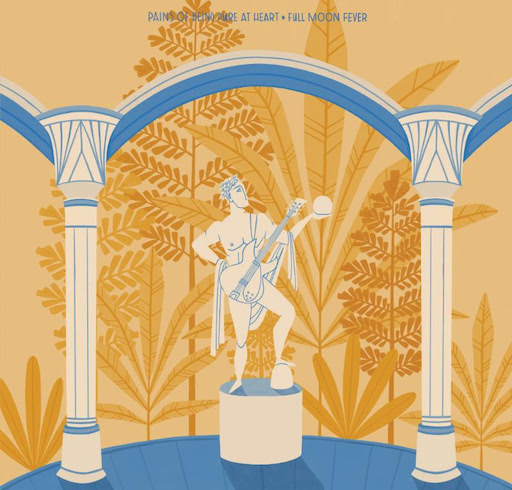
The latest installment in Turntable Kitchen’s series of releases featuring artists covering a full album of their choice is one of its most curious: The Pains of Being Pure At Heart tackling Full Moon Fever, the 1989 solo effort by Tom Petty. It’s a novel, unexpected choice for the band considering their core sound, but it’s also one that doesn’t make for the most gentle transition to a shoegaze/dreampop format. The otherwise sturdy songs have been made wispy and empty at their core, with even The Byrds’ “I’ll Feel A Whole Lot Better” turned into something dippy and fey. The key downfall is Kip Berman’s vocal performances throughout.
He didn’t need to try and replicate the twang-y tones of Petty but Berman makes the wrong choices throughout. He opts for his breathy croon when he should growl, and growls when he should get dreamy. It upends the more inventive moments like the band’s rendering of “A Face In The Crowd” as a synthpop dance classic and “A Mind With A Heart Of Its Own” as Beatles-esque blues. A pleasant diversion that will only inspire revisits to the Petty original. Maybe that was the point all along. Pains’ Kip Berman announced his debut solo EP Know Me More under the name the Natvral. Last year, the band released The Echo of Pleasure.
The Pains of Being Pure at Heart have covered Tom Petty’s 1989 solo debut Full Moon Fever in its entirety. It’s due out October 25th as part of Turntable Kitchen’s ongoing Sounds Delicious series—a monthly vinyl subscription of full-length cover albums, Full Moon Fever was Petty’s solo debut record and it is absolutely packed with hits. No less than 5 tracks charted on the Billboard Top 100: Free Fallin’, I Won’t Back Down, Runnin’ Down a Dream, Yer So Bad, and A Face in the Crowd. But even the tracks that didn’t chart could have been hits: Love Is A Long Road,Depending On You, A Mind With a Heart of its Own. The same could be said for so many of his albums. This dude’s catalogue is deep.
As the leader of the Only Ones, a band that drew fans like Johnny Thunders, Richard Lloyd, and Keith Richards, Peter Perrett was a musical force on the London scene of the late 1970s. After a few rocky, drug-filled, drug-fueled years, Perrett got sober but never hit the straight and narrow, and he’s still making great music. Many of you have probably heard The Only Ones’ best-known song, “Another Girl, Another Planet.” I consider it the most romantic punk rock song, even though most speculate it’s about heroin. A friend of mine gave me a mix tape with the song on it almost twenty years ago and I fell for him right then and there.
With singer Peter Perrett’s unique vocals and guitar sounds that lend to the feeling of shooting through space on a pink cloud. “I’ll always flirt with death, I’ll get killed, but I don’t care about it. I can face your threats and stand up straight and tall and shout about it. I think I’m on another world with you.” -Lyrics from, “Another Girl, Another Planet”.
The Only Ones came roaring through the scene in 1976, playing pubs and venues around London. Peter’s natural charisma brought about fans as well as praise from fellow respected musicians. New York bad boy Johnny Thunders, who was a New York Doll as well as a Heartbreaker, even felt compelled to approach the skinny, British singer to compliment him on his voice. A strong friendship continued after that fateful night. After the Only Ones’ demise in 1981, Peter and his wife, Zena, made a full-time job of selling dope out of their house. Was he worried they would be robbed or shot, he replied that even the worst thugs wouldn’t dare out of respect for Zena. She was the best cook in town—the item on the menu being crack. I’m surprised at how transparent and affable Peter is. It’s usually hard to get to the dark parts of a musician’s history as they want to highlight their best moments. This isn’t the case with Peter.
These days, Peter makes music with his two sons who were formerly involved in the Libertines as well as other hot London groups. In June of this year a remote show put together by Jesse Malin and NYC’s Bowery Electric in honour of Johnny Thunders’ birthday. Peter and his son played an acoustic song called, “Thy Will Be Done,” which was written long ago by Peter with help from Johnny Thunders to an audience of rock n’ roll fans worldwide watching through their computers.
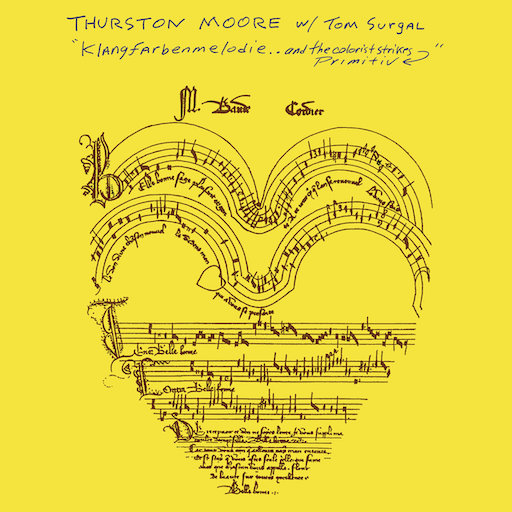
The solo discography of Sonic Youth co-founder Thurston Moore is littered with limited run work released on small indie labels amid his more blue chip LPs like Psychic Hearts and Demolished Thoughts. This 1995 recording of the guitarist making a free form racket with drummer Tom Surgal, for example, was originally issued only on CD in New Zealand by Bruce Russell of The Dead C. Did this need to be brought to a larger audience by U.K. label Glass Modern on a white vinyl pressing? Maybe not but we should still celebrate it.
Moore is as great an improviser as he is a songwriter and this explosive session is all the proof you’ll need of that. He sticks to a series of ringing tones, peppered with small sprays of feedback that builds and recedes with intensity as the mood and Surgal’s drums strike him. By the end, during the closing piece “Phase II,” he’s releasing little notes and squalls while the drums take control and drive them both toward infinity. Follow them into the light, brothers and sisters.
An extract from the Glass Modern Vinyl Reissue. First time on Vinyl. Originally released on CD only in New Zealand by the Dead C’s Bruce Russel’s label Corpus Hermeticum. New Liner notes by Bruce Russel too. “A 1995 release from the famed Sonic Youth guitarist, this recording sees him paired with free jazz drummer Tom Surgal for a blistering noise set, in keeping with New Zealand noise label Corpus Hermeticum’s aesthetic. The listener should not expect the sweet psychedelic pop of his Psychic Hearts album of the same year; rather, Moore explores his interest in freeform improvisation on this live set recorded in 1994. The recording is lo-fi, but that adds to it’s candid charm, as his guitar thrashing reaches peaks of noise only hinted at in early Sonic Youth. The duo works along lines that are more akin to the Blue Humans — with whom drummer Surgal began — and also seems influenced by such underground acts as Fushitsusha and the Dead C. Moore’s guitar is so distinct, however, that many parts here could be mistaken for a live Sonic Youth recording from that band’s more heady and chaotic ’80s period”
King Gizzard & The Lizard Wizard return with new album “K.G.”, their sixteenth since forming in 2010. In the wake of a global pandemic, it’s a collection of songs composed and recorded remotely after the six members of the band retreated to their own homes scattered around Melbourne,Australia. “K.G.” is a pure distillation of the King Gizzard sound, one that cherry picks the best aspects of previous albums and contorts them into new shapes via defiantly non-western rock scales. Over a ten-year span spent releasing an album every few weeks (or so it seemed) King Gizzard & the Lizard Wizard never repeated themselves, always pushing forward and trying new things whether it was lengthy jazz excursions, gloom-and-doom synth prog, or thundering thrash metal.
That changed some on 2020’s K.G., where the band revisit the approach used on Flying Microtonal Banana, the group’s 2017 album built around the avant-garde sounds of their custom-made guitars and altered instruments. Stuck in their various homes during the global pandemic, the band gravitated toward the unique instruments and built a batch of songs using their non-Western tunings and tones. Unlike that album, though, where that almost felt like a (mostly successful) gimmick, this time the guitars are more fully integrated into the songs. “Automation” and “Some of Us” kick and twist like classic King Gizzard-style psychedelic rockers, the acoustic guitars of “Straws in the Winds” have a snarling bite that matches the evil sneer of the vocals and sentiment of the lyrics, “Oddlife’s” guitar solos are pure prog, and “The Hungry Wolf of Fate” revisits the blown-out metal attack of their most recent studio LP with a nice mix of restraint and explosive power.
Even though much of the record transverses familiar sonic territory, the band still find some room for surprises. The acid house synths percolating behind the wall of guitars on “Minimum Brain Size” are a nice touch; the group work up a sweaty groove on “Ontolgy” and in the process sound something like Talking Heads butting heads with Kid Creole & the Coconuts; and in the album’s only real shocker, they drop some bubbly Madchester grooves on “Intrasport.” The sound is so slinky and giddily elastic, it makes one wonder what a full album of King Gizzard songs made for dancing would be like. Judging from this, and the band’s track record, probably pretty great. Apart from this one song, King Gizzard don’t break much new ground on K.G., and while that in itself might be something of a let down, the result is still quite pleasing. Listening to them tread a little bit of water is still better than listening to the fresh ideas of 99.9 percent of other groups, especially when it’s done with the energy and passion the band exhibit here.
Creating an immersive world in which to transport the listener to another plain, the songs meld into each other through percussive transitions that lead you through their world. Whether it is the stripped back Straws In The Wind, the jutting Ontology, or the pop-infused Intrasport, the band are firing on all cylinders to create a truly special album. Innovation, as ever, is the order of the day and, while the band are relying on the one concept of instrumentation, the variety of rhythms and grooves that they produce is dizzying.
They blend the mellower tracks with those that stomp and growl, songs that implore you to close your eyes and drift on their beauty with those that wrap you in swirling menace. Closing song, The Hungry Wolf Of Fate, distils all that down into one five-minute summary.
Sixteen albums in and King Gizzard & The Lizard Wizard show no sign of slowing their sonic experimentation and, with this album, again show that they have many avenues to choose from.
Another band we count as friends are Toronto’s PUP, who play a more aggressive, shout-y form of punk. Widerman credits Sum 41 guitarist Dave Baksh for giving invaluable help during Monster Truck’s early years; their 2011 EP Brown is named for the swarthy guitarist, who lent a ton of gear for its recording. While there isn’t necessarily a well-defined Canadian sound, one thing many players have in common is a focus on subtlety rather than pyrotechnics.
“One of the things I’ve noticed with Canadian artists in different media is there’s a lot of individuality,” Wilcox says. “Everyone from Neil Young to Joni Mitchell to whoever. Partly because there’s a certain feeling of isolation in winter. I don’t know.”
“I prefer guitar players who are able to tell stories through what they play,” says PUP guitarist Steve Sladowski, who cites Mitchell and Bruce Cockburn as some of his favourite Canadian players.
“Even someone like Alex Lifeson is somehow an understated guitar player. Playing in Rush, in a power trio, he’s happy to play what needs to be there. There’s some way of playing this really technical music and really proggy but never overplaying.” This guys have great pop sensibility and a penchant for great melodies, all dressed up in a jagged suit of chaos and energy.
For PUP, a band whose breakout album begins with the all-time great kick off line “If this tour doesn’t kill you then I will,” the only thing worse than being trapped on tour for a year is being trapped without the possibility of touring for a year. Innumerable great young bands have seen their touring careers stalled by the pandemic, and PUP is one of them: Instead of seizing the momentum of 2019’s phenomenal Morbid Stuff with another round of shows, the Toronto punk band is trapped at home and getting their aggression out with a characteristically misanthropic EP, This Place Sucks Ass. Titled after a routine tour refrain-turned-pandemic commentary (“at this moment in time, it feels so fucking real—wherever you are, it sucks ass right now,” frontman Stefan Babcock explains), the 17-minute release compresses the band’s infectious feel-bad punk energy into five new ragers and one cover.
While the sounds might vary, one thing that unites guitar bands is the hours they spend slogging it out on Canada’s endless highways (when you calculate the distance between Canada’s big cities, it starts making a lot of sense that Tom “Life is a Highway” Cochrane is a canuck).
Sladkowski points to two other highly aggro bands who have managed long careers in the north as examples of the creative risks bands can take in Canada
Pearl Jam frontman Eddie Vedder has unveiled a pair of new solo singles. Entitled “Matter of Time” and “Say Hi”, the songs were initially premiered during a livestream event benefiting Eddie and Jill Vedder’s EB Research Partnership.
“Matter of Time” is paired with an animated music video directed by Matt Finlin and Jeff Lermire, while “Say Hi” is accompanied by a live performance video. The latter track is especially noteworthy as it was written for Eli Meyer, a six-year-old boy whose affliction with Junctional Epidermolysis Bullos inspired the Vedder’s to launch their charitable organization in hopes of finding a cure for the disease.
Both songs are also available on now and will be released on limited-edition 7-inch vinyl (pre-orders are now ongoing).
Wednesday night’s Venture Into Cures livestream also featured appearances from Billie Eilish, David Letterman, Bradley Cooper, Jimmy Kimmel, Adam Sandler, Willie Nelson, and Judd Apatow, among others. You can also find a replay of the entire livestream below.
Earlier this month, Vedder sat down for a lengthy interview on the Howard Stern Show and spoke openly about Chris Cornell’s death and the grief he still feels to this day. He also revealed the one piece of advice he gave Bradley Cooper prior to filming A Star is Born.The official live performance video of “Say Hi” by Eddie Vedder. Written for Eli Meyer, a brave 6-year-old afflicted with Junctional Epidermolysis Bullosa.
The song is inspired by the “ComeSayHi” movement, an initiative started by Eli’s siblings to “Come Say Hi” to Eli to learn about EB. To help fund research aimed at treating and curing EB, please donate to the EB Research Partnership
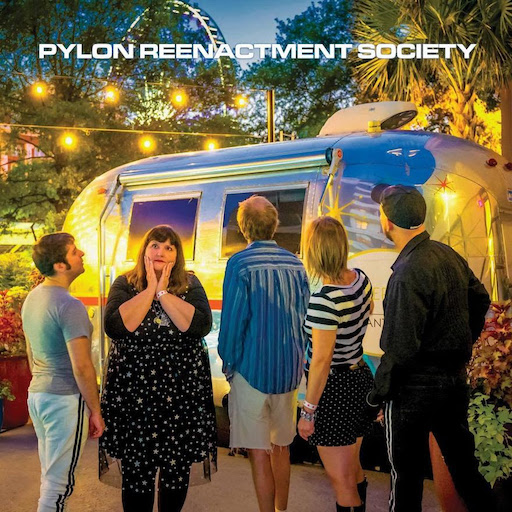
Through their on-again/off-again existence, the post-punk band Pylon may not have found the commercial success of their Athens, GA compatriots R.E.M. and the B-52’s, but their wiry dance funk sound has continued to carry forward, influencing the likes of Le Tigre and LCD Soundsystem. And while the original line-up will forever be shattered due to the untimely death of guitarist Randy Bewley, vocalist Vanessa Briscoe Hay has, since 2014, keeping the group’s legacy alive with her project Pylon Reenactment Society. Until now, this outfit has been content to play the music of Pylon, but this week they are releasing their first bit of new music with a 7” single featuring two freshly written jams. Both are very much in keeping with the original Pylon spirit, with the agitated rhythms of “Cliff Notes” sitting nicely alongside the glowering “Messenger,” and Hay’s vocals sounding like she hasn’t lost a step in the four decades since she first stepped onstage at the 40 Watt Club with Bewley, Curtis Crowe and Michael Lachowski.
The Orchard Enterprises “Cliff Notes” · Pylon Reenactment Society