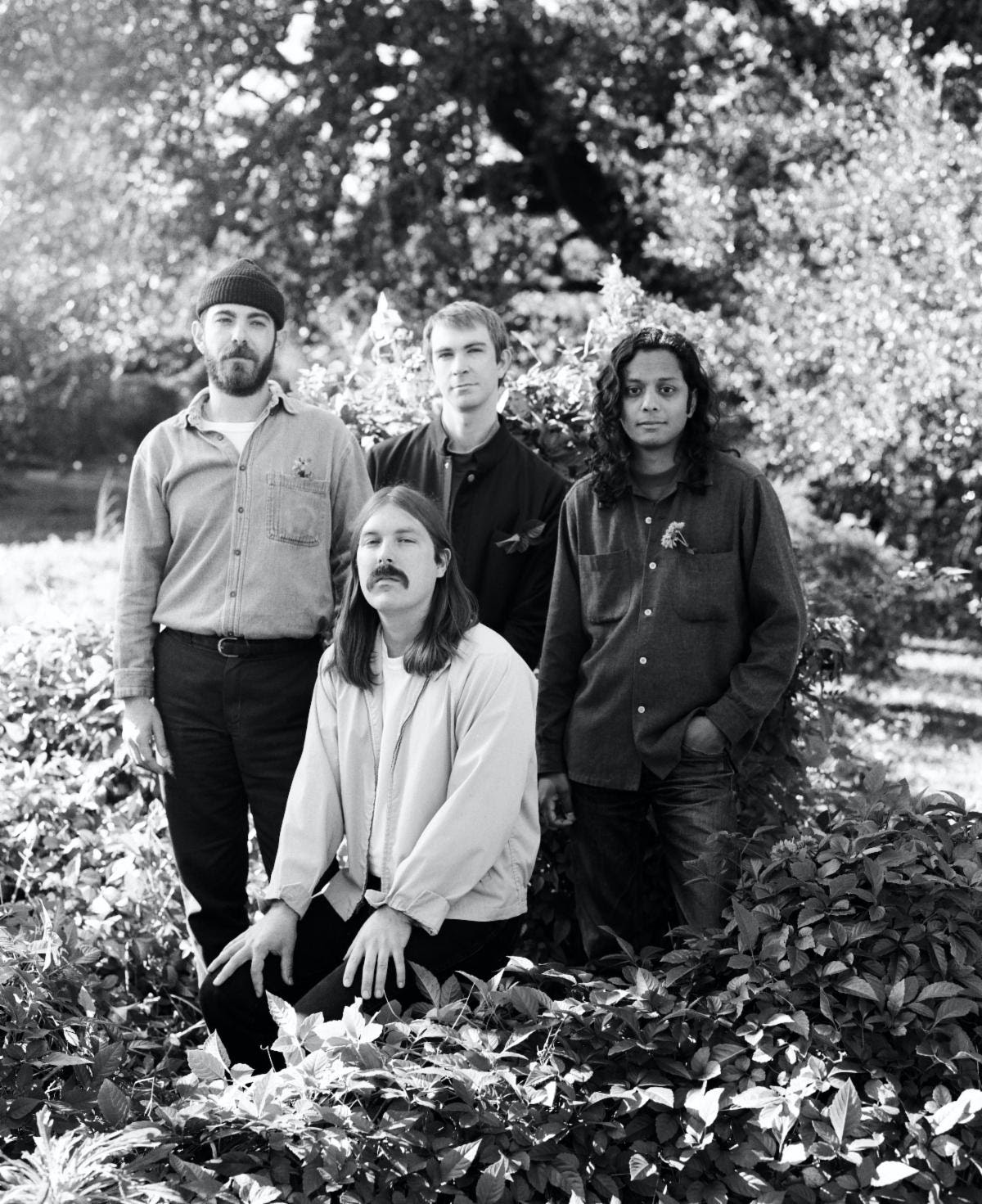
Arrlo combines elements of pop and rock in their debut songs “LSD” and “WFTWTE.” The two songs serve as a great introduction to the band, showcasing their musical and song writing talents. Both tracks are packed with emotion and energy.
Their first release, “LSD” combines the elements of heavy drums and catchy melodies to tell the story about a toxic relationship that’s coming to a close. This song has a dance beat, but stands out with an emo sounding vocal delivery style. The song features a breakdown section with a melodic guitar solo. The chorus on this track is irresistible and definitely hooky enough to get a party singing along. I could definitely see this song becoming an anthem at live shows or college parties!
On “LSD” Arrlo says: “With lyrics that showcase a “DGAF” attitude, LSD highlights the nature of wanting your cake, and eating it, too. So much growth comes from ending toxic relationships, but some of us don’t end them because we’d rather spare someone else’s feelings. That’s when two-timing, drug use, and mentally/emotionally checking out of the relationship all together can come into play. LSD gives off mysteriously seductive energy throughout, and presents the listener with the chaotic freedom of finally finding yourself again, by putting yourself first.”
“WFTWTE” is another song about the ending of a romantic relationship, where the singer seems to take the blame. The band mentions their hometown of Riverside, California in the opening lyrics. The songs title is an acronym meaning “Waiting For The World To End.” This song has another irresistibly catchy hook line, that feels very relatable during the pandemic as the singer paints the picture of sitting alone in an apartment and waiting. The guitarist plays a quickly paced riff which serves as another hook line for this already very catchy song.
Los Angeles’s Beachwood Sparks said that they hated the term “americana” to describe their music . But looking back now, there was something about their sound in terms of the production and energy in it that I think is missing from some of the big names in americana these days. It had that Laurel Canyon country-rock feel of bands like The Byrds and Buffalo Springfield but didn’t feel derivative. There was a buzz about it – the album felt messy but at the same time exciting. And the songs were just crazily good. Those first few bars of opener‘ Desert Skies’ still make the hairs on the back of my neck stand up. Even the cover is one of my favourite album covers of all time. Thank God they were reincarnated into GospelbeacH, but nothing will beat their debut – it’s a record I can’t imagine ever tiring of hearing and it’s great news to hear it is now being re-issued.
If ever a band sounded like the sunbaked children of a partnership between the trippy psychedelic dreamers of the paisley underground and the lonesome cowboys of the late-’60s Laurel Canyon cosmic country, Beachwood Sparks are it. The group’s self-titled debut album is a perfect distillation of the two thanks to soaring pedal steel, winsome harmonies, alternately twanging and swirling guitars, and songs that sparkle like lost gems. The band take care to adorn each sweet and sad melody with note-perfect arrangements that fill every corner of the mix with something good. They coat the melancholy songs in a woody patina of dusky sunlight, surrounding Chris Gunst’s fragile vocals with sympathetic strums and vocal harmonies. “Canyon Ride” is a blue delight, especially when the downcast “doo-doo-doos” come in, “New County” is a lovely laid-back waltz that sounds lifted from a late-’60s Byrds record, and “The Reminder” features some excellent barroom piano and sounds as lowdown and broken as the saddest Gram Parsons song.
The bulk of the album revolves around these tender ballads with the band showing off considerable skill as singers, writers, and players. They balance these moments with a handful that cut loose a little as they kick up some serious dust on rockers like “Sister Rose” or “The Calming Seas,” take a detour to the beach for “This Is What It Sounds Like,” drop some acid-y, guitar-heavy elements into the woozy “Something I Don’t Recognize,” and ramble through some hippie C&W on “Silver Morning After.” No matter the mood or tempo, every song comes across like the band playing at their absolute peak. Most of the members of the group had already been making music for a long time when they started Beachwood Sparks, notably with lo-fi heroes Further, and it shows. They play with confidence and restraint, while still filling the uptempo songs with a sense of joy and the sad songs with tear-streaked soul. Beachwood Sparks might not be the first band to give cosmic country a shot, but their debut album proves right away that they are one of the best.
[The 2020 reissue of the album adds a second disc of single tracks and rarities, including two that were on the Japanese release of the record. Two alternate versions of songs from the album are fun: “This Is What It Feels Like” has an explosive psych-rock coda that doubles its length; “Canyon Ride” leans even more into Laurel Canyon rock with a ripping guitar solo added.
The band’s 1999 Sub Pop single is made up of one of their summeriest tunes in “Midsummer Daydream” and a pleasantly laid-back slice of country-pop titled “Windows 65.” The two tracks from the Japanese album are lovely: “We’d Love to See You” is fine soft rock complete with electric piano; “Surfing Saints” is drifting psych pop that the Rain Parade might have come up with if they were stranded in the desert for a week. Best of all is the previously unreleased song “Morning Light.” It’s hard to see why this jangling, sun-dappled power pop ballad didn’t make the final cut for the album. These extra tracks help tell the complete story of this version of the band and make for an essential addition to what’s already a brilliant album.
Born to a musical family in rural Wales, Greta Isaac started writing songs as a child, often in her native Welsh language. The poetic traditions and storytelling of her homeland continue to shape and influence her artistic process; one that has culminated in her forthcoming EP “Pessimist” due out next spring.
Cramming joy, sorrow and hope into each of her explosive pop tracks, Greta Isaac is about to embark on the release of a collection of songs written across an 18-month period of self-reflection.
Greta, with other writers and producers wrote in their bedrooms, tracked vocals in tiny box studios and worked on the tracks bit by bit over months and months, letting them breathe before coming back to them when it felt right. Her first offering “Power” combines a sharp message with choral arrangements and minimal background music; an almost a cappella song about the effect of poisoned compliments. Singer-songwriter, Greta Isaac, expresses the effect of poisoned compliments in her commanding new single “Power”.
Greta says, “This is about how I feel being looked at as a woman and how I can feel useless without the affirmation of the male gaze. Each line starts as a compliment then slowly transitions to sinister promises. The idea of being complimented about my appearance and when I haven’t accepted them, or actively challenged them, my appearance and my femininity is used as a weapon against me”.
‘Pessimist‘ is the lead track from Welsh Singer Songwriter Greta Isaac’s forthcoming EP. Built upon insistent nagging guitar loops, beguiling multi faceted vocals and bombastic choruses that have hints of Taylor Swift, releasing the frustration and self annoyance at constantly dragging yourself down. It comes after an 18-month period of artistic and personal self-reflection for Isaac. She says: “I wrote this song about seeing the contrast between having this very childlike carefree mindset and that suddenly switching into this negative, exhausted state of mind. This song is a perspective song, an ode to myself.” Fantasically refreshing!
With her clear talent for crafting the catchiest of pop melodies, the forthcoming EPPessimist takes influence from the poetic traditions of the musical family in rural Wales where she grew up. Now in London and working closely with writers and producers like Martin Luke Brown and Matt Zara, this new single becomes especially personal for Greta with its bedroom written lyrics and tiny box studio recordings.
Loved the debut EP from New Orleans chooglers Silver Synthetic which came out last year and with “In The Beginning,” the band announces their first LP for Third Man coming on April 9th. The song follows the debut’s sunbaked country saunter — a gulf stream gust of Cosmic Americana that’s steeped in twang with just a hint of West Coast vibe and running through it. While its not easy to shake the salt air out of the song, at its core there’s a heat struck, back porch sound to ease “In The Beginning” that feels soaked in humid Southern summer nights with nothing on the docket the next day. Despite its title, the cut’s a bit of an end of party tune, winding down with the last couple of stalwarts still taking in that star-borne vista and feeling set for the moment. The band’s eponymous debut sets them up nicely to slot in among the current cosmic revival, clipping a couple of stunners from the EP and setting them up with a whole bunch of new favourites as well.
New Orleans’ Silver Synthetic were formed by members of other, more raucous, garage punk groups who wanted a musical outlet where they could, you know, chill. Their debut album is a real cool time indeed, drawing on a wide variety of ’60s/’70s psychedelic guitar pop (The Kinks, Big Star, Television) with undeniable hooks, heavenly harmonies and stellar musicianship. If you are also down with a little noodling, “Silver Synthetic” provides a pasta factory’s worth, all deliciously al dente and made with purpose. The jamming never gets in the way of the songs, though, and there’s not a mediocre one on this fantastic record.
The magisterial “Chasm Killer” is a baroque gem with the album’s best guitar solo.
In the Beginning · Silver Synthetic · Third Man Records Released on: 2021-02-17
Since 2015’s GUYD The Phoenix Foundation have been writing, recording, touring with the New Zealand Symphony Orchestra, creating the acclaimed soundtrack for Hunt For The Wilderpeople, building shrines to light, creating scores for VR, producing other artists and baking sourdough. Now they are ready to release some more music into the swirling oblivion that is 2020
Every Friend Ship needs a Life Boat. So we have two additional songs from the album here, featuring the lovely vocals of Fazerdaze on ‘Beside Yourself’
Dinosaur Jr. are returning with a new album: “Sweep It Into Space” is out April 23rd via Jagjaguwar Recordings. Kurt Vile co-produced the album and played 12-string guitar on the new song “I Ran Away,” which is out today. Here is Sweep It Into Space, the fifth new studio album cut by Dinosaur Jr.. during the 13th year of their rebirth. Originally scheduled for issue in mid 2020, this record’s temporal trajectory was thwarted by the coming of the Plague. But it would take more than a mere Plague to tamp down the exquisite fury of this trio when they are fully dialled-in.
“Sweep It Into Space” follows Dinosaur Jr.’s 2016 record “Give a Glimpse of What Yer Not”. They began recording the new one in autumn 2019 at Biquiteen in Amherst, Massachusetts. After the pandemic interrupted recording with Vile, J Mascis “ended up just mimicking a few things [Vile]’d done,” as he said in a press release. “But the recording session was pretty well finished by the time things really hit the fan.”
And Sweep It Into Space is a masterpiece of zoned dialling. Recorded, as usual, at Amherst’s Biquiteen, the sessions for Sweep It Into Space began in the late Autumn of 2019, following a West Coast/ South East tour. The only extra musician used this time with Kurt Vile. Indeed, Sweep It Into Space is a very cool album. As is typical, Lou Barlow writes and sings two of the album’s dozen tunes and Murph’s pure-Flinstonian drumming drives the record like a go cart from Hell. Lou’s songs here are as elegant as always. But there are very few moments where you wouldn’t know you were hearing Dinosaur Jr. in blindfolded needle drop.
“I Ran Away” the new song by Dinosaur Jr. from the album ‘Sweep It Into Space’, out April 23rd on Jagjaguwar Recordings.
Fans of the rock band Yes—who gained entry to the Rock and Roll Hall of Fame in the Class of 2017 on their third nomination have had, in recent years, two opportunities to enjoy the progressive rock group in concert. There’s the band that uses the official Yes name, and which features the long time members, guitarist Steve Howe and drummer Alan White. And for several years, there was Yes Featuring Anderson, Rabin and Wakeman, made up of Yes co-founder/vocalist Jon Anderson, and long time band members, keyboardist Rick Wakeman and guitarist Trevor Rabin (who may or may not return together).
For fans of classic Yes, we’re going to take you back to the early ’70s when the band was releasing album after album of prog rock goodness.
After two musically solid but poor-selling albums, the five-piece psychedelic-progressive rock group Yes privately suspected their label Atlantic was looking for some serious commercial progress in order to justify keeping them under contract. Their London-based A&R man Phil Carson was typically hands-off, but with label-mates like Emerson, Lake & Palmer, Led Zeppelin and CSNY catching fire, Yes could easily be left behind. In late spring 1970 they retired to a farm in Devon, England, for rehearsals with a “make or break” attitude.
The band had been used to building LPs from a combination of their own compositions and a sprinkling of unusual cover tunes, often radically reworked from their sources (the Byrds’ “I See You,” the Beatles’ “Every Little Thing,” Buffalo Springfield’s “Everydays” and Richie Havens’ “No Opportunity Necessary, No Experience Needed” had appeared on the Yes and Time and a Word albums). This was to be their first album of entirely original material.
Bill Bruford was likewise able to be subtle one minute and crash the next. Using a jazz approach, he tended to imply the main beat rather than always state it as a rock drummer would. His approach was defined by variety. ChrisSquire played bass like a lead instrument, generally with a heavy-gauge pick. Like the Who’s John Entwistle, he sounded at times like a low-pitched guitarist rather than a harmonic accompanist, part of the rhythm section. TonyKaye had trained as a concert pianist, but he’d abandoned classical music for pop, playing a Vox Continental in various groups before joining Yes in 1968 and settling on the Hammond B-3 organ as his main squeeze. Vocalist Jon Anderson (who initially spelled his first name John), drummer Bill Bruford, keyboardist Tony Kaye and bass player Chris Squire were integrating their new guitarist Steve Howe, after original member Peter Banks left in April. Howe, who’d previously been with the “freakbeat” band Tomorrow, was at home in a number of genres, including folk, blues and country, and was soon exerting a strong influence on the group sound as they wrote and rehearsed new material. His main axe was the Gibson semi-acoustic ES-175, often considered a jazz guitar. He was the type of versatile player who could take advantage of it. He could play powerful block chords, wail jagged solo lines, flat-pick or fingerpick; whatever it took, he supplied it.
Anderson sang in a high tenor, and was responsible for most of the group’s lyrics, which tended toward the mystical, pastoral and mythological. Yes’ producer-engineer Eddy Offord described how the group teased Anderson for his wordplay: “The band gave him such a hard time. They’d all say to him, ‘Jon, your fucking lyrics don’t make any sense at all! What is this river/mountain stuff?’” Offord says Anderson would always explain, “I use words as colours, for the sounds of the words, not the actual meaning.”
Offord recalled, “Bill Bruford didn’t like Jon messing with the tracks once they were recorded. I remember we were trying something—Jon wanted to have some echo in the background—and Bill got up and yelled, ‘Why don’t you put the whole fucking record in the background with echo then?’ But what I learned about working with them was, if somebody has an idea, it’s better to try it than sit around debating it.” Working at Advision Studios in London during autumn 1970, the group aimed for precision and even perfection. Most of the time Squire and Bruford recorded their parts and all other instruments and vocals were meticulously stacked on top, filling the 16 tracks available. Recording their complex, multi-part songs sometimes in takes as short as 30 seconds, they redesigned and edited pieces together as they went. Some heavily rehearsed sections were wedded to spontaneous studio creations. Offord was so expert that for much of the time the listener can’t hear the seams. So what appears to be superhuman effort, with musicians switching tempos, moods and effects at will, is actually a result of brilliant musicians who could hear the totality of the music in their heads as it emerged in bits, and a producer who could make it sound organic even when it was built like an assembly-line machine.
The nine-minute “Yours Is No Disgrace” kicks off the LP with a show of force, a sort of warped tango rhythm with Bruford and Howe assertively locked in, extremely prominent bass work, a Howe transitional solo and Kaye’s organ holding the strands together. Anderson and harmony vocals don’t enter until 1:30, with a tempo change, a Hammond B-3 bed and lyrics that are both evocative and opaque: “Yesterday a morning came, a smile upon your face/Caesar’s palace, morning glory, silly human race.”
Instrumental effects and changes in dynamics and tempo continue to oscillate, circling back like a classical sonata to theme and variations. There are sections that sound like prime King Crimson or Genesis; the arrangement keeps us guessing. At the 6:00 mark, Howe performs a dazzling series of solos in different styles, but isn’t allowed to linger before Anderson re-enters. At this point the lyrics are even wilder: “Battleships confide in me and tell me where you are/Shining flying, purple wolfhound, show me where you are.”
Strangely, the next track is “Clap,” a Chet Atkins-style acoustic guitar piece recorded at Howe’s very first live gig with Yes, at the London Lyceum on July 17th, 1970. Incorrectly and unfortunately listed as “The Clap” on the original LP, it’s a fine showcase for Howe, but what it’s doing sequenced between “Yours Is No Disgrace” and another nine-minute epic, “Starship Trooper,” is a mystery. Surely such a contrast would have worked better tucked somewhere on side two? Howe laid down a longer version of “Clap” at Advision, but it wasn’t released until 2003 when Rhino issued an expanded CD of the album.
“Starship Trooper” is in three parts running together, with “Life Seeker” written by Anderson, “Disillusion” by Squire and Howe’s “Würm.” Anderson’s at his peak, and again the instrumentalists are constantly impressive and in motion. Listen to Bruford’s variations as he moves around the kit and Squire puts in spectacular punctuation. At one point, Howe’s guitar track is run through a flanger, giving it a synthetic sound. He also does another Atkins-like country backing for a multi-tracked vocal grouping. Howe’s final section is a solid rocker that pounds a couple of chords into submission, Kaye dominating the background and Howe up front.
Yes rose at the same time that free-form FM radio stations were sprouting in every market. Song length was no concern for the programmers and DJs, who had no problem playing the full versions of “Roundabout” (8:29), “Starship Trooper” (9:23), “And You and I” (10:09) and “Close to the Edge” (18:50), which took up an entire side of the LP of the same name. Though edits of these songs for the most part failed to click with Top 40 programmers—at a time when rock bands were still a pop radio mainstay—their lack of mainstream appeal didn’t diminish their fans’ enthusiasm.
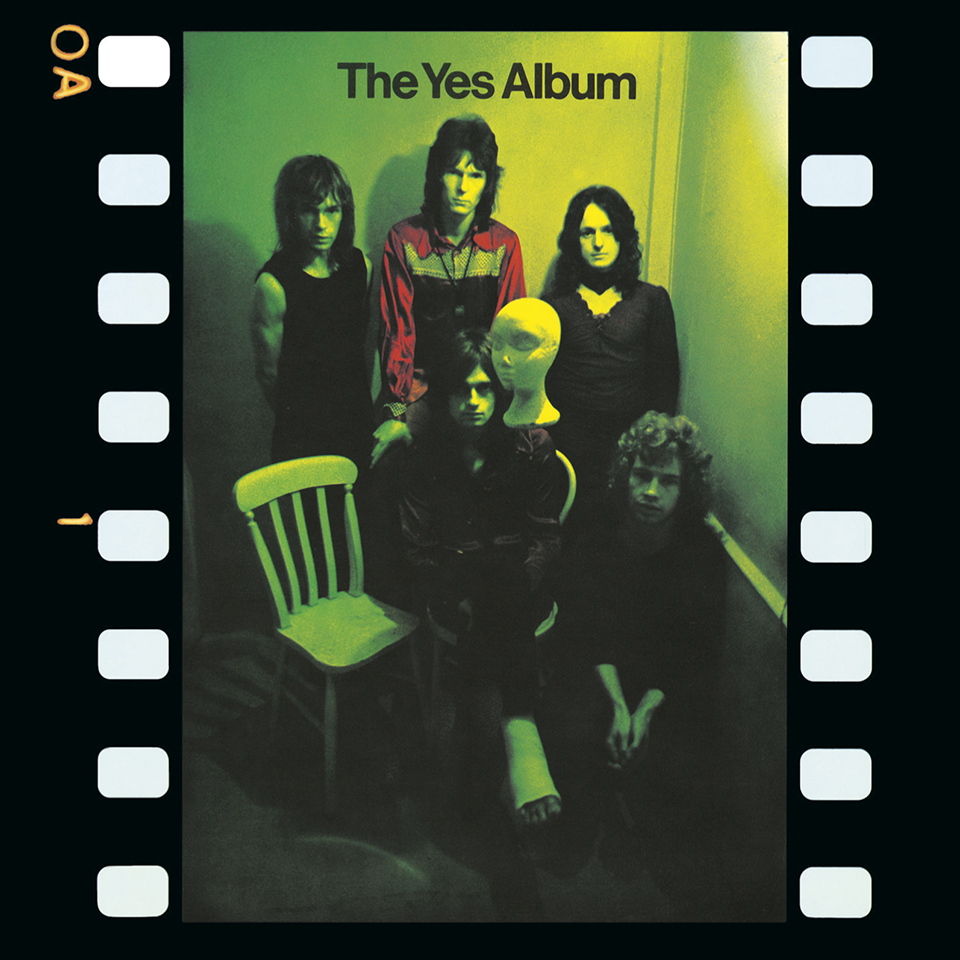
Diehards understand that that wasn’t what the band was about. This wasn’t a singles band. Yes made albums. And they did so with great regularity, releasing eight in a six-year span from 1969 to 1974 including 1973’s live triple-LP Yessongs. The band’s third release, 1971’s The Yes Album, featured Anderson and Howe (making his Yes debut), co-founder and bassist extraordinaire Chris Squire, and Yes original members keyboardist Tony Kaye and drummer Bill Bruford.
Side two begins with a two-parter meshing Anderson’s “Your Move” and Squire’s “All Good People.” The first half, with lyrics that use a game of chess as a metaphor for relationships, was released as a single and did get some AM airplay, but the FM dial took to the whole thing and made it ubiquitous, helping “The Yes Album” on its slow but steady trek to gold record status when released on February 19th, 1971.
“Your Move” utilizes a drum-bass tape loop, which was Offord’s solution to a frustrating session in which Bruford and Squire laboured hard but couldn’t get it right for long enough. Listen for Howe’s overdubbed 12-string. Squire’s bouncy “All Good People” is about as jaunty as Yes ever got, and it’s remained a fan favourite for 50 years.
“A Venture,” written by Anderson, fades in on Kaye’s delicate piano, Howe chimes in and the track becomes a very Beatlesque upbeat romp. On an extended version, released in 2014 as part of a deluxe CD/Blu-ray reissue supervised and remixed by Steve Wilson, there’s nearly two minutes of extra soloing, Howe and Bruford doing some excellent work. Offord has said he regrets the early fade on the original LP. The album concludes with the strong “Perpetual Change.”
It’s got a very cinematic, dramatic opening, after which Howe does a brief countrified electric solo, and the tumult dies out for Anderson’s gentle entry. The choppy main theme re-enters (listen what Bruford does here), and then, true to the title, it switches back into a lower gear. Much of the track consists of two overdubbed Yes bands playing in different time signatures.
The LP features four all-time classic rock greats: “Yours Is No Disgrace,” “Starship Trooper,” “I’ve Seen All Good People” and “Perpetual Change.” All are featured on “Yessongs”, which was recorded during their 1972 North American tours. Bruford performs on two of the collection’s tracks, but left the group after they finished recording Close to the Edge that summer. His replacement was Alan White and the result on the remainder of the tour and for the next several years was—despite the band’s numerous iterations—the one that many define as the classic Yes lineup: Anderson, Squire, Howe, Wakeman and White.
“The Yes Album” was very successful, and Yes was at last well-established as one of rock’s perennial acts. It would be Kaye’s last album with the group (until he returned to the line up more than a decade later). They wanted him to integrate synthesizers and other electronic sounds into the mix, and he wasn’t having it. His replacement, Rick Wakeman, was more than amenable, and Yes’ next discs, “Fragile” and “Close To The Edge”, were even bigger hits. The behemoth “Tales From Topographic Oceans”, which partisans cite as the apotheosis of ’70s prog-rock, was waiting in the wings.
Dundee psychedelic indie rock band Midnight Alleys released their first single of 2021 titled ‘Broken Ties & Stolen Lines’ on the 8th of February. The band consists of Neil Morrison (Vocals/Guitar), Matthew Kermally (Lead Guitar), George Mackenzie (Bass), Fabio Whyte (Keys/Vocals) and Ben Connelly (Drums). This track is another unique and fresh foray into the Scottish scene from the group. Nevertheless, ‘Broken Ties & Stolen Lines’ cannot simply be dismissed as just another genre-fitting indie song. The powerful track starts off with a hazy, vibrato wave reminiscent of MGMT before unexpectedly rolling into thundering drums as the members tease what they are about to phase into for just under three minutes. This tune gives each individual instrument a second in the spotlight in which the raw talent of the Dundee five-piece bounces between and compliments one another. The band play to each other’s strengths on this single and push each other forward without a second of anyone overpowering or outshining another member.
Not a single piece of songwriting in this track is unintentional. As the strong, snarling and ear-seducing vocal reaches the hook, the left channel guitar and Door-esc keys echo the melody before breaking down into scratchy-indie overdriven rhythm guitar, blended with charging funky bass, shuffling crisp drumbeats, playful dancing keys and woozy wah-wah lead. Vocalist Neil’s control and pitch is prevalent in any of the trippy lyrics which shine through the song. With clear hints of Gallagher and Turner, his vocal is still unique in its own way and truly brings an already great instrumental full circle with a powerful and memorable voice.
‘Broken Ties & Stolen Lines’ truly shines after two minutes, sixteen seconds in which the whole band take part in a guitar solo. The strength of the slick lead guitar is supported by each instrument in a section which leaves the listener imagining themselves watching these five lads command the crowd once restrictions are a thing of the past. Ending with a walkdown and some cymbal crashes, the song demands that the listener immediately listens to every other available single from the boys.
The talent is there. The songwriting proficiency is clear. The sound is tight.
‘Broken Ties & Stolen Lines’ is an impressive and dynamic tune. thanks/the-music-files.com/
After a break of over four years between album releases, Australian duo Big Scary announce fourth LP ‘Daisy’. Their most playful collection to date, the tracks are full of drama – a little bit spooky and a little bit silly. It’s ok to LOL when you listen (and do a little boogie), but equally there is a thoughtfulness to be discovered within the themes and arrangements. The pair of Joanna Syme and Tom Iansek reflect broadly on superficiality, naivety and fantasy, compared with the complexities of reality, and the ongoing exercise in thoughtful living. Dynamic relationships are explored, between lovers old and new; and with the voice in your head.
Since releasing their last album ‘Animal’ in 2016 the pair have dived into broader creative projects. Tom has released three albums across solo project #1 Dads and duo No Mono, and produced or engineered releases for Maple Glider, Tom Snowdon, The Paper Kites, Airling and Bec Sykes. Jo created a second label imprint Hotel Motel Records (the first being Pieater, run with Tom Iansek and manager Tom Fraser); releasing four LPs, eight EPs and many singles; and toured Australia and Canada with the likes of Quivers and Cool Sounds, as well as working the Pieater releases.
All songs written and performed by Big Scary, except for “Bursting At The Seams” where extra percussion was performed by Jim Rindfleish and live strings were performed by Emma Kelly


![Beachwood Sparks [Deluxe Edition]](https://rovimusic.rovicorp.com/image.jpg?c=VTzY6S_nwk-kpTMAgzPohlWnbEN5fCjifro6xhIBuB4=&f=5 "click to embiggen")