New 7″ single from London punks Fresh! Out 31st August. The London poppy indie punk band, Fresh have released a new. The band have also announced two acoustic tours next month as well as playing some full band dates at Big Scary Monsters‘ Big Day Out and supporting Camp Cope & Caves in London and Nottingham.
Having successfully toured the albums from Hooky’s previous bands for over eight years now, Peter Hook & the Light have now reached the late eighties and early nineties albums of new order, “Technique” and “Republic” in their consecutive run and have announced a raft of new concert dates.
As has become their custom, all dates feature the Light performing an opening set of Joy Division material.
‘Technique’, New Order’s fifth studio album chronicles the impact of acid house on the band, marking the clearest statement of the rock and dance influences which were shaping their output. released in january 1989, just after the bands infamous G-mex gig and aftershow downstairs at the Hacienda in december the previous year, it became New Order’s first album to go to number one in the UK. it was also hugely successful in the united states where the influence of Quincy Jones’ Qwest label regularly got the band’s singles to the top of the american dance charts, ‘Technique’ was driven by the classic acid house single “fine time” which rivals “Blue Monday” as probably the most openly dance orientated record the group ever produced whilst other tracks on the lp “Round and Round”, “Mr disco” and “Vanishing Point” also reflect the dance sensibilities then fusing their way into New Order’s sound. yet like on its predecessor, “Brotherhood”, these are balanced by the vocal led, more rock leaning “All the Way”, “Gulity Partner” and “Run”.
legendarily recorded in ibiza in 1988, ‘Technique’ has often been observed to capture the sound of that summer and the heady period back them both on the island and in the uk and of course, Manchester. as is widely known, the band didn’t actually do much work in ibiza, a jaunt that Factory label boss Tony Wilson once told Peter Hook “was the most expensive f*cking holiday you’ve ever been on”. the band returned to the UK to finish the lp at Bath’s Real World studios later in 1988, itself the scene of another legendary New Order party when recording was completed.
In many ways, ‘Technique’ epitomised its time and the culture surrounding it. it came out to generally ecstatic reviews from the top notch echelons of the music press. in the uk, melody maker called it “a rare and ravishing triumph” whilst nme proclaimed the band “had fashioned an lp of rare and unflinching honesty”. across in the states, spin called it New Order’s best ever album, rolling stone referred to its “sonic presence with immaculate playing” and pitchfork sum up the album simply as “magnificent.”
“placed in the perfect position to deliver the definitive alternative take on house music, the band produced another classic record” – all music
Many consider ‘Technique’ to mark the high point of New Order and as they went on from the album to headline Reading festival in august 1989, before going on hiatus and also pursuing their solo projects, this is generally thought of as the golden period for the band.
due to the well documented history surrounding ‘Republic’, it is remarkably difficult to characterise it as sharing the same sunny outlook as ‘Technique’ but Hooky’s decision to include it in these concerts underline his commitment to perform all of his catalogue that he has committed to record. Not that ‘Republic’ wasn’t hugely successful. again it went to number one in the UK and became the band’s biggest ever selling album in america, narrowly missing the billboard album chart top ten peaking at number 11.
however it is not unknown that it was new order’s most difficult album to make. Factory records had hit financial trouble and needed a new order album to bail themselves out so the band were coerced into recording the album in to save Factory. something that didn’t entirely work out as Factory was then to go bankrupt in november 1992 and New Order then signed to London Records, an offshoot of warner bros with ‘republic’ released in may 1993.
The band roared back with first single “Regret”, still thought of as one of their finest ever, and subsequent singles “Ruined in a Day” and “World” did well, both in their original versions and as remixes which again dominated the dance charts.
It’s not hard to deduce that the demise of Factory, coupled with the ongoing difficulties surrounding the band’s involvement in Manchester’s Hacienda as well as internal friction within New Order and due to the band members’ solo projects, all had an impact on the recording sessions and mood that lies behind “republic, something that Stephen Hague did his utmost to assuage in producing the lp.
Still considered a worthwhile addition by fans to New Order’s catalogue, yet, if not perhaps hitting the standards they had previously set for themselves, ‘Republic’ did receive some strong reviews. nme’s dele fadele awarded it 8/10 on release whilst all music commented that “‘Republic’ simply borrows elements of contemporary innovations in club music to frame a set of effortlessly enjoyable alternative pop songs.”
Say Hi is Eric Elbogen. It used to be called Say Hi To Your Mom. Like a good neighbor, A new Say Hi LP! Can you believe it?! Caterpillar Centipede is record number twelve, with ten rock gems that will worm their way into your heart in whatever way possible (hence the title). LPs, CDs and a brand new t-shirt are available in addition to the digital version . Until this week we hadn’t though about Say Hi for probably the best part of a decade. Then, as they do an email landed in our inbox, declaring a new album on the way, a new single to listen to and we were instantly propelled backwards, to a box room in a Leeds flat, and it was every bit as exciting as we remember it.
The track, Green With Envy, is the latest single to be lifted from Say Hi’s upcoming album, Caterpillar Centipede, which is out next week. With it’s Teenage Dreams like guitar riff, glitchy electronic pulse and emotive vocal, it’s just a fabulous alt-pop song. As Say Hi frontman, Eric Elbogen recalls, “‘riffage’ and ‘anthem’ were the two words going through my mind once the tape was rolling”. He’s not wrong; it’s a stone-cold indie-disco floor-filling banger, just about 10 years after they went out of favour with the mainstream. Still, with an album inspired by being visited in a dream by a centaur called David Bowie, Say Hi might just be the band to bring it back into fashion, or at least have those of us too old for dancing dreaming nostalgically of a youth well lived: either way it’s a triumph.
What do you do when your long term relationship grinds to a halt? If you’re lifelong friends Lily Rae and Alex Wisgard then you form Fightmilk. Coming together in 2015 as a heady mix of angst, alcohol and Kirtsy MacColl, the duo set about writing the songs that would soundtrack their break-ups and, reference It’s Always Sunny In Philadelphia wherever possible. Following two well received EP’s the band are set to take the full-length plunge in November, with the release of their debut album, Not With That Attitude.
Ahead of Not With That Attitude’s release, the band have this week shared their brand new single, Four Star Hotel. The track details how, towards the end of both their relationships, Lily and Alex had independently booked holidays to Amsterdam, which ended with the same conclusion, a holiday will never save a relationship. As Alex explains,“almost every line is based on one of our two true stories, from the shit-eating grins in the holiday photographs to having to push two twin beds together in a hotel room”.
Their tales of sexless nights in swanky hotel rooms, fleeing from weed cafes and, “kissing for the camera”, are set to their usual blend of ferocious riffing, and pounding drum beats. With a sound equal parts Weezer and Diet Cig, and lyrics so acerbically comic that Art Brut would be proud of them, Fightmilk are bringing a fresh take on the oldest, angstiest subject known to songwriting, and it sounds wonderful.
10 songs about crushing hard, acting out, and running away to solve crimes in Sweden, available on GORGEOUS pink vinyl thanks to the good folks of Reckless Yes Records.
MC5 only released three albums, but they were ferocious, adventurous, and confrontational enough to secure the group’s place as one of the greatest rock ’n’ roll bands ever. Singer Rob Tyner, guitarists Wayne Kramer and Fred “Sonic” Smith, bassist Michael Davis, and drummer Dennis Thompson came together as the MC5 in 1965. The band performed for several years before making its first record. This year is the 50th anniversary of the recording of the band’s incendiary debut, Kick Out The Jams, which was recorded live over two nights at Detroit’s Grande Ballroom in October 1968.
To celebrate, MC5 release Total Assault: 50th Anniversary Collection, a limited-edition boxed set that features all three of the band’s albums pressed on coloured vinyl. It includes Kick Out The Jams (red vinyl), Back In The USA (white vinyl) and High Time (blue vinyl). The albums come in sleeves that faithfully re-create the original releases, including gatefolds for Kick Out The Jams and High Times. All three are housed in a hard slipcase with new art and previously unseen photographs by world renowned photographer Raeanne Rubenstein. The music on Total Assault shows why the MC5 is held is such high regard today with indelible tracks like Kick Out The Jams, Human Being Lawnmower and Sister Anne.
The set also includes a new essay by Creem magazine founding editor/writer and Uncut contributor Jaan Uhelszki, who writes: “Turned loose on a bare stage, the MC5 were among the most awe-inspiring perpetrators of sheer bombast and rock and roll brinkmanship alive… They tore through the stuff they heard on the radio with a fierce intensity that transcended the original artists’ intent. Tunes by James Brown, Chuck Berry, the Kinks and the Rolling Stones vibrated at a higher frequency when the Motor City Five tackled them.”
MC5 co-founder and guitarist Wayne Kramer will release his memoir The Hard Stuff: Dope, Crime, the MC5, and My Life of Impossibilities on August 14th before hitting the road with a new all-star line-up of MC5 called MC50. The group will perform Kick Out The Jams in its entirety, along with other MC5 classics.
In the late 1960s, Wayne Kramer and his brothers in the radical Detroit punk group MC5 launched a heroic high energy rock and roll assault on US culture in an attempt to bring down the government with a gonzoid manifesto of ‘dope, rock and roll and fucking in the streets’ … Their revolution ended in chaos after being kicked off two record labels and culminating in the band breaking up, with members descending into heroin addiction and imprisonment. The MC5s never had a hit record, but the three classic albums that they made – and their impassioned philosophy and mythology – inspired bands like the Sex Pistols, The Clash, The Ramones, and Johnny Thunders, all the way through to Julian Cope, The Cult, and Primal Scream.
Here, for the first time ever on the page, is the inside story of one of the most chaotic and revered bands of all time: a band of brothers from Detroit who – like The Stooges – transformed the power of rock ‘n roll into a revolutionary force.
A rollicking account…from his rough upbringing in post-war Detroit, to his transformation from greaser guitarist to rock ‘n’ roll revolutionary.”–MOJO “Relives those energising days of the late ’60s, when Detroit’s MC5 mixed rock and revolution with free jazz and exceptional hair…An inspiring and redemptive tale.”–Uncut“Wayne Kramer’s story is an incredible tale of rock ‘n’ roll redemption. The MC5 crystallized the ’60s counterculture movement at its most volatile and basically invented punk rock music. But Wayne’s life proved to be as chaotic as his groundbreaking guitar playing. Rogue, rascal, rebel, revolutionary, artist, addict, inmate, poet, prisoner, and now proud papa, Brother Wayne Kramer is one of the wisest people I know, and he has earned that wisdom the hard way. The world needs to know this man’s story. Here it is.”–Tom Morello, guitarist of Rage Against the Machine, Audioslave, and Prophets of Rage
“Wayne Kramer is the biggest badass in rock ‘n’ roll. Period. And The Hard Stuff proves it. Between these covers is a story of survival, talent, madness, dope, guts, and a sheer, fearless commitment to bringing straight-up enlightenment to this fascist, prison-happy nation we happen to inhabit–even if it meant putting his own freedom, and his own unbelievably epic life, on the line. This just may be the best memoir of the year.”–Jerry Stahl, author of I, Fatty and Permanent Midnight
“MC5 fans will relish the opportunity to hear Kramer’s version of events from the band’s history...The Hard Stuff’s lesson is an inspirational one: no matter how far you fall, circumstances can arise which lead you to a better place. Plus it’s just wildly entertaining.”–Midnight to Six
“Often harrowing, sometimes hilarious and always compelling.”–Buffalo News
“The MC5 are the ultimate cult band: a rebellious group from late-1960s Detroit whose raw, proto-punk take on rock’n’roll influenced everyone from the Sex Pistols to Primal Scream. They never made it, though, and when you read this memoir by the guitarist and leader Wayne Kramer, you begin to see why. The Hard Stuff can be read as a manual of how not to become a rock star. Drugs, band feuds, jail and radical politics all combined to prevent stardom. This is a story of bad luck and bad behaviour in equal measure.”–Times of London
“There’s nothing like an autobiography when it comes to really digging deep. Kramer’s The Hard Stuff does exactly that. It’s simultaneously brutally honest, heartbreaking, hilarious, and life-affirming…It’s a frankly wonderful read.”–Detroit Metro Times
“A gritty rock memoir detailing a cult American band’s fall from grace and its subsequent determination not to get up…Gripping and sobering…A manual of how not to be in a band.”–Wanted Online
“He defied death, drugs and detention. Now MC5 legend Wayne Kramer has written an equally full-on memoir…Eye-opening…Wide-ranging…His journey from fatherless child to musical maverick to junkie to upstanding survivor reads like a history of the late 20th century.”–The Observer
Wayne Kramer, legendary guitarist and co-founder of quintessential Detroit proto-punk legends The MC5, tells his story in The Hard Stuff.
Saintseneca’s Zac Little has been thinking a lot about memory. Not necessarily his memories, though they creep in often, too. Rather, he mulls over the idea of memory itself: its resilience, its haziness, how it slips away as we try to hang on, the way it resurfaces despite our best efforts to forget. Memory is the common thread running throughout the Columbus, Ohio folk-punk band’s fourth album, Pillar of Na, arriving via Anti- Records. Following 2015’s critically lauded Such Things, the new album’s name is rooted in remembrance, referencing the Genesis story of Lot’s wife who looks back at a burning Sodom after God instructs her not to.
She looks back, and God turns her into a pillar of salt. “Na,” meanwhile, is the chemical symbol for sodium. “Nah” is a passive refusal and the universal song word. It means nothing and stands for nothing. It is “as it is.” Musically, Pillar of Na is Saintseneca’s most ambitious album to date, with Little aiming to incorporate genre elements he’d rarely heard in folk. “I wanted to use the idiom of folk-rock, or whatever you want to call it, and to try to do something that had never been done before,” Little explains. I told producer Mike Mogis I wanted Violent Femmes meets the new Blade Runner soundtrack. I’m looking for the intersection between Kendrick Lamar and The Fairport Convention.”
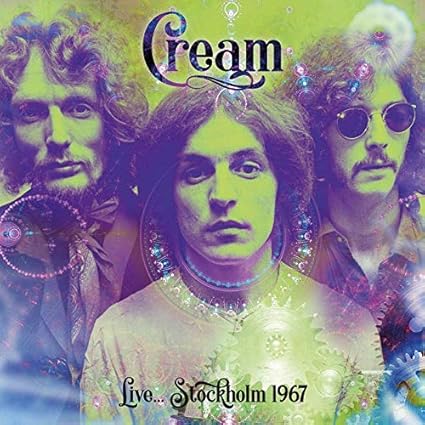
Cream, live at the Konserhuset, Stockholm, Sweden November 14th 1967. Just after the release of Disraeli Gears, Cream embarked on a Scandinavian tour on November 11th 1967, following dates in Denmark and Finland, they reached Sweden on the 14th. This explosive set, broadcast on Sveriges radio, was performed at Stockholm sKonserthuset that night, and captures them at their peak, stretching out on a selection of classics old and new. It s presented in full here, together with background notes and images.
Setlist:
1. Tales Of Brave Ulysses 2. Sunshine Of Your Love 3. Sleepy Time Time 4. Steppin Out 5. Traintime 6. Toad 7. I m So Glad
R.E.M’s second album, 1984’s Reckoning, carried a curious phrase on the LP’s spine: “File Under Water.” It was a designation, an in-joke or even an alternate title that referenced the running theme of water in the album’s lyrics, from “Seven Chinese brothers swallowing the ocean” to “These rivers of suggestion are driving me away.”
When R.E.M. released their first best-of collection, 1988’s Eponymous, the compilation had a different designation: “File Under Grain.” This time, it was a reference to the wheat field cover art as well as the subject matter of the LP’s lone single, “Talk About the Passion,” which was about hunger.
A few years, and albums, after Reckoning, and about a year before Eponymous hit stores, R.E.M. repeated this exercise. Lead singer and primary lyricist Micheal Stipe had noticed that many of the songs that made up the band’s fifth studio album, “Document” featured fire from burning coals in “Exhuming McCarthy” and fiery destruction in “Welcome To The Occupation” to a firehouse in “Oddfellows Local 151” and a literal chorus of “Fire!” in “The One I Love” When released in the summer of 1987, Document had “File Under Fire” inscribed on its spine.
R.E.M. has just finished a tour of Europe and North America, playing to the largest crowds of the group’s career so far. They are on the cover of the Rolling Stone, underscored with the declaration “America’s Best Band.” Their latest album,Document, is fast approaching platinum sales in the U.S. And they have a Top 10 hit. Most bands would be thrilled, ready to forge ahead with declarations of continued greatness . But the guys in R.E.M., bandmates for seven years, were more surprised by their quantum leap in popularity, maybe even shocked by it, and definitely skeptical.
For R.E.M., 1986 had been a pivotal year. The band’s fourth album, the brash, yet highly accessible Lifes Rich Pageant had rewarded them with their first gold disc, while their extensive Pageantry tour of the US had garnered considerable critical acclaim. As 1987 rolled around, confidence was at a high within the R.E.M. camp. The Athens, Georgia, quartet had already worked up a clutch of promising new songs for what would become their fifth album, Document, and they had completed a successful initial studio session with new producer Scott Litt prior to Christmas ’86.
Litt had already assembled an impressive CV. He began his career as a studio engineer during the late 70s, working on recordings by artists as diverse as Carly Simon and Mott The Hoople’s Ian Hunter. He debuted as a producer in 1982 with The dB’s Repercussion album, a record R.E.M. were already familiar with, having shared stages with the band. In fact, the two groups’ histories would continue to intertwine when The dB’s co-frontman, Peter Holsapple, later joined R.E.M. as their fifth member on the Green tour and then played on Out Of Time.
R.E.M. and Litt began their fruitful, decade-long partnership with the successful recording of the quirky ‘Romance’. Though intended for the soundtrack of the film Made In Heaven, the song also later featured on the rarities compilation Eponymous. Litt reconvened with the band at their regular demo studio – John Keane in Athens – for an extensive demo session, before R.E.M. took a break and briefly embarked on extracurricular activities, including some studio contributions to Warren Zevon’s Sentimental Hygiene album.
The band were back in the harness with their new producer at the end of March, with all of April ’87 given over to the recording of Document at Sound Emporium Studios in Nashville, Tennessee. Several of the songs had already been worked up onstage, and the band’s keen pre-production work paid dividends: for Document, R.E.M and Scott Litt captured the sound of a rock band at the absolute top of their game, capable of taking on all comers.
The accessibility that seeped from Lifes Rich Pageant’s every pore was again apparent, but this time round the band had taken things up a gear. Indeed, the R.E.M. of Document was a sinewy, muscular rock beast, primed and ready to dominate the airwaves. Peter Buck’s distinctive jangle and chime was still apparent on ‘Disturbance At The Heron House’ and ‘Welcome To The Occupation’, but, for the most part, his guitar playing took on a sharp, steely quality. Accordingly, he turned in some of his most memorable recorded performances: launching ‘Finest Worksong’ with urgent, metallic riffs; embroidering the swampy funk of ‘Lightnin’ Hopkins’ with Andy Gill-esque tension and atonality; and punctuating the band’s supercharged cover of Wire’s ‘Strange’ with a neat, Nuggets-style psych-pop solo.
Meanwhile, the newfound confidence and vocal clarity Michael Stipe proffered on Lifes Rich Pageant continued apace, and on Document he summoned up a clutch of startling performances: bending and twisting his voice like an old time preacher around ‘Lightnin’ Hopkins’ and rattling off a rapid-fire alternate history of the 20th Century on the exhilarating ‘It’s The End Of The World As We Know It (And I Feel Fine)’.
Lyrically, the socio-political concerns Stipe addressed on Lifes Rich Pageant again loomed large. Featuring barbed observations such as “Listen to the Congress where we propagate confusion/Primitive and wild, fire on the hemisphere below,” ‘Welcome To The Occupation’ was widely reputed to be a commentary on American intervention in South America. The deceptively infectious ‘Exhuming McCarthy’ also delved into political hypocrisy, drawing a parallel between the communist-baiting of the Joe McCarthy era of 50s American politics and the recent Iran-Contra affair during which senior politicians under President Ronald Reagan had secretly facilitated the sales of arms to Iran: a country which was then under an arms embargo.
Sonically, Document also afforded the band the chance to further broaden their palette. Special guest, Los Lobos’Steve Berlin, added his distinctive saxophone skills to ‘Fireplace’, while lap steel and dulcimer coloured the hypnotic, raga-like ‘King Of Birds’. From their earliest days recording Murmur with Don Dixon and Mitch Easter, R.E.M. had always relished the opportunity to try out different sounds and textures – and experimental approach that would continue through Green and Out Of Time, wherein the band members often swapped instruments and fashioned new songs from riffs and melodies worked up on acoustic instruments such as mandolins and accordions.
The spine of the artwork for R.E.M.’s second album, Reckoning, had featured the message ‘File Under Water’ and the original sleeve design for Document included another elemental phrase, ‘File Under Fire’. Michael Stipe considered fire to be one of the record’s central lyrical themes, with the album also including the song ‘Fireplace’ and the eerie, religion-related ‘Oddfellow’s Local 151’, on which the chorus consisted of Stipe repeatedly keening the word “Firehouse!” Document’s savage break-out single ‘The One I Love’ again included a chorus wherein Stipe sang “Fire!”, and while this emotionally vicious song itself was actually the very antithesis of a traditional love song, it still provided R.E.M. with their first major US hit single when it peaked at No.9 singles chart.
The second song on side two, “Fireplace.” Like the song that preceded it on the album, “The One I Love,” the track both contained a connection to fire and the use of repetition by Stipe. Where “The One I Love” replicated the same verse three times, but switched out a word in the last reiteration to emphasize a nasty cycle (“A simple prop” became “Another prop”), “Fireplace” changed the last line of its chorus each time, in an effort to depict escalation.
The first time around, the floor is cleared to “sweep the rug into the fireplace.” Next time, they “sweep the floor into the fireplace.” Before long, it’s “throw the chairs into the fireplace” and then, finally, “throw the walls into the fireplace.” What begins with, seemingly, the burning of dust and crumbs ends with the destruction of the structure that the fireplace is meant to make habitable. Fire and brimstone, indeed.
As it turns out, “Fireplace” has a significant religious connection. According to many R.E.M. biographies, Stipe’s lyrical inspiration for the song was a speech given in the eighteenth century by Mother Ann Lee, the leader of the first American chapter of the Shakers. Before she became known as Mother Ann, Lee joined this religious sect – also known as the Shakin’ Quakers because of their dancing method of worship – in her native England, where she was persecuted for her beliefs.
Despite the Shakers’ extreme reaction to a civilization that they felt was out of control (perhaps reflected in Stipe’s recitation of “Crazy, crazy world / Crazy, crazy times”), the sect is mostly known today for their simple, strong craftsmanship of furniture and for their love of dancing and movement as a method of worship. Each shaker home had hooks mounted on the wall, on which their chairs could be hung. This would allow for a strict cleaning of the floor, as well as make room for dancing.
Both of these elements are represented in the chorus of the R.E.M. song: “Hang up your chairs to better sweep / Clear the floor to dance.” Eventually, of course, everything including the floor, chairs and walls ends up in the fireplace. Given the other political content on Document, it’s likely that Stipe was making some sort of modern connection to Mother Ann Lee. “Fireplace” could be a cautionary tale, that righteous anger of any kind can slowly consume the structures that are necessary.
Stipe’s cryptic lyrics and matched by the strange, sharp instrumentation, which includes an off-kilter beat from drummer Bill Berry. “Fireplace” a “hard-rock waltz with a modal, hypnotic riff.” Peter Buck, the guitarist responsible for the riff, explained that R.E.M. was hoping for weirder results when making Document.
“This time around we wanted to make a tougher-edged record,” Buck reported .Its predecessor “Lifes Rich Pageant”. This time we wanted to make a loose, weird, semi-live-in-the-studio album. We wanted to have a little tougher stance. Part of the loose, weird approach was provided by saxophonist Steve Berlin, most famous as a member of Los Lobos – although he also worked with the Replacements, the Go-Go’s and Faith No More. Co-producer Scott Litt had previously teamed with Berlin and brought him near the end of the Document sessions. His midnight sax took the place of a typical Buck guitar solo, lending “Fireplace” a jazzy edge, as it finished off the song in an explosion of freewheeling bebop honking. Never before had an outside musician been given such a prominent role on an R.E.M. LP.
“That one was obviously a big one, because R.E.M. were pretty huge, said Berlin “I was a little nervous going into that field, but it was a lot of fun. Even though they’d been successful, they were still experimenting. They were having a lot of fun making that record. The vibe in that room was they were really having a great time. They were happy with the way they were sounding and how the record was going and the way the world was receiving them. It was just a real honor to be a part of it.”
The guys in R.E.M. must not have thought that “Fireplace” was much good without Berlin’s presence. The band only performed the song 10 times in concert in their entire career, the final instance coming in 1989. “Fireplace” remains a stranger, lesser-known entry in the R.E.M. canon, although – as with the Shakers – the workmanship is rock solid.
Document followed through on the success of ‘The One I Love’, peaking at an impressive No.10 in September 1987. The band’s heavy touring schedule across the past five years now yielded far greater dividends as Document proved to be a hit in numerous territories, peaking at No.28 in the UK (where it also went gold), No.17 in New Zealand and No.13 in Canada, where it earned a platinum disc for the band.
The press agreed en masse that R.E.M. had again conjured up something special with Document. Always one of rock’s most insightful writers, Rolling Stone’s David Fricke was impressed by Stipe’s continued prowess as a frontman (“His vocals, which are upfront in the mix, are as crisp and distinct as they’ve ever been, full of emotional portent and physical insistence”) before he cogently summed up his review with: “Document is the sound of R.E.M. on the move, the roar of a band that prides itself on the measure of achievement and the element of surprise.” Elsewhere, New York Times critic Robert Christgau weighed in with, “Their commercial breakthrough eschews escapism without surrendering structural obliqueness,” and the Los Angeles Times praised: “A tougher, meaner, leaner album than its immediate predecessors, with a far more hard-edged guitar sound and tenser rock rhythms.”
The group filmed promotional videos for Document’s spearhead singles, ‘The One I Love’ (directed by New York artist Robert Longo) and ‘It’s The End Of The World As We Know It (But I Feel Fine)’, for which R.E.M. turned to their long-term friend Jim Herbert, also the director of photography for the rock documentary Athens Georgia Inside-Out. In readiness for their next bout of touring, the band embarked on a series of interviews, including one with Rolling Stone, wherein Peter Buck cautiously stated: “I don’t see this as the record that’s going to blast apart the chart.”
From the onset of the band’s European tour, however, it was clear that R.E.M. were indeed ready to sell a large number of records and slough off the shackles of cultdom for good. The band’s Work tour kicked off with a rapturously received show at one of London’s premier indoor venues, the Hammersmith Odeon, and continued with the band playing to packed houses in The Netherlands, Germany and at La Cigale in the French capital, Paris.
Taking 10,000 Maniacs (and, later, The dB’s) along as their support, R.E.M. launched into the American leg of their Work tour with a show at the University Of Tennessee in Knoxville, on 1st October, and traversed North America and Canada until the end of November, playing around 45 shows in all. Along the way, they performed some of their most prestigious gigs to date, including a two-night stand at one of their favourite stamping grounds, New York’s Radio City Music Hall.
Document was a massive turning point for R.E.M., filled with big hits and hard lessons. As the band’s final studio LP with I.R.S. Records, it marked the ending of the band’s underground years – as R.E.M. would jump to Warner Bros. the following year and become an act that could fill arenas. But it was also the beginning of a new era, a fruitful studio partnership with Scott Litt resulting in a bevy of blockbuster albums and many more radio songs.
On October 12th, 2018, Sub Pop will reissue The Helio Sequence’s landmark album Keep Your Eyes Aheadfor its 10th anniversary as a deluxe edition.The newly remastered set will be available on CD/2xLP/DL and includes the original 10-song effort along with a second album of demos, alternate versions, and outtakes from the same era. Keep Your Eyes Ahead: Deluxe Edition was mastered by The Helio Sequence at Helio Sound studio in their hometown of Portland, Oregon.
Deluxe Edition of Keep Your Eyes Ahead (Release date: October 12, 2018)
Upon its release in 2008, the record was warmly received from critics and fans alike. It wasnamed one of the “Top 25 Albums of 2008,” ,“Keep Your Eyes Aheadis a shining example of how to go retro while still moving forward.” Washington Post offered this, “Trading its former album’s dense keyboard compositions for a more expansive and organic sound, Keep Your Eyes Aheadis the work of a band commanding its audience’s attention. Stand out tracks like “Hallelujah” and “Can’t Say No” show the band flexing its melodic muscles, branching out into grandiose guitar rock territory without sacrificing the nuance and keyboard flourishes of its early work.”