This week my favourite song of the week is the storming new single from Toronto based quartet Feather Weight. This second of a pair of singles written shortly after their formation, it is the latest introduction to the band, who are currently working on a debut EP, due out in the summer.
Discussing the track, Feather Weight have suggested “Volcano” is about, “human repression in the psyche and an exploration of emotional expression”, the lyrical heaviness set against a surprisingly danceable rhythm and early 2000’s indie-vibe. With tumbling guitar lines, rapid-fire vocal yelps and steady snare-driven rhythms. Bright, breezy and rather intoxicating, Feather Weight are a band that you could be getting excited about.
Volcano by Feather Weight featherweightsounds.bandcamp.com
Band Members
Alistair Bundale: Vocals / Guitar
Neil Culbert: Guitar / Vocals
Raymond Cara: Drums / Vocals
Jordan Quinn: Bass / Vocals
Abjects are a London-based trio, who are a walking celebration of the cities multi-cultural wonders. Composed of singer/guitarist Noemi from Spain, bassist Yuki from Japan and drummer Alice from Italy, the band are three citizens of the world, making joyous pop-songs with the arty edge you’d expect from a band who met while studying at Goldsmiths. This week the band have announced details of their debut album, “Never Give Up”, as well as sharing the rambunctious title track.
The track is a response to the complications thrown up by the rise of nationalistic, populist politics, and how sometimes, you just have to ignore them, “life is full of problems and obstacles, but we’re never going to give up having fun and living our lives the way we want”.
The track bounds in on a snare drum, so energetic that it seems to almost be jumping out of its stand, as Sleater Kinney-like guitar riffing, and shout-along Hinds-like vocals add some melodic to flare to the mix. Abjects are a band who look at the world’s problems and seem to refuse to be broken by them, their own kind of joyous, celebratory, revolution; if you can’t beat them, dance at them!
“Never Give Up” is out February 15th on Yipee Ki Yay.
The music Cleo Tucker and Harmony Tividad release as Girlpool occupies a transient space. Their constant evolution makes it perfectly impossible to articulate exactly where their project falls within the contemporary musical canon; this is one of the many reasons Girlpool’s music is so captivating.
Never before has a group’s maturation been so transparently attached to the maturation of its members. This is due in large part to the fact that Girlpool came into existence exactly when Girlpool was supposed to come into existence: at the most prolific stage of the digital revolution. Both online and in the flesh, Tividad and Tucker practice radical openness to the point where it may even engender discomfort; this is exactly the point where it becomes clear why theirs’ is such a special project: they accept the possibility of discomfort—Chaos—and show you how to figure out why you might feel it. This is achieved through their ability to empathize as best friends and partners in creation, with the intention of making music that provokes.
Proud to announce our second single ‘You’re Not There’ will be released 18th January on Desert Mine Music. Here is the official music video, showing the last few months of touring and recording. Cowgirl have been around for less than one hour, but in that time they have already stunned UK audiences with some outrageous live shows whilst supporting the likes of Amber Arcades, Mi Mye and more. Desert Mine released Cowgirl’s debut single, “She Picks Me Up”, which is taken from their highly anticipated debut album.
In 2017, Washington D.C. band Priests released its debut full-length, Nothing Feels Natural, which became one of our favourite albums of that year. Today, the band announces its follow-up, called The Seduction of Kansas, out in April via the band’s own Sister Polygon Records.
The title track with its accompanying video directed by singer Katie Alice Greer is a reminder of what makes the band’s sharp, cerebral music so exciting. “The Seduction of Kansas” follows in Priests‘ tradition of reckoning with complex questions about identity especially national identity through minute details; via a press release, the band says it illustrates “Kansas’ potent place in our national imagination.” (It also proves that Greer can sing “Applebee’s” more seductively than perhaps anyone else making music today.)
On the album, the band’s core trio (Greer, drummer Daniele Daniele and guitarist G.L. Jaguar) is joined by multi-instrumentalist Janel Leppin, who collaborated on songwriting with the band and played bass. The band also worked with producer John Congleton, recording for two weeks at his studio in Dallas. And should you need a reading list to accompany your anticipation, the band mentions some intriguing references for the album, including Chris Kraus‘ essay “Pay Attention” and Eileen Myles’ The New F*** You to The Twilight Zone.
The Seduction of Kansas is out April 8th viaSister Polygon Records.
Pond have just announced that they’ll will release a new album, “Tasmania”, in a couple months. The project — which is led by former Tame Impala bassist Nick Allbrook put their most recent album, The Weather, back in 2017, and Tasmania is being presented as a “sister album” to that one. As with most of their albums, this one was produced by Allbrook’s former bandmate and Tame Impala head honcho Kevin Parker.
Last year, the band released two songs that will be featured on the album “Burnt Out Star” and “Sixteen Days” and now they’re sharing another new one, “Daisy,” alongside an accompanying music video.
Allbrook had to say about the track in a fan newsletter: “Daisy” includes an interpolation of the Pilgrim Brothers ‘I Feel Like Going Back Home’. It’s about Summertime, the rigs are out, fires burn, bottl’os and dams drained aaaaand photos leaving us warped memories. Blood and lonely saltwater cowfolk.
‘Daisy’ is the new song from POND.
Tasmania is out 1st March via Spinning Top/Marathon Artists/Caroline/Interscope.
Washington DC power rock group Ex Hex came onto the scene in 2014 with their excellent, loud debut Rips. Filled with big, raucous waves of guitar, the album embodied the type of rock ‘n’ roll that genre devotees were hungry for, which made sense; Mary Timony, founder of the influential ‘90s riot grrrl group Helium, helms the group alongside Betsy Wright on guitar and Laura Harris on drums. Their second studio album, It’s Real, which arrives March 22nd via Merge Records, along with the premiere of “Cosmic Cave” a guitar-shimmering single that Timony calls “Old style Ex Hex.” It’s lively garage rock with a bittersweet swirl of a chorus and cavernous-sounding embellishments, best experienced beyond the boundaries of headphones.
Timony and Wright explained that It’s Real found its form through the deliberate collaboration between the pair their knack for continuous refinement feeding into their tightness in sound, execution, and their will to experiment. Whether it’s recording with ten amps at once or indulging in the weird effects of an old ‘80s headphone amp, Ex Hex are fully devoted to crafting the best sounds for blaring at maximum volume.
From the album It’s Real, out March 22nd, 2019 on Merge Records.
We’re not talking about the film, or the Chet Baker song. Lady Bird are a three-piece punk band formed around Tunbridge Wells, signed to fellow punk rockers Slaves’ new label. Their Social Potions EP was released in February this year, followed by the singles “Boot Fillers” and “Reprisal”. They’re wry, witty, social observers; crafting small but intricate vignettes of life that would otherwise seem mundane.
Band Members
Sam Cox – Vocals/Guitar/Organ
Alex Deadman – Guitar
Joe Walker – Drums
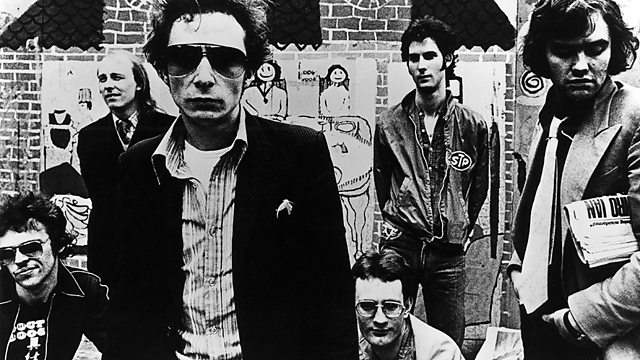
After he emerged in the pregnant pause between pub rock and punk, stardom never quite happened for the Camberley rocker, although his band’s spiky sound has echoed through artists from Elvis Costello to REM.
A few months before punk, the first sign a new order on the way was an awkward little rocker called Graham Parker. he appeared on the bill at Dylan’s concert at Blackbushe Aerodrome in 1978, only a few miles from his Camberley stamping ground, it was already clear by that time that the superior sneer, machine-gun delivery and catchy tunes of Elvis Costello
He was a skinny, T-shirted figure in shades; rough, honest, and angry. Heat Treatment has a Dylanesque snarl to it; a thirst for revenge in the light of the lost years mentioned above, and a sense of cutting to the chase, that there was no more time to waste.
One of the finest English songwriters of the past several decades, Graham Parker made a name for himself as the “angry young man” before the flurry of punk rock took over his native U.K. Sailing in on the smouldering embers of the pub rock scene, Parker came armed with attitude, amplification and an armload of great songs. From his first classic LP ‘Howlin’ Wind’ (produced by Nick Lowe) and right up to his most recent outing with the reunited Rumour, ‘Three Chords Good,’ GP has never stopped traveling his own unique road. Caught between the preceding wave of Bruce Springsteen and subsequent rise of Elvis Costello, GP, through no doing of his own, somehow got lost in those waters.
‘Howlin’ Wind’ (1976)
For most intents and purposes, Graham Parker emerged fully formed on his debut album, Howlin’ Wind. Sounding like the bastard offspring of Mick Jagger and Van Morrison, Parker sneers his way through a set of stunningly literate pub rockers. Instead of blindly sticking to the traditions of rock & roll, Parker invigorates them with cynicism and anger, turning his songs into distinctively original works. “Back to Schooldays” may be reconstituted rockabilly, “White Honey” may recall Morrison’s white R&B bounce, and “Howlin’ Wind” is a cross of Van’s more mystical moments and the Band, but the songs themselves are original and terrific. Similarly, producer Nick Lowe gives the album a tough, spare feeling, which makes Parker and the Rumour sound like one of the best bar bands you’ve ever heard. Howlin’ Wind remains a thoroughly invigorating fusion of rock tradition, singer/songwriter skill, and punk spirit, making it one of the classic debuts of all time.
‘Don’t Ask Me Questions’ put the lid on Parker’s debut, ‘Howlin’ Wind,’ with a perfect swagger. Employing a reggae inspired backdrop, GP delivers an attitude-laced gem. Lines like, “Well I stand up for liberty but can’t liberate /Pent up agony I see you take first place” are delivered with pure venom as GP has this little conversation with God. Often accused of being too much the “angry young man,” Parker used that anger to his benefit. Meanwhile, the Rumour never let up from their rocksteady groove. A live version of the song was released as a single in the U.K. in 1978 and made it up to No. 32.
‘Heat Treatment’ (1976)
On his second album Heat Treatment, Graham Parker essentially offered more of the same thing that made Howlin’ Wind such a bracing listen. However, his songwriting wasn’t as consistent, with only a handful of songs — like “Pourin’ It All Out” and the title track — making much of an impression. Unfortunately, the record was also tamed by the production of Mutt Lange, who polishes the record just enough to make the Rumour sound restrained. Which means, of course, the sheer musicality of the band can’t save the lesser material. Heat Treatment still remains an enjoyable listen — at this stage of the game, Parker hadn’t soured into a curmudgeon, and his weaker songs were still endearing — but it’s a disappointment in light of its predecessor.
In Parker’s early years, the influences of soul music and Van Morrison were a constant presence. ‘Heat Treatment’ is a perfect merger of those influences and one of the highlights of his second LP. The jumpin’ R&B feel of the song is complimented by the horn section, a staple of his early records. The song’s chorus is so irresistibly catchy that if your toes aren’t a tappin’, you better check your vitals. The other great track. ‘Fool’s Gold’ from Heat Treatment is again indicative of Parker’s affinity for soul, and while producer Mutt Lange would go on to fame and fortune after aligning himself with pop-metal sounds of Def Leppard, his production here is crisp, direct and well suited to the sounds Parker was dishing out. A soul classic.
‘Stick To Me’ (1977)
Released in the fall of 1977, ‘Stick To Me’ was Parker’s third LP in less than two years. The album was recorded once again with Mutt Lange at the board, but a problem with the tapes forced a re-recording with Nick Lowe back in the hot seat. The result was a more stripped-down approach that, despite critical indifference, ultimately suited the album perfectly. ‘Watch the Moon Come Down’ is as perfect a GP song as you’re likely to stumble upon. The air of despair never sounded so beautiful. Graham Parker and the Rumour’s third new studio album to be released in 18 months finds the bandleader running short of top-flight material; “Thunder And Rain” and “Watch The Moon Come Down” are up to his usual standards, but songs like “The Heat In Harlem” find him dangerously out of his depth. As a result, although fiercely played, this star-crossed release (it had to be re-recorded when the first version suffered technical problems) is a cut below Parker’s first two albums.
Parkerilla (1978)
In 1978, Graham Parker & the Rumour’s career was on the rise in the U.K. but going nowhere in America, despite rave reviews for his first three albums and a growing reputation as a powerful live act. Most observers, including Parker himself, blamed his U.S. label, Mercury Records, for failing to give him the promotion he needed Stateside; eager to find a more suitable corporate partner, Parker opted to finish off his contract with Mercury via that time-honored form of contractual obligation filler, the double-live album. In many respects,
The Parkerilla practically screams “Let’s get this over with,” from the skimpy running time (54 minutes, including a studio re-recording of “Hey Lord, Don’t Ask Me Questions” that filled side four) and unimaginative set list, to a slightly dodgy mix that keeps losing track of the horn section, and a sequence that has a hard time keeping one of the most exciting acts of the day in forward gear. However, Parker and the Rumour were too good on-stage for The Parkerilla to feel entirely like a throwaway; Parker’s vocals are tough and soulful at every turn, the Rumour get more of a chance to show off their instrumental prowess here than they did on their studio recordings, and when the players connect with the right song, as they do on “Back to Schooldays,” “Soul Shoes,” and “Gypsy Blood,” it’s hard not to wish this hadn’t been such an obvious rush job, since the potential for a great concert set was clearly there. (The live take of “Hey Lord, Don’t Ask Me Questions” is also superb, and makes mincemeat of the silly disco-influenced studio recut that closes out the album.) The Parkerilla has a reputation as a tossed-off disaster, and while it’s a lot better than that, you don’t have to know the back story to hear a band biding their time until something better comes along on this set.
‘Squeezing Out Sparks’ (1979)
Generally regarded as Graham Parker’s finest album, Squeezing Out Sparks is a masterful fusion of pub rock classicism, new wave pop, and pure vitriol that makes even his most conventional singer/songwriter numbers bristle with energy. Not only does Parker deliver his best, most consistent set of songs, but he offers more succinct hooks than before “Local Girls” and “Discovering Japan” are powered by quirky hooks that make them new wave classics. But Parker’s new pop inclinations are tempered by his anger, which seethes throughout the hard rockers and even his quieter numbers. Throughout Squeezing Out Sparks, Graham spits out a litany of offenses that make him feel like an outsider, but he’s not a liberal, he’s a conservative. The record’s two centerpieces “Passion Is No Ordinary Word” and the anti-abortion “You Can’t Be Too Strong” — indicate that his traditionalist musical tendencies are symptomatic of a larger conservative trend. But no one ever said conservatives made poor rock & rollers, and Parker’s ruminations over a lost past give him the anger that fuels Squeezing Out Sparks, one of the great rock records of the post-punk era.
With the 1979 album ‘Squeezing Out Sparks,’ Parker and the Rumour were finally starting to make headway in the American market. Ironically, the band was capitalizing somewhat on the success of acts like Elvis Costello and Joe Jackson, both of whom came late to the party Parker helped establish. Regardless, this new-found “spark” was full of charge, making one of GP’s finest all-around albums. The R&B influences had been usurped by an urgent, straight-ahead pop approach. This proved to be a good move commercially, as well as artistically, as the songs here are all vibrantly full of life. The Rumour are rock solid throughout what may be Parker’s finest LP. ‘Saturday Nite Is Dead’ is a real raver this full-on rocker stands as a testament to the power and urgency of the Rumour in their prime. Straight ahead, no frills, traditional rock ‘n’ roll, delivered full steam ahead, ‘Saturday Nite Is Dead’ was one of many high points on the fourth GP album. The Rumour tear it up while Graham spits it out. Perfection in action.
‘Squeezing Out Sparks’ ranks as one of Parker & the Rumour’s finest hours, and ‘Local Girls’ is one of their catchiest singles. The sound of 1979 is in full bloom here as Parker does his thing amid a pure pop setting. It was released as a single in America with video to accompany it, but failed to even make the Top 100. It’s a shame, since to this day, there’s pop gold to be mined from these grooves.
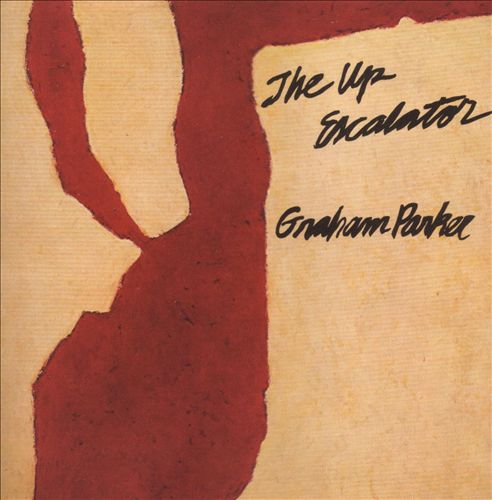
‘The Up Escalator’ (1980)
‘The Up Escalator’ (1980) would be the final album Graham would make with his legendary backup band, the Rumour, until their fine reunion effort ‘Three Chords Good’ in 2012. Produced by mainstream mainstay Jimmy Iovine, the album was an attempt to push Parker more into the mainstream, which worked modestly, as the album barely dented the U.S. Top 40. Chock full of great songs like the classic ‘Stupefaction,’ the album kicked off a rough decade for Parker artistically, as ’80s production values often clashed with his style. Not so on this one though, as the pure pop washed with grit here ranks as one of Parker’s best.
While it was something short of a hit, Squeezing Out Sparks did win a measure of richly deserved American recognition for Graham Parker & the Rumour, and for the follow-up, Parker’s American record label, Arista, paired him up with hotshot producer Jimmy Iovine. The idea looked good on paper; Iovine had produced or engineered great sounding hard rock records for Bruce Springsteen, Tom Petty, and Patti Smith, and his tough but vibrant sound would seem the perfect match for Parker and his band. But one listen to The Up Escalator reveals that Iovine’s trademark sound somehow escaped him for this project; the recording and mix are flat and poorly detailed (Brinsley Schwarz’s lead guitar and Stephen Goulding’s drums suffer the most), and the often mushy audio manages the remarkable feat of making the Rumour, one of the most exciting rock bands of their day, sound just a bit dull. But Parker fights the muddy sound every step of the way, and if his batting average as a songwriter is a shade lower than on Squeezing Out Sparks, he certainly offers up his share of A-list material, including the incendiary “Empty Lives,” the passionate “The Beating of Another Heart,” and “Endless Night,” which features one Bruce Springsteen on backing vocals. Parker’s singing is sharp and commanding, and even though the mix lets them down, the Rumour’s performances are tough and precise throughout. The Up Escalator failed to catch the ears of the mass audience, and Parker would soon part ways with the Rumour, but if this album doesn’t present them in the best light, it shows that they could play tough, passionate rock & roll that could survive even the most adverse recording conditions.
The Real Macaw’ (1983)
Parker’s 1983 album ‘The Real Macaw’ was another solid offering, stocked full of instantly catchy tunes and a solid crisp production. Despite all the checks in the plus column, no one was taking the bait. The album wandered up to No. 59 in the U.S. charts, but fell as quickly as it arrived. ‘Just Like A Man’ is another in a long run of dead-on, glowing pop songs from GP. Street-smart lyrics over a power-pop backdrop should have gone a long way to turn people’s heads, but by 1983, Parker sadly at this point was yesterday’s news to most.
Also check out the “Live at Marble Arch” album, On this promotional live album, Graham Parker and the Rumour combine selections from their just-released debut album, Howlin’ Wind, and their upcoming second album, Heat Treatment, with such influential oldies as “Chain Of Fools” and “You Can’t Hurry Love.”
1977 BBC Top of the Pops with their version of The Trammps “Hold Back the Night” from The Pink Parker EP
As productive as screaming into the void can be, sometimes the most effective way to air grievances is simply with a sigh. Meg Duffy, who has been the longtime lead guitarist for The Kevin Morby Band, switched her focus to Hand Habits in 2017. Duffy’s second album, “Placeholder”, leads off with the title track, a soft yet scathing lamentation of being secondary.
“If you’ve ever held someone’s seat in a theater, if you’ve been a bench warmer, if you’ve ever placed a reserved sign on top of a tablecloth, if you’ve been an ‘extra’ or a ‘stand in’ for something, you’ve experienced what being a placeholder feels like to some extent. You observe,” Duffy says.
The song wearily recounts the age-old story of being someone’s fallback, with Duffy growing more frustrated throughout the song. Additional vocals from Hannah Read (Lomelda) and wry guitar build, until the narrative is flipped — the agitator is now the proxy.
The Hand Habits project emerged after Meg moved to Los Angeles; it started as a private songwriting outlet but soon evolved into a fully-fledged band with Meg at the helm. Hand Habits’ debut album, Wildly Idle (Humble Before The Void), was released by Woodsist Records in 2017. The LP was entirely self-produced and recorded in Meg’s home during spare moments when they weren’t touring. Wildly Idle (Humble Before The Void) is a lush, homespun collection of folk songs that found Meg in an exploratory state as an artist moving out on their own for the first time.
Two years later, Hand Habits has returned with their sophomore album, placeholder, due out March 1st on Saddle Creek. To make this album, Meg chose to work in a studio and bring in collaborators, entrusting them with what had previously been a very personal creative process. Over the course of 12 tracks, Meg emerges with new confidence as both a bandleader and singer. This album is as tender and immediate as anything Meg’s ever written, but it’s also intensely focused and refined, the work of a meticulous musician ready to share their singular vision with the world.
Hand Habits – Placeholder from the album Placeholder