Last year Sun June caught the ear of many with their excellent debut album, “Years”. Described by the band as a, “we’ve-been-broken-up-a-long-time-record”,Years was an exploration of loss not delivered in the centre of the emotional storm, but presented with hindsight and the time for emotions to evolve. The record is about to get it’s second pressing on Keeled Scales, and will be presented alongside a new digital EP, “Younger”.
This week the band have shared the first taste of the upcoming EP, “Monster Moon”. A fine introduction to the genre the band call, “regret pop”,Monster Moon is a reflection on the long shadows cast when a relationship fails. Here it’s given an upbeat musical spin, vocalist Laura’s nonchalant delivery contrasted with a bright, pop-driven backing, like the fertile middle ground of Big Thief and Fleetwood Mac. A band who’ve already made waves on the musical underground, we wouldn’t be at all surprised to see Sun June’s unstoppable rise reach new heights in the year ahead.
‘Monster Moon’ by Sun June is from their digital EP Younger coming March 22nd, 2019, via Keeled Scales. It accompanies the second pressing
of their debut LP Years, which was originally released June 15, 2018.
This shows Jake Ewald’s versitility as a songwriter. Listen to this compared to Welcome and then compare both to MoBo.. he is evolving and maturing with every new song.
Jake just keeps getting better. holy ghost was a step forward from Modern Baseball’s older stuff, as was welcome from holy ghost, and this is another big step forward from that. songwriting on 100. its amazing to see the music thats growing out of the relatively straightforward emo revival stuff that Modern Baseball started out as. really excited for the album.
I love this EP, feels a little experimental with the original Slaughter Beach mix in there. Very happily surprised to see a Superweaks cover too!
Faye Webster is a ludicrously talented human being; not content with being on the verge of releasing her third album, Atalanta Millionaries Club, she’s also a decorated photographer. This week Faye’s shared the first single from that upcoming record, the inward glancing, “Room Temperature”.
Faye has suggested much of the upcoming album deals with feelings of lonesomeness, even when not on the surface of things, alone; Room Temperature hits straight to that point; “these aren’t even my clothes I just don’t change that much ’cause who’s to impress? There’s nobody around when I make my bed”. Although Faye has a background in the Atalanta hip-hop scene, it’s hard to imagine a record much further removed from that world; with a touch of Angel Olsen or Molly Burch, the track is delivered with a pallet of pedal-steel, pulsing bass and easy, skittering rhythms. That said, Faye has suggested the major influence on the album was Aaliyah, so when it comes to the Atalanta Millionaires Club, expect a record that’ll be nothing short of intriguing.
Atlanta Millionaires Club is out May 24th via Secretly Canadian.
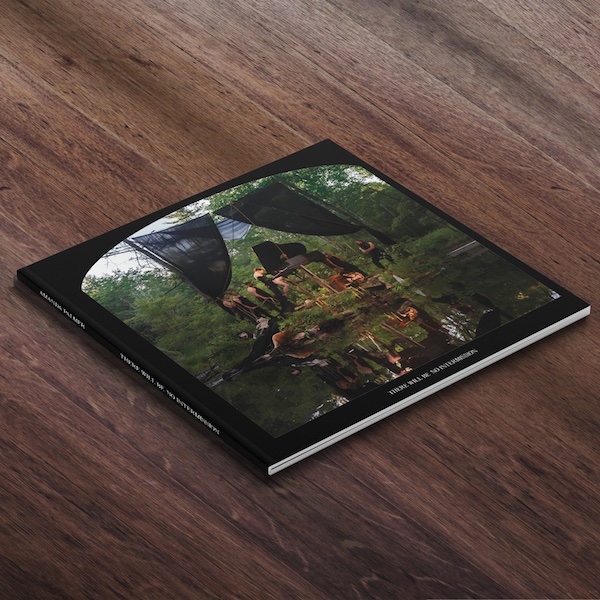
“There Will Be No Intermission” is out Friday, March 8th Amanda Palmer’s third solo effort and first in more than six years, is the multi-faceted artist’s most powerful and personal collection to date, with songs that tackle the big questions: life, death, grief and how we make sense with it all. While the themes may be dark, the album’s overall sonic and lyrical mood is one of triumph in the face of life’s most ineffably shitty circumstances. Beginning with the epic Bill-Hicks-inspired “The Ride”, it sees Palmer revealing her heart in total, turning the coals of fraught experience into musical diamonds. Themes of death and reproduction recur throughout, including “A Mother’s Confession”, a funny, honest, slice-of-life ramble detailing Palmer’s failings as a new mother, and “Machete” written in tribute to her best friend, Anthony following his untimely passing from cancer. “Voicemail For Jill” chronicles a different sort of death as Palmer reaches out to a friend on her way to an abortion clinic. Lead single “Drowning In The Sound” explores hidden connections between political unrest, the impending uncertainty of Hurricane Harvey, climate change, the solar eclipse, internet-hate and, bizarrely, Taylor Swift. One of the more lavishly produced songs on the album, the song combines Palmer’s singular style of piano-taming with a restrained chorus that pays sonic homage to two diverse but connected mentors: Prince and Ani DiFranco.
This album is the most personal and painfully vulnerable thing she has ever made, containing 10 of the most honest, funny, sad, dark songs. THE ALBUM, THE ARTBOOK and tickets for THE TOUR . the beautiful images you’re seeing (which are included in the artbook and are available as prints and select merchandise) were all captured by kahn & selesnick.
Amanda says, I know I say it a lot, but it bears repeating: this album would not have happened without the emotional and financial support of my 14,000 patrons. in so many ways, it just would not have been possible. if you are one of my patrons and reading this, i hope you are as proud today as I am. we did it.
The reviews and critics are weighing in….and the accolades mean a lot, but they don’t mean fuck all compared to what this music means to me and my community, and what it has meant over the past years as i’ve played these piano and ukulele in people’s houses, and in small clubs, and in living rooms, and in theaters for the people I really care about: you. you you you. fuck the critics. you’re my critics, and I listen. sometimes you make the art, and sometimes the art makes you. this record and tour feels more like the latter.
Listen. these songs are the most vulnerable and personal I’ve ever recorded, and they all provided some kind of relief from each life-situation I was facing over the last seven years since I out our my last album (theatre is evil), it was just non-stop, the gamut of human emotion and highs and lows. everything feels inseparable now: my crowdfunding through patreon, the birth of our son, the election of trump, my TED talk, two abortions, the kavanuagh hearing, the death of my best friend, writing a book, being in Ireland for the repeal, the miscarriage i had alone on a christmas day.
i sat in a theater in london and watched hannah gadsby decimate the blurted lines between entertainment and naked truth, i saw the brave women of #metoo standing up against their rapists, and I saw nick cave in concert and on record working through his grief using art as a necessary and generous tourniquet that others could re-use. they all reminded me to try harder and harder still to tell the real, unadorned truth. I love you all so much.
Thank you for coming on this ride with me.
watch this, and you will understand everything. I made this video in our living room (w/ two of my closest friends, Michael Pope & Coco Karol to announce my forthcoming solo album,
Amanda Palmer, performer, writer, giver, taker, listener, love-lover, rule-hater and co-founder of the Brechtian punk cabaret duo, The Dresden Dolls.
Musicians:
jherek bischoff – double bass, guitar, vibraphone, prepared piano, backing vocals
john congleton – drums, synths, sequencing
max henry – synths
amanda palmer – piano, ukulele, organ, synths, vocals
joey waronker – drums
jason webley – accordion
“There Will Be No Intermission is a triumphant return of an uncompromising artist. It is singularly the best piece of work that Palmer has produced in her career.” – popmatters.com
Happy birthday to R.E.M.’s farewell de force ‘Collapse Into Now’, released on this day in the US on 8th March 2011. “We were doing the last record, Collapse Into Now. We hadn’t made an announcement or anything,” guitarist Peter Buck told Rolling Stone in 2016. “We got together, and [singer] Michael [Stipe] said, ‘I think you guys will understand. I need to be away from this for a long time.’ And I said, ‘How about forever?'” Michael looked at [bassist] Mike [Mills], and Mike said, ‘Sounds right to me.’ That’s how it was decided.”
Scott McCaughey, who’d been a touring member of the band with the late drummer Bill Rieflin for years, didn’t even know. “I just thought we were carrying off the high we were on from [2008’s] Accelerate and the fun we were having being a band and just making another record,” McCaughey said in Tony Fletcher’s R.E.M.: Perfect Circle. “I knew it would be the last record in the [Warner Bros.] contract, but to me that didn’t mean anything necessarily.”
R.E.M. finally confirmed their split six months after Collapse Into Now arrived on March 8th, 2011, and then the album was seen in an entirely different light. Every song, every word, even every element of the recording process – the drawn-out attempt to find the right studio, a belated decision to add some key guest stars – was scrutinized anew. Turned out Stipe wasn’t waving hello on the cover. They started sessions in a surprisingly loose fashion, considering the weight of the moment. After demoing at producer Jacknife Lee’s Jackpot! Recording Studio in Portland, they officially got underway with a series of lively jam-like sessions at a renovated warehouse in New Orleans called the Music Shed. A holdover from the Accelerate album along with engineers Sam Bell and Tom McFall, Lee oversaw the completion of a series of early-take tracks over just a few weeks. “It could have been Accelerate Part 2,” McCaughey said “because we had a real brace of two guitars-bass-and-drums songs.”
Sessions for Collapse Into Now started back in early 2009 with songs worked up with interesting titles such as ‘After Ski At Timberline Lodge’, ‘Rusty In Orchestraland’, ‘Victim Of Psychic Surgery’ & ‘Sounds Of The Big Racers’..., (the guys certainly having fun) eventually changing to more. For Collapse Into Now, R.E.M., which is singer Michael Stipe, guitarist Peter Buck, and bassist Mike Mills, re-teamed with Grammy Award-winning producer Jacknife Lee, who produced the band’s acclaimed previous album Accelerate. Lee is also noted for his work on albums by U2, Snow Patrol, The Hives, and indie stalwarts Kasabian, Editors, Aqualung, and Bloc Party. R.E.M. and Lee recorded the album in New Orleans at the Music Shed and in Berlin at the famed Hansa Studios, where several legendary albums, including David Bowie’s Heroes, U2’s Achtung Baby, and Iggy Pop’s Lust for Life, were made. Additional recording and mixing was done at the venerable Blackbird Studio in Nashville.
The band has also revealed that Collapse Into Now features some very special guests: Patti Smith, guitarist Lenny Kaye, Peaches, Eddie Vedder, and The Hidden Cameras frontman Joel Gibb.
“I guess a three-legged dog is still a dog,” said Michael Stipe when drummer Bill Berry quit R.E.M. in 1997. True, but a three-legged dog never triumphed at Crufts or the racetrack. Even so, the R.E.M. that recorded 1998’s Up (experimental, frequently beautiful), 2001’s Reveal (lush, frequently beautiful) only started listing badly on 2004’s Around the Sun, where a mystifyingly insipid production and sluggish mood got in the way of frequent bouts of beauty. Stung into action, they tore through 2008’s frequently thrilling Accelerate – but can an R.E.M. album ever feel like an event again?
The clock is indeed ticking for the band, this being their 15th album on their 30th anniversary. But Radiohead should be so lucky at this stage. Even if a lyric sheet on a R.E.M. album doesn’t feel right, Stipe’s words are alluring, enigmatic and provocative, free of rhetoric (the Hurricane Katrina aftermath of Oh My Heart notwithstanding). Unlike Accelerate, Collapse into Now is also free of a planned response to a predecessor. It’s as varied and deep as previous R.E.M. classics. It’s not epochal like Automatic for the People, but it can’t be. These are different times.
On that basis, the album kicks off like Accelerate Part Two, with Discoverer and All the Best incorporating that sinewy and keening R.E.M. rock thrust of old. There are also passages that are, yes, frequently beautiful. All five ballads get the tense, urgent delivery they deserve, and at best, Walk It Back show as they get older, R.E.M. are even better at gravitas, Oh My Heart’s accordion/mandolin undertow is an immediate earworm and Every Day Is Yours to Win is the kind of wistful lullaby often reserved for an album finale.
The closing track here is more in line with You from 1994’s Monster: Peter Buck’s guitar is drenched in fuzz, Country Feedback-style; Stipe’s spoken word diatribe and Patti Smith’s solemn incantation equally fire; and a surprise coda returns to Discoverer’s exuberant chorus. Before then, though, we’ve heard the first (non-session) guest men on an R.E.M. album. Every Day… features Eddie Vedder and The Hidden Cameras’ Joel Gibb on valiant backing vocals and Patti’s faithful guitar foil Lenny Kaye transforms Alligator Aviator Autopilot Antimatter into something that’s virtually hard rock (Peaches adds lascivious vocal back-ups). Fun, maybe, but also overblown. Consider it the album’s only misjudgement. Fortunately, That Someone Is You follows in a more dutifully golden, Byrds-ian rush.
One of the great final gasps of R.E.M. is this stunning jam that stresses the idea of carpe diem. It’s about embracing the unknown and the changes that come from within. Musically, the whole thing brims with harmonies, hooks, and the kind of woodsy instrumentation that made the Athens outfit so iconic, but we’ll leave it to Stipe to explain the lyrical nature itself: “I wanted to picture an almost blunt outsider’s perspective – the experience of a guy who is walking through a city that is completely new to him and still very unfamiliar. I have combined these two words to express that. I don’t pretend being a German or a Berliner. Not at all. I just tried to figure out the mind of this outsider….” Well, there you are.
Buck reckons no R.E.M. in 20 years has 12 songs as good as this. 1996’s New Adventures in Hi-Fi may have something to say about that, but Collapse into Now genuinely feels like their first post-Bill Berry album to resemble a four-legged dog. And that, folks, is an event. “We felt like we made a great last record,” Buck told Rolling Stone. “The last two records we made — I’m really proud of them. Accelerate is in my top five. But we got to the point where we wanted to go our own ways. We didn’t want to keep doing 20-year-old songs.”
R.E.M. were still a band. Talk of a split had not been made public. Behind the scenes, however, they’d already decided that 2011’s “Collapse Into Now” would be their final album.
Throughout his four solo albums and myriad records of various collaboration, Kevin Morby has recognized in his work the ubiquity of an apparent religious theme. Though not identifying as “religious” in the slightest, Morby—the globetrotting son of Kansas City who has made music while living on both coasts before recently returning to his Midwestern stomping grounds—recognizes in himself a somewhat spiritual being with a secular attitude towards the soulful. And so, in an effort to tackle that notion head-on and once-and-for-all, he sat down in his form of church—on planes and in beds—and wrote what would become his first true concept-album: the lavish, resplendent, career-best double LP Oh My God.
“Religion is around all of us,” Morby says. “It’s a universal language and there is profound beauty in it. I’ve found it a useful tool within songwriting, as it’s something everyone can relate to on some level. There are religious themes or imagery in a lot of what I’ve done, so I wanted to get all of that out and speak only that language for a whole record. It’s not a born-again thing; it’s more that ‘oh my god’ is such a profound statement we all use multiple times a day and means so many different things. It’s not about an actual god but a perceived one, and it’s an outsider’s view of the human experience in terms of religion.”
Morby admits he has viewed the world through a skewed spiritual lens his entire life. As a kid he was told by his working-class parents that he was a Methodist, though the family rarely if ever made good on that claim come Sunday; he saw fire-and-brimstone billboards on Kansas roadways with the aim of scaring heathens straight. Despite his ignorance and indifference, religion seemed to be everywhere, and as Morby grew as a musician—playing bass for Woods, fronting The Babies, and with his solo career—he embraced its influence with his work. In 2016, on the heels of a trio of critically-acclaimed albums, he wrote the protest song “Beautiful Strangers” about the devastating world events of that year, and in it he inserted multiple “oh my god”s as pleas of desperation.
The song took off and the phrase became a mantra for Morby, inspiring him to weave the exclamation conceptually into the fabric of an entire album. In effect, he sought to highlight how that immortal turn of phrase embodies so much of our relationship with the sacred and profane—how religion is all around us, always, and that by simply uttering an OMG we enforce its ubiquity and ability to endure while humanizing its reach.
In January 2017, preceding the release of his fourth solo record City Music, Morby went into producer Sam Cohen’s Brooklyn studio for four days to record a handful of material written with his usual folk-meets-lo-fi-electric-guitar sound in mind. Cohen, with whom Morby made his 2016 breakthrough Singing Saw, had started recording the new songs with a business-as-usual mentality when on the third day he was struck with an idea: Rather than create what was becoming Singing Saw: Part 2, what if they stripped everything back and used only a few colours at a time instead of the entire Morby rock palette, focusing on Morby as hyper-literate singer instead of guitar-slinging troubadour?
“Sam suggested that we make songs that sound like sonic pop-art that only have a few colors, like a Keith Haring piece,” Morby says. “My other records had tons of colors, so we decided to keep this stark, like a painting that’s black-and-white with one vibrant blue. We went back to the drawing board and thought about what we wanted to do conceptually across an entire piece. And for the first time I could do exactly what I wanted, as I had time and the ability to get everything precise. Sam encouraged me to let my lyrics sit on top of everything else, and that discovery and the confidence that came with making my fifth record helped me realize the new direction was exactly where we needed to be. We opened it up completely and set out to make something in its own universe.”
Over the remaining day-and-a-half, Morby and Cohen recorded new versions of four songs—“Oh My God,” “No Halo,” “Savannah,” and “Nothing Sacred/All Things Wild,” the latter becoming a mission statement for the new sound and featuring Morby singing, Cohen playing a subtle organ part, and Morby’s drummer Nick Kinsey on congas. Breaking the songs down into their separate parts served Morby’s religious theme perfectly, as did the blueprint of “Beautiful Strangers,” and over the course of 2017 he wrote an album’s worth of similar songs while on tour.
As Morby jetted around the world playing shows, he came to realize that all that air travel was making its way into his music, too. He had always used his time in the sky to work on songs and listen to demos he had recorded, but he began noticing an aero-dynamic emerging in his lyrics as well. “Flying can be something of a religious experience for many people, myself included,” he says. “It’s unnatural, and it can be so scary being that high up—a few big bumps can even make an atheist pray. You’re anxious as you take off and thinking about death, then you level off and suddenly you’re in this kingdom above the clouds. There’s a holy feeling, and a big part of the record’s theme is being above the weather. The first song, ‘Oh My God,’ starts with chaotic hammering on a piano and then smooths out with a choir singing; it’s meant to mimic how I feel on an airplane.”
All that flying also meant Morby was sleeping in a new place each night, a situation he also learned to embrace creatively—most of Oh My God’s songs were written from beds. Morby typically starts and ends each day by playing guitar or writing songs while under the covers, a practice that mimics prayer in myriad ways. “There’s something sacred about working from bed,” he says. “It’s where you make love and where you dream. I always write just before I go to sleep and right when I wake up. It’s where I can access that feeling of dreams. Any bed is always a sanctuary, but my bed at home is the Holy Grail.”
Morby sought to represent these sentiments visually for the release of Oh My God. In addition to using a portrait of him reclining in his own fluffy-white bed at home in Kansas City on the album cover, he also worked with the filmmaker Chris Good on a short film to accompany the release. The film stars Morby as he wanders through a dream-like series of encounters—on planes, in cars, in a diner, at home in his back yard—and presents a Gondry-esque vision of the album and its holy mood.
Meanwhile, in January of 2018, a full year after their initial session, Morby and Cohen returned to the studio together to complete the album’s recording. They fine-tuned the rollicking opening trio—starting with the title track, then first single “No Halo,” and “Nothing Sacred/All is Wild”— and played with various styles and techniques throughout. The ethereal “Congratulations” was written in a dream, a first for Morby. (“Someone had been singing the chorus to me over and over, and I woke up in the morning and walked to my piano and wrote it then and there.”) “Seven Devils” features a ripping guitar solo by Morby’s bandmate Meg Duffy that evokes a distorted hellfire, and “Piss River” is a stream-of-consciousness, poetic and profound tune featuring harp played by Morby’s friend Mary Lattimore while the singer has a call-and-response conversation with himself. Saxophone duties throughout the record were handled largely by Cochemea Gastelum, and a seven-member choir appears as well. Morby directed Cohen in the creation of a track called “Storm (Beneath the Weather),” a 90-second ambient instrumental piece made with synthesizers to mimic what it can feel like under the clouds. “Above the weather, you’re safe and nothing can get to you; it’s heavenly, like you achieved peace,” Morby says. “Below that you’re subject to the insanity of humanity, or Mother Nature. I wanted a weird, atonal sound on the record to represent a storm, which feels in-line with the pop-art idea.”
“Hail Mary” may be the album’s grandest moment and is recognizable as one of the few guitar-driven songs that hearkens back to his previous work. Its heavy scope is still apparent despite the fact that Morby and Cohen edited it down from its original 15-minute-long, multiple-verse version into a concise five minutes and three verses. And as the final song, “O Behold,” makes a familiar, just-in-case farewell from an airplane seat (“If the plane’s on fire/know I love you”), the listener can sense the credits rolling as the clouds begin to break, grips loosen, and the kingdom comes into view. At 14 tracks and four sides, Oh My God is an actualized concept album with a contemporary feel that is sure to plant its maker firmly in a window seat at the front of the plane.
“This one feels full circle, my most realized record yet,” he says. “It’s a cohesive piece; all the songs fit under the umbrella of this weird religious theme. I was able to write and record the album I wanted to make. It’s one of those marks of a life: this is why I slept on floors for seven years. I’ve now gotten the keys to my own little kingdom, and I’m devoting so much of my life to music that I just want to keep it interesting. At the end of the day, the only thing I don’t want is to be bored. If someone wants to get in my face about writing a non-religious religious record? Thank god. That’s all I gotta say.”
U.F.O.F., F standing for ‘Friend’, is the name of the highly anticipated third record by Big Thief and their first on 4AD Records, set to be released on 3rd May 2019.
U.F.O.F. was recorded in rural western Washington at Bear Creek Studios. In a large cabin-like room, the band set up their gear to track live with engineer Dom Monks and producer Andrew Sarlo, who was also behind their previous albums. Having already lived these songs on tour, they were relaxed and ready to experiment. The raw material came quickly. Some songs were written only hours before recording and stretched out instantly, first take, vocals and all.
“Making friends with the unknown… All my songs are about this,” says Adrianne Lenker (guitar, vocals); “If the nature of life is change and impermanence, I’d rather be uncomfortably awake in that truth than lost in denial.”
‘UFOF’ by Big Thief, from the new album ‘U.F.O.F.’, released May 3rd on 4AD Records
Steven Van Zandt knows what you’re thinking, especially when the topic is his music and not his acting. You hear his name and immediately imagine a bandana-clad rock gypsy who sings and plays heated, self-righteous diatribes about politics and life in a justice-challenged America. And he doesn’t disagree with you. “All my previous solo records were very political and very personal,” he says from his Manhattan home. “And I wanted to get away from both of those things. I wanted to fictionalize my life. I was sick of me.”
Van Zandt’s first step in that direction came when he heard that his longtime employer, Bruce Springsteen, would be heading to Broadway in 2017. “I said, ‘I might as well use the time,’” he says. On that year’s Soulfire,Van Zandt revived his inactive solo career, his long-dormant band name (Little Steven and the Disciples of Soul) and several songs he’d written for other artists but had never cut himself. “As soon as I did Soulfire, I said, ‘I should evolve this to the next logical place,’” he recalls. “All my records in the Eighties were diverse, but the music was always second to the lyrics. This time I wanted the music to come first.”
For his next project, Van Zandt started with a new song, “Summer of Sorcery,” which he says was “relatively new territory for me — I’d never wandered into that Van Morrison area very often.” Starting with that swirly, strummy reverie, a new idea took shape: what he calls “a concept loosely about going back and experiencing the first summer of consciousness, first time in love, first experiences in life and that thrill of unlimited possibilities.”
Working with his current band, Van Zandt rode that feeling into Summer of Sorcery, the most eclectic record he’s ever made. Set for May release, it largely dispenses with protest songs and revels in the rock, soul and R&B of his Sixties youth. On tracks like “Soul Power Twist,” “Vortex” and “Love Again,” he returns to the sort of Jersey Shore soul shakers he once wrote for Southside Johnny and the Asbury Jukes. “I wanted to write some of those songs for me,” he says. “I would’ve given those to Southside, but I never wrote them for myself.”
The album also ventures into Phil Spector–style pop (“A World of Our Own”), Latin music (“Party Mambo”) and garage rock (“Communion”). Even more striking are the lyrics, which avoid autobiography in favor of character studies, like the lovesick romantic in “A World of Our Own.” “Every singer is an actor, and the song is the script,” he says. “And you’re selling it. You’re convincing the audience you are who you say you are. In this case, I had to inhabit the body of that person, and I played and sang along with these different movies that required my singing to be different.”
The results are particularly felt on “Suddenly You,” which features a rare Van Zandt swoony croon. He also points to the horn-swinging “Love Again,” which he calls “a complete fantasy” inspired by pop of a bygone era. “I was thinking about Sam Cooke singing ‘I ain’t got nobody’ [in ‘Another Saturday Night’] and yet he was having sex with two or three women a day!” Van Zandt laughs. “But there’s nothing autobiographical about this one.”
Still, Van Zandt couldn’t shut out current events entirely. “Superfly Terraplane” portrays a new anti-gun and pro–social-media generation, while “Gravity” laments the denigrated state of the country (“Two hundred years of muscle/You blew it all trying to be the boss”). “I couldn’t help myself,” he shrugs. “It pulled me back in.”
Yet he admits it’s ironic that he’s made one of his least political records during one of the country’s most tumultuous times. “I got that with Soulfire too: ‘What are you doing?’” he says. “It’s unbelievable what’s going on. We’re in a civil war here. But my usefulness now is trying to bring people together and find a common ground.” Van Zandt learned a hard lesson when he launched TeachRock, a rock-history–based education program for schools around the country. “I didn’t endorse Obama and I didn’t criticize Trump,” he says. “TeachRock is the biggest thing I’ve ever done in my life, and I didn’t want a teacher in Alabama saying, ‘I don’t want to follow this liberal.’”
Van Zandt will be taking the Summer of Sorcery songs on the road starting this summer through October. He hasn’t heard anything about future E Street Band roadwork, but he knows he needs to take advantage of his break and the chance to play his own songs as much as possible. “If Bruce goes back out,” he says, “we could be gone two years.”
Until that happens, assuming it does, Van Zandt says he’s going to enjoy stepping away from himself. “There’s nothing more anxiety-producing than trying to understand yourself and analyze yourself,” he says. “It’s exhausting.”
The upcoming album ‘Summer of Sorcery’, out May 3rd.
Fuzz Club, organised by the label of the same name in partnership with Eindhoven Psych Lab, in that city’s imperious Effenaar venue, is ostensibly a ‘psych fest’. It’s a little steelier than most, perhaps – there is more psychedelia of the skull-crushing, motoric and guitar-based variety than there are whacked-out interdimensional synth voyages – but psychedelia it remains.
In the wider world, psych is somewhat on the wane in 2018, having hit a soaring high four or five years ago. In Liverpool, the annual International Festival of Psychedelia – one of Europe’s largest – was the undisputed daddy of the Scouse music calendar, a cosmic celebration imbued with a sense of starry-eyed optimism, a friendliness and community spirit.
After last year’s Fuzz Club Eindhoven, and before our ears had even stopped ringing, The Fuzz Club promoters began working on round two. Today we’re unbelievably excited to share the first seventeen bands who are set to play at FCE19 – taking place once again at the Effenaar over August 23rd-24th. You can find the line-up as it stands as well as a link to early-bird tickets below.
So, topping the bill will be everyone’s favourite Japanese mavericks Kikagaku Moyo, who will be bringing their transcendental blend of minimalist psychedelia, Eastern folk and krautrock. Also joining them will be Iceage and their twisted post-punk drawl and The Soft Moon, whose pounding cocktail of industrial, EBM and darkwave will be shaking floors in the early hours.
On top that there will be The KVB’s icy synth-pop, the shadowy drone-rock of Tess Parks and shoegazing legends The Warlocks and The Telescopes. Plus further Japanese hypnosis courtesy of Minami Deutsch, synth-punk workouts from Rendez-Vous and droning garage-psych from Alan Vega proteges The Vacant Lots. Oakland cosmonauts Lumerians, Chilean heavyweights Vuelveteloca and South African noise-pop duo Medicine Boy. We’ll also be bringing back Berlin post-punk outfit The Underground Youth and Porto krautrockers 10 000 Russos.
Bands for 2019 + more to be announced Kikagaku Moyo, The Soft Moon, Iceage, The KVB, Tess Parks, The Underground Youth, The Warlocks, The Telescopes, The Vacant Lots, Lumerians , Whispering Sons, Rendez-Vous, Iguana Death Cult, Minami Deutsch, 10 000 Russos, Medicine Boy en Vuelveteloca.
From Los Angeles and part of the ‘Paisley Underground’ In the early 80’s, we have Rain Parade. Brainchild of brothers Steven and (the late, great) David Roback, along with multi instrumentalist Matt Piucci, released their first album on the Enigma label called, ‘Emergency Third Rail Power Trip’ in 1983. David left shortly after to form his band Opal, and the band carried on with a 1984 mini lp called ‘Explosions in the Glass Palace.’
Of all the albums that emerged from the L.A.“Paisley Underground” scene, Rain Parade’s Emergency 3rd RailPower Trip (1983)—and its follow-up EP, Explosions in the Glass Palace (1984)—were probably the most transparent in their influences and probably the most successful in transcending them. Here was the jangle-rock of the Byrds married with the soft, downbeat vocal harmonies of early Pink Floyd, infused with a Love-like delicacy—yet the dark lyrical themes and droning twin guitar melodies made listening to Rain Parade like being on an acid trip teetering on the knife edge between pure nirvana and colossal bummer. Which, for true fans of psychedelia, was an awfully sweet spot to be.
Rain Parade fashioned traditional, gentle psychedelic pop on Emergency Third Rail Power Trip, including the dreamy “What’s She Done to Your Mind” and the Byrds-ish “This Can’t Be Today” (with the Dream Syndicate’s Kendra Smith). They were clearly way ahead of their time, and it would take years before sleepy music (à la founding Rain Parade member David Roback’s Mazzy Star) would catch on. This record sounds no more made in the ’80s than in the ’60s or ’90s.
Listeners who were enraptured by this band’s first effort should enjoy this follow-up, even though principal member David Roback had already quit. Don’t know if this is considered an LP or EP, as it clocks in at a mere 20 minutes, but it’s still superior to other recycled psychedelia from L.A.’s Paisley Underground. Layered guitars, special effects, droning vocals, catchy hooks — they’re all here. The Rain Parade never broke any barriers during their brief existence, but they really captured the spirit of ’60s psychedelic rock better than most.
At Real Gone Music they are thrilled to be putting these two classic records back into print, both of them complete on a single CD and including “Look Both Ways,” the track that was left off the original U.S. release, with liner notes by Paisley Underground historian Pat Thomas featuring quotes from Rain Parade founding members, guitarist Matt Piucci and bassist Steven Roback. And even more important, our new single CD edition of this twofer features a brand new remastering by Mike Milchner of SonicVision approved by both Matt Piucci and Steven Roback…the first remastering since the album was originally released on CD back in the ‘90s!