Joanna Sternberg recently shared “This Is Not Who I Want To Be,” It’s our first taste from the New York-based musician’s debut album “Then I Try Some More”. Its released this week Sternberg has already lined up a stint opening for Conor Oberst this summer and has another single, “For You.”
Sternberg has a way with simple stories and melodies that feel eternal, and “For You” falls into that category. It’s little more than Sternberg and a gently galloping guitar, but it gets at something universal: not seeing humanity reflected in another person’s eyes. “With a smile like yours, you could get away with murder, so I will not trust you,” they sing. “With a face like yours, you will know no suffering, I can’t connect with you, although I’ll try each time though I don’t know why.”
Here’s Sternberg with a statement on the song:
This song is about being in any sort of a relationship with a narcissistic person who does not care about you. I have always wanted to be friends with everyone, so it has been difficult to say goodbye to these people. I wish all of them well. I wrote this song as a reminder to surround myself with people who reciprocate my love. I am sorry about the judgmental tone of this song, because I know that everybody feels pain and it is impossible to see into anyone’s mind, body or heart … but I guess life is full of fleeting emotions so if this song is too negative, maybe you will give me another chance and listen to “Pimba” (my song about a baby penguin) which is the next track on the album!
Florida band UV-TV have returned with their sophomore LP, “Happy”. It was released this week on Deranged Records. The band had earlier covered The Primitives punk pop classic “Really Stupid” on an excellent EP released on Stewart Anderson and Jen Turrell’s Emotional Response imprint.
This new LP is steeped in some shoegaze elements. I’m quite particular about the genre, in that I need there to be teeth and melody beyond the dreamy vocals and reverb. This record has got it in spades. It’s just so well informed by diy traditions, it hits that nostalgic sweet spot but it also sounds modern. UV-TV have done their homework.
UV-TV was born in 2015, in the chaos of Gainesville’s thriving DIY scene. With Ian Bernacett’s driving riffs and Rose Vastola’s rock-steady vocals, the two have a knack for writing solid, energetic songs with a sweetness that sticks in your head.
Drummer Ryan Hopewell is one of the best drummers going. He’s busy but precise and bangy, and it really elevates the music and makes them sound unique. Rose Vastola (Bass, Vox) and Ian Bernacett (Guitar, Vox) have spent the last year since relocating to NYC working on this record. When I saw the title I thought I might be in for a Mighty Lemon Drops cover, but it’s an original and it’s sparkling and magnificent with a payoff at the end when the song does a melodic change that brings to mind the Mary Chain with the lyric “You’re always Upside Down, I’m always Inside Out”.
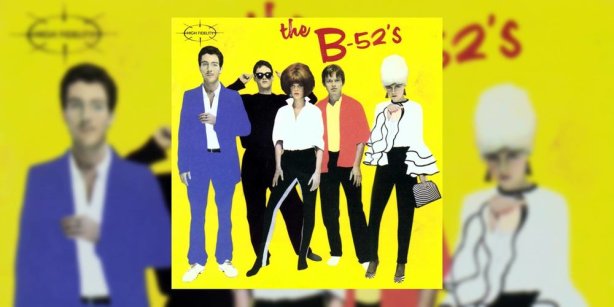
The B-52’s were ’70s punks molded not from the syringes and leather of New York City, but from the campy detritus you might have found in the thrift stores and garage sales of their home of Athens, Ga.: bright clothes, toy pianos, old issues of Vogue, tall wigs and discarded vinyl. They channeled spy soundtracks, exotica, surf music, long-abandoned dance crazes and garage rock — music that was gathering dust by their 1979 self-titled debut LP. Much of it (alongside their obsessions with Yoko Ono and the Velvet Underground) would reveal itself as bedrock of alternative culture years later.
The B-52’s were a clash of sounds that help bring punk to the suburban kids more likely to watch “Saturday Night Live” than visit CBGB: Fred Schneider’s sing-shout poetry, Cindy Wilson and Kate Pierson’s alien girl-group harmonies, Ricky Wilson’s tricky guitar riffs and Keith Strickland’s art-funky drums. Even demographically they were nothing like the new world of new wave being built by Talking Heads and Devo: 40 percent female, 60 percent Southern, and 100 percent fun.
“We didn’t have a goal of what we wanted to sound like when we started out,” says Keith Strickland, the multi-instrumentalist behind some of the B-52’s’ biggest hits. “We just knew we wanted it to be fun.”
Since springing out of Athens, Georgia, in the mid-Seventies, the group has always been the quintessential party band. Songs like “Rock Lobster,” “Dance This Mess Around” and “Love Shack” are indeed fun, thanks to singer Fred Schneider’s hilarious recitatives, fellow vocalists Kate Pierson and Cindy Wilson’s heaven-reaching harmonies, and the fusion of beach rock, Motown, girl groups, and ebulliently experimental jamming that Strickland and founding guitarist Ricky Wilson whipped up. They were improbable hit-makers, scoring Top Five singles and gold and platinum plaques while waving a flag for gay pride and singing the silliest lyrics possible. “Why don’t you dance with me? I’m not no limburger,” goes “Dance This Mess Around,” while “Rock Lobster” finds Pierson and Cindy going full Yoko Ono while making up sounds for jellyfish, narwhal, sea robins and bikini whales.
This summer, the B-52’s have been celebrating their history on tour, both solo and as part of a package with Culture Club and the Thompson Twins. Although the lineup has changed over the years – Ricky Wilson died of AIDS in 1985, shaking the band to its core, and Strickland retired from the road in 2012 – they’ve never lost the party spirit that defined the group when it was straddling punk and New Wave in the early Eighties. They haven’t put out an album since 2008’s Funplex(and likely won’t do another) but they know what their fans want from a B-52’s concert.
“We just have to play ‘Rock Lobster’ and ‘Love Shack,’ ‘Planet Claire’ and ‘Roam,’” the perennially redheaded Pierson says. “For our own benefit, we’ve added [Bouncing Off the Satellites‘] ‘Wig’ to the lineup, and we’ve never had so much fun playing that. Sometimes that’s a song people don’t know as well, but people seem to really enjoy it.”
The four surviving B-52’s took some time to reflect on the wild times that fueled their early success. Here’s an oral history of how the band, which formed after a night of drinking “flaming volcanos” at an Athens Chinese joint in 1976, took off.
Keith Strickland: Ricky and I had known each other since high school. When I met him, he had a 4-track tape recorder and had already recorded some songs just on guitar. They were amazing. He’d learned folk guitar. Then he and I started playing together. When we got more serious, I moved to drums.
Kate Pierson: Fred and Keith used to get stoned and do poetry and play. And I had been in a band in high school, and Cindy was singing with Ricky. So we all had sort of played with each other. One night we just started jamming after going out and drinking these flaming-volcano drinks, and that became the template of the band. Most of our songs came from jamming together.
Fred Schneider: We liked all music: James Brown, Motown, the Velvet Underground, Yoko Ono, the Beatles, Perez Prado mambo – we played everything, especially anything to dance to. Our goal, I guess, was to be a dance band, so we didn’t really have ballads in the beginning.
Strickland: We were listening to really campy sci-fi soundtracks. Fred is a vinyl collector. He’d find these great, old records. Ricky and I were really into Captain Beefheart. We also loved Joni Mitchell. You wouldn’t hear it, but she was a big influence on us, at least in terms of open tunings and the harmonies and chords she’d use. Our feeling was if it sounds good, it is good. So we put that freedom into writing. We felt like we could do anything.
Pierson: The inspiration for our vocal harmonies was sort of Appalachian. It’s sort of at weird intervals and it almost has an Appalachian kind of feel to it. The harmonies were really spontaneous. And the way we jammed, we would just get into a trance. Almost like automatic writing, this collective unconscious would take over and sometimes we’d be singing all at once. We’d listen back to the tape and seek out the best parts and patch them together in a collage. I might be doing the high part and Cindy does the low part, but then we would switch. On “Roam,” we crossed over in the highs and lows
Cindy Wilson: Ricky and I were living together at one point after he came back from hitchhiking all around Europe. We were working at a luncheonette counter [laughs]. I came to work one day, and Ricky was playing music on his guitar, just snickering. He played me the riff that turned out to be “Rock Lobster,” and it was hilarious. He was just trying to be funny. His guitar style made it moodier and it really is a driving song, but it does have that funny humor to it.
Schneider: I went to this disco in Atlanta called the 2001 Disco. Instead of a light show, they had pictures of puppies, babies, hamburgers and lobsters on a grill. And I thought, “Rock Lobster,” that’s a good idea for a song and probably no one else would.” I told everyone I had the idea, and we started jamming on it. The lyrics got weirder and weirder. I used to live on the Jersey shore, because I’m from New Jersey, so you would constantly hear “Pass the butter, please” on the radio, which was tanning butter [laughs]. I would do that and the gals came up with those wild fish noises. Cindy let loose with her tribute to Yoko.
The B-52’s’ debut single would remain their biggest hit until they invited everyone to the “Love Shack” a decade later. The ’79 smash is an unlikely blend of twangy Mosrite guitar, blooping Farfisa, beach-party-on-acid lyrics and an aquarium’s worth of creature noises. Cindy Wilson said that she remembered her brother snickering and saying, “I just wrote the stupidest riff.”
Wilson: We tried to have these song paintings. It took a lot of work and a lot of rehearsal, because we weren’t reading music. It was very intricate. There were a lot of stops and starts and changes and weird harmonies that we came up with. When we do the shows, it sounds like we’re just having fun, but it really is labor intensive.
Strickland: We’d listen back and pick out different vocal parts for Kate and Cindy, and the lyrics they were singing. Ricky and I would write the music, and then Fred, Kate and Cindy would jam on top if it and we would record it. Then we’d piece it together.
Schneider: We would jam for hours. It would sometimes take a month or two to come up with a song. We’d record everything on reel, and Kate and Ricky would take them home and go through it and pick out parts. That’s why “Rock Lobster” was originally six minutes and 47 seconds long.
Pierson: I remember being in the house me and Cindy had rented in Athens and working on that song and “Planet Claire” and just jamming on fish sounds. Little did we know that the song would have the life and spark it had. That’s one of my favorite songs to perform, because we can still experiment. We can still jam on it live. It’s very spontaneous.
Strickland: Fred told his friend, Julia, that we had a band – and we didn’t really have a band yet – but she was having a Valentine’s Day party, and she said we could play at her party.
Pierson: There weren’t really places to play in Athens, so we had to play a party. There was a folk club, and it was kind of hippie music. The clubs were just emerging. We were just sort of an aloof group of artistically oriented friends, and we would crash parties together and drink beer and dance really crazy. We’d usually drive people off the dance floor .
Strickland: When we played the Valentine’s party, we were doing a different kind of music from the stuff everyone listened to – R&B like James Brown; Junior Walker and the All Stars; Earth, Wind & Fire – but it still had a backbeat. So we played this party and our friends loved it. We had so few songs that when we were done, they said, “Well, play them again.” We just repeated it all the way through and everybody kept dancing. We thought it’s pretty good if our friends liked it, because they’d be the first to say, “You suck.”
Pierson: We had to borrow the sound system. We placed it on a bookshelf. It was in this little house, and it shook. We wore these fake fur wigs that I found; it was this crazy pocket book made of fake fur and we turned them upside down. They were white, and made white Afros. Cindy and I wore those and we wore black and had some Barbie dolls on the ceiling. Keith wore this little red wig he dyed. We had five or six songs. I know we did “Planet Claire, “Devil inMy Car,” “52 Girls,” “Rock Lobster,” “Lava” and maybe “Strobe Light.” Our friends loved it so much. They just danced so hard. The speakers were just rocking.
Strickland: So the tape had some conga, maybe some bass tones from the Farfisa organ and some second guitar; that we could play guitar with it and I played the congas. I wasn’t even playing drums.
Schneider: We all had jobs we didn’t like in the beginning. At the time, I was the mail delivery coordinator. Ricky worked at the bus station. Cindy worked at the Whirly-Q luncheonette. Kate worked at a local rag [the Athens Banner Herald]. So it was a hobby. We had to save up money to play anywhere.
Strickland: We started the band just to entertain ourselves.
Strickland: We had some friends in Atlanta who played in a band. They started playing New York at CBGBs and said, “You guys should play New York.”
Pierson: We sent a tape up there and CBGBs said no, but Max’s Kansas City said sure. So we drove up from Georgia, and it was like a 20-hour drive. We had this car we called Croydon, Cindy and Ricky’s parents’ station wagon. We’d stopped playing along with the tape by then.
Schneider: We were paralyzed with fear, because we had never played before anybody except our friends. I think only 17 people showed up. It was a Monday night in December, and I think two of the Cramps were there, Lux and Ivy. The curtain didn’t open, so I had to throw it open and all the other bands were dressed in black and we were like a rainbow congregation. We forgot to even ask if they wanted us back.
The B-52’s and the New York psychobilly brooders the Cramps both self-released their debut 7-inches in 1978 — the original recording of this beach blanket boogie served as the B-side to “Rock Lobster.” Together, the two bands were among the first to mix surf into the world of punk rock.
Pierson: On the first night, we didn’t have many songs. We didn’t realize it was kind of an audition night, and there were a lot of other bands on the bill. They asked us to cut the set short. We drove all the way from Georgia, and they said, “Can you play a couple of songs?” We played like 20 minutes or something and immediately left the stage. We put our stuff in the station wagon and drove straight back. But they called us and said they wanted us back.
Strickland: We were listening to the Talking Heads, Patti Smith, the Ramones and, of course, the Sex Pistols at the time. We didn’t really consider ourselves punk, but we knew that we were going to be a part of that. We didn’t really call ourselves “New Wave.” I remember we got called that when we started playing the clubs in New York for bands like us and the Cramps, because people were moving a little bit away from the punk thing and were just making songs [laughs].
Pierson: We blazed the path between Athens and New York for months. Each time we’d come back, we’d write more songs, rehearse like crazy and go back up. At one point, CBGBs said, “You can’t play both here and Max’s.” Then we started playing the Mudd Club and the Loft. I remember at the Loft, there was a huge line outside and Ricky looked out the window and said, “What’s that line out there?” We didn’t have any idea that the line around the block was for us. The place was so jammed and crowded. Ricky drank a lot because he was very nervous and shy. He was not gonna be able to play but [after he drank] he was on fire. He played great.
Strickland: So this thing was happening in New York and we were in the right place at the right time. A friend of ours, Danny Beard, created a label called DB Recs and we recorded our first single for him – “Rock Lobster” and the B side was “52 Girls” – and that sold really well, like 20,000 copies. So the labels got interested in us.
Pierson: We’d had a friend, who was our first manager, and she started getting offers from Red Star Records, and Virgin and Warner Bros. were interested. And she said, “Y’all, I don’t know what to do.” So we met our manager, Gary Kurfirst, through Tina [Weymouth] and Chris [Frantz] from the Talking Heads. He brokered the deal for us with Warner Bros. and Island Records.
Strickland: Our manager used to play that we were shy and he would do all the talking. We were rather quiet then. We’re all introverts except for Kate; Fred sometimes can be very shy. But when we get up onstage, we just go for it.
Wilson: I was shy, but Ricky was even shyer, until he got to know you. I think the music helps you get out of yourself.
Schneider: In the beginning Ricky would turn around onstage a lot. The band sort of looked at me to be the frontman, so I would tell bad jokes or I started a thing where I would get the audience to do a call-and-response thing. We became more outgoing over time. Plus, we smoked pot . That might have made us a little paranoid.
Pierson: We probably kept our mouths shut because we didn’t really know the music business. We thought, “It’s better to just not say much.” I don’t think we were shy so much as we were terrified. Especially when we did Saturday Night Live on live TV. We looked really animatronic because we were scared, but it came off as being this alien sort of attitude, which served us well, because people were like, “Whoa, this is so weird.” But we were just shy and terrified.
Schneider: Saturday Night Livewas nerve-racking. I was so sick to my stomach, but it went really well, and it put our record back on the charts. Eventually, it went platinum. Finding the Love Shack – “When You Opened the Door, It Was a Wild Band Playing”
Wilson: When Ricky passed [in 1985], it was just a horrible time. It was like an atom bomb going off. I think Keith dealt with the shock by doing music every day.
Strickland: After about two years, I told Cindy and Kate I had some music I had been working on and played it for them and then we started discussing the potential of working together again. And then we called Fred and said, “Do you want to do it?” He said, “Sure.”
Wilson: We got a rehearsal space in Manhattan in the Wall Street area. We were very serious about it. We would work for four days a week, and it came together pretty quickly. It was all about nostalgia. It was looking back at the good times we used to have in Athens, so it was a wonderful, healing record.
Schneider: The music became a little more funk, I guess. We wrote much faster.
Pierson: Keith would write the instrumentation and we would jam on that. We’d all get together and pick out parts and paste them together, then we would learn the parts. Sometimes we’d just play acoustic guitar and try out the parts and make a library. We’d use a double cassette player and make little edits.
Strickland: It took about a year to write Cosmic Thing. We spent a lot of time just talking, and we needed that. We were our own support group after Ricky’s passing, which was a very traumatic thing for all of us and, in particular, for Cindy.
Schneider: I had the idea for “Love Shack.” There was a place outside of Athens called the Hawaiian Ha-Le. It was an African-American club that had a lot of good shows. It looked like a shack, you wouldn’t expect it to be what it was, and when you opened the door, it was a wild band playing.
Wilson: It used to be this funky building with a tin roof that was old and rusty. They would have Soul Train lines. They just put a condemned sign on it, so it’s closed down.
Strickland: The funny thing about “Love Shack” is that we had decided what songs we wanted to do when we were meeting producers. We had already decided we were going to work with Nile Rodgers and Don Was. We played Don Was our demos, and he said, “Do you have anything else?” I said, “Well, we have this one other song, but it’s not finished.”
Pierson: We actually had a whole different version of it, and I remember Keith saying, “It’s not ready to put on the record.” Fred and I were like, “No, it’s gonna be a hit. We love it.”
Strickland: We almost didn’t play it for him, but we did and it was still rambling. Don said, “This is great. Just repeat this one part.” The part was, “The love shack is a little old place where we can get together … love shack, baby.” That had occurred only once in the original structure. So as soon as he picked that out, we thought, “That’s the chorus.” It’s like, “Voila.” It almost didn’t happen.
Pierson: That Motown feel really made it a party anthem, a regular hit at all your weddings and bar mitzvahs. It’s just got his infectious beat and you can’t help but dance to it.
Strickland: Another funny thing is we were recording the song at Bearsville Studios in Woodstock, and there was a big electrical storm outside, and all the electricity went out. We were like, “No, no, no.” When we listened back, we had an awesome take, but it was only halfway done but it got cut off in the breakdown, kind of over a dropout. So we just picked it up right there and took the rest from a second tape. That song is all live except for one splice. We didn’t know if it was a hit when we finished it, but we felt there was something special about it.
Pierson: The radio [programmers] weren’t really enthusiastic about the song. Fred worked a lot of the indie stations promoting it, Loretta Lynn–style, like “My record is in the garbage can.” Then college radio really embraced it. Thank God for college radio.
Strickland: There was something magical about that album, how it all came together. We sequenced it in a way that we felt told a story. I don’t know if anybody’s ever noticed it, but one song leads into the other in a nice way. It tells a story from beginning to end.
If there was any concern that David Berman had lost any of his stunning acuity with language in the 11 years since the last Silver Jews record, the record is set straight right out of the gate: “You see the life I live is sickening/ I spent a decade playing chicken with oblivion/ Day to day, I’m neck-and-neck with giving in/ I’m the same old wreck I’ve ever been.” The musical milieu may be different this time out—lush indie rock that feints frequently toward Americana—but Berman’s knack for weaving evocative narratives shot through with hope, doubt, and self-destruction are as strong as they’ve ever been. The album feels like a gift: when Berman blew up Silver Jews in 2008, he disappeared entirely; the long silence that followed made it seem like things might stay that way. Purple Mountains rewards the patience of his ardent followers with some of his strongest melodic songwriting to date, and also has enough clean hooks and clever barbs to reel in a few new ones.
Centerpiece “Margaritas at the Mall” likens the futility of human existence in the face of a silent God with day-drinking at a shopping center: “See the plod of the flawed individual, looking for a nod from God/ Trodding the sod of the visible, with no new word from God/ We’re just drinking margaritas at the mall/ That’s what this stuff adds up to after all.” The melody in the chorus sounds triumphant; the lyrics are anything but. The album is dusted with traces of pedal steel, barroom piano, and string-like keys, but—as it should be—the centerpiece is always Berman. “If no one’s fond of fucking me/ then maybe no one’s fucking fond of me/ Maybe I’m the only one for me,” he sings wryly in the album’s closing number. Berman may feel alone, but his legion of disciples cheer his return—and hang on every word.
David Berman comes in from the cold after ten long years. His new musical expression is a meltdown unparalleled in modern memory. He warns us that his findings might be candid, but as long as his punishment comes in such bite-sized delights of all-American jukebox fare, we’ll hike the Purple Mountains with pleasure forever.
To say that sinus woes suck would be a serious understatement: Your senses grow dull, your eyes throb with pain, and your whole noggin begins to feel like a fruit-gusher candy getting slowly crushed between two steel plates at any given moment. At least there’s a silver lining to all that snot; not only does the sickness eventually end — at least for a time — it might just inspire you to make a kickass album. Los Angeles grunge-gaze band Goon have done just that with their debut record, “Heaven Is Humming”, which mastermind Kenny Becker wrote while battling a chronic sinus condition. Rather than snuffle and lament, the musician sought inspiration from the good days. “I find encouragement in the fact that I’m able to be productive in the times that I’m not sick,” he said in a press release. “People like to romanticize the periods in which, for example, someone like Van Gogh was suffering, but it was actually because he was sick that he would go outside, and see a cherry-blossom tree, and be struck by its beauty.”
Heaven is Humming has been a long time coming. Three years coming, to be exact: singer/guitarist/songwriter Kenny Becker, singer/guitarist Drew Eccleston, bassist Caleb Wicker, and drummer Christian Koons started work on the album in the summer of 2016, right around the time Goon’s debut EP Dusk of Punk came ripping in from the Los Angeles sky, spilling from the brim with monster riffs and deep hooks.
Heaven Is Humming, then, is the rare example of a grunge album that isn’t mired in the artist’s despair, but rather his perseverance in the face of the fever dream. The noise-rock malaise hanging poison cloud-like over the record’s two heaviest cuts, “Datura” and “Deny,” along with Becker’s tension-laden yelps throughout, proves that journey as anything but easy, but chill vibes win out in the end. Tracks like “CCLL” and “Northern Saturn” run a little harsh, a little hazy, and a little high: just the way I like my rock.
Bibio’s back catalogue is a walk through different grounds of experimental sound. Starting his Warp Records journey with Boards of Canada influenced IDM, flirting with folk along the way and eventually falling into ambient textures on 2017’s Phantom Brickworks, Bibio has always pushed the boundaries of his work. This year’s Ribbons album sees him committing fully to dreamy, old-fashioned folk.
“Ribbons” initially feels like exactly the type of easy listening, laidback music that saturates chill Spotify playlists and the mood-based listening that dominates streaming platforms but Bibio’s unique qualities come in the weirdness and experimentation that breathes through his pretty, delicate instrumentation. Bibio’s relationship with British old-style folk isn’t a passing influence used to add another sound to his canon, its a full-bodied embrace and there’s a risk-taking charm in releasing wide-eyed tracks like ‘Erdaydidder-Erdiddar’ and ‘Watch the Flies’ to a Warp audience.
This album has been made very much in admiration of nature yet through a tinted window of manmade escapism. Spending more time in the British countryside, walking, photographing, listening and recording has certainly affected how I’ve been thinking and expressing myself in the studio – recalling the beauty in nature and the sadness of seeing it spoiled.
Yet, Bibio could teach his IDM peers a lesson with the intricate instrumentation and skilled layering exhibited throughout Ribbons. Ribbons brings you on a whimsical journey to another world that you might never want to return from.
Less than a year after their last album Performance, the ever-prolific White Denim are back with their eighth record “Side Effects”. More in line with the experimental, freewheeling spirit of their fan-favourite record Last Day of Summer than anything else they’ve done since, Side Effects is a record that captures the essence of the band’s full-throttle live shows. Featuring a rotating cast of band members led by James Petralli and Steve Terebecki, these tracks draw on the sounds of different personnel to create a cohesive whole – the result being an album that’s as varied and vivacious as anything they’ve ever done.
“I keep a few CDs of demos and rough mixes in my car, and when the radio gets unbearable, I’ll put them on to see if I feel anything,” Petralli says on how Side Effects first found life. “The songs on Side Effects are ones I heard from these demos – they were the ideas that sounded the most developed to me. I had this feeling that just because these tracks weren’t the right fit for the previous records, doesn’t mean that they couldn’t go on to be great in the right context.”
With that in mind, Side Effects takes on a more incisive feel than previous White Denim records. Contrary to Performance – the story of a questioning performer on stage – Side Effects is the off-stage life of the man behind the makeup. Spearheaded by Petralli and Terebecki (who tag-teamed production and called in specific talents from their rolodex of musicians), Side Effects has the feeling of a band providing fan service in a way only White Denim could do – by referencing their own material and putting out a record for fans to dig deep into. “We don’t put any limitations on what the band could do or should do in the studio,” says Petralli.
The album’s opening track, ‘small talk (feeling control)’, barrels out of the gate with a garage-rock prowess not heard from the band since the days of Workout Holiday. Not only does it invoke nostalgia for the band’s early days, but its second verse is also from the first batch of lyrics Petralli ever wrote for the band. “When we made Workout Holiday, we captured a feeling that comes from having fun and playing music on the weekend. I’m always looking for that feeling in the room – to get everyone laughing and playing well. ‘small talk’ is a great example of that.”
‘Reversed Mirror’ meanwhile comes directly from the stage as another take on the live favourite. An expertly crafted instrumental, it’s a reworking of both ‘Mirrored in Reverse’ and ‘Mirrored and Reverse’ and perfectly captures the raw, improvisational nature of the live band. ‘Shanalala’ on the other hand sees them embracing a post-punk side in the vein of Suicide – all stuttering, off-kilter electronics and breakneck drum machines. It’s a track that beautifully captures the playful attitude of the album – a song that shows off one of the many outfits White Denim have in their wardrobe.
Then there’s the album’s centrepiece – the six-minute odyssey ‘NY Money’. It features the backbone of the current live incarnation of the band on record (Petralli, Terebecki,Michael Hunter – Keys, Greg Clifford – Drums) and effortlessly traverses through the sounds of Soft Machine and Trans Am. “I cobbled the lyrics together from an old notebook I had on tour in 2015,” Petralli says. “It was after a night of drinking with The War on Drugs guys, and the Neu-influenced production at the back part of the tune is a winking homage to what they’ve been up to for the past few years.”
If you’re coming back to White Denim after a few years away, Side Effects most likely picks up exactly where you left off: a record showcasing a hugely energetic band bursting at the seams. And if you never checked out, then Side Effects is instead a wholly rewarding record – one that celebrates every form of White Denim to date and sets the stage for a brand-new chapter.
Hey buds, dig into these summer jams and cool off your mind.
The BBiB2019 Summer Jam Sampler is $5 minimum BUT all proceeds will be going to RAICES, the Refugee and Immigrant Center for Education and Legal Services; a nonprofit that promotes justice by providing free and low-cost legal services to under-served immigrant children, families and refugees in Central and South Texas.
AND anyone who pays $10 or more, will be entered to win several prizes that range from vinyl to BBiB t-shirts to tote bags to test pressings! We will have several winners. And you can feel good about your donation to RAICES. Obviously it’s money that is much needed right now.
“What to do with a spud like you?” Melbourne post-punk wags Terry return this summer with their new EP “Who’s Terry?”. Following on from last year’s huge-sounding I’m Terry album, this third EP from the band brings you right up to date with their wobbly politico-pop.
Spud is a class A toe-tapper that sees the band don fatigues and set their sights on the enemy. The rough and the tough, wrestled wrists and fools with crooked smiles all make an appearance as Terry sing as one over snare snaps and keyboard croaks.Bizzo and Tophat follows with a stride acrossthe underbelly, a thick slice of bop-heavy observation that gives way to one of Terry’s most elegiac refrains… “holding on and going forth”! Their gang vocal approach never sounding more resolute. Eggs then picks up the pace, a sure-footed romp that skips alongside prods of saxophone to join the parade.
Drawn for Days pulls the EP to a close, a sedate, melodic ponderance of strummy guitar, jangling bells and Amy and Xanthe’s soft-sung vocals. “Haunted by the big and small, hunted hanging for the fancy fall”. “I can’t stand up” the band decry in unison as the track scales its peak and gives way to warping synth noise. Who’s Terry encapsulates what Terry does best, the queasy marriage of the upbeat and traumatic, the catchy instant and the nagging distance. Their alliterative lyrics always sharp as tacks, their sense of melody and beat sunk deep in the heart of now.
Seattle trio Dude York have returned with the new full-length Falling, their tribute to adolescent romance and the pop-punk that clogged up FM radio wavelengths of yesteryear. To celebrate the announcement, the band has shared a new animated music video for the album’s impossibly catchy title track. Falling will be out Friday, July 26th on LP, CD, Digital, and Cassette . First-run LP copies come on frosting-colored vinyl.
“There are two ways things can fall” says Dude York’s Claire England. “They can fall and be ruined, or they can fall gently like a feather and be fine”. On Falling, their second full-length for Hardly Art, the Seattle trio explores that sentiment
“Falling” is from Dude York’s 2019 album of the same name.