Image may contain: 3 people, people smiling, people standing and indoor

All three Vivian Girls miss the rain. “It replenishes,” says Cassie Ramone, singer, songwriter, and guitarist. “It nourishes life!”

The band, who grew up and made their name on the East Coast, live in Los Angeles now. It’s far from the New Jersey basement shows, the 24-hour diners they frequented together as teens, and the tattoos they got to commemorate it all.  Ramone, now 33, singer-bassist Katy Goodman, 34, and drummer Ali Koehler, 32, have been secretly rehearsing for months. They were recording “Memory”, their first album in eight years — and the first since they announced their break-up in 2014. “When we broke up, we broke up for real,” says Goodman . “We had been going hard for a long time, and we were exhausted. But we always knew we had something special, and even when we broke up, we knew there was a strong chance we would reunite some day.”

“Vivian Girls are back and they haven’t forgotten what they went through,” reads the band’s press release for “Memory”. Their fans haven’t forgotten either; more than any other buzzing indie band that emerged in the 2000s, Vivian Girls saw the worst of what an intensely misogynistic music community was capable of. Social media had come into its own as a constantly brawling free-for-all, and many still recall the chauvinist thunderdome that was Brooklyn Vegan’s unmoderated comments section, which finally shuttered in 2016 — and all the hate it housed for the band. Kathleen Hanna  said that the comments left on Vivian Girls’ posts made her cry; “Vivian Girls reuniting has me reflecting on how terrible it was to be a ‘female musician’ in 2009,” wrote singer-songwriter Hether Fortune.

“I remember crying a lot!” says Goodman. “I would look out into the crowd [at shows] and see the one person who looked bored or mad. Being an anonymous internet troll was still a new thing to us… We felt like if we could just meet them, they wouldn’t hate us.”

At the time, the Vivian Girls easily stood out amid the lo-fi garage rock boom of the aughts: they revived the jangly fuzz-rock sound of Slumberland bands à la Black Tambourine; infused it with the cherubic, girl-group harmonies of the Ronettes; then knocked it all off-kilter, like proto-grunge punks the Wipers. It was a winning combination, and would spawn a decade of imitators. But that wouldn’t stop the trolls, who incessantly took swings at the band over their 12-year career, for what is now best explained as a poorly masked hatred of women coinciding with the boom of blog-fueled indie rock. The hate wore on the band, even after their break-up.

“We’re coming out swinging,” says Koehler. Vivian Girls played their first show in 2007, opening for Bikini Kill drummer Tobi Vail’s band, Old Haunts. “[Vivian Girls] sound like C86” — a 1986 indie pop compilation — “Because they are a pop band who listens to punk. Or maybe they are a punk band who happen to write pop songs,” Vail wrote in her zine, Jigsaw. Indie rock critics would later describe Vivian Girls’ music as “unschooled,” “amateur charm” and “rustic instrumentation,” but most listeners are likelier to call it what it is: “punk.” “We were intentionally lo-fi because we were a punk band,” says Ramone. “We did not want a highly-produced sound.”

“The first practice we ever had, our band goals were recording a record and going on tour,” says Goodman. “And being in Maximum Rocknroll,” adds Koehler, referring to the influential punk zine.

Goodman studied physics and education at Rutgers, and Ramone studied art at the Pratt Institute. Between them, the two friends managed to forge a stellar network of indie rock musicians between New Brunswick, New Jersey, and Brooklyn. “It was this frenzy of creative energy going on amongst our peers at the same time,” says Goodman. They counted Screaming Females, Matt and Kim, and Titus Andronicus as their peers in the scene. “They were our high school friends,” she says of Titus Andronicus. “They were touring America! They were putting out real records on labels! So we thought, ‘We should do that too!’”

“The band was starting to take off my senior year of college,” says Ramone. “I basically pulled a Cher from Clueless  total bullshittery and excused myself for going to SXSW one year to play shows. I was turning in Vivian Girls art for all my art classes ’cause I didn’t have enough time to do my homework. But it worked out! I was able to graduate.”

By the time Vivian Girls released their self-titled debut in 2008, they had also graduated from the basement shows that served as the genesis of their sound. They were opening shows for Jay Reatard, Black Lips, Sonic Youth, and Yo La Tengo. The band then invited Koehler, Goodman’s friend at Rutgers, to replace former drummer Frankie Rose; within a matter of months, they found themselves touring Puerto Rico, Europe, Japan, Australia, and New Zealand. “I’d just finished college,” said Koehler, who majored in German language and literature. “I said to my mom, ‘Katy and Cassie asked me [to] join Vivian Girls full-time, but I’d be gone a lot.’ And my mom was like, ‘What else are you gonna do? Sit at home all summer?’”

As Vivian Girls’ star began to shine well outside the sanctum of their local punk scene, the space that used to insulate artists from their critics had all but disintegrated, thanks to the increasing ubiquity of blogs and social media. “We wanted to produce music that would resonate with people in the [D.I.Y.] scene, and maybe elsewhere,” says Ramone. “Once we weren’t in our general circle of friends anymore, the misogyny jumped out.”

“People Had No Fucking Clue What to Do with Vivian Girls,” wrote critic Annie Fell for Vice just last year. Ten years prior, though, the same outlet openly indulged in rating women on their appearances. Hipster Runoff, the now-defunct cesspool of countercultural crit, referred to Vivian Girls as “slutwave” and titled a post, “The Vivian Girls show off their banging bikini bodies . The comments section of Brooklyn Vegan, the de facto media hub for the indie scene at the time, had already united against the band. Though it should have been a net good that women were tipping the scales and starting more rock bands of their own — such as Best Coast and Dum Dum Girls — men on the internet insisted on framing Vivian Girls as foils to other women in the genre, placing special emphasis on their appearances.

“My poor dad didn’t have to read all that,” says Koehler, whose father created a Brooklyn Vegan account to spar with anonymous naysayers. “I will always remember one comment: ‘Oh, look. It’s too fat, too skinny, and too tall.’ I think it’s funny now, but it’s really not. We’re all straight, cis white women — and it still sucked! What hope is there for anyone else?”

The band eventually found their own crafty ways of coping with negative attention: “We played a college show one Halloween in Connecticut,” says Koehler. “We saw some kid tweeting mean stuff about us. When we found out he was going to write about [our] show for the school newspaper, we reached out and told him he could interview us if he wanted.”

“We just killed him with kindness,” she continues. “Someone was being shitty about us so we sat down with him face to face and and disarmed him, ’cause he saw us as people and not some buzz band to troll.” It’s rare, though — and hardly recommended — to meet every detractor face-to-face.

The Compa-NY Studios in Glendale, California, is littered with shakers, tambourines, and a red Fisher-Price xylophone — which producer Rob Barbato will later filter through a delay pedal. In the booth, Goodman tries out harmonies in front of the microphone. “Baby angel voice,” she sings, jazz-like, before the reverb sets in. “Haaaah!“

Babies are the topic du jour in the studio. Koehler is seven months pregnant with her daughter Wendy at the time of the recording, but only complains about her shortness of breath. Otherwise, she powers through drum fills and harmonies with ease. The last time Koehler had been in a recording studio was in 2014 with Upset, her project with ex-Hole drummer Patty Schemel; before that, she drummed in Best Coast. Koehler pats her belly. “I’m gonna see how being a parent goes, before we think about touring again.”

Goodman, who parents a toddler with Todd Wisenbaker — her husband and counterpart in the indie-pop band La Sera — imparts the occasional bit of wisdom. In the early days of Vivian Girls, she taught high-school science full-time in Princeton, then commuted to Brooklyn to play shows. She now develops programs for fellow STEM educators. “I’m such a Virgo,” says Goodman. “I love to know the rules of the game. But then I found out that having a baby is not a game!”

Ramone doesn’t do baby talk, unless it’s about the Babies, her project with singer-songwriter Kevin Morby. She wanders in and out of the studio, often tending to her journal and checking the time during every step of the recording process. By night, long after Goodman and Koehler return to their families, Ramone leaves her journal open and lets her guitar unwind, cranking out rambling solos and feedback into the wee hours of the morning.

“There’s a Day Cassie and a Night Cassie,” explains Barbato. He first came into contact with the Vivian Girls’ universe producing La Sera’s 2012 LP, Sees the Light, then later produced the Babies’ 2012 record, Our House on the Hill. “Day Cassie is pretty pragmatic. She keeps a list, checks it off and moves everyone forward. Night Cassie is freer, and more vulnerable.”

Although Koehler and Goodman relocated to Los Angeles years ago, Ramone stayed behind in the Northeast, volleying between Brooklyn and her parents’ home in New Jersey. D.I.Y. venues began shutting down left and right, and the people she knew in the scene were leaving New York. She used to churn out new songs on the road with Vivian Girls — often teaching the band their parts during sound checks — but Ramone had grown increasingly secluded and focused on her visual-art practice. It was during a regular phone call one day that Goodman said, apropos of nothing, “Let’s do the band again!”

“I was originally trying to recruit a backing band for my next solo album,” Ramone says. “It sounded cool, but it just wasn’t going as smoothly as it did with [Vivian Girls]. I tried so hard to fit a square peg into a round hole with other people. So when Katy called me up, I was relieved. Once I got to L.A., I wrote most of the [Memory] songs in two weeks.”

“You don’t see too many bands with a bond like Vivian Girls,” says Barbato. “You usually see a one-person project, then they [hire] people to play with them. Cassie, Ali, and Katy have been friends since they were kids. But I think when it comes time to express stuff, it’s still hard for Cassie to maybe say things in front of them sometimes. It was easier for me to turn the lights down in the studio and let her go.”
“I’m a big [Burt] Bacharach fan,” says Cassie Ramone. “But I also love grit and punk simplicity. When I write, I try to merge those two ideals.”

From the very beginning, all Vivian Girls songs were written in conversation with the pop legacy built by titans like Brian Wilson, Burt Bacharach and Phil Spector. In their 2008 seven-inch, featuring the jangle-punk title track “Wild Eyes,” the Vivians conjure the hormone-fueled melodrama of the Crystals: “Say you’ll hold me till I die/Wild, wild eyes.” Flip the record and you get its chilling companion song, “My Baby Wants Me Dead” — a slow-cooked, escalated update on Carole King’s “He Hit Me (And It Felt Like a Kiss)” — eerily relevant in a time of surging mass gun violence.
“Since I was a child I was analyzing pop song structures,” says Ramone. “Even with Disney music. That’s why I’m such a big Bacharach fan. But I also love grit and punk simplicity, so when I write, I try to merge those two ideals. People can dislike my music if they want, but it bothers me when they’ve said it’s not thought-out or ‘lazy.’”

In writing the overcast surf-rock track, “Something to Do,” Ramone calls to mind Bacharach’s “I Just Don’t Know What to Do” as she roves between New Jersey diners and beaches. And in the listless, psychedelic march that is “Sludge,” she cites Jimmy Webb’s baroque pop masterpiece, “MacArthur Park” — filtered through a X-Vex Fuzz Factory pedal. But much like the architects of pop’s golden age, Ramone harbors an impenetrable melancholy beneath the sanded-down, bubblegum shellac of Vivian Girls’ music.

Drowsy with reverb, her verses ricochet between walls of static; her lyrics, more intelligible in Memory than in most releases, recall both the sighing theatrics of an embattled Brönte heroine and the blunt force of Minor Threat. “I lost it all/My final brain cell banged against the wall,” Ramone sings in the shoegazing lead single off Memory, “Sick.” As usual, her bleak visions are softened by Goodman and Koehler’s harmonies. “Tomorrow maybe I’ll wake up and say/Enough.”

“The main themes are poor mental health — a classic,” Ramone says with a laugh. “And love lost. For the first few records I only shared the lyrics where I wanted harmonies on, but with [Memory] I was like, ‘Whatever.’ If you’re gonna go there, you might as well just go there all the way.”

While 2011’s Share the Joy sardonically basked in the bubblegum (case in point: the Shangri-Las pastiche “Take It As It Comes“), 2019’s Memory shares both sonic and thematic D.N.A. with their 2009 LP, Everything Goes Wrong. The album came out during the advent of the glossy synth-pop sound known as chillwave (think: Washed Out, Toro Y Moi), when music critics already began foretelling the waning relevance of indie rock at large, as electronic-based music began to saturate the market. But instead of capitulating to the demands of any trend, Vivian Girls leaned harder into their punk-pop roots.

In Everything Goes Wrong — the only other album featuring Koehler — Vivian Girls first crash through the gates with brackish opening track “Walking Alone at Night.” They ramp up the energy with the hardcore push-and-shove of “I Have No Fun,” then go darker in “You’re My Guy” — a satirical jab at the band’s male antagonists and their warped fantasies. (“You’re my guy/You fuck me all the time/I’m lonely every night,” hisses Ramone, “Love ya’ though you love to see me fall.”)

Altogether, their 2009 album painted a grittier picture of the scene they’d come to occupy: a wilderness of faces they weren’t sure they trusted anymore. Yet Vivian Girls maintained their sense of humor, even as they continued to be publicly vivisected in the indie blogosphere. While touring in support of the album, all three members of Vivian Girls got matching tattoos that read COOL DUDE ATTITUDE.

Those days still sting, 10 years later. Writing and recording a new album also meant bracing themselves for another wave of sexist backlash. “Doing our press shots for this album, at one point I asked the photographer, ‘Can we shoot one that’s just our faces?’” recounts Koehler over the phone. “When we left, Katy said, ‘Thanks for saying that. I fucking hate taking pictures of my body.’ I was like, ‘I do too!’”

The misogyny leveled at the band was inextricable from their narrative. But now, the story of Vivian Girls no longer belongs to their detractors, most of whom remain as nameless as they are unremarkable. “Every day that came before is just an empty shell,” sings Ramone on the title track; with Memory, the band is committed to writing new stories together.

“Back when Vivian Girls started, we weren’t in control of the narrative,” says Goodman, who recently established the band’s first Instagram account. “We were a lot more reliant on blogs and music publications. They would take the art we make, process it themselves, and people would rely on those sources to form their opinions on things. Now you can just follow all your favorite artists on social media. Which is powerful!”

“It took a lot for me to just like leave the comfortable little hole that I had dug for myself in Brooklyn,” says Ramone. “But no risk, no reward, you know what I mean? To come out and do something like this — I have a feeling it’s going to be worth it.”

Memory is set for release September 20th via Polyvinyl Records.

Vivian Girls — Cassie Ramone, now 33, singer-bassist Katy Goodman, 34, and drummer Ali Koehler, 32 — will release ‘Memory, their first album in eight years, later this fall.

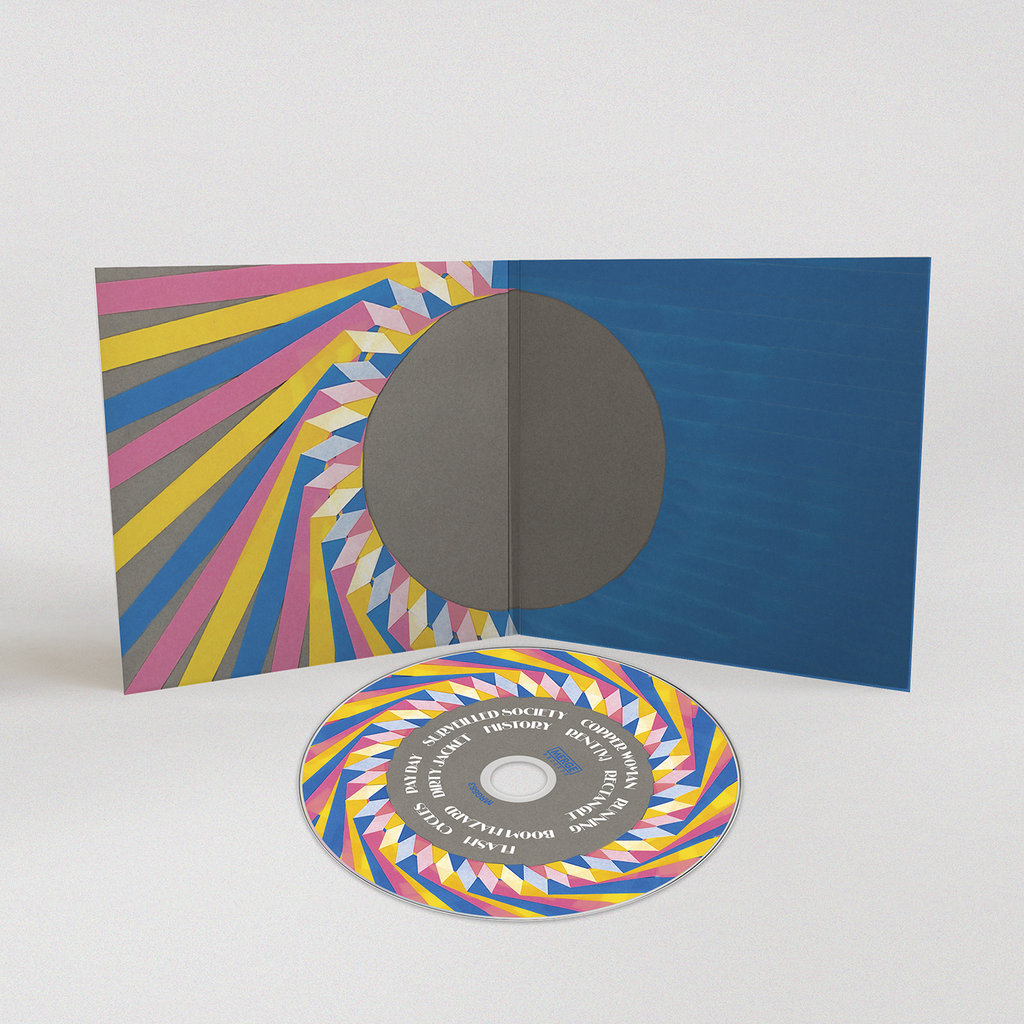
Image may contain: night, sky, text and outdoor

You know when you get to that time, I suddenly found myself saying such infamous quotes like ‘they don’t make music like this anymore’ and trust me – it scares me quite a bit. But on the bright side of things that can also work as a compliment, right? There’s something about the sound of Liverpool-based combo The Night Café that instantly clicked with me and I simply forgot to recommend it here , For me personally there’s a sense of old-fashioned beauty and nostalgia in their melody-driven indie-rock, something that reminds me of the heydays of the early 00s, I must say. From old Britpop heroes like Elbow and Doves, to the more melodic side of bands like Maximo Park – 0151, is the debut album of The Night Café is packed with plenty of reminiscences and ingredients of Britain’s long-lasting legacy of melody-driven guitar pop

‘Turn’ is taken from The Night Café, from their debut album ‘0151’ out 23rd August.

Songs like Turn and Finders Keepersare carried by a warm honesty and this really rare talent for melody and composition. In-between the album the Brits experiment with electronic and slightly more psychedelic elements as well but are eager to keep the focus on the songs. You can literally sense how they enjoy playing together; how they love to compose new songs, even if that results in a slightly overloaded album (it contains 18 tracks although lots of them are interludes). Maybe that’s what I love most about this little indie music gem called 0151 – it represents the youthful hunger for adventure, one that isn’t as saturated and worldly-wise as I might sometimes appear. It’s a reminder of music’s energy and power and I really hope it reaches out to the young at heart out there as well.

A product of the burgeoning Washington, D.C. punk scene, Gauche fill their songs with the kind of biting political commentary you’d expect from a group making music in the shadow of the White House. “Pay Day” is an unsparing look at wage inequality; on “History,” Mary Jane Regalado vents her rage at seeing her accomplishments stolen by men who take the credit. But like the equally political post-punk groups of the late ’70s, Gauche also know that dancing can itself be a weapon. Accordingly, the group employs bouncy sax, tense bass lines, and riotous yelps—conjuring the B-52s, Le Tigre, and Essential Logic in one manic package.

http://

released July 12th, 2019

Jason P. Barnett: Guitar, Bass, Vocals
Adrienne CN Berry: Saxophone, Vocals
Mary Jane Regalado: Vocals, Bass, Guitar
Pearie Sol: Keyboards
Laurie Spector: Bass, Drums
Daniele Yandel: Vocals, Drums, Bass, Guitar

Brittany Howard, best known for fronting the band Alabama Shakes, will release her debut solo album, “Jaime”, on September. 20th on ATO Records. She says this track is “is a song I deeply want to share to help others realize loving and being loved by God doesn’t have to look the same for everyone.”

With her soulful vocals and impassioned electric guitar playing, Brittany Howard is known as a blues-rock powerhouse, and the lead singer and rhythm guitarist for Alabama Shakes. She also just released her debut solo album “Jaime”. Howard was inspired to create the album after taking a cross-country trip from Nashville to Topanga, Calif., where she recorded it. “I wrote this record as a process of healing. Every song, I confront something within me or beyond me. Things that are hard or impossible to change, words and music to describe what I’m not good at conveying to those I love, or a name that hurts to be said: Jaime,” Howard says.

Is there anything Brittany Howard can’t do? Between Alabama Shakes (arguably the most acclaimed and commercially successful roots-rock band of the past decade), Bermuda Triangle (her Americana trio with Becca Marncari and Jesse Lafser), her hard-edged solo project Thunderbitch, the Alabama-born, Los Angeles-based singer/songwriter, guitarist, and producer has proven herself an adaptable force of nature, as an individual as well as a team player. “Jaime”, her breathtaking solo debut, is the most definitive proof of that to date. With her written accounts of life pre-Alabama Shakes—which she subsequently translated into song—supplying the thematic foundation, Howard delivers a powerful (and powerfully-sung) display of profound empathy, parlaying autobiographical intimacy into unflinching social protest. “I am dedicated to oppose those whose will is to divide us and who are determined to keep us in the dark ages of fear,” she vows adamantly on album highlight “13th Century Metal,” a curious hybrid of spoken word and electronica; “I hear the voices of the unheard / Speak for those who cannot speak / And shelter the minds that carry a message.” Judging from this album, we’re in good hands.

http://

Starting with a further track from Brittany Howard’s the stirring and inspired “He Loves Me,” from her upcoming solo debut Jaime.She named the album after her sister who passed away when they were both teenagers. The music is a celebration of the human spirit.

She shared one last pre-release song from the album, “13th Century Metal.” She has also shared a video of her performing the song live, Previously Howard had shared Jamie’s first three singles, “History Repeats,” “Stay High,“ and “He Loves Me,” as well as a video of her performing “He Loves Me” live. 

Howard’s sister inspired the album’s title. She taught Howard to play piano and write poetry, but passed away from cancer when the sisters were teenagers.

“The title is in memoriam, and she definitely did shape me as a human being,” says Howard in a press release. “But, the record is not about her. It’s about me. I’m pretty candid about myself and who I am and what I believe. Which is why I needed to do it on my own.”

In regard to branching out with a solo album, Howard had this to say: “I turned 30 and I was like, ‘What do I want the rest of my life to look like?’ Do I want to play the same songs until I’m 50 and then retire, or do I do something that’s scarier for me? Do I want people to understand me and know me, do I want to tell them my story? I’m very private, but my favorite work is when people are being honest and really doing themselves.”

From the debut solo album “Jaime” set for released on September 20th, 2019.

Love—in all its forms—is Brittany Howard’s compass on Jaime, her solo debut. Resting comfortably in rootsy soul, rock, R&B, and hints of funk, Howard makes a case for optimism without ever saying the word itself. She celebrates heady romance on the easygoing ”Stay High,” and with “13th Century Metal,” she offers a clear-eyed manifesto of empathy as she pledges to build a better world. She even approaches spirituality from a position of grace, painting herself as a sinner in the hands of a forgiving God on “He Loves Me.” By sharing her open heart, Howard encourages anyone listening to do the same.


Image may contain: one or more people, concert, night and indoor

Melbourne garage punk greats just released their first album in nearly a decade. It’s finest moment is “Like a Comet” featuring its nagging descending main guitar riff that then rips open like Love’s version of “7 and 7 Is” when it’s too late to brace for impact. Like that space snowball crashing into our atmosphere, Eddy Current Suppression Ring are back, right when we need them most. While its members have been busy playing in other bands, Australian garage rock greats Eddy Current Suppression Ring have been largely inactive for years now. Their last album was 2010’s Rush to Relax, and their last single arrived in 2011. Today, the band quietly announced that a new album is out before the year is through. It’s called All in Good Time and it’s out on December 13th.

“Like a Comet” · Eddy Current Suppression Ring from the album “All in Good Time” Castle Face Records Released on: 2019-12-13

The Chromatics album “Closer to Grey” features a haunting rendition of Simon & Garfunkel’s “Sound of Silence,” and that track is now the basis of a new EP they just released digitally for $1. The band have had an unexpectedly productive year. After pushing back Dear Tommy for four years—if it’s even coming out at all at this point—the band released new album Closer to Grey, their first full-length album in seven years. Now, they’re adding to that with a new EP featuring a handful of covers and an unreleased original track. The Sound of Silence EP, which was released on Friday digitally via their Italians do it Better label, features two versions of the band’s cover of “The Sound of Silence” (which is also featured on Closer to Grey), as well as a cover of Jackson C. Frank’s “I Want to Be Alone” and a new acoustic track called “Burning Bridges.” Hear the full EP in its entirety below.

Tracks;

(0:00) The Sound Of Silence (On Film) (2:28) I Want To Be Alone (6:14) Burning Bridges (8:10) The Sound Of Silence Produced & Mixed By Johnny Jewel

New Zealand’s Sarah Mary Chadwick first made a name for herself as the singer/guitarist of the grungy band Batrider, but she’s been pursuing a solo career since 2012 and her fifth solo album, “The Queen Who Stole The Sky”, is a triumph like few others. Sarah, who normally plays guitar or keyboard, was commissioned by the City of Melbourne to perform an original piece on the Melbourne Town Hall’s 147-year-old pipe organ, the largest Grand Romantic organ in the Southern Hemisphere. Sarah Mary Chadwick has always been an artist who goes ‘all-in’ emotionally, and on this album, she’s playing the hand of her life.

The first time we heard some of the songs from Please Daddy was in St Paul’s Cathedral. Chadwick was on the organ, solo, hidden away behind the pulpit while her howls echoed off the arches. Listening from the pews these tracks sounded like a natural extension of her last album, The Queen Who Stole The Sky, which was written on Melbourne Town Hall’s 147-year-old grand organ. The sparseness and the weight of it all was overwhelming, in a way.

On record, Chadwick feels closer. Her backing band have returned – Geoff O’Connor and Tim Deane-Freeman on bass and drums, Hank Clifton-Williamson and Joel Robertson on flute and trumpet – and the snare-heavy percussion and lilting flute especially add a lightness that makes you remember that Chadwick’s explorations into mortality and grief aren’t meant to be cold. Life’s a bitch and you die every day. You can’t ignore it, but you can’t let it crush you either.

The organ sound is ENORMOUS, and the songs are just superb. Her voice arches with the aching power of Bjork and the frail grace of Neil Young. It’s an overwhelming listen, with the emotional heft of of a Gorecki symphony. It’s an albums that renders pain, beauty, grief and joy into a singular, rolling wave.
Let it wash over you and take you where it will.

http://

That piece became The Queen Who Stole The Sky, which was recorded live and then turned into Sarah’s new album. It’s a concept that would be interesting even if the album wasn’t that fun to listen to, but it is fun to listen to. It manages to have both the accessibility of her earlier work and the pure uniqueness you would expect from a project like this.

On this album, I keep coming back to thinking she sounds like Amanda Palmer meets Bjork, and it’s rare to even hear someone attempt sounding like that, let alone pull it off as masterfully as Sarah Mary Chadwick does. I’d like to think that comparison is at least enough to make you curious enough to listen (if you haven’t already), but this is not really the kind of album you can compare to other artists anyway. Like Amanda and Bjork, Sarah Mary Chadwick is a true original on The Queen Who Stole The Sky. Not only did she have the technical skills to pull off this task, she was able to come out with a personal, emotional album in the process. The pipe organ is a grand, majestic instrument, but The Queen Who Stole The Sky still sounds intimate.

Image may contain: indoor

First, there was Band of Gypsies. Just a few years ago, there was Machine Gun. And, in between times, sundry compilations, bootlegs and all manner of other sources drip fed other moments from four momentous shows onto the collectors’ market.  Now, all four have been gathered together, and the result is one of the most spectacular Jimi Hendrix collections yet.

Band of Gypsies was Hendrix’s union with Buddy Miles and Billy Cox, a shortlived union that effectively debuted and departed in the space of 48 hours, New Year’s Eve 1969 and New Year’s Day, 1970. Two shows per day at the Fillmore East marked the band’s brief life, and for a long time, the soundtrack – the original Band of Gypsies album alone – was regarded by some as one of those take-it-or-leave-it Hendrix albums, released out of sequence out of contractual obligation, and effectively filled with overlong jamming through songs we’d never heard.

The passage of time, of course, dismissed that opinion, and Machine Gun, which served up the first of the four shows, placed at least some of the music into the context of a show… a great show, which danced back and forth between Jimi’s past and future, and ranks today among the most exhilarating single disc Hendrix live albums of them all.  And now that it has been expanded to five discs, it’s even better.

You can play favorites with the different shows according to their repertoire. On the first night, new material predominated, with only “Lover Man” and “Hear My Train A-Coming” coming through to satisfy the oldies fans. But a few more crept in on the second set; there was the glorious blast of “Stepping Stone” and “Foxey Lady” amidships in the third; and the final show was greatest hits a-go-go, as the evening ended with a colossal “Voodoo Chile,” a brutal “Wild Thing,” a leviathan “Purple Haze” and even “Hey Joe,” the song that started it all for Hendrix, but which he’d never seemed to have that much time for.

The sound is excellent throughout; the booklet well-presented and written. The box won’t take up much room on the shelf, and the whole thing, frankly, is a joy from beginning to end. The Band of Gypsies travel on.

Image may contain: 1 person, closeup

Having arrived in 2 parts, “Infancy” is a masterfully crafted and genre defying album which comes straight from the hearts of Haydn Park-Patterson and Millie Kidd. The album is an amazing listen which takes you on an exploration of the darker pits of society and what makes us human.

We admittedly were a little late to The Ninth Wave party, which is unusual given our adoration of Scottish bands and post-punk music. Then again, the Scottish outfit led by co-lead vocalists Haydn Park-Patterson (guitar) and Millie Kidd (bass) and includes Louise MacLennan (synths) and Lewis Tollan (drums) are still in their early ’20s and their careers are just taking off.

The two EPs they released this year on Distiller Records – “Never Crave Attention”and “Flesch” – are modern-day post-punk masterpieces with songs like “Swallow Me” and “A Wave Goodbye to the People Who Said I’d Win“ highlighting the respective records. What catches your attention is The Cure- and Joy Division-like wail and urgency of their sound and the unbridled honesty and poignancy of their songs. Comparisons to these two legendary bands have been earned, and the quartet can and hopefully will one day reach these lofty levels.

The debut album from The Murder Capital in a the rather nice looking rust marbles vinyl pressing. ‘When I Have Fears’ .There’s a whole raft of very decent bands heading over from Ireland at the moment who are, we hate to pun ‘gonna be big’. Dublin’s The Murder Capital are, at the moment in the same whisper as Fontaine’s DC, Just Mustard, Thumper and Inhaler.

But they’re by no means all the same in sound. We first saw The Murder Capital on a very cold night at The End Of The Road Festival in September, not knowing what the band were about. They instantly resonated, coming on to sirens blaring and the audience didn’t know what hit them. Live, their sound is big, it’s captivating and it stays with you. And we weren’t disappointed

We eagerly looked forward to their debut “When I Have Fears”. Even though we’d discovered them in January, by August there were still only a couple of songs on Spotify to listen to so an air of mystery remained.

The result has been just as huge as the hype surrounding Fontaine’s DC’s Dogrel. But this isn’t about all these Irish bands sounding the same.  The Murder Capital have made something much more dark, harrowing and passionate. More Is Less begins like Sonic Youth’s Tom Violence.Not a bad thing indeed.

A similarly distorted guitar, dripping with sadness and chilling. Pounding the lyrics ‘more more more, more is less’ give vibes like a protest song but with more amped up romance. Always the song that stood out in live shows, Green and Blue makes an apocalyptic sound of romantic devastation and destruction with Interpol style guitars bass and drums, but darker and more post-punk -if you can imagine that.

It’s as if everything is going on around us but somehow it’ll all be ok. The haunting ‘I failed you’ makes us imagine a camera drawing out of an unlit room as someone is left alone and devastated in the darkness. It all builds up to Slowdance I and Slowdance II. The meat of the album and a duo of songs to get completely lost in. In a live setting these two songs play as one single entity; one half with lyrics (Slowdance I) and one
half instrumental (Slowdance II).

Slowdance II is where it really kicks in. Dark and dreamy, this is the fulcrum where you immerse yourself in layers of sound. The most melancholic memory of romantic fuzz. It’s dramatic and hazy and seductive and epic and takes your breath away. You wonder how on earth they can top it.

Feeling Fades is a track that’s been available to listen to since we first discovered them. It ends with a dry shouted la la la la la la la la la and seems to poke fun at the song as it disintegrates, like light falling into a black star. Final track Love Love Love is already a personal favourite. Dark and moody, lurking and devastating, alarms sirens, cinematic and lush. ‘In the rain the romance lay, maybe in the rain, the romance will say goodbye’

When I Have Fears is such a raw record, both emotionally and sonically that we don’t want to be controversial or opinionated or seen as rooting for the underdog but it’s just knocked Dogrel from among our Album of the Year spot. It really is that good.

With When I Have Fears sees The Murder Capital have released an insane debut album which will only open doors for the band. The Dublin post punks are seriously a band to keep a close eye on, as with the release of their debut album it’s almost certain that 2020 is going to be massive for them.

Image may contain: one or more people and text