

JEFFERSON AIRPLANE – ” After Bathing At Baxters ” Classic Albums Released 30th November 1967
Posted: February 12, 2020 in CLASSIC ALBUMS, MUSICTags: After Bathing at Baxters, Grace Slick, Jack Casady, Jefferson Airplane, Jorma Kaukonen, Marty Balin, Paul Kantner, RCA Records, Spencer Dryden

In June 1967, The Beatles album ‘Sgt. Pepper” had just hit the US and the Summer of Love had barely began when Jefferson Airplane headed from San Francisco to L.A. The year 1967 saw the emergence of an entire new wave of American rock, much of which centered around the San Francisco scene of bands like Moby Grape, Country Joe and the Fish, The Grateful Dead and the Quicksilver Messenger Service. And within this cohort, no group showed more promise, exerted more influence or found more early success than Jefferson Airplane.
They’d spend the next four months recording ‘After Bathing at Baxter’s” It was their third album with the classic lineup. Following the smash success of the debut ‘Surrealistic Pillow” fired by two unexpected AM radio hits (“Somebody to Love” and “White Rabbit” they had a surprisingly big budget and creative carte blanche from their major label, RCA Records.
They also had a radical plan: to move past the poppy folk-rock that had been the Airplane’s stock-in-trade since the band’s first version formed in 1965.
Airplane, signed to RCA, started the year with a record already under its belt, 1966’s Jefferson Airplane Takes Off. Its gently twisted folk-rock had received decent reviews but hadn’t sold much of anything. That wouldn’t hold true for Surrealistic Pillow, the group’s second album.
To start with, that meant beefing up the studio sound to match the group’s live shows. As in, Jack Casady’s bass had little heft on ‘Pillow’—not at all the fat-toned omnipresent rumble my teen self witnessed at the Café Au Go Go in spring 1967.
Besides, the group’s dynamics and ambitions were rapidly evolving. Internal frictions were pivoting them in directions heavier sounds, art-rock song forms, looser vocal interplay that would define the Airplane going forward.
On ‘Baxter’s’, the creative and personal tensions that would undermine Jefferson Airplane’s cohesion over the next three years found powerful artistic balance. Despite period-piece flaws an overlong jam, some hippie-dippy lyrics it is arguably the most daring and accomplished album this trail-blazing band ever made.
When the Airplane cut ‘Baxter’s’, the San Francisco counterculture they were such an integral part of was peaking though nobody at the time knew it. The album’s dazzling array of song structures unusual, eccentric, oblique distills and reflects that scene’s trust and hope in the joys of experimentation. It sought to embody the shared feeling that the world was open to question and on the cusp of change.
As was the Jefferson Airplane itself. Their internal chemistry was deliberately shaken up to yield a sometimes uneasy democracy, where all six members contributed compositions, dialed up new sounds, and pushed at the edges of their talents. It didn’t always work; why would it? But it’s why ‘Baxter’s turns through a marvelous kaleidoscope of sounds, moods, and textures that are darker and denser, more layered and aggressive than anything they’d done to date.
Jack Casady and guitarist Jorma Kaukonen were among the key drivers of the sonic shift. Casady honed his agile, melodic runs, which routinely spilled with jagged finesse across bar lines, while playing R&B with the likes of James Brown; he and Kaukonen had played together since high school. Back then, ironically, Kaukonen played rhythm to Casady’s lead guitar. All those years gave the duo an almost telepathic interaction (Hot Tuna,) that drummer Spencer Dryden, a trained jazz musician with years of experience, prodded and anchored with skilled finesse. They all came to ‘Baxter’s wanting to inject more jamming into the mix a la the Grateful Dead, Cream, and Hendrix.
Grace Slick joined the Airplane just in time to record ‘Surrealistic Pillow’; somewhat ironically, she brought that album’s surprisingly edgy hits with her from her old band, The Great Society. Adept on keyboards, gifted with a supple, richly timbred voice, she was catalytic, strong-minded, and far from a hippie earth mother. On ‘Baxter’s, she was determined to pursue her idiosyncratic composer’s voice and explore her fierce feminist perspective.
Airplane co-founder Paul Kantner, originally a folk singer who idolized Pete Seeger, went to a military high school which helps explain the martial rhythms and feels to many of his songs. Since ‘Pillow’, though, he had started developing his own offbeat song forms and wanted more space for them. That and his shrewd musicality and sense of the times led him to buy into the others’ ideas and redirect the Airplane’s flight plans.
That left co-founder Marty Balin, an ex-folkie with an acute pop sense who, as singer and writer, was at the center of the earlier Airplane. Watching his role diminish on ‘Baxter’s didn’t exactly elate him. But he also knew he owned one of the band’s biggest assets: a fantastically flexible, expressive, and outsized tenor that, whether out front or part of the blend, capped the group’s utterly distinctive singing.
In fact, with Balin and Slick, the Airplane had two of rock’s most distinctive and charismatic singers. Their vocal ranges overlapped, though with very different timbres that offered possibilities they soon learned to manipulate and maximize. On ‘Pillow’, Kantner’s baritone anchored their nuanced blends. On ‘Baxter’s’, though, their approach becomes looser and richer, with harmonies unwinding into counterpoint lines and offshoot solo moments; that became another Airplane signature and helped shape subsequent outfits like The Band.
Then there’s the material, ranging from grungy garage rock to cantilevered art rock. At the dawn of classic rock’s golden era, ‘Baxter’s’ surveys the teeming musical landscape and filters it through the Airplane’s hydra-like sensibilities and talents. Sure, there are clunky moments. But they’re far outweighed by the thrilling, at times purposely disorienting probes into new turf.
Still, this early “concept” album has its share of disposable pretension, like grouping tunes into “suites.” Sometimes this makes some sense. The first, “Streetmasse,” gathers the initial three songs, which share a sense of whimsy, assembling “found” materials, and youth perspectives. “The War is Over,” the second “suite,” yokes two quite different Kantner pieces that share themes of connectivity and change. “Schizoforest Love Suite,” the last, contains “Two Heads” and two songs interwoven, so that fits. For the other two, your guess is as good as mine.

“Ballad of You & Me & Pooneil”
By now Jorma Kaukonen has mastered the joys of feedback, and his opening longer and more intense live is a call to arms that starkly contrasts with the sonics and poppier feels of ‘Surrealistic Pillow’; it will be a band staple from now on. Strutting in Kantner’s favored 2/4 sprung rhythms, the lyrics, a la William Burroughs, mash up pieces of A.A. Milne’s kids’ poetry. (Slick thought folk-blues artist Fred Neil, a Kantner pal and model, resembled Winnie the Pooh and dubbed him Pooh-neil.) Its multipart structure is tight and complex; the dynamic and rhythmic contrasts create breathtaking drama between the strut and the hovering chorus. And the finale’s sly harmonies create an open-ended feeling that segues into the next cut.
“A Small Package of Value Will Come to You Shortly”
OK, this collage is definitely period-piece, but it’s also clever dada-style fun: making it ‘Baxter’s second track illuminates why the band originally asked Frank Zappa to produce the record. Dryden, who composed it, was a skilled jazz musician who took a lot of crap from “serious” players for working with these guys, and his uncle happened to be Charlie Chaplin, so maybe comic irony came naturally. That irreverence was as much a part of hippiedom as drugs and courses through ‘Baxter’s—though in Slick’s hands, it can turn more savage.
“Young Girl Sunday Blues”
This brilliant blues-rock piece navigates around almost every blues-rock cliché—no mean feat. Dryden’s preternatural ability to shift accents and mesh with Casady’s fluid, serpentine bass powers the band’s supercharged engine. The inventive craft shaping Airplane charts is evident in how each section’s instrumental colors and interaction morph. The yearning tune and emotive (if druggy) lyrics let Balin unleash his loose, rangy tenor to terrific effect while avoiding standard-issue blues moves. Ironically, it’s also the only song on ‘Baxter’s that Balin, until now the Airplane’s chief composer, penned with Kaukonen. From here on, their mutual antipathy grew.
“Martha”
Ah, the Summer of Love: this paean to Kantner’s then-girlfriend, the runaway teen daughter of Sausalito’s mayor, has its hippie-lyric moments, but also gestures toward the incipient feminism (“She does as she pleases”) that Slick’s pieces deepen and slam home. Structurally, it’s a tour-de-force, playing minor and major keys off each other to yield a Mideastern/modal feel. Its impacted syncopations are punctuated by Casady’s sudden climbs up the neck. The tonal colors rotate and mutate: Casady’s burbling bass against Slick’s breathy snake-charmer recorder, Dryden’s delicate blocks, Kaukonen’s slicing fuzz guitar. Then comes the entropy of the finale’s gradual slowdown, until there is only Kantner’s voice, intoning, evoking, remembering: the bittersweet transition between the preceding and following tunes.
“Wild Tyme”
The track lifts off like a rocket, with a hooky riff delivered by an entwined guitar army crackling with Kaukonen’s barely suppressed feedback. At times the vocals are backdrops for the Kaukonen-Casady-Dryden proto-metal instrumentals; then the mirror flips, in that patented way this band veers away from clichés just when you expect them in order to feed dramatic tension. Kantner’s often eccentric chord progressions, like Ray Davies’, swerve in unique ways that encourage the Airplane’s powerhouse instrumental core, prodded by Casady’s ever-restless rumbling, to dive headlong into openings and teeter enticingly on the edge of chaos.
“The Last Wall of the Castle”
Teetering on the edge of chaos is actually this track’s goal. Here the rough edges running through ‘Baxter’s’ experimental ethos are foregrounded, as the high-octane rhythm section, spearheaded by Casady’s frenetic bass firing off counter-rhythms and filigrees, at once drives and battles with its grooves, creating disruptive tension as it romps hungrily through its varied sections. “The Last Wall of the Castle,” whose tightly-packed, half-spoken lyrics and soul-influenced chords reveal very real connections with the Nuggets-style garage rock then bubbling out of college towns across America. Where a garage band would stick tightly, head down, to the beat and song structure, the Airplane’s rhythm section struggles to break free, pulling the band into a thrilling middle ground between jam and song, the driving rhythm fraying into a heaven of skidding, slicing guitars. The record isn’t precise because the band isn’t going for precision – instead, it’s the sound of a rough democracy in living action.
“Rejoyce”
Grace Slick’s art-rock compositions on ‘Baxter’s’ highlight the dawn of feminism. No hippie earth mother, she wields her assemblage culled from Molly Bloom’s internal monolog in Ulysses—the ur-modernist experimental novel that, like the Pooh stories, was a counterculture fave like an acerbic rapier, slicing openings for women to speak truth to a man’s world. Her music is provocatively eccentric and experimental, anchored by her limber, accomplished piano, too often overlooked as an essential Airplane ingredient. Dryden’s horn chart evokes jazz classics like ‘Sketches of Spain and the ride-out incarnates the feminist pushback lurking beyond men’s glances and desires. It remains one of classic rock’s most powerful, unsettling songs.
“Watch Her Ride”
Sure, this Kantner anthem’s lyrics are shot through with hippie clichés, but they also link up, at least tentatively, with Slick’s feminism: relationships between males and females aren’t about possession, but about the freedom to share hope and risks. But skip, if you prefer, and focus on the densely textured musical layers, far subtler and more finessed.
“Spare Chaynge”
Here’s where the boys who’ll become Hot Tuna get their wish to stretch…and oh yeah, it’s too long and meandering with sporadic jawdropping passages. So try a different angle: listen to it upside-down, focusing on Casady and Dryden. Kaukonen, the feedback maestro and fingerpicking genius, is frankly at his weakest in extended solos like this. Remember that Casady played lead while Kaukonen played rhythm in high school, that Casady plus Dryden create tension and release as casually as breathing in and out, and you’ll find half to two-thirds of this comes interestingly alive, its rawness a sharp contrast with the rest of the album. But it’s still too self-indulgent.
Freedom is also the best word to describe what is arguably Baxter’s definitive track. In an age of overly indulgent jams, the dark, minimal grind of “Spare Chaynge” is astonishing, a bass-heavy excursion that slowly builds to a crescendo of pounding drums and circling guitar. As close to “free rock” as almost anything on record, the jam has a sense of space and style that reflects the band’s ballroom-honed chops. It conjures an aggressive, almost primal minimalism, resembling something from early Can or Hawkwind.
“Two Heads”
The gated percussive shock that opens this Slick piece punches this album’s ambitions about art and feminism home with brooding menace mixed with savage humor. What can you say about a line like, “Wearing your comb like an ax in your head?” The clipped harpsichord is teamed with Casady’s now-surging, now-thumping bottom-end bombs for a disorienting study in contrasts that mates perfectly with the lyrics. Slick’s rich contralto can wail or sneer, while Balin’s ghostly soaring behind her mimics the lyric’s central conceit while reminding us this outfit boasted stronger, more unconventional vocals than almost anyone else around. All that is just part of what makes it timeless.
“Won’t You Try/Saturday Afternoon”
This phenomenal two-tune mashup—it’s not a medley, really knits together the album’s moods and themes into an uplifting and challenging finale; its sonics, pacing, structure, and execution recap ‘Baxter’s musical journey before releasing listeners back to reality. See, the album wasn’t meant to be a soundtrack for the LSD-laced times; it was meant to embody them in musical form. So this highly wrought composition and chart, with dazzlingly mutating mini-sections that pulsate with mesmerizing tension and release, puts you inside the psychedelic peaks of the San Francisco hippie dream, the gatherings at Golden Gate Park, where the moods were free and easy and hope was abundant and change seemed imminent and palpable. Naïve? Oh, sure. But I still listen to this cut on 11 to find reasons to believe in the future.
RCA was unhappy about how long and complicated the sessions for ‘Baxter’s were. After the gold rush of ‘Surrealistic Pillow’, with two hit singles showcased on prime-time TV shows as well as AM radio, ‘Baxter’s two singles didn’t crack the top 25; the album peaked at 17 and never went gold.
Whatever. ‘Baxter’s set the Airplane’s conceptual template for the next three years. The band, obviously, disagreed with the market. But by 1970, its internal tensions, synthesized on ‘Baxter’s into ear-opening creative leaps, would tear it to pieces.
All around them, too, things were falling apart. The Summer of Love unleashed an overwhelming influx of runaway teens, drug dealers and pimps, and cops on the fragile, insular hippie counterculture’s epicenter. In its wake, the original scene-makers regrouped and dispersed. Baxter’s is, without a doubt, a record of many flaws – its jams can go on too long, its sequencing is uneven, and those oh-so-hip-at-the-time sound collages haven’t aged particularly well. It’s also a remarkably sloppy record; vocals often run askew, full band hits are fudged and the drumming occasionally runs aground. Yet, in a lot of ways, the album is a thrilling listen because – not in spite of these problems.
VUNDABAR – ” Petty Crime “
Posted: February 11, 2020 in CLASSIC ALBUMS, MUSICTags: Boston, Brandon Hagen, Drew McDonald, Either Light, Gawk Records, Vundabar

Boston duo Vundabar (Brandon Hagen and Drew McDonald) are releasing a new album, “Either Light”, on March 13th via Gawk Records. On Wednesday they shared another song from the album, “Petty Crime,” via an amusing self-directed video for the track inspired by The Sopranos.
Previously Vundabar shared Either Light’s first single, “Burned Off,” via a playful video for the track. Either Light is the follow-up to 2018’s Smell Smoke and finds the band working with a producer for the first time, Patrick Hyland (Mitski).
Hagen had this to say about Either Light in a previous press release: “The album is about the transitional lightness that follows a period of heaviness. After years of being caught up in a dark period marked by sickness, strife and worry, and using it as the context in which I saw myself, I suddenly found I’d outgrown that story. With that came a feeling of lightness that was opposite the feeling which preceded it.”
‘Either Light’ out March 13th 2020 on Gawk Records
WAXAHATCHEE – ” Fire “
Posted: February 11, 2020 in CLASSIC ALBUMS, MUSICTags: Katie Crutchfield, Merge Records, Saint Cloud, Waxahatchee

Not with a fizzle, but with a bang. Lyricist of Waxahatchee, Katie Crutchfield has taken this notion to heart with latest emotionally blazing track Fire. It is our first taste of her newest and fifth full-length album “Saint Cloud”, which will be released on the 27th of March via Merge Records.
Crutchfield’s inspiration is derived from her experiences and journey through life. This ties in well with the band’s name which was inspired by the Waxahatchee Creek, Crutchfield’s hometown in Alabama. Latest track ‘Fire’ captures the sun setting on the Mississippi River while Crutchfield drove from Memphis into West Memphis, AR.
The indie-folk track is a revisitation to stripped-back simplicity. Crutchfield perfectly describes it as a “personal pep talk”, as the album was written quickly following her choice to become sober. The vocals remain central throughout, with only a feather-light touching of keys, tapping drums and a shining strumming guitar. Crutchfield always has a knack for painting a picture with words, and her flair adds a sublime and luminous quality to the track. With lyrics such as “If I could love you unconditionally/ I could iron out the edges of the darkest sky”, and “It’s not as if we cry a river, call it rain/ West Memphis is on fire in the light of day.” Musically it’s a return to her roots such as her EP Great Thunder released in late 2018, and leaves any excessive instrumentals at the door.
From the album “Saint Cloud”, out March 27th on Merge Records
QUEEN – ” A Night At The Opera ” Classic Albums Released 21st November 1975
Posted: February 11, 2020 in CLASSIC ALBUMS, MUSICTags: A Night At The Opera, Brian May, Freddie Mercury, Queen, Roger Taylor
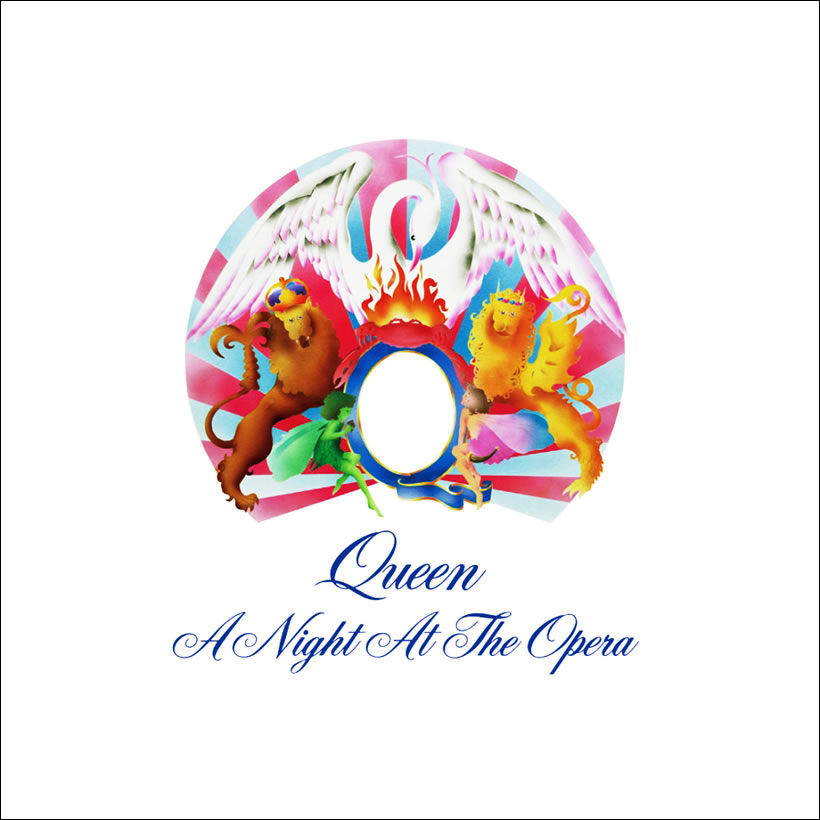
As the 1970s became the 1980s and all four members of the rock band Queen blossomed as songwriters, their albums started to sound like musical tugs-of-war. In fact, Freddie Mercury compared the group’s competitive streak and overall dynamic to “four cocks fighting”. However, the feathers were already flying on 1975’s ground-breaking, six million-plus selling fourth album, “A Night At The Opera”.
The UK tour to support the release of Sheer Heart Attack got underway during the autumn of 1974, and after taking in Europe and America, it finished at the Budokan in Tokyo, Japan, on 1st May 1975. Between the band’s return and the start of another UK tour on 14 November 1975, Queen recorded the album that would turn them from big stars to superstars. Work on Queen’s fourth album, another co-produced by the band along with Roy Thomas Baker, began in August 1975, and it was only finished shortly before the opening date of their tour at Liverpool’s Empire Theatre on 14th November. A Night At The Opera, as we all now know, is a masterpiece.
John, Roger, Brian and Freddie took much needed holidays before work on the new project began in earnest with a three-week writing and playing session in a rented Herefordshire house. They then decamped over the Welsh Marches once more to Rockfield Studio. The band later worked in five more studios (Roundhouse, Sarm East, Scorpio, Lansdowne, and Olympic) in their pursuit of perfection, and in so doing, their own self-belief was fully justified.
Everything about Queen’s fourth LP sounds big. The production. The performances. The sheer scope of the songs. You can boil it all down to the hit “Bohemian Rhapsody” if you want, but all of ‘A Night at the Opera’ is on this scale. It was their fourth studio album, and almost 45 years later the iconic “A Night At The Opera” is still one of the most talked about albums of all time. Queen’s discography spans over two decades, with 15 albums total, but “A Night At The Opera” is the masterpiece that made the band legendary.
“A Night At The Opera” set the forefront for rock albums to come. With its intricacies and surprising twists and turns, this album is anything but boring. And there is never a wrong time to review and talk about it.
The timeless and beloved hit song “Bohemian Rhapsody” changed how we listen to music today. With praise from big names from the ‘60s (The Beach Boys) and names from today (Panic! At The Disco), this song still is relentlessly covered, loud and relevant. Featured in movies like the famous scene in “Wayne’s World” and still one of the most played songs of all time, “Bohemian Rhapsody” isn’t your average album single. It’s what made Queen one of the most famous bands of all time.
“Bohemian Rhapsody” challenged all preconceived notions of what it meant to record a rock song. The song itself was never made for radio, clocking in at nearly six minutes long. It’s filled with obscure allusions and an inconsistent pace that should’ve sent fans running, but instead sent them to No#1 in the charts.
Though “A Night At The Opera” has one of the famous songs of all time, the album, overall, is full of incredibly organized chaos. Kicking off with a sneering “Death On Two Legs (Dedicated To…)” that’s followed by a less serious “Lazing On A Sunday Afternoon.”
The album isn’t complete without Roger Taylor’s tongue-in-cheek “I’m In Love With My Car,” a rock song that Taylor felt was more important and better quality than Mercury’s “Bohemian Rhapsody.”
“A Night At The Opera” explores various genres within itself. From the ragtime “Seaside Rendezvous” to the folky “‘39,” there is everything in the nearly 45-minute long, showcasing Queen’s ability to explore various genres, emotions and stories.
The ballad “Love Of My Life” was written by Mercury for his ex-fiance and close friend, Mary Austin. Mercury pleads in the song for his love to not leave him, a very different feeling than the seeming indifference he showcases at the beginning of the album. An orchestral feel with strings, piano and Mercury’s poignant vocals, that later progresses into a rock song with a brief Brian May solo, “Love Of My Life” reinforces Mercury’s lyrical vulnerability and songwriting expertise.
“A Night At The Opera” is a complete collection of everything good that’s ever come out of Queen’s songwriting. It’s intricate, in-depth, it has multiple layers. It’s to be taken very seriously and not seriously at all somehow at the same time. It’s incredibly detailed and has somehow managed to land among the greats. It is Queen’s career-defining LP, and to be taken seriously by many more generations to come.
The 12 tracks that make up A Night At The Opera comfortably broke the 43-minute mark, and like its predecessor, the sequencing of this record creates its own dynamic. This is an album that should be listened to in its entirety.
12) Lazing On A Sunday Afternoon
Rock, pop and vaudeville – it was all fair game to Freddie Mercury. As fun as it is, the trouble with Lazing On A Sunday Afternoon is that Mercury had already written one vaudeville pastiche, Bring Back That Leroy Brown on Queen’s Sheer Heart Attack album. The world didn’t need another. Freddie’s ‘Lazing On A Sunday Afternoon’ continued to showcase his piano playing skills and his growing confidence on keyboards helped to make the whole album so much better.
11) Good Company
Brian May has always been a one-man guitar orchestra, and rarely more so on this homage to Dixieland jazz, in which he sang a charming When I’m 64-style lyric while his guitar mimicked a ukulele-banjo and a clarinet. Once heard, rarely played again, though (unless it comes up unexpectedly on iPod shuffle and you can’t forward it quickly enough). Brian’s ‘Good Company’ is one of his wise family pieces – a song full of sound values and mature reflection. Recorded with the ukulele and his trusty Red Special to hand, their overlapping mimics a traditional Dixieland jazz band feel; the poignant narrative has a twist in the tale.
10) God Save The Queen
Queen’s version of the National Anthem closes A Night At The Opera album – and quite rightly so. Where else should it go? Still a testament to Brian May’s regal guitar skills, the most surprising thing about God Save The Queen is that it took the band four albums to get around to recording it.
9) Seaside Rendezvous
More old-time musical japes from Freddie. But preferable to Lazing On A Sunday Afternoon thanks to Mercury and Roger Taylor’s pin-sharp harmonies, some imaginative use of kazoo and the singer’s final payoff ‘Give us a kiss!’ which, unusually for Freddie, is delivered with all the grace and panache of driver Stan Butler leering at a buxom ‘clippie’ in the 70s TV comedy On The Buses.
8) Sweet Lady
Even Brian May’s tidy Zep-meets-Free riff can’t save Sweet Lady from obscurity. True, there’s a nice Communication Breakdown-style guitar dust-up at the end, but May would do it better in the years ahead (see: Tie Your Mother Down, Hammer To Fall…). Also contains one of the worst Queen lyrics ever: ‘You call me sweet, like I’m some kind of cheese…’ Brian’s ‘Sweet Lady’ accentuated the almost wilful diversity of Queen at this point in their career, with its live rhythm section and heavily distorted rock thrash in ¾ time. Mercury’s ‘Seaside Rendezvous’ is another track that shows the band’s inventiveness, since Freddie and Roger provide a woodwind section performed by just their voices, along with a tap dancing sequence they performed on the mixing desk with thimbles over their fingers.
7) The Prophet’s Song
On paper this Brian May-composed pomp epic should be one of Queen’s finest hard rock moments. But it struggles to match past gems such as Brighton Rock and Father To Son. Instead, it’s an oddly sluggish affair – like Jethro Tull on Night Nurse – but salvaged by that insane a cappella vocal mid-section. Brian’s lengthy, ‘The Prophet’s Song’, that was inspired, if that is the right word, when he was feverish with hepatitis during the Sheer Heart Attack sessions. A heavy, moody piece, ‘The Prophet’s Song’ was the ideal centrepiece for the forthcoming tour. Its Biblical atmosphere being accentuated by the guitarist’s use of the toy koto, a traditional Japanese stringed instrument more usually associated with experimental classical music.
6) ‘39
Brian May once described 39 as “sci-fi skiffle”. But while he does set a Robert Heinlein-inspired lyric to a Lonnie Donegan guitar thrashalong, its sing-song campfire melody and simple charm make it May’s best song on A Night At The Opera. Brian May’s ‘39’ is his first composition to appear on this album and it is a science fiction come space travel number that is a reminder of his learned interest in astrophysics and astronomy in general. Given the song’s weird skiffle arrangement, Brian asked Deacon to play double bass, and the number was included in Queen’s set-list by 1976, becoming an instant crowd favourite.
5) I’m In Love With My Car
Some would give Roger Taylor points on his licence for I’m In Love With My Car, the B-side to Bohemian Rhapsody. But why? The 1975-vintage Taylor, with his blonde girl’s hair and fine line in self-aggrandising, laddish rock songs (see also: Tenement Funster), captures the essence of Queen’s barefaced cheek and grandeur. Plus, any song that rhymes ‘forget her’ with ‘carburettor’ can’t be all bad, can it?
4) Love Of My Life
It says much about Queen’s embarrassment of riches that this romantic ballad (reputedly written for Mercury’s soon-to-be- ex-girlfriend Mary Austin) was dropped from the set in the mid-80s despite becoming an audience singalong at shows in the late ‘70s. Other, lesser bands would have clung on to it for dear life – and forever.
3) You’re My Best Friend
Freddie Mercury nicknamed Queen bassist John Deacon “the ostrich”. Deacon’s songwriting moments were rare, but he laid some golden eggs (the most golden being Another One Bites The Dust). However, You’re My Best Friend, a slightly twee pop song dedicated to Deacon’s missus Veronica, came first. Not that his bandmates liked it: Taylor thought the lyrics too soft and Mercury refused to play electric piano, making The Ostrich play it instead. But what did they know?. More new ground is broken by John Deacon’s ‘You’re My Best Friend’, which in 1976 became the eminent bass man’s first composition to be released as a Queen single, and a hit at that. Very much John’s baby, he even supplies the Wurlitzer organ.
2) Death On Two Legs
For all his charm and wit, Freddie Mercury could be a vicious sod. And the opening track on A Night At The Opera, apart from being close to its best, is certainly its most vicious. Lyrics such as ‘You suck my blood like a leech’ were aimed at Queen’s ex-co-manager Norman Sheffield, and were so vituperative the now late Sheffield threatened Queen with a lawsuit. From its Hammer Horror movie intro through May’s scything guitar solo and Mercury’s impassioned ‘You’re tearing me a-p-a-r-t’, this is Queen at their rococo rock finest.
1) Bohemian Rhapsody
Over-familiarity, over-exposure and hearing that terrible version in a recent TV ad for a well-known holiday company, has truly taken the shine off Bohemian Rhapsody. Yet to put Queen’s mini-symphony anywhere other than at number one seems churlish and, worse still, fake. More than 40 years on, its daring fusion of heavy metal, show-tune balladry and light opera remains the high watermark on A Night At The Opera, and a tribute to 70s Queen’s collective imagination and sheer bravado. Composed in six sections, mostly by Mercury in his Holland Park home, this was the song that divided opinion even within the ranks. Surely they couldn’t expect to get away with this? Mercury was certain of its merits, but seldom gave much away concerning the lyrical structure and the references to classic opera, Old Testament seers and the principal characters Scaramouche and Galileo.
Ironically, prior to releasing it as a single, one senior EMI executive was convinced that it was too long and he tried to convince the band that it needed to be edited if it was to stand any chance of getting any radio plays.
Mixing the gloriously bombastic with the sweetly simple, May’s guitar solo is bang on the money. ‘Bohemian Rhapsody’ was very much “Freddie’s thing” and also his tour de force, containing as it did elements of works in progress from earlier ventures.
As if the song wasn’t visual enough, it was accompanied by a ground-breaking video, and while it was said to be the most expensively constructed single made to that point in time,
And that wasn’t the end of the affair, and there was only one way to follow it. A revisit to May’s arrangement of the National Anthem, ‘God Save The Queen’ (surely that didn’t go unnoticed in Sex Pistols circles either); it was something they’d been using as a tour finale for some time. Instrumental, multi-layered and strangely affecting, May would achieve a kind of lifetime ambition many years later when he performed it from the roof of Buckingham Palace for the Queen’s Golden Jubilee in 2002; it was also a kind of homage to Jimi Hendrix’s Woodstock version of ‘The Star-Spangled Banner’.
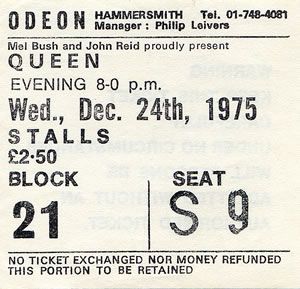
And so the album was released on 21st November 1975 and as a result, that Christmas belonged to Queen. The sold-out tour that had begun a week before the album’s release culminated with a Christmas Eve concert at Hammersmith Odeon that was videotaped and broadcast by the BBC on The Old Grey Whistle Test.
A Night At The Opera, as we all now know, is a masterpiece. Everything from its title (borrowed from The Marx Brothers 1935 movie) to the music, the album’s artwork and the whole pomp and circumstance of the entire package is majestic.
ELEPHANT STONE – ” Hollow “
Posted: February 11, 2020 in CLASSIC ALBUMS, MUSICTags: Elephant Stone, Fuzz Club Records, Hollow, Montreal, Rishi Dhir

On February 14th 2020 Montreal psych-pop group Elephant Stone will release their sixth full-length, ‘Hollow’, on Fuzz Club Records. It arrives following their 2016 LP, ‘Ship Of Fools’, and a number of recent side-projects and collaborations, such as the Acid House Ragas project and new band MIEN with members of The Horrors and The Black Angels.
The first Elephant Stone record made in frontman and sitarist Rishi Dhir’s own Sacred Sounds studio, ‘Hollow’ is an ambitious, dystopian sci-fi concept album which he says is inspired by The Who’s ‘Tommy’, Pretty Things’ ‘S.F, Sorrow’ and the second side of The Beatles’: “There are a lot of unhappy people out there who are trying to find a way out. They are looking for meaning and something to believe in… or nothing to believe in. We all want the same thing but are trying to achieve it in different ways. With this in mind, I set forth writing a song-suite telling of a world of unhappy souls who have lost connection with each other.
From Side A (‘The Beginning) though to Side B (‘The Ending’), the story told through Elephant Stone’s renowned garage-psych alchemy takes place immediately after mankind’s catastrophic destruction of the Earth and what happens when the same elite responsible for the first world-destroying climate disaster touch down on New Earth, a recently-discover planet sold with the same life of prosperity as the one they’d just destroyed. As soon as the chosen few step off the Harmonia ship built for the journey, it’s clear that all is not what it seems and humanity appears destined to make the same mistakes: “The storyline touches upon the plundering/poisoning of their home, the elite, demagogues, false idols, the truth as seen by children, and, ultimately, the fight for the survival of their species.”
DEMOB HAPPY – ” Mother Machine “
Posted: February 11, 2020 in CLASSIC ALBUMS, MUSICTags: Demob Happy, Holy Doom, Matt Marcantonio, Newcastle, So recordings

Indie rock trio Demob Happy return with explosive new single ‘Mother Machine’, their first new music for 2020.
Following 2019 single releases ‘Autoportrait’ and ‘Less Is More’, ‘Mother Machine’ sees the former Artist Spotlight band Demob Happy complete the trilogy delving headfirst into futuristic sonic realms, rewiring sprawling space-rock with a fierce and direct dynamic energy. Speaking of the track, frontman Matt Marcantonio states: “These last three singles have been like a trilogy, expressing things I’ve felt over the most intense year of touring I think we’ll ever do, and things I’ve learned about where we’re all going. “I wanted to leave ‘Mother Machine’ ’til last as there’s a lot of new sounds in it, and I like what it says about the future.”
‘Mother Machine’ debuted on Jack Saunders’ BBC Radio 1 show as the first Maida Vale session of 2020. Fans can also expect performances of ‘Autoportrait’, ‘Be Your Man’ and a special rendition of ‘Less Is More’ also featuring a cover of Daft Punk’s ‘Robot Rock’.
Demob Happy are currently recording the anticipated new album to follow 2018’s ‘Holy Doom’.
The band have also announced their first shows of 2020 with UK headline dates in collaboration with DIY Magazine for Independent Venue Week.
HOT SNAKES – ” I Shall Be Free “
Posted: February 11, 2020 in MUSICTags: California, Hot Snakes, San Diego, Sub Pop Records

“I Shall Be Free” is the second single in the series of four 7”vinyls leading up to their next full-length LP. Each single being a seasonal release. “I Shall Be Free” is the Spring installment. The song is defiant anti-work protest punk. The slash your face chords and bass less undertow channels an AC/DC-Cramps hybrid that completely misses the mark. Primo Hot Snakes for sure.
released February 11th, 2020
Released Sub Pop Records
Released Sub Pop Records

Image
—
Posted: February 11, 2020 in FESTIVALS, MUSIC
Tags: Reading and Leeds Festival
JASON ISBELL and the 400 UNIT – ” Reunions “
Posted: February 11, 2020 in CLASSIC ALBUMS, MUSICTags: Jason Isbell, Jason Isbell and the 400 Unit, Nashville, Reunions, Southeastern Records

In addition to his new album, Jason Isbell unveiled the lead single, “Be Afraid,” as well as a tour with dates that run from February until September. and span headlining shows to festivals. Grammy Award-winning singer, songwriter and musician Jason Isbell and his band the 400 Unit will release their highly anticipated new album, “Reunions”, May 15th via Spunk Records. Produced by Grammy Award-winning producer Dave Cobb and recorded at Nashville’s historic RCA Studio A, the album features 10 new songs written by Isbell including album track, “Be Afraid,”.
Reunions is Isbell’s seventh full-length studio album and the fourth released with his band, the 400 Unit: Derry deBorja (piano, keyboard, organ, omnichord), Chad Gamble (drums, tambourine), Jimbo Hart (bass), Amanda Shires (fiddle) and Sadler Vaden (acoustic guitar, electric guitar). The new album also includes background vocals from special guests David Crosby (Crosby, Stills & Nash, the Byrds) and Jay Buchanan (Rival Sons)..
Jason Isbell & The 400 Unit have shared a new song from their forthcoming album Reunions which is out May 15. “Only Children” is spare and somber and quite lovely.
“There are a lot of ghosts on this album,” Isbell said in a press release. “Sometimes the songs are about the ghosts of people who aren’t around anymore, but they’re also about who I used to be, the ghost of myself. I found myself writing songs that I wanted to write 15 years ago, but in those days, I hadn’t written enough songs to know how to do it yet. Just now have I been able to pull it off to my own satisfaction. In that sense, it’s a reunion with the me I was back then.”
Of the release, Isbell shares, “There are a lot of ghosts on this album. Sometimes the songs are about the ghosts of people who aren’t around anymore, but they’re also about who I used to be, the ghost of myself. I found myself writing songs that I wanted to write fifteen years ago, but in those days, I hadn’t written enough songs to know how to do it yet. Just now have I been able to pull it off to my own satisfaction. In that sense it’s a reunion with the me I was back then.”
Originally from Green Hill, Alabama and now based in Nashville, Isbell is widely renowned as one of the greatest songwriters of his generation. Since the release of his breakthrough solo album, Southeastern, in 2013,
NPR Music calls him, “one of the finest singer-songwriters working at the intersection of folk, country and rock today,” and continues, “his songs have an exquisite, rawboned realism and deeply embedded class consciousness,” while American Songwriter declares, “There’s no better songwriter on the planet at this moment, no one operating with the same depth, eloquence or feeling” and USA Today proclaims, “he has developed into one o the great American songwriters…in a world where most pop songs are lies, Isbell is determined to find truth.”
Jason Isbell and the 400 Unit “Be Afraid” Southeastern Records marketed and distributed by Thirty Tigers
Jason Isbell’s seventh solo album, “Reunions”, will be released on May 15th.

