Image result for comsat angels images

Musically, Sheffield post-punk outfit The Comsat Angels were difficult to pin down. Steve Fellows’ sporadic guitar-playing, Mik Glaisher and Kevin Bacon’s beat interpretations were often oddly elliptical, and Andy Peake restricted himself to a predominantly textural role, providing the subtlest of emotional hints with a variety of sombre organ tones and tempered white-noise.

But it wasn’t so much the elements as the way they combined which forced you to take note; one moment cavernous sounds that had you looking deep into the abyss then a wrench in the opposite direction to something much more hopeful. There was a peculiarly edgy, off-centre logic about the ordering of space and sound in The Comsat Angels’ music. It was, above all, intriguing.

Image result for comsat angels images

Their first LP, Waiting for a Miracle, it’s the blurry city scape of the band’s hometown of Sheffield. And that’s not giddy teenage kicks making the photo blurry; it’s despondency in the face of existential futility. The band cites another science fiction tale in the song “On the Beach” but it has no need for the novel’s post-apocalyptic narrative: the world of the Comsat Angels is already a bleak and hostile wasteland.

On the very first track singer Steve Fellows declares, “I surrender,” and matters rarely perk up from there. Fellows also plays guitar, but the musical heart of the album comes from Mik Glaisher’s expansive drums and Kevin Bacon’s pulsating bass, which often serves as lead instrument while Fellows lets feedback ring. Andy Peake’s keyboards form the crucial fourth element of the Comsat Angels, leading several choruses and piercing verses with sharp bleats of neurotic melody.

The postpunk sound would quickly become a formulaic blueprint, of course, but the Comsat Angels served as one of its sonic architects. Their lyrical approach adopts the cold efficiency of a modernist architect. “Don’t wanna be your baby,” Fellows sings on “‘Baby'”, the extraneous quotation marks themselves problematizing the word. Midway through the song Fellows starts pleading, “say something… say anything,” at which point he begins shouting the title repeatedly. A nominal term of endearment becomes a mark of alienation, a syllable to fill otherwise unbearably empty discursive space.

And that’s the band at its most romantic; elsewhere, on the single “Total War”, a relationship is militarized: “this is total war, girl.” No wonder Fellows “can’t relax” on the album’s other single, “Independence Day.” Both songs rely on stark minimalism centered around Glaisher’s steady beat, which on “Total War” moves slowly enough for each thump of the kick-drum to hang in the air. The result is a heavy but powerful album, fairly unrelenting in its foreboding emotional tone but far from devoid of pop smarts. The band may be forgotten, but someone heard them: the killer bassline on “Real Story” beacame a Killers bassline when that band presumably drew inspiration from it for their own similar-sounding “Jenny Was a Friend of Mine.”

Those familiar with British history understand the devastating effects of heartless Thatcher policies, but novices curious as to how dire things had already gotten by 1981 can simply hear it in the music: the grey cover of the Cure’s Faith spoke for the music inside, while Echo and the Bunnymen took a temporary step away from pop on Heaven Up Here, among other examples. Sleep No More goes further into the void, sounding like an album written under self-imposed martial law. Glaisher’s drums again lead the band, with a massive boom; only Public Image Ltd.’s Flowers of Romance that year relied as heavily on percussion. Like a John Bonham biography directed by Ingmar Bergman, Glaisher was recorded in a stairwell to add heft to his sound. But stomp like Bonzo he does not; restraint is the goal on this most pent-up of albums. Bacon scales things back even further, allotting exactly two notes to his bassline for the verses of “Be Brave.” Tension mounts continuously throughout the album; “Dark Parade” describes the hostage situation in Iran (which helped Ronald Reagan win his role as reactionary American complement to Thatcher in 1980).
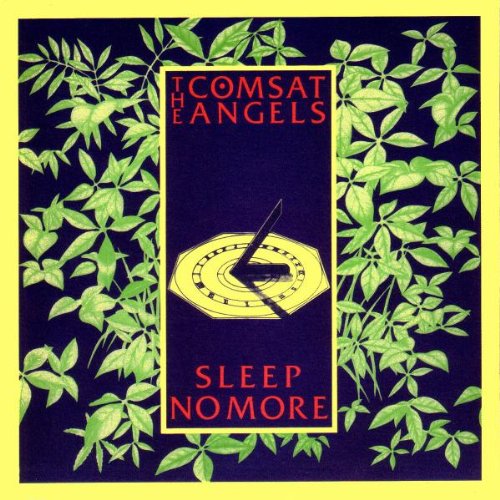
Sleep No More is a stunning work, even if it largely defies song-by-song breakdown in presenting a unified front. That front never falls prey to monotony, though, as the Angels display a mastery of dynamics. Glaisher’s inexorable beat drops off on the ambient “Restless,” and when the band next launches into the furious guitar riff of “Goat of the West” the effect is crushing. “It’s so funny,” Fellows sings, “but I’m not laughing.” Typed out, the lyrics look dour and plain, but with the jagged guitar and Peake’s sharp keyboard intervention jabbing at them.

Unable or unwilling to sustain the overwhelming gloom of its sophomore effort, the Comsat Angels turned in lighter directions on 1982’s Fiction. Glaisher again leads the way: the album’s first sounds are of him swishing at the hi-hat, which immediately informs one that new emotions are at play. Fellows verifies this, declaring, “the sky will clear again, after the rain.” Though Glaisher soon forsakes brushstrokes for heavier stick-thuds, Fiction rarely strives for the hopelessness of its predecessor. Fellows sings with more approachable emotions and Peake asserts his presence more fully, making his keyboards a structural element of the compositions rather than its frequent previous status as a supplement. “Zinger” delivers interestingly oblique lyrics, though the liner notes undermine their effect by revealing he wrote the song as part of a bet to see if he could create a song about nothing.

The driving “Eye Of The Lens”, one of The Comsat Angels’ heavier recordings, saw tribal drumming, reverberated guitar and synths fused to form an atmospheric soul-stealing number.

Waiting for a Miracle (1980) established the band’s tense pull and austere musical force, and the next year’s Sleep No More followed the debut’s logic to its limit, wound so tightly the soundwaves of its songs practically take corporeal form; if they did, it would be as the towering black monolith from 2001, looming overhead in physical defiance of human attempts to ascribe meaning. It’s an unjustly ignored landmark in musical bleakness, and it’s no surprise third album Fiction failed to maintain its intensity. That album still merits praise,
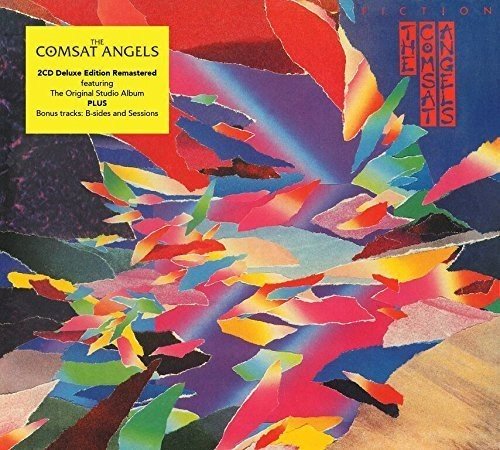
If Friction’s solid but lesser songs gave some indication of new directions for the Comsat Angels, “Time Considered as a Helix..”. confirms that. The first 13 of its 19 tracks deliver taut renditions of material from the first three albums and assorted ephemera of the period Renascent has done a marvelous job collecting, bolstering each disc with non-album singles, b-sides, demos and outtakes, fleshing out the songs in new and often more human arrangements, but after the random cover of the obscure Rolling Stones song “Citadel”, the tracks here reveal the unfortunate slide of the Comsat Angels

From this episode of TOGWT, the unsettling tension of “Ju Ju Money”, a track that would have its studio issue on the band’s third album, ‘Fiction’ in August 1982.

The Angels would go on to sign with Jive, score a near-hit on the Weird Science soundtrack, and generally vanish from the public radar. A comeback in the 1990s abandoned their failed chart-pandering but proved temporary.

That this band existed and put out two great albums and one fairly strong one before succumbing to the allure of potential commercial success. That that success wouldn’t come should have been obvious to a band that once sang of “waiting for a miracle, but nothing ever happens”, but perhaps they got distracted by the “Ju Ju Money” on display in Fiction. At any rate, the timing may be slightly off again, as the retro-postpunk wave seems to have crested, but the Comsat Angels at their best transcended trends and flew the genre coop, traveling on their heavenly wings straight for greatness.
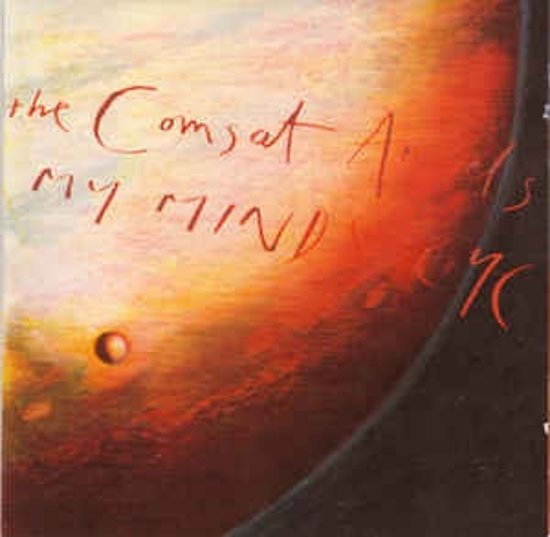
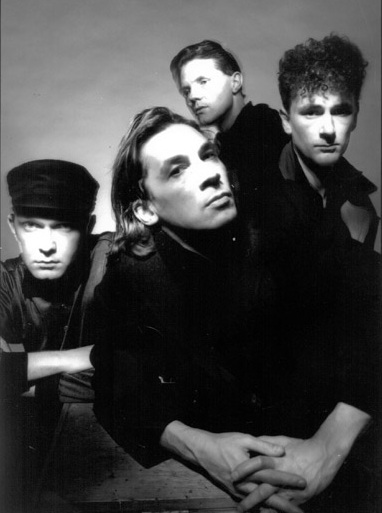
Image result for comsat angels images

Band Members
Stephen Fellows (guitar, vocals), Kevin Bacon (bass), Mik Glaisher (drums), Andy Peake (keyboards, vocals), Simon Anderson (guitar, 1993-95), Terry Todd (bass, 1993-95)

Image result for the comsat angels

The Comsat Angels were an English post-punk band from Sheffield,  Named after the J. G. Ballard short story “The Comsat Angels”, the foursome’s original lineup (lasting from 1978 to 1992) consisted of Stephen Fellows (vocals, guitar), Mik Glaisher (drums), Kevin Bacon (bass) and Andy Peake – (keyboards). Their music has been described as “abstract pop songs with spare instrumentation, many of which were bleak and filled with some form of heartache”. They have been credited as being an influence on later post-punk revival bands such as Blacklist, Bell Hollow, Editors and Interpol.

The Comsat Angels sent a copy of their debut EP, “Red Planet”, to John Peel, who liked it and gave the band a session, which Polydor Records picked up and signed the group to their label. The group overall did 4 sessions for Peel’s show and in an interview singer Stephen Fellows praised Peel for helping the band sign to Polydor:

“These days you have singles on the album and singles that are played on the radio and that help sell records, but that kind of thinking wasn’t really as prevalent then.. A band like us didn’t generally get played anyway. If John Peel hadn’t got hold of ‘Red Planet’and given us a session, Polydor probably wouldn’t have heard of us and signed us .Once they had done I don’t think they knew exactly what they had. They left us to get on with it really. I don’t recall any A and R input at all.”

Recorded: 1981-02-03. Broadcast: 09th February 1981.

The complete session recorded by The Comsat Angels on 3rd February 1981 for the John Peel show on BBC Radio 1 and broadcast on the 9th of that month.

Tracklist: 1. Be Brave (0:07) 2. At Sea (4:02) 3. Eye Of The Lens (8:13) 4. Dark Parade (12:12)

From TIME CONSIDERED AS A HELIX OF SEMI-PRECIOUS STONES: THE BBC SESSIONS 1979 – 1984

Image may contain: 1 person, closeup

Closer To Grey is the new album from Portland’s Chromatics. Closer To Grey is the first album the band released since 2012. Amongst others, it contains reverent cover versions of Simon and Garfunkel’s The Sound Of Silence or Jesus And Mary Chain’s On The Wall. The minimalistic Synth-Sound of previous albums is not lost though, and singer Ruth Radelet proves once again how tender and at the same time powerful a voice can sound.

Chromatics are no strangers to pulsating synths and electronic melodies, all wrapped around with lead singer’s Ruth Radelet’s dulcet tones. With their latest single “Toy,” the band further embraces their danceable and intoxicating sound by diving into a cinematic exploration of forgetting those who hurt you, despite possessing strong feelings of love towards them. Keyboard strokes and bustling drum machine beats all coalesce into a shimmering listening experience that fits perfectly for those late-night stargazing and introspective moments.


Hmltd west of eden lucky133cd

London based five-piece HMLTD release their long-awaited debut album, “West of Eden”. The expansive, labyrinthine debut has been several years in the making, a daring collection of songs created to incite conversation about proposed new visions of masculinity, the decadence of western capitalism and the violence of insecurity and repression. Across its 15 tracks, the band’s artistic vision is realised in full technicolour, with all shades of their sonic palette used to create an album that is equal parts lush and abrasive.

HMLTD formed back in 2015, but they only hit our radar screens when we saw them at a festival the previous year year. And now, they’ve engrained themselves in our psyches. Formerly known as Happy Meal Ltd, the London-based sextet are charting a new course for glam rock and punk with their extremely outlandish live performances. You’d be forgiven for thinking you’re watching the cast of a musical as lead vocalist Henry Spychalski dances his way around stage through their sets. There is almost certainly no other performer or performers around like HMLTD.

They’re going to be a big love or hate band, but that’s probably what the band will be trying to draw out of those watching. The music is like a mix of Bowie and Adam Ant, with real cool ’80s vibes in songs like “Proxy Love”. The experimental band were picked up by Sony Records in 2017, so expect to hear a lot more from HMLTD over the next few years, whether it’s love for their sound or dislike for their bizarre style. Either way, they’ll be great to get a reaction.

HMTLD are Henry Spychalski (vocals), James (guitar), Duke (guitar), Nico (bass), Zac (keys), and Achilleas (drums).

Arguably the most stylish new band doing the rounds at the minute, but have they got the substance to match? Find out for yourselves as their collision of new romanticism, punk, funk and all things in between looks set to bring Friday’s fringe event to a chaotic close.

No band in the UK is talked about as much as HMLTD. Live, they’re like a potent mix of The Cure, Jesus and Mary Chain and The Prodigy and with Faris Badwan having been in the studio with them recently it wil be exciting to see what comes out next year. 2017 is theirs for the taking

West of Eden, due for release on 7th February 2020.

Image may contain: text

After 4 strange and bewildering years, I can confidently announce that my new album “Love, Death & Dancing” will be available May 29th. and watch the video for Time 

Jack Garratt’s long-awaited return is just as powerful, meaningful, and spectacular as we could have imagined. Released this week, “Time” arrives (alongside “Mara” and “Return Them to the One”) as the first of three tracks taken off Garratt’s forthcoming album “Love, Death & Dancing” (out May 29 via Island Records). “Why is it not enough to be fine?” Garratt asks within the song’s first seconds, his emotive voice aligning with effusive, jumpy keyboards and frenetic guitars. A groove sets in as he begins a rhetorical pondering of big, existential topics for which he will never find a satisfying answer: “You’re overthinking, in a rut and terrified of giving in to who you are and losing your mind,” he continues.

At five and a half minutes in length, “Time” is demanding of its listener in more ways than one. An uptempo, pulsing track, the song encourages us to move and shake while we confront demons of self-doubt and inertia. A very personal, intimate song taken from what promises to be a very personal and intimate album, “Time” is a window into Garratt himself – of the depression he struggled with in the wake of his critically-acclaimed 2016 debut album, of the pressure he put upon himself and felt from others, and of the journey that took him from this dark space, into one that was perhaps a little brighter and healthier for the soul.

Image may contain: 1 person, text

Black Belt Eagle Scout; the moniker of Portland-based multi-instrumentalist Katherine Paul released an excellent  album titled “At the Party With My Brown Friends” in 2019. That seemed to get lost in the shuffle with all the other things in life, etc. After seeing it pop on a number of year-end lists and she really is something special. She’s heading out on a North American and European tour this year and has released an excellent video for I Said I Wouldn’t Write This Song

Its animated video was edited and directed by Chantal Jung (Inujuk Nunatsiavutimi), and is meant to raise awareness of the Alaskan coastline and its deep connection with Indigenous people and animals. “The video features Northern imagery that shows aspects of Inuit life, including cloudberry picking, animal relatives and Arctic landscapes,” describes Jung. “People often forget that our livelihoods are extremely connected to the environment, including the animals and plants that live among us. This video is meant to bring awareness of the land, the animals and the people who protect the land.”

On their debut album “Close Encounters”, Pocari Sweater pays homage to slacker rock giants such as The Replacements or Pavement through hook-heavy, jangly rock with more than a hint of Gram Parsons-esque Americana. The four piece band uses big, strutting riffs that shuffle and swirl, with lyrics that often reflect the halcyon days of the late-‘90s. But, singer Jake Tapley smartly subverts that wistfulness on the song “DeLorean,” on which he laments and ultimately lets go of the trappings of the past, crooning “Why would I want to go back in time?” On the title track, Tapley sings, “In the morning you can erase my mind,” another reminder to live in the now.

http://

released January 1st, 2020

Pocari Sweater is Jake Tapley (guitar/vocals), Nigel Meyer (bass), Matt Filip (drums), and Jake Philley (lead guitar). Additional percussion by Matt Filip. Mellotron on “Adjacent” by Jake Philley. All songs written and performed by Pocari Sweater.

Recorded and mixed by Jim Marlowe at End of an Ear. Mastered by Andy Myers.

Image result for SHAKEY GRAVES - " Mystery of the Ivory Tablet " OST

This album made my night. Such a beautiful, unexpected surprise. Just like everyone who has discovered Shakey Graves, his music has carried me through many trials & tribulations over the years.

http://

released February 9th, 2020

Image may contain: 3 people

If guitar rock is dead, no-one told Bad Sav. The latest blast of Analogue Dunedin comes from the band that refused to be left behind. Although featuring Death And The Maiden guitarist/vocalist Hope Robertson and bassist/vocalist Lucinda King, plus Shifting Sands guitarist Mike McLeod (on drums here), Bad Sav are the primary strain from which both of those bands sprang.
When asked to describe her band’s sound in a 2010 interview, Hope suggested “…a missed punch and a grazed fist. Sad, heavy, unpredictable loud pop”. Indeed, Bad Sav offer a far more guitar-oriented hard attack than Death And The Maiden their distinctive filtering and reassembly of influences from shoegaze, psychedelic noise-rock – and goodness knows where else – are combined using a uniquely electrified Dunedin sonic alchemy, bursting with colossal, majestic, melodic noise.

http://

They conjure epic maelstroms of distorted guitars, pounding drums, reverbed vocals and squalling noisescapes to teleport listeners into their bruised sonic universe. The carefully balanced ten track collection is sure to be a local highlight of the year for many.

Bad Sav are:
Hope Robertson – Guitar, vocals
Lucinda King – Bass, vocals
Mike McLeod – Drums