Lilting between the eerie and the ethereal, White Flowers debut is an album for off-kilter dreaming and wandering at dusk. Following their stints as art students, Katie Drew and Joey Cobb returned to Preston, taking the capital’s psych influence with them. Welding cascading loops with petal-delicate vocals, the duo experimented with sonic equipment and visual craft; cultivating a realm of drifting soundscapes and monochrome blooms. The release of their debut album, ‘Day by Day’, we caught up with the pair to uncover the processes behind the record.
“Day by Day” was actually written a few years ago but has taken on an eerie relevance in light of current events. As the title suggests, the song explores living in the present moment as a way of overcoming difficulties and growing stronger. Written during a dark time in our lives the song is about the struggle of carrying on, taking each day at a time in hope that things will eventually get better”
Co-produced by Doves’ guitarist, Jez Williams, “Day By Day” picks up where debut “Night Drive” left off, fragile, and amorphous, driven by a Kevin Shields-esque drone and underpinned by Katie Drew’s beautiful and delicate vocal.
“There’s no handbook for releasing an album in the middle of a global pandemic. But if any band is ready to adapt, we’re that band.”
BJ Barham is sitting in his home in North Carolina, taking a break from packing mailers of his band’s new record, Lamentations, which comes out this Friday. This marks American Aquarium’s eighth studio album and Barham seems at peace — as much as one can be — with celebrating a new LP during this unprecedented crisis.
“The country is in a weird spot, a lot of people are struggling,” he says. “A lot of people are out of work. People need these kinds of distractions. Instead of taking it away and putting it out when it might be better to put out an album, we’re going to go ahead and release it. We’ve worked too hard on this record and we believe in it. If there’s ever a time to release a record like Lamentations, it’s right now.”
There is a prophetic voice that guides the new album. Though it was recorded in December, Lamentations features 10 tracks that highlight the things that can break humanity, including financial loss, political strife, and death. “If COVID-19 never happened, this record would still be just as effective,” Barham says, though there is no sense of joy in this statement. “Loss is not something that only happens during a disease or once every 100 years. On a daily basis, people are having to deal with the themes of this record.”
He takes a breath. “But throw in a global pandemic, and this album really hits home for a lot of people.”
Prayers of lament are some of the most common prayers found in the Bible; there’s an entire book that shares a name with American Aquarium’s new record. In Western society, though, individuals prefer to lift their voices to their respective gods with more self-serving prayers. But when one laments, one simply cries out in grief with no goal other than giving a voice to injustice and suffering.
“The dictionary’s definition of lament is simply an extreme expression of sorrow or grief,” Barham says, “but look at the biblical version. There is a central character who cries out to God, who questions the very existence of God, because God has turned his back on this man and this man’s country. I saw a lot of parallels between questioning God’s existence because of political turmoil and what we’re experiencing. That’s originally where I got the idea for Lamentations.”
Out of that, Barham put pen to paper and wrote what would turn into the title track and opener of the record, “Me and Mine (Lamentations).” Over the course of seven minutes, the band creates an atmosphere like nothing that’s ever been recorded by American Aquarium, an almost ambient space that builds into a freakout crescendo, all in support of Barham’s devastating lyrics of deception, disappointment, and demise as he laments what’s become of the American Dream.
“You can tell where I was when I wrote that song,” he admits. “It’s very much me standing up for what I believe in, standing up for the people who I think are being misrepresented and bamboozled.”
Barham is no stranger to being public about his opinions, but there’s something that resonates deeper than just politics on Lamentations. Maybe it’s the grief that saturates the opening track, or the autobiographical struggle with life after sobriety found on “Six Years Come September,” featuring one of Barham’s favorite lines on the whole album: “I’ve been cursed with this clarity.” It might be the all-too-real heartache of “The Day I Learned to Lie to You,” as Barham sings, “I know good and well that I’m going straight to hell / For all the things I put you through / My biggest regret in life, the thing that keeps me up at night / The day I learned how to lie to you.”
But whatever that something is, it resonates most powerfully on the flawless “A Better South.”
“There are so many people who sit around and talk about how good our country could be, especially in the South,” he explains. “But nothing’s going to change until we all go out and put our thoughts into action.”
Barham cites Patterson Hood and Drive-by Truckers as inspirations for living with a love-hate relationship with the South. “They’ve always been really great at talking about that duality,” says Barham, who grew up in the central North Carolina small town of Reidsville. “You love the culture, food, music, and people, but you also hate the dark history, having to come to terms with the fact that most of our great-grandparents were racists and bad people. Don’t get me wrong, in the last 50 years or so, we’ve made some progress, but then you see us every now and then take two steps back. If 2016 taught me anything, it’s that we like to pretend that the South sees everything through these rose-colored glasses — ‘We killed racism, it’s done, there’s no more hate in the South.’ … Well, that is, until you have a politician who tells you it’s okay to talk about your hate. Then all of a sudden you see this disgusting underbelly of something that I love.”
A self-professed “progressive redneck,” Barham realizes he doesn’t fit comfortably into any political category. “I don’t believe in big government. I believe in the 2nd Amendment, but I also believe in equal rights and a woman’s right to choose,” he says. “I’m not liberal enough for my liberal friends and I’m not conservative enough for my conservative friends, and you know what? I think that’s most of the country.” “A Better South” is Barham’s attempt to lament this reality while standing up for his Southern pride. “The only dream that ain’t worth having, is the one you won’t chase down,” he sings on the stunning track. “They say sing your songs, boy, and shut your mouth / But I believe in a better South.”
When he hears those lyrics read back to him, there’s a genuine sense of frustration with wanting to live up to the song’s theme. But his frustration doesn’t end with grief; it points toward hope.
“When you tell somebody that you’re a proud Southerner, they think you’re flying a Confederate flag and screaming, ‘South’s gonna rise again!,’” he says. “That’s not what it’s about. Being a proud Southerner is knowing what we could be and not just talking about it, but putting that talk into action.”
Sorrow and struggle aren’t abstract themes on Lamentations; they were very real for Barham as he prepared to record. Two weeks before heading to Memphis to make the album, Barham learned the original producer was backing out. “We got told they had a gut feeling that it wasn’t a right fit for them,” Barham says. “As a writer, that took a huge toll on me. Are the songs not good? I sent these people “Me and Mine” and “The Day I Learned to Lie to You,” what I consider some of my best writing in a very, very long time, and they told me it wasn’t a good fit.”
For the next week, Barham found himself practicing the very thing his new album would be named after. Sitting in confusion and grief, he began to question whether this was even the album he was supposed to be making right now. But in that lament, a glimmer of hope burst into flames. “My booking agent called me and asked if I would have any interest in working with Shooter Jennings,”Barham says, replaying how his jaw hit the floor when he received that call. As fate would have it, Barham’s booking agent represents Jennings.
“When it popped up on my radar, before even listening, I said I’d love to,” Jennings says about being thrust into the producer’s seat for Lamentations. A fan of American Aquarium since he first heard 2012’s Burn. Flicker. Die., Jennings still keeps “Abe Lincoln” in his weekly listening rotation. “When I heard the songs, they really had a profound impact on me emotionally. I could feel it already, and I knew we would be able to make a slamming record together.”
Though Barham still wanted to record in Memphis, Jennings suggested he and the band come to his home turf in Southern California instead to record at engineer David Spreng’s studio.
“It was really weird to take this record, which in my mind was a Memphis record, to Southern California,” Barham confesses. “But we couldn’t have made this record in Memphis. It definitely has that Southern California vibe to it, and Shooter added the Shooter touch. He’d say, ‘Well, what if we do a Paul Simon drum thing and then give it a Latin feel and have these experimental Pink Floyd guitars and then we double down the vocals and then we turn the pedal steel into a theremin for a second?’ And luckily for me, I have a band that is all on the same wavelength and could do everything Shooter was hearing in his head.”
That band is made up of guitarist Shane Boeker, Rhett Huffman on keys, pedal steel player Neil Jones, percussionist Ryan Van Fleet, and bassist Alden Hedges, and Barham proudly calls Jennings the seventh member of American Aquarium, an accolade the producer humbly accepts.
“It’s really easy to make music with people who love music,” Jennings says, “and BJ is somebody that has a fire in his eyes and his belly to be greater and stronger and more introspective with each record. I always feel really fortunate to be able to be inserted into a well-oiled working dynamic. With American Aquarium, I got to stay in the control room and really work with every member of the band with a clear head. With such a powerful live band, it was really fun just to be the guy in the back of the room rooting on the dissonant moments of the music.”
Six months later, Barham is still in a bit of awe as he recounts the twisty path that led to being in the studio with Jennings.
“To go from that kind of valley to having the hottest producer in music right now? Talk about an emotional roller coaster,” he confides. “Shooter wasn’t doing us a personal favor. He loved our songs and he wanted to make a record.” Jennings concurs.
“BJ and that band and I will be lifelong friends after this whether we do more projects or not. I’m very proud of what we did.”
Lamentations is leveling-up in moral courage and fearlessness on Barham’s part as a songwriter and bandleader, and it’s a level of musicianship that has never existed in American Aquarium’s storied discography. Thanks in large part to Jennings, all of those things come together for a career-defining, unforgettable masterpiece.
“It’s a collective consciousness between all the members of the band,” Jennings explains, “and my job is to kind of steer the plane into the storm while everyone else is doing what they need to do to keep the engine running and all the passengers calm. BJ is excellent at this, and he’s just a really funny, charismatic guy. His enthusiasm for the record is that rocket fuel, and all I have to do is take off, have a few drinks, and land the thing safely ahead of schedule and on budget. Some of that slips, but sometimes it all comes together into something really special..
Steve Earle examines the physical strength and life-risking bravery of Appalachian miners in “Devil Put the Coal in the Ground,” the first preview of the singer’s new album, “Ghosts of West Virginia”. The follow-up to the Texas-born singer-songwriter’s 2019 Guy Clark tribute album, Guy, Earle and his band the Dukes’ Ghosts of West Virginia has roots in the New York theater community.
Earle was approached by playwrights Jessica Blank and Erik Jensen, with whom he’d worked on The Exonerated, to collaborate on a play about the 2010 Upper Big Branch disaster in West Virginia, which killed 29 men. The finished work, Coal Country, features Earle as a kind of Greek chorus and opens March 3rd, with shows running through March 29th, at the Public Theater in New York. During a production of Coal Country, Earle sings seven of the songs that have been recorded for Ghosts of West Virginia, which also centers on the Upper Big Branch disaster. For composing around this theme, the famously liberal Earle challenged himself to write songs that would embrace and sympathize with people who may not align with him politically.
Steve Earle’s latest release — “Union, God and Country” — from his forthcoming album, Ghosts of West Virginia,
“One of the dangers that we’re in is if people like me keep thinking that everyone who voted for Trump is a racist or an asshole, then we’re fucked, because it’s simply not true,” he says in a release. “So this is one move toward something that might take a generation to change. I wanted to do something where that dialogue could begin.”
Over the course of the album, Earle examines hardship and loss, but also sets his sights on the mining company whose safety violations doomed the miners and the union-busting politicians who eroded their bargaining power. But in “Devil Put the Coal in the Ground,” Earle employs a heave-ho work-song rhythm to conjure the pride of working men as they descend into the mines. With a bluesy, hypnotic musical backdrop of banjo, droning fiddle, and pounding percussion, Earle drawls his lyrics in a way that almost sounds like a taunt: “The good lord gimme two hands/Says is you an animal or is you a man.” It transforms into a psychedelic guitar odyssey, thrilling and anxiety-ridden all at once.
Steve Earle’s latest release his forthcoming album, Ghosts of West Virginia, available May 22nd, 2020
In 1972-73, Leon Russell released two albums about as far apart on the musical spectrum as they could be. “Carney” was an ambitious concept album with flashes of psychedelia. ‘Hank Wilson‘s Back!”, brought him back to his rockabilly/country roots. One is seriously ambitious. The other is just serious fun.
The dramatic shift between the two reflected Leon Russell’s multi-genre reach and aspirations as well as the changing musical times. But what drove both was his need to try on different personas, to figure out how to deal with the sudden glare of the spotlight fame brought him in the early 1970s. In a musical sense, Leon Russell was asking, “Who am I really?” And the answer to that question was anything but simple, In the Early Days Leon Russell had, he admitted freely, “huge stage fright.”
Sure, back in his early Tulsa days he started working in bars and clubs when he was severely underage… like fourteen. But when he graduated from high school, his band the Starlighters hit the road for two months to back Jerry Lee Lewis, one of rock and roll’s most aggressive onstage performers. That was the first time, but far from the last, that Russell would play straw boss for a scenery-chewing front man.
When the seventeen-year-old moved to L.A., his multi-instrumental talents—this child prodigy studied classical piano, could play tenor sax or xylophone, and took guitar lessons from the one and only James Burton made him a go-to session guy. He thrived in the studio. Everyone knows he did literally thousands of sessions for a phone book’s worth of artists. But he always kept his own level-headed perspective. “I was a jobber, like an air-conditioning installer,” he told one interviewer. “You need air-conditioning? Call this guy. People called me to do what I did.”
When Russell migrated to the house band for TV’s Shindig in 1964, he transferred his skills, once again helping to organize musical backing for a weekly cavalcade of pop stars. Revealingly, in 1967 he built his first home studio. Not long after, he started Shelter Records, his own label, with partner Denny Cordell. Over time, Shelter would release records by the likes Freddie King, J.J. Cale, the Gap Band, and Tom Petty and the Heartbreakers.
It’s as if Russell was building his own musical ecosystem where he could do what he loved most—write, record, and produce. Russell was a control freak in the studio and onstage. He was intuitively finicky about details others didn’t know they’d missed. It made him an excellent producer and bandleader. Shelter Records was barely open when Delaney Bramlett, an ex-Shindogs colleague, tapped Russell for the floating cast of characters that toured as Delaney & Bonnie and Friends. Then he got a panicky call from Joe Cocker, whose ‘Joe Cocker!. album he’d co-produced.
Joe Cocker had parted ways with his Grease Band, partly because he didn’t want to tour. Whoops! His management informed him they’d set up three months on the road. Suddenly Cocker needed a new touring band… in a week. Russell pulled together pals from the Friends and added a horn section and background vocalists to create Mad Dogs & Englishmen. The number of folks onstage could hit fifteen or so, but Russell was always in control… and usually out of the spotlight.
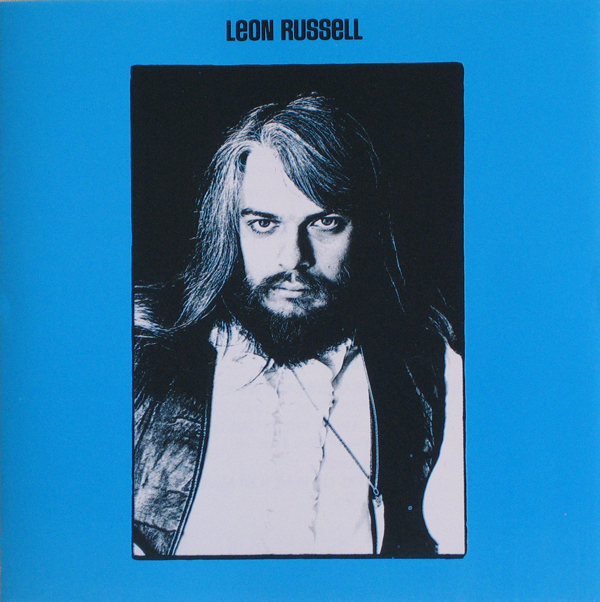
Leon Russell
His debut album, came out while he was ramrodding Cocker’s travelling circus. The album’s personnel bristled with A-listers: Eric Clapton, George Harrison, Steve Winwood, Mick Jagger, Bill Wyman, Charlie Watts, and so on. It had his take on “Delta Lady” which Cocker had a top 100 hit with. And “A Song for You” which became an instant classic; eventually somewhere between one and two hundred other artists would cover it.
When Cocker’s tour was done, the documentary Mad Dogs and Englishmen focused its spotlight on Russell and made him a star almost despite himself. Then he had to tour to support his own album for the first time. Along the way, he appeared at the Fillmore with admirer Elton John, who’d later play a crucial role in his last “comeback,” and made the rounds of TV shows to promote sales. Watch those appearances now, and you can see he’s trying out a public persona to deal with a sudden fame that kept growing after mega-events like the 1971 Concert for Bangladesh.
His sense of reserve wasn’t new or an afterthought. Leon Russell was a stage name; Claude Russell Bridges never legally changed his handle, because it offered him some mental insulation.
As he put it, “It’s handy. I can be a different person for a while.”
‘Carney’
With ‘Carney’, his third album, Leon Russell, Joe Cocker’s Master of Space and Time and victim of acute stage fright, pulled the curtain back on his unexpected stardom.
It was 1972, the apex of the age of concept albums, too many of which were flatulent self-indulgence—which may be a big reason that ‘Carney’ these days is virtually forgotten, except for its hit “Tight Rope” Another is that the album is challenging. Until ‘Carney’, Russell’s primary musical calling card was his usually sunny roots-rock directness. Here his songs gather ingredients of classic rock to veer determinedly into a layered complexity and dark vision that can flummox those expectations.
Take “Acid Annapolis To most critics, this experimental psychedelic flight of wordless swoops and chittering sonics verged on seeming trite even at the time. But you can also hear it as an abstract comment on this concept album’s central themes: the gaps between perception and reality, between public and private faces—fundamental human traits that both unite and divide us.
That’s foundational for the album’s big hit—the biggest Russell ever had—“Tight Rope.” Its Fellini-esque picture rides rhythms alluding to a circus oompah beat. Russell’s nasal drawl and hiccup-like falsetto stabs mimic the fragile balance he’s maintaining as a performer. The B section’s musical jauntiness underpins some pretty sarcastic lines: “Like a rubberneck giraffe / You look into my past / But baby you’re just too blind to see.”
That last word, separated from the others, is almost a yelp. The next cut, “Out in the Woods” explores being lost and alone in a tumult of others’ expectations. “My love she is not waiting” is a deftly poignant line that underlines how completely cut off from human contact the singer feels. He begs her to come get him even though “your sweet understanding can’t fix this broken heart.”
In similar fashion, “Me and Baby Jane” looks back at his Okie childhood and the lost girlfriend who “offered me balance for a while” now has “vacant eyes and a needle in her vein,” as old friends “stand beside me too late to try and find excuses in the face of being blind.” But dark as it is, can you doubt, listening to it, that Russell fan Elton John drew inspiration from this song? Or that Mark Knopfler at least glanced off the honky-tonk-meets-gospel “Roller Derby The Queen here, after all, is another performance artist, like the Carney: she’s daunting as hell on the floor, but once she’s home “alone in love / she murmurs like a sweet mourning dove.”
Bird cheeps, rain, road sounds—the opening of “Manhattan Island Serenade” seems counter-intuitive. But that’s exactly how alone he is, in his imaginary landscape at the center of this country’s most populous city, where this song’s gospel feel adds complex tension to lines like, “With every step I’ll see your face / Like a mirror looking back at me.”
That conceit is the core of “Magic Mirror” the album’s final track dealing with the central theme of projection. What you see up on that tightrope is some version of what you’d like to be. It may have nothing at all to do with what’s actually going on. That’s OK: after all, it’s a show.
But then Russell retrains the lens on himself to ask, “Do I see myself in anyone I meet?… If only we could try to see ourselves as others would.” ‘Carney’ peaked at number two on the Billboard charts. It was Russell’s last hit record for decades.
‘Hank Wilson’s Back!’
When Russell headed to Owen Bradley’s studio in February 1973, he wasn’t exactly what Nashville’s music establishment was looking for in their continuing quest to woo mainstream America to listen to their takes on country music. He looked like a hippie, but that Okie drawl proved his pedigree; he wasn’t just another one of those longhairs who’d created country-rock despite the Grand Ol’ Opry crowd’s sneering, dismissals, and resistance. Nor was he one of the emerging Outlaws they’d marginalized, who’d very soon draw crossover listeners with their fusions of rock and country.
Russell wanted to pay homage to their tradition’s classics, fit into it, maybe above all redefine himself as he nestled within it as a fictitious persona. Say hi to Hank Wilson—the name itself a homage to country-star Hanks like Williams, Snow, and Thompson. Tellingly, his album cover portrait is taken from behind.
Choosing Bradley Barn to make the album is a big clue to his motives. So is this veteran session man’s tapping an A-list of Nashville session stalwarts for his sidemen.
But what Russell wanted, maybe above all, was a fresh start with a new persona that cut virtually all ties with his last decade. If ‘Carney’ was ambitious and probing, this disc seems like remarkably un-radical fun. Yet there are also sly, subtle touches of creative reinterpretation throughout. Recasting Lester Flatt’s “Roll in My Sweet Baby’s Arms” the disc’s opener, as classic rockabilly before putting the bluegrass hammer down announces Russell’s unconventional embrace of Nashville’s roots.
Hank Thompson’s “A Six Pack to Go” reiterates that move, when the bluesy acoustic intro that also punctuates the song yields to good old honky-tonkin’ in a modified Thompson vein.
This concept shapes the album’s best stuff: unconventional Leon wearing a Stetson instead of a top hat or greasepaint.
His aside, “Ah, Billy Byrd,” on “I’ll Sail My Ship Alone” is just one of his overt grins at playing this new role. Another is the party atmosphere made explicit at the end of Lead Belly’s “Good Night Irene” which he infuses with an infectious passion that peaks on his interpolated autobiographical lines about Tulsa and Nashville.
The album’s last cut is revealing: “In the Jailhouse Now” these days famous thanks to the Coen Brothers’ O Brother, Where Art Thou? gets a tasty back-porch acoustic treatment that midway, mirroring the opening track, upshifts to modified rockabilly. You could argue that particular song underlines Russell’s aims with this album: to redefine his relationship with the prison fame can be. And there’s truth to that. But what’s palpable on almost every track, even Bradley-style string-laden stuff like Hank Williams’ “I’m So Lonesome I Could Cry” and “Am I That Easy to Forget”
is how much fun he’s having as he throws himself wholeheartedly in his personal tour through the country classics of his youth.
No doubt that’s why he recorded more Hank Wilson albums even though fewer and fewer listeners cared. He’d made a pile, achieved more than he’d dreamed of, and could now cut back on touring and delve into… well, whatever he felt like. He’d come down from the tightrope and had no regrets. Decades later, during his Elton John-instigated comeback, he told an interviewer, “I was surprised by the success I had. I was not surprised when it went away.
Anana Kaye is a Nashville based Indie Alt-Americana Duo. Hailing from Georgia (The country) Anana Kaye and Irakli Gabriel deliver a unique and distinctly European sound rarely experienced in such potent doses today. With influences including Kate Bush, Nick Cave and David Bowie their music is a genre bending experience akin to twisting kaleidoscope
Señor (Tales of Yankee Power)” first appeared on Bob Dylan’s 1978 album Street-Legal, and it’s an urgent-yet-winding enigma. Nashville’sAnana Kaye has recently shared her dusky version of it — a windswept drama with a wild heart shot starkly in black and white. You can find streaming links for it right here, and it’s available from her https://ananakaye.bandcamp.com Bandcamp page as well.
It’s been three years since Dilly Dally released their acclaimed debut record, ‘Sore,’ and in that time, the Toronto rockers managed to tour the world and take the press by storm, only to nearly call it quits and walk away forever. Rising from the ashes with more power and conviction than ever before, the band’s new album is, appropriately enough, titled “Heaven”, and it’s a fierce, fiery ode to optimism, a distortion-soaked battle cry for hope and beauty in a world of darkness and doubt. Monks describes the songs as coping mechanisms, and the collection does indeed form something of a survival kit for hard times, but even more than that, it’s a declaration of faith in the power of music and a burning reminder that we need not wait until the afterlife for things to get better.
Monks and guitarist Liz Ball formed the band after bonding over a shared passion for explosive, grungy rock and roll in high school, and the two have been inseparable and unwavering in their vision ever since. By the time they recorded their debut, Monks and Ball had fleshed out the line-up with bassist Jimmy Tony and drummer Benjamin Reinhartz and hit a blistering stride that floored critics on both sides of the Atlantic.
For an entire year, Monks wrote alone in her bedroom every single day on a white Flying V guitar, starting first with moody drones and noise beds run through her pedal array before warming up her voice and allowing words to flow freely from her subconscious. Band members began showing up once a week to help Monks refine the material she was channeling, honing in on taut, lean structures that cut straight to the heart of things. Producer Rob Schnapf (Elliott Smith, Beck) encouraged the band to lean into the unique space their music occupies and be unapologetically themselves. Rather than smooth out the rough edges, he highlighted them, drawing every potent ounce of energy from the foursome’s swampy tones, raspy vocals, and volatile rhythm section.
Heaven opens with the dreamy “I Feel Free,” which begins as a floating, untethered soundscape before transforming into a soaring anthem. It’s an ideal entry point for an album that aims to clean the slate, with Monks promising “We’ll start it again / In a moment of silence” as she finds peace through letting go. While the music is undeniably ferocious, there’s uplift woven into the fabric of every track. The inexorable “Believe” insists on self-confidence, while the driving “Sober Motel” celebrates the lucidity a clear mind, and the lilting “Sorry Ur Mad” makes a case for releasing yourself from the prisons of anger and resentment. Escape is a frequent goal—from the bruising “Marijuana” to the epic queer tragedy of “Bad Biology”—but it ultimately solves very little, at least in any permanent way, and so the album carves out its own atheistic religion to get through the day, a faith that validates our pain as real and valid but responds with a beaming light of hope (and maybe a little bit of weed).
“Sober Motel” from Dilly Dally’s new album ‘Heaven’ out September 14th, 2018.
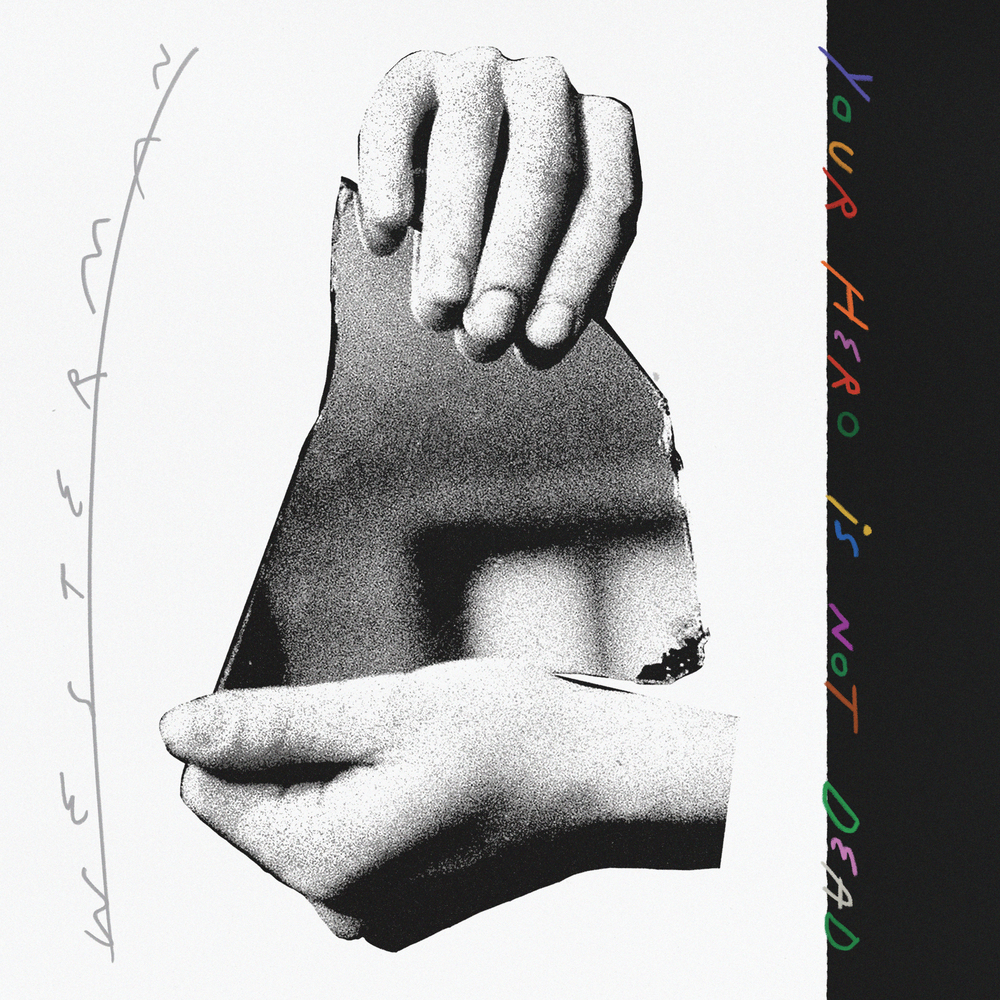
West London’s Will Westerman, who releases music simply under his last name, announced his debut full-length album, “Your Hero Is Not Dead”, and shared a new song from it, “Think I’ll Stay.” Your Hero Is Not Dead is due out June 5th via Partisan Records. The Vinyl includes a printed inner sleeve and a double-sided insert. CD includes a 12-page booklet. Artwork and packaging by Bráulio Amado.
“Your Hero Is Not Dead” is full of supremely crafted songs about moral, political, and ethical grey areas. It is an album about empathy and compassion, struggle and release, and all the ways we contradict and battle within ourselves. Recorded alongside his close friend and producer Nathan Jenkins (aka Bullion), they find Westerman attempting to resolve external issues by looking inward. Like a young Peter Gabriel in a late capitalist world, Westerman’s music falls somewhere between artful soft rock and confessional electronic pop.
Westerman writes through his internal conflicts—songwriting is a way for him to grapple with concepts and paradoxes that cannot always be expressed with words, and in doing so he’s able to reach resolution and catharsis. “What animates me is when I feel a compulsion to express something in a way that can’t be conveyed through conversation.” Often, it’s a process of “expulsion.” He writes about his own writing process—about creativity blocks and “infinite choice”—on “Confirmation,” a rich and cerulean song and one of Westerman’s most celebrated yet.
Westerman recorded Your Hero Is Not Dead in Southern Portugal and London with his friend and producer Nathan Jenkins (aka Bullion). The album includes “Blue Comanche,” a new song Westerman shared in January.
In 2018 Westerman released a 4-song EP, Ark, via Blue Flowers. Before that he garnered attention for a series of singles and his 2017-released Call and Response EP.
Westerman had this to say about “Think I’ll Stay” in a press release: “I wrote this while I was moving a lot. I was thinking about a chronic pain condition when it started. That pain is a very specific type, but I think there’s an inevitable amount of pain that everyone goes through just being alive. A friend was talking to me about how they’re going to be working until they’re 80 years old, so what’s the difference. In the song, I’m trying to say that it’s worth sticking around. It’s a sort of giddy affirmation of being.
You can hear that struggle and release in the sound, too; he has arranged what he calls his “sonic palette” in order to accompany or juxtapose both the lyrics and melody of each song. “Think I’ll Stay,” began as a rumination on chronic pain, but has a jaunty, energizing, and soothing tone and beat. Westerman describes the track as “a sort of giddy affirmation of being” despite the seriousness of the topic. “The whole feel of the song is supposed to be a sort of warped celebration of existence. The initial impetus is a very specific case, but I think there’s an inevitable amount of pain that everyone goes through, being alive.”
‘Think I’ll Stay’ is taken from Westerman’s upcoming debut album ‘Your Hero Is Not Dead’, out 5th June on Play It Again Sam / Partisan Records. is due out June 5th.
Who is “Bobby,” you ask? Enter Pottery. Enter Paul Jacobs, Jacob Shepansky, Austin Boylan, Tom Gould, and Peter Baylis. Enter the smells, the cigarettes, the noise, their van Mary, their friend Luke, toilet drawings, Northern California, Beatles accents, Taco Bell, the Great Plains, and hot dogs. Enter love and hate, angst and happiness, and everything in between. Beginning as an inside joke between the band members, Bobby and his “motel” have grown into so much more. They’ve become the all-encompassing alt-reality that the band built themselves, for everyone else. So, in essence, Bobby is Pottery and his motel is wherever they are.
But really, Bobby is a pilot, a lumberjack, a stay at home dad, and a disco dancer that never rips his pants. He’s a punching bag filled with comic relief. He laughs in the face of day-to-day ambiguity, as worrying isn’t worth it to Bobby. There’s a piece of him in everyone, there to remind us that things are probably going to work out, maybe. He’s you. He’s him. He’s her. He’s them. Bobby is always there, painted in the corner, urging you to relax and forget about your useless worries. And his motel? Well, the motel is life. It might not be clean, and the curtains might not shut all the way. The air conditioner might be broken, and the floors might be stained. But that’s okay, because you don’t go to Bobby’s Motel for the glamour and a good night’s sleep, the minibar, or the full-service sauna. You go to Bobby’s Motel to feel, to escape, to remember, to distract. You go for the late nights and early mornings, good times and the bad. You might spend your entire life looking for Bobby’s Motel and just when you think you will never find it, you realize you’ve been there all along. It’s filthy and amazing and you dance, and you love it.
The 11 songs on ‘Welcome to Bobby’s Motel’ don’t just invite you to move your body; they command you to. Fusing reckless, manic energy with painstaking precision, the record is part post-punk, part art-pop, and part dance floor acid trip, hinting at everything from Devo to Gang of Four as it boldly careens through genres and decades. The music is driven by explosive drums and off-kilter guitar riffs that drill themselves into your brain, accented with deep, funky grooves and rousing gang vocals. The production is similarly raw and wild, suggesting an air of anarchy that belies the music’s careful architecture and meticulous construction. The result is an album full of ambitious, complex performances that exude joy and mayhem in equal measure, a collection that’s alternately virtuosic, chaotic, and pure fun.
The debut album from Pottery, Welcome to Bobby’s Motel, arrives June 26th. limited edition hot dog yellow vinyl. Produced by Jonathan Schenke.
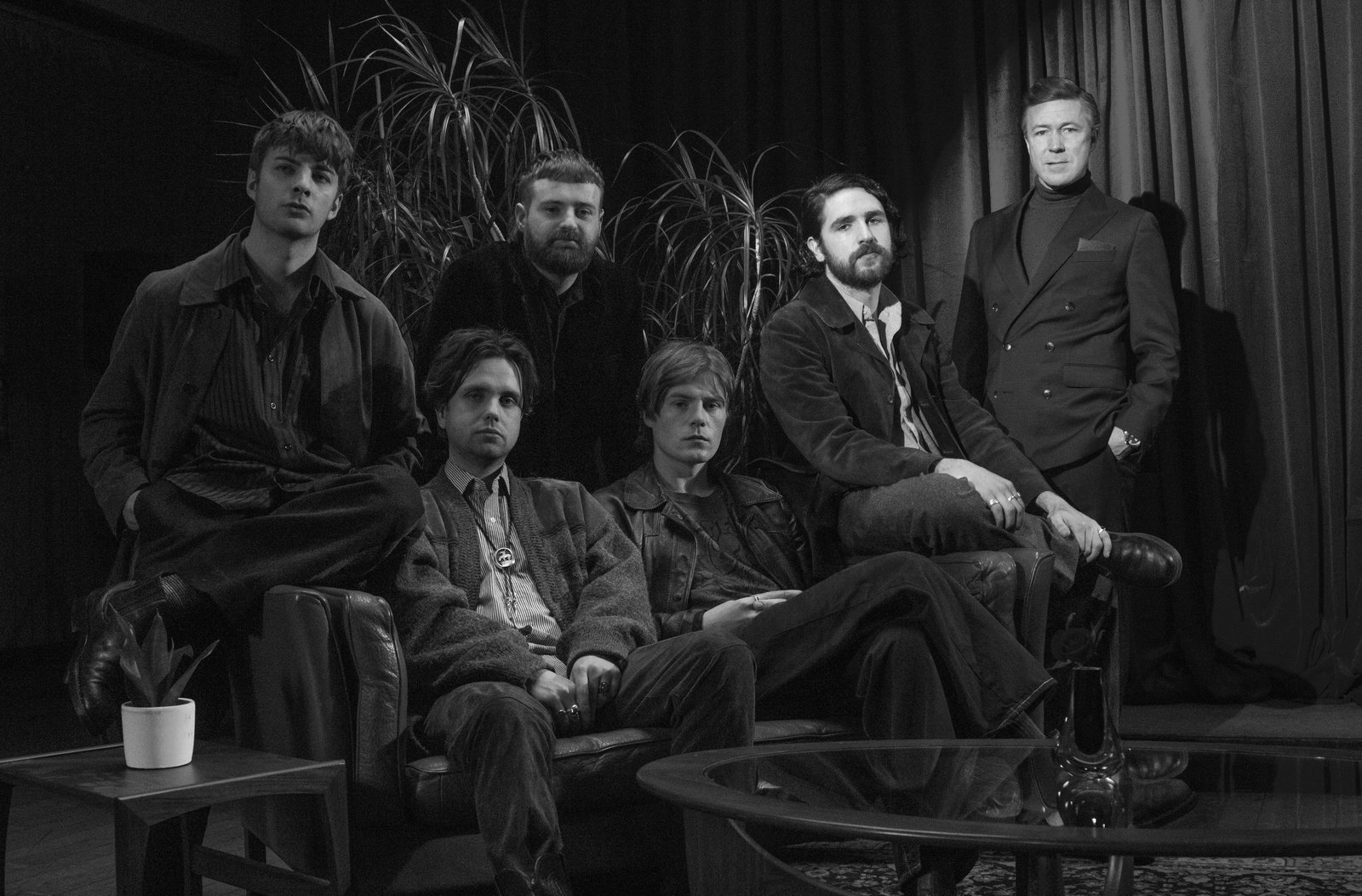
The new album from Fontaines D.C. ‘A Hero’s Death’—arrives July 31st. Available on deluxe gatefold 2x 180g vinyl, limited edition stormy blue vinyl, standard black vinyl, two pocket wallet CD, limited edition cassette, and MP3, lossless or 24-bit WAV digital album. Each album purchase comes with an instant great download of “A Hero’s Death” (the single), and the full digital album to be delivered on release day.
Barely a year after the release of their hugely acclaimed debut album ‘Dogrel’, which earned a Mercury Prize nomination and Album of the Year 2019 at both BBC6 Music and Rough Trade record store, Dublin’s Fontaines D.C. have returned with an intensely confident, patient, and complex follow up album. ‘A Hero’s Death’ arrives battered and bruised, albeit beautiful – a heady and philosophical take on the modern world, and its great uncertainty.
Releases July 31st, 2020, “A Hero’s Death” taken from the forthcoming album out 31st July on Partisan Records.
To paraphrase one of her most evocative lyrics, there’s something about what happens when you listen to a Lucinda Williams song. The plain but cultivated beauty of her phrase-turning draws you in, but it’s another quality that makes a novice listener into an ardent fan. It’s the feeling of watching something grow like a flower on a vine: a recollection, a fully fleshed-out image, a person’s inner life unfolding. Williams crafts words and melodies that seem to originate in the listener’s own head, capturing the way stray observations and building reveries intertwine to become the stories we tell ourselves and each other. Her songs bring to mind the way William Carlos Williams (no relation) described the task of writing poetry: “We’re not putting the rose, the single rose, in the little glass vase in the window — we’re digging a hole for the tree — and as we dig have disappeared in it.”
Williams, who releases her 14th studio album “Good Souls Better Angels” today, was born to this process. Her father Miller was, in fact, a poet and a literature professor, and after a youth moving around the Deep South, she modified the family trade to become a singer-songwriter. A folk singer at first, Williams broke through in the late 1980s in the wake of a group of artists — Rosanne Cash, Steve Earle, Rodney Crowell, Lyle Lovett — who took rock and roll chances with roots-music legacies. A critics’ pick and songwriter’s songwriter who gained some fame when Mary Chapin Carpenter had a crossover country hit with her song “Passionate Kisses” in 1993, Williams became a true legend with the 1998 release of “Car Wheels on a Gravel Road” a perfect work of observational storytelling that both defined the nascent Americana genre and instantly transcended it, because no one could write both so personally, it seemed, and with such talent for reaching inside fans’ own souls. I remember when I first got “Car Wheels” ,Every evening I’d listen, making dinner, my solitary thoughts filtered through Willliams’s voice like the twilight through my row house’s back window.
Williams’s testimonies to survival despite hard living and lost opportunities, and her elegies for absent friends and lovers, connect her to the blues, the form for which she first fell. From country music she learned the practice of turning glimpses of the private — a pot of coffee bubbling, the lines at the edges of a beloved’s eyes — into metaphors through which life reveals itself. From rock she took freedom, an obsession with self-determination that defined her persona and her career-long practice of doing exactly what she wants, the demands of the marketplace be damned. She stirred up these influence within her own sound, also incorporating New Orleans rhythms and classic rock attitude, working with bands who could move within her greasy grooves. She favors hot guitar players as dialogue partners. Always, she keeps things real: her songs sound like what people wish they could say to each other, and only sometimes do.
“Car Wheels” was Williams’s fifth album. It’s just one apex in a career that’s unfolded more like an Appalachian ridgeline, with dazzling high points and dips into deep woods and hollows, than the flat roads of her native delta. To really understand Williams’s catalouge, start with “Car Wheels” and continue both backward and forward. It’s crucial to spend time with the peace-seeking laments of 1992’s “Sweet Old World”, the edgy sexiness of 2003’s “World Without Tears”, and the ever-rawer rock mantras that typify the sound she’s cultivating now, at 67. With the hindsight that recognizes the limits of musical categories, a dive into the Lucinda Williams catalouge reveals that she is as spiritually aligned with defiant originals like Patti Smith, or indie inheritors like Katie Crutchfield and Alynda Lee Segarra, as with her Americana peers. Most of all, Williams is a singular artist with a resolutely personal voice that feels, to many people, like home.
Here’s a playlist for people who already love Lucinda Williams and for those who want to know more about her.
“Car Wheels On a Gravel Road” from:Car Wheels on a Gravel Road (1998)
The title track of her album masterpiece, an impressionistic account of the fugitive childhood Williams’s academic father gave her, contains everything great about this songwriter: resonant details, a unique but relatable perspective, and deep feeling rising through everyday talk like humid summer steam.
“Passionate Kisses” from: Lucinda Williams (1988) Mary Chapin Carpenter’s version won Williams a 1994 Grammy for best country song; her own showcases a drawl as redolent of Mick Jagger as To Kill a Mockingbird‘s Scout Finch.
“Sweet Old World” from:Sweet Old World (1992) Every great songwriter has one ballad anyone would want played at their funeral; this is Williams’s, a melancholy ode to the human tenderness that makes life worth living, and accepting a loved one’s death so hard.
“Joy” from: Car Wheels on a Gravel Road (1998) From Slidell, La. to West Memphis, Ark., Williams chases down the happiness a betrayer stole in one of her fiercest and most defiantly triumphant rockers.
“Essence” from:Essence (2001) The 2001 album with this title track was sonically subdued and deeply sexy in tone, never moreso than on this pheromone daydream, the epitome of Williams’s erotic expressionism.
“Fruits of My Labor” from: World Without Tears (2003) Williams turns the classic slow blues that’s so often inspired her into a nearly psychedelic reverie – like the Beatles’ Strawberry Fields meets an Anne Rice vampire novel – in this missive from a woman of means to the lover who knew her when.
“Are You Alright” from: West (2007)
Empathy for the lost and the marginalized runs through Williams’s songwriting, and this gentle secular hymn for someone who’s gone missing offers it in heartbreaking measure.
“Man Without a Soul” from: Good Souls Better Angels (2020) Williams has evolved to become a powerful protest singer, and she’s never been so bold as in this Springsteenesque broadside directed at Donald Trump.
“Changed the Locks” from: Lucinda Williams (1988) This barn burner, one of many Williams songs about claiming power in the face of abuse, is catnip for other rockers — Tom Petty, indie mainstays the Silos and Australian country maverick Kasey Chambers have all covered it.
“Side of the Road” from:Lucinda Williams (1988)
Another from her essentially flawless Rough Trade debut, this meditation on the need to spend time alone with one’s own imagination is an artist’s manifesto that informed Williams’ own career and which nourishes any creative soul who hears it.
“Something About What Happens When We Talk” from:Sweet Old World (1992) The originality of Williams’s mind shines on this vulnerable ballad about the aphrodisiacal charge of meaningful conversation.
“2 Kool 2 Be 4-Gotten” from: Car Wheels on a Gravel Road (1998) “Junebug vs. Hurricane”: Williams saw that phrase scrawled on a wall in a photograph from Birney Imes’s book Juke Joint and expanded it into a song about the glories of those rural makeshift bars. Since then, others have named memoirs, blogs and cocktails after it, and even had it tattooed onto their arms. Her language resonates.
“Get Right With God” from: Essence (2001)
Gospel music is a central, if underdiscussed, inspiration for Williams. Here she makes the connection clear in a driving account of faith’s relationship to audacity and risk. The song inspired one of her most astounding vocal performances.
“Unsuffer Me” from:West (2007) Williams is a master of parataxis — the poetic technique of stringing short phrases together in what literary scholars call “iconic ordering” (think the biblical Beatitudes, or Bob Dylan’s “Like a Rolling Stone”). Here she uses an almost heavy-metal musical approach to serve it, her lyrics enacting a seduction that’s really a cry for spiritual release.
“If My Love Could Kill” from:Ghosts of Highway 20 (2016) Though her songs encompass the full range of human emotions, Williams is often painted as a lady of sorrow — and indeed, she has always confronted grief unflinchingly. Never has that process been as personal as in this song mourning the loss to Alzheimer’s of her father and lifelong mentor, poet Miller Williams, set within a gorgeous, Spanish-tinged arrangement.
“Little Angel, Little Brother” from: This Sweet Old World (2017) Williams reimagined 1992’s Sweet Old World through new recordings in 2017, the songs reinvigorated within new arrangements and by her more worn, still powerful vocals. A highlight is this achingly compassionate expression of love and loss, a song for anyone who’s cared about someone they can’t save.
“I Lost It” from:Happy Woman Blues (1980) The original version of a song that became a fierce rocker on Car Wheels shows Williams’s foundational connection to Louisiana music, here embodied by a Cajun fiddle and a two-step beat.
“I Envy the Wind” from:Essence (2001) So much of Williams’s work comes alive within very particular, deeply shaded worlds, but this is her secret pop classic: The lyric that imagines nature itself as a lover’s companion complements the song’s unchained melody to render it timeless. Elvis or Billie would have sung this song if they could have.
“Those Three Days” from: World Without Tears (2003) Few writers of any kind can match Williams when it comes to brutal honesty about the violence of desire. This noirish, countryish confession assesses the scars a fling can leave in a vulnerable heart, and the rawness of Williams’s vocal is remarkably courageous.
“The Temporary Nature of Every Precious Thing” from: Down Where Spirit Meets the Bone (2014) The first two lines of this slow gospel vamp sum up Williams’s philosophy and artistic motivation: “The temporary nature of any precious thing, that just makes it more precious.”
“Soldier’s Song” from:Blessed (2011) Maybe her most chilling song, this spare story song traces a fighter’s last moments on the battlefield in counterpoint with the beautiful mundanity of his family’s daily activities back home.
“We’ve Come Too Far To Turn Around” from: Vanished Gardens (2018) Facing pain, believing in joy, investing in survival: This transcendent collaboration with octogenarian saxophonist Charles Lloyd and his band the Marvels captures everything that makes Lucinda Williams an essential companion on life’s road.