Destroyer has shared a video for “foolssong,” the closer of Have We Met. It was directed by David Galloway and David Ehrenreich and shot on the road during Destroyer’s most recent tour, which was called off early due to the coronavirus.
“The tour got cancelled. We were making a film. Maybe we still are, it’s hard to tell, though,” Galloway and Ehrenreich said in a statement. “‘foolssong’ is what’s left of that for now…. With any luck, these alien landscapes provide only a temporary snapshot of an unfamiliar world, a glimpse into a future that denotes self-separation, isolation, but on the bright side, maybe a little bit more wonder.”
Snow Day. At this very peculiar time, the expression “Have We Met” deserves a question mark less than ever. We likely haven’t met anyone new since March, and the cadence of this statement is more of an absolute than an actual inquiry. The tour got cancelled. We were making a film. Maybe we still are, it’s hard to tell, though. “foolssong” is what’s left of that for now. “foolssong” is a lullaby, it’s the painted book cover of a sinister romantic novel, and it’s our second favourite song on the album.
Packing up mid-stride and pushing through North America to find solace in quarantine is a pretty foreign experience.
With any luck, these alien landscapes provide only a temporary snapshot of an unfamiliar world, a glimpse into a future that denotes self-separation, isolation, but on the bright side, maybe a little bit more wonder.
Rolling Blackouts Coastal Fever are back with another preview of their upcoming album “Sideways To New Italy”, in the form of new track “Falling Thunder”.
Speaking about the new track, the band writes, “This song is about pushing on through the relentless march of time, against the constant cycle of seasons, and the way people change and relationships change. It’s set in that time when autumn is turning into winter and the trees are getting bare.” “Falling Thunder” is a third taster of the group’s forthcoming second album, arriving after previous singles “She’s There” and “Cars In Space”.
Sideways To New Italy will follow on from their 2018 debut Hope Downs, and is named after a village near New South Wales’ Northern Rivers – the area drummer Marcel Tussie is from.
Vocalist and guitarist Fran Keaney says of their forthcoming record, “I wanted to write songs that I could use as some sort of bedrock of hopefulness to stand on, something to be proud of. A lot of the songs on the new record are reaching forward and trying to imagine an idyll of home and love.”
“Falling Thunder” is out now. Rolling Blackouts Coastal Fever’s Sideways To New Italy album is due to arrive via Sub Pop Records on 5th June
In the ’70s, the hits of War were everywhere. From car radios, stereo systems and street parties poured songs like “Cisco Kid “Low Rider” and “Why Can’t We Be Friends?” hits that, together, helped define the disco decade. But in hindsight, War’s singles only gave a hint of the character and texture of their full albums. In fact, few bands experienced such a disconnect between the songs radio favored and their larger body of work.
War’s best-known songs were terse, catchy and fun, as all great singles should be. But their albums went another way, achieving something elaborate, challenging and deep. Where War’s hits had an accessibility that allowed them to reflect the life of anyone who listened, their albums spoke of specific lives that came from a particular sensibility and place.
The broad catalogue War created during their ’70s prime captured the essence of Los Angeles areas like Compton and Long Beach, places where many of the band’s members either grew up or moved to. The members also reflected the ethnicities in those areas, bringing together Latin, African-American and Caucasian players. In a parallel way, War’s sound combined Latin-jazz, funk, pop and rock. The amalgam arrived just as Afro-Cuban influences were enjoying a fresh surge in music, in acts from Santana and Malo to Mandrill and the Fania All-Stars. While all those groups had distinct sounds, War’s was, perhaps, the most finely-attuned to the groove.
Their deep tracks favored riffs that moved laterally, as an array of soloists took flight above. No fewer than four of their members improvised with distinction, including the Danish-born harmonica player Lee Oskar, sax and flute man Charles Miller, guitarist Howard Scott and keyboardist Lonnie Jordan. Providing their defining foundation was the three-way rhythm section, comprised of bassist B.B. Dickerson, drummer Harold Ray Brown and percussionist “Papa Dee” Allen. Though instrumental sections ate up huge chunks of War’s music, their approach to vocals also played a key role. All seven members sang, often in unison, giving their voices a purpose while simultaneously covering for a flaw. Though all the members had solid voices, none had the pre-eminence of the greatest front men. Singing together gave them extra power. More, their blend of voices gave the music the feel of a neighbourhood in conversation.
That vibe had great symbolic resonance in a place, and at a time, when gang-activity drove many locals apart. The music of War demonstrated the power of unity over division. Heard in that context, hits like “Why Can’t We Be Friends,” “Summer and “Low Rider” became peace pipes, connecting the inner city, rather than mere party anthems for the suburbs
During their prime, between 1970 and ’77, this West Coast colossus amassed no fewer than eight gold albums, as well as two platinum sets (both hits collections). They also enjoyed seven Top Ten Billboard singles; Twelve of their songs made the Top 40.
War scored its first chart smash—the Top Five “Spill the Wine” before they even solidified as the group they would become. On their first two album, they backed a singer who was already a star, Eric Burdon of The Animals. The British-born vocalist, along with veteran producer Jerry Goldstein, discovered the musicians during a club show in L.A. and, afterwards, proposed a collaboration. The resulting collection, ‘Eric Burdon Declares War” released in April of 1970, had the feel of a band finding its footing. But the looseness created its own distinction. The album consisted mainly of long, evolving jams. The seven-minute “Vision of Rassan” tipped a hat to avant-garde jazz player Rassan Roland Kirk, while the title of another piece, “Blues for Memphis Slim” made its inspiration just as plain. Not that either song sounded like the music of the artists they name-dropped. Both stressed hard funk, created by the rhythm section, while the soloists riffed and Burdon offered his own mix of rapping and singing. It was a summery, loopy, and sexy sound, indulgent to be sure but with a real feel for the beat.
Their follow-up,Eric Burdon & WAR released under the tongue-in-cheek title ‘The Black-Man’s Burdon” offered unrecognizable improvisations on the Stones’ “Paint It Black and the Moody Blues “Nights in White Satin” A double set, ‘Burdon’ was even more undisciplined than its predecessor, but it had more speed and variety on its side. Though both albums made the Top Thirty, Burdon wound up ditching the group during a European tour, inadvertently freeing them to find their own voice.
Let’s takes a look at the best songs of Stephen Stills including a few chestnuts from all aspects of his career. Look at Stephen Stills’ solos albums his work with Manassas, Crosby Stills Nash & Young, and his earlier band Buffalo Springfield. This is by no means a definite list of Stephen Stills songs but rather just a sort of soundbite at some of the most essential songs Stephen Stills has released throughout his 50 plus year career. Neil Young gets far more attention for his contributions to Buffalo Springfield and Crosby, Stills, Nash and Young but two-time former bandmate Stephen Stills has created his own niche as a stirring singer, songwriter and instrumentalist. Unfortunately, a sporadic, up-and-down solo career hasn’t always helped his profile.
Our classic Stills songs list is a tough thing to do because Stephen Stills had so much success in the late 1960s and early 1970s with Buffalo Springfield, Crosby Stills Nash and Young and his solo career. I suppose you could have filled a top 50 listing of Stephen Stills songs list from just that early five years period. However Stephen Stills has continued to write and record songs up to 2017 as of this writing. So we have spread this list out over the years the best we could while still limiting it to ten. Every song in this list was written by Stephen Stills.
For What It’s Worth
We open our Essential Stephen Stills songs list with a legendary song written by Stephen Stills when he was a member of Buffalo Springfield. The great Stephen Stills song “For What It’s Worth,” was released on Buffalo Springfield’s second pressing of their debut album entitled Buffalo Springfield. The album was released in 1966. The song “For What It’s Worth,” was originally released as a single and then added to the album on the second pressing.
“For What it’s Worth,” was a huge hit for Buffalo Springfield in 1966 as the song became a top 10 hit on the Billboard Hot 100. Interestingly, every song on Buffalo Springfield’s debut album was either written by Stephen Stills or Neil Young.
Four Days Gone
Buffalo Springfield released three studio albums before the band broke up. In 1968, Stephen Stills left the group to form Crosby Stills and Nash, Richie Furay formed POCO with Jim Messina who would later join with Kenny Loggins as part of Loggins and Messina. Neil Young became essentially solo Neil Young. We would have loved to have chosen more Stephen Stills songs from Buffalo Springfield for our Stephen Stills songs list, but we had so much more to cover which limited our choices. Our second choice was released on Buffalo Springfield’s final album entitled Last Time Around. The great song “Four Days Gone,” also featured great lead guitar work by Neil Young.
Suite: Judy Blue Eyes
If you had to pick one Crosby Stills & Nash sons that you could ever listen to again, tell me it would not be “Suite: Judy Blue Eyes.” This incredible piece of music was written by Stephen Stills and released on the band’s debut album simply titled Crosby Stills & Nash. The album was released in 1969. the song “Suite: Judy Blue Eyes,” was released as the second single from the album after the release of “Marrakesh Express,” as the band’s debut single. Another deft amalgamation – as the title implies, this is a suite of four short songs written by Stills and seamlessly interwoven. Lyrically it refers to his relationship with folk singer-songwriter Judy Collins. Opening with glistening acoustic guitars, it builds to a searing, Latin-flavoured climax, ending on a repeated ‘doo-doo-doo-da-doo’ refrain of life-affirming joy.
Stephen Stills “Suite: Judy Blue Eyes,” was exceptionally long for a single,clocking in at over seven minutes. Nonetheless, the song was a top 40 hit peaking at number 21 on the Billboard Hot 100. It also became a staple on fm radio becoming one of the most played classic rock songs of all time.
Helplessly Hoping
Stephen Stills’ song “Helplessly Hoping,” was also released on the Crosby Stills & Nash debut album. The song was placed as the b side to the album’s debut single “Marrakesh Express,” which was written by Graham Nash. From an arranging point Stephen Stills dominated that album as he was responsible for almost all the guitar, bass and keyboard parts on the record. Dallas Taylor played drums and Crosby & Nash added some guitar parts here and there, but in the end, most of the instrumentation on the album was performed by Stephen Stills.
Carry On
Neil Young joined Crosby Stills & Nash in 1970 to form the quartet Crosby, Stills, Nash & Young. The four brilliant musicians would record their first album together entitled Déjà Vu.It must have been really tough choosing whose songs got recorded and released between these four brilliant musicians and songwriters. Stephen Stills got three of his songs recorded for the album including one he co-wrote with Neil Young. Here Stephen Stills brings elements of three different songs into one concise package. He draws on Questions from his old band Buffalo Springfield, plus there’s a jam session with drummer Dallas Taylor tagged on as a delightful free-form coda. And, of course, the yearning harmonies are to die for. The album’s opening track was written by Stephen Stills entitled “Carry On.” The song was released as the fourth single from the record.
Love The One You’re With
While Crosby Stills Nash & Young were enjoying tremendous success with their work together on record, the four talented musicians were also celebrating the releases of their solo albums. In 1970, Stephen Stills released his first solo album entitled Stephen Stills. The album’s leadoff track and first single “Love The One You’re With,” became Stephen Stills most successful solo single. The song reached all the way to number 14 on the Billboard Hot 100. One could not turn on the radio in the early 1970’s without hearing Stephen Stills “Love The One You’re With.”
Stephen Stills’ biggest hit and focus instead on how this one song collects everything that can sum up his career. From its island-inflected percussive elements and utterly irresistible chorus to a vocal so full of unfettered longing and those chunky organ fills (played by Stills), “Love the One You’re With” is the sound of a performer at his tour-de-force peak.
Stephen Stills’ first solo album featured an incredible cast of musicians. Two of the greatest guitar God’s of all time performed on the album. Both Jimi Hendrix and Eric Clapton played on some of the albums songs. Ringo Starr, Booker T. Jones, Rita Coolidge, David Crosby and Graham Nash also performed on the record.
It Doesn’t Matter
The great Stephen Stills song “It Doesn’t Matter,” was released on the album Manassas which was also the name of the new band Stephen Stills band in 1972. The group recorded two albums from 1972 to 1973. While hardcore Stephen Stills and Crosby Stills Nash & Young fans are familiar with Manassas,the groups has not gotten the recognition it deserved on a more mass scale in classic rock history. The group consisted of Stephen Stills, Chris Hillman, Al Perkins, Paul Harris, Dallas Taylor, Calvin Samuels and Joe Lala. The lilting opening track to the Stills-led side project Manassas, “It Doesn’t Matter” was co-written by the Byrds‘ Chris Hillman. But it serves as a sturdy showcase for Stills‘ hoarsely emotive vocal and ringing guitar.
“It Doesn’t Matter,” was released as the album’s single. It registered on the Billboard top 100 but peaked at number 61. The song was written by Stephen Stills, Chris Hillman and Rick Roberts. “It Doesn’t Matter,” opened side three of the two record set.
Dark Star
In 1977, Crosby, Stills & Nash released their second album as a trio. It had been eight years since the band released their debut album in 1969. Of course there was Déjà Vu.with Neil Young in 1970, but the release of CSN in 1977 was surprisingly only the second album the trio had released together. Stephen Stills song “Dark Star,” opened side two of the record. It was never released as a single, but it was a firm fan favourite instantly.
Isn’t It So
Stephen Stills song “Isn’t It So,” is the first Stephen Stills song on this list that was not released in the 1960’s or 1970’s. That’s not to say that Stephen Stills did not continue to release great music from the 1980’s on. It just defines the incredible body of work that Stephen Stills was responsible for in the 1960’s and 1970s.
“Isn’t It So,” was released on the Stills “Alone” album. The record was released in 1991. While bands like Nirvana, Pearl Jam and Soundgarden were releasing dark music that captivated the rock and roll scene, Stephen Stills was going it alone. Just Stephen Stills on a guitar with a handful of great songs sung in that legendary voice. Keeping it real, keeping it simple and keeping it great.
Judy
We close out our classic songs of Stephen Stills songs list with a great song from his album Everybody Knows. The album was released and billed as Stills & Collins. It was the first time that Stephen Stills and Judy Collins ever released an album together. The album was released in 2017. The song “Judy,” represented the second time Stephen Stills composed a song about Judy Collins, the first being Suite: Judy Blue Eyes.
Treetop Flyer
The darkly intricate “Treetop Flyer” is a rumination by a free spirit, presented in a suitably raw setting featuring only Stills and his imaginative guitar. The album-closing song from 1991’s StillsAlone includes a narrative twist: He’s not flying so close to the ground because he’s some kind of daredevil; he learned that trying to avoid anti-aircraft fire in Vietnam. And it arrives like a punch in the chesthttps://www.youtube.com/watch?v=opBe5z0qwRE
Also check out Bluebird or Southern Cross, Black Coral , Rock N Roll Woman, Colorado, Black Queen, As I Come Of Age also from the first Manassas album. So begins the Task.
Today, Dave Longstreth, Dirty Projectors bandleader, has shared a cover of “Isolation” by Plastic Ono Band. It is available exclusively on Bandcamp; listen below. My cover of Plastic Ono Band’s“Isolation” is up for streaming & purchase exclusively on Bandcamp. All proceeds through April 3rd are going toward MusiCares’ COVID-19 relief fund for musicians and music industry folks whose work has been disrupted by the crisis It’s a very fine version of John Lennon’s great song from his legendary John Lennon/Plastic Ono Band album. And when coupled with a great cause, what’s not to like?.
On the track, Dave said,
“All proceeds through April 3rd are going toward MusiCares’ COVID-19 relief fund for musicians and music industry folks whose work has been disrupted by the crisis. So I encourage you to buy it (pay-what-you-wish) and we can be a part of helping combat this together
released March 19th, 2020
Written by John Lennon, Produced, performed and mixed by Dave Longstreth.
In March 2019, Los Angeles songwriter and multi-instrumentalist Sasami released her self-titled debut album. Its ten tautly melodic rock tracks originated as a string of demos recorded straight to her iPad while on tour, and described the surprising ways that one’s relationships—with lovers, with friends, with oneself—can shift in a single year. The prolific Sasami (aka Los Angeles based musician Sasami Ashworth) via Domino Recordings. Last month she shared a brand new song, “Mess,” via a lyric video for the track. Ashworth says “‘Mess’ is where I’m at now” and that she wanted to release a new song to honor the one-year anniversary of her debut, before moving on to her sophomore album.
Ashworth had this to say about the song in a press release: “I started making my self-titled album almost three years ago. Since then I’ve fucked other people, healed bad relationships, broken new good ones, found more joy, more anger and everything in between. ‘Mess’ is where I’m at now. I wanted to end the year of my first album campaign with one last sentence before I crack into the stone slab of my next album. This time I didn’t want to provide any visual counterparts. I just want people to listen.”
When Sasami’s self-titled album was announced she shared a self-directed video for the new song “Jealousy,”. Then she shared a video for another new song from the album, “Free.” The song featured backing vocals from Devendra Banhart, although he was not in the video, Then Ashworth shared a video for “Morning Comes” that featured her grandmother hosting a cooking show where she teaches you to make kimichi. The album included the previous singles “Not the Time” and “Callous.”
Sasamiearned acclaim from critics: “a powerful first effort” according to Pitchfork; “one of the best debut rock albums of the past few years…incessantly replayable” via FLOOD; “impressive: finely crafted and introspective” per NPR.
Since then, Sasami has toured internationally, released a holiday 3-track single titled lil drmr bb, and curated an issue of the zine Yes Plz.
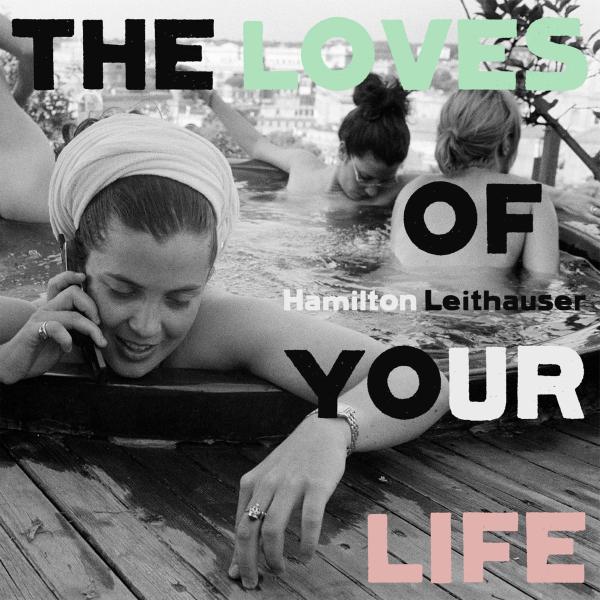
The Walkmen’s Hamilton Leithauser’s fourth solo album is unashamedly old fashioned. It’s certainly not what you’d call a change of pace, after all, the band’s debut artwork was a sepia photograph from 1910, and he was only 21 then. Leithauser has evolved in the 19 years since – The Walkmen no longer even exist – but the storytelling intent signalled by that photograph and the three working class factory boys it depicted remain at the heart of his solo work, and provide the concept for this record; a storybook of sorts, with each song telling a different person’s tale. It’s the kind of record which defined the 70s singer/song-wiriter mould, making it feel joyously traditional, and not just because of amounts of upright piano which would make Randy Newman blush.
Produced and mixed by Leithauser alone in his DIY studio The Struggle Hut, there is a decidedly homely quality to the music. The album is bookended by “The Garbage Men” and “The Old King”, two songs which feature his wife and daughters as backing vocalists, and even their pre-school teacher sings on half the songs too. Eschewing the sleek production of Electric Lady Studios, which must have been mere blocks away, gives the album the raucous feeling of a bar-room jam.
The impact of his previous album, a collaboration with Rostam Batmanglijof Vampire Weekend, has not been lost. Like Batmangij’s productions, the drums on these songs resonate loud in the mix, cutting through sweaty saxophone riffs, jubilant piano and Leithauser’s own signature bellow, and ‘bellow’ he does. He seems to only have this mode – one where you can almost hear the veins straining – but while some variation may wouldn’t have gone amiss, amongst the chaos of these songs he makes himself heard.
Despite this, Leithauser is eager to ensure that it’s the characters of his tales which sit at the heart of the album. The swinging “Cross-Sound Ferry” recounts a world-wise stranger he met on the ferry from Orient Point to New London, while vaudeville lead single “Hear They Come” depicts a friend of his hiding from life’s problems in a cinema, the lights coming up as the real world refuses to stay outside.
“Don’t Check the Score” is made distinct with chanting female vocals, erupting into a beauteous crescendo with piano from Stuart Bogie and clattering percussion. It reminds of the down ’n’ dirty musical theatre of Tom Waits’ Rain Dogs, but not as much as the off-kilter vamps all over it’s successor “Til the Ship Comes In” which delivers the delicious shanty “I love you now / I loved you then / gonna love you / til the ship comes in!” When the backing instrumentation drops out to leave Leithauser booming those words into an empty room, the album is at its most powerful.
This isolated moment is part of the power of the record. Unlike the songs of obvious parallel Springsteen, Leithauser tells these tales from the rear view mirror, looking back. The woozy drum beat which opens “The Stars of Tomorrow” announces itself as a moment where Leithauser is about to leave it all on the floor. The story is one of a Polish woman he met one night in the wake of a terrible fight with her husband, about to vanish in her red Chevy Silverado truck. Leithauser excuses himself from the song halfway through to pronounce: “I’m just a singer / and you’re just in my heart / I wish you the best of luck / I wish you a brand new start”.
Like all of these songs, this is just one page from a journal recited aloud by a man in a DIY studio with only these memories for company. The album as a whole is a tribute to muses like these; the man who wrote “The Rat” and “In The New Year’ revealing the loves of his life: a smorgasbord of people who animate his pen and breathe lives lived into his songs.
The stirring and singular harmonies of Hamilton Leithauser make the failed dreams, broken promises and anxiety in “The Garbage Men” feel like an uplifting fairy tale.
Official Audio for “The Garbage Men” from Hamilton Leithauser’s album “The Loves of Your Life“
Beach Music was the first occasion on which (Sandy) Alex G (Alex Giannascoli) did not write all of the album’s songs in one sharp burst. Instead, he wrote the songs around his touring schedule, the result of which is an eclectic album that oscillates wildly in style, depending on what he was listening to at the time of writing, from Americana-tinged country to deafening noise-rock.
(Sandy) Alex G “Kicker” from ‘Beach Music’, Originally released 2015 on Domino Record Co.
Domino Recording Co is proud to introduce a new signing, Colombia-born/raised and Brooklyn-based Ela Minus, and present her new single/video, “they told us it was hard, but they were wrong.”Ela melds machines with her living body, creating complex electronic music that exudes a vibrant warmth, and a stark, celebratory affirmation that our breaths aren’t infinite. Self-made and punk in spirit, Ela uses only hardware synthesizers to perform, write, and record.
Its accompanying video, directed by Will Dohrn, begins with fog and mountains, a direct homage to the Andes of Colombia. Ela pierces through its disorienting, desaturated and strange world, and brings light and color to it. Using choreography and aesthetic transformations, the “they told us it was hard, but they were wrong” video tells a story that lifts from heaviness to joy. It’s a powerful visual statement of contrasts: between the organic and the technical and industrial, light and darkness.
Before forging her path as a solo electronic artist, Ela was a drummer in a teenage hardcore band. She joined the band when she was just 12, performing with them for almost a decade. Ela then moved to the United States to attend Berklee College of Music, where she double-majored in jazz drumming and synthesizer design. This roving background instilled in her a belief that we all have the power to change things, and as she delved deeper into her work with synthesizers, she saw a clear connection between the freedom of the DIY scene she grew up in and club culture.
The title of this debut single for Domino, “they told us it was hard, but they were wrong,” could easily be a line shouted by Fugazi, a band Ela cites as an inspiration. Over an invigorating beat and staccato synthesizer, Ela’s controlled, breathy vocals are motivating: “if you have to go to the bottom of a hole to find what’s wrong just let it go // everyone told us it’s hard, but they were wrong // when you love, you love it all and nothing seems impossible.”
On “they told us it was hard, but they were wrong”, Ela says,“When everything is taken from us, the ability to choose our attitude and create our own path forward is the only certainty we have.”
Ela Minus – “they told us it was hard, but they were wrong.”, out now on Domino Record Co
North London’s Sorry have today shared their new video for ‘Perfect’, taken from their acclaimed debut record 925. The ‘Perfect’ video was directed and produced by the band’s Asha Lorenz and Flo Webb aka flasha.prod. whilst in isolation, using “an iPhone, a little strobe light and some black food colouring”. The track follows recent BBC Radio 6 Music playlisted singles ‘Right Round The Clock’ and ‘More’.
The band have also announced their rescheduled UK/EU tour dates for November and December, including a hometown headline show at Heaven on 2nd Dec.
Sorry – “Perfect”, taken from the debut album ‘925’, out now on Domino Recordings