LA’s Death Valley Girls have made a name for themselves by churning out a desert-blasted blend of rowdy proto-punk and primitive heavy metal steeped in cosmic idealism and third-eye consciousness. Their first new offering since tearing a hole in the sky with their 2018 album Darkness Rains comes in the form of a two-song seven-inch, “Breakthrough.” The title track is a cover by Atomic Rooster, though the band discovered the track through a rendition by Nigerian outfit The Funkees.
With its grimy guitar riffs, fire-and-brimstone organ, and combative chorus, it’s as if the song was originally written with Death Valley Girls’ brand of stark transcendental rock in mind. But it wasn’t just the pulse and melody that drew the band to the song. “It spoke to me because of the lyrics about breaking free from an invisible prison… we all have invisible or visible prisons we are trapped in,” says vocalist and multi-instrumentalist Bonnie Bloomgarden. The song discovery coincided with the band’s interest in Damien Echols of West Memphis 3 and his ability to endure his imprisonment by learning to astral project through meditation.
The b-side is another cover—a ramped up version Daniel Johnston’s loud-quiet-loud anthem “Rock ‘N’ Roll / EGA.” It’s a total rager, but it’s also a bittersweet song for Death Valley Girls as they had the rare privilege to briefly serve as Johnston’s backing band. Ultimately, the two songs have a deep and profound connection to Death Valley Girls, both in their spirit and in their aural alignment.
Suicide Squeeze Records is proud to offer up the “Breakthrough” seven-inch in a limited edition one-time pressing of 750 copies on Half Purple & Half Black colored vinyl on June 12th, 2020.
A compilation of a ton of covers we’ve done, from 2003-2020!, Be sure to check out the albums and singles these are from!. The Dollyrots are a female-fronted rock n’ roll band from California. Rockers Kelly Ogden and Luis Cabezas juggle the family business — their irrepressible pop-punk quartet The Dollyrots
Get this download for FREE for a limited time!.
When you hear acoustic strum’s and harmonica, you possibily think Bob Dylan—especially when it sounds this much like Bob Dylan. But Tré Burt isn’t just trying to play copy-cat Dylan on his 2020 album “Caught It from the Rye”. He clearly takes Dylan seriously as an influence, yes, but Burt has his own thing going on, and, as pointed out in February, it’s distinguishable mostly for its vivid swath of Black emotions. “And Mother Nature, I guess she caters / To those with white skin / I don’t feel well anymore / To darkness I’m returnin’,” he sings on “Undead God of War,” a protest song of sorts.
But he also succeeds at singing from an even more personal perspective. “Real You” expresses a Leon Bridges-like yearning for vulnerability, and “Moth’s Crossing,” which sounds like Dylan more than any other song (seriously, it’s almost creepy!) is a lusty, lovely call to a potential mate.
Tré will hit home with just about any folk fan, but particularly those that long for a little bit of old fashioned folk revival sounds à la Joni, Joan, Bob and Leonard mixed in.
“Caught It from the Rye” from newly-signed Oh Boy Records artist, Tré Burt.
Alicia Bognanno channeled the 1997 Chumbawamba classic “Tubthumping” when it came to writing her new single, “Where to Start” The first song off of Bully’s upcoming third album, Sugaregg (out August 21 via Subpop records).
“I was listening to ‘Tubthumping’ by Chumbawamba and picking apart the melodic structure and sort of trying to mimic that,” Bognanno tells us. “I’m not even joking; it still makes me laugh to think about. But let’s be real, that is undeniably a solid song. ‘Where to Start’ addresses the frustration that comes along with love having the ability to fully control your mood and mental state for better or worse. It was therapeutic to funnel some lightheartedness into what can be an otherwise draining state of mind.”
“Where to Start” boasts Bully’s characteristic high-energy snarl, as growling guitars lead into Bognanno’s raspy-throated condemnation: “I don’t know where to start/I don’t know where to start with you.” Decidedly more jangly guitars then usher us all the way into the guts of the song — a mixture of sweet and sour, soft and frustrated.
Wow wow wow SUGAREGG is finally available for pre-order today and officially out August 21st. I spent the past 3 years working on this record and am so very excited, proud and terrified haha. Sometimes ya just gotta take a big leap, do all you can and hope for the best ya know what I mean? Anyhow the most greatest thanks to everyone involved: Wes Mitchell, John Congleton, Zach Dawes, Graham Walsh, Heba Kadry, Ryan Matteson, Madelyn Anderson, Tony Kiewel and everyone else whomst I absolutely adore at Sub Pop. More soon!
“Driver 8” kicks off the strongest two-song sequence on “Fables of the Reconstruction” with a bluesy guitar riff that mimics the forward thrust of a locomotive. Add in the insistent repetition of “Take a break, Driver 8/ Driver 8, take a break” that carries over from the first verse into the chorus, and you’re left with the distinct impression of a train barreling through a Southern landscape with no brakes and a crew strung-out on lack of sleep. But something about the song’s mood or urgency shifts as it arrives at the second verse, where all of a sudden Michael Stipe pauses to soak in the imagery that surrounds him: a tree house on a farm, church bells ringing, children playing in the field. But just as the driving riffs give way to arpeggiated chords, so do these pastoral relics of the South give way to images of power lines and other vaguely sinister representations of modernity. Like many of the best R.E.M. songs, “Driver 8” doesn’t pick sides. Not quite sad and not quite celebratory, it keeps its quiet revelations close to the chest.
Fables of the Reconstruction contains plenty of wisdom — including this song, inspired by the title of the book Life: How to Live written by a local Athens character named Brivs Mekis. The lyrics are whimsical — they detail Mekis’ eccentric habits — but suit the bustling music. In particular, Bill Berry’s drumming bristles with spring-loaded energy, which pushes the song forward and highlights the urgency inherent in Peter Buck’s circular riffs and the water-falling backing vocals. R.E.M. dusted off “Life and How to Live It” occasionally even during their final tour, and it became even more galvanizing as the years passed.
Rolling Stone wrote: “Listening to Fables of the Reconstruction is like waking up in a menacing yet wonderful world underneath the one we’re familiar with. R.E.M. undermines our certitude in reality and deposits us in a new place, filled with both serenity and doubt, where we’re forced to think for ourselves.”
The band’s fourth LP – A concept album with Southern Gothic themes and characters Released: 10th June 1985 – 35 years ago
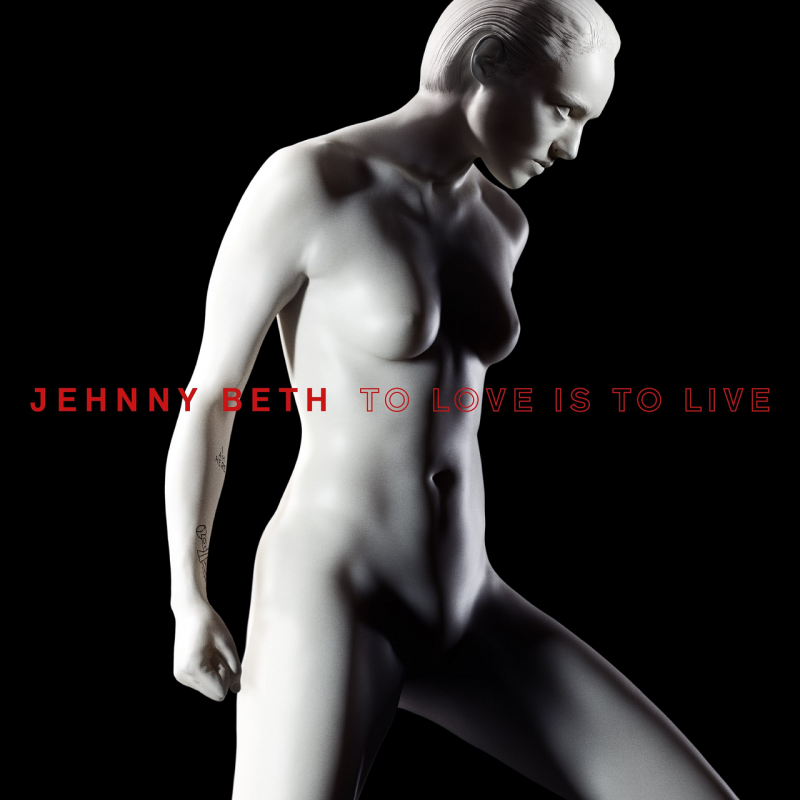
Jehnny Beth was the formidable and mysterious leader of Savages’ flinty monochrome attack, remoulding stark post-punk into gender-fluid shapes. Retiring the band after two Mercury-nominated albums, and returning to France after more than a decade of self-discovery in London, this solo debut is the product of an intense period of self-reflection, softening the carapace of her English persona to ponder innocence and rustic roots.
Beth’s friend PJ Harvey laughingly dismissed her poetry as “terrible”, and even Cillian Murphy’s spoken-word turn can’t redeem some po-faced portentousness, or a chilly air of theory familiar from French erotic provocateurs such as Catherine Breillat. Mostly, though, Beth digs deeper, building an artistic identity capable of both transgressive rampages and introspective quiet.
Ambivalence is constant, as she plays with guilt and pines for innocence. “We Will Sin Together” suggests Jean Genet-like underworld adventures beyond good and evil, but allows for simple, lusty pleasure (“All I want is your sexy eyes/Your legs parting to the skies”). “Flower” is a breathily shivering ode to an LA stripper, delicate falling leaves of guitar adding grace to its electro glide. The thrusting cyber-swagger of “I’m the Man” dives deepest into Savages territory, only to make a startling feint into Seventies boudoir balladry, like Barry White gatecrashing The Prodigy. Even cocky humour slips in, when the elusive feminine Pimpernel of “Heroine” insists: “All I want is some good use of my great body.”
Beth’s rediscovery of her schoolgirl studies in jazz piano and literary bent both pay off in “The Rooms”, an enigmatic vignette of secret erotic exchanges with a heavy, languid atmosphere of French provincial shadows. “The French Countryside” is a limpid piano ballad, wide open to romantic ecstasy and the past. While retaining steely strength this is a fuller self-portrait, warmed by flesh and blood, remembered family and love.
‘Flower’ comes from Jehnny Beth’s debut solo album ‘To Love Is To Live.’
The album will be released June 12th
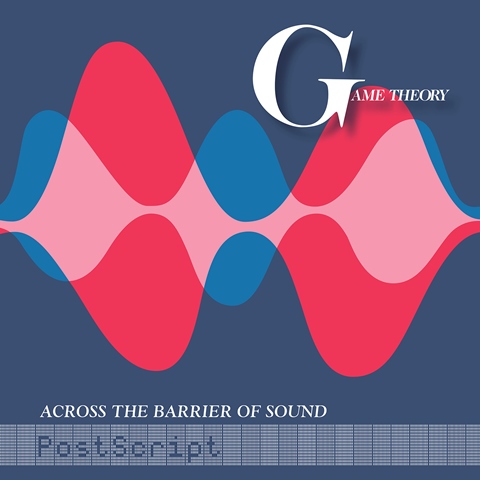
The totemic California art-popsters Game Theory, band have a new collection “Across The Barrier Of Sound: Postscript” this compilation tracks the Game Theory of 1990 and 1991: a period when mainstay Gil Ray had joined Game Theory as their drummer and backing vocalist in 1985 At this time Ray was also playing guitar and keyboards in the band. These became Game Theory’s final, under-the-radar years and, until now, have not been the subject of an official release.
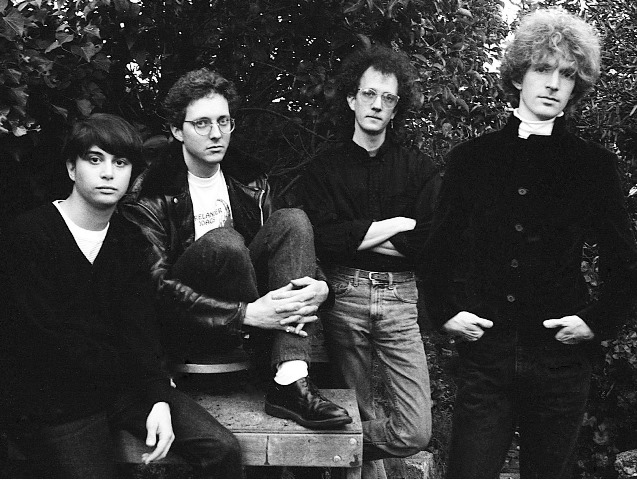
Gil Ray’s passing in January 2017 means that just half of this latter-day, four-piece Game Theory is still with us. Bandleader and founder Scott Miller took his own life in 2013. The other members were recently arrived drummer Jozef Becker and bassist Michael Quercio. Becker is best known from his then-recent spell with Thin White Rope. Earlier still, he played with Miller in Alternate Learning.
Quercio, the fourth member of the Across The Barrier Of Sound line-up, joined in 1989 when his band The Three O’Clock fell apart after their patchy 1988 album Vermillion album which was issued by Prince’s Paisley Park label (Prince wrote a track for the album). Miller and Quercio had co-written “The Girl With The Guitar”, which was on the 1985 Three O’Clock album ArriveWithout Travelling. Game Theory also recorded the song. In essence, the reconfigured Game Theory of 1990 and 1991 was a form of family affair.
It came together as Miller took stock after the assured 1988 album Two Steps From The Middle Ages and around the time of the early 1990 Game Theory compilation Tinker To Evers to Chance. The collection included a few new tracks made with Becker and Quercio but then without Ray. At this point, Miller was seemingly pondering his band in a retrospective light. All the flux and shape-shifting means that the 24 tracks on Across The Barrier Of Sound: Postscript are as per the last word of the title: an add-on to what’s known. Especially so, as nothing was intended for release. It is not an unissued album.
Four of Across The Barrier Of Sound’s tracks – “Inverness”, “Idiot Son”, “My Free Ride”, and “Take me Down (to Halloo)” – are finished studio recordings. “Treat it Like my Own” was first heard on a fan club cassette (different versions of two other songs from that cassette are collected). Otherwise, the sources are home demos (mostly solo) and a couple of live tracks. This is a window into what was going on in Game Theory’s world, rather than a Game Theory release as such.
Revealingly, the sense of this as a period of flux is reinforced by Miller’s post-Game Theory band The Loud Family subsequently recording much of what’s made it onto Across The Barrier Of Sound. “Go Back To Sleep Little Susie (Aerodeliria)”, “Idiot Son”, “Inverness”, “Jimmy Still Comes Around”, “Slit my Wrists” “Some Grand Vision” and “Take me Down (Too Halloo)” are familiar in their later forms. Lyrics may have changed. Odd parts of melodies and song structures differ too. But the blur between Game Theory and The Loud Family is clear.
As an album was not the goal, everything comes across as transitional. Indeed, it is hard to see how a band with Miller as its leader could have – in the long term – accommodated Quercio, another strong, idiosyncratic singer and songwriter. A single band with both had to have had a finite shelf life.
However, some of what’s collected ranks with the best of Game Theory and The Loud Family. In contrast, despite a home-recorded version of The Three O’Clock’s “A Day in Erotica”, little nods towards Quercio’s recent past.
Of the studio-proper tracks, “My Free Ride” is brilliant: classic Scott Miller with a beautiful melody and exquisite singing. The version of “Take me Down (to Halloo)” feels tentative though – doubtless due to the familiarity of the later Loud Family version. “Inverness”, again cut later by The Loud Family, also suffers due to the same reflexive comparison. “Idiot Son”, instead, is more angular, spikier than when it was tackled by The Loud Family. A home demo of “Jimmy Still Comes Around” is a wild ride, suggesting Miller had a jagged identity in mind for the end-days Game Theory. A lovely, poised solo recording of “Some Grand Vision” could have stood on its own if buffed up with a full arrangement.
Obviously, Across The Barrier Of Sound: Postscript is not an entry point into this important band. For that, head to Real Nighttime (1985) , The Big Shot Chronicles (1986), Lolita Nation (1987) and Two Steps from the Middle Ages (1988), all of which capture the Game Theory Scott Miller in excelsis; as a pop auteur on the Todd Rundgren level.
And also, despite the songs included, Across The Barrier Of Sound: Postscript is not a lost prequel for The Loud Family. Instead, what’s compiled is a vital snapshot of transition. As to where this short-lived Game Theory could have gone if Miller and Quercio had stuck with it? No one will ever know.
Choctaw-American artist Samantha Crain has shared a new single and video, “Pastime”, which is from her forthcoming album, “A Small Death”, out July 17th via Ramseur Records/Thirty Tigers and Real Kind Records/Communion Records.
A Small Death finds the Oklahoma-based artist confronting decades of grief, trauma, and an incapacitating physical pain which left her home in bed and barely able to perform or play an instrument. The video was also directed by Crain herself, who explains “The video was meant to be a celebration of the community of the town I live in, Norman, Oklahoma, as well as a nod to the capture of improvisation. Spontaneity is often forgotten as a great tool and teller of stories and I wanted to have a day of filming the wonderful people in my community remembering and exercising the flustering and freeing practice of ‘just winging it.’”
Samantha Crain’s track ‘Pastime’the new album ‘A Small Death’
One of this year’s most talked-up new outfits, it’s easy to see why on the catchy single “Taking You With Me” which has recently been receiving praise in all the right places. Having already amassed plenty of support in their hometown (their fanbase includes Brix & The Extricated and Clint Boon), it should only be a matter of time before Blanketman’s glorious post-punk racket connects with a mass audience.
They are also a band with a great logo, get one of their t-shirts before they become a much sought after collector’s item. With the intuition of the rhythm, believable lyrics and the tasteful guitar work, the band’s ability to keep it to the point, without tacked on self indulgence clouding the pathway, permits them to continually develop into a strong, entertaining live act that all elements of the masses can enjoy.
Suffice to say, they will not be unknown for long. Blanketman and their new double A side single has confirmed them as one of the brightest talents to come out of Manchester in a very long time
We’ve been lucky enough to catch these live twice already, supporting Life at Liverpool’s Phase One and as the opening act for IDLES . On both occasions, it was obvious that these are stars in the making, just one listen to their single That’s My Ego is sure-fire proof of that.
“That’s My Ego” is available on a limited edition vinyl: and was released via Come Play With Me. To find out more about the label, their singles club + the artists they’re supporting, head to https://www.cpwm.co
Akin to Placebo, Faux Pas are a wrecking ball of energy.
The new singles by Manchester-based indie punks Faux Pas and Leeds-based psych-po 5-piece Uncle Buzzard, come together as a double A-sided 7”. That’s My Ego shows Faux Pas maturing as songwriters as they discuss the pursuit of perfection, whilst Big Cat sees Uncle Buzzard’s shimmering sound shrouding some heavy subject matter.